REVIEW · ATHENS
Athens: Classic Cooking Class with Market Visit and Wine
Book on Viator →Operated by The Greek Kitchen · Bookable on Viator
Greek food, made hands-on.
This class is built around a friendly market walk and a practical cooking setup, so you’re not just tasting Athens—you’re learning how to recreate it at home. The Greek Kitchen has run since 2017, and you’ll cook with real home-cook energy led by instructors like Vasia (V-A-S-I-A).
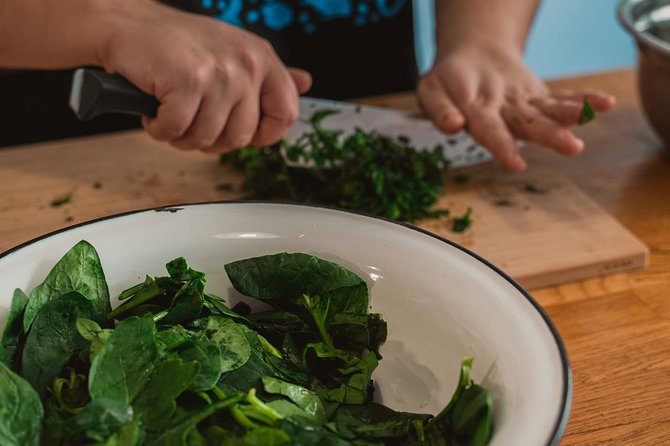
I really like the hands-on format. You get to prep and cook multiple dishes, then sit down together to eat what you made. I also like that you leave with recipes of the dishes you cooked, so the class doesn’t vanish the next morning.
One drawback to plan for: the meeting spot involves stairs, and the market time is on foot. Wear comfortable shoes and bring sun protection.
In This Review
- Key things to know before you go
- Entering Athens Central Market the practical way
- Your 4-hour Athens rhythm: cook, snack, then sit down
- The menu you’ll make teaches real Greek cooking
- Tzatziki: thick yogurt, cucumber, and garlic
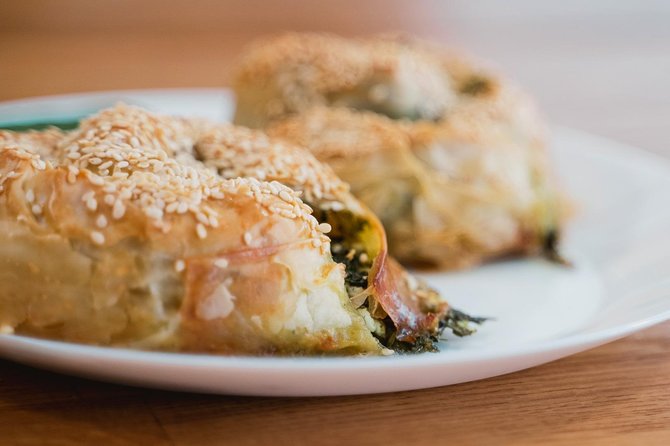
- Spanakopita: phyllo coils and herby spinach-feta filling
- Dolmades: vine leaves, rice, and beef, rolled tight
- Imam baidi: roasted eggplant with sauce and feta
- Portokalopita: syrup-soaked orange and cinnamon sweetness
- Wine and snacks: the meal feels like the point
- Getting your recipes and recreating the flavors later
- Price and logistics: worth it if you want skills, not just dinner
- Who this Athens cooking class is best for
- Should you book The Greek Kitchen in Athens?
- FAQ
- What does the Athens class include?
- How long is the tour?
- Where does it start and end?
- Is there hotel pickup?
- Is the tour in English?
- Do I need to bring comfortable shoes?
- Is free cancellation available?
Key things to know before you go
- A 30-minute Athens Central Market walk sets up the ingredients and Greek food shopping culture.
- Hands-on cooking means you’re doing the work, not watching someone else cook.
- A set menu with classic dishes: tzatziki, spanakopita, dolmades, imam baidi (eggplant), and portokalopita.
- Bread and olives show up every class, plus seasonal market snacks and water.
- Up to 16 people, so you’ll have time to get involved at your station.
- Wine is included: 250ml of locally produced red or white with your meal.
Entering Athens Central Market the practical way
If you’ve only seen Athens from streets and viewpoints, this tour gives you a different angle: food shopping. You’ll start with a 30-minute walk to Athens Central Market, where you get a quick look at how ingredients show up in Greek home cooking day to day.
Here’s what I like about this approach: it teaches you what to buy later. You’re not left with a vague memory of flavors. You learn the “why” behind the ingredients. And you get to see how people actually shop—fast, casual, and ingredient-led.
Do plan for walking. The market visit involves a bit of stroll time and sun exposure. Comfortable shoes help a lot, and I’d bring something for shade (cap, sunglasses, sunscreen) if you’re going in warmer months.
Also note the logistics at the start: The Greek Kitchen is up two short flights of stairs. That’s not the end of the world, but it matters. If you’re traveling with bulky bags or you dislike stair climbs, plan accordingly.
You can also read our reviews of more tours and experiences in Athens.


Your 4-hour Athens rhythm: cook, snack, then sit down
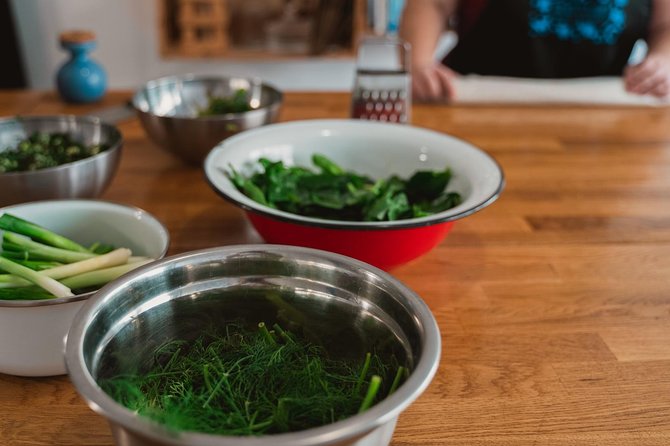
This is about one afternoon flow, not a half-day of scattered stops. The day is structured around cooking stations, food prep, and finishing with a shared meal.
A big part of the value is the pacing. You’re working through a menu that builds skills. You start with a dip-style dish (tzatziki), then move into phyllo work (spanakopita), then something more technique-heavy (dolmades), then a roasted-eggplant style dish (imam baidi), and finish with a sweet syrupy dessert (portokalopita).
You’ll also keep eating while you cook. There’s bread and olives at every class, plus seasonal snacks from the market and drinking water. That means you don’t end up starving while waiting for the oven or phyllo to do its thing.
The class is family-style in the sense that you eat together at the end, and it’s a group experience. If you’re the type who prefers silence and solo plans, you’ll want to know you’ll be part of a table conversation with other people.
One more real-world note: a few people feel the experience can feel a bit rushed. Four hours can move quickly when you’re cooking multiple dishes. If you love slow, leisurely meals only, this might not scratch that itch. If you like a hands-on challenge, it’s a good fit.
The menu you’ll make teaches real Greek cooking
You’re making a “best hits” menu, but each dish trains a specific technique. Here’s the practical breakdown.
Tzatziki: thick yogurt, cucumber, and garlic
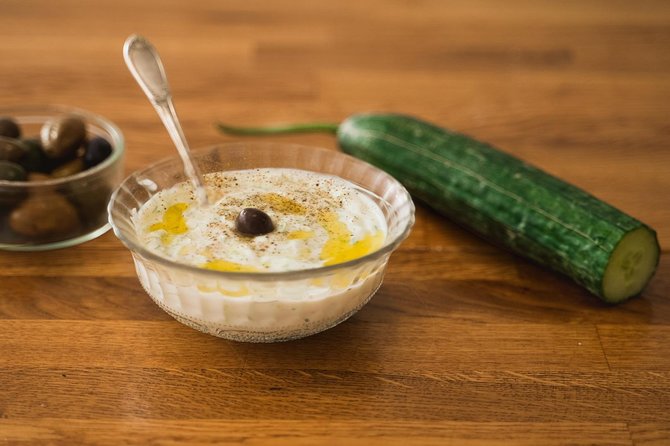
Tzatziki is often called a simple dip. Here, it’s a skill builder. You’ll work with thick Greek yoghurt, fresh cucumber, and garlic. The garlic component is not subtle, so if you like bold flavors, you’re going to be happy.
What you learn: how Greek-style tzatziki gets its personality from balance—cool yogurt, fresh crunch, and that garlicky punch. Once you’ve made it, you’ll stop treating tzatziki as a store-bought shortcut.
Spanakopita: phyllo coils and herby spinach-feta filling
Spanakopita is Greece’s comfort-food pie moment. You’ll make something built on phyllo, with spinach, feta, and herbs.
What you learn: phyllo isn’t just pastry. It’s texture. The technique matters, from handling sheets to assembling the structure so it bakes up crisp.
Also, this dish shows why Greeks love layers and crunch. It’s not “one more pie.” It’s a cooking lesson in how thin dough can turn into something substantial.
- All Day Cruise -3 Islands to Agistri,Moni, Aegina with lunch and drinks included
★ 5.0 · 4,958 reviews





Dolmades: vine leaves, rice, and beef, rolled tight
Dolmades take more time and patience than dips or simple mixes. You’ll be working on rolling vine leaves around a fragrant filling of rice and beef.
What you learn: rolling is its own craft. You need the right size, a steady hand, and a feel for how tight to go without tearing. When you eat them afterward, you understand why they’re worth the work.
Even if you don’t master the exact look at home, you’ll copy the method and seasoning logic—and that’s the point.
Imam baidi: roasted eggplant with sauce and feta
Imam baidi is a historical comfort dish built around roasted eggplant topped with sauce and feta. It also has a “how it got here” story: your cook reveals how this dish came to Greece in the early 20th century.
What you learn: Greek home cooking doesn’t always mean same-day simplicity. Sometimes it’s about building flavor through roasting, then finishing with a creamy, salty topping. It’s also a nice bridge dish—less delicate than phyllo, more layered than a salad.
Portokalopita: syrup-soaked orange and cinnamon sweetness
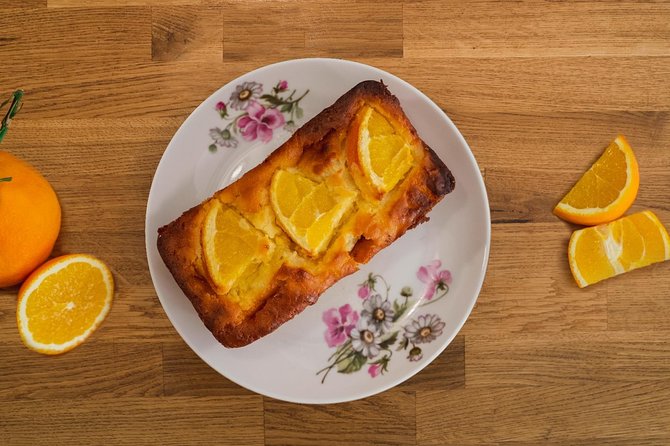
For dessert you’ll make portokalopita, which is often described as another pie, but it behaves more like a cake. You’ll work with shredded phyllo soaked in orange and cinnamon syrup.
What you learn: Greek sweets often lean on syrup and aroma. Orange + cinnamon is a familiar combo, but the effect is different when phyllo soaks up syrup. It’s the kind of dessert you’ll remember because it tastes like the kitchen stayed busy even after dinner.
Wine and snacks: the meal feels like the point
Food classes can be hit-or-miss. This one holds up because the meal isn’t treated like a bonus. It’s the finish.
You’ll have 250ml of locally produced red or white wine with your self-made meal. That amount is enough to relax the group without turning it into a party. You can still think clearly enough to remember what you did and how it tasted.
On top of that, you’ll snack as you cook. Bread and olives show up at every class, and you also get seasonal market snacks. That matters because cooking takes time. You’re not stuck waiting in silence with nothing happening in your hands or mouth.
At the end, you eat together. In one group experience, the vibe felt like you were surrounded by family. That’s not an empty phrase here—it’s the way the class is set up. You share the table, compare notes on what you made, and swap cooking tips right there while the food is still warm.
Getting your recipes and recreating the flavors later
One of the best parts is what you don’t lose at the end: you receive recipes of the dishes you made. That’s huge for value. A lot of cooking classes are fun, but you can’t reproduce them without writing down tricks and measurements.
Here, you get the recipes so you can repeat the menu later at home. And because the dishes are classic—tzatziki, spanakopita, dolmades, eggplant, orange dessert—you can build a Greek-themed meal without hunting for obscure ingredients.
One more practical point: the class format makes it easier to remember technique. You’ll know what you were supposed to do when your yogurt went thick, when your phyllo needed handling, and when your dolmades needed rolling consistency. That learning sticks because it happened with your hands.
Price and logistics: worth it if you want skills, not just dinner
The price is $83.44 per person for about 4 hours. For Athens, that’s in the range where you should ask yourself: am I buying a meal, or am I buying cooking skills?
This tour is better when you want both. You’re paying for:
- a market walk (ingredient context, not just sightseeing),
- guided hands-on cooking with a Greek home cook,
- multiple dishes worth of work,
- included wine, bread, olives, water, and seasonal snacks,
- and take-home recipes.
The absence of hotel pickup is the tradeoff. You’re responsible for getting yourself to the meeting point. The good news: it’s near public transportation, and the start location is clearly set.
One more logistics thing: the experience ends back at the meeting point. That means you plan your afternoon around it. If you’re trying to cram in a late museum visit or a tight dinner reservation right after, you’ll want to leave some breathing room.
Who this Athens cooking class is best for
This experience fits a few clear travel styles.
Book it if you want hands-on Greek cooking skills.
You’ll cook several dishes that cover cold starters, phyllo pie work, rolling technique, roasting, and syrup dessert.
Book it if you like small-group social time.
With a maximum of 16 travelers, it’s interactive but not chaotic. It’s also a solid way to meet people—especially if you’re traveling solo or with friends who want something more active than a walking tour.
Book it if you’re curious about Greek food culture beyond a tavern menu.
The market stop helps explain how Greeks shop and what shows up in home cooking.
Maybe skip it if you hate stairs or hate walking in the sun.
Two short flights of stairs at the meeting location plus the market walk are part of the experience. Also, the timeline can feel quick.
Should you book The Greek Kitchen in Athens?
I think this is a strong choice if you want a practical souvenir: recipes you can actually cook again, plus technique you understand. The best reason to book is simple: this isn’t only about eating. You’re learning a full Greek menu, piece by piece, with wine and snacks making the whole afternoon feel like a real meal, not a classroom.
I’d hesitate only if your priorities are purely low-effort sightseeing, or if you’re dealing with mobility issues around stairs and walking. And if you need a super-slow pace, be aware that four hours plus multiple dishes can feel like a sprint.
If you’re the type who likes to cook at home, share meals with friends, and bring home skills instead of just photos, this one earns its spot.
FAQ
What does the Athens class include?
You get a hands-on cooking class, drinking water, bread and olives during the class, seasonal snacks from the market, and 250ml locally produced red or white wine with your meal. You also receive recipes of the dishes you make.
How long is the tour?
It’s about 4 hours total, including a 30-minute market walk.
Where does it start and end?
It starts at Athinas 36, Athina 105 51, Greece. It ends back at the meeting point.
Is there hotel pickup?
No. Hotel pick up and drop off are not included.
Is the tour in English?
Yes. The experience is offered in English.
Do I need to bring comfortable shoes?
Yes. The market portion involves walking, and the meeting location is up two short flights of stairs, so comfortable shoes and sun protection are a good idea.
Is free cancellation available?
Yes. You can cancel for free up to 24 hours in advance for a full refund.



More Tour Reviews in Athens
- All Day Cruise -3 Islands to Agistri,Moni, Aegina with lunch and drinks included
★ 5.0 · 4,958 reviews