REVIEW · ATHENS
Athens: Philosophy Experience at Plato’s Academy Park
Book on GetYourGuide →Operated by Hellas Revival · Bookable on GetYourGuide
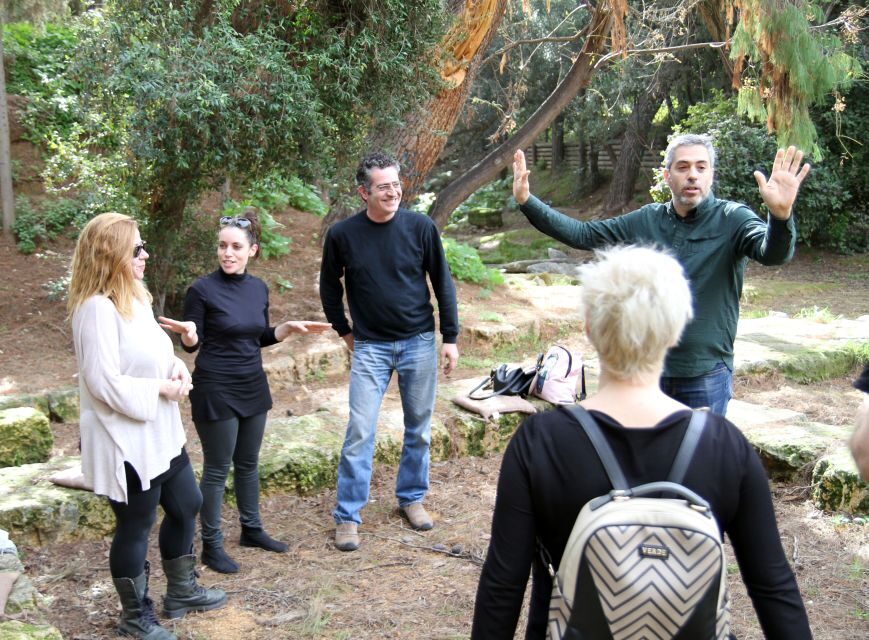
Plato’s ideas feel alive here. This is a hands-on philosophy workshop at Plato’s Academy Park, where you tackle the Allegory of the Cave through discussion, not lectures. I love the way the format turns ideas into a group conversation, using Socratic-style questioning to get you thinking on your feet.
I love that it’s built for plain English beginners, so you don’t need a philosophy background to participate. One possible drawback is that the Plato’s Digital Museum can be closed or change hours without much warning, and archaeological excavation can shift what you see inside the park.
In This Review
- Quick hits
- Plato’s Academy Park: what makes this workshop work
- Where you meet and how the session gets rolling
- Plato’s Digital Museum: your free warm-up task
- Walking the archaeological park and reaching the Gymnasium ruins
- Using the Allegory of the Cave as a group discussion tool
- Socrates’ maieutic method: learning how to question yourself
- The debate game: a modern case study with Plato’s perspective
- Price and value: is $90 a fair deal?
- What to bring and how to act at a historical site
- Who should book this (and who might not)
- Should you book Plato’s Academy Philosophy Experience?
- FAQ
- How long is the Athens Philosophy Experience at Plato’s Academy Park?
- What’s the meeting point?
- What language is the workshop taught in?
- Is the workshop suitable for beginners?
- What do I do at Plato’s Digital Museum?
- What happens in the archaeological park?
- How does the Allegory of the Cave fit into the workshop?
- Is there a debate at the end?
- What should I bring?
- What’s included in the price?
Quick hits
- Start at Plato’s Digital Museum for a short, guided research task before you move into the ruins
- Walk through the Academy’s archaeological park and stand near the ancient Gymnasium ruins
- Use the Allegory of the Cave as your conversation engine
- Practice Socrates-style maieutic (midwife) methods to question and refine ideas
- Finish with a debate game using a modern-life case study based on Plato’s view of the philosopher
- Small-group, highly interactive workshop style with materials provided
Plato’s Academy Park: what makes this workshop work
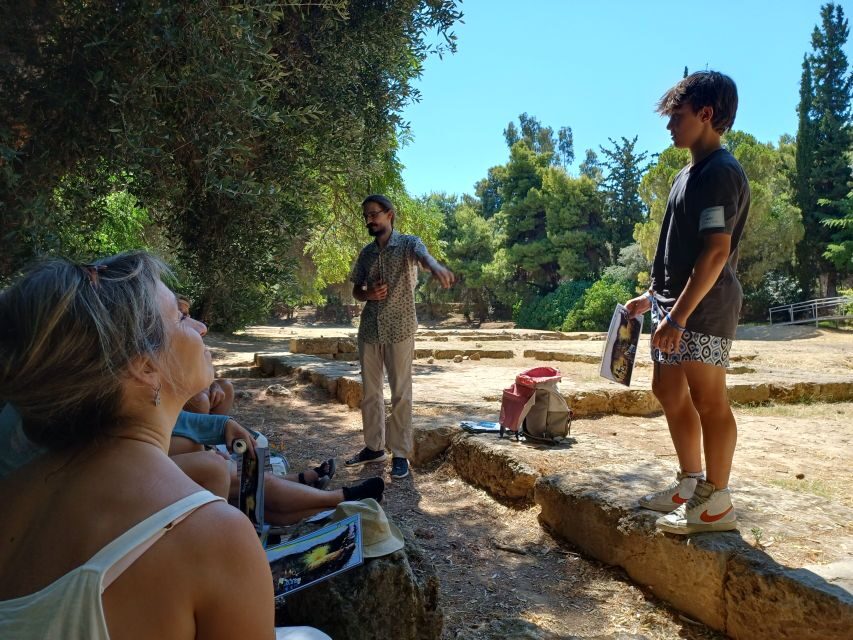
This experience isn’t trying to be a museum tour with extra talking. It’s a guided philosophy quest in an actual historical setting—then it asks you to participate like a thinker, not a spectator.
You’ll get a clear path through the material. First you gather information about Plato, then you explore the archaeological park, and only after that do you turn those ideas into dialogue. That order matters because it keeps the philosophy from floating off into abstract theory.
The setting adds weight. You’re at the place that hosted the world’s first Academy, and the workshop treats that as more than scenery. It’s a prompt: what would it mean to think here, in the original spirit of inquiry?
You can also read our reviews of more tours and experiences in Athens.



Where you meet and how the session gets rolling
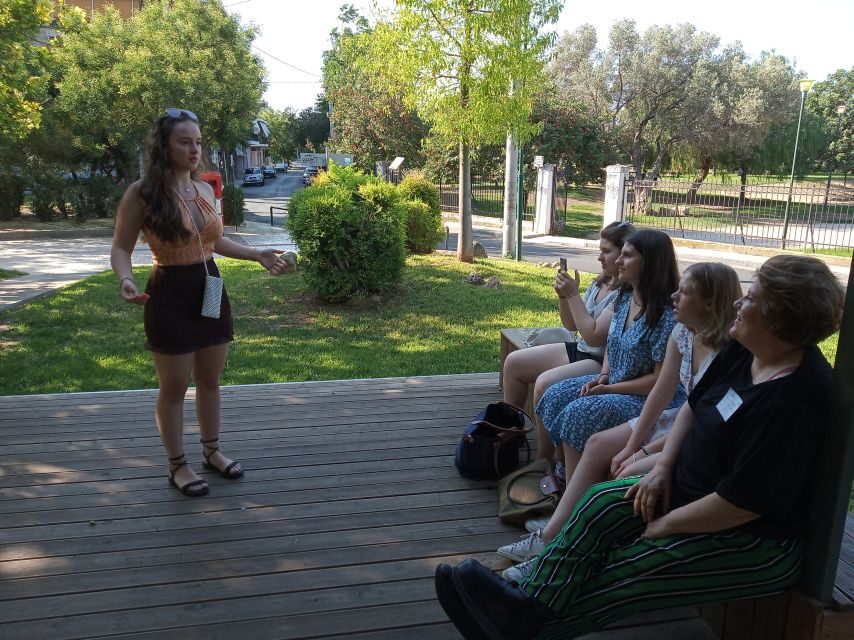
You meet your instructor outside the Plato’s Digital Museum entrance. You’ll spot them holding a Hellas Revival sign, so you’re not playing guessing games.
From there, the session follows a simple rhythm: information-gathering, walking and noticing, then conversation. The workshop is explicitly designed as educational and interactive, not as a standard guided tour. That means you should expect to speak, not just listen.
The instructor is English, and the workshop is described as suitable for people without previous knowledge, with plain language and no difficult terminology. In practice, that’s what makes the experience approachable: you can follow the steps, contribute your thoughts, and still feel like you understand what’s happening.
The total duration is about 2 hours, and it runs at set starting times (check availability for the schedule).
Plato’s Digital Museum: your free warm-up task
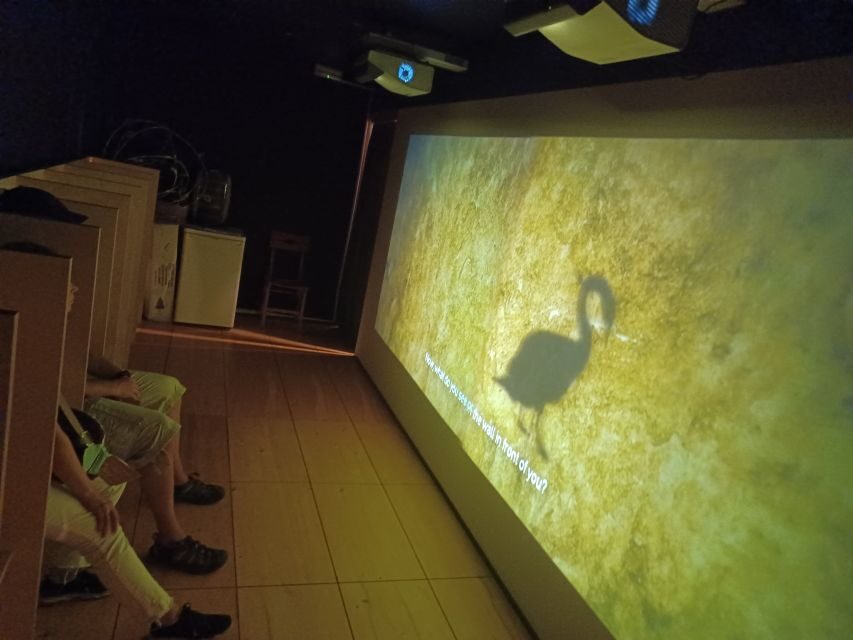
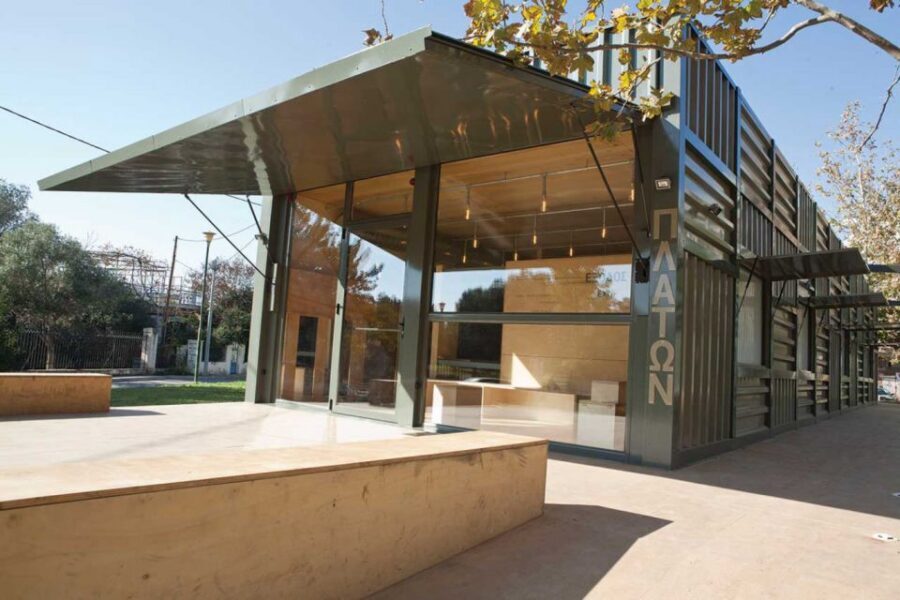
The session begins with a short exploration of the Plato’s Academy Digital Museum. Entrance is free, as long as it’s open and operational.
This part is more than browsing. You’re given a task: gather specific information about Plato’s life and works, plus details about the Academy. Then you’ll bring that information into the discussion later.
This is a smart design for two reasons. First, it gives you something concrete to focus on while you’re in the museum space. Second, it sets you up to participate when the group starts interpreting ideas, because you’ve already “collected evidence” of a sort.
A real-world consideration: the museum schedule changes constantly, and sometimes it’s closed without announcement. That doesn’t mean the workshop is a waste; it does mean your best move is to check the day-of situation and be ready for the session to adjust.
Walking the archaeological park and reaching the Gymnasium ruins
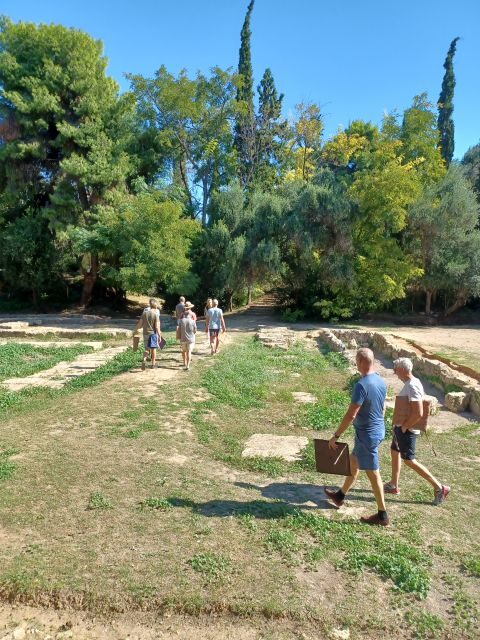
After the digital museum portion, you walk through the archaeological park of the Academy. This is where the experience shifts from facts to atmosphere.
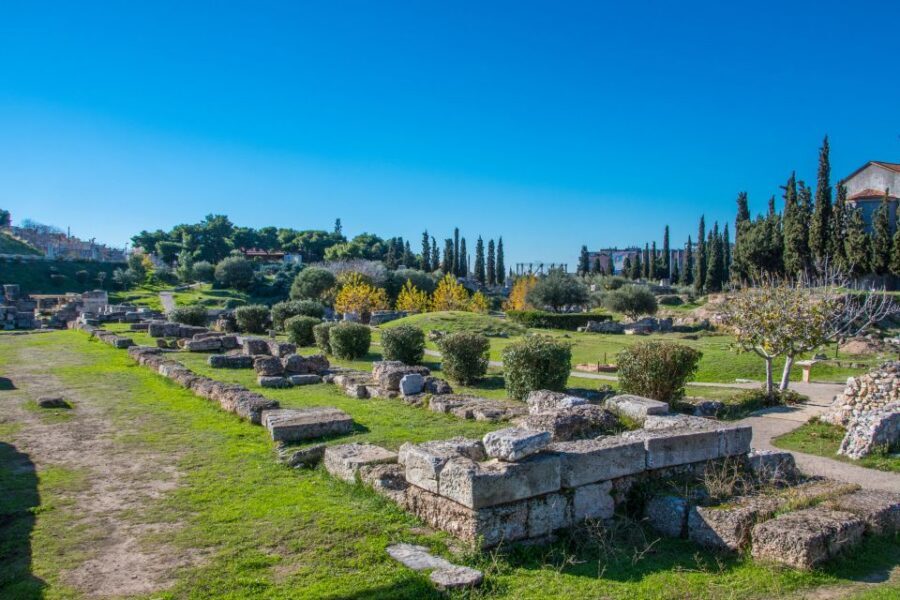
You’ll find yourself near the ruins of the ancient Gymnasium. It’s a striking anchor point because it connects the workshop theme—philosophy as a lived practice—to a physical place tied to how the Academy functioned.
There’s also a practical caveat. Excavation often takes place in Plato’s Academy Park. If that’s happening during your visit, you may see the Gymnasium ruins from a short distance, and you’ll settle at a different spot in the park.
That adaptability is worth knowing up front. You’re not paying for one fixed view from one exact angle. You’re paying for a guided learning experience that can continue even when the site is actively being worked on.
Using the Allegory of the Cave as a group discussion tool
The heart of the workshop is the Allegory of the Cave. But you’re not hearing it recited like a bedtime story. You’re using it as a shared framework for meaning-making.
After you reveal what you gathered about Plato and the Academy, you discuss what it was like to be a philosopher back in ancient Athens. Then the conversation turns to the Cave and its deeper meanings.
This is where the small-group format pays off. With fewer people, you get more airtime. With more time for speaking, the group can actually compare beliefs, experiences, and views instead of just trading quick opinions.
You can expect an instructor-led flow built around discussion prompts. The goal is to connect Plato’s ideas to modern life, not by forcing a modern lesson, but by letting you test how the ideas land in your own thinking.
- All Day Cruise -3 Islands to Agistri,Moni, Aegina with lunch and drinks included
★ 5.0 · 4,958 reviews





Socrates’ maieutic method: learning how to question yourself
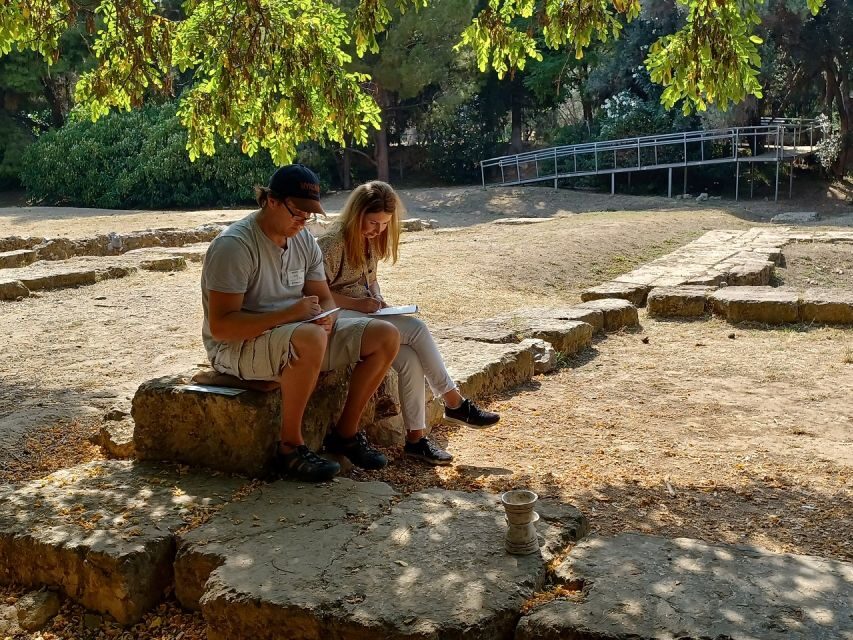
A major selling point here is the use of Socrates’ maieutic art, often described as the midwife method. In plain terms, it’s about guiding someone to think through questions rather than delivering a final answer.
The workshop also uses platonic dialogue techniques to facilitate exchanging opinions and beliefs. So instead of you memorizing “the correct interpretation,” you practice a mindset: clarify your view, listen to other angles, and revise your thinking when a new question lands.
This matters because it trains a skill you can use beyond philosophy class. Critical thought isn’t just about being skeptical. It’s about staying aware of your assumptions and learning how to examine them.
If you’ve ever felt like you have opinions but can’t explain why, this workshop structure is designed to help. The dialogue game and guided discussion push you to articulate your reasoning, then stress-test it with the group’s responses.
The debate game: a modern case study with Plato’s perspective
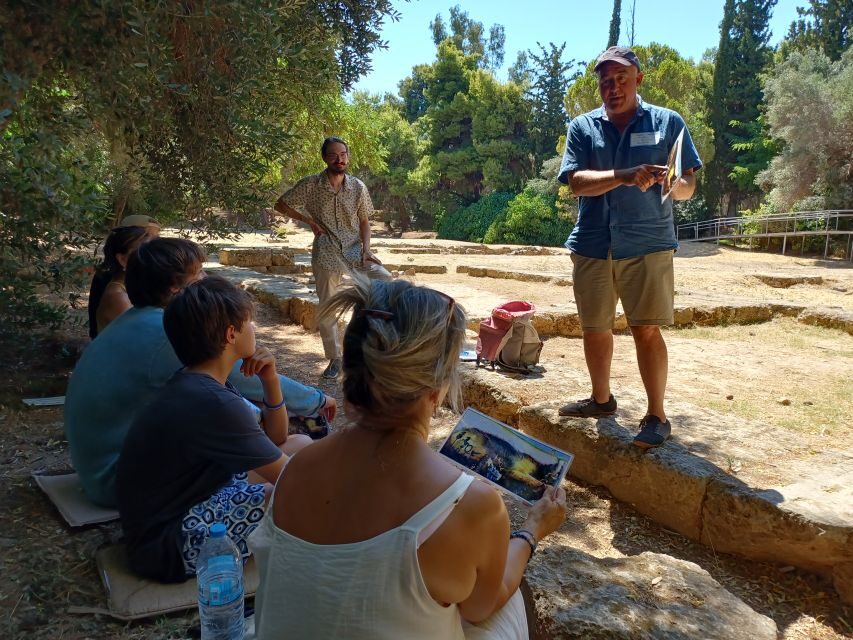
At the end, you take part in a short debate game. The topic is a modern life case study, built around Plato’s opinion of how a philosopher should act.
This is a useful closing move. You’ve spent time gathering and discussing, and now you’re applying the ideas to a realistic scenario. Debate games also make the end of the workshop feel energetic without turning it into chaos, since the instructor steers the conversation.
You shouldn’t expect a win-lose format. The design is about practicing the philosopher approach: thinking carefully, speaking with purpose, and examining how your stance fits with the framework you discussed earlier.
Price and value: is $90 a fair deal?
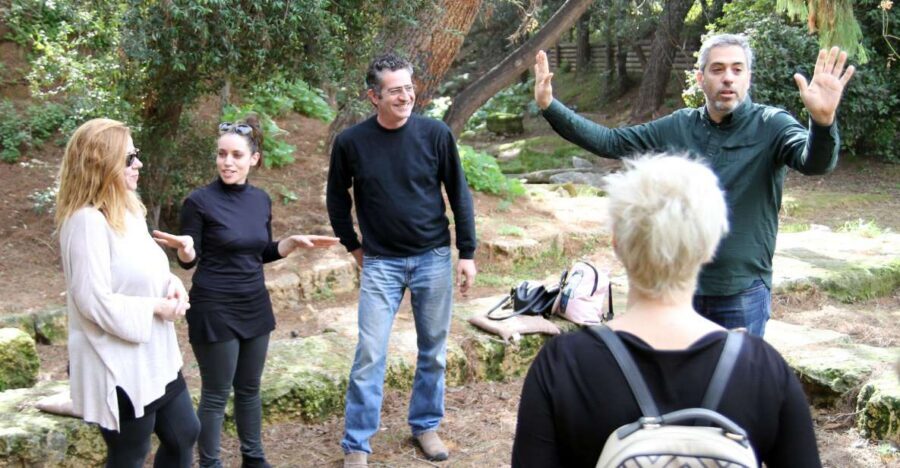
The price is $90 per person for a 2-hour, expert-facilitated, highly interactive workshop, with all materials included and local taxes (24%) included.
For your money, you’re getting several things in one: an onsite historical setting at the Academy Park, a guided research start at the Digital Museum (free entrance, when operational), and a structured dialogue experience using Socratic and platonic techniques. That’s more than a “history stop.” It’s a learning format where you’re expected to participate.
The value also depends on what you want. If you’re looking for a passive walk with facts, you might find it less satisfying. But if you want a guided conversation that changes how you think, the $90 starts to look reasonable.
Also note what’s not included: this isn’t described as a guided tour. It’s an educational workshop, so the emphasis is on discussion and participation rather than exhaustive site touring.
What to bring and how to act at a historical site
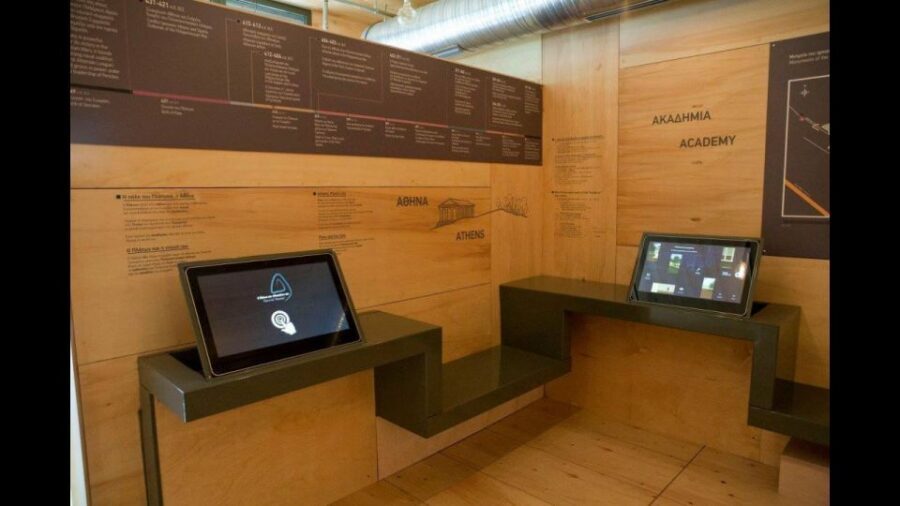
This takes place at a historical archaeological location. The workshop asks for respectful conduct: soberness, cleanliness, photo/video etiquette, dress-code, and keeping the noise level appropriate.
In other words, treat it like you’re inside a functioning cultural space, not just a photo opportunity.
For your comfort, bring:
- Comfortable shoes (you’ll be walking outdoors)
- Sun hat
- Water
- Comfortable clothes
It’s also wise to dress for sun and wind. You don’t want to cut the experience short because you’re distracted by discomfort.
Who should book this (and who might not)
This workshop is a great fit if:
- You want beginner-friendly philosophy that uses plain language
- You prefer interaction and discussion over long lectures
- You like learning in an authentic location rather than a classroom setting
- You’re curious about how Plato’s ideas can connect to modern life through the Cave and dialogue practice
It may feel less ideal if:
- You want a traditional guided tour with lots of uninterrupted commentary
- You dislike speaking or group discussion (even though participation is guided, it’s still part of the format)
The wheelchair-accessible note is a good sign for inclusive participation, and it’s run by an English-speaking instructor.
Should you book Plato’s Academy Philosophy Experience?
If you’re even a little curious about Plato but don’t want a textbook approach, I think this is a smart booking. The strongest reasons are practical: you’ll learn through a structured sequence, you’ll talk with others (not just listen), and you’ll connect the Allegory of the Cave to real questioning.
The main reason to hesitate is scheduling uncertainty around the Plato’s Digital Museum, plus the possibility of excavation changing where you sit or how close you get to the Gymnasium ruins. If that kind of variability would stress you out, you might want to build in a flexible mindset.
Overall, for the cost of $90 and a 2-hour time block, this offers a good mix of place-based learning and hands-on Socratic practice. It’s philosophy you do, not philosophy you watch.
FAQ
How long is the Athens Philosophy Experience at Plato’s Academy Park?
It lasts about 2 hours.
What’s the meeting point?
The instructor waits outside Plato’s Digital Museum at the entrance, holding a Hellas Revival sign.
What language is the workshop taught in?
The instructor speaks English.
Is the workshop suitable for beginners?
Yes. It’s described as a basic philosophy workshop with plain English and no difficult terminology.
What do I do at Plato’s Digital Museum?
You explore it briefly and gather specific information about Plato’s life and works and about his Academy.
What happens in the archaeological park?
You walk through the Academy archaeological park and find yourself near the ruins of the ancient Gymnasium, then discuss what you gathered and what it was like to be a philosopher in ancient Athens.
How does the Allegory of the Cave fit into the workshop?
You use it as the basis for guided dialogues to discover deeper meanings, with instructor facilitation using Socratic and platonic dialogue techniques.
Is there a debate at the end?
Yes. You’ll join a short debate game with a modern life case study based on Plato’s opinion of how a philosopher should act.
What should I bring?
Bring comfortable shoes, a sun hat, water, and comfortable clothes.
What’s included in the price?
The expert facilitator, all materials, and local taxes are included. A guided tour is not included.
More Tour Reviews in Athens
- All Day Cruise -3 Islands to Agistri,Moni, Aegina with lunch and drinks included
★ 5.0 · 4,958 reviews