REVIEW · ATHENS
Athens to Meteora, Day Trip with Local Guide,up to 9 people
Book on GetYourGuide →Operated by VIP Meteora Tours · Bookable on GetYourGuide
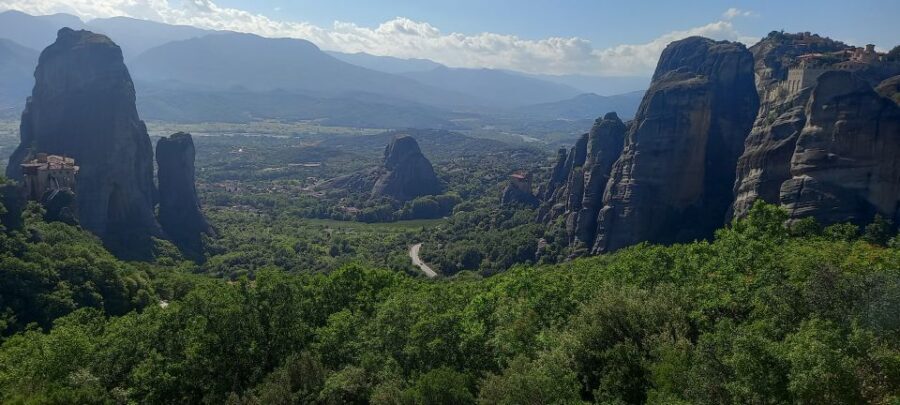
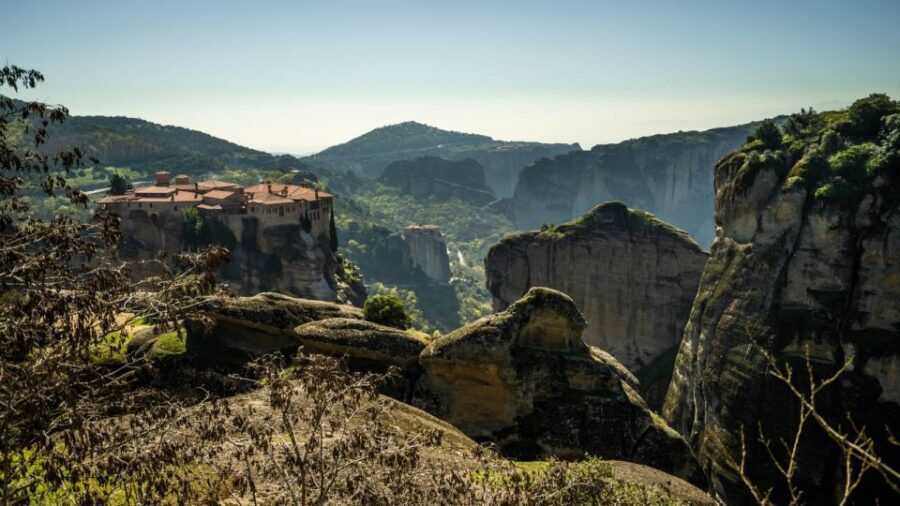
Meteora hits you in the first 10 minutes. One day out of Athens and you’re staring at monasteries perched on rock towers that look too steep to be real. I like that this is a small group (up to 9 people), so the guide can actually pace things. I also like the “see it all” approach: you get close views of all 6 monasteries, plus guided time inside 3 of them. The main drawback is simple: it’s a long day and involves early travel, plus a lot of time on your feet.
Here’s what makes it work. You start with a train leg out of Athens, then switch to a bus partway to reach Kalampaka, the gateway town for Meteora. In Meteora, your local guide fills the drive and monastery time with clear stories about how this place shaped Greek monastic life and why these spots were chosen in the first place. I especially appreciate that the experience is organized so you’re not guessing where to stand for the best views—your guide points out photo angles and the “why” behind what you’re seeing.
One more consideration: this trip isn’t for everyone physically. It’s not suitable for wheelchairs or people with mobility issues, and it’s also not a fit for back problems, heart problems, or recent surgery. If you’re good on uneven stone steps and can handle a day of walking, you’ll probably love it.
In This Review
- Key things I’d plan around
- Athens to Kalampaka: the long day starts early, but it’s organized
- Meeting your guide: why the stories change the way you see Meteora
- Meteora’s main circuit: seeing all 6 close up, then touring 3 inside
- What “see all 6” really means for you
- What “visit 3 inside” gives you
- Panoramic photo stops: don’t just shoot, watch your angles
- Hermit Caves: a quieter stop that changes the tone
- Timing and comfort: how to survive 14 hours without feeling wrecked
- Price and value: is $128 a fair deal for Meteora?
- Who should book this tour (and who should skip it)
- Final call: should you book this Meteora day trip from Athens?
- FAQ
- How long is the Athens to Meteora day trip?
- How many people are in the group?
- Do you visit all 6 monasteries inside?
- Are monastery entrance fees included?
- What about meals during the day?
- How do you get from Athens to Meteora right now?
- Is there an English-speaking guide?
- Is this tour suitable for people with mobility limitations?
Key things I’d plan around
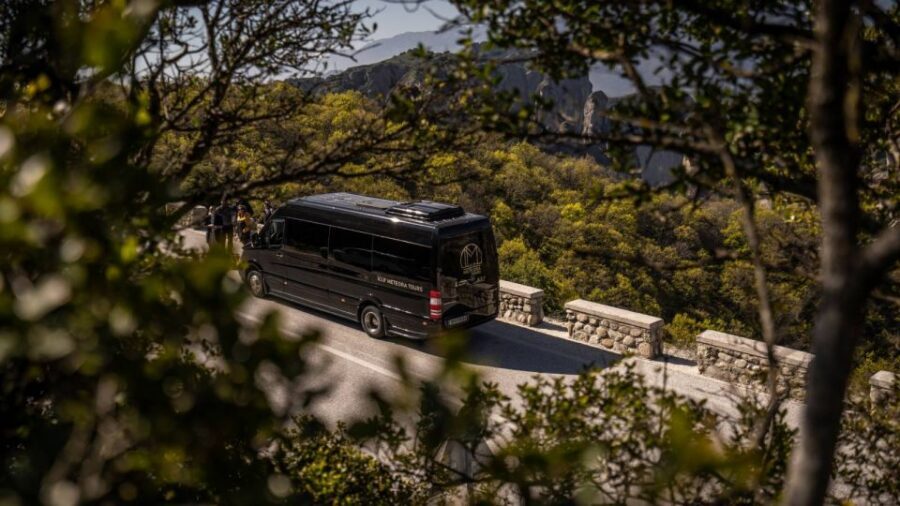
- Up-close views of all 6 Meteora monasteries plus guided time inside 3
- Hermit Caves visit for a different side of the monastic story
- Small-group pacing (max 9 people) with an English-speaking guide
- Plenty of photo stops at the most panoramic spots, not just one quick look
- Air-conditioned transport and Wi‑Fi to make the long travel day less painful
Athens to Kalampaka: the long day starts early, but it’s organized
The trip is built for one clear goal: get you from Athens to Meteora fast enough to enjoy it properly, without turning the day into a maze. Departure begins at St. Larissis. From there, you’ll take a train toward Kalabaka, then switch to a bus for the final stretch.
Right now, train service into the Meteora area is not fully operating. The route has been paused due to repairs on the rail line, so your operator provides a modern air-conditioned 35-seater bus for the affected part of the trip. The key point for you: travel time stays about the same, but the ride is easier than you might expect with the changeover.
When you arrive, you’ll meet your local guide in Kalabaka and transition into the Meteora part of the day. This matters because Meteora isn’t just “pretty rocks.” It’s a real working landscape of heritage sites, viewpoints, and steep climbs. Having guidance early helps you understand what you’re looking at before you start hopping between monasteries.
And yes, you’re in transit a lot. The schedule runs roughly as follows: a train leg of about 2 hours 50 minutes, then about 80 minutes by bus/coach, and then later you return with the same basic structure. If you hate long seat time, this is the tradeoff. Still, the comfort pieces—bottled water, air-conditioning, and Wi‑Fi on the vehicle—help you arrive in good shape.
You can also read our reviews of more guided tours in Athens

Meeting your guide: why the stories change the way you see Meteora
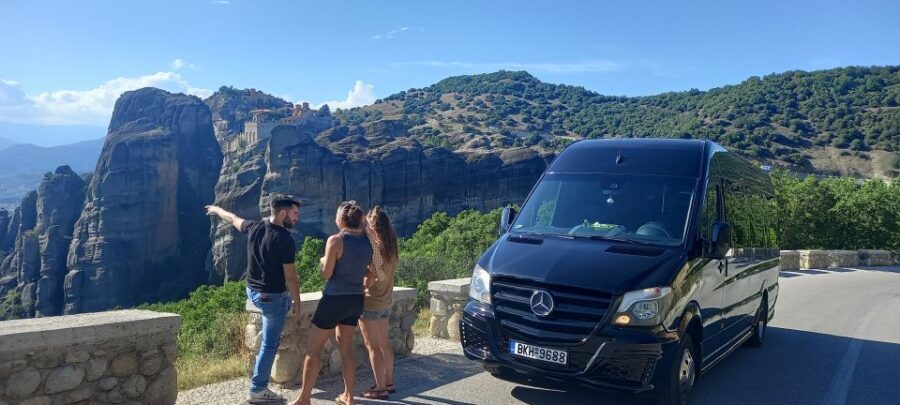
In Meteora, the “wow” is obvious. But the “oh, I get it” part comes from what your guide explains while you’re moving and standing around.
I like that the tour uses a local English-speaking tour leader, and I’ve seen examples from previous groups like George being quick and responsive with communication, and guides such as Vagelis delivering a history lesson in a casual, clear way. You’re not getting museum-speak. You get the kind of explanation that makes the monasteries feel like decisions people made—practical choices shaped by faith, geography, and isolation.
This kind of guidance is especially useful at Meteora because you’ll see the same basic structures from different angles and time periods. Even if the buildings look similar at first glance, the details and the story behind them help you tell what you’re looking at. It also makes the viewpoints more meaningful. A photo stop isn’t just for a snapshot; it’s often timed for a sightline that explains how monastic life worked on these cliffs.
Meteora’s main circuit: seeing all 6 close up, then touring 3 inside
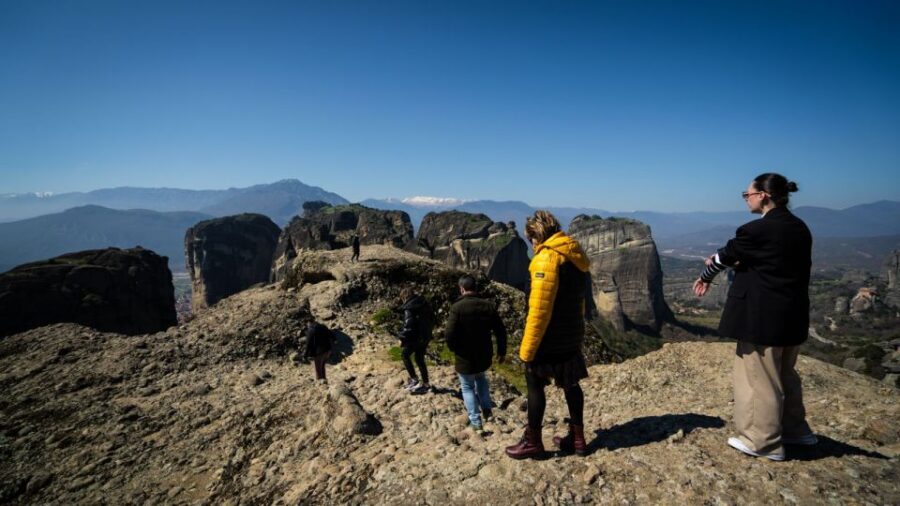
Once you’re in Meteora, you’ll have a built-in block of time to see the sites. The plan is designed to give you two layers:
1) Close-distance views of all 6 monasteries
2) Entrance tours inside 3 monasteries, guided
That split is smart. If you tried to tour all 6 interiors in a single day, you’d spend half your life waiting for gates and paying fees. Instead, you see everything from the outside (so you don’t miss any of the big names), then you go inside for deeper context at three sites.
What “see all 6” really means for you
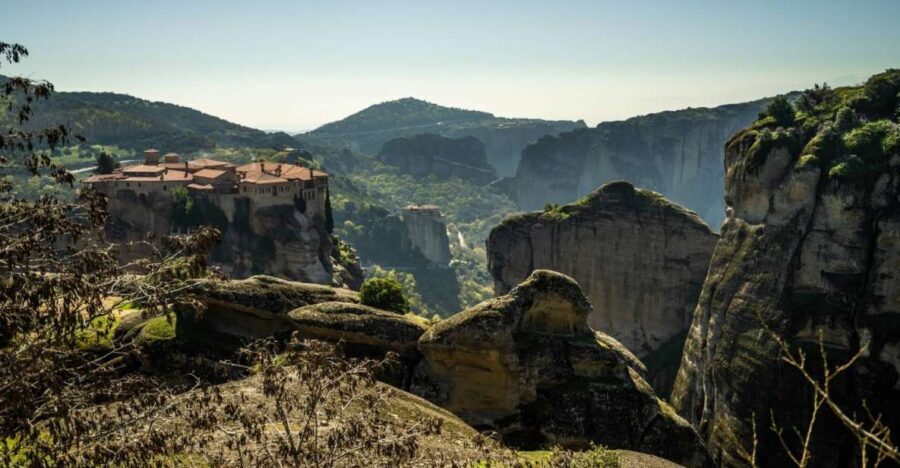
You’ll get panorama viewpoints and quick transitions that help you compare monasteries against the rock towers. From the road and terraces, you start noticing patterns: how buildings cling to different ledges, how access paths were built, and how the whole system was designed for separation from the outside world.
This is also where your guide’s photo logic pays off. The tour includes photo stops at the most panoramic spots, so you’re not stuck with only one angle of the whole complex.
What “visit 3 inside” gives you
Inside is where the experience stops being “scenic.” You’ll be able to see the religious spaces, craftsmanship, and the scale of what it took to live here. It also helps to know this: monastery entrance fees aren’t included. The cost is 5€ per person per monastery, so for the three interiors, you’ll want a little cash ready. Also, inside the monasteries, you may still encounter the state-licensed guide requirement, which is separate from your tour leader. Your tour leader is the one shaping your day, while you’ll follow site rules once you’re inside.
If you’re the type who likes to look at details—painted surfaces, layout, and how the space feels—those three indoor visits are the best payoff of the day.
You can also read our reviews of more tours and experiences in Athens



Panoramic photo stops: don’t just shoot, watch your angles
Meteora is one of those places where every viewpoint looks similar until you actually pay attention. The towers, courtyards, and monasteries shift dramatically depending on where the sun hits and how close you are to each rock face.
That’s why the included photo stops matter. The tour isn’t just driving you between stops and letting you fend for yourself with your camera. Your guide helps you get to the angles where you can see the monasteries as more than isolated buildings.
Practical tip: take a moment between photos to locate a monastery from one viewpoint, then compare it when you move. You’ll start to understand distance and placement fast. It’s also a great way to keep the day moving without burnout—look, orient, then move on.
Hermit Caves: a quieter stop that changes the tone
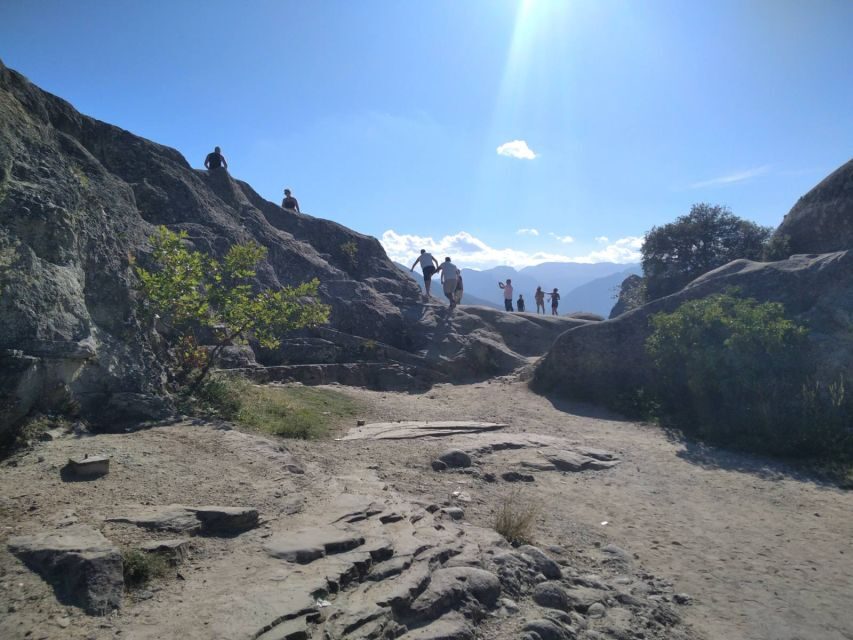
Not every Meteora day includes a stop like this. Here, you’ll visit the Hermit Caves. This is one of the best ways to get a different emotional note from the monasteries.
The monasteries show communal religious life—organized worship, buildings, and visitors. The Hermit Caves point to the other side: people seeking solitude and survival in difficult conditions. Even if you don’t remember every detail of the stories, the change in tone tends to stick. It makes Meteora feel more human and less like a movie set.
You’ll probably find this is the stop that resets your brain after the busiest monastery hours. If you want one moment in the day that feels reflective, plan to slow down here and actually look around.
Timing and comfort: how to survive 14 hours without feeling wrecked
This is a 14-hour day. That number isn’t just “time on the clock.” It’s time that includes transit, walking, stairs, and waiting for the group to gather.
Here’s how to make it easier:
- Wear comfortable shoes with good grip. You’ll be on stone surfaces and steps.
- Bring a camera because the views are the headline, and you’ll get multiple chances to frame the monasteries.
- Dress in comfortable clothes you can layer. Even when Meteora is warm, you might feel temperature shifts depending on sun and shade.
- Bring cash for monastery entrance fees (5€ per monastery) since they’re not included.
- Plan for a break and lunch on your own time. Meals are not included, but you’ll have a break during the Meteora portion of the day to handle food.
A couple of small logistics notes matter too. Smoking and alcohol are not allowed on the vehicle, and you should expect no touching of exhibits inside. Also, the tour notes that the railway company changed operations and your transport may be bus-based for parts of the route, so be ready for a seat-and-go rhythm.
Price and value: is $128 a fair deal for Meteora?
At $128 per person, this is priced as a guided, round-trip day from Athens with guided monastery interiors and transport. The value comes from the combination:
- You’re paying for round-trip transportation and the up-front organization that handles the train-to-bus change.
- You get an English-speaking local guide for the whole day, not just a quick walkthrough.
- The tour includes Wi‑Fi, bottled water, and an air-conditioned vehicle, which helps on a long day.
- Most importantly, you don’t just see Meteora from one road pull-off. You see all 6 monasteries close up and visit 3 inside, plus the Hermit Caves.
What’s not included is also clear: monastery entrance fees and meals. If you do the three interiors, budget for the entrance costs on top of the tour price. Once you add that in, it still tends to work out as a solid package because you’re essentially buying convenience plus a guide who knows the site flow.
If you were to DIY this alone, you’d save the guided portion, but you’d likely spend more time sorting transport and timing, and you might miss the best photo angles and the context that makes Meteora click.
Who should book this tour (and who should skip it)
This day trip is best for:
- You want a guided, efficient Meteora day without spending your day planning transport.
- You like history explanations that connect geography to the monastic story.
- Your group size is something you value: small group up to 9 means less chaos and easier pacing.
It’s not suitable for people with:
- Wheelchairs or mobility impairments
- Back problems
- Heart problems
- Recent surgeries
If you’re unsure, think about stairs and uneven paths. This is not built around slow, accessible walking routes.
Final call: should you book this Meteora day trip from Athens?
I’d book it if you want Meteora in one shot and you’d rather rely on local planning than wrangle transport changes and site timing yourself. The guide component really matters here, especially for making sense of what you see across multiple monasteries.
I’d hesitate if you know you can’t handle a full 14-hour day with lots of walking. Also, if you hate paying additional site fees, remember that monastery entrances are 5€ per person per monastery and meals are on your own.
If you’re physically able and you like the idea of seeing the whole complex with a guide, this is a strong way to experience Meteora without turning the day into logistics homework.
FAQ
How long is the Athens to Meteora day trip?
The total duration is about 14 hours.
How many people are in the group?
The group is kept small, limited to up to 9 people.
Do you visit all 6 monasteries inside?
You’ll see all 6 monasteries close up and visit 3 monasteries inside.
Are monastery entrance fees included?
No. Monastery entrance fees are not included. The cost is listed as 5€ per person per monastery.
What about meals during the day?
Meals and snacks are not included, so you’ll need to plan on buying food during the break time.
How do you get from Athens to Meteora right now?
You start by taking a train bound for Kalabaka from Athens, then you disembark partway and board a bus with the same tickets provided. Trains in the area have ceased operating due to restorations, and transport to Meteora is handled with a modern air-conditioned 35-seater bus.
Is there an English-speaking guide?
Yes. You’ll have a local English-speaking tour leader.
Is this tour suitable for people with mobility limitations?
No. It’s not suitable for wheelchair users, people with mobility impairments, or those with back problems, heart problems, or recent surgeries.
More 1-Day Tours in Athens
More Guided Tours in Athens
More Tour Reviews in Athens
- All Day Cruise -3 Islands to Agistri,Moni, Aegina with lunch and drinks included
★ 5.0 · 4,958 reviews