REVIEW · ATHENS
Biblical Tour Letters ToThe Corinthians St Paul’s Footsteps 6Hour
Book on Viator →Operated by Yomadic.Tours & Transfers · Bookable on Viator
Paul’s footsteps start just outside Athens. This 6-hour-plus tour strings together places tied to Saint Paul, so you can connect the Bible to real stones without the usual chaos. You ride in an air-conditioned private vehicle with Wi‑Fi and bottled water, making the long day feel manageable.
I love the Paul-centered storytelling from the English-speaking driver, with clear explanations that link Acts and the Corinthian letters to what you’re seeing. It’s the kind of narration that helps you understand why each site mattered—without turning it into a lecture.
One thing to consider: you’ll likely pay some archaeological entrance fees (like Ancient Corinth and Isthmia), and Greek rules mean the driver can’t act as a licensed guide inside the sites themselves.
In This Review
- Key things I’d put on your radar
- Paul’s Athens to Corinth: what the day is really about
- Getting picked up and beating the clock (especially for cruises)
- Areopagus Hill: the Unknown God moment at Mars Hill’s setting
- Daphni Monastery: Byzantine mosaics beyond the usual Athens checklist
- Corinth Canal: crossing the narrow isthmus and the long shipping dream
- Isthmia museum stop: what’s in the ground at the edge of the sea
- Isthmia ruins: Temple of Poseidon, stadium engineering, and theater mosaics
- Ancient Corinth and the Bema: where preaching met civic power
- Kechreai (Cenchreae) and St Paul’s Church: the coastal Christianity thread
- Budget and site access: entrance fees and the licensed-guide rule
- Who should book this Paul’s-footsteps day trip?
- FAQ
- How long is the tour?
- Do I get picked up and dropped off in Athens?
- Is the tour in English?
- What’s included in the tour price besides transportation?
- Do I need to pay entrance fees at Ancient Corinth or Isthmia?
- Can the driver go inside the archaeological sites with me?
- What happens if weather is bad?
- Should you book this St Paul’s Footsteps tour?
Key things I’d put on your radar
- Door-to-door pickup for hotels, Airbnbs, and cruise ports, with a schedule built to get you back on time
- Comfort extras in the van: A/C, Wi‑Fi, and bottled water, plus luggage storage depending on what you bring
- Areopagus Hill timing (about 15 minutes) for the Unknown God speech backdrop
- Daphni Monastery (about 20 minutes) and its preserved Byzantine mosaics
- Isthmia ruins with Temple of Poseidon, stadium remains, and theater mosaics featuring sea creatures
- Ancient Corinth’s Bema connection to Paul’s preaching, plus a stop at the church of St Paul
Paul’s Athens to Corinth: what the day is really about
This is a classic “big idea” tour done well. You’re not trying to cram in every artifact or museum in Greece. Instead, you’re building a mental map of Paul’s travel story—from the Athens scene to Corinth and the surrounding coastal places where early Christians formed communities.
What makes this one practical is the pacing. You’ll spend meaningful time at the key biblical/archaeological moments, then move on before you start fighting traffic or losing your place in the narrative.
You also get a format that works for different interests. If you’re there for faith, the Bible connections are the spine. If you’re there for ruins, you’ll get enough context to understand what you’re looking at instead of wandering around with your phone and guessing.
You can also read our reviews of more tours and experiences in Athens.


Getting picked up and beating the clock (especially for cruises)
Logistics matter on a day trip like this, and this one is designed for it. Pickup and drop-off are included from your Athens hotel, Airbnb residence, or the cruise ship area, and after the tour you’re returned back to the starting point/meeting area.
The group stays small—described as intimate (about 2 to 4 people) with the tour operating as a private group experience. Even though the minivan can hold up to 8 passengers, your actual group is kept tight for a calmer day and easier conversation.
You’ll also appreciate the comfort package on the road: A/C, Wi‑Fi, and bottled water. That sounds basic until you realize you’re covering a lot of ground beyond central Athens. If you’re doing this while carrying camera gear, you’ll be glad there’s the option to store luggage in the car during the tour (depending on how much everyone brings).
Areopagus Hill: the Unknown God moment at Mars Hill’s setting
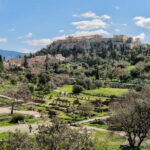
Your day starts with Areopagus Hill, the “Holy Rock” of the Acropolis area. Expect about 15 minutes here—enough time to stand in the right location and hear the speech context without dragging it out.
This stop works best when you treat it like a stage. You’re not only looking at a view. You’re placing Paul’s message into the geography of Athens—where people gathered, argued, and tried to make sense of new ideas.
Even with a short time limit, the payoff is how your driver ties it back to Paul’s larger journey. You’ll likely leave this stop with a clearer sense of what Paul was addressing and why the phrase Unknown God became such a memorable hinge in the story.
Daphni Monastery: Byzantine mosaics beyond the usual Athens checklist
Next comes the Monastery of Daphni, located on the slopes of Mount Aigaleo. You’ll have about 20 minutes here, and the focus isn’t just the setting—it’s the layered history.
This monastery sits on a spot associated with an ancient temple of Apollo, with the monastery later developing into a major Byzantine monument. Over time it moved between different controlling powers, including Cistercian use during the Frankish period and Orthodox control after the Ottoman conquest. Earthquakes damaged the site, and major restoration work has helped preserve its spiritual and artistic legacy, especially its mosaics.
Why this stop matters on a Paul-focused tour: it reminds you that early Christianity didn’t appear in a vacuum. It arrived into a world of older religions, older structures, and later Christian traditions that repurposed sacred spaces.
Corinth Canal: crossing the narrow isthmus and the long shipping dream
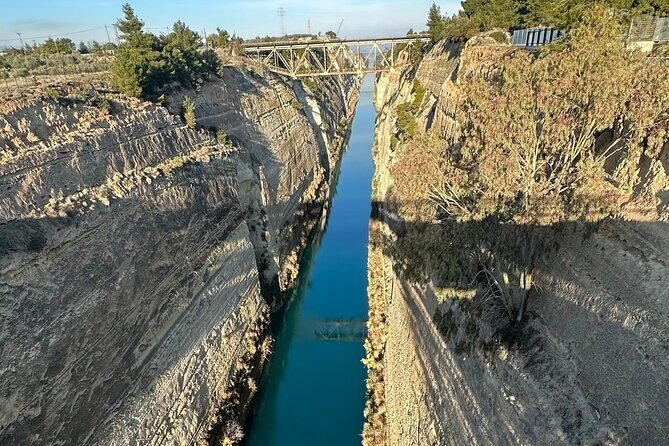
Then you roll to the Corinth Canal for about 20 minutes. This is one of those places that feels simple until you learn the backstory.
The canal connects the Gulf of Corinth to the Saronic Gulf and separates the Greek mainland from the Peloponnese. The idea was a 2000-year-old dream: before the canal existed, ships often had to sail around the Peloponnese, adding roughly 185 nautical miles.
The tour frames this as a practical, historical change—how movement and trade shaped where people went and how cities grew. If you’re thinking about Paul’s travel routes and audience, this is the kind of context that helps you understand why coastal cities mattered and why ports like Kenchreai show up in the New Testament story.
- All Day Cruise -3 Islands to Agistri,Moni, Aegina with lunch and drinks included
★ 5.0 · 4,958 reviews

Isthmia museum stop: what’s in the ground at the edge of the sea
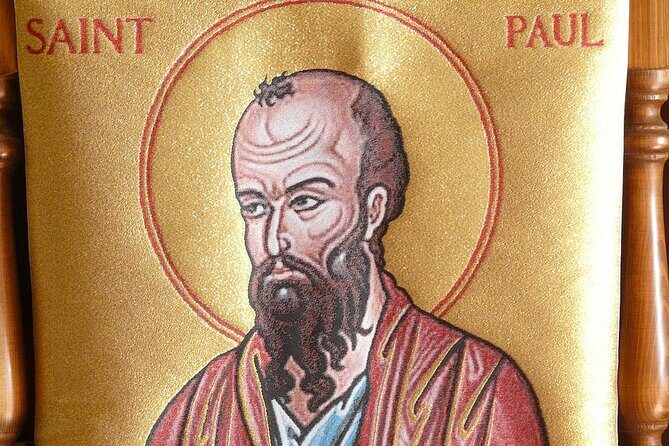
You’ll then visit the Archaeological Museum of Isthmia area (about 20 minutes). The important practical note: admission here is not included in the base price, so you may pay separately if you’re specifically planning to enter.
This is where details you might miss in an open-air site come into focus. The museum includes items tied to the Sanctuary of Poseidon and the broader harbor/temple world—like colored glass fragments (glazing from Kechreon), artifacts connected to Isis and the harbor, and marble and stone finds that help date the site’s activity.
Even if you’re not a museum person, this stop can “upgrade” your next hour at the ruins. You’ll see the kind of craftsmanship and offerings that belonged to this place, then recognize the same themes when you move outdoors.
Isthmia ruins: Temple of Poseidon, stadium engineering, and theater mosaics
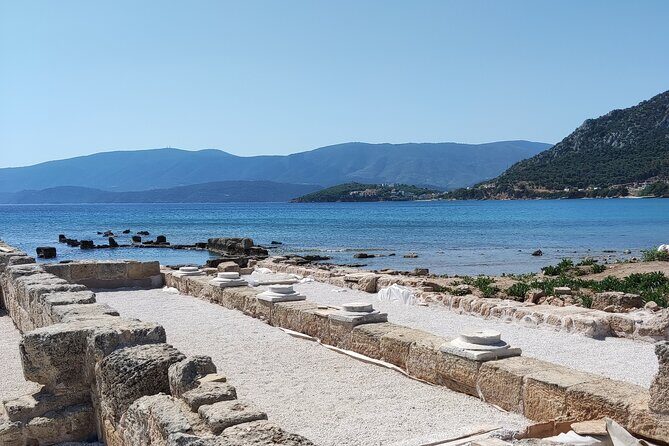
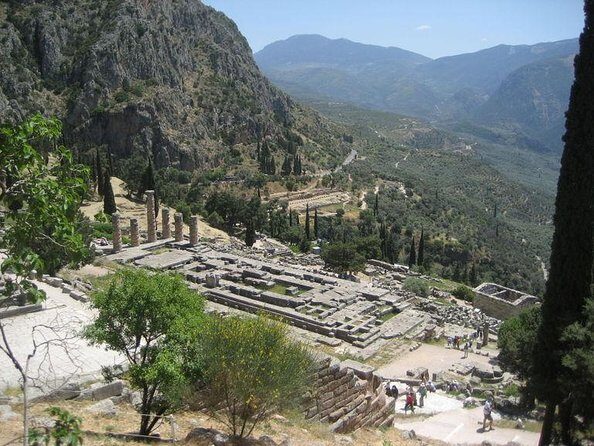
The core ruins time is the big win: you’ll spend about one hour at Isthmia and then more time exploring parts of the archaeological area (including the Temple of Poseidon zone and other key features).
At Temple of Poseidon and Amphitrite, the story is all about repeated rebuilding after fires and damage. The first phase is dated to 690–650 BC, followed by major destruction and reconstruction cycles. Later, Roman-era damage and end-of-use impacts add another layer of historical continuity.
You’ll also see the stadium context, originally built around 550 BC and later modified when the Isthmian Games continued to matter. A surviving “athlete’s release system” called the ysplex is mentioned as a preserved triangular release area. This is a good moment to look closely at how sports infrastructure worked in the ancient world.
Then there’s the Sanctuary of Palaimon, associated with worship connected to sailors and nocturnal services in Roman times. These are the kinds of details that make ancient religion feel connected to daily life rather than distant myth.
One of the most memorable sections is the theater area with Roman mosaics (often described as sea-creature scenes). You may spot images including an octopus with seven tentacles and a mosaic featuring Nereis riding a Triton surrounded by sea life. If you like seeing how art communicates beliefs, this is the kind of stop you’ll remember later.
If you’re wondering why Isthmia fits a Pauline tour at all: the presence of Paul in the Isthmian region is treated as important, and the tour ties it to the fact that early Christians were showing up in public life—here linked to the Isthmian Games and the broader civic world.
Ancient Corinth and the Bema: where preaching met civic power
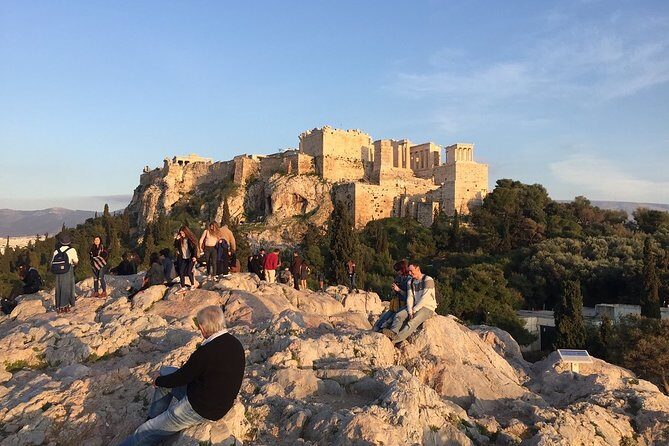
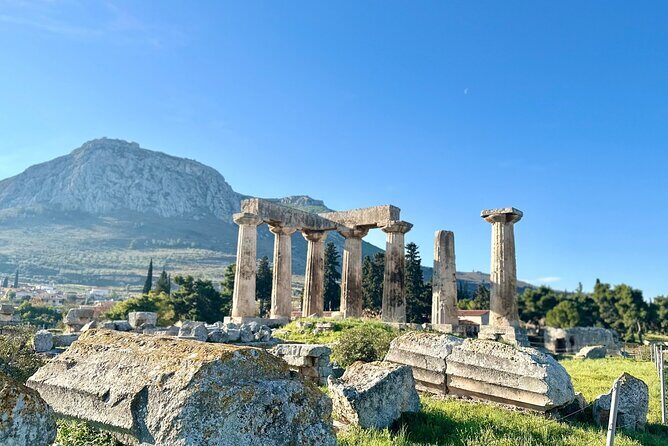
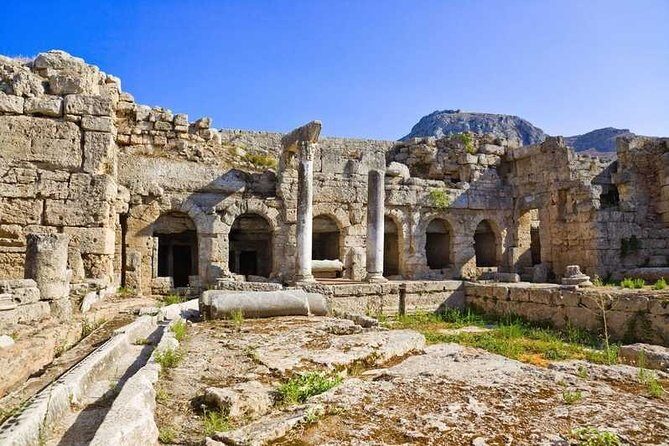
Ancient Corinth is the heart of the day’s biblical connection. You’ll have about one hour at the Archaeological Site of Ancient Corinth.
Corinth started as a city-state on the isthmus—halfway between Athens and Sparta—and it grew into one of the most important cities in Greece. It got destroyed by the Romans in 146 BC, then rebuilt decades later, and later became the provincial capital of Greece. That rise-and-fall pattern matters, because it explains why so much of what you see today feels like layers rather than one clean timeline.
For Christians, this is where Paul’s letters to the Corinthians come in. The tour also connects Corinth to Paul’s missionary travel described in Acts, and it references Pausanias’ later writings as well.
Inside the site, the focus is on the Agora, including the rectangular marketplace area and the famous podium (Bema). This is presented as the elevated platform linked to Paul’s preaching in 52 AD. A tradition is mentioned that during the Byzantine era, the Bema was transformed into a Christian church—an idea that makes the location feel “sticky” in the Christian story over time.
Practical tip: this is not a place to rush through. If you want the Bible connection to land, take a few minutes to imagine the movement of people in a marketplace space and then connect that to how public speaking worked in that era.
Kechreai (Cenchreae) and St Paul’s Church: the coastal Christianity thread
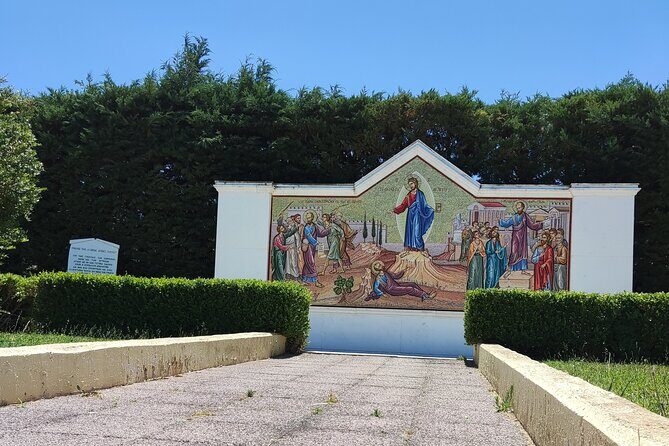
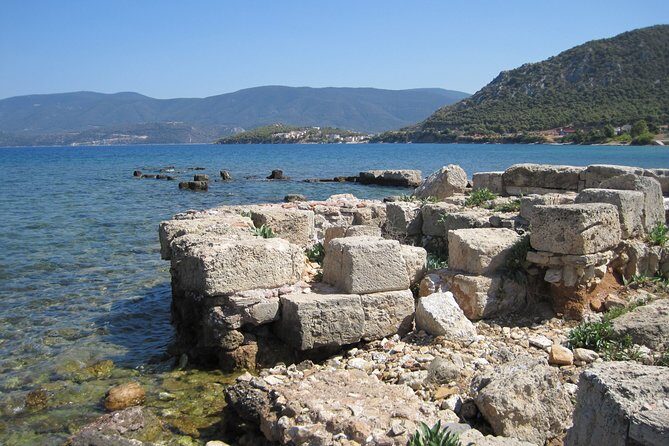
After Ancient Corinth, you head to Kechreai, the village area tied to the ancient port town Cenchreae. You’ll get about 30 minutes here, and the tour frames it through the New Testament mention of Paul’s stop during his second missionary journey. The epistle connection to Phoebe is also part of the framing.
This is one of those stops that pays off if you like seeing how the Bible story includes everyday travel details—ports, hair-cut vows, and community members named in letters. It makes the text feel human and lived-in.
Finally, you visit the church of St Paul in Corinth (about 20 minutes). The tour presents this church as the metropolitan church founded during Paul’s long stay in Corinth (about 1.5 years in 51–52 AD). It’s widely connected to Acts and the Corinthians letters, giving you a clear place to end the day on the Christian side of the story.
Budget and site access: entrance fees and the licensed-guide rule
Here’s the part you should plan for before you go. The tour price includes transport and commentary, but not every archaeological entry is included.
From the information provided, you should expect entrance fees for:
- Ancient Corinth: €15 per person (not included)
- Archaeological Site of Isthmia: €5 per person (not included)
Other stops are listed as included or free in parts of the route, but those two are the ones you can count on budgeting for.
Then there’s the Greek law reality. In archaeological sites, only officially licensed tour guides are allowed to accompany guests inside. The driver can explain from outside, but they can’t replace a licensed guide inside the sites themselves.
If you want that extra level, the tour can arrange a professional licensed guide on request for an additional €160 per booking, depending on availability. If you’re the type who loves learning every detail inside the ropes, this optional add-on can be worth it.
Who should book this Paul’s-footsteps day trip?
This is a strong match if you:
- Want a stress-managed day outside Athens, especially if you’re on a cruise and need a predictable return
- Like both faith connections and archaeology, and you want them linked by storytelling
- Prefer small-group pacing, with time to look and not just shuffle from one photo to another
- Value a driver who stays interactive—answering questions and adjusting to what you care about
You might reconsider if you:
- Hate paying entrance fees for major sites once you’re already in-country
- Want a guide in every single site space without any extra option for licensing
- Prefer a slow, long museum-style day rather than a moving “route narrative”
FAQ
How long is the tour?
It runs about 6 hours 15 minutes, approximately, including travel time between stops.
Do I get picked up and dropped off in Athens?
Yes. Pickup is offered from your Athens hotel, Airbnb residence, or the cruise ship. After the tour ends, you’re returned back to the meeting point.
Is the tour in English?
Yes, the tour is offered in English.
What’s included in the tour price besides transportation?
The base includes an air-conditioned private vehicle, Wi‑Fi in the vehicle, bottled water, and a mobile ticket. Some site admissions on the route are listed as included or free.
Do I need to pay entrance fees at Ancient Corinth or Isthmia?
Yes. Entrance fees are not included for Ancient Corinth (€15 per person) and the Archaeological Site of Isthmia (€5 per person). Other stops vary between included, free, or not included.
Can the driver go inside the archaeological sites with me?
No. Due to Greek legislation, only officially licensed tour guides can accompany guests inside archaeological sites. The driver can explain from outside, and a licensed guide can be arranged on request for an additional €160 per booking depending on availability.
What happens if weather is bad?
The experience requires good weather. If it’s canceled due to poor weather, you’ll be offered a different date or a full refund.
Should you book this St Paul’s Footsteps tour?
If your goal is to connect Paul’s story to specific places—without fighting traffic or losing time—this tour is a very good bet. Budget a bit for Ancient Corinth and Isthmia admissions, and decide whether you want the optional licensed guide for inside access.
For cruise passengers and first-timers in Athens, it’s especially practical: you get a focused day with a clear route and a return timed to your schedule. If that sounds like your kind of travel, book it and use the day to see how the Bible narrative changes when the stones are right in front of you.
More Tours in Athens
More Tour Reviews in Athens
- All Day Cruise -3 Islands to Agistri,Moni, Aegina with lunch and drinks included
★ 5.0 · 4,958 reviews