REVIEW · DELPHI
Delphi: Archaeological Site & Museum Ticket with Audio Tour
Book on GetYourGuide →Operated by Clio Muse Tours · Bookable on GetYourGuide
Delphi has a way of feeling close up. With a timed visit to the Delphi Archaeological Museum followed by a self-guided walk through the ruins, you can pace it yourself while the Temple of Apollo and the theater come to life through an offline audio track.
I especially like that you get a pre-booked ticket so you can skip long line delays and start walking sooner. I also like the freedom of doing it at your own speed, stopping whenever the views over Mount Parnassus steal your attention. One thing to consider: you’re relying on your phone and headphones, and the audio experience can be annoying if your playback sequence gets out of order.
This works best when you come with practical expectations: wear solid shoes, bring a charged smartphone, and use the audio to help you connect the dots between sites like the treasury, Roman Agora, and amphitheater.
In This Review
- Key Things I’d Focus On Before You Go
- Entering Delphi: Fast Gate, Self-Paced Ruins
- Museum First: Get Oriented Before You Walk Uphill
- The Smartphone Audio Guide: Offline, Multilingual, and Handy
- The Roman Agora: Where Stories Feel Like Daily Life
- Treasury of the Athenians: A Monument That Screams Politics
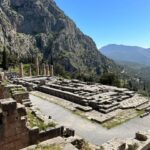
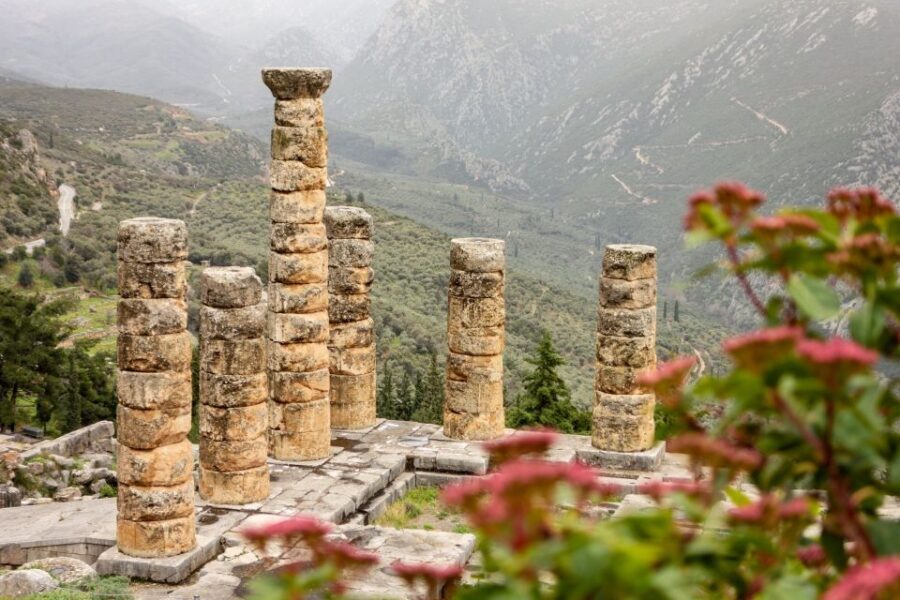
- Temple of Apollo: Myth Meets Stone
- Amphitheater and Panoramic Views: Don’t Skip the Theater Walk
- Price and Value: When $41 Actually Makes Sense
- What to Bring (So You Don’t Hate Life on the Hill)
- Who This Ticket Fits Best
- Should You Book This Delphi Audio Ticket?
- FAQ
- What’s included with the Delphi Archaeological Site & Museum Ticket?
- Does the audio guide work offline?
- Where does the audio guide start?
- What languages are available on the audio tour?
- What devices are compatible with the audio guide?
- Do I need to bring my own headphones and phone?
- How much storage space is needed on my phone?
- Is the museum or site wheelchair accessible?
Key Things I’d Focus On Before You Go
- Timed museum entry first, then ruins, so your day has a natural flow
- Offline smartphone audio in several languages, with maps and mixed text/audio
- Audio starts at the Delphi site entrance, so you can begin cleanly
- Icon stops are built in: the Treasury of the Athenians, Temple of Apollo, and the theater
- Mountain-side walking means comfortable shoes matter more than anything else
Entering Delphi: Fast Gate, Self-Paced Ruins
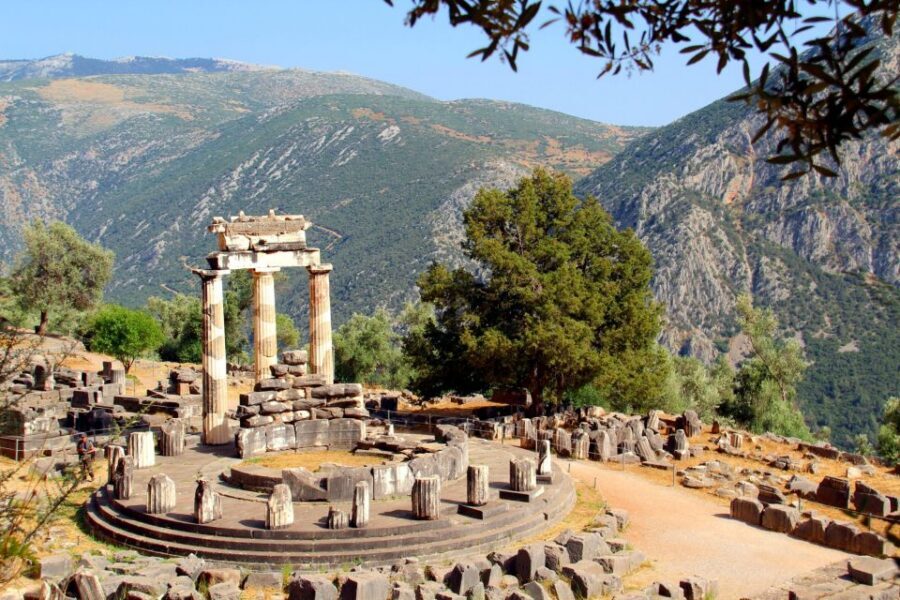
Delphi is one of those places where timing affects how much you actually enjoy it. With this ticket, you’re not just buying access and hoping for the best. You’re given an approach that’s designed to reduce wasted time, which is a big deal at a popular site. Your day starts with the museum visit first using your selected time slot, then you move on to the archaeological site itself.
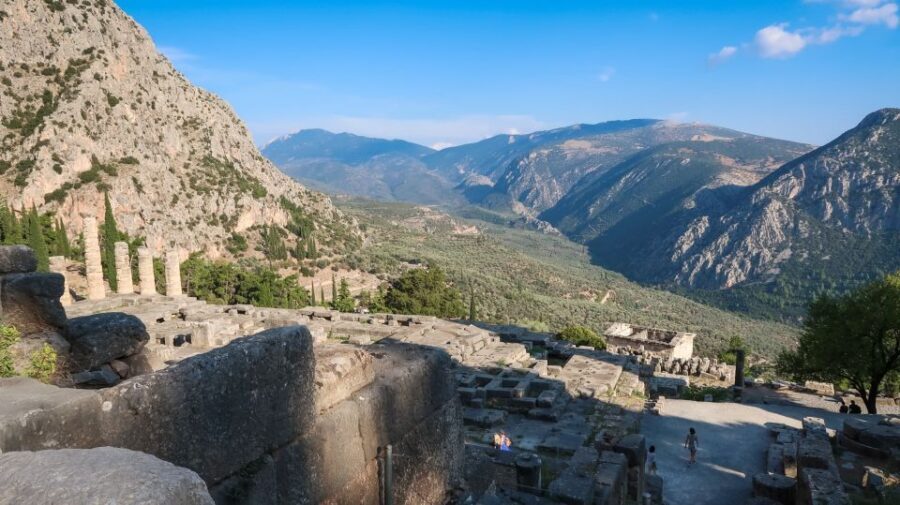
Once you’re at the ruins, the experience shifts from museum calm to hilltop energy. The archaeological area spreads up the side of a mountain, which affects everything: walking pace, shade breaks, and even how long it takes you to get from one major landmark to the next. The audio guide helps because it gives you story structure, not just random facts.
Best part: you’re not stuck in a large group schedule. You can pause when you want, and you can speed up when you don’t. That’s great here because Delphi is easier to enjoy when you can look around, read small details at your own rhythm, and soak in the setting.
You can also read our reviews of more tours and experiences in Delphi
Museum First: Get Oriented Before You Walk Uphill
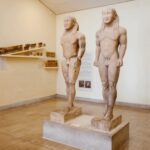
Your ticket is set up so you first visit the Delphi Archaeological Museum, then head out to the archaeological site afterward. That order is a practical win. The museum helps you understand what you’re about to see outside, so the outdoor ruins don’t feel like a pile of stones. You’ll likely find it easier to connect themes across stops, especially when the audio guide later tells you what mattered and why.
The museum also offers the most straightforward environment for a breather. If you need water, shade, or a moment to cool off, this is where you’ll want to build it into your flow. The ruins are spread out, and you’ll be doing more uphill walking than you may expect if you’re thinking of a flat city museum.
Access note, so you can plan realistically: the museum has wheelchair access, but the ruins themselves are spread up rough mountain tracks, and the provider notes it would not be possible to push a wheelchair up those routes. If accessibility is a key factor for you, focus on the museum portion of the day.
The Smartphone Audio Guide: Offline, Multilingual, and Handy
This is a ticket where the core guide is your phone. The good news is the audio content is offline, which matters in Delphi because connectivity can be spotty. You also download the app and audio guide instructions before you go, then you’re set even if your data is weak.
You’ll get audio in English, Italian, French, German, and Spanish. The track includes a mix of narration plus text and maps, and you can listen again after you leave. That last part matters more than it sounds. Delphi can be visually overwhelming, and being able to replay helps you lock in the names and stories later, when you’re calmer.
What I’d do to make the audio experience smooth:
- Download the audio guide before you arrive.
- Bring headphones and keep them ready from the start.
- Make sure your phone has enough storage space. You’ll need about 100–150 MB.
- Keep your smartphone charged. This is a full-day walk, and you don’t want to be hunting for power mid-site.
Device compatibility is specific. The audio guide requires an Android (version 5.0 and later) or iOS smartphone, and it’s not compatible with Windows Phones, iPhone 5/5C or older, older iPod Touch models, iPad 4th generation or older, or iPad Mini 1st generation. If you’re traveling with an older device, double-check now to avoid disappointment.
One caution that can affect your enjoyment: the audio sequence may feel tricky at times if you accidentally jump around or lose your place. If you notice that happening, stop, reload the current section, and get back on track before walking to the next landmark.
The Roman Agora: Where Stories Feel Like Daily Life
The audio guide takes you through multiple key zones, including the Roman Agora. This stop is less about one single monument and more about atmosphere. It’s a place where the ruins help you imagine movement and everyday public space—exactly what you want at Delphi, because it reminds you that this wasn’t just a myth-making stage. It was also a working crossroads for people over time.
As you walk, use the audio to connect what you see to the idea behind it: why this area existed, what kind of activity likely happened here, and how later Romans related to earlier Greek religious meaning. The audio’s combination of storytelling and maps is built for this kind of understanding-by-walking.
Practical tip: keep your pace realistic. The ruins sit on a mountain slope, and the spacing between major areas can add up. If you try to “tour it all” in record time, you’ll end up reading less and seeing less.
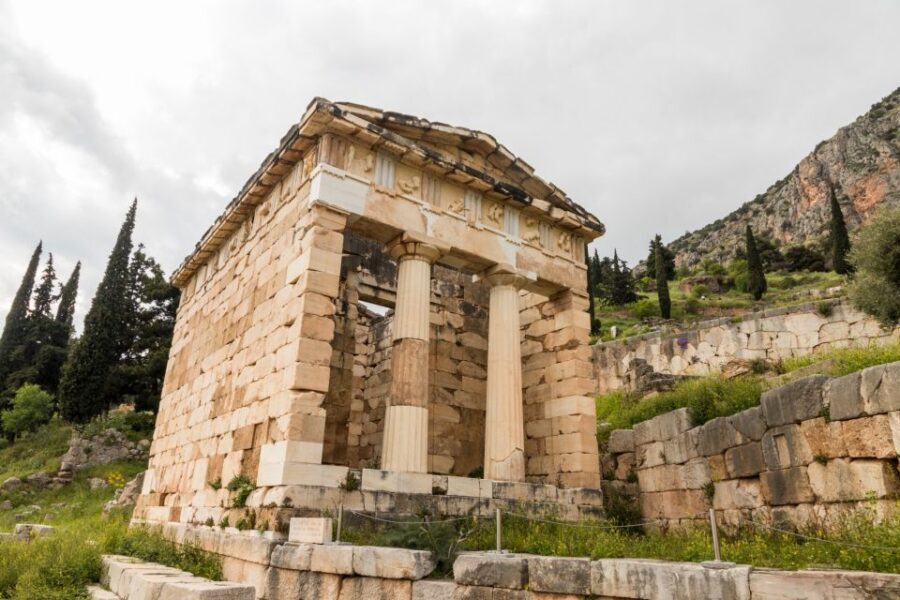
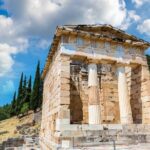
Treasury of the Athenians: A Monument That Screams Politics
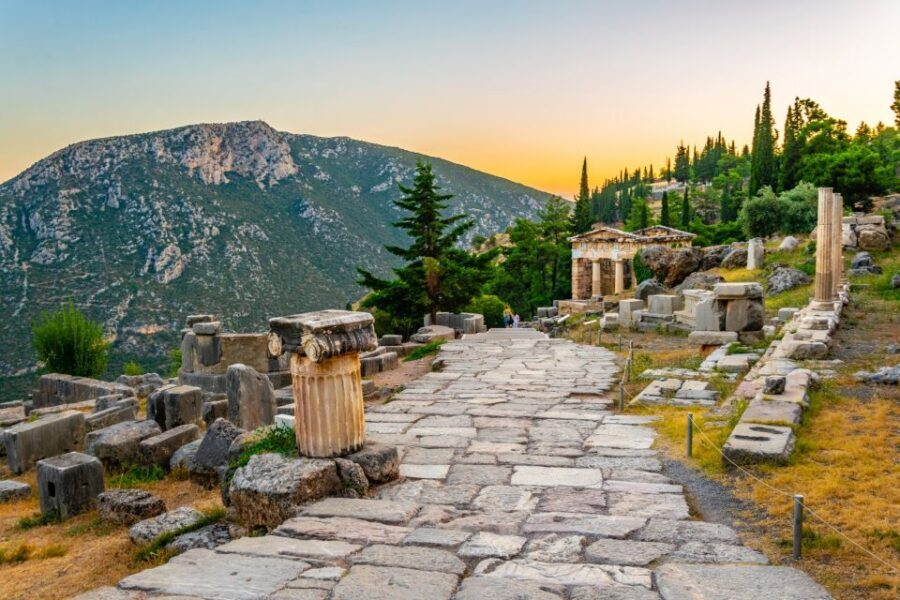
Then comes one of Delphi’s iconic moments: the Treasury of the Athenians. Even if you know nothing about Greek history, this is the kind of structure that makes you look twice because it feels like it was meant to impress. Treasuries weren’t just storage. They were statements—about civic pride, wealth, and competition.
The audio guide is useful here because it frames what you’re seeing as part of a larger cultural story rather than a random architectural fragment. You’ll get both historical context and anecdotes that help you imagine why this spot mattered so much. The maps and narration help you keep your orientation too, which is helpful when multiple structures sit close enough to blur together.
What can be a drawback: if you’re relying purely on audio without pausing to actually look, you might miss the details that make the treasury memorable. Build in one or two slow minutes. Look at the structure’s shape, the placement in the complex, and the way it fits into the site layout.
You can also read our reviews of more museum experiences in Delphi
Temple of Apollo: Myth Meets Stone

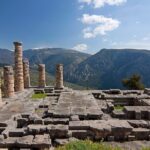
The centerpiece for many people is the Temple of Apollo. This is where Delphi’s reputation isn’t just marketing. It’s a powerful mix of setting, symbolism, and visibility. The temple area is also where your audio guide can make a big difference, because the narration gives meaning to what you’re looking at—especially if you’re trying to connect myth with the physical layout.
When you arrive, take a moment before you press play. Walk slowly around your viewing point, then start the corresponding section. This makes the story land better. You’ll likely notice how Delphi’s religious importance ties into its geography, too. The site’s position on the hillside isn’t incidental. It shapes sightlines and the sense of arrival.
Also, don’t rush this area. The temple zone is a place to balance two needs: listening to the audio and scanning your surroundings. If you keep moving while the audio speaks, you may miss both. A short pause here often improves the whole day.
Amphitheater and Panoramic Views: Don’t Skip the Theater Walk
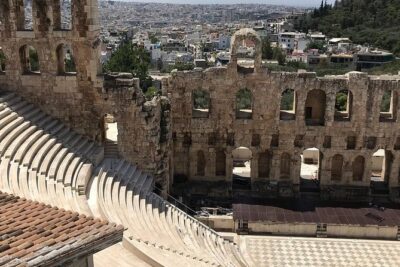
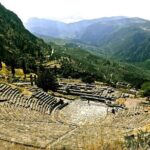
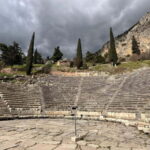
Delphi has a theater that connects another layer of meaning. Hearing stories while standing in a space designed for watching and listening is a smart way to understand how Greeks used performance and public ritual. Even if the structure is in ruins, the purpose is still legible, and the audio helps you connect the dots.
But for me, the amphitheater area also works as a break from strict “reading mode.” It’s a chance to stand, look, and let the site’s scale click. You get a sense of how people experienced Delphi as both sacred and dramatic.
Then there are the spectacular panoramic mountain scenery moments from the top of Mount Parnassus. This is the payoff for the walking. You didn’t come to stare at stone all day. You came to understand a setting that feels bigger than its ruins.
How to time these view breaks:
- If the sun is strong, use your museum time earlier and plan shade stops during uphill walking.
- Build in a short photo/air break before you move to the next major stop, rather than trying to squeeze it in when you’re already tired.
Price and Value: When $41 Actually Makes Sense
At $41 per person, this ticket sits in the category of “not cheap, but not outrageous” for a major Greek site—especially when you compare it to guided experiences. The value here comes from two things.
First, you’re paying for entry plus a full self-guided audio guide in multiple languages with offline content. That’s useful time value, especially if you’re traveling without a live guide. Second, the pre-booked approach is about reducing waiting. At Delphi, a 20–40 minute delay can easily turn a good day into a rushed one.
Is it perfect value? Not always. One concern you should weigh is that audio guides can feel overpriced if you were hoping for a more “complete” experience for the price. If you’re the type who learns best from a human explanation or a detailed printed guide, you might feel the ticket is paying more for convenience than for depth. If you like self-guided flexibility and you’ll actually use the audio, you’ll probably feel the price is fair.
What to Bring (So You Don’t Hate Life on the Hill)
Delphi is manageable, but it’s not a stroller-friendly stroll. To keep the day comfortable, bring:
- Comfortable shoes (the ruins are spread up mountain tracks)
- A hat and sunscreen
- Headphones
- A charged smartphone
The “phone-ready” checklist is worth treating like a mini packing list:
- You’ll need storage space (about 100–150 MB).
- You’ll want the audio downloaded and ready before you arrive.
- You’ll want your battery level to survive a full visit.
Oversize luggage and large bags aren’t allowed, so travel light. This is one of those places where your best souvenir is not adding extra weight to your day.
Who This Ticket Fits Best
This Delphi experience fits best if you:
- Want to explore at your own pace instead of following a group schedule
- Like audio storytelling with maps rather than a constant human guide
- Will actually use a smartphone audio guide properly (download first, keep it charged)
- Prefer the flexibility to linger at the Treasury of the Athenians, Temple of Apollo, and theater when something clicks
It may not be ideal if:
- You strongly dislike relying on technology for navigation and context
- Your phone battery is usually unreliable
- You need full accessibility through the ruins themselves (the museum is accessible, but the uphill tracks are not practical for wheelchair pushing)
Should You Book This Delphi Audio Ticket?
I’d book it if you want a smart, efficient day where you can see the big Delphi highlights and still feel in control of your pace. The timed museum entry, the offline multi-language audio, and the ability to replay later are all practical advantages. The fact that the audio starts at the entrance of the archaeological site of Delphi (33054, Delphi, Prefecture of Fokida) also helps you get going without confusion.
Skip it or think twice if you already know you’ll struggle with audio playback or you’re traveling with an unsupported device. Also, if you’re expecting a live-guide level of depth, this is not that. It’s self-guided by design.
FAQ
What’s included with the Delphi Archaeological Site & Museum Ticket?
You get entry for the Delphi Archaeological Museum using your selected time slot, then entry to the archaeological site of Delphi, plus a multilingual smartphone audio tour for both museum and site. The content is available offline.
Does the audio guide work offline?
Yes. The package includes offline content, and you’re instructed to download the app and audio guide instructions before your visit.
Where does the audio guide start?
The audio guide is designed to start at the entrance of the archaeological site of Delphi, at 33054, Delphi, Prefecture of Fokida.
What languages are available on the audio tour?
The audio guide is available in English, Italian, French, German, and Spanish.
What devices are compatible with the audio guide?
It requires an Android smartphone (version 5.0 and later) or an iOS smartphone. It is not compatible with Windows Phones, iPhone 5/5C or older, iPod Touch 5th generation or older, iPad 4th generation or older, or iPad Mini 1st generation.
Do I need to bring my own headphones and phone?
Yes. The smartphone and headphones are not included. You should bring your own headphones and a smartphone that you’ve charged.
How much storage space is needed on my phone?
You’ll need about 100–150 MB of storage space for the audio guide.
Is the museum or site wheelchair accessible?
The museum has wheelchair access, but the ruins themselves are spread up rough tracks on a mountain side, and it would not be possible to push a wheelchair up those routes.
If you tell me your travel month and whether you’re on iPhone or Android, I can suggest a simple day plan (timing and pacing) to keep the uphill walk comfortable.