REVIEW · DELPHI
Delphi Skip-The-Line Private Tour – Expert Guide
Book on GetYourGuide →Operated by WARMPENGUIN · Bookable on GetYourGuide
Delphi makes more sense with a guide. I love the skip-the-line flow and how it turns a quick visit into real understanding, and I especially like Georgia’s style—she’s an archaeologist and she makes the Oracle and the Pythian Games feel human. One catch: the ancient site is uneven and not suited to wheelchair users or anyone with mobility impairments.
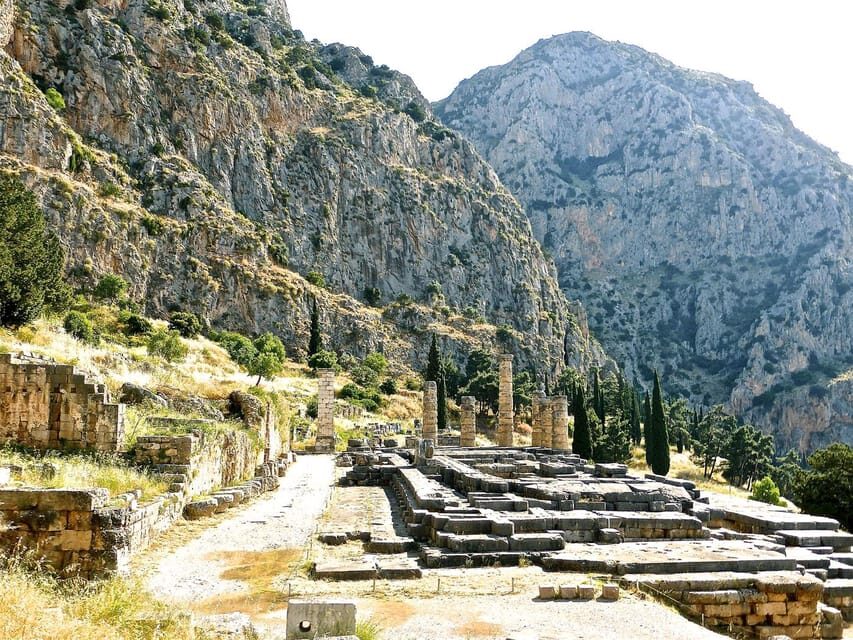
You start in the Delphi Archaeological Museum, then move out to the sanctuary area around Temple of Apollo. Along the way, you’ll see the treasuries and the giant Naxos Sphinx, with stories that explain why each stone mattered.
In This Review
- Key highlights worth planning for
- Delphi works best when you can connect the dots
- Where the tour starts: Delphi Archaeological Museum basics
- The 50-minute museum tour: seeing sculpture with a reason
- Skip-the-line entry at the Delphi site: Temple of Apollo in context
- Treasuries and the Naxos Sphinx: why these details matter
- The Oracle, prophecies, and the Pythian Games connection
- The fast reality check: 2 hours is short, so choose what you want
- Price and value for a $202 private tour
- What to bring (so the walk feels easy, not annoying)
- Who should book this Delphi private tour
- Should you book this Delphi skip-the-line private tour?
- FAQ
- Where do we meet for the Delphi tour?
- How long is the tour?
- What does the skip-the-line part include?
- Is the entrance price included, or do I buy tickets separately?
- What languages are available for the guide?
- What should I bring, and is flash photography allowed?
- Is the site wheelchair accessible?
Key highlights worth planning for
- Skip-the-line entry so your short 2 hours don’t get eaten by waiting
- Museum + site in one private flow, with a guide leading both parts
- Oracle and Pythian Games context so you’re not just looking at ruins
- Treasuries of different city-states and the symbolism behind them
- The giant Naxos Sphinx, a standout moment you’ll remember
- No flash photography inside the museum, which keeps things orderly and respectful
Delphi works best when you can connect the dots
Delphi is one of those places where the scenery is only half the story. The other half is meaning: prophecy, competition, politics, and religion all tangled together on the same slopes. When you add a real guide, you get names, motives, and atmosphere—things you’d otherwise have to guess at.
This private format matters, too. You can ask questions in real time, slow down when something clicks, and keep pace when it doesn’t. The whole experience is just about 2 hours, so it’s ideal if you want a strong overview without committing a full day to archaeology.
And you’re not only seeing ruins. You’re also getting the museum stop, where sculpture and artifacts explain what you’re looking at outside. That combo is where the visit starts to feel complete instead of fragmented.
You can also read our reviews of more guided tours in Delphi

Where the tour starts: Delphi Archaeological Museum basics
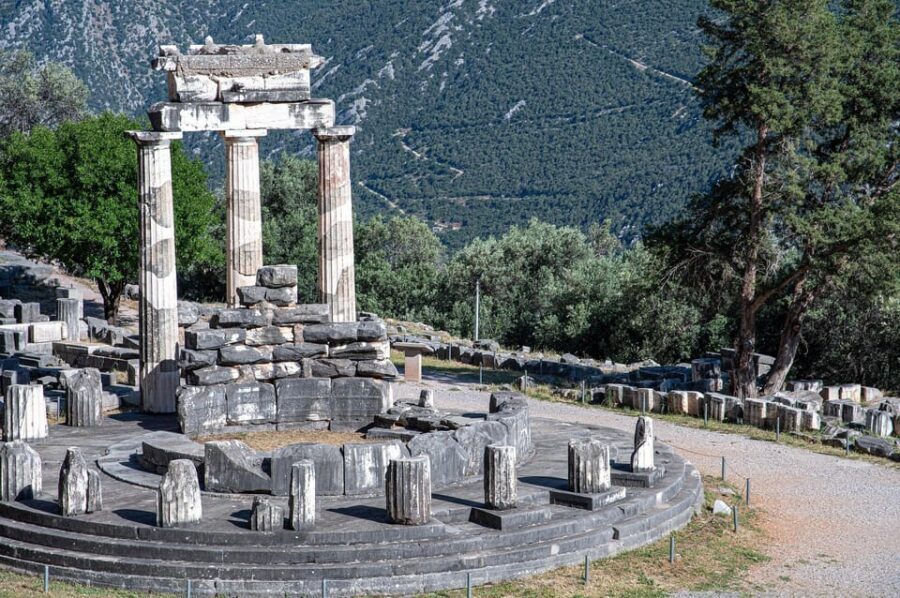
Your tour begins at the Delphi Archaeological Museum, at the ticket office on the first floor. That’s a handy detail because it sets you up correctly before you ever step into the galleries—less wandering, more timing.
The museum portion runs about 50 minutes, guided start to finish. This is the part I like most when I’m trying to make Delphi click fast, because the museum helps you interpret the site rather than viewing it as a random collection of stones.
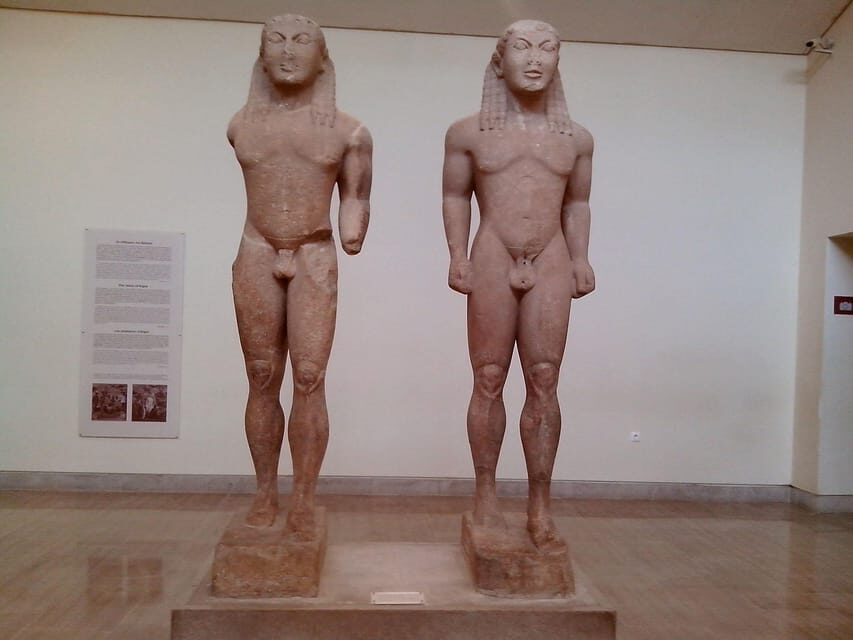
What the guide focuses on here is the “human side” of the place: sculpture and objects connected to the sanctuary. The guide’s job is to connect style and subject matter to the larger Delphi story you’ll see again outside—especially around Apollo and prophecy.
Practical tip: the museum has a clear rule—no flash photography inside. Bring a camera, but keep the flash off. If you’re shooting video, check your settings before you walk in so you don’t lose time.
Also, museum floors are often less forgiving than you expect. If you’re someone who hates fatigue by the end of a tour, keep your pace steady and your shoes supportive.
The 50-minute museum tour: seeing sculpture with a reason
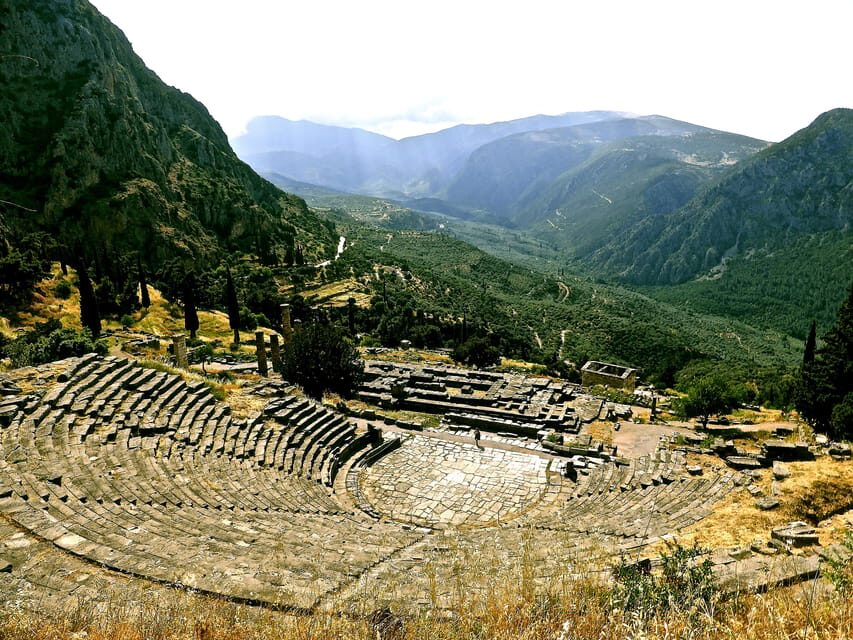
A museum visit can be either satisfying or frustrating. Satisfying happens when you understand what you’re looking at. This guided museum time is built for that.
Your guide covers the sculptures and art in a way that supports what you’ll walk past outside. That’s important at Delphi, because the sanctuary isn’t just a single monument—it’s a whole network of structures tied to offerings, civic pride, and religious authority.
You’ll get context that makes the museum feel like part of the same conversation as the ruins. Instead of staring at “interesting objects,” you’re learning why those objects existed and what they signaled to the people who came to Delphi.
This is also a good point to bring your questions. If you’re wondering how propaganda, religion, and competition could all operate in one place, this is where your guide can explain it without rushing.
Skip-the-line entry at the Delphi site: Temple of Apollo in context
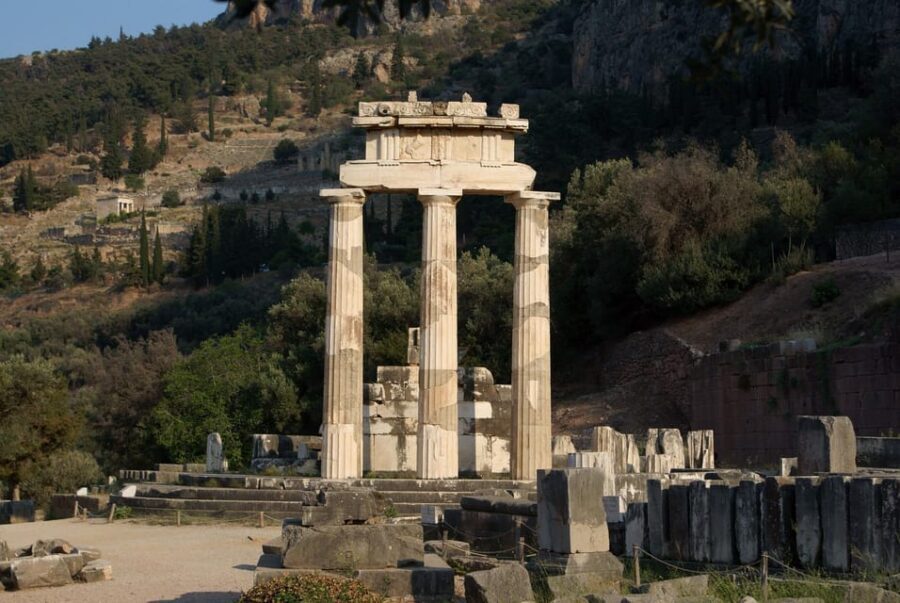
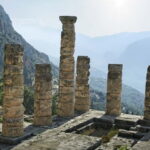
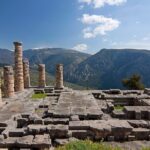
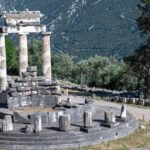
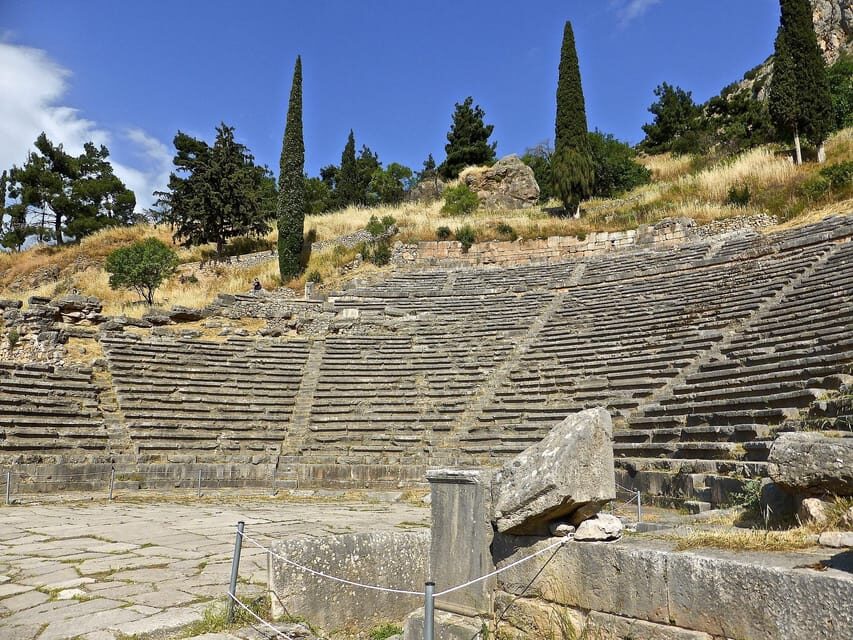
After the museum, you move to the Delphi archaeological site for another 50 minutes of guided walking. This is where you get the physical impact: the terrain, the spacing of monuments, and the sense of walking through a sanctuary rather than just touring ruins.
Skip-the-line entry is a real advantage here because Delphi is a popular stop. Even if you’re not visiting in peak season, you don’t want to waste your limited time standing around. The tour is built around getting you inside and moving.
One of the most important things you’ll see is the Temple of Apollo area. Your guide doesn’t treat it like a static photo stop. Instead, the emphasis is on what the site meant to people: Delphi as a major center of the ancient world, and Apollo’s role in prophecy and pilgrimage.
It helps to think of Delphi as a stage. The monuments around the sanctuary were designed to frame movement, attention, and belief. When you understand that, you start noticing sightlines and how the structures relate to each other.
Treasuries and the Naxos Sphinx: why these details matter
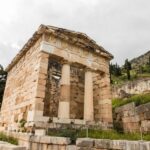
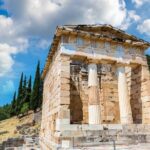
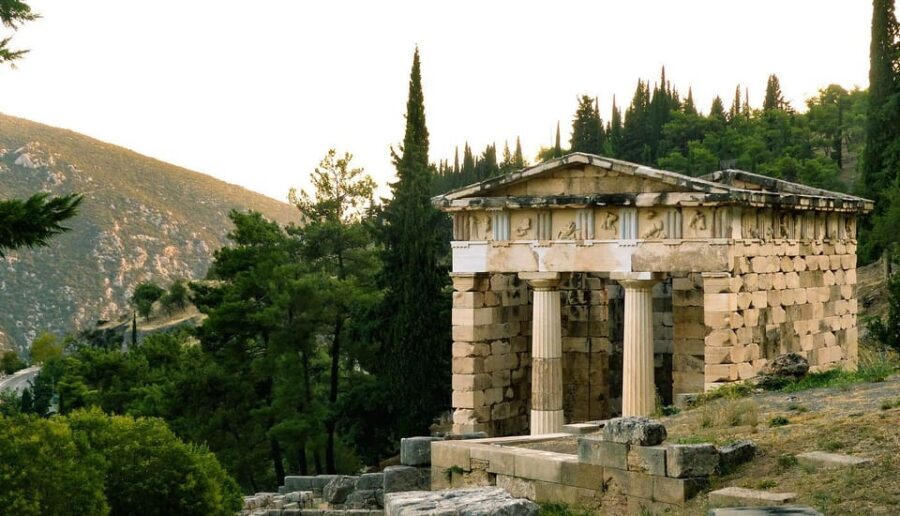
Delphi is famous for the Oracle, but the sanctuary’s power shows up in the details. The guide brings you to the treasuries of cities, which are not random buildings. They represent civic identity and competition between communities.
These treasuries are a key reason Delphi feels alive historically. People didn’t just visit for spiritual reasons. They also came to declare status. Donations and monuments were the ancient form of branding—except the message was sent through religion and art instead of ads.
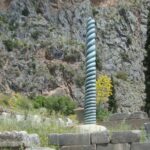
Then there’s the giant Naxos Sphinx, a signature moment. It’s the kind of artifact that makes you stop and look twice, because it’s hard to imagine its original presence and impact without standing near it.
A guided approach helps here because your guide can explain symbolism and placement rather than letting you interpret everything alone. With Delphi, that difference is big. Without context, you might enjoy the visual. With context, you start understanding the message.
And you’ll keep returning to the same theme: Delphi gathered different strands of Greek life—religion, politics, and athletic competition—into one place.
You can also read our reviews of more private tours in Delphi

The Oracle, prophecies, and the Pythian Games connection
Here’s what often makes Delphi feel confusing if you visit on your own: people talk about the Oracle like it’s the only story. But Delphi’s influence went beyond prophecy.
Your guide ties together the Prophecies of the Oracle and the idea of ancient games held there. In particular, you’ll learn about the Pythian Games and how they fit into the Delphi world.
The value of that connection is simple: it explains why people traveled, why offerings mattered, and why Delphi wasn’t just a place to get an answer. It was also a place to compete, perform, and earn honor.
Georgia’s style—story-driven and anchored in archaeology—helps a lot here. She doesn’t just list facts. She frames what it would have meant to come as a pilgrim of Apollo or as a competitor. That’s the kind of storytelling that makes your walking time feel purposeful.
If you’re the type of traveler who loves myth, this is your sweet spot. If you prefer “real-world” history, it’s also there. Delphi sits at the intersection of both.
The fast reality check: 2 hours is short, so choose what you want
Two hours can sound tight until you think about what Delphi is: a major archaeological site where you could easily spend hours if you let it. This private tour is designed as a focused visit, not a slow stroll.
That’s good news if you want the big themes:
- Apollo and prophecy
- the sanctuary setting
- treasuries and civic offerings
- the Naxos Sphinx
- museum context so what you see outside has meaning
It can feel less ideal if you want long free time for sketching, deep reading, or repeated re-walks of the same areas. This tour aims for understanding and momentum, not slow wandering.
If you like to linger, you can still do it—but expect to add time separately. The tour itself stays structured, and the guide keeps you on track.
Price and value for a $202 private tour
At about $202 per person for a 2-hour private tour, you’re paying for three things: a licensed guide, skip-the-line access, and the combo of museum plus site. That can be good value if your goal is clarity, not just photos.
Here’s the practical way to judge the price. If you’re likely to spend time reading signs and guessing, a guide costs less frustration. And Delphi signs won’t always explain the “why” of what you’re seeing. A strong guide does that part for you.
One important nuance: the tour data also notes that admission tickets may be purchased on request after booking. At the same time, it lists entrance as included for key parts like the Temple of Apollo, the archaeological site, and the museum. So don’t assume. When you confirm your booking, quickly check whether entry is fully included or whether you’ll add tickets on request.
If you travel as a couple or small group and want personalized pacing, private guiding tends to feel more justified. If you’re solo and purely on a budget, you might decide to self-guide. But if you want Delphi’s stories tied to the physical site, this price can make sense.
What to bring (so the walk feels easy, not annoying)
This is a walking-focused experience, and the terrain can be uneven. You’ll be happier with the basics ready.
Bring:
- Comfortable shoes with grip
- A hat for sun protection
- Sunscreen
- Water in a bottle
- Your camera (and no flash in the museum)
The simplest planning move is water. Even on a mild day, Delphi gets sun and stairs and uneven ground. Hydration keeps you from getting cranky halfway through.
Also, wear gear for the sun. You’re outside for part of the tour, and there’s a lot of stone and open air.
Who should book this Delphi private tour
This tour fits well if you fall into any of these categories:
- You want a short, guided overview with real context
- You like myths explained through archaeology, not just slogans
- You want the Oracle and Apollo stories tied to the actual landscape
- You’re curious about the Pythian Games and how Delphi hosted competition
- You’re traveling with kids or mixed interests and want something accessible without being watered down
It’s not a good fit if you:
- Need wheelchair accessibility
- Have significant mobility impairments
- Struggle with uneven ground and walking distances
If accessibility is part of your planning, I’d treat the site walk as the limiting factor. The museum is easier than the outdoor ruins.
Should you book this Delphi skip-the-line private tour?
I’d book it if you want to leave Delphi with understanding, not just images. The best reason is the guide-led pairing of museum and site, with story-driven explanations around Apollo, prophecy, the treasuries, and the Naxos Sphinx.
It’s also a smart choice when you’re short on time. The skip-the-line approach keeps the experience moving, and the structure protects your day from turning into “let’s figure it out as we go.”
The only real reason to hesitate is mobility. If walking on uneven terrain is an issue for you, this tour may not feel right.
If you’re on the fence, one question to answer first is: do you want Delphi explained? If yes, this is the kind of guided approach that turns ancient ruins into a place you can actually picture.
FAQ
Where do we meet for the Delphi tour?
Meet at the Delphi Archaeological Museum, at the ticket office on the first floor.
How long is the tour?
The experience lasts about 2 hours, split into roughly 50 minutes at the museum and 50 minutes at the archaeological site.
What does the skip-the-line part include?
Skip-the-line entry is included for the Temple of Apollo area, the archaeological site, and the Archaeological Museum.
Is the entrance price included, or do I buy tickets separately?
The tour information lists entrance as included, but it also notes that admission tickets may be purchased on request after booking. Check what’s covered when you confirm your booking.
What languages are available for the guide?
The guide is available in English, French, and Italian.
What should I bring, and is flash photography allowed?
Bring comfortable shoes, a hat, sunscreen, water, and a camera. Flash photography is not allowed inside the museum.
Is the site wheelchair accessible?
No. The archaeological site is not accessible for wheelchair users or for those with mobility impairments.