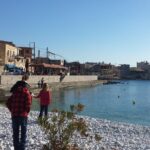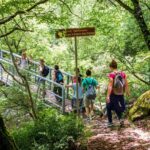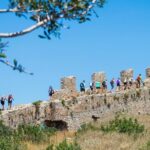
There’s something about stone paths that makes you slow down. This hike in the West Mani foothills feels like a focused taste of the region’s real life: old villages, olive groves, and big gorge viewpoints, all guided so you can just enjoy the walk and not worry about navigation. I love the map-light guidance and the way the route is built around dramatic scenery. I also love the rare stop at Agia Sophia, a 16th-century church in a spot most people never reach on their own.
The main thing to consider is that this is outdoors hiking on uneven ground. It lasts about 3 hours on paper, but expect closer to 4 hours or even 5 depending on pace and breaks, so bring sensible shoes and don’t plan a tight next appointment.
In This Review
- Key points at a glance
- Why this Exochori-to-the-sea hike feels like real West Mani
- Starting from Kardamili: stone paths, not complicated planning
- Olive groves and upland villages: the calm part that makes the views better
- Exochori and the Viros Gorge viewpoint: why the destination is worth the climb
- Agia Sophia: the 16th-century church on the old Kardamili route
- Pace, group size, and what to pack for 3 to 5 hours outside
- Price and value: what $104.15 buys you on this hike
- Who should book this hike (and who might skip it)
- Should you book the Exochori hike from Kardamili?
- FAQ
- What is the main route of the hike?
- How long is the hike?
- What will I see in Exochori?
- Do I need to navigate with a map?
- Are food and drinks included?
- What about safety during the hike?
- Is the group small?
- What happens if the weather is bad?
Key points at a glance
- Guides lead the way so you can focus on villages, plants, and viewpoints instead of maps
- Exochori village views put you above Viros Gorge, the largest gorge in West Mani
- Agia Sophia on an ancient stone path ties together the hike’s history and your steps back to Kardamili
- Olive groves and upland hamlets give you a layered feel for how this part of Mani lives
- Small group size (max 12) makes it easier for a guide to manage different abilities and ages
- Backup support includes a standby vehicle and a first aider on the team
Why this Exochori-to-the-sea hike feels like real West Mani
This walk is built around a simple idea: go from the Kardamili area into the uplands, then return by a different route that still hits the best viewpoints and historic pieces. You’re not crammed into one big viewpoint and then rushed out. Instead, you move through the everyday heart of the area—stone paths, hillside homes, and olive trees—so the place starts to make sense as you walk.
Exochori itself is the kind of village that makes you stop looking at your feet and start watching details. It’s a stone-built settlement with a long paper trail—listed as Androuvista, first seen around 1278 AD—and it sits about 450 meters above Kardamili. That altitude matters. Even if the hike is short, the views feel earned, especially when the route opens toward the gorge country.
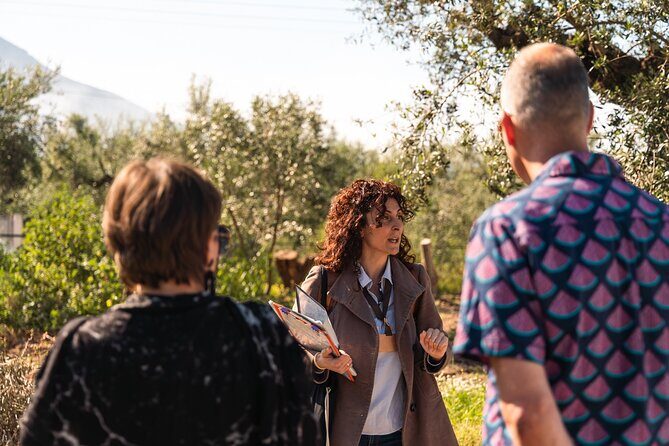
You’ll also appreciate the way the experience is paced. The tour is designed for mixed groups (and the small limit helps), and guides like Yiannis, Paschalis, and Giannis have a track record of adjusting the walk when age ranges and comfort levels vary—right down to keeping people together without turning the outing into a slog.
You can also read our reviews of more tours and experiences in Kalamata.

Starting from Kardamili: stone paths, not complicated planning
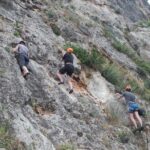
Your hike begins in Kardamili (meeting point at Kardamyli 240 22, Greece), and that first stretch is exactly why a guided hike beats a DIY wander here. The route uses old stone paths and paths through the mountain fringes of the Taygetos area. Even when the trail looks straightforward, the real challenge in Mani hills is that the land doesn’t always give you obvious choices.
Here, you don’t need to study a map to get oriented. The guide keeps you moving along the right lines, including sections that pass through upland villages and older lanes that feel woven into the hills rather than laid across them. You’ll likely notice how the terrain slowly changes as you rise—less of the coastal flatness, more of that airy upland feeling.
And since this tour includes a standby vehicle for emergencies or discomfort, it adds a layer of practical reassurance. You’re still hiking, but you’re not locked into the idea that everything has to be done with 100 percent physical perfection. That’s a nice mental difference on a short hiking day.
Olive groves and upland villages: the calm part that makes the views better
Midway through the hike, the story becomes gentler—olive groves and hillside village life. This is where you get the atmosphere that makes West Mani feel distinct. Olive trees aren’t just scenery here; they’re part of the seasonal rhythm and local identity. One of the best comments from past hikers was how the outing felt like an olivetheme guided walk: you’re walking through groves, and the guide can connect what you see to the olive-and-olive-oil tradition of the region.
You’ll also get the sensory extras that are hard to fake on your own. Expect the kind of walking where you catch the smell of sage and thyme along the way. That kind of detail matters, because it turns a hike into a memory. It also keeps the pace from feeling like one long climb with nothing but effort.
A practical note: since the tour does not include food or drinks, you should think like a hiker, not like a sightseeing tourist. Bring water and a small snack so you can keep energy steady. The route has a natural rhythm for stops, but you’re not being served a picnic along the way.
Exochori and the Viros Gorge viewpoint: why the destination is worth the climb
Exochori is the real payoff. As you approach the village, the hillside opens up into that West Mani viewpoint territory, and the big moment is the chance to look out over Viros Gorge, described as the largest gorge in West Mani. Even if you’ve seen impressive gorges elsewhere in Greece, Viros has that feeling of scale you only get when you’re high enough to see the terrain fall away.
What makes Exochori special isn’t just the view. It’s also the way the village sits in a living landscape—stone homes, old paths, and olive country all around. This is one of those places where you can feel the difference between passing through and actually arriving. The guided format helps here too: you’re not wandering randomly trying to find the best angle or wondering which lane leads where.
Photo-wise, this is strong. Past hikers highlighted fantastic opportunities from the west Mani area. You’ll want to bring a phone or camera with enough battery, because once you start getting angles down toward the gorge, you’ll keep finding new ones.
Potential drawback: views come with wind and sun exposure. If your weather is clear but breezy, you may want a light layer even in warmer months. Don’t count on shade. That’s just the geography.
Agia Sophia: the 16th-century church on the old Kardamili route
On the way back, the route changes. Instead of retracing everything, you visit Agia Sophia, a 16th-century church tied to a much older story. The key detail is the setting: the church sits on a 2500-year-old stone path that historically connected Kardamili with Sparta.
This is where the hike shifts from scenery to context. The stones under your feet aren’t just hiking trail stones; they connect to an ancient network of movement across the region. Even if you’re not a history fanatic, that idea makes the stop feel meaningful, because you can literally see how the path would have guided travel through the hills.
The best part is that it doesn’t feel like a museum stop. It’s part of your return route through Kardamili’s older quarter, so the walk stays active. You’re not done at the viewpoint and then told to wait. You keep moving, and the church acts like a hinge between the countryside and the town.
One more reason I’d prioritize Agia Sophia: it’s a relatively rare chance to see this kind of historic site in a natural walking setting. If you only do one hiking day in Kalamata-region Mani, this is one of the better chances to get both mountain views and real, specific cultural landmarks.





Pace, group size, and what to pack for 3 to 5 hours outside
The tour runs about 3 hours in the description, but real-world timing can stretch. One past trek clocked closer to 4 hours, and another described a five-hour walk. That usually comes down to breaks, photo time, and group mix.
Good news: the group limit is max 12 travelers, so the pace is easier to manage. Guides who worked with families from ages like 7 to 70 have shown they can adapt. If you’re traveling with a range of abilities, a small group is a big deal. It makes it more likely that the guide can slow down when needed without turning it into chaos.
Packing is simple, but don’t skip it:
- Wear sturdy shoes with grip (stone paths can be slick when damp)
- Bring water, since food and drinks aren’t included
- Add a light layer for wind at viewpoints
- Plan for sun exposure; shade isn’t guaranteed
Also, it’s a good weather experience. If conditions are poor, the tour may be canceled and rescheduled or refunded, so keep an eye on forecasts if you’re flexible.
Price and value: what $104.15 buys you on this hike
At $104.15 per person, you’re not paying for a long day tour or a fancy meal. You’re paying for something more practical: a guided walk that gets you into villages, olive groves, and viewpoints without the navigation headache, plus professional safety support.
Here’s what the price covers based on the tour details:
- Experienced guide and first aider
- Standby vehicle if someone needs assistance or has discomfort
- Small group size
- Mobile ticket
- English-speaking guide
- The route highlights: Exochori, gorge viewpoints, and Agia Sophia
Is it expensive compared to a self-guided hike? Yes, and it should be. You’re paying for access to the right old stone paths and for context that makes the scenery mean something. If you want a simple afternoon stroll, skip this. If you want an efficient, guided route that strings together the best Mani ingredients in a few hours, the price starts to look fair.
Who should book this hike (and who might skip it)
This tour fits best if you want:
- A guided Mani experience without map stress
- Village life plus big viewpoints in one outing
- A historic stop that isn’t just a quick drive-by
It also makes sense for families and mixed-age groups, based on how guides have handled wide age ranges before. The small group size helps, and the backup support helps more.
You might skip it if you:
- Need a perfectly flat walk with minimal uneven ground
- Want a day-long program with lunch included
- Are expecting a casual stroll rather than an actual hike segment
Should you book the Exochori hike from Kardamili?
If you’re planning a West Mani day and you want more than one good photo angle, I’d book this. The combination is strong: olive groves and upland villages for atmosphere, Exochori for gorge-scale views, and Agia Sophia for a specific historic connection you can actually walk to. Add a small group cap, English guidance, and safety support, and it’s one of the better ways to spend a half day without losing your energy to confusion.
If you’re the type who likes structure, clear routing, and a guide who can explain what you’re seeing while you keep walking, this is an easy yes.
FAQ
What is the main route of the hike?
The walk starts in Kardamili, goes through stone paths and upland villages toward Exochori, includes olive groves, and offers views toward Viros Gorge. On the way back you take a different route and visit Agia Sophia before ending back at the meeting point in Kardamili.
How long is the hike?
The tour duration is listed as about 3 hours, though the actual time can run longer depending on pace and stops.
What will I see in Exochori?
Exochori is a stone-built village with historic roots, and the hike includes a breathtaking viewpoint over Viros Gorge, described as the largest gorge in West Mani.
Do I need to navigate with a map?
No. The tour is guided, and you don’t need to study a map because the guide leads the way.
Are food and drinks included?
No. Food and drinks are not included.
What about safety during the hike?
The tour includes an experienced guide and a first aider, plus a standby vehicle in case of any discomfort or emergency.
Is the group small?
Yes. The tour has a maximum of 12 travelers.
What happens if the weather is bad?
The experience requires good weather. If it’s canceled due to poor weather, you’ll be offered a different date or a full refund.