REVIEW · ATHENS
From Athens: 4-Days Classical Tour with Meteora
Book on GetYourGuide →Operated by G.O.TOURS · Bookable on GetYourGuide
Classic Greece, in four days.
This tour strings together big-name ancient sites with real, working views of today’s Greece. I like that it moves you through Peloponnese landmarks (Corinth Canal, Epidaurus, Mycenae, Olympia) and then up to the Meteora monasteries without making the trip feel random. You also get a professional guide and comfortable coach transport, so you spend less time figuring things out and more time looking.
I especially liked the focus on places where you can understand the past with your own eyes: Epidaurus, with its famous acoustics, and Delphi, tied to the oracle. One thing to consider: this is a lot of ground in a short window, so you’ll be in the bus more than you might expect, especially on the longer drive days.
In This Review
- Key highlights worth planning for
- Your first taste of Peloponnese: Epidaurus to Mycenae
- Olympia: where the Olympics began (and where the torch ties in)
- Delphi: the oracle site you can feel
- Meteora monasteries: that mid-air rock feeling
- Comfort, timing, and why the route feels manageable
- Hotels and meals: good value, but don’t expect restaurant magic
- Guides and drivers make a difference on fast-moving tours
- Who this tour fits best
- Should you book? My take
- FAQ
- FAQ
- How long is the Classical Tour with Meteora?
- What’s included in the price?
- Is lunch included?
- Do I need to pay an accommodation tax?
- What sites do you visit along the way?
- Which languages is the live guide available in?
- Is there Wi-Fi during the trip?
- Where do I meet the group?
Key highlights worth planning for
- Meteora’s rock-top monasteries with standout Byzantine art and dramatic views
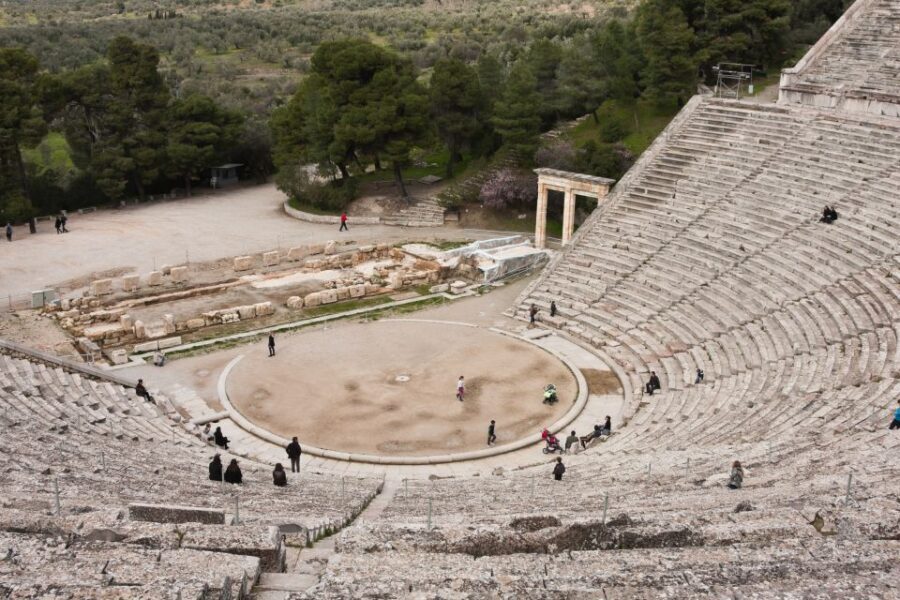
- Epidaurus Theater for its legendary acoustics and the feel of an ancient performance venue
- Olympia’s Sanctuary of Zeus and museum plus the spot linked to the modern Olympic flame lighting
- Delphi’s archaeological site and museum, anchored by the oracle’s ancient fame
- Corinthian Bay crossing (Rion to Antirion) plus scenic passes through towns like Nafpactos and Itea
- A well-packed route that connects the classics of the Peloponnese to central Greece fast
Your first taste of Peloponnese: Epidaurus to Mycenae
Day 1 starts with a coastal-road drive and a short stop at the Corinth Canal. Even if you’ve seen photos before, it’s one of those places that helps your brain switch modes from modern Greece to the “civilizations used to move through here” mindset. It’s narrow, engineered, and oddly dramatic for something that’s basically a waterway cut through land.
From there, the itinerary lands at Theatre of Epidaurus, famous for acoustics. Here’s what I think makes it more than a standard stop: the theater layout is still readable, so you can imagine how sound traveled before microphones and speakers. If you like architecture tied to human experience, this is one to linger over.
Next comes Nafplio for a brief photo stop. It’s a quick hit, not a deep dive, but it’s a useful pause. You’ll get a sense of why so many people base themselves there after tours like this move on.
Then the tour pushes into the Peloponnese’s ancient core: Mycenae and the Tomb of Agamemnon. This is where you go from “old ruins” to feeling the weight of stories tied to palace life, power, and myth. The site doesn’t need extra explanation; you can read the scale and think about how people built status into stone. If you like archaeology that connects to famous names, you’ll feel at home here.
By the end of the day, you’re heading inland through towns such as Tripolis and Megalopolis toward Olympia, where you overnight. Dinner and sleep in Olympia matter because Day 2 is packed.
You can also read our reviews of more tours and experiences in Athens.


Olympia: where the Olympics began (and where the torch ties in)
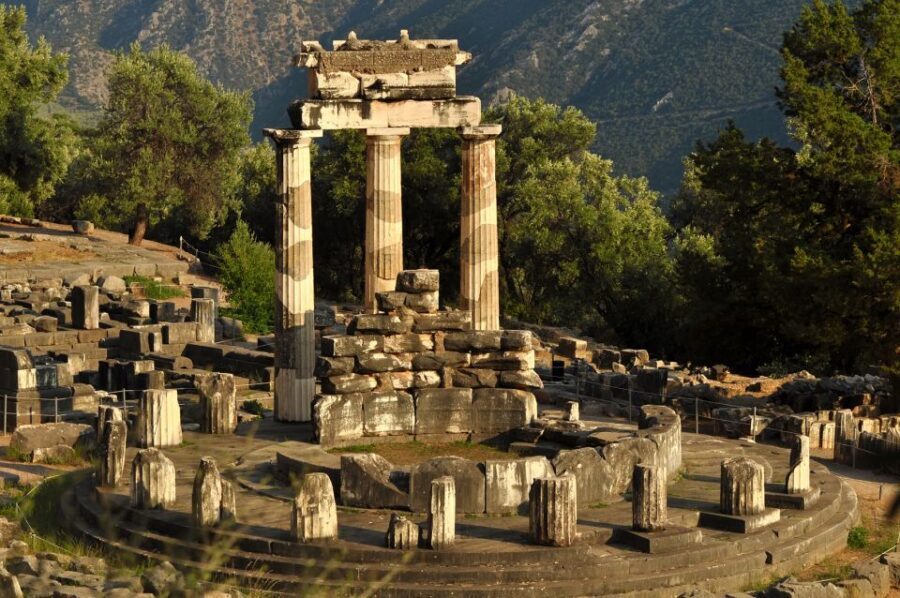
Day 2 is Olympia’s moment to shine. You begin with the archaeological site featuring the Sanctuary of Olympian Zeus. This is one of those places where the remaining layout helps you picture ceremonies and crowds, even if you’re walking it at a calm pace. The scale is what grabs you first.
Then you move on to the ancient stadium area. Standing near it, you can understand why people keep returning to Olympia in their imagination. This isn’t just about statues; it’s about how sports and ritual were bundled together in ancient time.
One of the most interesting details here is the spot linked to the torch of the modern Olympic Games. Whether you’re an Olympics fan or not, it’s a practical reminder that traditions can be reworked and reused long after the original world is gone. It gives you a “then and now” connection without needing a lecture.
You also visit the Archaeological Museum, which is a smart move in a one-day-at-maximum sightseeing block. Museums help you translate what you’ve seen outdoors into artifacts, names, and context. If you’ve ever felt ruins are too big and too vague, museums are the antidote.
After lunch (not included), the drive continues through the plains of Ilia and Achaia, then takes you to a major photo-and-scenery moment: the bridge crossing the Corinthian Bay from Rion to Antirion. This section is where you’ll notice how roads and infrastructure shape modern travel in Greece. It’s also a nice reset day: from one historical layer to the feeling of moving through the country.
The tour passes Nafpactos (Lepanto) and Itea along the way to Delphi, where you have dinner and overnight.
Delphi: the oracle site you can feel
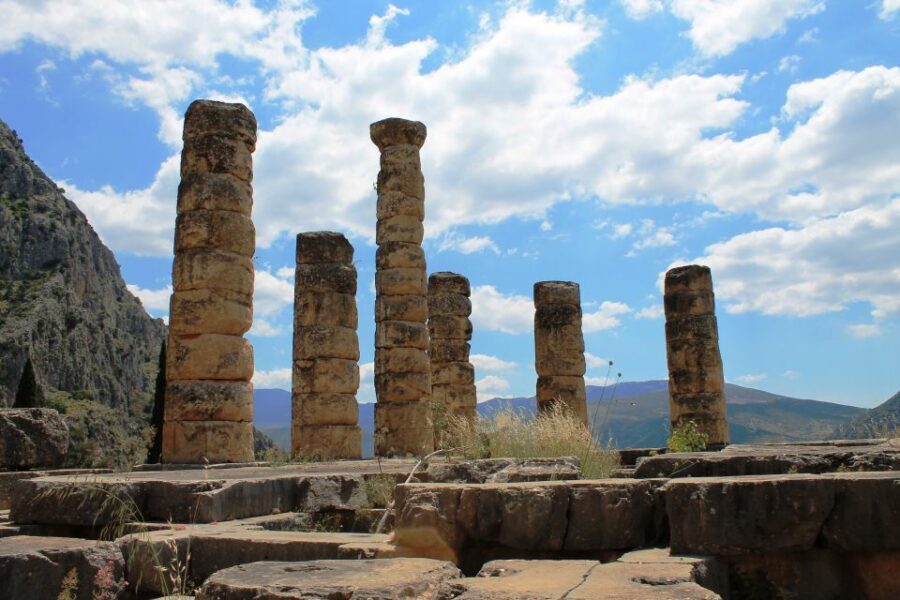
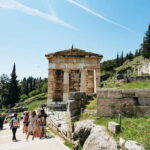
Day 3 begins at Delphi, starting with the archaeological site and then heading to the Museum of Delphi. Delphi’s fame comes from the oracle, but what you’ll enjoy more in person is the way the site sits and organizes your viewpoint. Even without any dramatic effects, the location encourages you to think about messages, prophecy, and decision-making.
At the archaeological site, you’re dealing with layers: ancient religious practice, major cultural significance, and a landscape that helped people believe they were close to something bigger than everyday life. It’s the kind of stop where a guide matters. A good guide helps you read the site instead of just walking past it.
The museum is where you’ll likely make those connections fast. Even if you only have a limited time, a museum visit in Delphi can turn the day from sightseeing into understanding. It’s also where you can slow down and see what the oracle-related world looked like in objects and inscriptions, not just in legend.
Then you drive to Kalambaka, a town at the foot of Meteora, where the next day’s scenery takes over. You’ll have dinner and overnight here. This sleep matters because Meteora is a long day visually. You want your energy for the monastery viewpoints, not for basic exhaustion.
Meteora monasteries: that mid-air rock feeling
Meteora is the reason many people choose this route. On Day 4, you visit the monasteries perched on huge rocks that look like they’re hanging in mid-air. The first time you see Meteora from the right viewpoint, your brain does that quick, skeptical math: how did anyone build anything here, and how did they live in it?
Beyond the views, the monasteries hold Byzantine art. That’s what turns the scenery from “wow, nature” into “wow, faith and culture.” If you care about how art traveled through time—icons, religious storytelling, the visual language of Byzantine Christianity—this part delivers.
Practical note: because you’ll be at rock-top sites, it helps to wear shoes that feel secure. You’ll likely want layers, too, because weather can change around open viewpoints faster than you expect.
After Meteora, the tour returns to Athens with stops along the way, including Trikala, Lamia, and Thermopylae. At Thermopylae, you get a short stop where you can see across the road to Leonida’s Monument. It’s brief, but it gives you that instantly recognizable historical anchor before the final push into Athens.
You arrive early in the evening back in Athens, which is a relief if you’ve got dinner plans or an onward travel day.
Comfort, timing, and why the route feels manageable
This tour covers a major chunk of Greece’s ancient heartland: Peloponnese, central Greece, then Meteora. You’re doing a lot, but it’s arranged in a way that keeps the day-to-day rhythm from feeling chaotic.
A few things help the trip feel “manageable”:
- Overnight stays in Olympia, then Delphi, then Kalambaka. You’re not constantly packing and repacking in the middle of the day.
- A mix of ruins + museum time, especially at Olympia and Delphi. It gives your brain somewhere to put information.
- Coach travel with a pro guide, plus free Wi-Fi on the bus, which helps you stay sane on longer stretches.
Still, be realistic. This is not a slow-travel itinerary. If you dislike long drives, you’ll feel it most on the days moving between Peloponnese sites and central Greece.
- All Day Cruise -3 Islands to Agistri,Moni, Aegina with lunch and drinks included
★ 5.0 · 4,958 reviews


Hotels and meals: good value, but don’t expect restaurant magic
The tour includes overnight accommodation, and it includes breakfast and dinner. Lunch is not included. That means you’ll likely snack or buy lunch on your own while you’re moving between stops.
Based on what people have said, hotel quality can improve if you choose the upgrade option. One review mentioned an upgraded stay to a 4-star hotel and praised the accommodations. Without the upgrade, some people felt the hotels weren’t as strong.
On the dinner side, at least some guests have found the included meals more on the safe buffet side rather than highly adventurous Greek-specific choices. If you care a lot about eating one particular kind of Greek food (or you want a different kind of dining experience every night), you’ll probably still want to treat a couple of meals in Athens as your personal foodie time.
Accommodation taxes are also worth planning for. You’ll pay an overnight stay tax at check-out, with different amounts depending on the hotel star category.
Guides and drivers make a difference on fast-moving tours
The tour’s main advantage isn’t just the sites. It’s the human layer that keeps you from feeling lost.
In the feedback, guides named Georgia Dova, Evie, and Anthony came up as excellent, and drivers like John and Socrates were praised for getting everyone there comfortably. That lines up with what you’ll feel on the ground: when a guide is strong, the route stops being a checklist and starts feeling like a story you can follow.
If you’re choosing this tour because you want context—why a theater mattered, what Olympia represented, why Delphi’s oracle was so influential—you’ll get more value from those guiding moments than from spending extra time wandering alone.
Who this tour fits best
This is a strong match if you want:
- Classical Greece icons in one trip: Epidaurus, Mycenae, Olympia, Delphi, and Meteora
- A tour pace that prioritizes seeing many major sites, not slow wandering
- A guide-led approach that helps you interpret what you’re looking at
- Comfortable coach travel with included logistics like entrance fees and hotel nights
It may be less ideal if you want:
- A heavy focus on food experiences every day (included dinners can be buffet-style)
- Minimal bus time (there’s plenty of driving across regions)
- A night-by-night plan built around free time in each town (this is structured)
Should you book? My take
If your dream trip is the big “classical-to-meteora” route, this is a solid way to do it without turning your travel day into math. The best parts are the high-impact sites: Meteora’s rock monasteries, Epidaurus’s theater, and Olympia and Delphi with museums. And for the price, the value comes from the combination of transport, hotel nights, entrance fees, and meals—so you’re not constantly budgeting for add-ons.
I’d say book if you’re happy with a guided whirlwind and you want Greece’s headline historical locations in one well-paced package. I’d hesitate only if you’re the kind of traveler who needs long open-ended time in each place, or who hates driving days.
FAQ
FAQ
How long is the Classical Tour with Meteora?
It lasts 4 days, with dates and starting times depending on availability.
What’s included in the price?
The tour includes overnight accommodation, a professional guide, luxury air-conditioned coach transport, breakfast and dinner as per the itinerary, entrance fees, and free Wi-Fi on the bus.
Is lunch included?
No. Lunch and drinks are not included.
Do I need to pay an accommodation tax?
Yes. An overnight stay tax must be paid at check-out, and the amount depends on the hotel star category (listed ranges are provided in the tour information).
What sites do you visit along the way?
You visit the Corinth Canal, the Theatre of Epidaurus, Nafplio (photo stop), Mycenae including the Tomb of Agamemnon, Olympia (including museum and stadium area), Delphi (site and museum), and Meteora.
Which languages is the live guide available in?
Live tour guides are available in French, English, and Italian.
Is there Wi-Fi during the trip?
Yes. The bus includes free Wi-Fi.
Where do I meet the group?
The start meeting point may vary depending on the option booked. Zappeio is listed as a starting location option. The tour ends back at the meeting point.
If you tell me your travel month and whether you prefer history depth or photo time, I’ll help you decide if this pace is right for your style.


More Tours in Athens

More Tour Reviews in Athens
- All Day Cruise -3 Islands to Agistri,Moni, Aegina with lunch and drinks included
★ 5.0 · 4,958 reviews