REVIEW · ATHENS
Full Day Private Of Athens Highlights of Classical &Modern Athens
Book on Viator →Operated by Yomadic.Tours & Transfers · Bookable on Viator
Athens hits different early in the day. This private 6-hour highlights plan is built to cover the classics and a chunk of modern Athens, with hotel or cruise pickup and an English-speaking driver who helps you connect the dots fast.
I especially like the way the day is anchored on the Acropolis first, then paired with the Acropolis Museum at the base of the rock. I also like the comfort factor: A/C, cold bottled water, and even free WiFi on board, plus drivers in the Nikos-shaped example are reported as punctual and clear in English.
One thing to consider: it is a packed schedule with several major sites not included in the price. That means budgeting for tickets and accepting that some stops are shorter than you might want if you like to linger.
In This Review
- Key things to know before you go
- How this private Athens day runs from pickup to drop-off
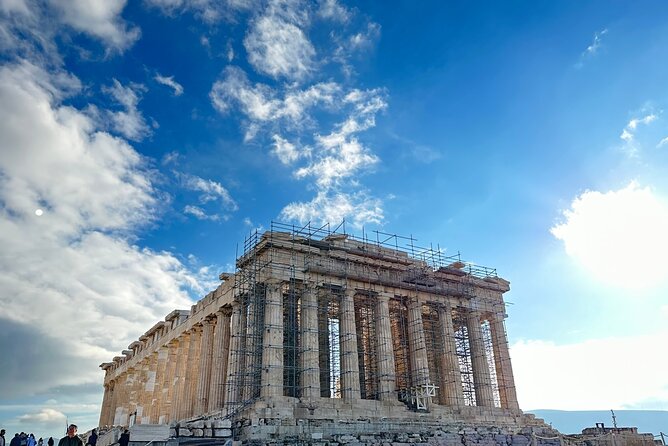
- Acropolis early: Propylaea gateway and the Parthenon viewpoint circuit
- Beyond the temples: Erechtheion details and the Theatre of Dionysus stop
- Panathenaic Stadium: from ancient games to the 1896 Olympics
- Acropolis Museum: when the sculptures make sense
- Syntagma Square and the Evzones changing of the guard
- Neoclassical Athens drive: Academy, National Library, and the “stone landmarks” feeling
- Agora, Plaka, and Monastiraki: democracy sites plus street-level Athens
- Lycabettus viewpoint: a short ride that changes how you see the city
- Temple of Olympian Zeus and Hadrian’s Gate: big scale, big story
- Vouliagmeni Lake and Mikrolimano: swap marble for warm water and seafood views
- Budget check: entrance tickets and optional add-ons that change the final cost
- Is this tour worth it for your group?
- Should you book this private Athens highlights tour?
- FAQ
- What’s included in the tour price?
- Do I pay separately for the Acropolis and other entrances?
- Is the Changing of the Guard ceremony included?
- Is this tour private or shared?
- Will the driver go inside the archaeological sites with me?
- Can I cancel for a full refund?
Key things to know before you go
- Acropolis timing matters: you start early, and you’ll get a guided-feeling route across Propylaea, key temple areas, and views.
- Flexible pacing for a private day: it’s described as tailor made, so you can include or skip sites based on your interests.
- Several paid entrances: Acropolis, Acropolis Museum, and Ancient Agora are listed as extra costs.
- Modern Athens showpiece: the Changing of the Guard at Syntagma runs hourly and is built into the day.
- A driver-led tour, not an archaeological escort: your driver can explain, but won’t enter the sites with you.
- Expect mixed scenery: the itinerary shifts from stone ruins to big-picture viewpoints and coastal stops.
How this private Athens day runs from pickup to drop-off
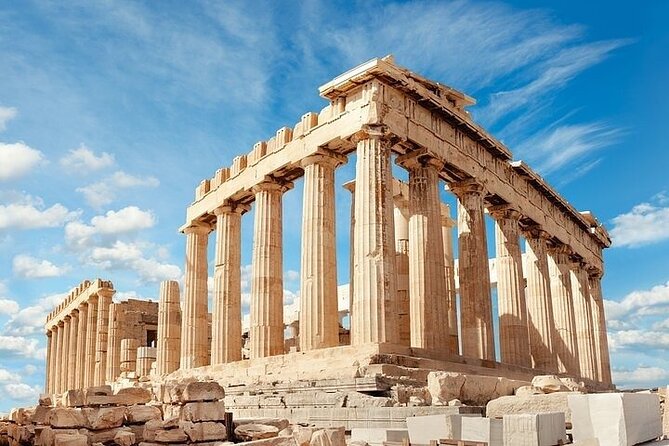
This is a private, door-to-door style tour. You get picked up from your Athens hotel or residence area, or from the Piraeus cruise port, and you return to the same place or a preferred point afterward. For cruise days, the whole plan is designed around getting you back in time without the stress of big groups.
The transport is part of the value. You’ll ride in an A/C, non-smoking vehicle suited to your group size—sedan for smaller groups, mini van for larger ones—plus fuel and tolls are covered. If you’re traveling with kids, car seats can be requested in advance, and the tour notes it can be modified for family needs.
Your driver is described as an English-speaking tour leader driver, but with an important boundary: drivers are not official archaeological guides and won’t enter archaeological sites with you. In practice, that can be fine if you want orientation and context while you explore on your own. If you want deeper narration inside the sites, there’s an optional licensed guide listed at an extra cost.
You can also read our reviews of more tours and experiences in Athens.


Acropolis early: Propylaea gateway and the Parthenon viewpoint circuit
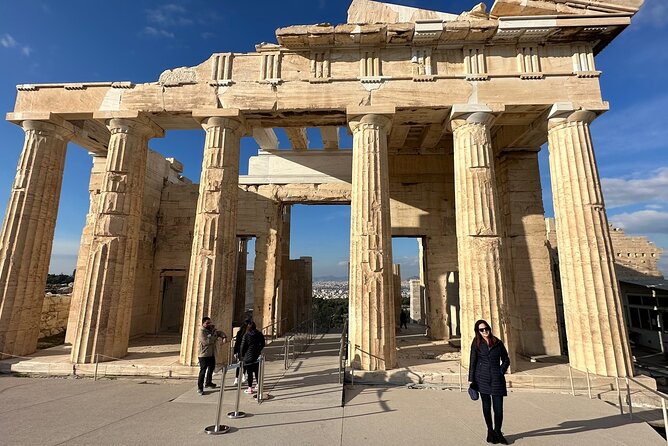
The day is built around walking the hill that ancient Athenians treated like the spiritual and cultural center of the city. You begin at the top with Propylaea, the monumental gateway commissioned in the rebuilding push after the Persian Wars. It’s listed as a short stop with a free admission ticket, so you get the wow factor without paying twice.
From there, you move through the Acropolis area with a planned time window that’s long enough to see the big picture rather than just catching photos. You’ll have time at the Acropolis proper, then on to the Parthenon highlight zone.
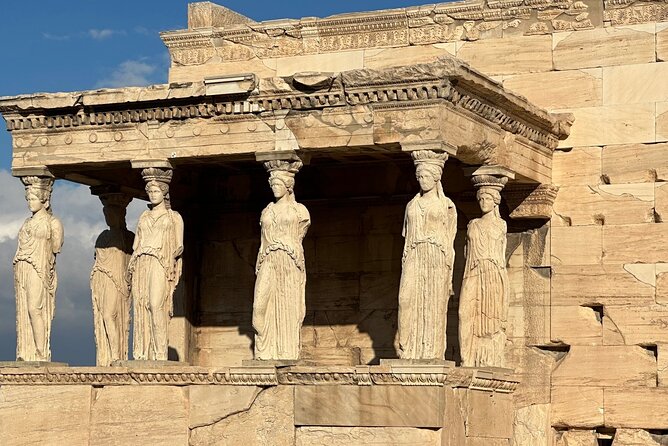
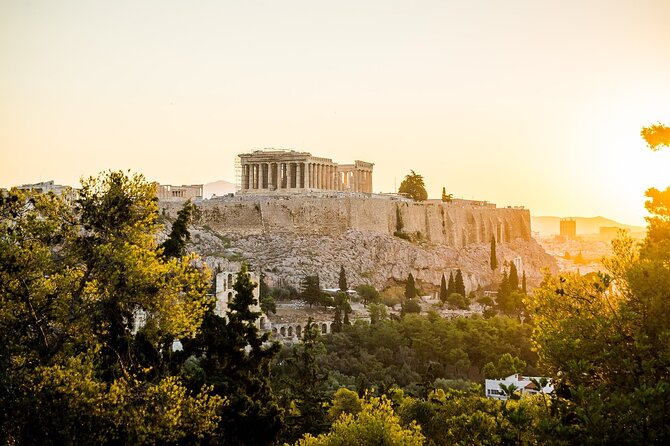
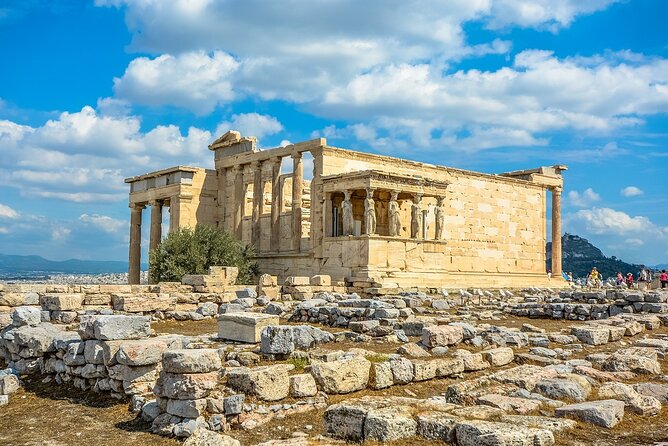
When the route reaches the Parthenon area, you’re looking at the sacred hill in the way it was meant to be experienced: as a sequence of buildings that creates a story. You’ll see the Parthenon dedicated to Athena Parthenos, the Propylea entrance, the Temple of Athena Nike, and the Erechtheion with its famous Caryatid statues (the Porch of Maidens). The Temple of Athena Nike is noted as an early fully Ionic temple on the Acropolis, positioned on a steep bastion.
A practical note: this is serious walking and there’s sun. The route is timed to hit key sights efficiently, but the heat is still real. I’d treat water as non-negotiable, and an umbrella can help during harsh daylight.
Beyond the temples: Erechtheion details and the Theatre of Dionysus stop
One of the strengths of this style of route is that it doesn’t only chase postcard-perfect buildings. It also includes the ancient “stage” side of Athens—theatre and public life.
The itinerary points you to the Theatre of Dionysus, originally part of the sanctuary of Dionysus Eleuthereus. You get the sense of how the city used performance as civic culture: it was tied to events like the City Dionysia, and the theatre reached a big capacity in its fourth-century prime. Even if you’re not a theatre-history nerd, it helps you understand why Athens is famous beyond temples.
This stop also makes the Acropolis feel less like a museum and more like a functioning world. The hill wasn’t just stone—it was public life, philosophy, politics, and theatre.
Panathenaic Stadium: from ancient games to the 1896 Olympics
Next comes a major gear change: you leave the Acropolis hill and head to the Panathenaic Stadium, also known as the Kallimarmaron Stadium. This is one of the few places in Athens where you can watch the ancient Olympic idea echo into modern times.
The plan calls out two big time periods. The stadium hosted the inaugural modern Olympic Games in 1896 and remained important for later Olympics, including the Athens Games in 2004. It’s built (or rebuilt) with Pentelic marble, and the location traces back to a natural hollow that was reshaped for the Great Panathenaea festivities long before modern sports revived the idea.
Time here is relatively short, so treat it as a “see it, get your bearings, take your photos” stop. If you’re an Olympics person, you’ll still appreciate it because it’s one of those rare Athens sites where the story is easy to explain and easy to remember.
Acropolis Museum: when the sculptures make sense
After descending from the hill, you’ll go to the Acropolis Museum, planned for about 35 minutes. This is where your Acropolis walking starts to click.
The museum is described as packed with marble from the Parthenon and other relics uncovered during Acropolis excavations. Even with limited time, seeing the sculptures and artifacts in a museum setting helps you understand scale and design decisions you can’t fully grasp when you’re staring at a temple from the outside.
If you’re the type who gets museum fatigue, 35 minutes might feel just right. If you love detail, this could be your “wish we had more time” site—good news is you can add depth later on a separate trip.
- All Day Cruise -3 Islands to Agistri,Moni, Aegina with lunch and drinks included
★ 5.0 · 4,958 reviews




Syntagma Square and the Evzones changing of the guard
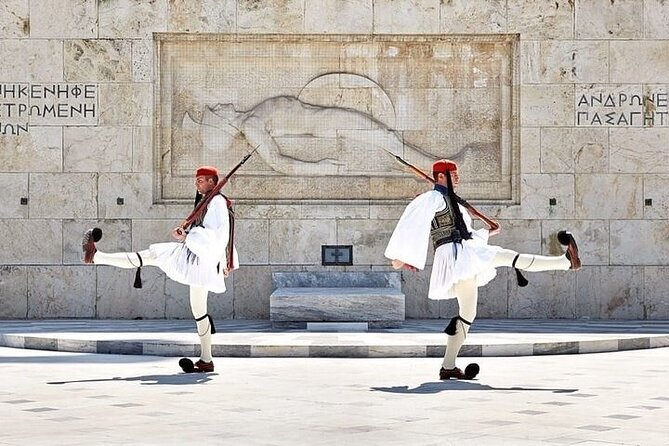
Modern Athens gets a spotlight at Syntagma Square. The route is designed to put you in front of the Greek Parliament building, with the Tomb of the Unknown Soldier nearby. The guards—Evzones—are part of why Syntagma is such a must-see.
The itinerary includes the Changing of the Guard ceremony, which happens every hour and is described as about a 15-minute spectacle. Your scheduled time at Syntagma is shorter, so aim to arrive ready: phone charged, camera set, and comfortable shoes on. The choreography includes a very physical gait when the guard takes over, followed by stillness at the monument.
If you only know one part of Athens’ modern identity, make it this. It’s a living tradition right in the city center.
Neoclassical Athens drive: Academy, National Library, and the “stone landmarks” feeling
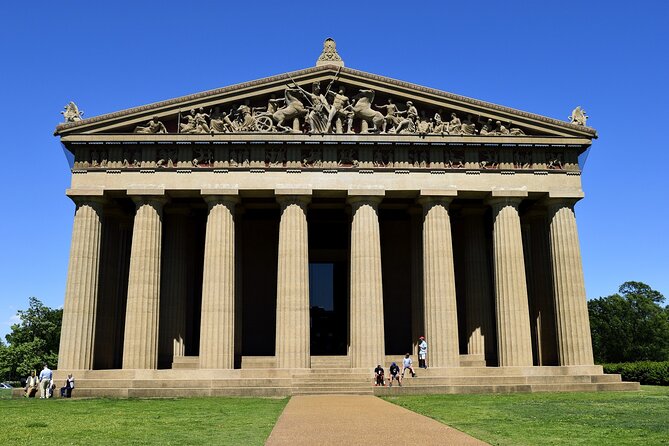
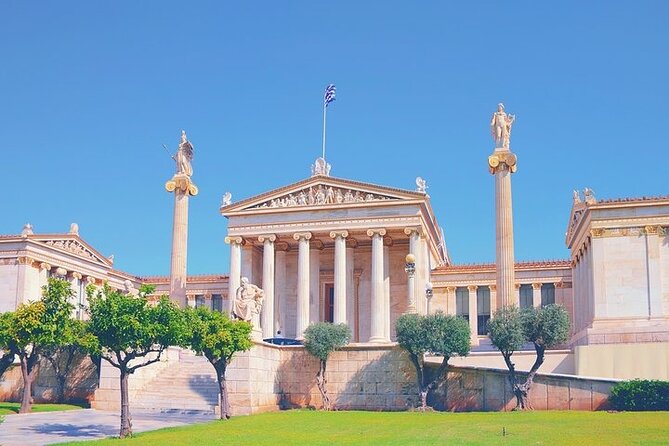
Between the big walking zones, the day also uses car time intelligently. As the vehicle navigates through central Athens, you’ll pass major neoclassical landmarks mentioned in the plan.
Two standouts listed are the Academy of Athens and the National Library of Greece. They’re tied to famous neo-classical architecture in a trio style, which helps explain why parts of Athens feel like a stage set for Western learning. The plan also references the Temple of Hephaestus (Hephaisteion), a well-preserved Doric temple on a hill overlooking the area that was used as a church much later.
This drive section matters because it gives you context without making you walk for hours on end. If your goal is to see more in less time, the vehicle route earns its keep.
Agora, Plaka, and Monastiraki: democracy sites plus street-level Athens
After Syntagma and the city-center highlights, the route shifts toward neighbourhood Athens: Plaka, then the Ancient Agora area, then Monastiraki.
The Ancient Agora of Athens is framed as the birthplace of democracy, philosophy, and free speech, and you’ll have time to explore the space where commercial and assembly life once happened. It’s also bounded by the Areopagus hill and Market Hill, so you’re surrounded by the geometry of civic life—even if you’re just walking through modern ruins and pathways.
Nearby, you’ll also move through Plaka, described as the neighbourhood of the gods because it sits close to the Acropolis and is packed with archaeological sites. Plaka is a place where you can slow down for a snack, browse handmade souvenir shops, or just enjoy the lane layout.
Then you hit Monastiraki Flea Market, paired with the fish and meat markets downtown. This is your “taste the everyday city” stop—good for quick shopping and a sense of how Athens eats and shops, not just how it worships and debates.
One big takeaway: in a tight itinerary, these neighbourhood stops work best if you treat them as sensory breaks. You don’t need to buy anything to enjoy them, and you’ll come out feeling you understand Athens beyond marble.
Lycabettus viewpoint: a short ride that changes how you see the city
When the itinerary reaches Mount Lycabettus (Lykavittos), you get a panoramic viewpoint. The plan gives about 15 minutes, which is short, but viewpoints are efficient like that. From above, ancient and modern Athens start lining up visually.
I love this kind of stop because it turns the day’s scattered locations into one coherent picture. You’ll be able to connect the dots between the Acropolis, the dense city grid, and the broader hills around Athens.
Bring sunscreen and water here too. A quick photo stop turns into a long wait if you’re tired or dehydrated.
Temple of Olympian Zeus and Hadrian’s Gate: big scale, big story
The day returns to major ancient ruins with the Temple of Olympian Zeus. The itinerary notes it was built between 124 and 132 AD, with a complex column layout and the survival of 16 columns, 13 on the east side described as intact.
This is a good stop when you want scale. The columns you see today are fewer than the original design, but the surviving sections still communicate the ambition of the Roman period in Athens.
Your route also includes the nearby merge of eras around Hadrian’s Gate and the area tied to both Greek and Roman Athens. It’s one of those “how the city layered over time” places, especially helpful after spending the morning focused almost entirely on the Acropolis world.
Vouliagmeni Lake and Mikrolimano: swap marble for warm water and seafood views
Toward the end, the itinerary turns toward nature and the coast, starting with Lake Vouliagmeni. This is described as an unusual geological feature near the Athenian Riviera—formed when an underground cave collapsed. The water is listed as warm year-round, about 22–29°C, and mineral-rich with a mix of salty and brackish composition.
A quirky detail that makes this stop memorable: the lake is said to include Garra rufa fish that provide a natural exfoliation effect. If you get time and the conditions allow, you might even want to plan for a quick swim, but the scheduled stop is only about 20 minutes—so think photos, a short taste, and fresh air more than a full spa session.
Then the tour heads to Mikrolimano in Piraeus, described as a small horseshoe-shaped harbour. It’s framed as a seafood-and-views kind of ending, with fishing tradition and modern boats lined up along the waterfront. If you’re hungry, this is where it makes sense to slow down for a meal after a long day on your feet.
Budget check: entrance tickets and optional add-ons that change the final cost
The listed price is $179.59 per person, but several key entrances are marked as not included. In other words, the true cost depends on what you choose to enter and what you treat as optional.
From the details provided:
- Acropolis entrance is listed at €30 per person.
- Acropolis Museum entrance is listed at €20 per person.
- Ancient Agora entrance is listed at €20 per person.
- Temple of Olympian Zeus entrance is optional at €20 per person (photos only can be done instead).
- Panathenaic Stadium entrance is optional at €20 per person (photos only can be done instead).
- There’s also an optional licensed guide for archaeological sites listed at €250 per person.
That sounds like a lot, but the value case is simple: you’re paying for a private, efficient route that covers many major sights in one day, plus comfort and planning. If you skip some optional paid entries, the cost comes down. If you want maximum interior time, budget for entrances up front.
Also note: meals aren’t included. The plan says lunch stops are scheduled, but you pay for food yourself. If you want to stay within budget, pick one meal and use quick snacks for the rest.
Is this tour worth it for your group?
This works best when you’re:
- seeing Athens for the first time and want the headline sites without stitching together multiple taxis
- traveling with a cruise ship schedule and need a tight return plan
- bringing family members (including teens) who can handle walking but prefer the day to be organized and not improvisational
It’s less ideal if you:
- want a slow, deep archaeology session with lots of museum time
- want a guide who stands with you inside archaeological sites for detailed narration (your driver won’t enter the sites, though you can add a licensed guide at extra cost)
- plan to spend a long time at one place while skipping others (this itinerary is built to move)
Should you book this private Athens highlights tour?
If your goal is to see Acropolis icons, the Changing of the Guard, and major ruins plus a couple of “modern or coastal” mood shifts in one day, this tour makes sense. The private transport, comfort features, and time structure are practical—exactly what helps on a day when you’re likely to clock serious walking.
Book it if you’re okay with paying separate entrance fees and treating several stops as focused walk-throughs. Skip it if you’d rather go slow, go deep, and stay longer in fewer places. This isn’t that kind of day.
FAQ
What’s included in the tour price?
The tour price includes a private tour with pickup and return from Athens hotels/residences or the Piraeus cruise port, transportation in an A/C vehicle, bottled water, free WiFi on board, and fuel/tolls. It also includes a tailor-made driver-led experience in English, with the option to include or skip sites. Entrance fees and meals are not included.
Do I pay separately for the Acropolis and other entrances?
Yes. Acropolis entrance is listed as €30 per person, and Acropolis Museum entrance is listed as €20 per person. Ancient Agora entrance is listed as €20 per person. Temple of Olympian Zeus and Panathenaic Stadium entrances are listed as optional, €20 per person each (photos are possible).
Is the Changing of the Guard ceremony included?
Yes, the itinerary includes a stop at Syntagma Square for the Changing of the Guard ceremony in front of the Tomb of the Unknown Soldier. It is described as happening every hour and lasting about 15 minutes.
Is this tour private or shared?
It’s private. Only your group participates.
Will the driver go inside the archaeological sites with me?
No. The driver is described as knowledgeable and can provide English commentary, but they will not enter archaeological sites with you.
Can I cancel for a full refund?
Yes. Free cancellation is offered up to 24 hours in advance for a full refund. The experience can also be canceled due to poor weather, with an alternate date or full refund offered.



More Tour Reviews in Athens
- All Day Cruise -3 Islands to Agistri,Moni, Aegina with lunch and drinks included
★ 5.0 · 4,958 reviews