REVIEW · OLYMPIA
Private local tour of the archaeological site and museum of Olympia
Book on Viator →Operated by Niki Olympic Tours · Bookable on Viator
A day in Olympia feels like a puzzle. A great guide turns the scattered stones into a story you can follow fast. This private tour pairs the Archaeological Site and the Museum of Olympia so you see the “what” and then the “why” without bouncing around on your own. I especially like the way the tour walks you through big named landmarks, like the gymnasium and palaestra ruins, and then confirms what those places meant with museum finds like Hermes by Praxiteles. The other thing I love is the human touch: you’re not just hearing facts, you’re getting the context in clear, practical language from guides such as Zoe, Niki, and Georgia. One possible drawback: the entrance tickets aren’t included, and you’ll pay extra per person once you arrive.
Because it’s private, you control the pace and questions, which is perfect when you care about the details. The tour lasts about 2 hours 30 minutes, with a smart split between the site (about 1.5 hours) and the museum (about 1 hour), so it fits neatly into a day without exhausting you. Still, it’s not a sit-and-watch kind of tour. You’ll need a moderate fitness level for walking through the site, and there’s no private transportation included—so plan how you’ll get to Olympia and meet at the start point.
In This Review
- Key highlights worth planning around
- A private Olympia guide makes the ruins make sense
- On the site: gymnasium, palaestra, Philipeion, and the stadium
- Phidias’s workshop and the Zeus/Hera story you can track
- Olympia Museum: Hermes, Nike, and pediment statues in context
- 2.5 hours of smart pacing (and how to plan your entry ticket)
- Price check: $216 per person plus €20 entry can still feel fair
- Should you book this Olympia private tour?
- FAQ
- How long is the private tour of Olympia?
- Is the tour offered in English?
- Is this a private tour or shared with other travelers?
- Where does the tour start and end?
- Are the museum and archaeological site entrance fees included?
- Does the price include transportation?
- Will I get a mobile ticket?
- Is there a physical fitness requirement?
- Are service animals allowed?
- Can I cancel for a full refund?
Key highlights worth planning around
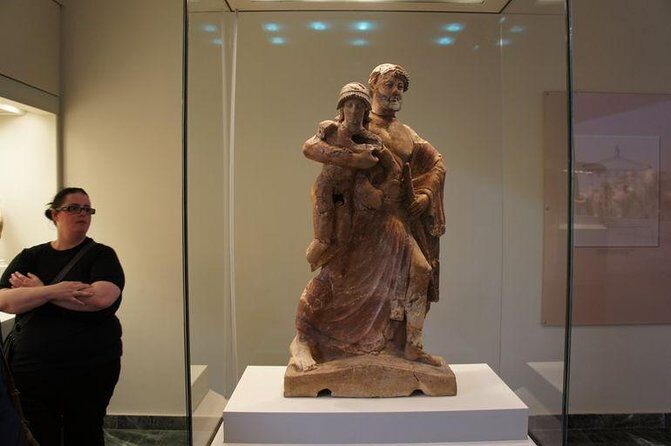
- Gymnasium, palaestra, and the Olympic stadium: you’ll see the kinds of athletic spaces Olympia was built for
- Philipeion and temple areas: distinctive remains that help you connect buildings to the bigger sanctuary
- Phidias workshop area: the story tied to the gold-and-ivory Zeus statue concept
- Museum finds from the dig: tools, ceramics, armor, and offerings that explain what people left behind
- Masterworks on display: Hermes by Praxiteles and Nike by Paeonios, plus very well-preserved pediment statues
A private Olympia guide makes the ruins make sense
Olympia is one of those places where you can technically “walk around” and still feel lost. The ruins are real, but your brain needs a map—what you’re looking at, how it all connected, and why it mattered.
That’s where a licensed, English-speaking guide earns the money. With a private format, you can ask the questions that pop up as you look at the gymnasium, the temples of Zeus and Hera, and the rest of the sanctuary remains. You’re not trying to decode signage while other people drift ahead. Your guide can also adjust the pacing on the fly, depending on your group size and interests—something that comes through clearly in how guides like Zoe and Niki are described: warm delivery, clear explanations, and answers that go past the basics.
There’s also a practical side. Olympia can look like “random broken columns” until someone points out what each building type was used for. Once you understand that, the whole site clicks into place, and the museum stops feeling like a separate attraction. It becomes the receipts for what you just saw outdoors.
You can also read our reviews of more private tours in Olympia

On the site: gymnasium, palaestra, Philipeion, and the stadium
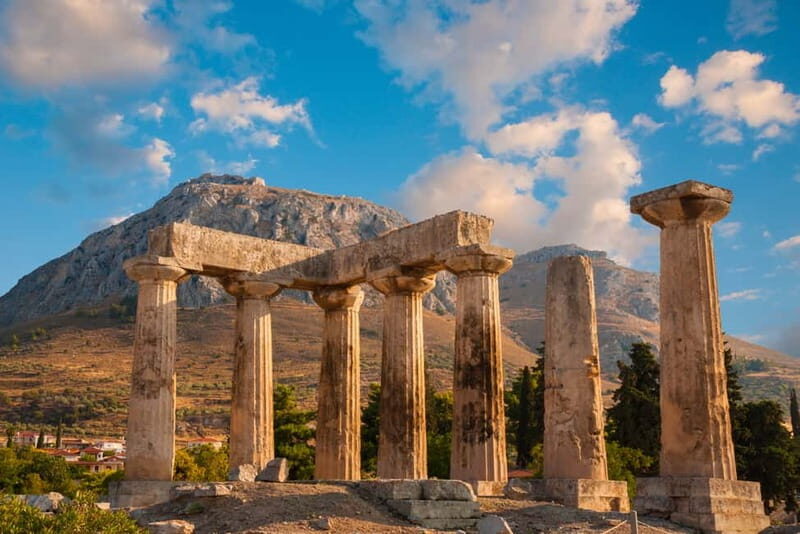
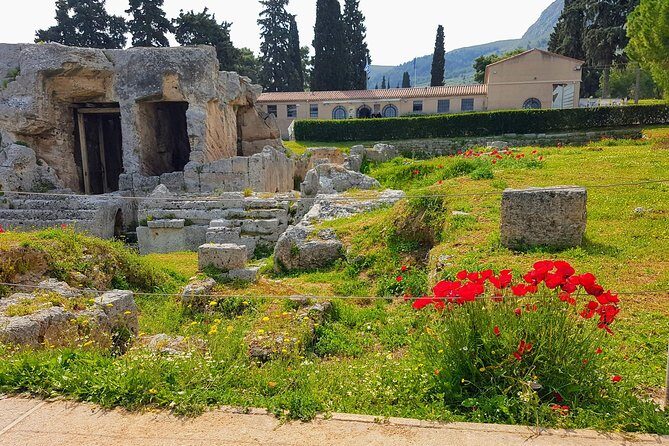
The tour starts at the Archaeological Site of Olympia, where you’ll spend about 1 hour 30 minutes seeing the key remains that define the sanctuary. This is the part that makes Olympia feel tangible, because you’re standing where ancient athletes, craftsmen, and visitors moved through the same zones—at least in terms of location, scale, and layout.
Here are the standout areas you’ll focus on:
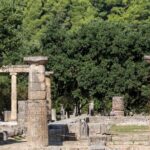
Gymnasium and palaestra remains
These are the athletic zones you’ll hear about right away. Even if you’ve only seen a quick photo of Olympia before, the guide helps you connect the space to physical training and competition culture. It’s the kind of thing that’s hard to grasp without context, because the ruins don’t explain themselves.
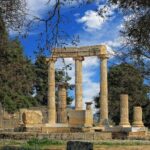
The round Philipeion
The Philipeion is distinctive—round, recognizable, and easy to spot once you know to look for it. This kind of landmark helps you orient mentally, which matters because Olympia isn’t tiny.
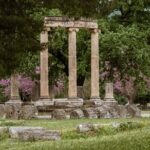
Temples of Zeus and Hera
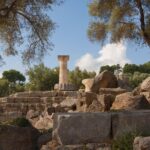
When you reach the temple areas, the tour shifts from “places to walk” into “places with meaning.” You’ll see the ruins that relate directly to Zeus and Hera, and that makes the next museum stop hit harder.
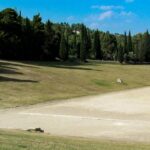
The Olympic stadium
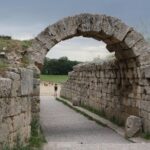
The ancient Olympic stadium is where the scale suddenly feels real. You can stand in the space and understand why this location became a symbol for competition long after the original games ended.
One consideration: the site admission ticket is not included in the tour price. That €20 per person entrance fee is separate, so factor it into your budget before you commit. Also, expect a bit of walking on uneven ground. It’s manageable for most people with moderate physical fitness, but it’s not a stroller-friendly vibe.
Phidias’s workshop and the Zeus/Hera story you can track
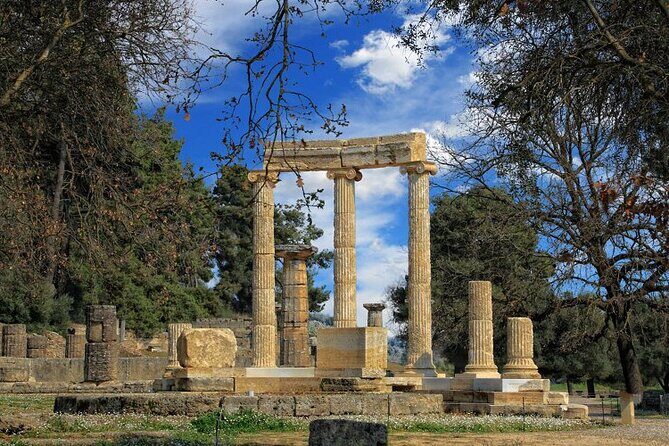
Olympia isn’t just athletics. It’s also art, craft, and big-deal religious symbolism. On-site, your guide points you toward the workshop of Phidias, connected with the gold-and-ivory statue of Zeus being built there. Even though you won’t be looking at the statue itself, the way the tour frames that workshop makes the surrounding sanctuary feel more like a production center and a sacred stage, not just a ruin field.
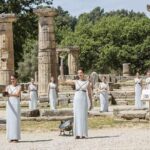
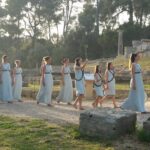
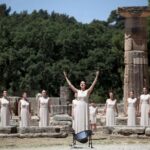
You’ll also encounter the kind of “story anchors” that turn modern and ancient symbolism into one thread. For example, the tour includes the altar where the Olympic torch is lit in modern days. That detail is small, but it lands because it connects what you’re seeing now—ritual, ceremony, lighting—to the ancient setting that gave the Olympics its name and identity.
The way this section is taught is the real value. A skilled guide doesn’t just point and list. They connect the dots between:
- where people gathered,
- what the sacred spaces represented,
- and how famous art and athletic culture lived side-by-side at Olympia.
If you’re the kind of visitor who likes explanations that are clear rather than academic, this tour style is a good fit. If you want to read quietly and go at your own speed, you might find the structure a little too guided. But for most people, it’s exactly what the site needs.
Olympia Museum: Hermes, Nike, and pediment statues in context
After the site, you shift to the Archaeological Museum of Olympia for about 1 hour. This is where the experience becomes more emotional. The museum turns “ruins” into objects with weight: tools, ceramics, armor, and offerings that were excavated from the sanctuary.
What I like here is the museum’s lineup, because it covers both everyday and headline pieces:
Bronze and clay offerings
You’ll see offerings such as tripods and figurines. These are the kinds of objects that help you picture real people leaving tokens and making dedications.
Armor and vases
These show how the sanctuary collected material culture around events and visitors, not just religious art.
Phidias workshop finds
You’ll also see items connected to the workshop, including tools and the cup connected with the workshop work. That’s a great bridge from the outdoor story into the “made here” reality.
Hermes by Praxiteles and Nike by Paeonios
These are the big names on display. Hermes and Nike help you understand that Olympia was not only about games—it was also a stage for celebrated sculpture.
Pediment statues from the temple of Zeus
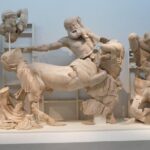
The museum includes very well-preserved classical statues from the pediments of the temple of Zeus. This is the section where your guide’s explanations really pay off. Pediments can feel like a jumble of stone figures unless someone tells you what you’re looking at and why those compositions mattered.
A practical tip: the museum is a great place to ask your guide about what to prioritize if you’re a first-timer. With a private format, you can get a short, personal “do-not-miss” list instead of trying to guess what matters most.
2.5 hours of smart pacing (and how to plan your entry ticket)
The tour runs about 2 hours 30 minutes. That’s a strong length for Olympia because you get both the site and the museum without turning your day into a marathon.
Here’s how the timing works in real life:
- Roughly 1.5 hours walking and looking at the site remains.
- Roughly 1 hour in the museum to see the excavated finds and major sculptures.
Admission tickets for the site and museum aren’t included. You’ll pay €20 per person for entrance. So your all-in cost is the tour price plus that entry fee. It’s not a hidden fee, but it is a budget item you should plan for upfront.
Also, this experience doesn’t include private transportation. The meeting point is listed near Archaia Olympia, and the tour ends at the Archaeological Museum of Olympia. It’s noted as being near public transportation, which helps if you’re using bus/shuttle options rather than a taxi.
One more detail that matters: it’s a private activity with only your group. That means you avoid the “everyone hears something different” problem you get on crowded tours. Your guide can slow down for kids, for questions, or for anyone who wants extra time near the gymnasium remains or the temple areas.


Price check: $216 per person plus €20 entry can still feel fair
At $216.02 per person, this is not a “cheap tour,” but it also isn’t overpriced for what you’re getting. You’re paying for a licensed local guide plus the tight structure of a site-plus-museum combo that works in about 2.5 hours.
Here’s the value logic I’d use if I were budgeting:
- The big selling point is the private format. You’re not splitting attention with a large group.
- Olympia is one of those sites where context dramatically changes the experience. That makes guided time more valuable than it would be at, say, a museum where every room has obvious labels.
- You still pay a fixed entrance cost of €20 per person, so the true total depends on your entry fee day-of.
What could make it worth it even more: if you’re traveling with friends or family, the tour notes group discounts. If two or more of you are going, that can improve the per-person value versus booking small and paying separately.
The one reason you might hesitate is the entry fee plus the higher tour cost adds up quickly if you’re a big group. If you’re pinching pennies, you could do it independently. But if you care about understanding the site while you’re there, the guide time is the part you can’t easily replace with a phone app.
Should you book this Olympia private tour?
If your goal is to understand Olympia—beyond photos—then I think this is a strong booking. A private guide helps you follow the story across the site and then the museum, and the key art and objects you’ll see (like Hermes, Nike, and the pediment statues) land much better when you’ve already walked the grounds.
Book it if:
- you want a clear, story-driven visit without crowd chaos,
- you’re interested in how the athletic spaces and sacred spaces connect,
- you’d rather ask questions than hunt for answers yourself,
- you appreciate pacing that fits into a 2.5-hour block.
Skip it (or consider a different format) if:
- you prefer fully independent wandering,
- you’re trying to minimize all guided costs and entrance fees,
- you’re not comfortable with moderate walking on uneven archaeological grounds.
Either way, this is the type of tour where the guide matters. Guides like Zoe, Niki, and Georgia are highlighted for making the place make sense, and that’s the real product you’re buying here.
FAQ
How long is the private tour of Olympia?
It’s about 2 hours 30 minutes total.
Is the tour offered in English?
Yes, it’s offered in English.
Is this a private tour or shared with other travelers?
This is private. Only your group participates.
Where does the tour start and end?
You start at Unnamed Road, Archaia Olimpia 270 65, Greece, and the tour ends at the Archaeological Museum of Olympia (Archaia Olympia 270 65, Greece).
Are the museum and archaeological site entrance fees included?
No. Entrance tickets are not included, and the entrance fee is €20.00 per person.
Does the price include transportation?
No. Private transportation is not included.
Will I get a mobile ticket?
Yes. A mobile ticket is provided.
Is there a physical fitness requirement?
You should have a moderate physical fitness level.
Are service animals allowed?
Yes. Service animals are allowed.
Can I cancel for a full refund?
Yes. Free cancellation is available if you cancel up to 24 hours in advance for a full refund.