REVIEW · ATHENS
Best of Athens & Acropolis Full Day Private Guided City Tour
Book on Viator →Operated by The Greek Taxi · Bookable on Viator
Athens in one day, with your pace and your guide. This private tour threads Acropolis highlights into the city’s civic past, then layers in Syntagma, ceremonial Athens, and marble-era sports history. It’s built for people who want major sights without feeling like they’re sprinting through a checklist.
I especially like the way the day is timed around the Acropolis complex: you climb the sacred rock first, then work through the Parthenon area step by step. You’ll also get admission included at several key sites, so you can spend energy looking closely instead of juggling tickets.
The main consideration is physical and weather-based: Acropolis surfaces are smooth marble, and the experience requires good weather, so comfy grip shoes and a flexible attitude help.
In This Review
- Key things to know before you go
- Why this tour works: Acropolis focus plus real city time
- Pickup, meeting, and how the day stays smooth
- Entering the Acropolis: a climb with purpose, not just views
- Parthenon time: perfect proportions and why it looks perfect
- Propylaea and Athena Nike: gates, victory, and framed arrival
- Erechtheion: myths in an irregular footprint
- Ancient Agora and the Stoa of Attalos: Athens as a working city
- Temple of Hephaistos (Aries): the best-preserved Doric pause
- Syntagma and the Unknown Soldier: modern Athens with a ceremonial beat
- Academy, University, and the National Library: the Athens trilogy in miniature
- Panathenaic Stadium, Olympian Zeus ruins, then Plaka’s quiet charm
- Monastiraki: marketplace layers and photo gold at golden hour
- Price and value: what you’re really paying for at $600.12 per person
- Should you book this Athens private day tour?
- FAQ
- How long is the Best of Athens & Acropolis Full Day Private Guided City Tour?
- Is pickup included?
- What language is the tour in?
- Is this tour private?
- Are admission tickets included?
- Is entry to Panathenaic Stadium included?
- What time does the tour operate?
- What should I wear for the Acropolis portion?
- What if weather is bad?
- How does cancellation work?
Key things to know before you go
- Acropolis admission included at the big hitters (Acropolis, Parthenon, and nearby monuments)
- Proportions and tiny details explained so the architecture makes more sense, fast
- Agora stop with real civic context, plus a museum tie-in (Stoa of Attalos)
- Modern Athens add-ons like Syntagma and the Evzones without feeling like a separate tour
- Plaka and Monastiraki give you time to wander, eat, and reset your feet
Why this tour works: Acropolis focus plus real city time

This day isn’t just about seeing famous stone. It’s about understanding why those stones matter. You’ll start with the big statement pieces on the Acropolis—then you’ll move into Athens’ civic heartbeat at the Ancient Agora—before finishing with modern landmarks and classic neighborhoods.
For me, the sweet spot is the pacing. The Acropolis portion gives you short, clear segments: climb, enter, look, then move on. That keeps the day from turning into one long “stand and stare” moment. After that, you get “street Athens” time in Plaka and Monastiraki, where your brain can breathe again.
And it’s private. Only your group joins you, which usually means your guide can adjust to your questions, your photo speed, and your comfort level. You still walk, but you’re not stuck in a herd.
You can also read our reviews of more guided tours in Athens


Pickup, meeting, and how the day stays smooth
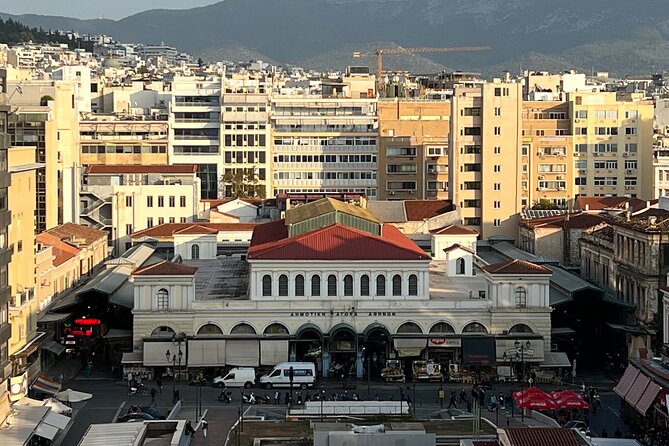
Pickup is offered, and you coordinate the exact pick-up spot using WhatsApp or Apple iMessage. That matters more than it sounds—Athens is full of tight streets and changing road patterns, so having a quick chat in advance prevents the usual “Where are you?” stress.
The tour runs about 5 to 7 hours and operates daily 9:00 AM to 6:00 PM. You also get a mobile ticket. In plain terms: you’ll show up, scan, and go.
English is the stated language, and the tour is designed for most travelers to participate. Still, keep expectations realistic: the Acropolis is a real climb, and the marble can be slick. Plan for grip, not sandals with trust issues.
Entering the Acropolis: a climb with purpose, not just views
Your first major stop is the Acropolis, and you’ll spend about an hour there with admission included. The big advantage here is the approach: you move along a pedestrian promenade up toward the sacred rock. The city falls away in layers, and suddenly the Parthenon and other marble structures start behaving like something you can understand, not just something you point at.
A guide’s job is to make the site click in your head. Here that shows up in the kinds of details they point out—things like ancient quarry marks in the bedrock, carved drainage channels, and reused marble blocks that hint at restorations across centuries. Those are small clues, but they change how you read the structures.
Practical note: surfaces are smooth marble, so grippy footwear is essential. If you only pack “pretty,” you’ll pay for it on the climb.
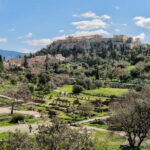
Photo-wise, there’s a built-in moment: pause midway up for a dramatic frame with the Parthenon set against the Saronic Gulf. That’s the kind of shot you’ll be grateful you planned for, not the one you chase while hurrying.
Parthenon time: perfect proportions and why it looks perfect

The next steps move into the Parthenon area, including about 15 minutes dedicated to the Parthenon itself, with admission included. This is where the guide’s explanations matter most. The Parthenon isn’t “perfect” by accident. Optical refinements—like subtle curvature and tilted columns—create the illusion of absolute symmetry.
You’ll also learn why the architecture uses controlled imbalance. Corner columns are slightly thicker to counter optical thinning, which is a fancy way of saying the building looks right to the human eye, not to a ruler.
The Parthenon also has a story layer that many first-time visitors miss: sculpted friezes once carried vivid color, and you can still look for traces of pigments on sheltered stones. Respect barriers—this is protected archaeology, and getting too close doesn’t help your photo or your view.
For pictures, shoot along the colonnade lines. That rhythm gives you scale and a sense of the building’s geometry without you having to invent composition on the fly.
Propylaea and Athena Nike: gates, victory, and framed arrival

You’ll then move through two gateways of meaning: Propylaea and the Temple of Athena Nike.
- Propylaea gets about 15 minutes with admission included. This monumental gateway orchestrates how you enter the precinct—part fortress, part flourish. The big detail to watch is the asymmetry. It’s a practical adaptation to terrain and nearby shrines, and it makes the entrance feel engineered for real life, not just ceremonial arrival.
Photo tip: step just inside, turn back, and frame the city through the columns. It’s one of those “stop and breathe” shots that makes Athens feel like it’s arranged for you.
- Temple of Athena Nike also takes about 15 minutes with admission included. It’s compact, but symbolism packs in: it celebrates victory—both military and civic—and its friezes once showed dynamic battle scenes with winged Nikes. The guide can help you spot the well-known motif of Nike adjusting her sandal. In this stop you’ll see a replica; the originals are preserved in the Acropolis Museum.
Good to know: it’s small, but the story gives tiny details weight. If you like “small things that explain big things,” this is your moment.
You can also read our reviews of more city tours in Athens





Erechtheion: myths in an irregular footprint

Next up is the Erechtheion, about 15 minutes and admission included. This one feels mysterious even without trying. It houses layered myths connected to Athena and Poseidon, including Athena’s olive tree and Poseidon’s salt spring, plus the memory of legendary kings.
What makes it architecturally memorable is the asymmetrical plan, which wraps around holy spots. If you’ve ever thought ancient buildings were rigid, this stop corrects that assumption fast. It’s sacred geography translated into stone.
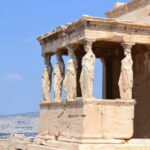
The famous south porch Caryatids (maiden statues) carry the roof like living columns. The guide will also point out that what you see here are faithful casts—originals are preserved in museums.
Photo tip: frame two Caryatids with the Parthenon blurred behind for depth. And don’t rush—standing at the right angle makes the forms feel three-dimensional instead of like flat figures.
Ancient Agora and the Stoa of Attalos: Athens as a working city
After the Acropolis, you move to the Ancient Agora of Athens for about an hour, with admission included. This is where the day shifts from sacred to practical.
You’re walking the civic heart where democracy, philosophy, commerce, and everyday gossip overlapped. A good guide makes that less abstract. You’ll hear how law courts and stoas shaped public life, not just how important philosophers were.
One standout here is the Stoa of Attalos (museum), which holds artifacts tied to daily life—coins, weights, inscriptions. It’s a helpful counterweight to the big speeches. Athens didn’t run on ideas alone; it ran on stuff people actually used.
Watch for boundary stones marking sacred vs. civic zones and ruts from ancient cart wheels. Those details feel almost “too real,” which is exactly why they work.
Photo-wise, try wide shots from the north looking south. You’ll get the Acropolis crown the scene again, like the city is folding back on itself. And comfort note: shady porticoes can make this the most pleasant mid-day stop.
Temple of Hephaistos (Aries): the best-preserved Doric pause

The tour then stops at the Temple of Hephaistos—often associated with “Temple of Aries” in casual listings—about 15 minutes, with admission included. It’s described as the best-preserved Doric temple in Greece, standing almost as built.
Here’s the value: you’re not just seeing a temple. You’re seeing Athens’ industrious side. It’s dedicated to Hephaistos (craft) and Athena Ergane (handiwork), with an overlook toward the workshops of ancient metalworkers.
Look for intact metopes with Heracles and Theseus myths and original roofing elements. The “almost as built” condition makes your viewing easier. You’re less likely to feel like you’re guessing what’s missing.
The elevated position also offers a panoramic view back across the Agora. From there, it’s easier to connect the dots between religion, work, and politics.
Syntagma and the Unknown Soldier: modern Athens with a ceremonial beat
After ancient Athens, you get a short modern section starting at Syntagma (about 15 minutes, admission free). It’s described as modern Athens’ civic living room. Buses and boulevards fan out from polished stone terraces, and you’ll notice locals and visitors gathering around fountains and flowerbeds.
What’s helpful for you: beneath your feet are layers of Athens. There are metro station displays with archaeological finds visible from the concourse. That’s a nice reminder that the city keeps building on itself.
Your next stop is the Monument to the Unknown Soldier (about 15 minutes, free). This is where the Evzones matter. Their precision drill and distinctive uniform—the fustanella pleats and tsarouhia pom-poms—carry tradition in a way you can see clearly without any translation needed.
Photo tip: stand side-on to capture synchronized steps without blocking spectators. Good to know: stay behind the line and don’t touch guards or obstruct their path. It’s a respectful way to photograph movement.
Academy, University, and the National Library: the Athens trilogy in miniature
Then comes neoclassical Athens, in three quick hits:
- The Academy of Athens (about 15 minutes, free): temple-like façade with statues of Athena and Apollo, and Socrates and Plato seated at the fore. The guide can point out restored polychrome details—soft reds and blues—that hint at ancient color, which helps this façade feel less like a blank stage.
Photo tip: low angle from the steps dramatizes the statuary and pediment.
- National and Kapodistrian University of Athens (about 5 minutes, free): part of an “Athenian Trilogy,” representing learning in the reborn Greek state. You’ll see a frescoed portico and symmetrical plan, plus elegant ironwork along the forecourt.
Try aligning it between the Academy and the Library for a grand axial shot.
- National Library of Greece (about 5 minutes, free): twin curving staircases and Doric columns on Panepistimiou. It’s a temple-like idea of knowledge as a public good. The modern library’s operations moved to a contemporary complex, but the façade is still a strong stop for quick photos and a change of pace.
Photo tip: symmetry matters here—center yourself for a balanced frame.
These stops are short on purpose. They keep you moving without sacrificing classic architecture. If you love learning what a city wants to say about itself, this section pays off.
Panathenaic Stadium, Olympian Zeus ruins, then Plaka’s quiet charm
The tour includes Panathenaic Stadium (about 15 minutes). It’s carved entirely from white marble and hosted the first modern Olympics in 1896, on the footprint of an ancient stadium used for the Panathenaic festival. You’ll get to stand on the track where the “modern restart” happened.
Admission note: optional paid entry lets you climb higher and visit a small exhibit, but that isn’t included in your tour time here. If you want the sweeping views down the lanes, plan extra time and pay attention to whether the entry is worth it for your interests.
After that, you’ll take in the Olympeion (Temple of Olympian Zeus) ruins. Even as incomplete ruins, the towering Corinthian columns signal imperial scale and Roman ambition under Hadrian. You’re looking for the solitary fallen column and how its fluted drum segments reveal construction.
Good to know: there’s a quick capture angle, depending on traffic (you might get a snapshot through the coach window with Hadrian’s Arch if conditions allow).
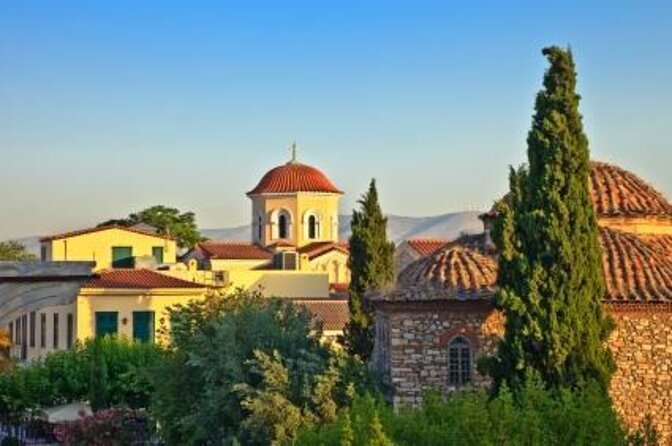
Then the pace slows for Plaka (about an hour, free). It’s described as Athens’ village under the rock: a maze of neoclassical houses, flower-draped balconies, and tiny chapels. You’ll see cafés spilling onto lanes and hear bouzouki melodies drifting from doorways.
Look for Anafiotika: whitewashed Cycladic-style houses built by island craftsmen clinging to the Acropolis slope. This is where you can reset after museums and marble monuments. Take it slow—cobblestones and stairs mean your feet will thank you for moving at a human pace.
Monastiraki: marketplace layers and photo gold at golden hour
Finally, you end in Monastiraki (about an hour, free). This is where eras overlap: a mosque, a church, the Roman Agora, and flea-market stalls selling everything from leather sandals to antiques. The square hums with street food and bargaining chatter.
Key sights to notice: views to the Acropolis from the square and the ruins of Hadrian’s Library just steps away. Photo tip: golden hour in the square can light up the Parthenon like it’s been waiting for you.
Practical note: keep small valuables zipped. The crowds are part of the charm, but they’re also where pickpocket risk rises in any busy square.
Price and value: what you’re really paying for at $600.12 per person
At $600.12 per person, this isn’t a budget “hit the highlights” deal. But it can still be good value, depending on how you travel.
Here’s where the math leans in your favor: admission tickets are included at major stops like the Acropolis, Parthenon area, Ancient Agora, and Temple of Hephaistos. Instead of paying multiple entry fees and spending time figuring out counters, you’re paying for a guided flow between sites.
You’re also paying for time quality. Several stops are designed as focused micro-sessions—around 15 minutes each for top monuments in the Acropolis complex—so your guide can point out the details that turn “I saw it” into “I understood it.”
Pickup is offered too, which reduces the friction of crossing the city on your own.
The one reason this might not be worth it for everyone is simple: if you already know Acropolis architecture deeply and you don’t need a guide to make it click, you could potentially do a self-guided day cheaper. But if you want context, photo help, and a planned route that makes efficient sense, the price starts to look more reasonable.
One more small but important point: your booking is typically made well in advance. The average booking time is 122 days, which suggests you’ll want to reserve early so you can pick a date that matches good weather.
Should you book this Athens private day tour?
I’d book it if you want:
- A private, English-speaking guide who explains why the Acropolis looks the way it does
- Admission included at multiple major sites, plus a logical route
- A day that combines ancient monuments with real city atmosphere in Plaka and Monastiraki
- Clear photo guidance (colonnades, Caryatids framing, golden hour squares)
I might skip it if:
- You’re traveling strictly on a tight budget
- You hate walking and climbing, even with breaks built into short stop times
- You prefer doing monuments slowly at your own pace with no structured flow
If you choose it, do one thing that makes the whole day better: pack grippy shoes and keep your schedule weather-smart. Athens can be magical, or it can be slippery and soggy. This tour works best when you show up ready to move.
FAQ
How long is the Best of Athens & Acropolis Full Day Private Guided City Tour?
The tour runs about 5 to 7 hours.
Is pickup included?
Pickup is offered, but you need to coordinate the exact pick-up spot using WhatsApp or Apple iMessage.
What language is the tour in?
The tour is offered in English.
Is this tour private?
Yes. It’s a private tour/activity, and only your group participates.
Are admission tickets included?
Admission tickets are included at several major stops, including the Acropolis and Parthenon area, the Ancient Agora, and the Temple of Hephaistos. Other stops like Syntagma and Plaka are listed as free.
Is entry to Panathenaic Stadium included?
Optional paid entry is available to climb higher and visit a small exhibit, but that paid entry is not included in the tour time.
What time does the tour operate?
The listed opening hours are 9:00 AM to 6:00 PM, Monday through Sunday.
What should I wear for the Acropolis portion?
The Acropolis has smooth marble surfaces, so grippy footwear is essential.
What if weather is bad?
The experience requires good weather. If it’s canceled due to poor weather, you’ll be offered a different date or a full refund.
How does cancellation work?
Free cancellation is available if you cancel at least 24 hours before the experience’s start time. If you cancel less than 24 hours before, the amount paid is not refunded.



More Guided Tours in Athens
More Tours in Athens


More Tour Reviews in Athens
- All Day Cruise -3 Islands to Agistri,Moni, Aegina with lunch and drinks included
★ 5.0 · 4,958 reviews