REVIEW · ATHENS
City Sightseeing Athens, Piraeus & Beach Riviera Hop-On Hop-Off Bus Tours
Book on Viator →Operated by City Sightseeing Ltd - Europe · Bookable on Viator
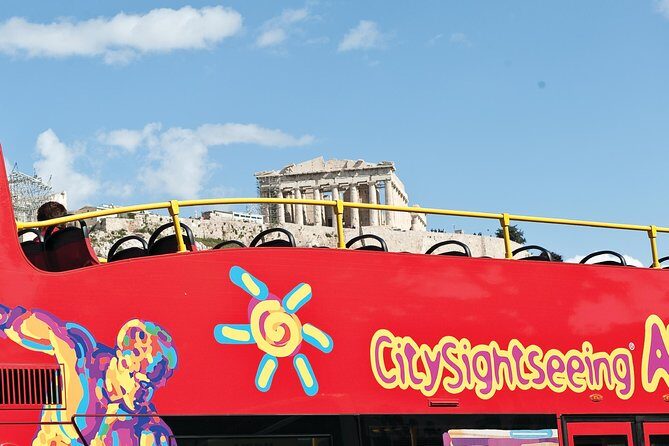
Athens moves fast, but your sightseeing route does not. This hop-on hop-off bus gives you an easy way to see the big hitters and then choose where you want to linger, from Syntagma Square to the Acropolis views and beyond. You get open-top, double-decker rides with on-board audio so the city feels arranged instead of random.
What I like most is how practical the setup is. You can plan your own pace with a 24-, 48-, or 72-hour pass, and the buses hit stop locations close to the places most people want to see first. I also love the coverage breadth: the Athens loop focuses on central antiquities and museums, while optional lines add Piraeus and beachside spots without you needing taxis.
One drawback to think about: the experience depends on roads and timing. Athens road closures during major events can mean reduced service or skipped stops, and some people report audio quirks (like playback not matching perfectly), so build in a little patience and flexibility.
In This Review
- Key things to notice before you board
- Why this bus format works so well for Athens
- Picking the right line: Athens loop vs Piraeus vs Riviera beaches
- The Athens Line: a smart way to map the city in about 90 minutes
- Syntagma Square: your Athens starting point
- Melina Mercouri Monument to Acropolis/Plaka: the must-do views
- Acropolis Museum area: useful even if you skip the museum
- Temple of Zeus and the Parliament/National Gardens zone
- The museums corridor: Four Museums and National Gallery
- Stadium and National Library: add local Athens feel
- National Archaeological Museum: for the artifact-focused day
- Monastiraki and Kotzia Square: where shopping and wandering start
- Piraeus Route: from cruise terminals to harbor views
- Culture and city edges: Pantion and Niarchos Foundation area
- Municipal Theatre and the march toward the port
- Lions Gate and the Archaeological Museum area
- Votsalakia and Mikrolimano: seaside breaks that feel different
- Planetarium and big-hotel zone: easy pick-up and re-board
- Beach Riviera Route: Glyfada coastline and the long southward day
- Faliro/Flisvos and Edem: good for a first coastal taste
- Agios Kosmas and Glyfada: classic beach and resort hopping
- Vouliagmeni Lake stop: for nature-minded sightseeing
- Kalamaki toward the south and return points
- Audio, Wi-Fi, and the small comfort details
- Timing, traffic, and why the schedule can shift in Athens
- How to plan your day so you don’t feel rushed
- Who should book this bus, and who should think twice
- Should you book City Sightseeing Athens, Piraeus & Beach Riviera?
- FAQ
- How long is the hop-on hop-off pass valid?
- Which routes are available with this tour?
- Does the Athens Line run year-round?
- When does the Piraeus route depart, and how long is it?
- What about the Beach Riviera route schedule and duration?
- Is audio commentary included, and in how many languages?
- Is Wi-Fi included on the bus?
- Is free Greek beer included?
- What’s not included in the ticket price?
Key things to notice before you board

- Flexible time: 24-, 48-, or 72-hour validity means you can ride once for orientation and come back later.
- Audio with headphones: 13 languages, plus a system designed for self-guided sightseeing.
- Multiple lines: choose Athens-only, or add Piraeus for cruise-port access, or Riviera for beach hopping.
- Route times differ: Athens takes about 90 minutes per loop, Piraeus about 80, Riviera about 110.
- Stop coverage near major sights: most stops are placed for easy walking to landmarks and museums.
- Plan for schedule changes: special events can affect roads and bus frequency.
Why this bus format works so well for Athens
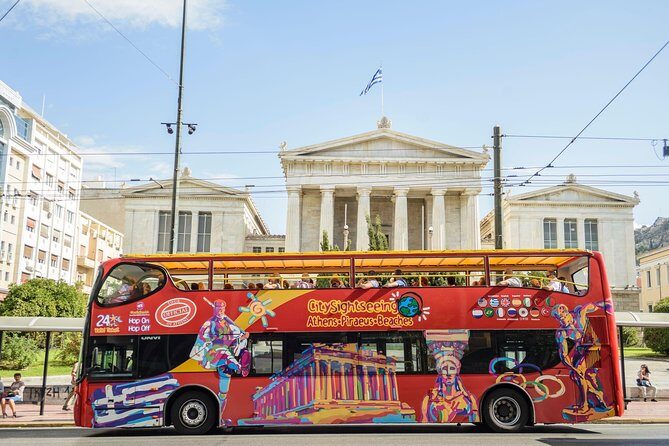
Athens is a “walk-and-heat” kind of city. Even if you love history, you don’t want to spend your first day trapped in traffic or guessing how to move between neighborhoods. The hop-on hop-off approach solves that. You get a loop that shows you what’s where, and you decide when you want to get off and explore on foot.
The open-top, double-decker part matters too. From the upper level you get a clearer sense of spacing—how the Acropolis sits above the city, how major squares connect to streets you’ll actually walk later, and where museums and viewpoints cluster. It also makes a difference when you want photos that include the city’s layout, not just a close-up of one monument.
Then there’s the on-board audio. Audio does not replace reading a guidebook, but it helps you understand what you’re looking at while you’re moving. You’ll hear explanations in multiple languages and you can follow along without constantly checking your phone.
You can also read our reviews of more city tours in Athens


Picking the right line: Athens loop vs Piraeus vs Riviera beaches
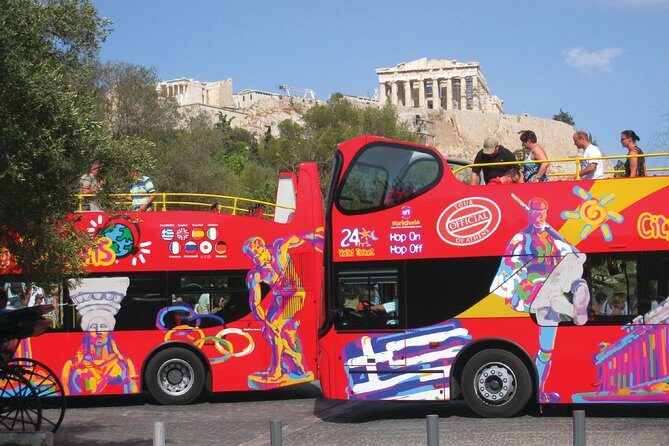
The main pass concept is simple: your ticket is valid for 24, 48, or 72 hours, and depending on which option you buy, it covers up to three routes. That flexibility is where the value really shows. One day can be “get your bearings.” Another day can be “pick 2–3 sites and go deep,” including museums and beach stops.
Here’s how I’d decide which route matters most to your trip:
- Choose the Athens Line if you want the classic first-day sweep: central squares, the Acropolis area, major museums, and easy walking links.
- Add the Piraeus line if you’re arriving or leaving from cruise terminals or if you want harbor views and seaside neighborhoods. It’s also useful for anyone who wants a different side of Athens beyond antiquity sites.
- Add the Beach Riviera line if your idea of Athens includes time on the coast—places like Glyfada, plus stops that reach toward Vouliagmeni Lake.
There’s also an interchange idea built into the network. The Piraeus route and Riviera route can connect back near the Acropolis area, which makes it easier to stitch beach time with antiquities without starting over.
The Athens Line: a smart way to map the city in about 90 minutes

The Athens Line runs year-round (with a few holiday exceptions), and it’s timed for a steady first loop. Departures start at 8:30am and run until 4:30pm, with buses typically every 20–30 minutes. Each full loop is about 90 minutes, which is long enough to see the main sites while still short enough to hop off and return later within your pass window.
Let’s talk stops in plain terms—what each cluster is good for, and what can slow you down.
Syntagma Square: your Athens starting point
You begin at Syntagma Square. It’s a strong orientation stop because it connects to major central streets and gives you a sense of where the city center is “anchored.” If you only have one day, this is one of the easiest places to start and restart your route.
Melina Mercouri Monument to Acropolis/Plaka: the must-do views
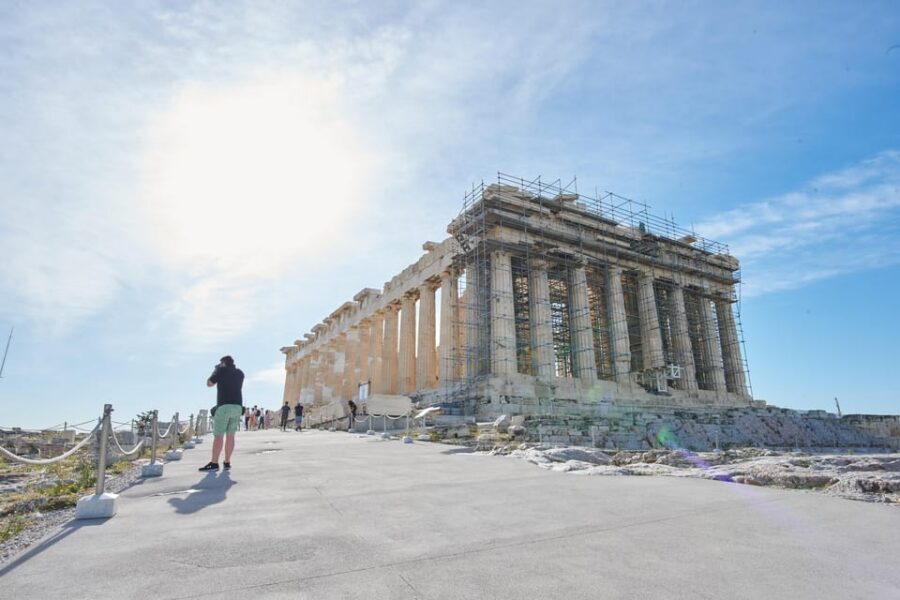
The bus heads to the Acropolis / Plaka area with a stop at the Melina Mercouri Monument. This is one of your best jump-off zones, because it’s where you’ll feel the dramatic rise of the Acropolis above street level. Plaka is also where you can transition from big views to street wandering later.
- All Day Cruise -3 Islands to Agistri,Moni, Aegina with lunch and drinks included
★ 5.0 · 4,958 reviews





Acropolis Museum area: useful even if you skip the museum
Next you’ll reach the Acropolis Museum area at Chatzichristou 6A. Even if you do not go inside, the location helps you understand the site layout: you’ll see how the museum connects to the Acropolis complex and why the area is so concentrated.
Temple of Zeus and the Parliament/National Gardens zone
You’ll pass through stops near Temple of Zeus and then move back toward Parliament / National Gardens by the Syntagma area again. This is a good combo when you want both grandeur and calmer walking breaks. Just note: central sites can have crowds, so hopping off right at peak times may mean longer waits to re-board.
The museums corridor: Four Museums and National Gallery
Stops at Leof. Vasilissis Sofias 642 and Leof. Vasileos Alexandrou 14 point you toward “museum row” vibes. The names suggest variety, and that’s useful if you’re the type who prefers interiors—art, artifacts, and exhibits—over only outdoor monuments.
Stadium and National Library: add local Athens feel
The Ancient Olympic Stadium area connects to George Karaiskakis Statue, and then you’ll reach places like the National Library at Oμόνοια 118. This part of the loop helps balance “tourist Athens” with areas that feel more like daily city life.
National Archaeological Museum: for the artifact-focused day
The stop near 28is Oktovriou 53 is the National Archaeological Museum area. If your goal is objects and context—rather than only viewing ruins—this is a great hop-off option. Plan your time carefully, because a museum visit can easily turn into a half-day even if you only meant to browse.
Monastiraki and Kotzia Square: where shopping and wandering start
You’ll also get to Ermou 137 (Monastiraki Square) and Kotzia Square (Town Hall area). This is where the bus becomes more than sightseeing. Once you’re in this zone, it’s easy to mix history with shopping streets and quick snack stops.
Practical tip from the experience: for the Athens Line, I’d aim for one loop early, then pick one or two neighborhoods to revisit on foot. It saves energy and stops you from trying to do everything in one tired sprint.
Piraeus Route: from cruise terminals to harbor views
The Piraeus route runs April to October and is shorter per loop—about 80 minutes. Departures are listed at 11am and 3pm, which makes it a more “planned day” choice than the Athens loop.
This line stands out because it’s built for real arrival/departure life. It serves the cruise terminals (the stop listed as Telōneio, Cruise Terminals A & B). If you’re on a cruise, that timing and stop placement can turn a stressful logistics day into a simple hop-on plan.
Here are the stop clusters and what they’re best for:
Culture and city edges: Pantion and Niarchos Foundation area
You’ll start through areas including Pantion University (Isalos.net) and Niarchos Foundation area (Lisikratous 1). These are good for a quick “what’s here” feel. The bus gives you a way to link these city-side spots to the waterfront without guessing transport.
Municipal Theatre and the march toward the port
A stop at Municipal Theatre (Sotiros Dios 15) helps you get oriented in the central-to-coastal movement. Then you head toward the cruise terminals and beyond.
Lions Gate and the Archaeological Museum area
Stop placement includes Akti Miaouli 238 (Lions Gate) and the Archaeological Museum of Piraeus zone (listed as the Nelson Exhibition). Even if you do not go in, these stops put you near the stories connected to Piraeus itself, not just Athens proper.
Votsalakia and Mikrolimano: seaside breaks that feel different
Stops like Votsalakia Beach (Akti Kountouriotou 13) and Mikrolimano Harbour (Leof. Al. Papanastasiou 68) are your best reasons to pick this route. This is where you can hop off for sea air, photos, and casual walking. Expect a more relaxed vibe than around the Acropolis.
Planetarium and big-hotel zone: easy pick-up and re-board
The line also serves Planetarium – Marriott Hotel (Leof Andrea Siggrou 387) and Grand Hyatt & Intercontinental (Aristotelous 1). These are practical stops for re-boarding because they’re easy to find and usually have good foot traffic paths to link back to sights.
Small confidence bonus: I’ve seen reports of staff handling lost items successfully. For example, there’s a mention of a driver named George X in a lost-wallet situation where staff helped track the item down and return it at an agreed stop. That’s the kind of reliability detail that matters when you’re riding open-top buses with your hands full.
Beach Riviera Route: Glyfada coastline and the long southward day

The Beach Riviera route also runs April to October and is the longest loop listed—about 110 minutes. Departures are 11am, 1pm, and 3pm, so it’s easiest to plan this as a beach-focused half day plus transport.
What I like about this line is that it gives you multiple coastal flavors. You’re not limited to one beach area. You can hop around and compare vibes—some stops are clearly more resort-style, while others push toward natural or quieter scenery.
Faliro/Flisvos and Edem: good for a first coastal taste
Stops such as Trokantero (Faliro / Flisvos) and Edem help you “start coastal” without committing to a far drive. This is a good choice if you want to test the beach mood and then decide where you want to stay longer.
Agios Kosmas and Glyfada: classic beach and resort hopping
You’ll see stops including Agios Kosmas Beach (4η ΚΑΛΑΜΑΚΙΟΥ), Glyfada Beach (Leof. Poseidonos 82), and resort and hotel zones like Palace Hotel Glyfada / Bomo Palace. Glyfada in particular is a place where you can combine sea time with café and shopping energy (depending on the day and your exact stop).
Vouliagmeni Lake stop: for nature-minded sightseeing
The bus includes Vouliagmeni Lake (Limnē). This is one of the most interesting additions on the Riviera list, because it’s not just beach sand and sun. It’s also the kind of stop that can help you break up a long day if you want one nature-based change of pace.
Kalamaki toward the south and return points
Later stops include Kalamaki (Leof. Poseidonos 43) and Poseidon Athens Hotel, plus return-oriented stops like Planetarium – Marriott Hotel. The circuit makes it easier to finish your day without needing to coordinate multiple separate transit rides.
Planning note: beach days often turn into “we stayed longer than expected.” The 24–72 hour pass gives you breathing room. You’re not stuck trying to squeeze everything into one ride time.
Audio, Wi-Fi, and the small comfort details

The tour includes free Wi-Fi, and there are audio headphones tied to an audio guide system in 13 languages. This is the backbone of how the ride becomes more than just a bus loop.
That said, audio tech is still tech. Some people report issues like one earbud not working, or the recording not matching the exact stop moment. If you run into that, switch headphones left/right, and make sure you’re using the headphones provided with the system. Also, bus noise can make audio harder to hear on open-top upper decks if it’s windy—turn the volume up carefully and test it at your first stop.
One detail that feels minor but matters: the staff and drivers. You can get a lot more out of a hop-on bus if you can ask a quick question at a busy stop. In the feedback, staff were described as friendly and helpful, and there’s also mention of a guide named Teddy at the Acropolis who was noted for being both humorous and informative. If you’re the kind of person who likes to understand what you’re seeing, catching a departure with strong guidance can improve your day.
Free beer is also listed as included, but the venue may change. Have your expectations flexible. If it’s important to you, check locally where and when it’s offered.
Timing, traffic, and why the schedule can shift in Athens
Even with a great route, Athens is Athens. Roads can get jammed, and major events can change what runs smoothly. There are examples of marathon weekends and even protests affecting schedules and stopping service on some stops.
So here’s the practical approach I recommend:
- Treat the bus schedule as your guide, not a promise.
- If you’re planning museum or timed entry, still build a buffer.
- Don’t assume every stop will run exactly as usual during big public events.
Within normal conditions, the Athens Line is set to move fairly often (every 20–30 minutes). That frequency is why it’s a solid “first day” tool: you don’t have to sprint to catch the bus, and you can hop off and return without waiting too long.
If you’re trying to maximize your value, I like the simple strategy that shows up again and again: ride the loop once, then do a second pass focused on the sights you decided you care about most.
How to plan your day so you don’t feel rushed
Here’s the rhythm that works best for me when you have limited time in a big city like Athens:
- Start early on the Athens Line (Syntagma is a good anchor).
- Ride the loop once mainly for orientation and to decide what you want to walk.
- Hop off for one museum or one “big ticket” area, then get back on when you feel your energy drop.
- Use the Piraeus and Riviera lines only if they match your day plan, since they have fixed departure windows.
A quick comfort checklist:
- Bring water and snacks. Heat and stop-and-go riding add up fast.
- Expect traffic to be part of the ride, not a problem to solve.
- If you’re in a hurry, keep your hop-off stops close together. The bus reduces transit stress, but you still want efficient walking distances.
If you’re visiting with kids, the open-top views and the ability to stop when someone needs a break can be a real win. If you want to avoid heat and sun exposure while still seeing the big monuments, sitting upstairs and hopping off only where it’s worth the climb is a nice compromise.
Who should book this bus, and who should think twice
This is a good fit if you want:
- A low-stress first look at Athens with flexible hop-on time
- Stops near central sights, museums, and key squares
- The option to add Piraeus for harbor and cruise-terminal access
- The option to add Beach Riviera for coastal day planning
It may be less ideal if:
- You have mobility concerns. Reports mention steep stairs to the upper deck and difficulty getting on, plus limited visibility from lower windows due to the way the glass is set up.
- You rely on audio to match every stop perfectly. Some people report the recording timing or headset audio not aligning well.
If you’re comfortable with stairs and you’re open to the idea that schedules can shift during big public events, you’ll likely get a lot of value out of this style of tour.
Should you book City Sightseeing Athens, Piraeus & Beach Riviera?
Yes, if you want a practical way to cover a lot of Athens without overplanning. For the price point (listed here as $26.36 per person), the real value comes from flexibility: a 24–72 hour pass plus access to the route types you care about. If beaches or the port matter to your itinerary, bundling routes is a smart way to avoid extra transit decisions.
If your trip is super short and you only care about one or two sites, you might want to compare whether a single-line plan fits better than committing to multiple lines. Also, if your travel dates line up with a major marathon or public protest, plan for schedule changes and don’t tie your whole day to strict timing.
Bottom line: use it for what it does best—orientation plus targeted walking time—and you’ll come away with a clearer map of Athens and a smoother day.
FAQ
How long is the hop-on hop-off pass valid?
Your ticket is valid for either 24, 48, or 72 hours, depending on the option you select.
Which routes are available with this tour?
You can choose options that include the Athens Line, and optionally the Piraeus line and/or the Beach Riviera line, depending on the pass you buy.
Does the Athens Line run year-round?
The Athens route operates all year round, except for 17th November, 25th December, and 1st January.
When does the Piraeus route depart, and how long is it?
The Piraeus route departs at 11am and 3pm, and the tour duration is about 80 minutes.
What about the Beach Riviera route schedule and duration?
The Beach Riviera route departs at 11am, 1pm, and 3pm, and the duration is about 110 minutes.
Is audio commentary included, and in how many languages?
Yes. There is on-board audio commentary in 13 languages, and headphones are included.
Is Wi-Fi included on the bus?
Yes. Free Wi-Fi is included.
Is free Greek beer included?
Free local Greek beer is included, though the venue may change, so it’s worth checking locally.
What’s not included in the ticket price?
Entry to attractions is not included, and food and drinks are not included unless specified.


More City Tours in Athens



More Tours in Athens



More Tour Reviews in Athens
- All Day Cruise -3 Islands to Agistri,Moni, Aegina with lunch and drinks included
★ 5.0 · 4,958 reviews