REVIEW · ATHENS
Small Group Tour: 7 Balkan Countries Athens to Dubrovnik / Split
Book on Viator →Operated by Choose Balkans · Bookable on Viator
Seven countries in two weeks sounds intense. It works because the route chains together major UNESCO sites with day-to-day human scale stops—old towns, bazaars, castles, and church-to-mosque stories you can actually see. Two things I like a lot: the small group size (max 10) that keeps the day from feeling like a conveyor belt, and the way the plan mixes big-ticket sights (Delphi, Ohrid, Stari Most) with smaller stops like Berat’s windows and Tirana’s food-focused neighborhoods. One drawback to plan for: it’s a lot of moving. You’ll cross borders and ride for long stretches, so it’s not the trip for you if you want lots of free downtime.
The logistics are also surprisingly supportive for a route this long: pickup in Athens, private transportation, a professional tour leader, and a finish with a driver shuttle to your hotel in Dubrovnik or Split. In past departures, guides such as Elton and Eri Veseli have been praised for being helpful and for connecting the timelines across Illyrian, Ottoman, and Austro-Hungarian eras in ways that make the places click.
In This Review
- Key Highlights You’ll Remember
- Why This Athens to Dubrovnik or Split Route Feels Different
- Pace, Borders, and the Small-Group Setup (Max 10)
- Where the Money Goes: Price and What’s Actually Included
- Greece First: Athens Pickup, Delphi Classics, and Meteora Sunset
- Delphi: the sanctuary layers you can still feel
- Meteora: monasteries on rock, timed for the best light
- Albania Day to Day: Gjirokaster’s Stone City and Berat’s 1001 Windows
- Ioannina and the old-town/castle pairing
- Gjirokaster: fortified town, medieval feel
- Berat: windows stacked like a signature
- North Macedonia’s Crown: Ohrid Lake and the St. Naum Water Source
- Tirana Isn’t an Afterthought: Food, Coffee, and Bunk’Art 2
- A local companion approach
- Bunk’Art 2: Cold War history inside a bunker
- Kosovo’s Cultural Capital: Kruja, Prizren, and Old Stone Details
- Kruja: old bazaar and castle resistance legacy
- Prizren: bridges, tolerance, and Sinan Pasha Mosque
- UNESCO Monastery and Wine Country Stops in Kosovo Surroundings
- Montenegro and the Adriatic Feel: Budva, Kotor, and One Serious Old Town
- Budva: split personality old town vs newer city
- Kotor: UNESCO maze of streets
- Bosnia Highlights: Stari Most, Mostar Bazaar, and Blagaj Tekija
- Sarajevo’s Layered Story: War Reminders, Ottoman and Austro-Hungarian Parts, Latin Bridge
- Hotels, Comfort, and What to Pack for a Two-Week Sprint
- Guides and Service: Why Elton and Eri Veseli Matter
- Should You Book This Balkan Small-Group Tour?
- FAQ
- Where does the tour start and what time?
- How many countries does this tour include?
- What’s the maximum group size?
- Is hotel pickup offered?
- How does the tour end?
- Is the cost per person or per room?
- Are entry tickets included?
- Are meals included?
- Is the tour refundable if I cancel?
- Do I need travel insurance?
Key Highlights You’ll Remember
- UNESCO, but not in museum-only mode: Delphi, Meteora, Ohrid, Berat, Kotor, Stari Most, and other standout heritage stops are built into real streets and viewpoints.
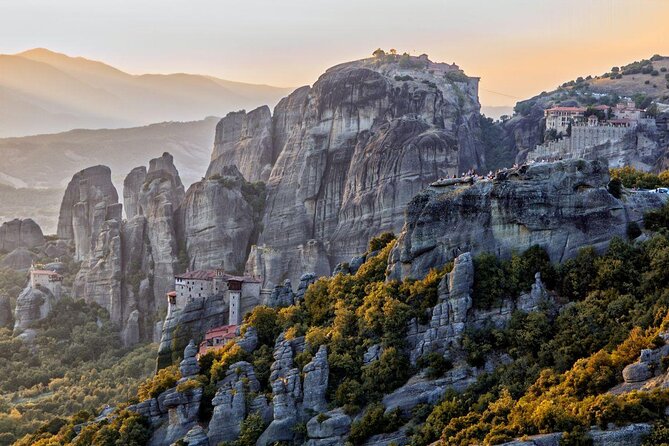
- Sunset payoff at Meteora: You’re scheduled for one of the best moments of the trip—monasteries perched above the rock formations as the light drops.
- Tirana food and coffee detour: Byrek breakfast, bazaar wandering, and an Albanian coffee break go beyond checklist sightseeing.
- Ohrid + St. Naum combo: You get city viewpoints plus monastery views tied to Lake Ohrid and the Crni Drim water source.
- Historic architecture in every direction: From Gjirokaster’s “stone city” feel to Prizren’s bridges and mosques to Sarajevo’s Latin Bridge story.
- Guides can make the day: Elton and Eri Veseli have been singled out for caring service and clear explanations.
Why This Athens to Dubrovnik or Split Route Feels Different
This is one of those trips where the itinerary length is the whole point. You start in Greece, then keep stepping through the Balkans across seven countries, ending on the Adriatic side. The best part is that the day-to-day mix doesn’t just stack famous ruins. You’ll also walk steep streets, pass old bridges, and spend time inside towns that still feel lived-in.
I like the “contrast” structure. One day you’re staring at Delphi’s classic sanctuary layers and thinking about ancient cult life. The next, you’re in Meteora watching monastery silhouettes on the rocks as the sky changes. Later you’ll shift from lake views at Ohrid to castle walls at Berat, then to the Ottoman-to-Austro-Hungarian neighborhoods around Sarajevo. Even if you don’t memorize every date, you start to feel how borders and empires changed daily life.
For context, the price—$5,116.01 per person—might look steep at first glance. But you’re paying for a lot of included value: private transportation across multiple countries, a professional tour leader, hotel pickup and drop-off, tourist taxes, and entry tickets for the sites marked as visited. Meals aren’t included, so you’ll still spend on lunch and dinner. Still, if you tried to arrange this level of ground coverage yourself, the time cost and logistics headaches would add up fast.
You can also read our reviews of more tours and experiences in Athens.

Pace, Borders, and the Small-Group Setup (Max 10)
This tour caps at 10 travelers, which matters more than it sounds. With a small group, you tend to get quicker regrouping at sites, less waiting on board, and more chance to ask questions before you move on. You also usually get a smoother rhythm when crossing into different countries—especially on a route that includes Greece, Albania, North Macedonia, Kosovo, Montenegro, Bosnia and Herzegovina, and Croatia as the finish region.
The tradeoff is simple: you’re on the road often. The itinerary pairs distant places, so you’ll have some long travel blocks and a tighter schedule at each stop. If you’re the kind of traveler who needs hours of unplanned wandering every afternoon, this may feel rushed. If you like structure and want to maximize what you see without spending your vacation doing logistics, you’re in the right place.
Also note the trip is described as “approx.” 14 days, so think in terms of “two weeks of action” rather than a precise timetable down to the minute. It’s also set up to adapt if weather, strikes, or temporary site closures happen.
Where the Money Goes: Price and What’s Actually Included
Here’s what you’re covering in the listed package:
- Accommodation and breakfast for all overnight stays (BB)
- Private transportation
- Professional tour leader
- Hotel pickup in Athens
- Drop-off by local representative/driver in Dubrovnik or Split
- Entry tickets for the sites that will be visited
- Tourist taxes
- International car insurance, road taxes, petrol
- Mobile ticket
And what you’re responsible for:
- Lunches, dinners, drinks, snacks
- Souvenirs and personal spending
- Anything not explicitly mentioned as included
This is the part where I tell you to do the math in a practical way. If you usually spend $25–$50 a day on lunch and dinner (more in some cities), your “real cost” ends up higher than the headline price. But you’ll also save a huge amount of planning time. The included breakfasts help because they reduce one of the biggest “daily decisions” during busy touring days.
One more value point: the plan includes pickup in Athens and a final shuttle to your hotel. That reduces your stress load at the start and finish, which is where long trips often go sideways.
Greece First: Athens Pickup, Delphi Classics, and Meteora Sunset
You start in Athens with hotel pickup (starting at 8:00 am) and a move toward the ancient Greek world. If you arrive early, you’ll have some freedom to explore Athens on your own before the tour leader collects you. That’s a nice way to avoid feeling like you only see a city through a window.
Delphi: the sanctuary layers you can still feel
Delphi is a UNESCO site, and the plan gives you focused time at several key areas: Temple of Apollo, the Castalian Fountain, the Large Sphinx of Naxos, and highlights like the Treasury of the Athenians and the theatre. You also visit the museum, including the famous statue of Antinoos and the bronze statue of the Charioteer (dated 475 B.C. in the description).
What I’d expect you to enjoy here is the “concentration.” Delphi isn’t scattered across a giant modern city. It’s built like a dramatic story, so even if your brain is tired from travel days, the site still lands quickly.
- All Day Cruise -3 Islands to Agistri,Moni, Aegina with lunch and drinks included
★ 5.0 · 4,958 reviews

Meteora: monasteries on rock, timed for the best light
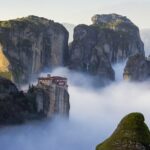
Then you drive toward Meteora, another UNESCO site with monasteries built atop dramatic rock formations. The schedule specifically aims for sunset. If you’re the kind of traveler who thinks sunsets are all the same, Meteora is one of the exceptions. The monasteries and rocks turn the landscape into a stage set, and the light shift makes the whole place feel alive.
Just be ready for real-world conditions: rock sites can mean uneven steps and cooler air near evening. Wear shoes you trust.
Albania Day to Day: Gjirokaster’s Stone City and Berat’s 1001 Windows
Albania is where the tour really leans into “old towns you can walk.” You start with Ioannina one day (also a historical old town and castle area), then head into Gjirokaster, the “stone city.”
Ioannina and the old-town/castle pairing
In Ioannina, you walk cobbled streets and see architecture that reflects Byzantine and Ottoman layers. The castle stop is a key moment, because inside the walls you get a web of narrow streets and historic buildings—not just a single “viewpoint stop.”
Gjirokaster: fortified town, medieval feel
Gjirokaster is UNESCO, and the tour explains why so well: it functions like a fortress town where houses look built as small strongholds. The plan includes time for the medieval bazaar and a well-preserved house where the interior feels original.
What you’ll likely love most is the texture: stone, steep streets, and the way the city shape makes you slow down and look around.
Berat: windows stacked like a signature
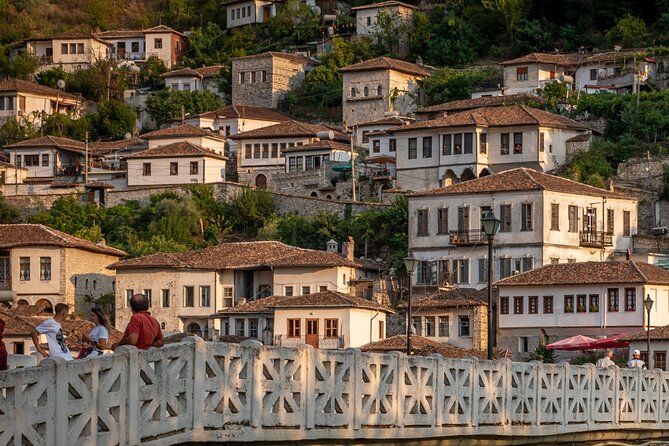
Next is Berat, UNESCO and known as the town of 1001 windows. You’ll walk narrow stone streets where those windows appear layered and stacked. Berat also has a mix of castle walls (where residents still live inside the old fort area), churches and mosques, and a lively lower town.
Two entrances are explicitly marked as included:
- Berat Castle
- National Iconographic Museum Onufri
If you’re into art and religious painting traditions, Onufri’s signature reddish tone gets attention here. And if you’re not, the museum time still helps you understand why the town mattered beyond just scenic photos.
North Macedonia’s Crown: Ohrid Lake and the St. Naum Water Source
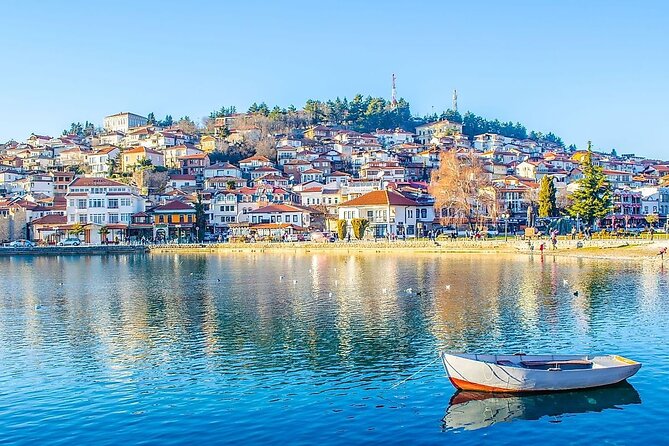
Ohrid is one of Europe’s oldest human settlement areas per the tour description, and the city plus Ohrid Lake are UNESCO sites. This is a day where the walking is paired with viewpoint stops and church-and-mosque variety.
You’ll visit viewpoints tied to the Church of St. John, the Church of St. Nicolas, and Halveti Hayati Tekke (a mosque). The tour also points out Ohrid’s reputation for 365 Orthodox churches—one for each day of the year. Even if you treat that as a saying rather than a strict count, it tells you why the city is a big deal for Orthodox heritage.
Then you head to St. Naum. The monastery complex is set at the source of the River Crni Drim, feeding into Lake Ohrid. The plan also frames the stop as part of a protected natural area within the Galicica park. Expect this to feel calmer than the city center, because it’s timed as a scenic, nature-meets-spiritual site.
Tirana Isn’t an Afterthought: Food, Coffee, and Bunk’Art 2
Tirana can be easy to under-appreciate on a Balkan circuit, but this plan puts it at the center in a way that feels practical.
A local companion approach
You meet with a local companion and focus on culinary treasure-hunting rather than just landmarks. You’ll stop for Byrek and breakfast like locals, then move through Tregu Çam and the Çam bazaar area.
After that, the tour includes time for street food culture and pastries, plus a coffee break where you taste traditional Albanian coffee. The stop sequence also includes Pazari i Ri, the “Bicycle bazaar,” and the New Bazaar for an Albanian lunch featuring Qofte (meatballs), fresh bread, and options like Albanian Gjize (cottage cheese) for vegetarians. You’ll also taste Albanian Raki as part of the meal experience.
Bunk’Art 2: Cold War history inside a bunker
The final cultural stop in Tirana is BUNK’ART 2, a nuclear bunker converted into a museum. It’s tied to Enver Hoxha’s era and the communist daily-life story told through a museum format. That’s an important shift from the festival-like energy of markets into something heavier and more reflective.
This is one of the best “why this tour feels real” moments: you don’t just see Albania, you taste it.
Kosovo’s Cultural Capital: Kruja, Prizren, and Old Stone Details
The route goes through Kruja, then into Kosovo with Prizren, and adds monastery and bazaar stops later.
Kruja: old bazaar and castle resistance legacy
Kruja is presented as an Albanian resistance symbol against Ottoman expansion. You walk the Medieval Old Bazaar, and you also visit Kruja Castle, with the entrance marked as included. The castle placement and the mention of hidden paths give you a reason to care about the geography—not just the view.
If you enjoy towns where history is built into street angles and stone walls, Kruja is a strong stop.
Prizren: bridges, tolerance, and Sinan Pasha Mosque
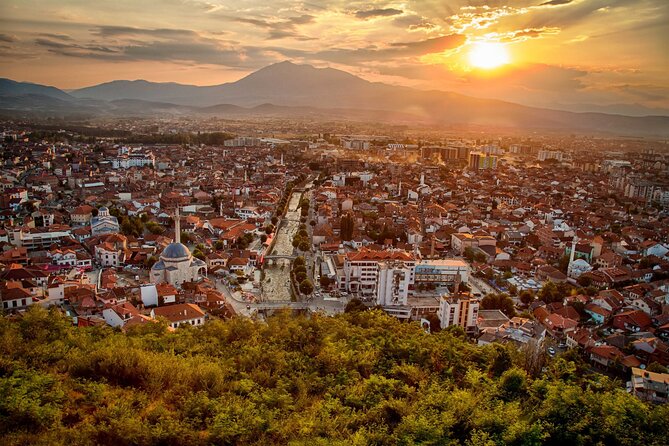
Prizren is described as Kosovo’s cultural capital, with religious tolerance noted as part of the identity. The old town sits around a river with bridges crossing the water. The tour includes Sinan Pasha Mosque (marked included) and Kalaja Fortress for a panorama view.
There’s also a free afternoon in Prizren. That matters because you’ll want time to wander those streets slowly—especially after so many moving days.
UNESCO Monastery and Wine Country Stops in Kosovo Surroundings
Later you’ll reach Decan Monastery, a UNESCO site (described as white-colored and still with monks who make fresh organic food). The tour highlights frescoes and the Palaeologan renaissance style connected to the way Byzantine painting changed.
You’ll also have a Rahovec Valley stop tied to viticulture. The description mentions grapes cultivated since Illyrian times and points to a wine festival every September. Even if your dates don’t match the festival, seeing the region’s wine identity helps make the area feel specific rather than just “another town.”
Montenegro and the Adriatic Feel: Budva, Kotor, and One Serious Old Town
Montenegro adds coast air and Adriatic energy. You start with a viewpoint near Sveti Stefan—then head into Budva and Kotor.
Budva: split personality old town vs newer city
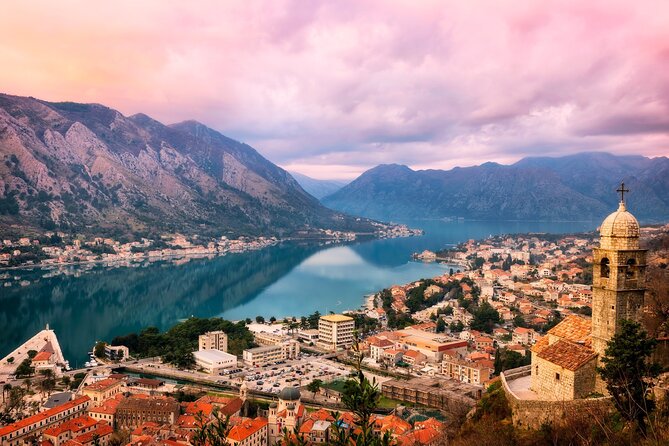
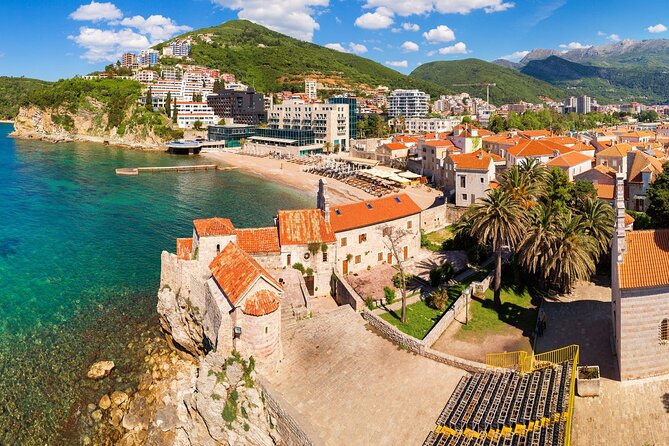
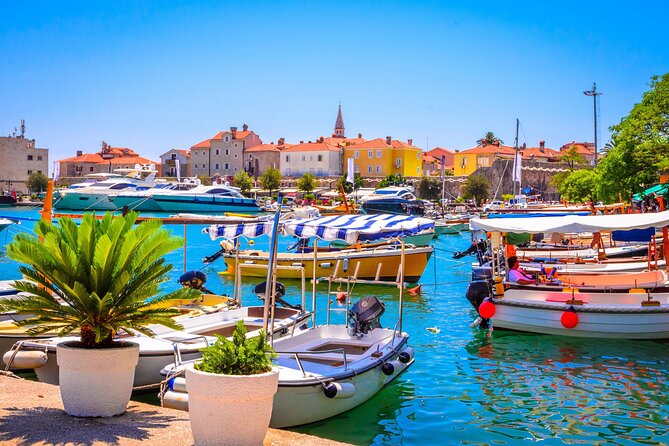
Budva is described as having an old and a new part. You’ll focus on the Old Budva center and visit the St. Ivan church and the small church of St. Mary, plus medieval old-town sights. This gives you an easy understanding of why it’s popular, without spending the day in shopping streets.
Kotor: UNESCO maze of streets
Kotor is UNESCO and is explained well as a maze of narrow cobblestone streets. The tour includes Saint Luke’s church, which locals connect to unity. The plaques with construction dates and original use are mentioned, which suggests you’ll see more than just one “icon.” You’ll be able to read the city like a timeline.
One practical note: old towns on cobblestones reward good walking shoes. Also plan to keep water handy since days can stack many stops.
Bosnia Highlights: Stari Most, Mostar Bazaar, and Blagaj Tekija
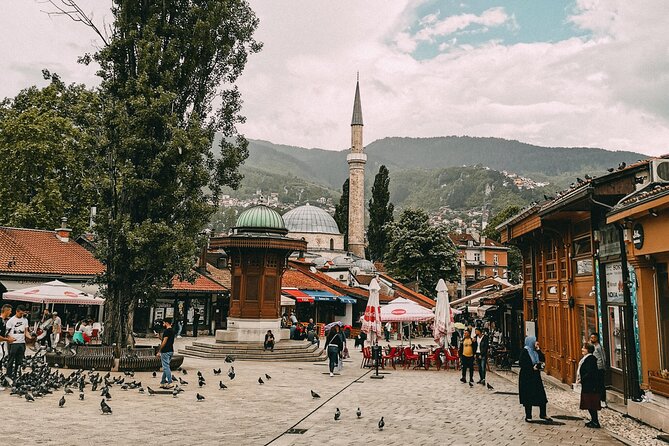
Mostar is where the trip hits one of its most iconic images. You’ll cross into Bosnia and Herzegovina and visit Stari Most (the Old Bridge), a UNESCO site built in the 16th century in Islamic architectural style. After the bridge, you wander the Old Bazaar and see “Don’t Forget” memorial stones around town. That detail reminds you this place carries modern history as well, not just postcards.
Then you go to Blagaj tekija, a monastery site outside Mostar at the foot of a cliff with blue waters in front. The tour describes it as part of the spring of the river Buna. It’s another day where the plan balances architecture with setting, so you’re not only walking through stone streets.
Sarajevo’s Layered Story: War Reminders, Ottoman and Austro-Hungarian Parts, Latin Bridge
Sarajevo is the emotional and intellectual finishing stretch before the Croatia coast.
The tour includes walking on uneven terrain and a focus on ruins and reminders of the Yugoslav War: bullet holes and cannon marks are visible in the city. The plan also connects Sarajevo’s origins and the medieval Bosnian Kingdom, then moves through Ottoman and Austria-Hungarian parts.
This is where you get the “European Jerusalem” idea described in the tour notes: bazaars, mosques, churches, and synagogues living in the same urban fabric. Then the Latin Bridge stop brings a World War I trigger story into the middle of the walking route.
After that, you get free time to eat traditional dishes and spend time in the old town area.
Hotels, Comfort, and What to Pack for a Two-Week Sprint
The tour lists 3 stars hotel accommodation with pricing calculated based on double/twin/triple/quad occupancy. That means you should expect clean, functional rooms rather than resort-style comfort. Since meals aren’t included, you’ll likely spend time looking for lunch and dinner options near your route, so keeping a small daily budget for food is smart.
For clothing and gear, go practical:
- Comfortable walking shoes for cobblestones and uneven terrain
- A layer for mountain and evening temps (Meteora sunset and lakes can shift fast)
- A small day bag for water and snacks between stops
- A phone charger, since you’ll use a mobile ticket system
Guides and Service: Why Elton and Eri Veseli Matter
Small-group tours succeed or fail based on leadership. In past departures, Elton has been described as kind and helpful, with clear explanations of historical events and timelines. Eri Veseli has been praised as passionate and knowledgeable, with great care for the group and helpful guidance.
Even if your personal guide style will vary, the key is that you’ll want someone who can connect what you’re seeing to the bigger story without turning it into a lecture. This tour’s best moments tend to be when that connection is made during walking time, not just at the roadside.
Should You Book This Balkan Small-Group Tour?
Book it if:
- You want organized cross-border travel with a clear UNESCO hit list (Delphi, Meteora, Ohrid, Berat, Kotor, Stari Most, and more).
- You like walking old towns and learning through streets, churches, mosques, and castles.
- You’re okay with a busy schedule and want the convenience of pickup and final drop-off.
Skip it if:
- You prefer long afternoons with no structure.
- You want a slower pace with fewer borders and more free time for independent exploration.
- You’re sensitive to cobblestones, uneven terrain, or evening temperatures around viewpoints.
One final practical tip: since lunch and dinner aren’t included, decide how you’ll handle food. If you love local markets, you’ll enjoy the Tirana and bazaar-focused days. If you want predictable meals, you’ll need a plan for where and when you eat during free time blocks.
FAQ
Where does the tour start and what time?
It starts in Athens, Greece, with pickup at your hotel. The start time is listed as 8:00 am.
How many countries does this tour include?
The trip is described as a 7 Balkan countries tour, starting in Greece and ending in Croatia (Dubrovnik or Split).
What’s the maximum group size?
The tour has a maximum of 10 travelers.
Is hotel pickup offered?
Yes. Hotel pickup in Athens is included.
How does the tour end?
On the last day, the tour leader takes you to the Croatian border and a local representative/driver shuttles you to your hotel in Dubrovnik or Split.
Is the cost per person or per room?
The listed price is per person, and the tour notes that pricing is calculated on double/twin/triple/quadruple room occupancy in 3 stars hotels.
Are entry tickets included?
Entry tickets for the sites that will be visited are included.
Are meals included?
Breakfast is included (14 breakfasts). Lunches, dinners, drinks, and snacks are not included.
Is the tour refundable if I cancel?
No. The experience is non-refundable and cannot be changed for any reason.
Do I need travel insurance?
You’re responsible for having your own health/travel insurance. The tour includes international car insurance and road taxes, but it doesn’t replace personal coverage.
More Tour Reviews in Athens
- All Day Cruise -3 Islands to Agistri,Moni, Aegina with lunch and drinks included
★ 5.0 · 4,958 reviews