REVIEW · ATHENS
Steps to tradition: Greek traditional dances in Athens
Book on GetYourGuide →Operated by Hidden Greece · Bookable on GetYourGuide
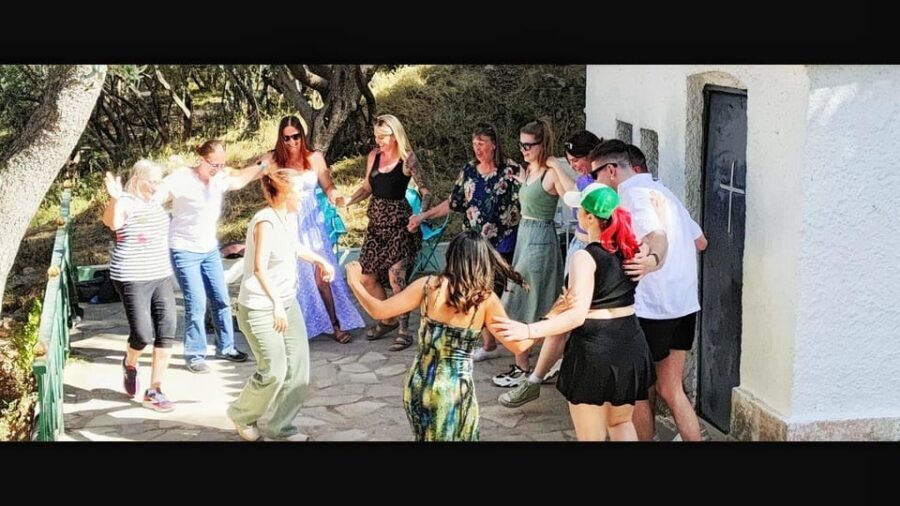
Hand-in-hand, you learn Greece’s old rhythms. This Greek dance workshop pairs real steps with real context, and it all starts with meeting Tania, an English-speaking traditional dance teacher, right by Philopappos Hill. I love that you’re not just copying moves—you’re learning why the dances matter, and how families have kept them going through generations.
You’ll also love the setting: you begin on Philopappos Hill with an easy walk for Acropolis views, then you’re taught in a nature spot that feels calmer than the busy streets below. The tone from the instructors is upbeat and supportive, so even if you’re not a dancer, you can still go at your own pace and actually enjoy the music.
One consideration: this is outside on a hill with walking and footwork, so it’s not for wheelchair users, and it may not suit people with heart problems or motion sickness.
In This Review
- Key highlights at a glance
- Philopappos Hill: the Athens spot that makes dance feel real
- Getting started: where you meet and how the first minutes work
- Learning Greek dance steps: why hand-in-hand matters
- What dances you’ll cover and the meaning behind the moves
- The instructor experience: what makes this class feel supportive
- Timing, pacing, and how the 2.5 hours actually feel
- What you take home: photos, videos, and a real souvenir
- Price and value: is $41.33 worth it?
- Who this Athens dance workshop fits best
- Practical tips before you go
- Should you book Steps to tradition: Greek traditional dances in Athens?
- FAQ
- How long is the Greek traditional dance experience on Philopappos Hill?
- Where exactly do we meet?
- Is the instructor English-speaking?
- What’s included in the price?
- Is this experience suitable for wheelchair users?
- Is free cancellation available?
Key highlights at a glance
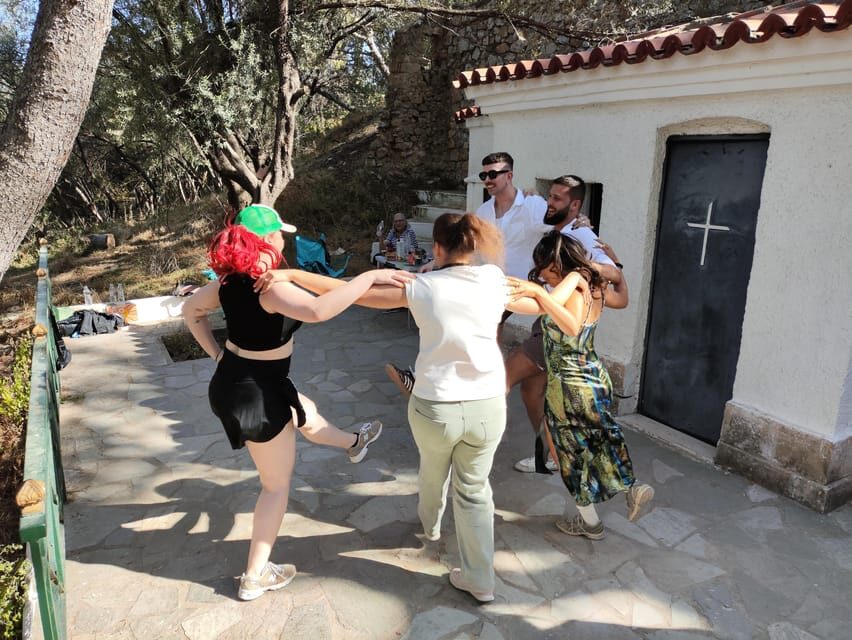
- Meet Tania at Philopappos Hill for an English-led traditional dance course by the Acropolis
- A short hill walk with Acropolis views before you start dancing
- Step-by-step teaching of authentic Greek traditional dances, held hand-in-hand with others
- Regional dances plus cultural meaning so the steps feel connected to Greek life
- Photos, videos, and a printed program you can take home
- Water and drinks included to keep things comfortable during the 2.5-hour session
Philopappos Hill: the Athens spot that makes dance feel real
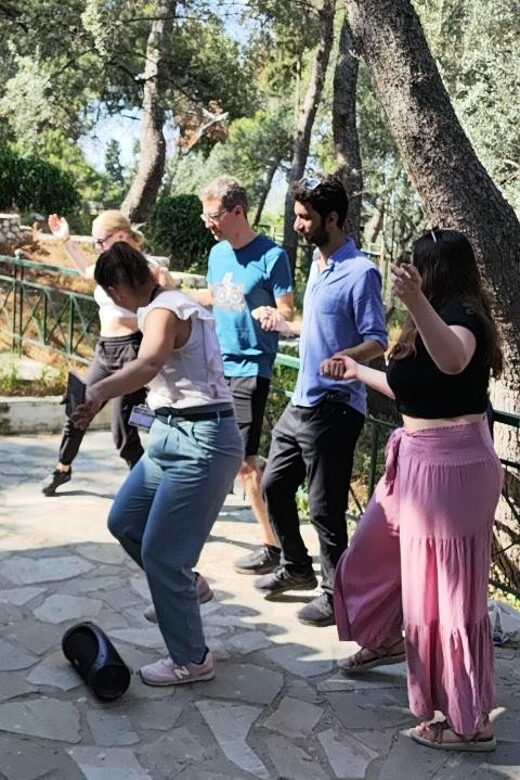
This experience is built around a simple idea: learn the dances where Greek culture still breathes. Philopappos Hill sits next to the Acropolis, so you get that unmistakable Athens feeling—ancient ruins nearby, and sky overhead—without being stuck inside a museum or in a crowded performance venue.
What makes the location especially effective for a dance workshop is the transition. You’re not dropped into a class right away. You start with a brief walk that gives you time to look up, orient yourself, and feel the rhythm of the place. Then you reach a beautiful natural spot on the hill where the dancing begins, and it clicks: this isn’t just “a thing to do,” it’s a living tradition in action.
And yes, the view matters. Even if you’ve seen Acropolis photos a thousand times, watching it from here while you’re about to move your body changes your attention. Your brain stops treating it like a distant landmark and starts treating it like part of the story you’re learning.
You can also read our reviews of more tours and experiences in Athens.



Getting started: where you meet and how the first minutes work
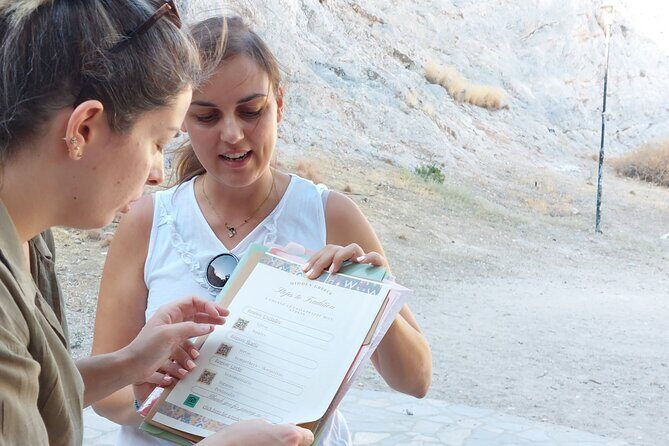
Your meeting point is exactly at the entrance of Philopappos Hill, next to the touristic buses. That’s handy: you can arrive, find the buses, and line up without playing guess-the-spot.
Once everyone gathers, the teacher leads you on about a 10-minute walking route with a view of the Acropolis. This walk does two jobs at once. First, it warms you up gently so you’re not suddenly expected to jump into footwork. Second, it sets expectations for how the class will feel: outdoors, hands-on, and connected to the area rather than fenced off from it.
When you reach the nature spot on the hill, you’re ready for the actual teaching. You’ll start with the steps and build from there, with the teacher guiding you while you dance alongside the group. You’ll also get that satisfying sense of timing: when the music starts, you’re not standing around wondering what happens next.
Learning Greek dance steps: why hand-in-hand matters
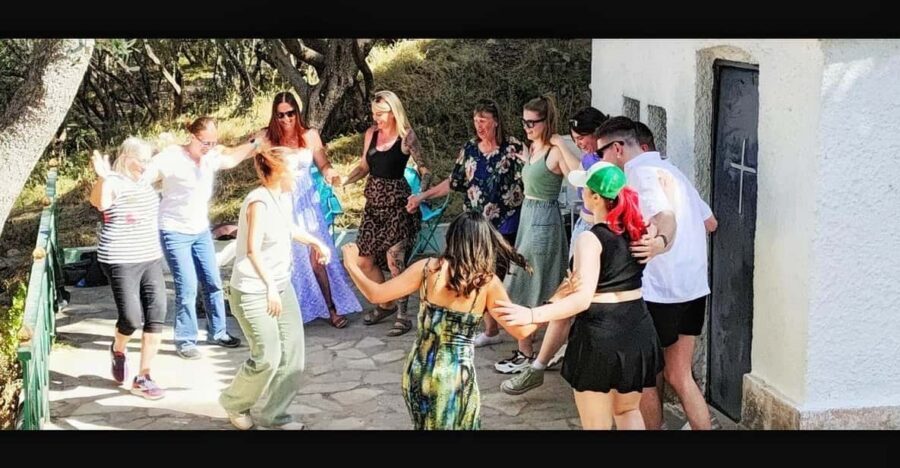
The heart of the workshop is learning real Greek traditional dances step by step. The teacher leads you through the sequence, and you practice with other people, often held hand in hand. That detail isn’t just sweet. It’s practical and cultural.
Practically, hand-holding helps beginners. If you’re unsure of your timing, you’re not alone. You’re guided by the rhythm of the group and the physical cues of where the line moves next. It turns a “class” into something closer to a social dance circle—safer, less stressful, and more fun.
Culturally, it matches how many traditional dances function as community activities, not solo performances. The workshop frames dances as something that has been preserved through families and passed from parents to kids. That’s why you’ll feel the emphasis on movement together rather than looking perfect.
Also, you learn to let the rhythm do some of the work. Instead of counting every beat like a math problem, you start responding to the music. It’s the kind of lesson that makes you forget you were worried about looking awkward.
What dances you’ll cover and the meaning behind the moves
The workshop is designed to teach dances characteristic of the main regions of Greece. You won’t just learn one style and call it a day. The point is to show how Greek traditional dances have roots in ancient times, then kept evolving across eras and influences—still unmistakably Greek, but not frozen in time.
That evolution is what makes the “meaning” part of the class click. You’re not learning steps in a vacuum. You’re learning them as part of a bigger story: dances preserved, adapted, and kept alive from family to family.
You’ll also get a short “why” behind the movements as the teacher guides you. This is where the experience becomes more than entertainment. When you understand what you’re doing and how it connects to Greek cultural life, you remember the steps better—and you take home something more useful than a quick clip.
And if you’re the type who likes context, you’ll probably appreciate that the workshop includes history-type insights woven into the experience. The overall vibe stays fun, but it doesn’t feel shallow.
The instructor experience: what makes this class feel supportive
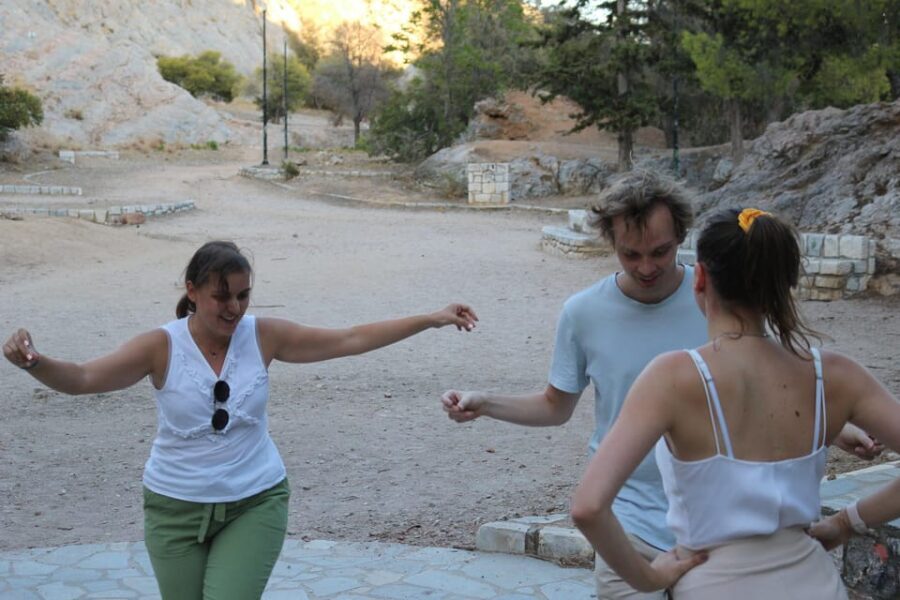
A major reason this workshop earns top marks is the teaching style. The instructors are described as very nice and supportive, and that shows in how you’re encouraged to participate.
You’re not treated like a burden or a spectator. You’re guided so you can go all out with your enthusiasm—and still stay comfortable enough to actually learn. That matters because dancing can feel intimidating, even when you’re excited.
The teacher also works in an English instruction style, which is helpful if you’re visiting Athens without Greek. The class includes a printed program with the dances, so you can follow along and have something to reference after.
Bottom line: if you want a class where you’re allowed to be a beginner and still feel successful, this teaching approach makes a difference.
- All Day Cruise -3 Islands to Agistri,Moni, Aegina with lunch and drinks included
★ 5.0 · 4,958 reviews






Timing, pacing, and how the 2.5 hours actually feel
The course runs about 2.5 hours, and starting times depend on availability. Since the workshop is outside and includes that short hill walk, you’ll want to arrive a few minutes early so you’re not stressed about finding the entrance.
In terms of pacing, it’s long enough to feel like you genuinely learned. It’s not a “quick photo-op” class where you barely start before it ends. At the same time, it’s not so long that you lose energy or momentum.
You’ll start with orientation and walking, then shift into step teaching, then practice with the music. The combination keeps you engaged: you’re always either learning something new or putting it into your body immediately.
Also, you get water and drinks, which is a small detail that makes the experience smoother, especially in Athens sun.
What you take home: photos, videos, and a real souvenir
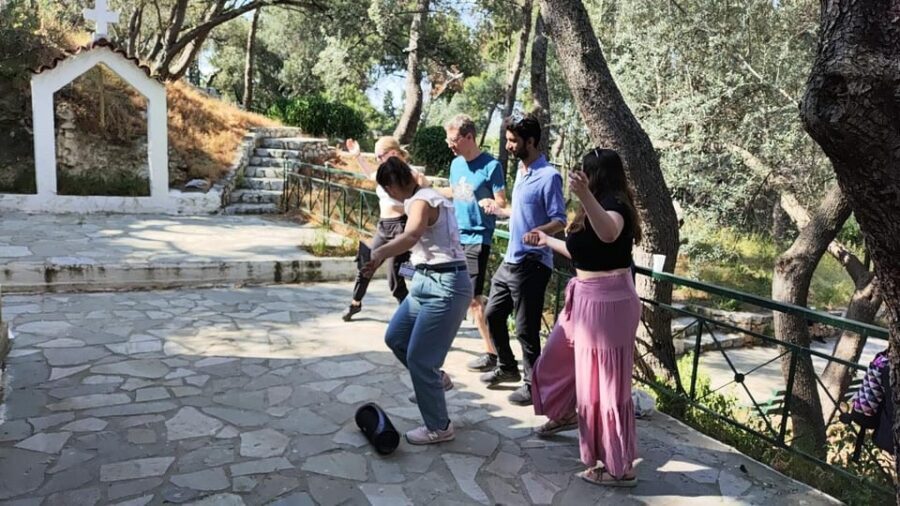
Most activity-based tours offer a memory. This one tries to offer something closer to keepsake value.
Included in the price are photos and videos from the course, plus a commemorative of participation and a printed program. That means you don’t just leave with a vague recollection. You leave with material you can show friends and family, and with a program you can use to refresh the dances later.
This is especially useful if you’re traveling with someone and want an activity that produces more than one good snapshot. Dance lessons generate movement—so photos and videos become more fun and more “you were really there” than still shots alone.
Price and value: is $41.33 worth it?
At $41.33 per person, the price lands in a reasonable range for a guided, instructor-led cultural workshop in Athens—particularly one that includes teaching, a printed program, drinks, and both photos and videos.
The value equation here is less about the dollar amount and more about what’s included:
- A real teacher (Tania) with structured step-by-step instruction
- A meaningful location next to the Acropolis rather than a generic studio
- Cultural context about traditional dances and their origins/evolution
- Take-home media (photos and videos) plus a printed program
If you like experiences where you do something physical and social (instead of just walking through sights), the cost feels fair. If you only want a quick, low-effort activity, you might feel it’s more than you need. But if dancing interests you even a little, you’ll likely find this is the kind of Athens moment you’ll repeat in conversations.
Who this Athens dance workshop fits best
I’d recommend this for:
- People who want a hands-on cultural experience, not just sightseeing
- First-time dancers or anyone who’s nervous—because the teaching is supportive and step-by-step
- Travelers who like learning context alongside activity
- Anyone visiting Athens and wanting a memorable evening or morning beyond museums
You might want to skip it if:
- You have mobility limitations or need wheelchair access (it’s not suitable for wheelchair users)
- You have heart problems or concerns with outdoor physical activity
- You get motion sickness, since there’s walking on the hill as part of the experience
If you’re healthy enough for gentle outdoor walking and you’re comfortable with basic movement, this is a great way to spend time near the Acropolis in a way that feels personal.
Practical tips before you go
- Wear comfortable shoes with grip. You’ll be moving outdoors on a hill, so your feet will thank you.
- Bring a light layer. Even on warm days, shaded spots can feel cooler once you’re standing or moving less.
- Plan for photos: the included photos and videos do the heavy lifting, but you may want to bring something to hydrate and stay comfortable.
- If you’re camera-first, remember that this is a dance lesson. Put your attention on learning; the media is there, but you’ll enjoy the experience more if you actually dance.
Should you book Steps to tradition: Greek traditional dances in Athens?
Book it if you want an authentic, structured way to connect with Greek culture while doing something joyful with other people. I’d especially recommend it if you like the idea of learning actual traditional steps and taking home photos, videos, and a printed program—not just a selfie.
Skip it if you’re looking for a fully seated experience, need wheelchair access, or have health concerns related to outdoor walking and movement. Otherwise, this is one of those Athens activities that turns a famous area into a human one, with Tania leading you through dances that feel shared, not staged.
If you want, tell me your travel month and whether you prefer morning or afternoon plans, and I can help you decide the best time slot around the Acropolis area.
FAQ
How long is the Greek traditional dance experience on Philopappos Hill?
The duration is about 2.5 hours. Starting times vary based on availability.
Where exactly do we meet?
Meet at the entrance of Philopappos Hill, next to the touristic buses. The activity ends back at the same meeting point.
Is the instructor English-speaking?
Yes. The instructor teaches in English.
What’s included in the price?
It includes the Greek traditional dance course with an experienced teacher, an experiential activity, a printed program, water and drinks, a commemorative of participation, and photos and videos from the course.
Is this experience suitable for wheelchair users?
No. It’s not suitable for wheelchair users.
Is free cancellation available?
Yes. You can cancel up to 24 hours in advance for a full refund.

More Tour Reviews in Athens
- All Day Cruise -3 Islands to Agistri,Moni, Aegina with lunch and drinks included
★ 5.0 · 4,958 reviews