REVIEW · ATHENS
The adventure of Athens best and Poseidon’s temple in cape Sounion
Book on Viator →Operated by Athens Tours Greece · Bookable on Viator
One day. Two mythic worlds.
This is a private Athens outing that strings together the big classics with a serious sea-view finale. I like the way the plan stacks Acropolis monuments early and efficiently, and I also like that you don’t just stop at Athens. You push out to Cape Sounion for the Temple of Poseidon, where the horizon does the talking. The main drawback to keep in mind is simple: if weather turns wild, you can end up standing outside longer than you’d like, and the experience doesn’t mention any provided rain gear.
You’ll ride in an air-conditioned private vehicle and go door-to-door with pickup from your hotel in Athens or directly at the Piraeus cruise pier. I also like that this runs as a small group (up to 3), so you’re not squeezed into a big bus schedule. Do note: entrance fees are not included, and the driver is not a state-licensed guide inside the archaeological sites, so you may want to plan for extra ticket time or consider adding a licensed guide.
In This Review
- Key Things I’d Pick This Tour For
- Private Athens in One Day: From Piraeus to the Acropolis
- The Acropolis Stops That Matter: Propylaea, Athena Nike, Parthenon, Erechtheion
- Propylaea: The “front door” of the sacred hill
- Athena Nike: A small temple with a big story
- Parthenon: Your long look at the centerpiece
- Erechtheion and the Caryatids: Beauty with a purpose
- A Break From Temples: National Garden, Syntagma, Guards, and Plaka Charm
- National Garden and the Parliament neighborhood
- Tomb of the Unknown Soldier and Changing of the Guards
- Academy, Library, University, and Old Parliament links
- Syntagma Square and Plaka-side wandering
- Kallimarmaro: Marble stadium nostalgia
- The Athens Riviera Drive: Sea Views and Real-Time Attica
- Palaia Fokaia Lunch Break: A Little Time to Reset
- Cape Sounion and the Temple of Poseidon: The Cliffside Payoff
- Sanctuary of Poseidon: How the site is set up
- A reality check on weather
- Price and Logistics: Is $480.44 Worth It?
- Should You Book This Athens + Sounion Day?
- FAQ
- Is pickup included for hotels and cruise ships?
- How many people are in the group?
- What language is the tour provided in?
- Are entrance fees to the sites included?
- Is lunch included during the Palaia Fokaia stop?
- Do I need to purchase tickets in advance?
Key Things I’d Pick This Tour For
- Acropolis highlights in a single sweep: Propylaea, Athena Nike, Parthenon, and Erechtheion with practical pacing
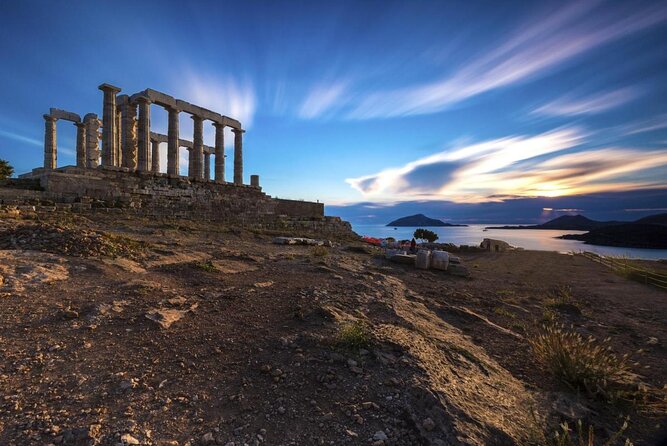
- Cape Sounion + Temple of Poseidon: the dramatic payoff at the southern tip of Attica
- Piraeus and the Athens Riviera drive: you get the coastal scenery, not just city stops
- Private vehicle for fewer logistics headaches: easier timing than hop-on hop-off
- Small-group feel (up to 3): more flexibility in how you move through crowded areas
- Planned city landmarks between ancient stops: Syntagma Square, the Parliament area, and Plaka-side views
Private Athens in One Day: From Piraeus to the Acropolis
If you’re short on time and you want the “greatest hits” without playing ticket-line ping-pong, this kind of day plan works. You start at Piraeus—either your cruise pier pickup or your hotel pickup in Athens—then head toward the Acropolis area. The route itself matters: you’re traveling from one of Europe’s busiest passenger ports, and then you transition into Athens’ historic core by way of the Saronic Gulf coastal road.
What I like about beginning with Piraeus is that it immediately frames Athens as a living port city. You’re not just arriving at a museum district; you’re moving through a real geography—water, roads, suburbs, and sea air—so the ancient sites feel connected to where people actually live.
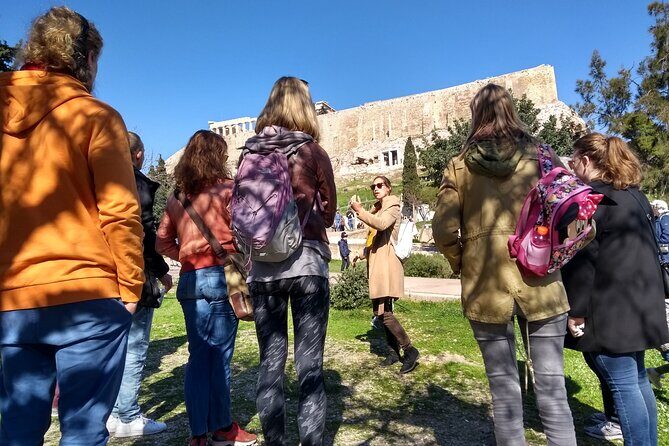
Once you’re at the Acropolis zone, the tour focuses on the major structures you want to see in a meaningful order. That’s the big value of a private format: you’re not waiting around while a larger group argues about which stair makes the best photo.
You can also read our reviews of more tours and experiences in Athens.


The Acropolis Stops That Matter: Propylaea, Athena Nike, Parthenon, Erechtheion
The Acropolis portion is built around the monuments that define classical Athens. You’ll spend time at the Propylaea (the monumental entrance/gate complex), the Temple of Athena Nike, the Parthenon, and the Erechtheion. The timing in the schedule is short at each point, but it’s long enough to get the layout in your head and see the key details.
Propylaea: The “front door” of the sacred hill
Propylaea is the ceremonial entrance on the west side of the Acropolis. You’ll hear how the site changed hands and designs across eras, including references to earlier gates and rebuilding efforts after destruction. Expect this stop to be as much about orientation as sightseeing. Standing there helps you understand how the Acropolis was built for processions and movement, not just isolated viewing.
Practical tip: the Acropolis area can feel slippery or steep, so wear shoes you trust.
Athena Nike: A small temple with a big story
The Temple of Athena Nike sits on the southeast edge of the sacred rock. Even though it’s not as visually massive as the Parthenon, the details here are part of the charm: it’s tied to earlier structures, altars, and a tradition sometimes described as Athena’s winged presence being controlled so the goddess never leaves Athens.
You’ll also see how archaeologists preserve earlier foundations beneath later construction. That makes this stop feel less like a single snapshot and more like a layered timeline.
Parthenon: Your long look at the centerpiece
This is the stop with the most time on the itinerary—enough to actually look. The Parthenon was built in the Periclean building period and is dedicated to Athena Parthenos. You’ll learn about its architects and the role of sculptural decoration supervised during the building program.
In a private format, the value is that you can pace yourself: you can step back for the full view, then move in for details. That’s important because the Parthenon is designed to reward both distance and closeness.
Ticket heads-up: admission fees are not included, and the tour suggests pre-purchasing tickets so you don’t lose time hunting for availability.
- All Day Cruise -3 Islands to Agistri,Moni, Aegina with lunch and drinks included
★ 5.0 · 4,958 reviews



Erechtheion and the Caryatids: Beauty with a purpose
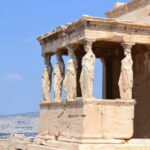
The Erechtheion is on the north side of the Acropolis and is tied to the worship of Athena Polias and mythic associations with Erechtheus. It’s also the temple famous for the Karyatides—the sculpted female figures that function as roof supports.
If the Parthenon makes you think about grand design, the Erechtheion makes you think about sacred geography and storytelling. It includes references to a dispute between Athena and Poseidon over Athens, so the sea-god theme you’ll see later at Sounion doesn’t feel random. It’s like the day is setting up for its finale.
A Break From Temples: National Garden, Syntagma, Guards, and Plaka Charm
After the Acropolis, the tour shifts into a very different mode: Athens as a modern capital layered on top of older power centers. This section is where you get variety without needing to “figure out Athens” yourself.
National Garden and the Parliament neighborhood
You’ll pass by the National Garden, a green space behind Parliament and Syntagma Square. It’s a former royal garden that opened to the public later and covers a large area with many plant types. It’s a nice reset after stone monuments.
Then comes the Hellenic Parliament building area. The history here runs through the modern Greek state, including that the building originally served as royal palace space before becoming parliament. It’s not a long stop, but it gives you context for why Syntagma is the political heart of the city.
Tomb of the Unknown Soldier and Changing of the Guards
The tour includes the Tomb of the Unknown Soldier and a look at the Changing of the Guard ceremony. This is one of those experiences that’s short but memorable because it’s so visual and ritualized.
A useful detail from the program: the changing ceremony at the Tomb takes place every Sunday at 11:00, with the Evzones performing an honor guard with slow-motion elements. If your dates line up with Sunday morning, you’ll get an extra layer of atmosphere.
Even if it’s not Sunday, the area is still worth a walk-through because the ceremony zone is a major focal point.
Academy, Library, University, and Old Parliament links
You’ll also see the Academy of Athens and the National Library as part of the neoclassical city “trilogy,” plus the National and Kapodistrian University. If you like architecture, this is a solid add-on: it gives you a sense of how Athens projects knowledge and national identity in stone.
Then you visit the National Historical Museum housed in the Old Parliament Building. That setting connects modern Greek history directly to government spaces that have housed the National Assembly across different eras.
Syntagma Square and Plaka-side wandering
Syntagma Square is described as the heart of Athens and the place where major events unfolded in the last two centuries. From there, you get to Plaka, the historic neighborhood beneath the Acropolis slope. This is where Athens becomes walkable and human-scale: narrow cobblestone streets, small shops, side-street tavernas, and the kind of hillside architecture that makes the city feel lived in.
One more practical angle: Plaka is also where you might want to buy small water or a quick snack if you didn’t already. It’s easy to burn energy after the Acropolis.
Kallimarmaro: Marble stadium nostalgia
The tour includes a stop at Kallimarmaro (Panathenaea Stadium), famous for being made of marble, including Pentelic marble. The program notes that this marble changes color depending on daylight, and that it’s the same marble associated with monuments on the Acropolis.
Even with only a brief visit, this stop adds personality to the day. It also reinforces how Athens keeps reusing its materials and identity.
The Athens Riviera Drive: Sea Views and Real-Time Attica
After the city stops, you shift into coastal territory. You’ll spend time along the Athens Riviera, the stretch from Piraeus down toward Sounion. Expect an hour-and-a-half of scenic travel through the seaside suburbs, with organized beaches, rocky coves, marinas, and that classic Aegean “blue-water” feeling.
This is more than just transportation. It helps you understand the logic of Sounion: Athens watched the sea because the sea controlled trade, security, and power.
If you’re someone who gets impatient in cars, this part can either feel like a breather or like wasted time. The difference is your expectations. If you treat it like a moving viewpoint, it works.
Palaia Fokaia Lunch Break: A Little Time to Reset
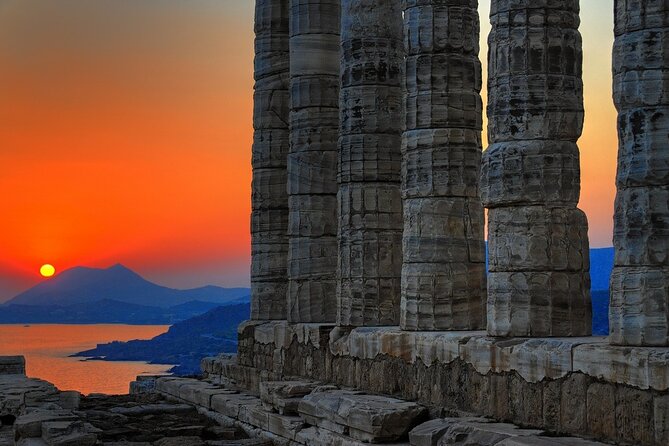
You’ll have a stop in Palaia Fokaia with free time for lunch in a restaurant on the water. Lunch is not included, so you’re making your own choice here—but that’s also part of the flexibility of a private day.
I like lunch breaks that are unstructured. You can pick something quick if you’re not hungry, or sit down if you’re ready to slow down.
Practical note: because this day is already packed, it helps to choose a meal that won’t stretch into an hour-and-a-half you didn’t plan for.
Cape Sounion and the Temple of Poseidon: The Cliffside Payoff
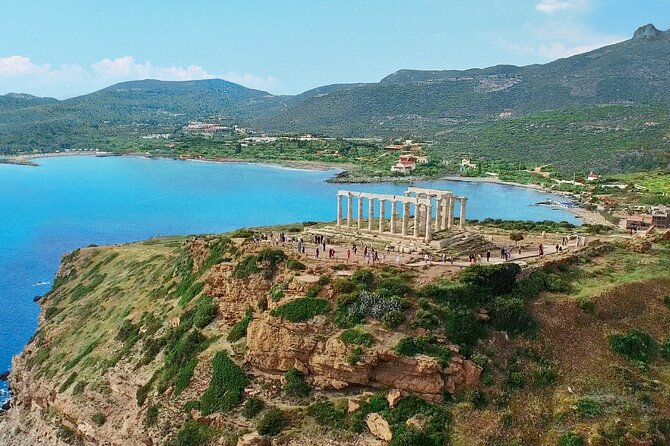
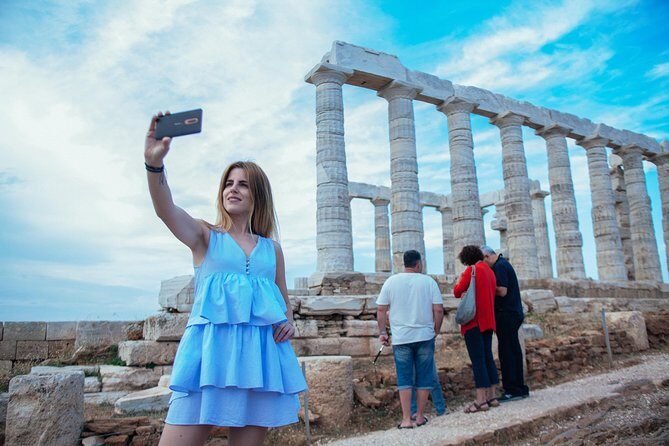
The final stretch is the dramatic one. You head to Cape Sounion, the southernmost tip of Attica, historically important for controlling sea passage and access to rich resources (including silver mining mentioned in the program). Before you get to the temple, you’ll also get the wider sanctuary context: prehistoric habitation, the fortified sanctuary area, and how the deme of Sounion fit into Athens’ political map.
Sanctuary of Poseidon: How the site is set up
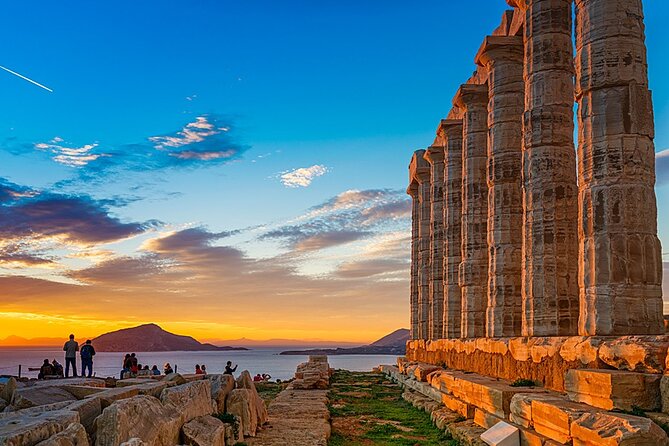
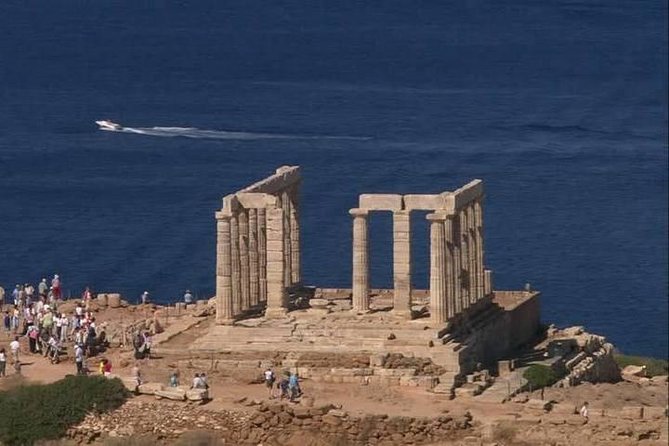
The Temple of Poseidon sits within a sacred precinct on the highest area of the fortress. You’ll be shown how the precinct is laid out and how the temple dominates the south part of the site, with porticoes in the other areas.
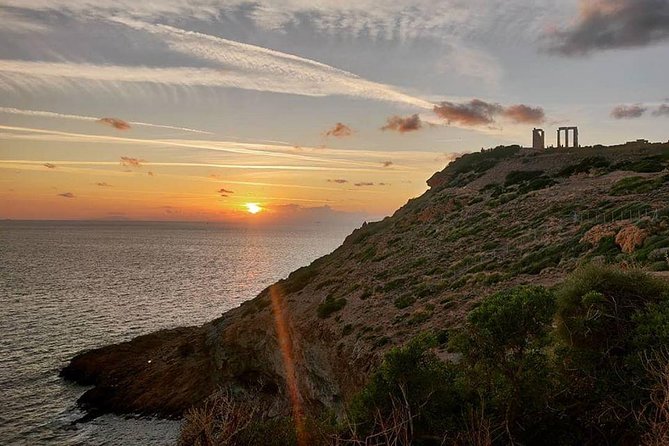
Then you get the main visual: the doric temple on cliffside rock, facing out to the Aegean. This is the moment where the earlier Acropolis stops start to feel like part of a theme. Today’s architecture lesson turns into a myth and geography lesson.
The program also weaves in stories tied to the coastline, including King Aegeus and other myth references. Even if you don’t go deep into mythology, you’ll feel why this place is remembered: the horizon line is huge, and the wind is part of the atmosphere.
A reality check on weather
One caution comes straight from experience with this kind of day. If it rains, cliffside outdoor viewing can get uncomfortable fast. There’s no mention of umbrellas or rain gear being provided, so bring your own rain protection if the forecast looks questionable. A small plastic poncho is often easier than trying to manage a bulky umbrella on uneven ground.
Price and Logistics: Is $480.44 Worth It?
This tour is priced at $480.44 per group, up to 3 people, for an 8-hour day. That matters, because you’re not paying per seat like a typical bus tour. If you’re traveling as a small group, your cost per person drops noticeably.
Here’s what you’re getting for that price:
- Professional English-speaking driver (important for navigation and context)
- Air-conditioned private vehicle
- Hotel pickup and drop-off in Athens
- Piraeus cruise pier pickup and drop-off
- Mobile ticket
- Time at major sites including the Acropolis set and Cape Sounion
Here’s what’s not included:
- Entrance fees to archaeological sites and museum
- Food and drinks
- A state-licensed tour guide for inside sites (the driver can guide you until you enter; if you want a licensed guide inside, it’s an extra cost and depends on availability)
So the value equation is this: you’re paying for time saved, transportation comfort, and an efficient routing that includes both Athens icons and Sounion. If your number of people is low (say, just one or two), the price can feel steep compared with group tours. If you have three people and you hate wasting time, it starts to feel like a smart use of one day.
Also, dress code is listed as formal. That doesn’t mean you need a tux, but I’d pack something that looks properly neat—especially if you plan to spend time inside museums.
Should You Book This Athens + Sounion Day?
I’d book this if you have limited time and you want a single-day “Athens plus Poseidon” plan that handles the driving, the routing, and most of the key stops for you. It’s a good fit for first-timers who want the major landmarks without the hassle of trains, buses, and figuring out timing.
Skip it or consider a licensed guide add-on if you’re the type who needs a lot of interpretive depth inside archaeological spaces. The driver’s role is until entry, and entrance fees aren’t included, so you’ll want to plan for tickets ahead of time.
And bring rain protection if there’s a chance of bad weather. This is an outdoor-heavy day, and cliffside viewing doesn’t slow down for umbrellas.
FAQ
Is pickup included for hotels and cruise ships?
Yes. The tour includes hotel pickup and drop-off in Athens, plus pickup and drop-off at the Piraeus cruise ship pier.
How many people are in the group?
This is a private tour/activity. Only your group participates, up to 3 people.
What language is the tour provided in?
Pickup and the tour are offered in English.
Are entrance fees to the sites included?
No. Entrance fees to archaeological sites and the museum are not included.
Is lunch included during the Palaia Fokaia stop?
No. You’ll have free time for lunch there, but lunch is not included in the price.
Do I need to purchase tickets in advance?
The tour suggests pre-purchasing admission tickets because availability may be limited. They also note they can buy tickets for you in advance for a small service fee.


More Tour Reviews in Athens
- All Day Cruise -3 Islands to Agistri,Moni, Aegina with lunch and drinks included
★ 5.0 · 4,958 reviews