REVIEW · ATHENS
The Apostle Paul’s Missionary Journey in Athens and Corinth
Book on Viator →Operated by Colours of Greece · Bookable on Viator
Paul’s footsteps feel close in Athens and Corinth. This day connects the Bible story with the real streets of ancient Greece, from the Agora to Acrocorinth. I love the door-to-door transport and the private, small-group feel, so you can ask questions without feeling rushed. One drawback: you’ll do a fair amount of walking on uneven stone, and entrance fees for sites aren’t included.
You’ll stay connected with complimentary Wi‑Fi on board, and the air-conditioned vehicle helps when the heat hits. Expect an 8–9 hour day that’s usually booked well ahead, which tells you this isn’t the kind of excursion people do on a whim.
In This Review
- Key highlights at a glance
- Athens and Corinth make sense together for Paul
- Pickup comfort in Athens: small group, Wi‑Fi, and a driver with context
- Ancient Agora + Areopagus: Paul inside the city’s loud thinking
- Agios Dionysios Areopagitis Church: a Christian memory in modern Athens
- Corinth Canal + Kenchreai: follow the geography between cities
- Ancient Corinth at the Bema: courtroom drama, then real daily life
- Museum of Ancient Corinth + Acrocorinth: artifacts and the big views
- Price and budgeting: is $200.25 good value?
- Who should book this Paul’s footsteps tour?
- Should you book it?
- FAQ
- How long is the tour?
- Is pickup included?
- Are entrance tickets included for the archaeological sites and museums?
- Who guides the experience?
- Is this tour private?
- What’s included for comfort during the day?
- Can I cancel, and what if weather is poor?
Key highlights at a glance
- Private, small-group pacing that keeps the day from feeling like a stampede
- Door-to-door hotel or port pickup so you start (and end) with less stress
- Paul’s Athens stops in context, from the Agora to the Areopagus
- A smooth Athens-to-Corinth route, using the Corinth Canal and Kenchreai to connect the story
- Two big “payoff” moments: Ancient Corinth at the Bema and the climb/views of Acrocorinth
Athens and Corinth make sense together for Paul
If you want Paul’s story to click, Athens and Corinth are the right pair of cities. Athens shows Paul meeting Greek thinkers in a place built for public debate—politics, commerce, and religion all mixed in the same streets. Corinth then shifts the tone: it’s a major hub where everyday life, faith, and power all collide in real-world ways.
This tour is built around that contrast. It takes you to locations tied to Paul’s presence in Athens and his mission in Corinth, then helps you understand what those places meant to people at the time. That’s the value here: you’re not just seeing ruins. You’re following the thread of where Paul went and why it mattered.
And yes, you’ll also get classic Greek sites alongside the biblical ones. It’s a nice balance for anyone who likes both faith history and the actual ancient world.
You can also read our reviews of more tours and experiences in Athens.


Pickup comfort in Athens: small group, Wi‑Fi, and a driver with context
The day starts with hotel or port pickup, and the driver waits for you just outside (or at the port arrival area with your name). That little detail matters more than it sounds. In a city like Athens, you’ll lose less energy figuring out where to meet and more energy actually walking.
This is a private tour, so your group stays together the whole time. For groups of 1–4 people, the tour uses a sedan vehicle, which tends to make the day feel calmer and more direct. You also get bottled water, Wi‑Fi on board, and an air-conditioned vehicle—useful when you’re moving from stop to stop in warm weather.
One practical note: the driver is a professional English-speaking driver with in-depth history knowledge. Still, the tour does not include a licensed guide to accompany you into the archaeological sites. That affects how “hands-on” the interpretation can be inside the ruins themselves. Entrance fees also aren’t included for some key stops, so you should plan for ticket costs.
Ancient Agora + Areopagus: Paul inside the city’s loud thinking
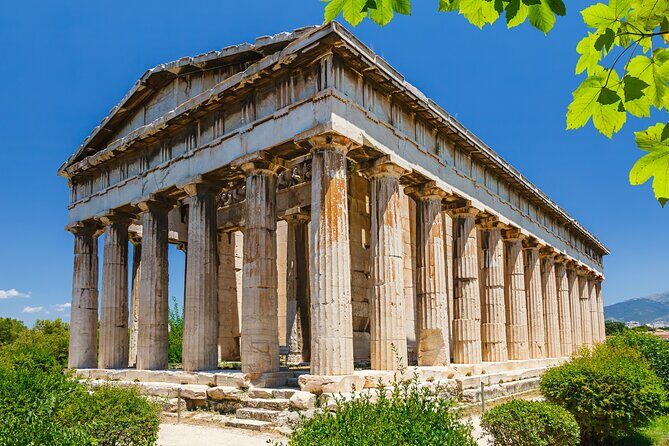
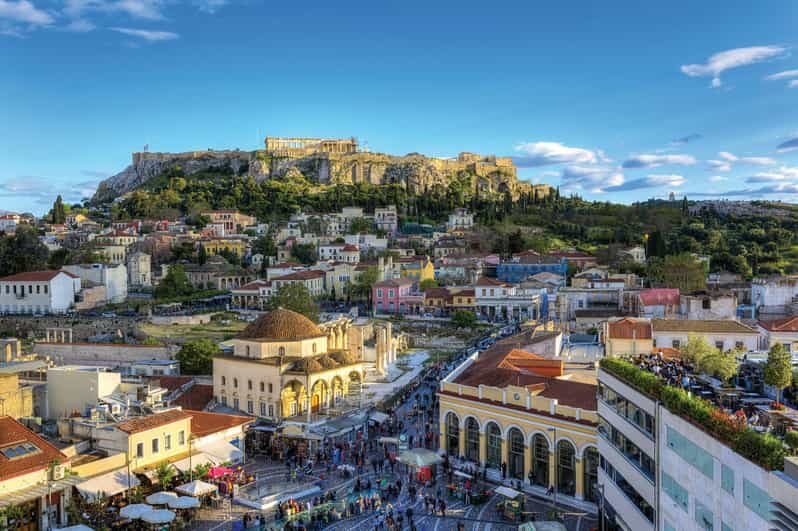
Your Athens start is the Ancient Agora, the city’s center for politics, commerce, social life, and religion. This is where Paul would have encountered a mix of ideas—people debating, buying, arguing, worshipping, and organizing public life. That’s why the Agora stop is more than scenery. It frames the kind of crowd Paul faced: people used to discussion, persuasion, and public presence.
You’ll spend about one hour here. Admission is not included, so you’ll want to budget for your Agora ticket. Also, allow for time to orient yourself. The Agora is big, and if you rush, you miss the “what used to happen here?” feeling.
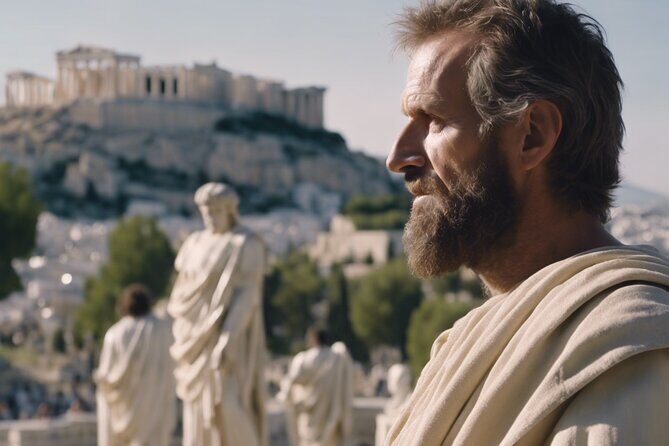
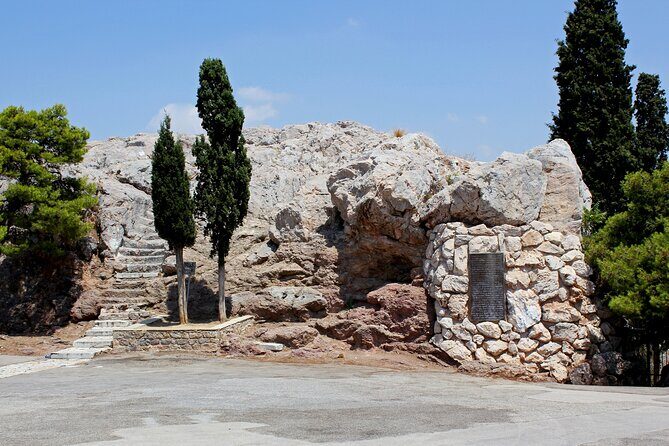
Next is the Areopagus, a marble hill just northwest of the Acropolis. In ancient times, it served as a judicial and political meeting place, and during Paul’s visit it was also known for intellectual debate. The tour focuses on the idea of Paul presenting his message to a council-style setting—people listening, weighing ideas, and responding to a new message in a Greek framework.
The Areopagus visit is shorter—about 30 minutes—and admission is free. It’s a good moment to step back and connect what you saw in the Agora to the kind of “formal” debate the Areopagus represented.
Agios Dionysios Areopagitis Church: a Christian memory in modern Athens
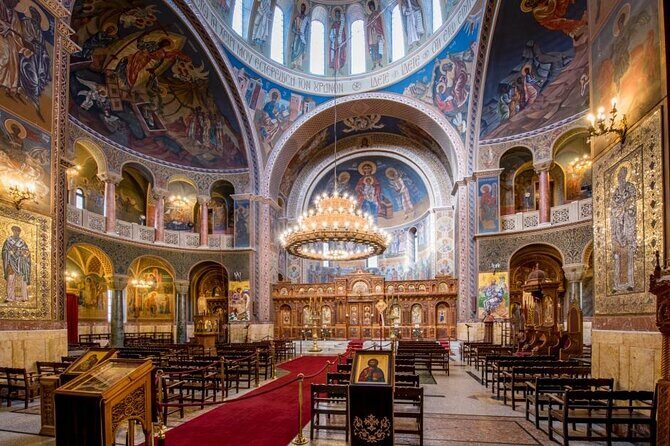
Then you move to the Agios Dionysios Areopagitis Church in the upscale Kolonaki district on Skoufa Street. This stop lasts around 20 minutes and is free.
Here’s why it’s worth it: it ties Paul’s Athens story to a named figure—Dionysius the Areopagite—who is remembered as someone converted by Paul and later described as becoming Athens’ first bishop. Even if you’re not a church-history specialist, this is a clear way to see how older events turned into lasting local tradition.
Depending on the time of day, you might also find the church experience includes the kind of religious atmosphere that makes the stop feel alive rather than museum-like. For me, that’s the best use of a quick church visit: treat it like a pause that gives the day a spiritual tone.
Corinth Canal + Kenchreai: follow the geography between cities
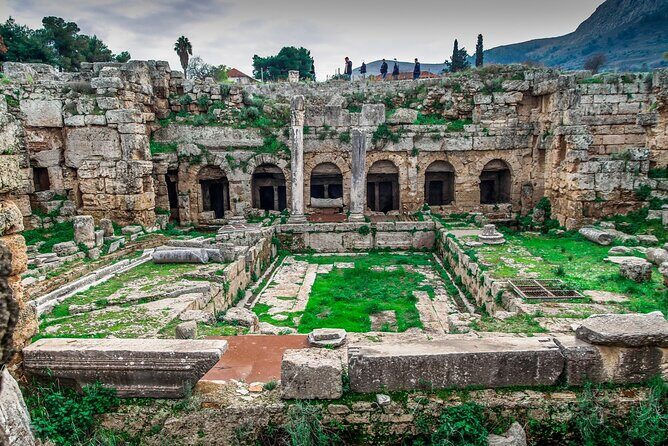
Leaving Athens behind, the tour heads toward Corinth and uses two stops that help you understand how movement worked here.
First is the Corinth Canal. It’s an engineering marvel that slices through the narrow Isthmus of Corinth, connecting two bodies of water. It was built much later than Paul’s time, but the point of the stop is practical: it shows how important this strip of land was. The peninsula is effectively turned into an island by the canal, and the region’s strategy becomes easier to picture.
You’ll spend about 20 minutes here, with no admission fee.
Next is the Ancient Port of Kenchreai (often spelled Kechrees/Kenchreai). This is Corinth’s eastern port, tied to trade and travel, especially during the Roman era. Portions are submerged or in ruins, but you can still see remnants and layers—storerooms, breakwaters, a nymphaeum, sanctuaries, and an early Christian basilica from the 4th century A.D.
This stop is also about 20 minutes, and it’s free. It’s especially meaningful because Kenchreai is described as the place where Paul arrived in 51 A.D., beginning his mission in Corinth. That detail makes the geography feel personal. You’re not imagining the story—you’re standing near a spot connected to the start of it.
- All Day Cruise -3 Islands to Agistri,Moni, Aegina with lunch and drinks included
★ 5.0 · 4,958 reviews



Ancient Corinth at the Bema: courtroom drama, then real daily life
The biggest Corinth anchor is Ancient Corinth (Archaia Korinthos). Plan on about one hour, and admission is not included.
This is where the tour connects Paul’s story to civic life. At the Bema, a raised platform in the center of the city, Paul is believed to have addressed the local community and also stood trial before the Roman proconsul. Even if you don’t know Roman legal process, the visual idea of a raised platform helps. It makes Paul’s message feel public and high-stakes rather than private.
From there, the Agora nearby brings you back to everyday life in Corinth. This is where you can imagine markets, noise, schedules, and normal people doing normal things—while faith is still part of the conversation.
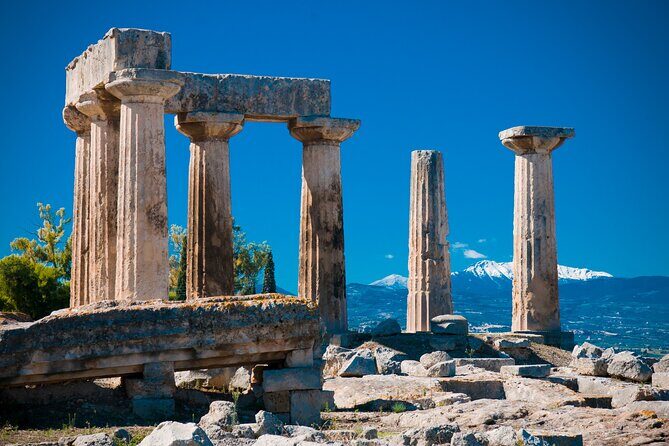
And then there’s the Temple of Apollo, which adds another layer: Corinth’s religious life was not one single track. Multiple beliefs, power structures, and rituals existed side by side. That’s important for interpreting Paul’s letters. He wasn’t writing to a blank page.
A practical reality: ruins often mean uneven ground and some surfaces that don’t feel stroller-friendly. Bring comfortable shoes and give yourself permission to move slower than you think you need.
Also remember the tour doesn’t include a licensed site guide. The driver can interpret, but if you love super-detailed archaeology talk inside the site itself, you may want to consider official on-site guidance by request or ticket add-ons where available.
Museum of Ancient Corinth + Acrocorinth: artifacts and the big views
After the ruins, you’ll visit the Archaeological Museum of Corinth, about 45 minutes. Admission is free.
This stop works because it helps you switch modes. Ruins can be hard for the brain at first—what you see is “what’s left,” not the whole story. The museum, established in 1932, holds artifacts that bring the city’s life into focus, including prehistoric treasures and finds from the Sanctuary of Asklepios. In other words, you get to see the religious and everyday textures that the ruins hint at.
Then you end at Acrocorinth, the fortified acropolis that guarded Corinth through centuries. The visit is about 30 minutes, and admission is free.
Acrocorinth adds the “why it’s so dramatic here” feeling. It was a military stronghold and also a religious center, and it’s described as having housed the Temple of Aphrodite, said to include up to 1,000 priestesses. Even if you treat that number as part tradition and part legend, the bigger point lands: this hilltop mattered deeply to how people thought and worshipped.
You also get panoramic views. That’s a good closer for this kind of tour because Paul’s story ends up being about ideas, movement, and real pressure points. Looking out over the terrain helps you feel the scale of the region.
One more practical note: you’re finishing with an acropolis area. Even if the stop is short, expect uphill terrain and uneven ground.
Price and budgeting: is $200.25 good value?
The price is $200.25 per person for an 8 to 9 hour private tour. For that cost, you’re getting a lot of “real logistics value,” not just sightseeing. Door-to-door pickup, air-conditioned transport, Wi‑Fi, bottled water, and private pacing reduce friction. In places like Athens and Corinth, that friction adds up fast—meeting points, heat, and navigation can steal your energy.
Here’s what can affect value: entrance fees aren’t included for some of the main archaeological stops (Ancient Agora and the Ancient Corinth site). The museum and several other stops are free, but the paid tickets can still be a meaningful add-on. If you budget carefully, the overall experience still tends to feel fair because you’re not paying extra for transport time or constantly recalculating your day.
Another value factor: the tour is often booked well ahead (about 76 days on average). That suggests demand for this exact “Paul’s footsteps” combo. If you’re traveling during a busy season, booking early is usually smart.
Who should book this Paul’s footsteps tour?
This is a great fit if you want your Christian-history day to connect to visible places in Athens and Corinth. You’ll like it if you enjoy figuring out how ideas spread in real social settings—public debates in Athens, then civic life and faith friction in Corinth.
It also works well for couples and small groups. Many private tours feel like a “solo trip with a driver.” This one keeps the interpretations focused, and because it’s private, you can ask questions and get straight answers.
If you’re sensitive to walking on uneven surfaces, you can still enjoy it, but you should plan for slower pacing. The day includes outdoor ruins and archaeological grounds, plus time at viewpoints like Acrocorinth. If mobility limits are part of your planning, I’d check with the operator ahead of time so you don’t get surprised by the ground.
And if you’re the type who likes food at the end of a historical day: ask your driver for lunch suggestions. One group mentioned a lunch stop near Acrocorinth at Taverna Kastro, but lunch itself wasn’t included—so treat it as a bonus option.
Should you book it?
I think you should book this tour if you want more than a checklist of sites. The mix of Athens debate locations, Corinth mission-linked areas, and ending at Acrocorinth gives the day a clear arc. Add private pickup and small-group pacing, and it becomes an efficient way to connect Paul’s story to the physical map.
I’d skip (or at least adjust expectations) if you’re chasing a nonstop, zero-walking style day, or if you expect a licensed guide to accompany you inside every archaeological stop. The driver provides interpretation and history knowledge, but licensed site guiding and entrance tickets are extra.
If you can handle uneven ground and you’re ready for a full, meaningful day—this is one of the better ways to trace Paul’s journey in Greece without turning your trip into a complicated logistics puzzle.
FAQ
How long is the tour?
The tour runs about 8 to 9 hours.
Is pickup included?
Yes. Pickup and drop-off are included from Athens hotels or from the port. Airport pickup is optional and costs extra.
Are entrance tickets included for the archaeological sites and museums?
Entrance fees are not included. Admission is free for some stops (like the Areopagus and parts of the museum experience listed), but not for all sites (notably the Ancient Agora and Ancient Corinth).
Who guides the experience?
You’ll have a professional English-speaking tour driver with in-depth history knowledge. The tour does not include a licensed guide to accompany you into archaeological sites.
Is this tour private?
Yes. It’s a private tour/activity, and only your group participates.
What’s included for comfort during the day?
You get an air-conditioned vehicle, bottled water, Wi‑Fi on board, and a mobile ticket.
Can I cancel, and what if weather is poor?
Free cancellation is available up to 24 hours in advance for a full refund. The experience requires good weather, and if it’s canceled due to poor weather, you’ll be offered a different date or a full refund.

More Tour Reviews in Athens
- All Day Cruise -3 Islands to Agistri,Moni, Aegina with lunch and drinks included
★ 5.0 · 4,958 reviews