REVIEW · ATHENS
Accessible Tour In Athens, 3 Hours Athens Panorama Shore Excursion
Book on Viator →Operated by Athens Tours Greece · Bookable on Viator
Three hours, and Athens hits hard. This private accessible panorama tour strings together the big hitters with a real-world pace: pickup, lots of scenic driving, and short stops where you can actually see what you came for. I like how the experience is built around your group, with driver guidance and the option to adjust to mobility needs.
Two things I’d especially highlight are the stress-free hotel or cruise-ship pickup and the way the driver talks through the city’s landmarks while you’re on the move. You’ll also catch moments that feel made for photos, like skyline views from Lycabettus and the sweep of the Acropolis from below. One thing to keep in mind: this is a short tour, so some stops are brief, and you may spend more time viewing from viewpoints than doing long inside visits.
In This Review
- Key points at a glance
- How the 3-hour Athens panorama tour really feels
- Pickup in Piraeus or Athens: start without wasting energy
- Saronic Gulf and Piraeus scenes before the Acropolis
- Propylaea: the gate you understand in minutes
- Temple of Athena Nike: small scale, sharp details
- The Parthenon stop: what you can get in limited time
- Syntagma Square and the neoclassical trilogy, from Parliament to the Unknown Soldier
- Plaka: walkable charm under the Acropolis
- Kallimarmaro and the marble stadium quick look
- Lycabettus Hill: the best payoff for the last third of the day
- Piraeus waterfront and trireme moments for the seafaring side of Athens
- Price and value: what $272.33 per group buys you
- Should you book this Athens panorama tour?
- FAQ
- Is pickup included in this Athens tour?
- How long is the tour?
- Is the tour private?
- Are entrance fees included?
- Do I get an English-speaking guide?
- Is a wheelchair ramp available?
Key points at a glance
- Private minivan with driver commentary: you get explanations along the way, not just a drop-off at sites.
- Acropolis-focused timing: Propylaea, Temple of Athena Nike, and the Parthenon area are worked into the route.
- Syntagma Square and the neoclassical trilogy outside stops: fast orientation around Greece’s modern power center.
- Plaka on foot: narrow cobblestone streets, shops, and the Anafiotika area vibe nearby.
- Lycabettus Hill for the payoff views: about 1 hour 10 minutes for skyline time.
- Mobility-friendly approach with limits: ramp service isn’t part of the vehicle setup, but lift access may help depending on the situation.
How the 3-hour Athens panorama tour really feels

This is a “see the highlights without the hassle” kind of Athens day. You’re in an accessible minivan with a driver, so you’re not wrestling with buses, transfers, or parking.
The tour is built for small groups (up to 3). That matters in Athens. You get the kind of pacing where you can pause for photos, slow down when someone’s tired, and get moving again without making everyone wait.
For me, the best part is the driver. In one review, Andreas was described as superb: friendly, helpful, and ready to make everything easy for low mobility. Another review calls out Michael as super helpful and notes a clean wheelchair-equipped car for a mother. That tells you the mindset: the driver’s there to make the day workable, not just drive you from point A to point B.
You can also read our reviews of more tours and experiences in Athens



Pickup in Piraeus or Athens: start without wasting energy
Your day begins with pickup, and that’s where the value starts. If you’re in Athens, you meet at the main entrance of your hotel. If you’re on a cruise, you disembark and walk outside the terminal exit door at Piraeus port, where the driver holds a sign with your name.
Either way, you get the early-win: you’re not trying to figure out which taxi stand makes sense, or how to herd luggage plus mobility gear. One review specifically mentioned stowing luggage at the start of a cruise day, which is a real comfort if your port time is tight.
You’ll ride in a Mercedes-Benz air-conditioned vehicle (leather interior is included). That’s not just comfort talk. In summer heat, it affects how long you can enjoy the stops you do get.
Saronic Gulf and Piraeus scenes before the Acropolis

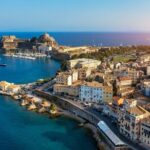
Once you’re picked up, you’ll drive along the coastal road of the Saronic Gulf. This is the Athens Riviera part of the story, where you get a sense of how the city’s coastline shapes daily life and the feel of the port.
Piraeus is the chief seaport of Athens, and the tour route treats it like more than a backdrop. It’s described as Greece’s largest port, home to Europe’s biggest passenger port, which explains why cruise ships pour in from all over the world.
After that coastal intro, the focus shifts toward the Acropolis area. The day’s first stop includes a viewpoint moment with “Temple of Democracy” called out as part of the Acropolis experience. It’s short, but it sets the stage so the later landmarks feel connected, not random.
Propylaea: the gate you understand in minutes
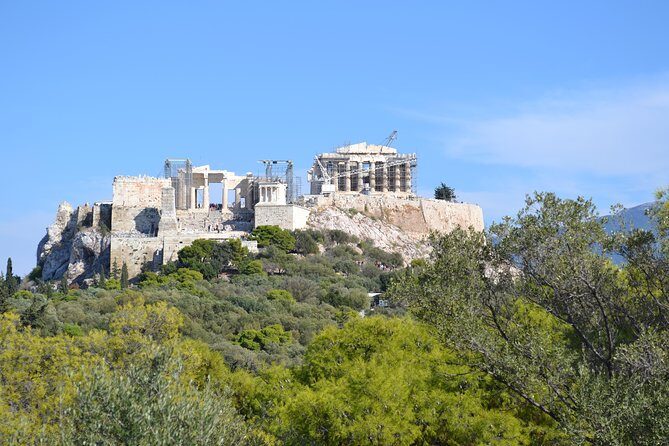
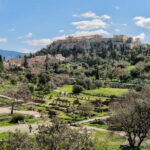
The Propylaea are the monumental gateways on the west side of the Acropolis hill. You’ll see them for a brief stretch, but the point here is orientation: this is the entry face of the sacred precinct, not just another pretty building.
What makes Propylaea interesting is how layered it is. An early gate related to the age of Peisistratos once stood there. Later, a new propylon was built around 510–480 BC, then destroyed by the Persians in 480 BC and repaired after the Persian Wars. The modern monumental Propylaea you see today were part of the Periclean building program, erected in 437–432 BC by architect Mnesikles.
That timeline matters because it tells you the Acropolis didn’t freeze in time. It kept getting rebuilt, damaged, and redesigned as Athens’ power changed.
Temple of Athena Nike: small scale, sharp details
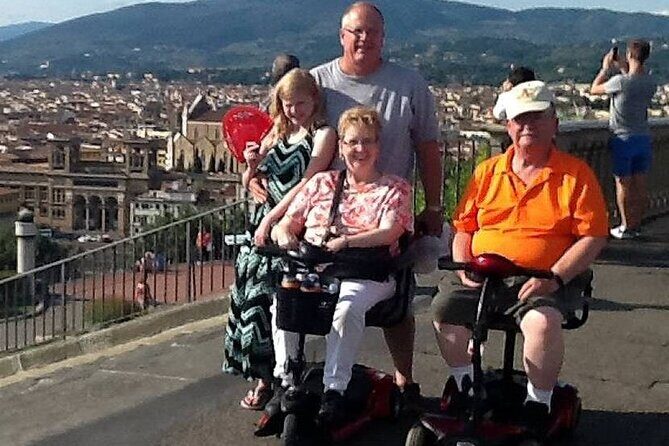
Next comes the Temple of Athena Nike, a small Ionic temple built between 426 and 421 BC. It sits on a bastion at the southwestern edge of the Acropolis, so it works well for quick stops where you still want something specific to look at.
The big detail you’ll want to remember: the temple’s frieze tells different stories on different sides. One side shows a gathering of gods around enthroned Zeus. Other sides depict war scenes, including Greeks vs. Persians and Greeks vs. other Greeks. A south-side scene connects to Marathon in 490 BC.
Even if you don’t have time to read every stone inscription, you’ll likely catch the overall idea: the Athenians used art as messaging. It was political and religious at the same time.
You can also read our reviews of more tours and experiences in Athens

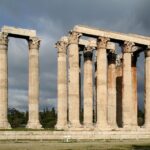
The Parthenon stop: what you can get in limited time
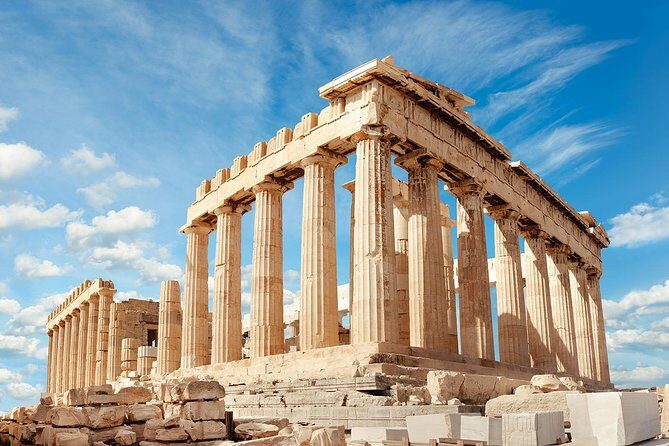
The Parthenon is the star of the hill, and you’ll spend about 10 minutes there in this format. It’s built in the mid-5th century BCE and dedicated to Athena Parthenos.
The Parthenon’s architectural claim to fame is the Doric order. It’s described as the culmination of Doric development, which means you’re looking at the simplest Greek architectural style pushed to its height.
The tour frames it as part of Pericles’ rebuilding program after the sack of the Acropolis during the Greco-Persian Wars. It also served as a treasury of the Delian League, tying the monument to Athens’ economic and political reach.
Real talk: 10 minutes is not enough for museum-level absorption. But it’s enough for the “wow” factor and for learning what to notice once you’re back on your own.
Syntagma Square and the neoclassical trilogy, from Parliament to the Unknown Soldier
After the Acropolis cluster, the day moves into Athens’ modern heart. You’ll make stops around Syntagma Square, the Hellenic Parliament, and the nearby ceremonial scenes.
The Hellenic Parliament building’s story is tightly linked to modern Greece. The area originally served as the palace of Kings Otto and George I, then became Parliament and Senate a hundred years after the palace was constructed. It’s still the Parliament site today.
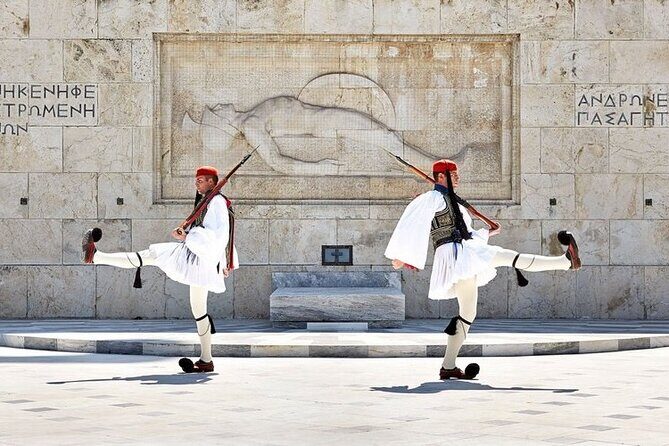
Right by it is the Monument to the Unknown Soldier, a war memorial (cenotaph) for Greek soldiers killed in war. It’s sculpted between 1930 and 1932 by Fokion Rok, and it’s guarded by the Evzones of the Presidential Guard. Even in a short stop, the guard detail tends to grab attention fast.
Then you’ll see the “Neoclassical Trilogy” idea: the Academy of Athens, the National and Kapodistrian University, and the National Library. The National Library is described as built between 1887 and 1902, based on a study by Danish architect Theophile Hansen. That’s a useful detail because it gives you a name to attach to what you’re seeing.
There’s also mention of the Old Parliament building hosting the National Historical Museum. In this tour format, think of these as photo + orientation stops, not a full deep dive through exhibits.
Plaka: walkable charm under the Acropolis
Plaka is the part of Athens you can feel in your feet. You’ll get around 20 minutes here, with enough time to slow down and wander a bit rather than just stop for a picture.
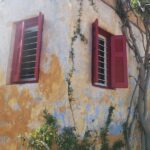
This area sits in the shadow of the Acropolis. It’s described as a village feel, with narrow cobblestone streets, small shops, and tavernas that often run late. Nearby is Anafiotika, with whitewashed homes that create an island-like atmosphere.
Plaka is also nicknamed the Neighborhood of the Gods, and the tour’s framing is accurate: it’s beneath the northeastern slope of the Acropolis and stretches toward Syntagma Square through winding lanes with ruins and antiquities tucked in.
If you’re trying to balance mobility needs with atmosphere, Plaka is one of the better picks for a short stop. The streets are charming, but you’ll still want to be realistic about cobbles.
Kallimarmaro and the marble stadium quick look
Next comes the Kallimarmaro (Panathenaea) Stadium. It’s tied to the first modern Olympic Games in 1896 and is famous for being made of marble, specifically Pentelic marble.
The tour notes that the marble can change color with the day’s light, shifting morning and afternoon tones. It’s also said that monuments on the Acropolis and the Temple of Zeus are made of the same Pentelic marble. That connection is the point: you start noticing materials as a theme across the city.
One important practical note: Kallimarmaro admission is listed as not included. So in this tour format, your experience may be mainly outside viewing unless you choose to pay separately on the spot.
Lycabettus Hill: the best payoff for the last third of the day
The biggest view moment is reserved for Lykavittos (Mount Lycabettus). You’ll spend about 1 hour 10 minutes, and that extra time makes a difference. You’re not just grabbing a photo and leaving.
Lycabettus is the highest point in central Athens at 277 m (909 feet). It offers views of Athens and the coastline, and it’s also described as one of the largest green areas in the center of the city.
You don’t have to climb if that’s not your plan. The hill is accessible on foot, by funicular railway, and by car. You’ll also see mention of a small chapel of Saint George, plus a common rhythm: tourists climb, but many Athenians stroll too, using the hill as a break from busier streets below.
After the hill visit, you’ll be dropped back at the same spot where you were picked up. That makes end-of-day logistics simple, especially if you’re returning to a cruise schedule or catching dinner somewhere close.
Piraeus waterfront and trireme moments for the seafaring side of Athens
The tour also keeps one foot in maritime Athens. Along the route and toward the waterfront, you may see highlights connected to ancient sea power.
A stop at Marina Flisvos includes a trireme (triērēs) viewing. The description emphasizes how devastating these ships were: three banks of oars, maneuverability, and a bronze-sheathed ram on the prow used to sink enemy vessels. It also connects triremes to Athens’ maritime empire in the 5th century BCE.
There’s also mention of Trocadero back at Piraeus, including the Averof Battleship and an ancient trireme ship. These aren’t the Acropolis, but they do something Athens highlights tours sometimes skip: they remind you the city’s story includes the sea, not just temples on a hill.
Price and value: what $272.33 per group buys you
At $272.33 per group up to 3, you’re paying for private transportation and a driver who provides the commentary and pacing. For a group of 3, the cost works out closer to under $100 per person. For 2 people, it’s closer to $136 each. If you have a mobility need, that per-person math can look better because you’re buying convenience and time saved.
What’s included:
- Professional English-speaking driver (commentary along the way)
- Pickup and drop-off at the cruise ship pier in Piraeus or at your Athens hotel
- Accessible-appropriate vehicle for the group size (air-conditioned Mercedes-Benz)
- Private format so your group controls the tempo
What’s not included:
- Entrance fees to archaeological sites and museums
- Food and drinks
- An English-speaking licensed tour guide inside sites (you can arrange one for extra cost, subject to availability)
Here’s the practical way to think about it: if you want the driver’s overview plus mostly free exterior time, this is good value. If you want someone licensed to guide you inside every major site, you’ll likely add-on guide service and entrance tickets, and the total climbs.
Also, one accessibility detail you should not ignore: a vehicle with a ramp is not available on this tour. If you need ramp access, contact the operator first. If you rely on lifts at specific sites, there’s evidence from a review that a lift can make Acropolis time possible, but you’ll still want to confirm how that works for your needs.
Should you book this Athens panorama tour?
Book it if you want a short, private, driver-led Athens overview that hits Acropolis views, Plaka atmosphere, Syntagma Square landmarks, and a real viewpoint at Lycabettus. It’s a strong fit if someone in your group has limited mobility, since the tour is built around car-based pacing and driver help—drivers like Andreas and Michael came up for a reason.
Skip it (or plan add-ons) if you want hours inside major museums and archaeological spaces with a licensed guide. This format is about getting your bearings fast and seeing the highlights without burning daylight.
FAQ
Is pickup included in this Athens tour?
Yes. You can be picked up from your hotel in Athens, or from your cruise ship pier at Piraeus port. You return to the same pickup spot.
How long is the tour?
It runs about 3 hours (approx.), with a longer stop around Lycabettus Hill of about 1 hour 10 minutes.
Is the tour private?
Yes. It’s a private tour/activity, and only your group participates.
Are entrance fees included?
No. Entrance fees to archaeological sites and museums are not included, even though many exterior stops are listed as free.
Do I get an English-speaking guide?
You get a professional English-speaking driver with good knowledge and commentary. The driver is not a licensed guide to accompany you inside archaeological sites and museums. Licensed tour guide service can be arranged for an extra cost, subject to availability.
Is a wheelchair ramp available?
The tour notes that a vehicle with a ramp is not available. If you need ramp access, contact the operator before booking. Also, a disabled person must be escorted by the person who takes care of them.

More 3-Hour Experiences in Athens
More Tours in Athens



More Tour Reviews in Athens
- All Day Cruise -3 Islands to Agistri,Moni, Aegina with lunch and drinks included
★ 5.0 · 4,958 reviews