REVIEW · ATHENS
Acropolis Group Tour in German or Dutch
Book on Viator →Operated by Little Owl Tours · Bookable on Viator
That hill has a way of pulling you in.
This Acropolis group tour turns the monuments into a guided story in Dutch or German, so you’re not just collecting sights. I like that it’s paced well for a short visit, with a licensed guide walking you through the important points and explaining the myth and meaning behind what you see.
What I really like is the emphasis on specific stops that people usually rush past. You’ll get time at the Parthenon and the Erectheion (with the Caryatids), plus a quick hit at places that shape how ancient Athens worked, like the Theatre of Dionysus and Dionysus’s religious roots.
One possible drawback: you’ll only get the full experience if you’re comfortable with Dutch or German. If you’re relying on English, bring a translation plan, because the tour itself is not offered in English.
In This Review
- Key highlights worth your time
- Why this Acropolis tour works for a short Athens visit
- Starting smart at the Acropoli metro exit and first entrance views
- Stop-by-stop on the hill: Acropolis to Propylaea
- The Acropolis area: the “big picture” run-up (about 20 minutes)
- Theatre of Dionysus Eleuthereus: where theater begins (about 15 minutes)
- Temple of Athena Nike: the small temple that hits hard (about 5 minutes)
- Propylaea: the monumental gateway feeling (about 5 minutes)
- Parthenon and Erectheion: the stops you’ll remember
- Parthenon (about 20 minutes)
- Erectheion and the Caryatids (about 10 minutes)
- Herod Atticus Odeon: a Roman hall still used for music
- Price and tickets: what your budget should really include
- Who this Acropolis tour suits best
- Should you book this Acropolis Group Tour in Dutch or German?
- FAQ
- Is the Acropolis tour offered in English?
- How long is the tour?
- Where do I meet the guide?
- Are entrance fees included in the price?
- What stops are included on the tour?
- What’s the meeting and end point?
- What if the weather is bad?
Key highlights worth your time
- A small group (max 20) that keeps the guide’s attention where it belongs
- Licensed guidance with myth and context built into each stop, not just dates and facts
- Stop-by-stop coverage of Parthenon, Erectheion, Theatre of Dionysus, and more
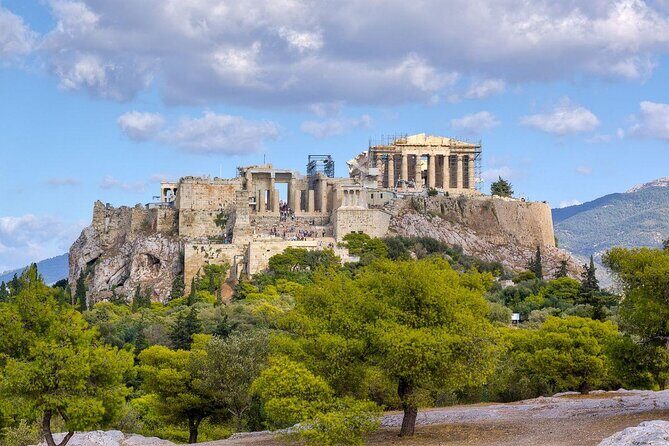
- A real 360° payoff from the top of the Acropolis hill
- The Caryatids story and learning what happened to one of the columns
- Herod Atticus Odeon as a living venue (seasonal concerts can still happen there)
Why this Acropolis tour works for a short Athens visit
The Acropolis can feel like a museum you sprint through. This tour is designed to slow you down just enough. You don’t sit all day. But you also don’t get a bare-bones walk-through where the guide keeps moving faster than you can look.
The big win is the storytelling approach. Instead of treating the Acropolis as a pile of stone, the licensed guide connects monuments to the myths and beliefs that shaped them. That matters because many parts of the site only make full sense when you know what they were for and why people cared.
Another practical bonus: the group stays small, with a maximum of 20 people. Smaller groups tend to mean fewer bottlenecks and more time for questions when something catches your eye. For a site this crowded, that’s not a luxury. It’s part of getting value from the experience.
One more thing to consider: this is a Dutch or German tour. If you’re traveling with someone who loves history but struggles with the language, this is the one detail that can make or break enjoyment. If you do speak Dutch or German (or you’re comfortable following along with basic context), you’ll likely feel like the whole hill makes more sense.
You can also read our reviews of more tours and experiences in Athens.
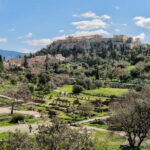


Starting smart at the Acropoli metro exit and first entrance views
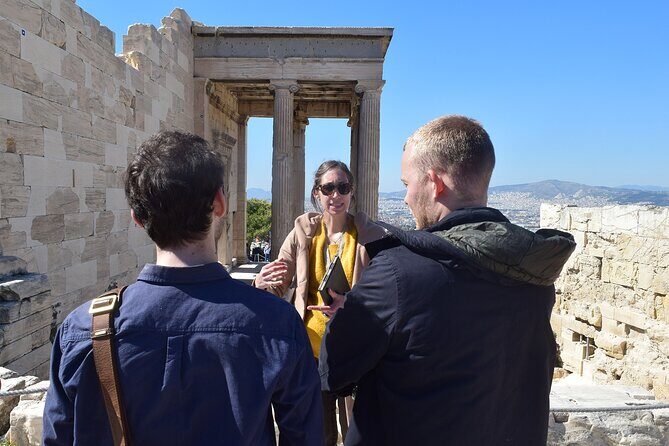
You meet at the exit of the Acropoli metro station (Exit Makriyianni/ Dionysiou Areopagitou) and you’re then guided to the entrance of the site. This is a good setup because it gets you close to the action quickly, without wasting time on a long transfer.
The tour begins with your first real look at the Acropolis as an outdoor set piece. You’ll pass major monuments as you move along the hill, and the guide’s narrative helps you avoid the common problem: seeing everything without understanding the order or the “why.”
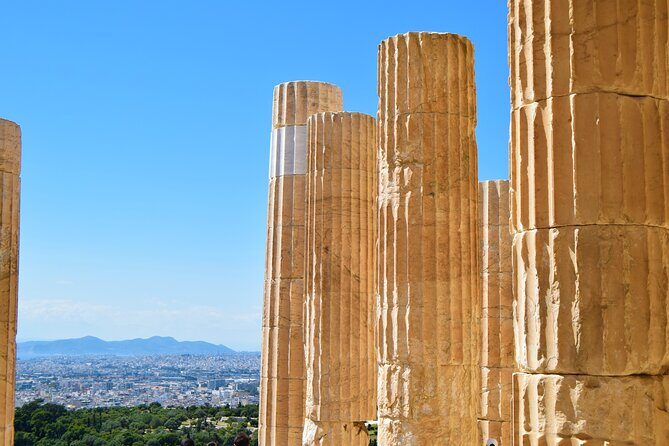
The first stop includes a key payoff: a stunning 360° view over Athens from the top of the hill. Even if you’ve seen photos, the view is still the kind of moment where you feel oriented. It gives you a sense of scale: this isn’t just one temple. It’s a whole sacred “platform” overlooking the city.
A note on time: the Acropolis stop is about 20 minutes. That’s enough to absorb the big picture and walk between viewpoints, but not enough to do a long, unhurried self-guided wander. If you’re the type who wants to linger at every column and carving, you’ll probably want extra time in Athens later or a second visit for slower exploring.
Stop-by-stop on the hill: Acropolis to Propylaea
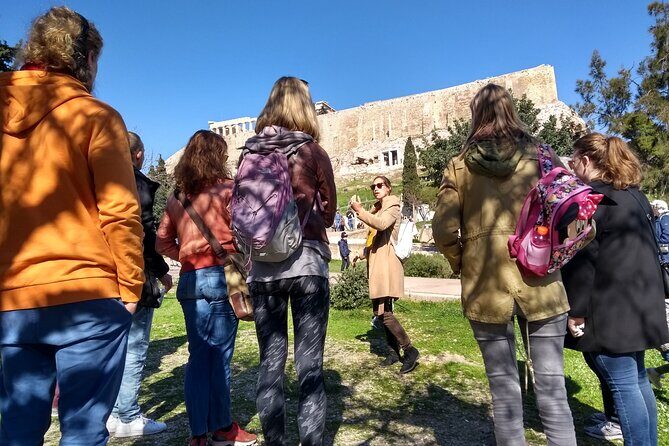
The itinerary is tight, but it’s also logical. Here’s how the early stops fit together and what to watch for.
The Acropolis area: the “big picture” run-up (about 20 minutes)
This is where the guide helps you connect the monuments to the story of ancient Athens and its mythological self-image. As you pass the major buildings, you’re not only looking at architecture. You’re learning what each part signals—power, worship, civic identity, and belief.
You’ll also get that 360° sweep of Athens at the top. It’s the moment that makes the rest easier to understand, because you can imagine how the city sat below these sacred spaces.
Tip for your photos: plan for the view first, then use the view to frame how you photograph the monuments. It’s easier than trying to guess angles while you’re walking.
Theatre of Dionysus Eleuthereus: where theater begins (about 15 minutes)
Next up is the Theatre of Dionysus Eleuthereus, described as the birthplace of ancient Greek theater. The guide explains how theater grew out of the cult of Dionysos—god of wine and a central figure in Greek religious life.
This stop is short, but the theme is powerful. You’re learning that theater wasn’t just entertainment. It was tied to worship and public ritual. When you look at ancient marble seating, you’re seeing a place where community belief and performance overlapped.
One practical detail: the theatre includes ancient marble seats with incised names. Even in a brief visit, it’s the kind of feature that makes the site feel human, like you’re reading traces of real people.
- All Day Cruise -3 Islands to Agistri,Moni, Aegina with lunch and drinks included
★ 5.0 · 4,958 reviews




Temple of Athena Nike: the small temple that hits hard (about 5 minutes)
The Temple of Athena Nike is the smallest temple on the Acropolis hill, focused on Nike, the goddess of victory. With only about five minutes, the goal here isn’t deep study. It’s to make sure you recognize why it’s there and what it symbolized.
This is also one of those stops where context changes how you see it. Instead of treating it as a quick photo spot, you’re hearing how victory as a concept shaped later ideas and even how it’s connected to a famous sport brand (as explained by the guide).
Propylaea: the monumental gateway feeling (about 5 minutes)
Then comes the Propylaea, the grand entrance gate. You go through it to reach the top of the Acropolis.
This stop is brief, but it’s important because it changes your viewpoint physically. The gate marks a transition. If you’ve ever felt that the Acropolis looks like it’s staged for dramatic effect, you’ll understand why here.
There’s also a close-up highlight: you’ll admire a huge marble block up close while passing by. It gives you a sense of scale before you move into the heavier hitters.
Parthenon and Erectheion: the stops you’ll remember
If you love classic monuments, these are the anchor points of the tour.
Parthenon (about 20 minutes)
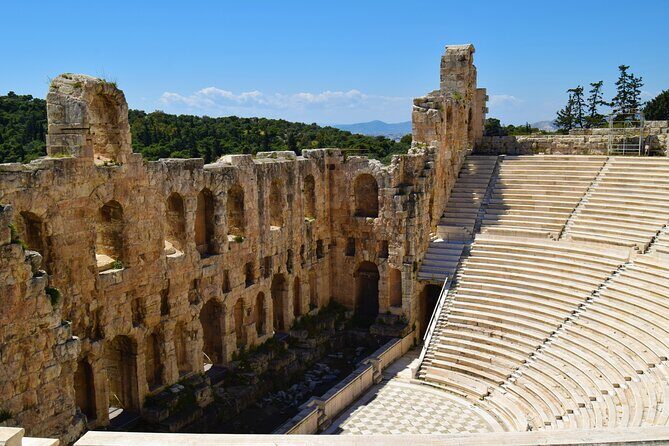
The Parthenon is the biggest temple on the Acropolis hill, dedicated to Athena. You get around 20 minutes here, which is a thoughtful amount of time for a guided visit because it allows the guide to explain the structure without turning it into a lecture.
One of the most interesting things you’ll hear is that the building does not rely on straight lines in the way you might expect. The guide connects those design choices to how architecture influenced the wider world. That’s a key moment: you stop thinking only about the Parthenon as an ancient object and start seeing it as an architectural idea that spread beyond Athens.
How to enjoy this part: slow down when the guide points out how the design works. Even a quick look at the details is more memorable than rushing for the perfect wide shot.
Erectheion and the Caryatids (about 10 minutes)
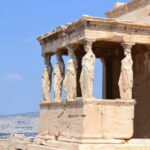
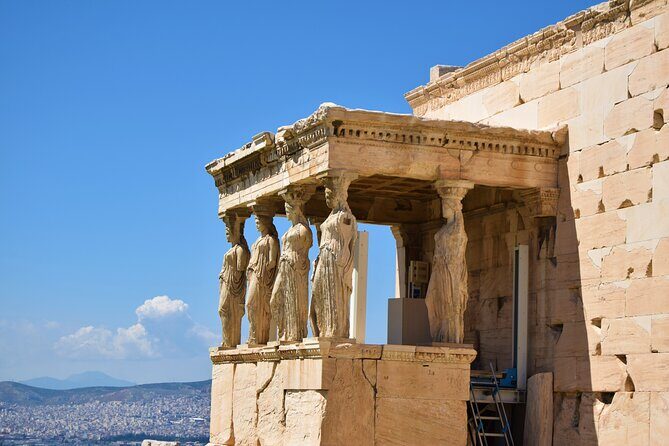
Next is the Erectheion, known for the Caryatids, the female columns. This stop is about 10 minutes, which might sound short, but Caryatids are not something you skim. They’re distinctive and immediately graspable, even if you’re not a long-time architecture fan.
The guide also covers a myth connected to Athena and Poseidon. That myth layer makes the sculpture feel less like decoration and more like part of a bigger story about divine conflict and the identity of Athens.
There’s a bonus detail included in this stop: you’ll learn what happened to one of the Caryatids columns and where it is nowadays. The key is that you leave this stop knowing the full context, including why the present-day appearance isn’t exactly the same as the original scene.
Practical tip: if you’re taller or you have a big camera, watch your spacing around the Caryatids. The best angles often require being still, and it’s easy to crowd the space quickly.
Herod Atticus Odeon: a Roman hall still used for music
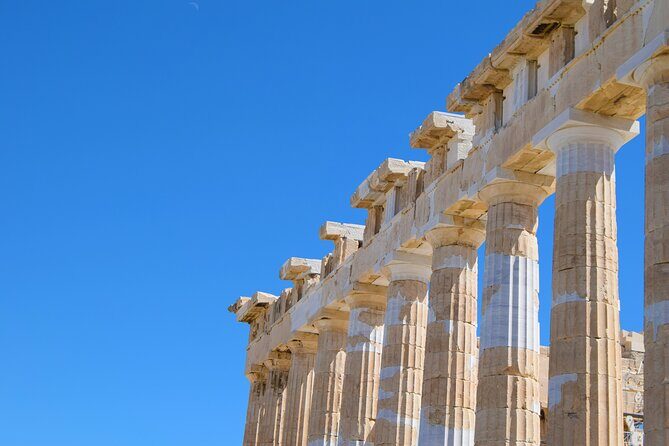
The last monument stop is Herod Atticus Odeon, a restored Roman concert hall built in AD 161 by wealthy Roman Herodes Atticus in memory of his wife Regilla.
This is a nice change of pace. After Greek temple heavyweights, you step into a venue built for performances. Even when the tour ends quickly here (around 10 minutes), the idea stays: the Acropolis wasn’t frozen in time. Different eras reused the setting for their own public culture.
There’s also a modern link. The guide notes that during summer, you can still see major artists perform there, with examples like Sting or Patti Smith mentioned. Whether you catch a show or not, the point is useful: the site can be historical and active at the same time.
When you’re looking at the restored structure, try to imagine the acoustics and how a crowd would face the stage. That mental image helps the Odeon make sense beyond its appearance.
Price and tickets: what your budget should really include
The tour price is $46.26 per person, and the group generally books about 63 days in advance. Duration is about 1 hour 30 minutes.
The most important cost detail: entrance fees are not included. Plan for 30 EUR per adult. The good news is that the operator arranges your entrance fees for you. That saves you from scrambling last-minute at the site with a complicated purchase.
So what’s the real value? You’re paying for three things:
1) a licensed guide who connects the monuments into a story you can follow
2) a structured route that hits the main points without wasting time
3) time-saver simplicity: language-specific narration and a planned sequence on the hill
If you only did self-guided wandering, you could spend similar amounts on entry tickets alone. The extra cost here is buying interpretation and a fast, efficient route. With a time-limited visit to Athens, that can be a very smart trade.
Food and drinks are not included. Bottled water isn’t included either, but carrying water matters. The tour moves outdoors and you’re climbing on a hot stone hill when weather cooperates (and it does need good weather for the experience to run).
Also, there’s no hotel pickup or drop-off. You’re expected to handle getting yourself to the meeting point near the metro.
Who this Acropolis tour suits best
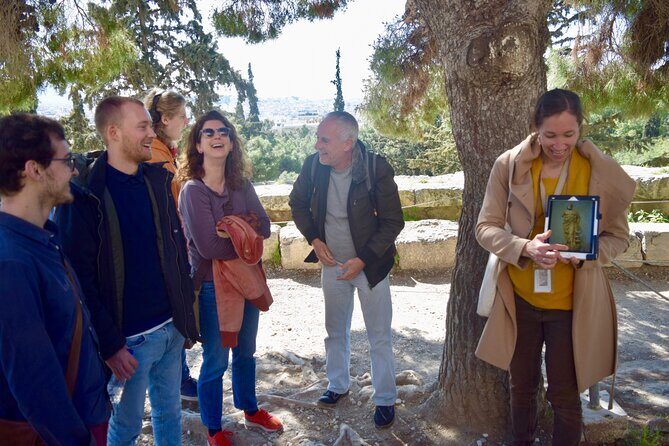
This tour is built for people who want a clear plan and don’t want to spend hours deciding what to see first.
I think it’s a strong match if:
- you have limited time in Athens and want key Acropolis landmarks in about 90 minutes
- you enjoy mythology and context, not just seeing buildings
- you like small-group pacing (max 20) so you can actually hear the guide at the stops
It also sounds like it can work well with kids. One guide name that came up is Jessica, described as very kind, telling interesting stories, and being patient with children. That’s a big deal in a place that can overwhelm younger visitors.
One more note: you need good weather. If Athens is clear and bright, you’ll benefit a lot from the 360° view payoff. If it’s not, the tour may be rescheduled or you’ll receive a full refund, depending on what happens.
Should you book this Acropolis Group Tour in Dutch or German?
Book it if you want a structured, story-driven walk that hits the Acropolis highlights without dragging on. The stop selection makes sense: you start with the hill and viewpoints, then cover the Theatre of Dionysus, Athena Nike, Propylaea, and the biggest “must-see” monuments like the Parthenon and Erectheion, before finishing at Herod Atticus Odeon.
Don’t book it if you need English narration. The language is Dutch or German, and this kind of tour lives or dies by understanding the guide’s explanation. Also, if you’re the type who wants to linger for a long time in every corner, treat this as a foundation stop, then plan extra time afterward for slow, self-guided wandering.
If your goal is clarity, efficiency, and real context for the main monuments, this is a solid value way to spend an hour and a half on the Acropolis hill.
FAQ
Is the Acropolis tour offered in English?
No. This tour is in Dutch or German.
How long is the tour?
It runs about 1 hour 30 minutes (approx.).
Where do I meet the guide?
You meet at the exit of the Acropoli metro station (Exit Makriyianni/ Dionysiou Areopagitou).
Are entrance fees included in the price?
No. Entrance fees are not included. The tour lists 30 EUR per adult, and the provider will arrange the entrance fees for you.
What stops are included on the tour?
You visit the Acropolis, the Theatre of Dionysus Eleuthereus, the Temple of Athena Nike, the Propylaea, the Parthenon, the Erectheion, and Herod Atticus Odeon.
What’s the meeting and end point?
You start at Acropoli Athens 117 42, Greece, and the tour ends on top of the Acropolis hill at Acropolis of Athens 105 58, Greece.
What if the weather is bad?
The experience requires good weather. If it is canceled due to poor weather, you’ll be offered a different date or a full refund.

More Tours in Athens

More Tour Reviews in Athens
- All Day Cruise -3 Islands to Agistri,Moni, Aegina with lunch and drinks included
★ 5.0 · 4,958 reviews