REVIEW · ATHENS
“All Day Tour Athens & Corinth:Highlights & Path of Apostle Paul”
Book on Viator →Operated by Greece Athens Taxi GAT · Bookable on Viator
Ancient Athens and Corinth in one day.
This long, high-impact tour strings together the Acropolis highlights, modern political Athens around Syntagma Square, and then heads to Corinth for sites connected to the Path of Apostle Paul. It’s a great choice when you want big-name monuments plus meaningful religious and ancient stops without juggling buses and tickets on your own.
I especially like two things. First, the hotel/Airbnb/Piraeus pickup is flexible and easy—your driver shows up at your location (including right outside the cruise ship at Port of Piraeus). Second, you get practical comfort for a long day: Mercedes transport with A/C, WiFi on board, bottled water, and mobile chargers.
One thing to think through: the driver is not a licensed tour guide inside museums or sites. That can matter if you’re expecting a full guide narrative at every ticketed stop, and it also means you should plan around ticket costs on top of the tour price.
In This Review
- Key highlights you’ll actually feel during the day
- How a Private Athens and Corinth Day Works (Pickup, Time, and Pacing)
- Acropolis First: Parthenon, Athena Nike, Erechtheion Karyatids, and Herodion/Theatres
- Panathenaic Stadium, Olympian Zeus, and Hadrian’s Gate: Athens Beyond One Hill
- Syntagma Square: Parliament, Changing Guard, and Neoclassical Athens Walk-Bys
- Plaka and Monastiraki: Old Streets, Agora Layout, and Stoa of Attalos
- Corinth Canal and Acrocorinth: The Isthmus, Strategic Defenses, and Paul-Linked Steps
- Corinth Museum and the Temple of Apollo: Turning Stops Into Context
- Price and Value: What the €30 and €20 Tickets Mean for Your Budget
- Should You Book This Athens and Corinth Day Tour?
- FAQ
- Do you pick up from hotels, Airbnbs, and the Port of Piraeus?
- Is this tour private?
- How long does the Athens and Corinth tour take?
- Is the tour offered in English?
- Are skip-the-line tickets included?
- Are entrance tickets included for major sites?
- Will the driver act as a licensed tour guide inside museums?
- Can I cancel for a full refund?
Key highlights you’ll actually feel during the day
- Private group touring with your own schedule rhythm so you can move at a pace that fits your group.
- Skip-the-line ticket help, which can save time at the busiest spots (but you still cover ticket costs).
- Acropolis in one concentrated sweep: Parthenon, Temple of Athena Nike, Erechtheion with the Karyatid statues, and classic theater views.
- Syntagma Square politics break with the Parliament area and the Unknown Soldier monument guarded by the Presidential Guard.
- Corinth Canal + Acrocorinth for big views and a strong “this is where movement through the peninsula mattered” feeling.
- Apostle Paul-associated stops like Apostle Paul’s step and early Christian basilica areas at Corinth.
How a Private Athens and Corinth Day Works (Pickup, Time, and Pacing)
This is built for a full day. Expect about 10 to 11 hours, and plan for a lot of walking plus occasional uphill patches, especially at Acrocorinth. Some stops are long enough to see and take photos; others are shorter photo-and-orientation breaks, which is normal on a route this ambitious.
Logistics matter here because the tour hits both Athens and Corinth. The payoff is that you get door-to-door pickup and return transport with no need to navigate intercity timing. In one real-world example, the driver Bledi handled an airport meet-up promptly (even arriving earlier by following an incoming flight) and managed the transfer needs tied to cruise boarding time. That kind of flexibility is exactly what makes a long-day itinerary feel smoother.
Comfort is handled, too. You’re riding in Mercedes-Benz vehicles with A/C, and you’ll have WiFi, bottled water, and mobile chargers. That doesn’t replace the need for good walking shoes, but it does make the hours between ruins much more bearable.
You can also read our reviews of more tours and experiences in Athens
- All Day Cruise -3 Islands to Agistri,Moni, Aegina with lunch and drinks included
★ 5.0 · 4,958 reviews

Acropolis First: Parthenon, Athena Nike, Erechtheion Karyatids, and Herodion/Theatres
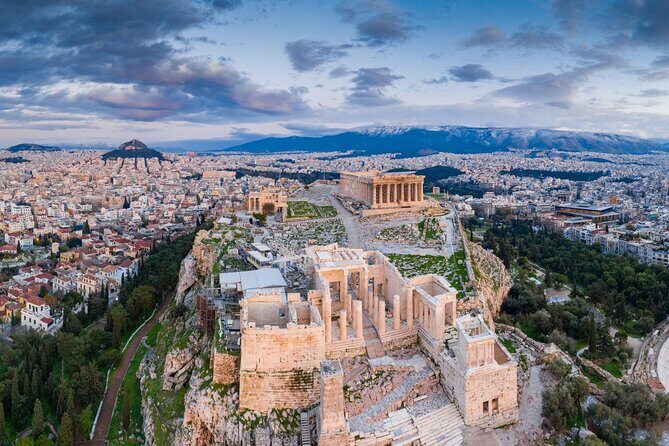
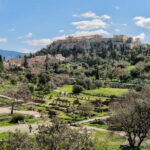
The day kicks off with the Acropolis, a rocky hill towering over Athens. You’ll start with the skyline-defining monuments—this is where Athens makes its most dramatic first impression. The Parthenon is the headliner: it’s the temple dedicated to Athena, begun in 447 BC and completed in 438 BC, with decoration work continuing afterward. Even before you get into details, you’ll feel why this building is treated like the center of Classical Greece.
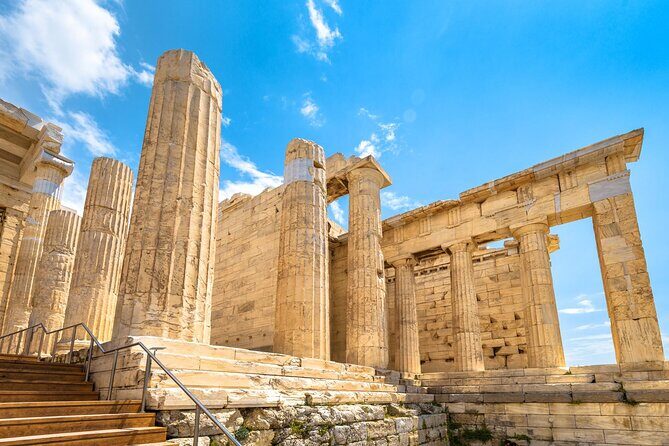
From there, your route includes Temple of Athena Nike, and the Erechtheion on the north side of the Acropolis. The Erechtheion is known for its Karyatid statues, and it’s a nice contrast to the Parthenon’s “strong and strict” Doric vibe. You also get time for the Propylaea area, the monumental gateway feel that helps you understand the Acropolis as a designed space, not just a pile of ruins.
The tour also includes viewpoints tied to the Acropolis theatre world. You’ll see the Odeon of Herodes Atticus (also called Herodion), plus the Theatre of Dionysus, which sits on the south slope. These places help connect the dots between religion, politics, and public life in ancient Athens—because drama wasn’t some separate hobby. It was part of how citizens gathered and argued, through story and spectacle.
A practical timing note: Acropolis stop time is listed at about 1 hour 15 minutes, and Acropolis admission tickets are not included. Even if you’re fast, you’ll want a plan for what you want most: architecture details, panoramic photos, or quick orientation. If you care about a specific indoor stop (like an Acropolis museum), ask what’s actually built into your schedule before you finalize the day.
Panathenaic Stadium, Olympian Zeus, and Hadrian’s Gate: Athens Beyond One Hill
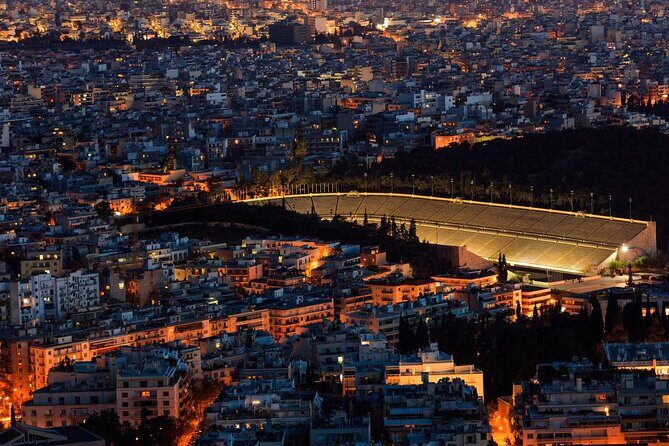
After the heights of the Acropolis, the tour spreads out across central landmarks. One highlight is the Panathenaic Stadium (Kallimarmaro)—famous as the oldest stadium still in operation and built entirely of white marble. You won’t get long here (about 10 minutes), but it’s a memorable “how did they stage mass events here?” moment that breaks up the ancient-temple focus.
Then comes the Temple of Olympian Zeus, described as a half-complete temple dedicated to Zeus. The site is popular for a reason: you can study the scale and the long history of destruction and rebuilding at a glance. Also, it’s surrounded by other famous spots in walking distance, including the Arch of Hadrian (Hadrian’s Gate) and nearby landmarks like the Zappeion area.
The Arch of Hadrian is a quick but satisfying Roman-style landmark. It also works as a visual reminder that Athens wasn’t static—later powers left their mark right alongside older sacred spaces.
You’ll also see the Zappeion, a palatial building next to the National Garden area. It’s described as a modern landmark used for meetings and ceremonies, which helps you connect ancient civic life to modern state functions.
Syntagma Square: Parliament, Changing Guard, and Neoclassical Athens Walk-Bys
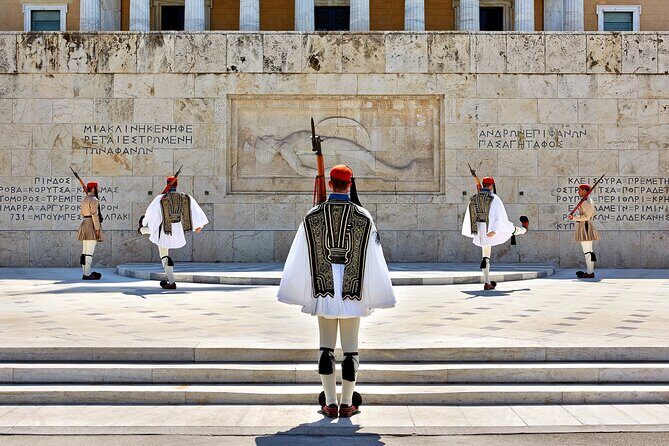
Next you shift into modern political Athens at Syntagma Square. This is the central square tied to Greece’s constitutional history, and it’s still the heartbeat of Greek politics from a daily-life angle. The tour includes the Monument to the Unknown Soldier and the changing of the guard performed by the Euzones in front of the Old Palace, now the Parliament House.
The Greek Parliament sits in the Old Royal Palace by the square, and the monument area is guarded 24 hours a day by the Presidential Guard. Even if you’re not a flag-and-ceremony person, this is one of the few places in Athens where you can step into a very clearly defined ritual that feels local, not touristy theater.
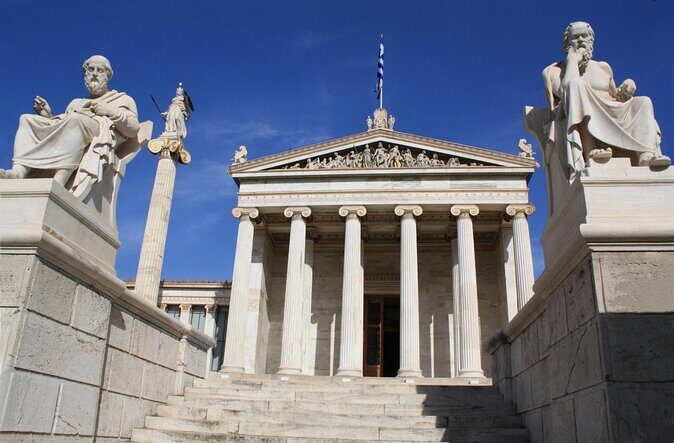
Your route also includes quick stops related to learning institutions and major public buildings, such as the National Library (Vallianeion) reading room. The details here are genuinely interesting: it once housed over 2 million books and manuscripts, including 5,200 manuscripts and over 300 Greek New Testament manuscripts, plus handwritten renditions linked to Aristotle, Plato, and Homer.
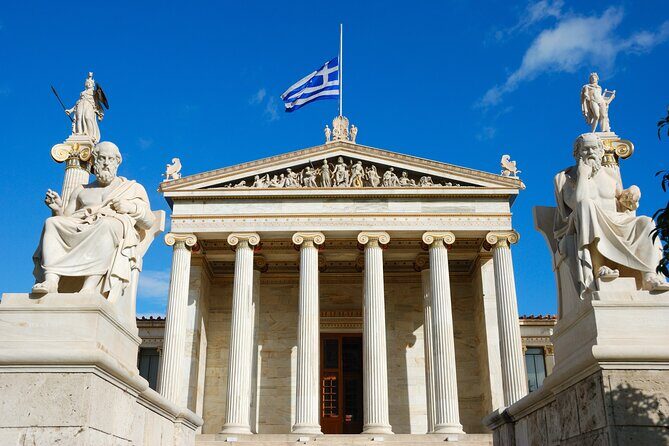
You’ll also pass by the National and Kapodistrian University of Athens (NKUA) and the Academy of Athens. These are not just “nice buildings” stops. They help you see how Greece frames education and research as part of national identity.
Plaka and Monastiraki: Old Streets, Agora Layout, and Stoa of Attalos

After the official Athens stops, you’ll get time in Plaka, described as Athens’ oldest and charming district. This is where the pace can soften, because you’re walking through narrow lanes with neoclassical homes, red-tile roofs, balconies with flowers, and typical taverns and street cafés where you can pause for an ice-cold frappé.
Plaka sits right below the winding medieval alleyways near the Acropolis, so it’s easy to keep that ancient-feel energy going even while you’re in modern streets.
Then you’ll head to Monastiraki, known for iconic nearby landmarks like the Ancient Agora area, the ruins tied to Hadrian’s Library, and the rebuilt Stoa of Attalos. The stoa is important because it represents how the agora functioned as a gathering place—literally a space for assembly and social order in a city-state.
Hadrian’s Library is another quick-stops-and-outside-look kind of highlight. It’s described as an AD 132 complex with an internal courtyard and pool bordered by 100 columns. Even when your time is short, it’s the kind of place that helps you understand how serious public life was, not only in temples and theatres but in everyday civic spaces.
- All Day Cruise -3 Islands to Agistri,Moni, Aegina with lunch and drinks included
★ 5.0 · 4,958 reviews




Corinth Canal and Acrocorinth: The Isthmus, Strategic Defenses, and Paul-Linked Steps
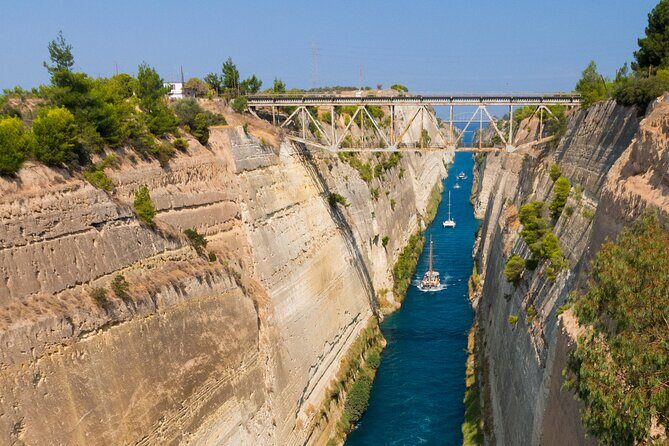
The big change comes when the tour leaves Athens and travels to the Peloponnese. One of the route highlights is the Corinth Canal, a narrow strip of land connection that links the Saronic Gulf with the Gulf of Corinth. It’s about 6 km long, and the canal work at the narrowest point took place between 1880 and 1893.
This stop is more than scenic. The canal area is described as a strategic point where ancient walls existed since the end of the 5th century BC, preserved later into Byzantine times (the Hexamilion). Standing in that setting helps you grasp why control of movement mattered so much here.
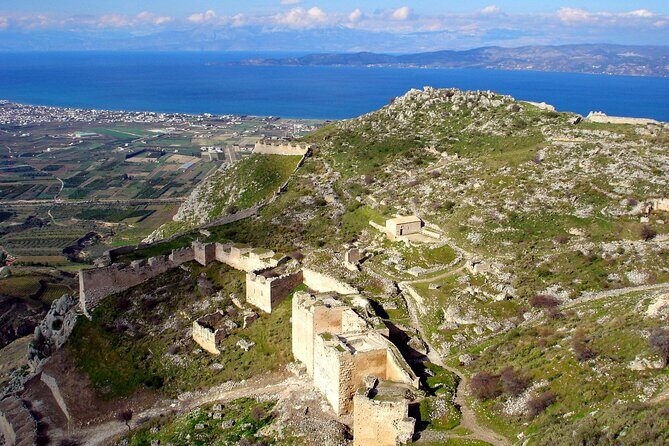
Next comes Acrocorinth, the steep rock at about 575 meters high overlooking the ancient city of Corinth. It’s described as the most impressive acropolis of mainland Greece in one historical estimate, and it also functioned as a viewpoint used for defense. With a secure water supply, the fortress was repeatedly used as a last line of defense, controlling access into the peninsula.
Your stops in the Acrocorinth zone are tied to the “Path of Apostle Paul” idea. Expect to see the Apostle Paul’s step plus the amphitheater, theatre, and other named sacred or historic areas such as:
- the Sanctuary of Asclepius
- the Sanctuary of Demeter and Koris
- Fountain Glavki
- the Temple of Apollo
- the Temple of Octavia
- Early Christian Basilica of the Skull and Early Christian Basilica of Lechai
- and additional site areas like Pirine and Conservatory
Even if you don’t go deep into every name, this is a powerful way to experience layering: Greek civic space, ancient religion, and early Christian footprints all on one defensive height.
Practical note: this is where shoes and pacing matter most. Plan for slopes and steps, and keep an eye on hydration, especially in warm months.
Corinth Museum and the Temple of Apollo: Turning Stops Into Context
After the outdoor sites, you’ll go to the Archaeological Museum of Ancient Corinth. The museum is described as being built in 1932 by the American School of Classical Studies that conducted excavations in the area. The museum is where the day shifts from “where it was” to “what was found.”
You get about 1 hour here, and museum entrance is not included. But it’s priced clearly: €20 per person is listed for the Archaeological Museum of Ancient Corinth. Inside, the museum covers finds from Prehistoric collections, artifacts from the Asklepieion, and items from the Geometric times through the Byzantine period. One item called out is the Twin Kouroi from ancient Tenea, which is described as archaic plastic art and recently became part of the exhibition.
The tour also includes a stop connected to the Temple of Apollo in the Corinth area. It’s described as an archaic temple with 40 monolithic Dorian columns, with seven still maintained over the ruins of the ancient market. This is one of those “look with patience” areas. Short time here can still be worth it because you’re seeing structural remnants that explain the scale of the original complex.
By the end of the Corinth portion, your brain usually needs a reset. If you’re someone who likes to keep notes or take photos with purpose, this is a good moment to do it. You’ll have enough names and stop points that you’ll want some anchors when you get back to Athens.
Price and Value: What the €30 and €20 Tickets Mean for Your Budget
The tour price is $307.39 per person, and the big value is what you’re getting for that money: private transportation, hotel/Airbnb/port pickup and return, a driver with English and history background, plus extras like WiFi and bottled water. You’re not paying separately for the logistics piece that usually eats half a day in planning.
The catch is that entrance fees are not included. The Acropolis admission is listed at €30 per person, and the Archaeological Museum of Ancient Corinth is listed at €20 per person. So, at minimum, you should budget for at least €50 beyond the tour price, plus any other archaeological site tickets not itemized here.
Skip-the-line assistance is included in the form of help with purchasing tickets, but remember: you still cover ticket costs. For the Acropolis, that’s usually the difference between spending your energy on the monument or losing it in ticket lines.
Given the distance Athens-to-Corinth, a private day like this often ends up cost-effective compared with doing it independently if you factor in time, transport hassle, and ticket coordination.
Should You Book This Athens and Corinth Day Tour?
Book it if you want a single-driver day that covers major Athens landmarks and then hits Corinth’s key ancient and early Christian sites in one go. It’s especially strong for first-time visitors who hate the stress of intercity travel and want the day structured around named places like the Acropolis monuments, Syntagma Square, and Corinth’s Acrocorinth viewpoint.
I’d be cautious if your main goal is a very specific indoor museum or if you want a tightly timed sequence that never changes. The driver is not a licensed guide inside museums, and the schedule can feel tight at a route this full. If you have your heart set on one particular indoor stop, confirm it clearly in advance so you aren’t surprised by pacing.
Also check calendar closures for the Acropolis and the Archaeological Museum of Ancient Corinth: they’re listed as closed on January 1st, March 25th, May 1st, Easter Sunday, and December 25th and 26th. If your trip lands on one of those dates, you’ll want a different plan.
If you’re traveling with kids, note that the vehicles come with child seats, and service animals are allowed.
FAQ
Do you pick up from hotels, Airbnbs, and the Port of Piraeus?
Yes. Pickup is available from any location you choose, including hotels, Airbnbs, the Port of Piraeus (outside your cruise ship with a sign showing your name), or metro/bus stations. You’ll provide the exact address or meeting point when you book, and you’ll receive the driver contact details one day before.
Is this tour private?
Yes. It’s a private tour/activity, and only your group participates.
How long does the Athens and Corinth tour take?
It runs about 10 to 11 hours.
Is the tour offered in English?
Yes. It’s offered in English, and you’ll have an English-speaking driver.
Are skip-the-line tickets included?
The tour includes assistance with purchasing skip-the-line tickets. The customer covers the ticket cost.
Are entrance tickets included for major sites?
No. Entrance fees/tickets for archaeological places and museums are not included. The Acropolis is listed at €30 per person, and the Archaeological Museum of Ancient Corinth is listed at €20 per person.
Will the driver act as a licensed tour guide inside museums?
No. The driver is not licensed to accompany you inside sites or museums. A licensed tour guide may be available on request depending on availability.
Can I cancel for a full refund?
Yes. You can cancel up to 24 hours in advance for a full refund. If you cancel less than 24 hours before the start time, the amount paid is not refunded.
If you want, tell me your travel month and whether you’re starting from a hotel or from a cruise. I can suggest the best way to protect your time at the Acropolis and Corinth so you don’t feel rushed.


More Full-Day in Athens
- All Day Cruise -3 Islands to Agistri,Moni, Aegina with lunch and drinks included
★ 5.0 · 4,958 reviews


More Tours in Athens


More Tour Reviews in Athens
- All Day Cruise -3 Islands to Agistri,Moni, Aegina with lunch and drinks included
★ 5.0 · 4,958 reviews