REVIEW · ATHENS
Ancient Athens Corinth Biblical Tour Following Paul 51.A.D
Book on Viator →Operated by Great Greece Tours · Bookable on Viator
Paul’s world feels close here.
This Athens-to-Corinth day traces the places tied to Saint Paul’s mission in 51 A.D., with stops that connect real geography to the stories you’ve read. What makes it compelling is the pacing: you’re not just rushing through ruins—you get a driver-guide who explains how the sites fit together, then you get time to look around at your own speed.
I especially like the hotel or cruise pickup and the private, air-conditioned van with Wi-Fi, which makes this long day feel manageable. One thing to consider: you pay extra for the Ancient Corinth entrance fee (and in at least one key archaeological stop, you’ll likely need to explore on your own while the driver-guide stays with the group).
In This Review
- Key highlights at a glance
- Why this Paul’s footsteps route works better than a solo day
- The ride: pickup, Wi‑Fi, AC, and why that matters
- Areopagus and Mars Hill: the setting for Paul in Athens (51 A.D.)
- Roman Agora: where Paul’s Corinth story starts to feel connected
- The Diolkos: a 2,700-year-old trade shortcut that shaped Corinth
- Corinth Canal: King George’s 1882 excavation story and big views
- Ancient Corinth (Archaia Korinthos): the Step of Paul is the main event
- Temple of Apollo: light, music, and the sun hitting the sightline
- Acrocorinth: the big castle views and the Caesar-era connection
- Kenchries (Kechries): the harbor where Priscilla and Aquila enter the picture
- Apostolos Pavlos Church: the mosaic tied to Paul’s vision
- Price and value: what you’re really paying for
- Who should book this Corinth and Athens Paul’s footprints day?
- My booking advice: should you go?
- FAQ
- Do I need to pay an entrance fee for Ancient Corinth
- Is lunch included
- Is there hotel or cruise pickup
- Is air-conditioning and Wi‑Fi included on the vehicle
- Is the tour private
- What language is the tour in
- How long is the tour
- What about admission fees at other stops
- Do I get bottled water
- Can a child seat be provided
- How does cancellation work
Key highlights at a glance
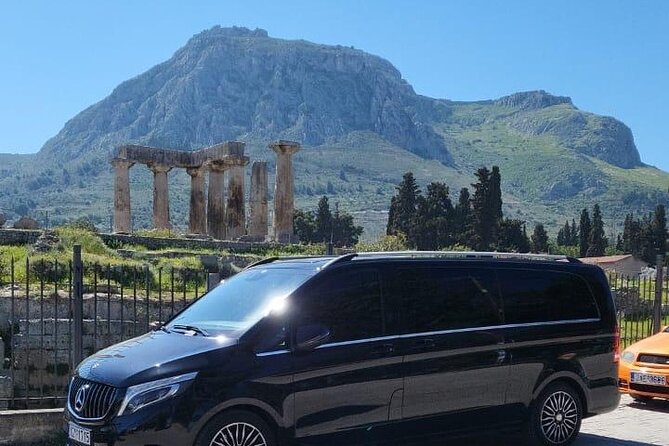
- Pickup + drop-off: start from your hotel or cruise gate without playing transit roulette
- Private group for up to 2: easier photos and more flexible timing
- Paul-to-Corinth context: your driver-guide links stops to what Paul encountered in 51 A.D.
- Corinth Canal viewpoints: a quick stop with big scenery energy
- Ancient Corinth + BHMA focus: the Step of Paul area is the main event
- Acrocorinth castle views: Caesar-era high ground with long sightlines
Why this Paul’s footsteps route works better than a solo day
Athens and Corinth are close enough that you can do it as a day trip—but far enough that self-planning can get annoying fast. This tour removes the friction: you get picked up, you ride in a comfortable private vehicle, and you’re guided through the storyline of Paul’s journey.
That storyline matters. Corinth wasn’t just one ruin on a hill. It was a trade hub, a cultural mix, and a place where religious debates could turn personal. When you connect a place like Areopagus with what Paul faced on the ground afterward, the day stops being a checklist and starts making sense.
You can also read our reviews of more tours and experiences in Athens.


The ride: pickup, Wi‑Fi, AC, and why that matters
You’ll start with hotel or cruise pickup and drop-off, with the driver waiting at a recognizable spot (entrance for hotels/airbnbs, gate sign for port guests). That saves you time and stress—especially if you’re arriving by ship.
On board you get air-conditioning, Wi‑Fi, and bottled water. For a 7 to 8 hour day, that’s not a luxury detail. It helps you stay comfortable on long drives and gives you flexibility for quick planning—maps, translation notes, and timing.
Areopagus and Mars Hill: the setting for Paul in Athens (51 A.D.)
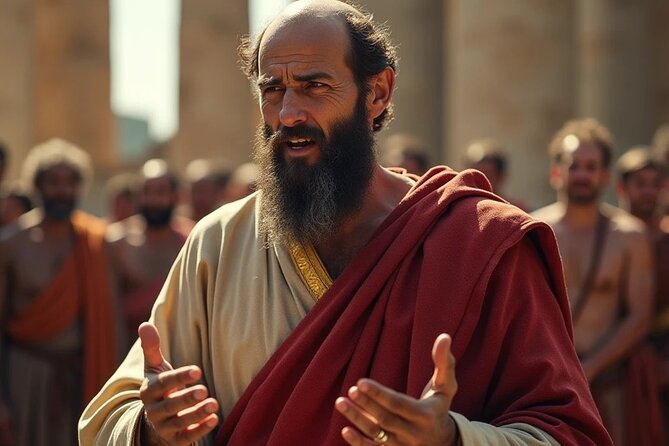
Your first stop is the Areopagus area, tied to the moment associated with Paul around 51 A.D. This is the classic Mars Hill / Acropolis neighborhood where speeches and debate would have made sense to the crowd.
What I like here is the framing. Instead of treating Areopagus as just another viewpoint, you’re positioned to understand why it mattered—this was the kind of public space where a message could spark conversation.
A practical note: on some dates, Mars Hill can be closed for repairs, meaning you may be able to see it but not climb up. If that happens, don’t panic—the surrounding sightlines still give you the “where are we standing?” context, and the day keeps moving.
Roman Agora: where Paul’s Corinth story starts to feel connected

Next you head to the Roman Agora, one of the ancient agoras in Athens. This area is linked to Paul’s early movement through the city, including the sense of how he was invited to speak toward Areopagus.
You’ll spend a short window here, so think of it as orientation time: why this district, why these public routes, and how the “map of movement” helps you picture Paul in motion.
One drawback to plan for: this stop is listed with admission not included, and the time on site is tighter than the bigger scenic stretches. Go in knowing it’s about connection, not lingering.
The Diolkos: a 2,700-year-old trade shortcut that shaped Corinth
Then you get a wonderfully specific stop: the Diolkos, famous for being around 2,700 years old. This was a system for dragging boats across the land—moving vessels between the Corinthian Sea and the Aegean Sea.
This part is smart for two reasons. First, it shows Corinth as an economic engine, not just a religious backdrop. Second, it helps you understand why people, goods, and ideas moved here so quickly. In a place like Corinth, that matters.
Expect it to feel more like a historical landscape stop than a museum stop. That’s fine. The point is to grasp the “why Corinth mattered” before you see the bigger ruins.
- All Day Cruise -3 Islands to Agistri,Moni, Aegina with lunch and drinks included
★ 5.0 · 4,958 reviews



Corinth Canal: King George’s 1882 excavation story and big views
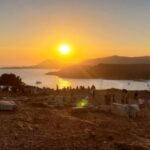
At Corinth Canal, you get quick, scenic payoff. The canal is described as connecting the Aegean Sea with the Ionian Sea, with impressive scale—roughly 6 km long and deep enough to feel dramatic from the viewing spots.
The tour also includes the story that King George began excavations in 1882, and that thousands of workers were involved. It’s a neat reminder that even modern engineering here follows an old strategic logic: cutting through for faster movement.
Practical tip for your photos: this is a short stop, so if you want postcard shots, decide your angles early and keep moving.
Ancient Corinth (Archaia Korinthos): the Step of Paul is the main event
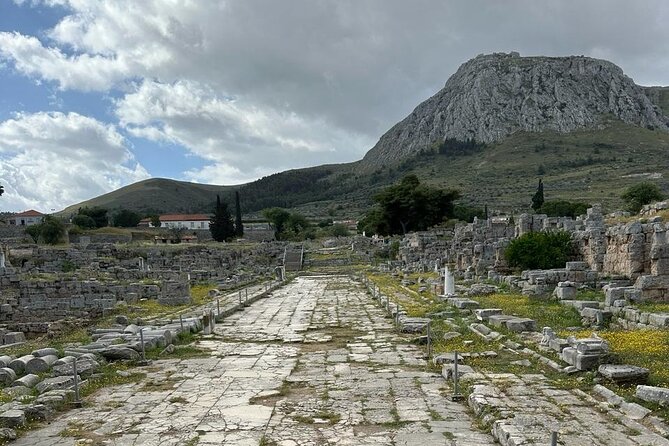
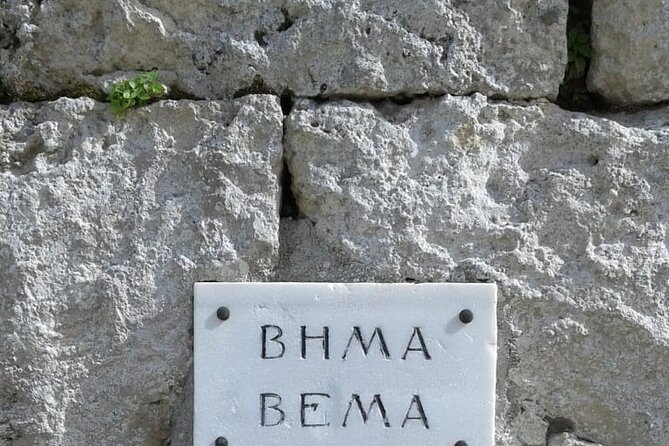
This is the centerpiece: Ancient Corinth (Archaia Korinthos), with a focus on the Step of Paul (BHMA). This is the stop that’s meant to bring the biblical setting into focus—what Paul had to navigate with Romans and Corinthians once he arrived.
The key thing to understand is how the tour handles site time. Entrance fee is not included for Ancient Corinth, listed at €15 per person. Also, at least one recent experience notes that the driver-guide may not go inside with you. So you should come with at least a little context of what the BHMA area represents and be ready to explore at your own pace once you’re on-site.
Is that a drawback? Sometimes. If you want constant spoken guidance inside the archaeological areas, you’ll want to read a bit before you go or use your own phone notes. If you prefer quiet time to look and think, it can actually be a good fit.
Either way, this is the stop you’ll remember.
Temple of Apollo: light, music, and the sun hitting the sightline
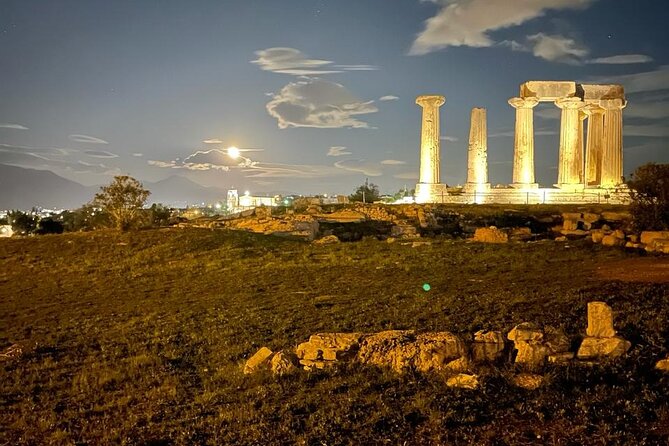
After the major ruins, you head to the Temple of Apollo, described as the oldest Temple of Apollo in Greece and tied to Apollo as the local god of light and music.
What makes it interesting is the specific mention that the sun hits from all sights at 716 B.C. That’s a poetic way of saying this temple is tied to a particular relationship with sunlight and orientation—one reason ancient sites often feel more like living places than static ruins.
Expect this to be shorter and more “look and understand” than deep exploration. The temple is listed with admission free, so you’re not dealing with extra ticket friction.
Acrocorinth: the big castle views and the Caesar-era connection
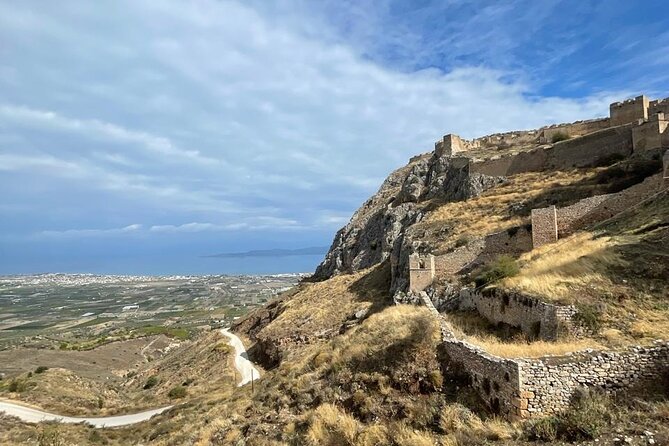
Next comes Acrocorinth, the hilltop that functions like Corinth’s high-world. The tour describes it as a winter palace of Caesar, with a Temple of Aphrodity, and frames the site as a major fortress (including a reference to its later palace use in the 1246 A.D. period).
Even if you’re not chasing every historical layer, the big win here is viewpoint. From the high ground, you get a sense of how dominating this location would have been—on the ground, the rest of Corinth feels like a spread-out story below you.
One more practical note: you’ll likely feel the climb and time on uneven surfaces. Wear solid shoes and treat it like a short hike.
Kenchries (Kechries): the harbor where Priscilla and Aquila enter the picture
Now you shift from castle views to sea-life history. Kenchries is described as an ancient harbor tied to Paul and the story of Priscilla and Akila making tents, with an additional mention of a church connected to learning and worship practices tied to Paul’s time.
This stop is a nice contrast. You see how Corinth isn’t only inland ruins—it connects to shipping routes and daily labor. That matters because Paul’s work often intersected with everyday people, not just formal religious spaces.
It’s also admission free in the tour listing, so you can spend time simply observing the harbor feel and imagining the movement of people and messages.
Apostolos Pavlos Church: the mosaic tied to Paul’s vision
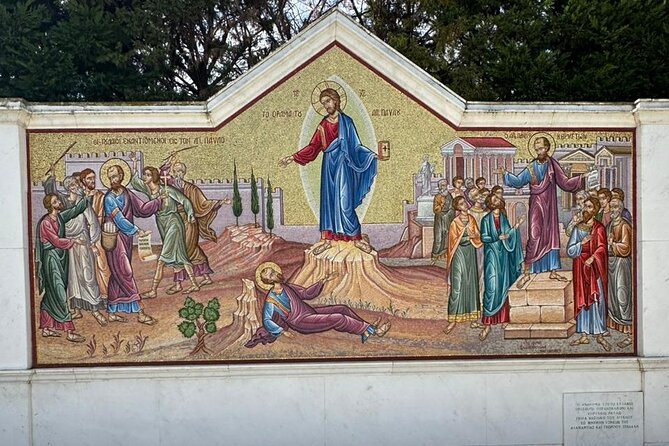
Finally, you visit Apostolos Pavlos Church, described as the Church of Paul in Ancient Corinth, featuring an impressive mosaic titled The vision of Paul.
This is a good ending because it brings the day back to belief and community. After walking through ancient sites and historical architecture, the mosaic gives you a concentrated image to hold onto.
It’s a shorter stop (listed around 20 minutes), so aim to take in the whole scene without rushing. Then you’re done—no awkward “one more museum” stretch.
Price and value: what you’re really paying for
At $313.01 per group (up to 2), you’re not paying for a cheap bus tour. You’re paying for a private setup that includes:
- air-conditioned vehicle + Wi‑Fi
- bottled water
- English-speaking driver-guide
- hotel/cruise pickup and drop-off
This is where the value shows up. When the day is long and the route is complex—Athens to Corinth and back—the ability to arrive at specific places without navigating transit is worth real money.
Yes, you should budget extra for Ancient Corinth entrance (listed at €15 per person) and plan for no lunch included. But if you split the group price between two people, this can become a very reasonable way to get a structured day that focuses on Paul’s context instead of random sightseeing.
Who should book this Corinth and Athens Paul’s footprints day?
This is a great fit if:
- you want a religious-and-historical day that connects places to Paul’s 51 A.D. context
- you prefer private pacing and the comfort of a luxury vehicle
- you like getting driver-guide interpretation on the drive, with time to look around yourself
- you’re traveling with someone and can use the up to 2 group pricing
It may be less ideal if:
- you want a guide to walk inside every archaeological area with you (Ancient Corinth entry is extra, and inside access guidance may be limited)
- you hate paying add-on fees for major sites (Ancient Corinth is the notable one)
My booking advice: should you go?
If your goal is Paul’s footsteps—Athens to Corinth with the big landmarks tied to the story—this is the kind of day that will feel purposeful. The best reason to book is the combination of private comfort + structured context, especially the attention to key stops like Areopagus, BHMA at Ancient Corinth, and the high ground of Acrocorinth.
My call: book it if you want meaning, not just movement. Skip it only if you know you’ll be unhappy exploring part of the main archaeological site on your own after paying the entrance fee.
FAQ
Do I need to pay an entrance fee for Ancient Corinth
Yes. The tour lists the Ancient Corinth (Archaia Korinthos) entrance fee as €15.00 per person, which is not included.
Is lunch included
No. Lunch is listed as not included.
Is there hotel or cruise pickup
Yes. Hotel/airbnb pickup and cruise port pickup are included, with the driver waiting at the entrance or at the port gate holding a sign with your name.
Is air-conditioning and Wi‑Fi included on the vehicle
Yes. The tour includes an air-conditioned vehicle and Wi‑Fi on board.
Is the tour private
Yes. It’s described as a private tour, with only your group participating.
What language is the tour in
The tour is offered in English.
How long is the tour
It runs about 7 to 8 hours.
What about admission fees at other stops
The tour data lists some stops as free admission ticket and others as not included. The only specific paid entrance fee provided is for Ancient Corinth (€15 per person).
Do I get bottled water
Yes. Bottled water is included.
Can a child seat be provided
Yes. Child seats are available upon request.
How does cancellation work
Free cancellation is available up to 24 hours in advance for a full refund. Less than 24 hours before the start time is not refundable.


More Tour Reviews in Athens
- All Day Cruise -3 Islands to Agistri,Moni, Aegina with lunch and drinks included
★ 5.0 · 4,958 reviews