REVIEW · ATHENS
Ancient Corinth, Sanctuary of Hera, Blue Lake & Canal from Athens
Book on Viator →Operated by Ancient Greece Tours & Transfers · Bookable on Viator
Ancient Corinth looks different when you go beyond Athens. This private day trip links big-name ruins—Acrocorinth, Apollo’s Temple, the Agora—with a rare break at the Heraion by the Blue Lake. You get round-trip rides from your hotel, plus a driver who explains what you’re seeing as you go.
I especially like the pace: short stops that keep you moving, then a couple of longer blocks where the sites actually sink in. I also like the smart mix of places—fortress views above Corinth, Roman-era details down in the archaeological area, and then time for a swim and local fish food near Perachora.
One thing to think about: the driver is not a certified guide for entering the archaeology/museum. You’ll still get context and time on your own, but if you want someone to walk you inside the ticketed areas, you need to request that add-on.
In This Review
- Key highlights worth planning for
- A private day trip that really changes how you see Corinth
- The route: Corinth Canal to Acrocorinth to the ruins below
- Corinth Canal: a 45-minute engineering viewpoint for trade routes
- Acrocorinth fortress: the acropolis of monolithic rock
- Ancient Corinth: Apollo’s Temple and the Agora where Paul’s story lands
- Temple of Apollo and the Doric columns
- Agora and the Bema: the public stage
- Roman buildings, theatre, and the health zone feeling
- Lechaion road and St. Paul’s church mosaic
- Upper Peirene and the Temple of Apollo Bema: small stops, big connections
- Upper Peirene Fountain
- Temple of Apollo Bema
- Museum and village browsing: time to reset and shop thoughtfully
- Heraion in Perachora and the Blue Lake swim
- Price and value: what’s included, what costs extra
- Who this tour fits (and who might want a different style)
- Should you book this Ancient Corinth, Heraion & Blue Lake tour?
- FAQ
- FAQ
- How long is the Ancient Corinth, Sanctuary of Hera, Blue Lake & Canal tour?
- Is pickup from Athens hotels included?
- Is this a private tour or a group tour with other people?
- What entrance fees should I expect to pay?
- Do I need a licensed tour guide for the archaeological sites?
- Does the tour include swimming at the Blue Lake?
- What’s included in the vehicle experience?
- What language is the tour offered in?
- What if I need to cancel?
Key highlights worth planning for
- Private, first-class vehicle door-to-door from Athens, so you’re not waiting on a bus schedule
- Acrocorinth: a huge fortified rock-top acropolis with dramatic walls and structures
- Ancient Corinth’s centerpiece sites, including Apollo’s Temple and the Agora/Bema tied to St. Paul
- Blue Lake at the Heraion (Perachora): built-in swimming time plus a seaside pause
- One main entrance cost for the Ancient Corinth site and museum (plus an optional licensed guide add-on)
A private day trip that really changes how you see Corinth
This is built for people who want the Corinth story without the hassle of organizing transport, tickets, and logistics on their own. You start with pickup from your hotel or Airbnb, then settle into an air-conditioned vehicle with WiFi, bottled water, and wipes—small comforts that matter when you’re out for about 9 hours.
The private format is the real value play. It’s just your group in the vehicle, so you can actually enjoy the stops instead of sprinting between strangers and seatmates. And because the day runs as a route—canal, fortress, ruins, then the Heraion—you end up with a fuller picture of what ancient Corinth controlled: land routes, sea trade, and sacred space.
You can also read our reviews of more tours and experiences in Athens.


The route: Corinth Canal to Acrocorinth to the ruins below
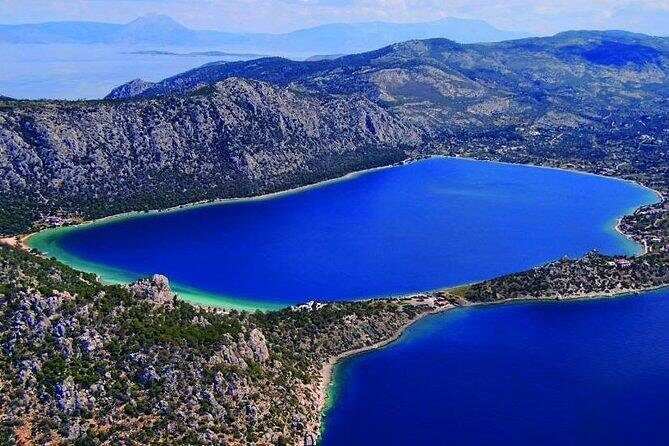
What makes this itinerary work is the “from far to close” rhythm. You begin by seeing the modern-day cut of the Corinth Canal, then you climb the mental map up at Acrocorinth, and only after that do you go into Ancient Corinth itself. That order helps you understand why the ancient city mattered so much.
Along the way you also get viewpoints (like Geraneia), so the day doesn’t feel like only stone and dust. It’s still a culture-and-ruins day, but you get enough sky and sea to make it easier to stay focused.
Corinth Canal: a 45-minute engineering viewpoint for trade routes
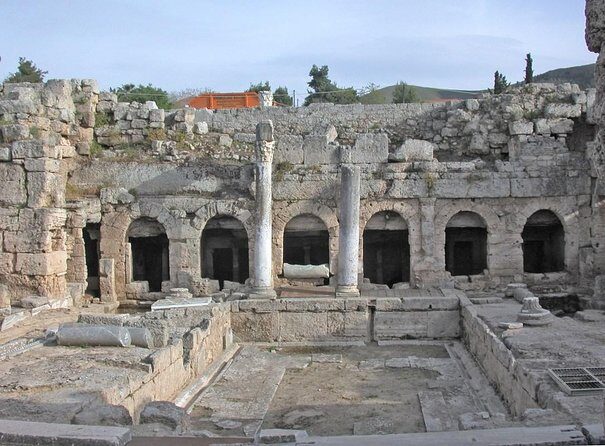
The first major stop after pickup is the Corinth Canal. This is one of those places where standing there makes the scale click: it’s described as a major 19th-century engineering project that played a catalytic role in Mediterranean trade.
It’s also a good reset. After leaving Athens, this stop gives you a clear “why this area matters” moment. You’re not just sightseeing—you’re watching how a narrow geography became a strategic shortcut. You’ll have about 45 minutes, which is enough time to orient yourself and take in the setting without feeling rushed.
Acrocorinth fortress: the acropolis of monolithic rock
Then comes the big view stop: Acrocorinth (Acrocorinthos). This is the acropolis of ancient Corinth, perched on a monolithic rock that towers over the ancient city. The fact that it’s dominant is the point—you can see how rulers would want control of this elevation.
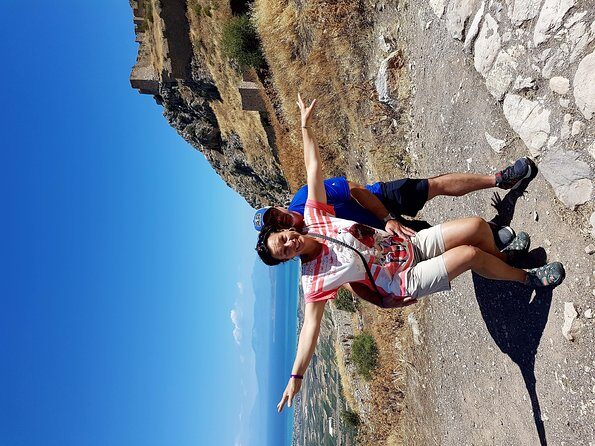
At the top, you’ll find a system of three circuit walls reinforced by towers. That defensive layout is one of the reasons Acrocorinth feels more like a fortress than a typical “ruins on a hill” visit. There are also traces of a Temple of Aphrodite on one of the highest parts of the mountain, plus the Frankish Tower on the southwest edge, fortified during Frankish times. The area preserves remains tied to later periods too, including churches, mosques, houses, fountains, and cisterns.
This stop is about 1 hour, and you should use it for two things: (1) scan the walls and towers so you understand how the whole defense system worked, and (2) spend a few minutes just looking down over the geography. When you do that, the later ruin stops feel more coherent.
Ancient Corinth: Apollo’s Temple and the Agora where Paul’s story lands
Now you drop into the main event: Ancient Corinth (Archaia Korinthos). This is the block where you’ll want comfortable shoes and the patience to slow down. The site time here is about 2 hours, and that’s enough to hit the major anchors.
- All Day Cruise -3 Islands to Agistri,Moni, Aegina with lunch and drinks included
★ 5.0 · 4,958 reviews
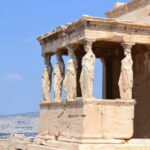



Temple of Apollo and the Doric columns
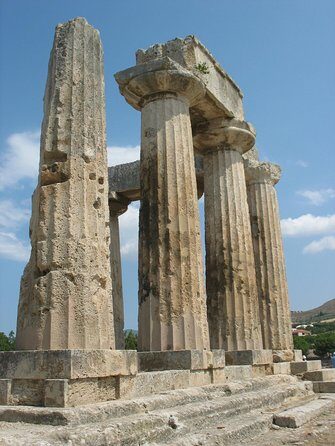
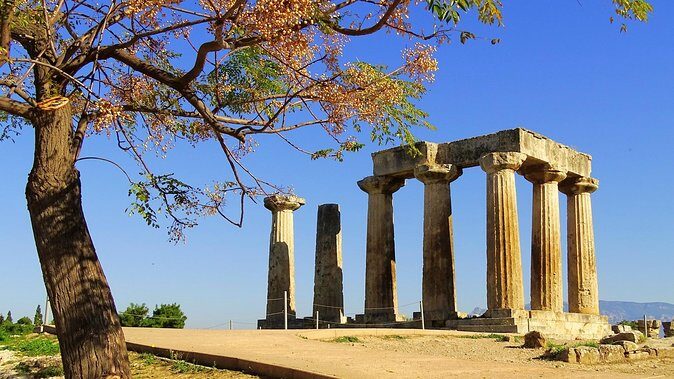
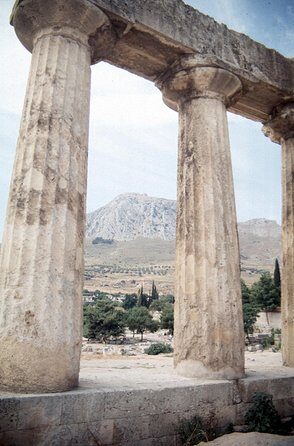
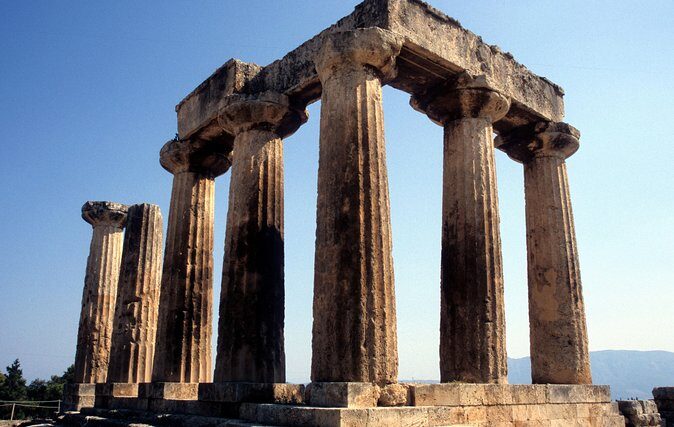
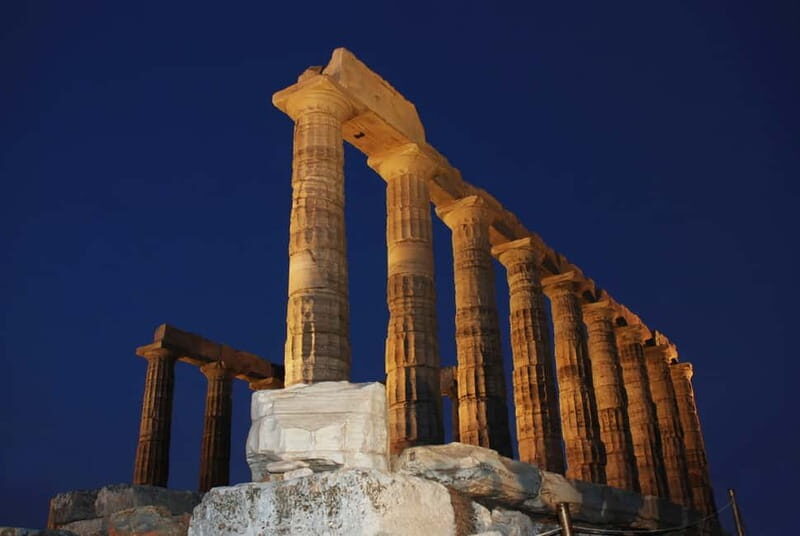
One of the headline features is Temple of Apollo. It’s noted as one of the earliest Doric temples on the Peloponnese and Greek mainland, built around 560 BCE, and it’s associated with monolithic columns—rare in the ancient world.
Even if you’re not a stone-nerd (no judgment), you’ll feel the difference between “temple remains” and “real structure.” The timing of the build matters too, because it helps you see Corinth as an important place long before it became famous for Roman-era life.
Agora and the Bema: the public stage
Next up is the Agora, described as a rectangular space about 160 m long and 70 m wide. It includes central shops, small temples, altars, and—critically—the podium/Bema area. This is where Apostle Paul addressed the Corinthians in 52 AD.
That’s one of the best ways to make the site come alive: stand where public speeches happened. Even if you’re looking at foundations and ruins, you can picture the crowd movement—people entering market space, then shifting focus to the elevated speaking area.
Roman buildings, theatre, and the health zone feeling
The site also includes Roman buildings, plus a theatre and Odeon/Asklepieion. This combination is useful because it reminds you that Corinth wasn’t just religious and political. It was civic, cultural, and tied to health and ritual spaces too.
Lechaion road and St. Paul’s church mosaic
You’ll also see the Lechaion road, facing the Corinthian gulf and leading toward the port of Lechaion. Think of it as a reminder that Corinth’s power came from moving goods and people.
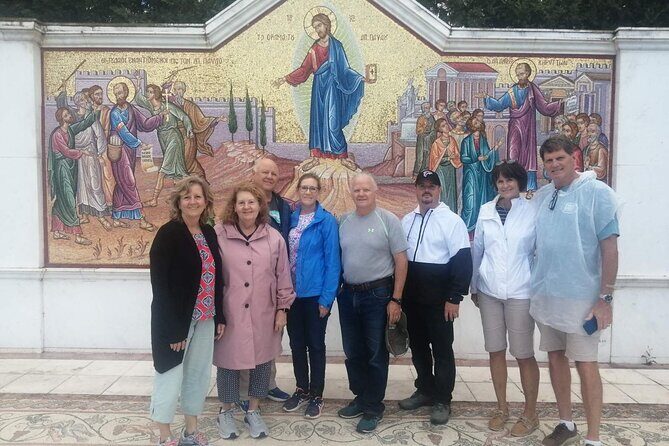
And at St. Paul’s church, there’s a mosaic mural depicting Saul’s vision from Christ as he was traveling to Damascus to persecute Christians. It’s a meaningful change of tone after all the monumental architecture. You’re no longer just looking at the ancient city—you’re seeing how later faith communities remembered a pivotal story.
Upper Peirene and the Temple of Apollo Bema: small stops, big connections
After the main archaeological block, the route adds two shorter anchors that help tie the day’s story together.
Upper Peirene Fountain
The stop at Upper Peirene Fountain centers on Peirene Spring, located within the encircling walls and described as a gift of Asopus to Sisyphus. This is a quicker visit—about 20 minutes—but water sources are often the hidden heartbeat of ancient cities. You’re paying attention to why a city could function and thrive, not just how it looked.
Temple of Apollo Bema
Then there’s another 20-minute stop at the Temple of Apollo Bema/pedestal, described as the site of St. Paul’s trial. The Bema is framed as an elevated rostrum that stood prominently in the Roman Forum of ancient Corinth, where city officials addressed the public.
If you only visited one part of Ancient Corinth, the Agora/Bema zone would probably be it. This short add-on reinforces the connection between public space and power—who spoke, from where, and to whom.
Museum and village browsing: time to reset and shop thoughtfully
You’ll get a 45-minute block at the Archaeological Museum of Corinth, which houses artifacts from the local site and from smaller sites nearby. This is where you get context fast: objects help explain what you saw outside, and they often fill in gaps you wouldn’t notice while walking ruins.
After that, the schedule includes 30 minutes strolling village shops at Ancient Corinth. This is a good moment to grab small, handmade souvenirs without forcing it into the middle of the archaeology time. It’s also when you can pause, grab a snack if you want, and step away from the “always looking up at stone” feeling.
Heraion in Perachora and the Blue Lake swim
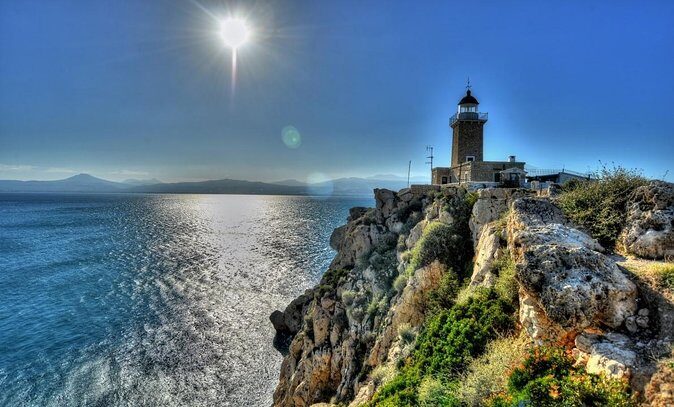
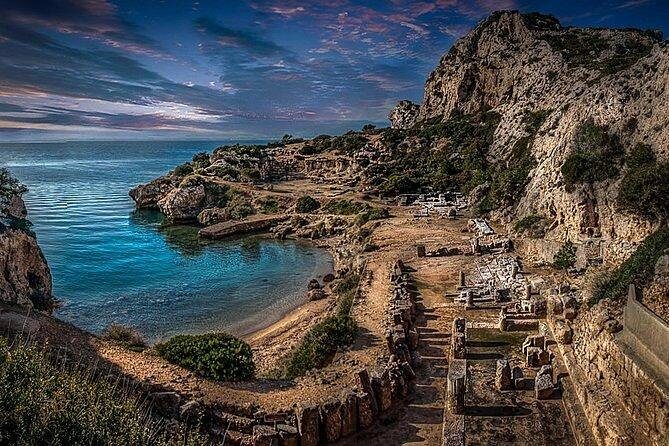
If you want a day trip that doesn’t end with another museum room, this is your payoff. The later part of the route goes to the Heraion (Sanctuary of Hera) in Perachora, with Malagavi Lighthouse in the area and the Heraion / Blue Lake experience built in.
The timing here is about 1 hour 30 minutes, which is generous compared to most half-measures. You can enjoy time to swim and bathe under the sun. Based on the way this stop is described, I’d treat it as a real swim break, not a photo stop—so plan for that.
There’s also mention of eating authentic local delicacies from nearby fish tavernas. Since food and drinks are listed as not included overall, don’t assume it’s completely covered. But the schedule is clearly built to give you a chance to try local flavors in the right setting.
Price and value: what’s included, what costs extra
At $337.34 per person, this tour isn’t the cheapest way to do Corinth—but it’s also not trying to be a budget bus. The value comes from three things: private transport, door-to-door pickup and drop-off, and a driver with in-depth knowledge of Greek history.
Here’s where the math gets real for your wallet:
- The big ticket extra is the entrance fees for the Ancient Corinth site and museum, listed as €15 per person.
- A licensed tour guide who can accompany you inside the site and museum is additional cost on request. If you don’t add that, your driver still shares history, but you should expect to explore the ticketed areas largely on your own time.
- Food and drinks aren’t included, so budget for a meal and drinks on the day—especially since the Heraion stop is tied to fish-taverna time.
If you’re the type who likes explanations while you walk—someone calling out what matters—ask for the licensed guide add-on. If you’re happy reading a bit, wandering at your own pace, and using the driver’s context to guide your attention, the standard format can be a good fit.
Who this tour fits (and who might want a different style)
This is a strong pick if you want:
- A private day with pick-up from your exact lodging in Athens
- A route that includes both monuments and a real downtime stop by the water
- An English-speaking driver who gives history while you travel between highlights
It might be less ideal if you’re hoping for a fully guided walk inside every ticketed site. The tour description is clear that a licensed guide inside the archaeology/museum is an extra request. You’ll still get time, and you’ll still have explanations, but it won’t be the same as having a guide with you at every step.
Also, it’s a lot of stops in one day. That’s the point of the itinerary, but if you prefer slow travel with fewer transitions, you might find the pace a bit intense.
Should you book this Ancient Corinth, Heraion & Blue Lake tour?
I’d book it if you want Corinth to feel like a complete story—canal trade logic, fortress dominance, ancient civic life, and then a seaside swim break. The combination is unusual, and the private setup from Athens makes it practical.
Before you click confirm, think about two choices:
- Do you want the licensed guide add-on? If you want someone to meet you inside the Ancient Corinth site and museum, request it.
- Plan for the swim stop. Bring what you’d need to actually enjoy the water time.
If you can handle a full-day rhythm and you like hitting major ancient highlights with smart breaks, this is a solid, good-value way to spend a day outside Athens.
FAQ
FAQ
How long is the Ancient Corinth, Sanctuary of Hera, Blue Lake & Canal tour?
It’s approximately 9 hours total.
Is pickup from Athens hotels included?
Yes. You can be picked up from your chosen hotel, Airbnb, or apartment in Athens.
Is this a private tour or a group tour with other people?
It’s a private tour/activity, meaning only your group participates.
What entrance fees should I expect to pay?
Entrance fees to the Ancient Corinth site and the museum are not included and cost €15.00 per person.
Do I need a licensed tour guide for the archaeological sites?
A licensed tour guide to accompany guests into the site and museum is not included and is available on request for an additional cost. Your tour driver provides history, but the licensed guide is the part that covers entry accompaniment for the ticketed areas.
Does the tour include swimming at the Blue Lake?
Yes. The schedule includes time to enjoy a refreshing swim and bathe at the Heraion / Blue Lake area.
What’s included in the vehicle experience?
Round-trip transit in a comfortable, air-conditioned vehicle, WiFi on board, bottled water, and refreshing wipes.
What language is the tour offered in?
It’s offered in English.
What if I need to cancel?
You can cancel for a full refund if you cancel up to 24 hours in advance of the experience start time.

More Tour Reviews in Athens
- All Day Cruise -3 Islands to Agistri,Moni, Aegina with lunch and drinks included
★ 5.0 · 4,958 reviews