REVIEW · ATHENS
Ancient Sparta Ancient Corinth Private Tour from Athens/ Nafplio
Book on Viator →Operated by GREECE TAXI · Bookable on Viator
Ancient ruins, long road, big payoff. This private day is built for time-saving transport plus a dedicated English-speaking driver who helps you connect the dots between Corinth, Sparta, and what made both places tick. I especially like the number of photo-and-stretch stops packed into one loop, and I like that you can adjust pacing without herding anyone. One drawback to plan around: it’s a long day, and museum hours matter—especially the olive oil museum in Sparta, which is closed on Tuesdays.
If you’re choosing between driving yourself and a tour, this format is about convenience. You’ll get round-trip pickup (from hotels and apartments in Athens center up to 7 km) in an air-conditioned vehicle, plus the fuel, tolls, and parking handled. Just know this is driver-guided rather than an archaeologist-led walk-through at every site.
Key stops are spread out, so you’ll see the highlights fast: the Corinth Canal, major Sparta landmarks, then Ancient Corinth with context for what you’re looking at. If you’re the kind of traveler who wants slow museum roaming for hours, you may feel rushed. If you like smart structure and a full day out of town, this works.
In This Review
- Key points I’d prioritize before you book
- Price and logistics: what you’re really paying for
- Morning pickup in Athens: the private-driver advantage
- Corinth Canal: the quick walk that makes the whole day feel different
- Sparta in half an hour: what you can see (and what you can’t)
- Archaeological Museum of Sparta: worth it if it’s open
- Sparta’s Acropolis and Ancient Theater: Roman-era marble, big seating
- Leonidas Monument: the “Molon labe” moment in stone
- The Olive and Greek Olive Oil Museum: optional, timed, and schedule-sensitive
- Ancient Corinth: walking the city Paul knew
- Archaeological Museum of Corinth: short and useful
- How the day flows: pace, food breaks, and picture math
- Best-fit travelers (and who should skip this format)
- Price and value for a private day: when it makes sense
- Should you book the Ancient Sparta and Ancient Corinth private tour?
- FAQ
- What’s the approximate duration of the tour?
- Is pickup offered, and where does it start?
- What if I’m staying in Piraeus?
- How many sites are visited in one day?
- Are museum tickets included?
- Is the olive oil museum always open?
- Is the Sparta archaeological museum open every day?
- Does the driver act as an archaeologist guide?
- Can the itinerary be changed during the tour?
- What language is the tour in?
Key points I’d prioritize before you book

- Round-trip transportation from Athens saves you the headache of planning the Peloponnese route
- Corinth Canal + Sparta + Ancient Corinth in one day gives you a strong “theme” arc
- Driver-led storytelling on the drive links places and eras so the ruins make sense
- Museum schedules can change your day (Sparta olive museum and some sites close on Tuesdays)
- Optional olive oil museum is worth it only if timing lines up
- Flexibility for extra stops may be possible if you have time in the schedule
Price and logistics: what you’re really paying for
At $265.50 per person for about 10 hours, you’re not just buying tickets. You’re paying for a private, end-to-end day: the car, the driving, and the ability to start from your hotel instead of assembling transportation like a small logistics company.
This is where the value shows up. Athens to the Peloponnese isn’t next door, and you don’t want to waste the best part of your day stuck on buses or figuring out parking. With a private vehicle, you also get timing control. That matters on days when you want one extra photo stop, or when someone needs a restroom break without turning your schedule into chaos.
Do a quick reality check: the tour is private and flexible, but it’s still timed. You’ll have set windows at major sights (often around 15 to 60 minutes), and that affects how deep you can go inside museums.
You can also read our reviews of more private tours in Athens



Morning pickup in Athens: the private-driver advantage
The day starts with pickup from your hotel or apartment in Athens center (up to 7 km). If you’re farther out—like parts of Piraeus—there’s an added fee, and pickup from the airport or Lavrio port is handled only by prior agreement. If you’re staying near central Athens, you’ll likely feel the smoothest start.
You can pick a sedan, minivan, or minibus depending on your group size. That matters if you’re traveling with kids or if you want enough room to spread out your day bag, water, and snacks. Also note a practical point: the driver is not an archaeologist guide for inside-the-site narration on the spot. Your driver handles the driving and historical detail through an informative documentary/audio and in-car commentary.
This setup is ideal if you like conversation and context, but still want freedom to move at your own pace during short site walks. If you want a licensed archaeologist to lead every walking moment, you’ll need to arrange that separately (availability and extra cost apply).
Corinth Canal: the quick walk that makes the whole day feel different
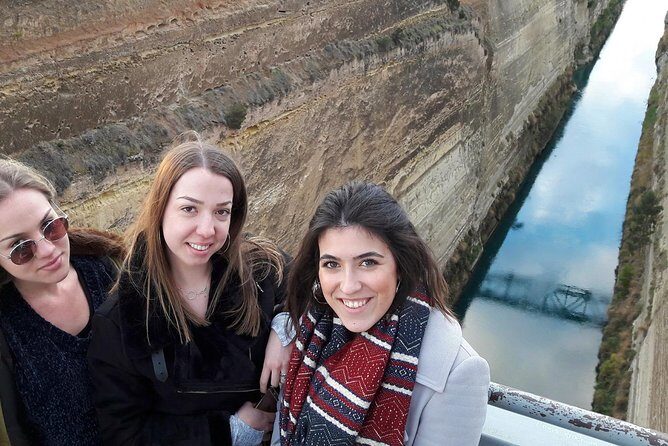
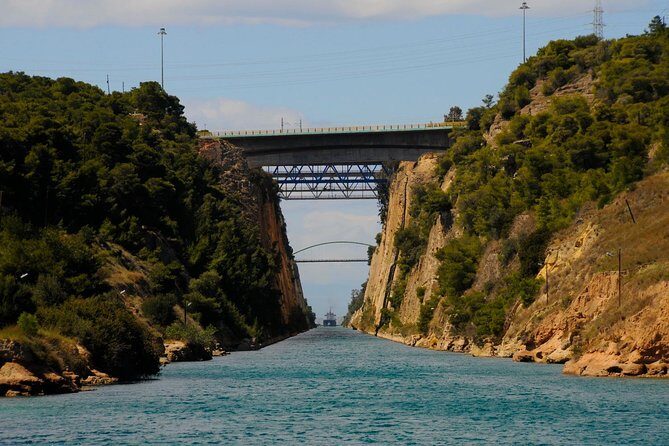
Your first stop is the Corinth Canal, the man-made cut linking the Aegean and Ionian seas. It’s one of those places where modern engineering and ancient geography shake hands.
Here’s what you can do in the time you’re given:
- Walk across on a pedestrian bridge for easy, dramatic views
- Photograph the canal from a height (about 80 m)
- Take in the scale—thousands of workers dug it over more than a decade
The cool part is how the canal reframes the Peloponnese in your head. Standing there, you understand why controlling sea routes mattered, and why a place like Corinth could be strategically huge long after the ancient world changed its shape.
Time is short (around 15 minutes), so keep your expectations realistic: it’s a “see it, snap it, breathe it” stop, not a long linger.
Sparta in half an hour: what you can see (and what you can’t)
Sparta proper is not like Athens, where you can wander and still feel like you’re inside a major city core. Sparta is spread out, and much of what you’ll grasp quickly comes from landmark viewpoints and site remnants.
In about 30 minutes, you’ll cover enough to get the gist:
- A sense of Sparta’s social structure—Spartiates, perioikoi, mothakes, and helots—so you’re not just staring at stones
- The key idea that Sparta organized society around military training and physical discipline
This is also where having an attentive driver helps. When the commentary is good, you’ll understand why Sparta feels different: not as a marble-city, but as a system built to produce soldiers.
Archaeological Museum of Sparta: worth it if it’s open
Next comes the Archaeological Museum of Sparta, located in a neoclassical building constructed in the late 1800s. The museum is tied to the story of Sparta as a real place studied and collected, not just a legend.
A few practical notes:
- Ticket is paid separately (general admission listed: €10)
- The museum is closed every Tuesday
- Plan for about 30 minutes
If you’re traveling on a Tuesday, you may want to skip mentally and shift your focus to the outdoor monuments and theater. If it is open, this is one of the best places on the day to ground what you’re seeing in artifacts and curatorial context.
- All Day Cruise -3 Islands to Agistri,Moni, Aegina with lunch and drinks included
★ 5.0 · 4,958 reviews





Sparta’s Acropolis and Ancient Theater: Roman-era marble, big seating
The Acropolis and Ancient Theater stop is one of the stronger “wow” moments for many people. The theater was built of local white marble during the Roman period, even though Sparta itself is much older. That mix matters: it reminds you that ancient sites kept getting re-used and re-shaped.
What stands out:
- The theater is described as one of the Classical world’s largest
- It’s estimated to hold around 16,000 people
- Expect some erosion and damage, especially from later periods like Byzantine times
Even in a short visit (around 1 hour), you can walk the logic of the place: where performers would have stood, how the auditorium would have focused attention, and why theaters were social machinery—not just entertainment.
If you like atmosphere, this stop delivers. If you want heavy interpretation inside, rely on your driver to explain as you look, since the time is limited.
Leonidas Monument: the “Molon labe” moment in stone

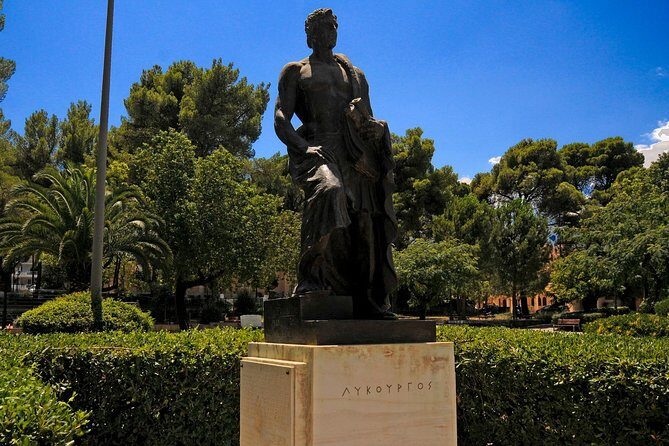
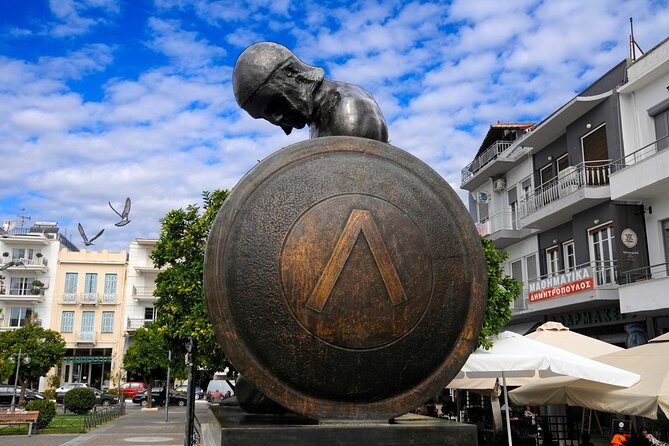
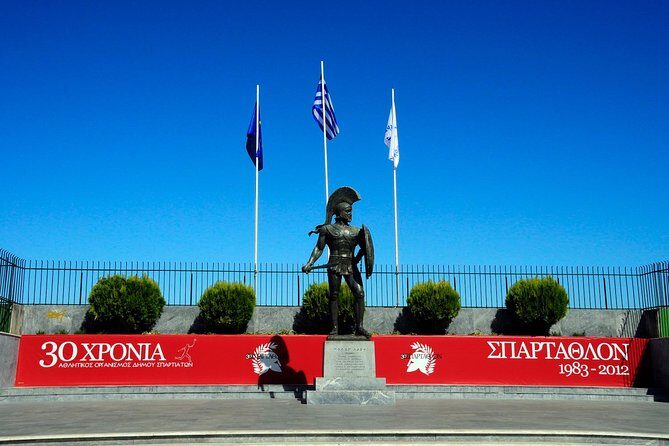
After the theater, you’ll visit the Leonidas Monument. It’s a bold, straightforward stop: the statue sits in front of a stadium-like setting, and the story is built around Thermopylae.
The key idea you’ll take from here is not just a battle scene. It’s the famous Spartan response: Molon labe (Come and get them). Even if you don’t care about quotes, it’s a solid way to connect Sparta’s reputation to a single enduring image.
There’s also archaeological interest nearby—excavations brought to light a construction dating to the 5th century B.C., sometimes thought to relate to the tomb of Leonidas, according to classical sources. Time here is short (about 15 minutes), but it’s memorable because it’s so direct.
The Olive and Greek Olive Oil Museum: optional, timed, and schedule-sensitive
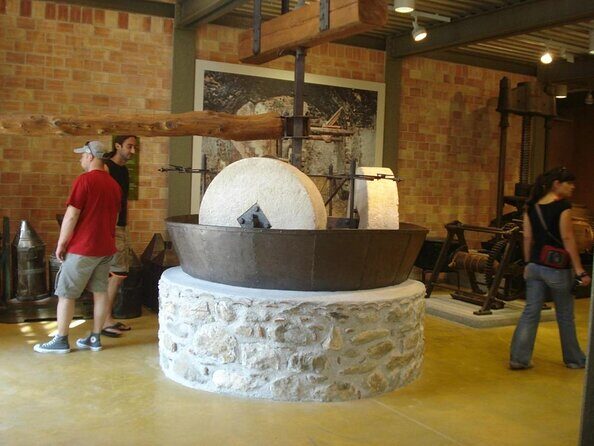
This is the optional stop that can make your day feel either richer or tighter. The Museum of the Olive and Greek Olive Oil is designed to show how olive oil connects to Greece across long stretches of time—economy, nutrition, religious worship, and technology.
What makes it interesting is the mix of evidence types:
- Fossilized olive leaves dated to 50,000–60,000 years old (from Santorini)
- Linear B tablets replicas from the 14th century BC, tied to early writing about olives and oil
The museum is closed every Tuesday. Ticket cost is €5, and the visit is around 20 minutes. Because it’s optional and depends on timing, don’t plan your trip day around it unless you’re traveling on a day you can confirm it’s open.
If it’s closed or you’re running short on time, you’re not stranded—you’ll keep your day focused on Sparta landmarks and Ancient Corinth. In fact, some itineraries substitute based on what fits.
Ancient Corinth: walking the city Paul knew
Then you shift from Sparta’s story to Ancient Corinth (Archaia Korinthos), one of the largest cities in Ancient Greece. Walking here feels like stepping into a place where layers matter: civic life, religion, travel routes, and the commercial energy Corinth became known for.
This is also where cultural context helps most. Corinth shows up in the New Testament through Saint Paul’s letters and missionary journeys. Even if you’re not visiting for religious reasons, that gives you a map for how the city was remembered.
You’ll have about 1 hour (with the listed combined ticket guidance: summer €15, winter €8; museum included, but museum details can vary by season). In winter it can feel quieter, and that can be a plus if you want fewer interruptions when you’re trying to orient yourself.
What I like about this stop as part of a one-day tour is how it balances Sparta’s military mindset with Corinth’s role as a crossroads.
Archaeological Museum of Corinth: short and useful
After the ancient site, there’s an Archaeological Museum of Ancient Corinth stop. The site’s museum and the outdoor ruins together help you get the big picture instead of just seeing scattered stones.
Time is about 30 minutes, and admission is listed as included for the archaeological site and museum. In winter, the museum is closed on Tuesday as well, so day-of-week matters again.
If you’re the kind of traveler who likes to end the day with a “what you just saw, in objects” moment, this stop helps.
How the day flows: pace, food breaks, and picture math
This tour is built as an intense day in a good way. You’re moving, stopping, and adjusting all day long, but not in a chaotic way. The big secret is that your driver can usually keep things smooth—choosing good pull-off points, helping you time your walks, and answering questions as you go.
One reason people love this format is the restraint. You’re not shoved along on a tight leash every minute. You get windows at stops, and many guides are praised for not pressuring you to rush. That’s especially useful at places like Sparta and Corinth where you’re doing short walks and quick orientation.
Food: you’ll likely have a lunchtime stop along the route. The exact place isn’t guaranteed in the tour details, but it’s built into how the day is structured. If you prefer Greek comfort food, this tour’s route style tends to support that—short, easy meals instead of long sit-down marathons.
Also, plan your feet. Sparta and Corinth involve walking on uneven ground and stairs. And if you ask in advance (or in the moment if timing allows), some drivers can add a detour to nearby historic areas like Mystras—but only if the schedule has room.
Best-fit travelers (and who should skip this format)
This tour fits you well if:
- You want a full day of highlights without stressing over transport
- You like context while you drive—answers to what you’re seeing, not just directions
- You’re okay with short site windows and quick museum sampling
You might reconsider if:
- You want a slow, deep museum day (especially in Sparta)
- You’re traveling on a Tuesday and olive oil museum timing is a major priority for you
- You require an archaeologist-led guide at every stop (your driver isn’t one, and extra arrangement is needed)
Price and value for a private day: when it makes sense
For many people, the real comparison isn’t price vs. another tour. It’s price vs. your own day planning and the cost of stress.
You’re getting:
- Air-conditioned transportation with fuel, tolls, and parking included
- Pickup and drop-off near your Athens lodging (with limited distance included)
- A private, flexible day with an English-speaking driver and in-car historical materials
If you’re traveling as a couple or family, private format can become the best value because you spread the cost and gain control over pacing. If you’re traveling solo, the price might feel steep compared to joining a group—but the convenience of a single pickup and no waiting can still feel worth it.
Should you book the Ancient Sparta and Ancient Corinth private tour?
I’d book it if you want one strong day that strings together Corinth’s crossroads role with Sparta’s military reputation—without spending your vacation days in transit planning mode. The driver-led context is a key part of why the day clicks, and the number of stops keeps you from feeling like you only “did one thing.”
Skip or adjust your expectations if Tuesday closures could ruin your must-see list, especially the olive oil museum in Sparta. If olive oil history is your top priority, plan your day so the museum is open, or be flexible.
If you’re excited by canals, monuments, and ancient city layers—and you’re fine with a timed but not frantic day—this is a solid choice. It’s the kind of trip that leaves you tired in the best way, with a mental map that lasts longer than the drive.
FAQ
What’s the approximate duration of the tour?
The tour runs about 10 hours.
Is pickup offered, and where does it start?
Pickup is offered from hotels/apartments in Athens center up to 7 km. You can also request another pickup/drop-off location, and Nafplio pickup is available on the Nafplio option.
What if I’m staying in Piraeus?
Pickup from Piraeus Port or the Piraeus Cruise Terminal has an additional charge (listed as €15 per way). Airport and Lavrio Port pickups require prior agreement.
How many sites are visited in one day?
The day includes stops such as the Corinth Canal, Sparta landmarks, the Sparta archaeological museum (ticket separate), the optional olive oil museum, Ancient Corinth, and the Archaeological Museum of Corinth.
Are museum tickets included?
Some are not included. The olive oil museum (€5) and the Ancient Corinth ticket (seasonal €8 winter or €15 summer) are not included in the base price. The Sparta archaeological museum has a listed admission (€10 general). The Archaeological Museum of Corinth is described as included with the site ticket.
Is the olive oil museum always open?
No. The Museum of the Olive and Greek Olive Oil is closed every Tuesday.
Is the Sparta archaeological museum open every day?
No. The Archaeological Museum of Sparta is closed every Tuesday.
Does the driver act as an archaeologist guide?
No. The driver provides historical information via documentary/audio and commentary, but if you need a licensed archaeologist guide for walks or site narration, it must be arranged separately.
Can the itinerary be changed during the tour?
The tour is private and flexible, and you can discuss timing adjustments. If you want to extend the tour, there is an additional hourly cost based on vehicle type.
What language is the tour in?
The driver provides the tour in English.



More Private Tours in Athens


More Tours in Athens

More Tour Reviews in Athens
- All Day Cruise -3 Islands to Agistri,Moni, Aegina with lunch and drinks included
★ 5.0 · 4,958 reviews