REVIEW · ATHENS
Apostle Paul’s missionary journys in Athens Private Tour 4Hours
Book on Viator →Operated by Yomadic.Tours & Transfers · Bookable on Viator
Paul’s Athens comes alive fast. This private tour is built like a timeline you can actually stand inside, linking early Christian storylines to real Athenian landmarks. I especially love how the route connects Paul’s preaching in the marketplace and on Mars Hill to what you see around you, and I also love the shift into Byzantine art with Daphni Monastery mosaics.
The one thing to consider is the money side: big archaeological sites usually cost extra on your own, so you’ll want to budget for Acropolis/Agora/optional stadium tickets depending on what you enter.
In This Review
- Key things to know before you go
- Paul’s Athens, from harbor arrival to Mars Hill sermon
- Pickup rhythm and how the tour fits real schedules
- Daphni Monastery: UNESCO mosaics without the guesswork
- Flisvos Marina (Faliro): the harbor where Paul’s arrival story starts
- Ancient Agora: where Paul met the city’s arguments
- Areopagus and the sermon point: Mars Hill as a teachable moment
- Acropolis and Parthenon tickets: the big moment, done the practical way
- Agios Dionysios Areopagitis: a direct link to the Paul story
- Mount Lycabettus: views, plus a cave-church story
- Price and value: what you’re really paying for
- Extras mentioned in the tour materials: confirm what’s included for your day
- Who should book this Apostle Paul Athens private tour
- Should you book it
- FAQ
- How long is the Apostle Paul’s Athens private tour?
- What’s included in the pickup and drop-off?
- Is this tour private?
- What languages are offered?
- Are there entrance fees included for the main sites?
- Does the tour include the Acropolis and Parthenon visit?
- Does the tour include the Ancient Agora?
- Is Mars Hill included?
- Are the Panathenaic Stadium and Temple of Olympian Zeus included?
- What happens if weather is bad?
Key things to know before you go
- Private pickup and drop-off right where you’re staying, including cruise/port arrivals with a name sign
- A Paul-focused route that keeps pointing back to Acts 17 and the Unknown God moment
- Daphni Monastery (UNESCO) as a stop with free admission in the plan, plus standout Byzantine mosaics
- Mars Hill twice in spirit: a hill stop and the sermon area, both quick but meaningful
- Efficient half-day timing designed for cruise schedules and limited time in Athens
- You may explore sites on your own because the driver is not licensed to accompany you inside
Paul’s Athens, from harbor arrival to Mars Hill sermon
If you like your history with a storyline, this is a good match. Instead of treating Athens like a checklist of famous ruins, the tour frames the city around one big question: where did Paul actually go, and what was happening in people’s minds?
You start with Paul arriving by sea—then you move toward the places where he argued, taught, and pushed back against the city’s flood of idols and philosophies. The big win is that the route doesn’t feel random. You’ll keep hearing the same through-line: Paul’s message about one God and the resurrection, delivered to people who were used to debate.
You also get a practical travel benefit. Athens can be traffic-heavy and parking is a headache. This tour uses a modern private vehicle with WiFi, A/C, and bottled water, so you spend your limited time seeing, not stressing.
You can also read our reviews of more private tours in Athens

Pickup rhythm and how the tour fits real schedules
This is built as a true private experience. Your driver meets you at your hotel lobby, Airbnb entrance, or the port/airport arrival area with a signboard showing your name. For cruisers, the plan is clearly designed to get you major sights without gambling on long delays or getting trapped in lines.
The time is listed as about 4 hours in the title, but the tour duration shows as approximately 5 hours. In practice, that difference is usually the difference between a smooth day and a rushed one. Plan for about half a day, with some time inside sites (if you buy tickets and enter) and some time doing the “see it and understand it” version from the outside.
One important heads-up from the way the tour is described: the driver is well-versed in Greek history and context, but they’re not licensed to accompany you inside archaeological sites. So even in a private tour, you might be dropped near a site entrance and expected to handle your own entry process and wandering inside.
Daphni Monastery: UNESCO mosaics without the guesswork
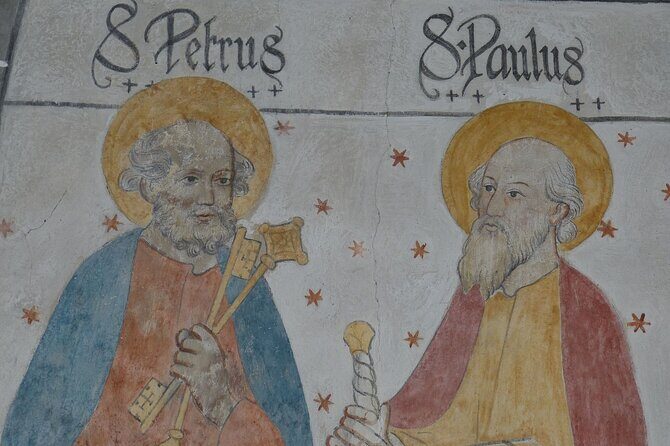
Stop 1 is Daphni Monastery, about 11 kilometers northwest of Athens. It’s a UNESCO World Heritage site dating back to the 6th century, and the headline here is the mosaics—some of the finest Byzantine examples. The monastery complex includes the katholikon (main church), described as a cross-in-square style building with a large dome.
What makes this stop smart on a Paul-themed tour is the contrast. Paul’s Athens represents the early Christian message meeting the ancient Greek world. Daphni represents later Christianity expressing itself through art at a very high level of craft. You’re not just seeing ruins; you’re seeing how the faith’s story became visual culture.
The plan lists admission as free for this stop (about 30 minutes on site). Still, monastery hours and any visitor rules can change, so it’s worth checking current conditions before you lock your timing.
Flisvos Marina (Faliro): the harbor where Paul’s arrival story starts
Next up is Flisvos Marina, tied to the idea that the ship that brought Paul docked at Faliro. In the tour’s background detail, the ancient port location is described as being determined in the area between the mouth of Kifissos and the small church of Agios Georgios, with a belief that it sits on the site of the ancient Faliros wharf.
Then comes the historical storytelling point: this is where the road began that led toward Athens, and Paul followed that road after disembarking. Even if you don’t treat this as a courtroom-level certainty, it’s a compelling way to “place” the beginning of Paul’s Athens chapter into geography you can stand near.
This stop is short (around 15 minutes) and the admission is listed as included. If you’re hoping for a deep museum experience here, you won’t get that. But as a narrative kickoff for the day, it works.
Ancient Agora: where Paul met the city’s arguments
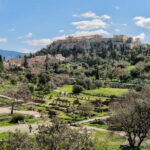
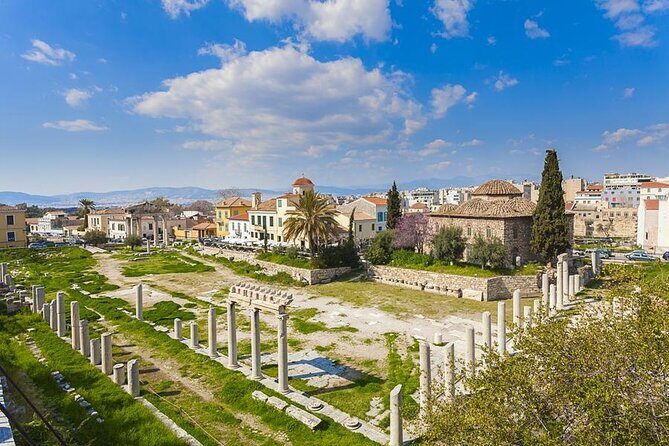
The Ancient Agora of Athens is one of the most logical places to stop on a Paul tour, because Acts 17 places him in exactly this kind of setting. In the plan, this is where Paul visited and preached during his second missionary journey (Acts 17:16-21).
The Agora here isn’t just shops and streets. It’s described as Athens’s central marketplace, a hub for philosophical debates, and a stage for idolatry—exactly the atmosphere that led Paul to speak about Jesus’s death on the cross and the resurrection. The tour also frames Paul’s interactions with Stoic and Epicurean philosophers, which helps you understand why his message wasn’t only religious—it was also intellectual and confrontational in a city trained for debate.
Your time on this stop is listed at 1 hour 10 minutes. Admission is not included (listed as an extra cost), so this is where your budget choice matters. If you enter, you’ll get more out of the stop. If you don’t, you can still see a lot from the general area, but you’ll miss the most satisfying part: moving through the space where arguments and worship collided.
- All Day Cruise -3 Islands to Agistri,Moni, Aegina with lunch and drinks included
★ 5.0 · 4,958 reviews

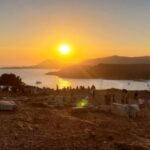

Areopagus and the sermon point: Mars Hill as a teachable moment
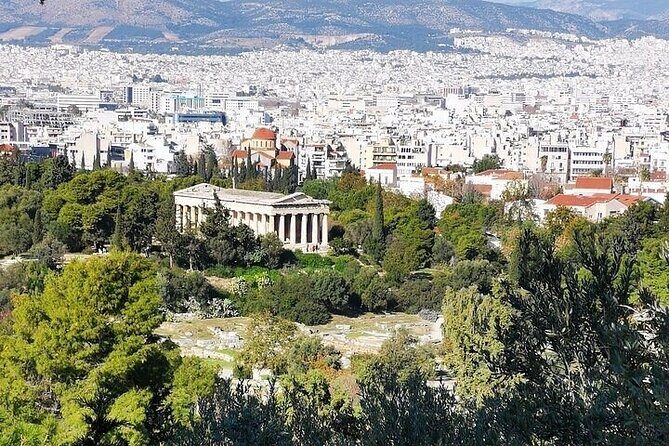
The plan includes a stop at the Areopagus (Hill of Ares) area, described as the site where St. Paul delivered his famous sermon (Acts 17:22). There’s also a separate Mars Hill-focused visit (about 20 minutes) with the specific sermon content highlighted.
Why do two stops matter? Because the story is layered. One part of your brain is trying to locate the hill as a physical spot. The other part is trying to follow the sermon’s logic:
- Paul references the Athenians’ altar to the Unknown God
- He uses Greek philosophical and poetic references (Epimenides and Aratus are named)
- The reaction is mixed—some mock, some become curious, and some convert
Even when the stops are short, the context helps you “hear” the speech in your head while you look out over the area. It turns a scenic hill into something closer to a classroom.
Both Areopagus stops are listed as free admission in the plan, so you won’t be forced into ticket decisions here.
Acropolis and Parthenon tickets: the big moment, done the practical way
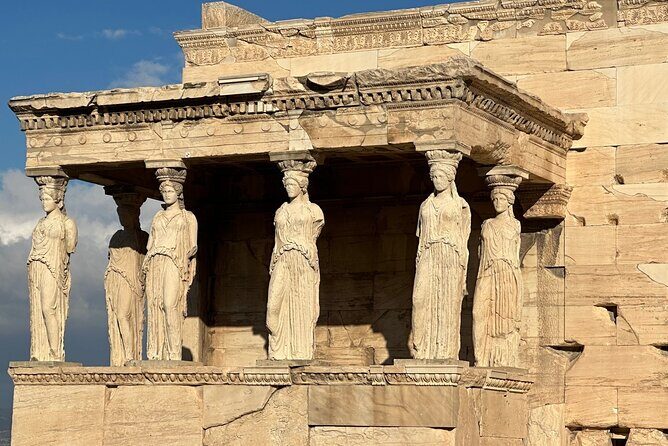
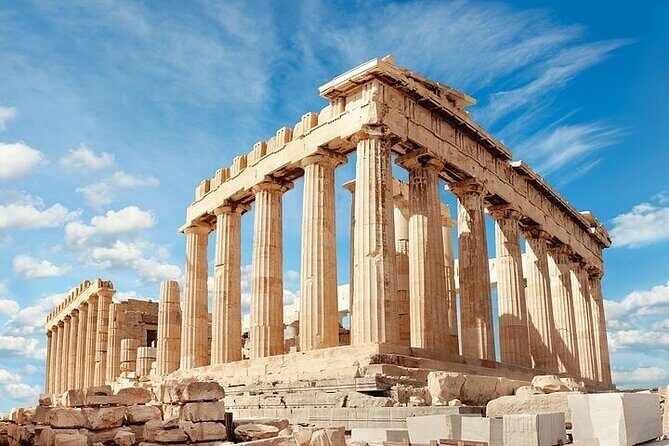
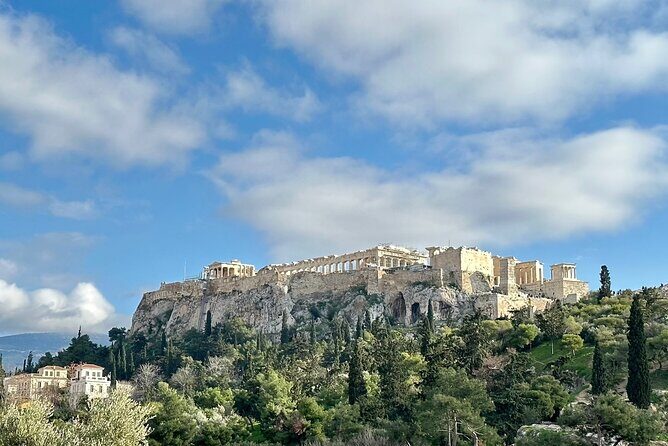
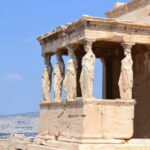
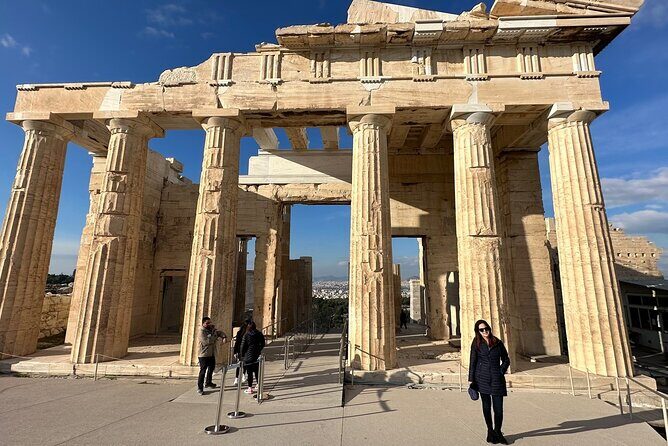
Acropolis is the headline site, and it’s not treated as an afterthought. The plan includes visits to the Parthenon and the Erechtheion area. Admission for the Acropolis/Parthenon is listed as not included, with an extra charge.
This is the place where you should decide what kind of visitor you are.
- If you want the full experience, buy your entry and plan time to move slowly.
- If you only want the photos and the skyline feeling, you can treat it like a quick stop—just don’t expect the Acropolis to fit into a rushed drive-by.
The guide role matters here. A good driver will give you a mental map before you enter, so you don’t wander with no context. That’s especially helpful if your focus is Paul’s story, because it’s easy to get distracted by sheer scale.
One more practical note: in Athens, timing your Acropolis visit can make or break your day. Even though the tour is private, you still need to respect any entry systems and the time needed for security and walking up.
Agios Dionysios Areopagitis: a direct link to the Paul story
This stop is short but it adds a nice bridge from biblical text to later Christian tradition. The Catholic Cathedral of St. Dionysius the Areopagite is described as the seat of the Catholic Archbishop of Athens and built in a three-aisled neo-Renaissance basilica style, with frescoes and stained glass windows.
The plan also mentions a Church of St. Dionysius the Areopagite with cruciform design and a large dome, plus neoclassical elements.
The Paul connection is the key detail: Saint Dionysius the Areopagite is listed as a convert of Apostle Paul (Acts 17:34). Tradition says Dionysius was a member of the Areopagus council and was converted after hearing Paul’s sermon on Mars Hill, later becoming the first bishop of Athens. Even if you treat traditions as tradition, the emotional payoff is real—because it ties together the hill, the sermon, and a name you can point to.
Admission is listed as free, and the time on this stop is about 20 minutes.
Mount Lycabettus: views, plus a cave-church story
After the heavier historical stops, Mount Lycabettus gives you breathing room. It’s described as a major viewpoint landmark in Athens, with the church of Agioi Isidoroi on the southwestern slope.
This is the part of the tour I like for variety. It’s not another ruin. The story is specific: Agioi Isidoroi is described as a church built in the 15th or 16th century on top of a cave, with several transformations over the centuries. It’s dedicated to Saints Isidore of Chios (named as a 3rd-century martyr) and Isidore of Pelusium (named as a 4th-century monk and scholar).
It’s also presented as a pilgrimage site, with the surrounding area noted for caves and scenic views. Your stop is brief (around 15 minutes), but the payoff is big if you like city panoramas and want one last “Athens in one glance” moment.
Price and value: what you’re really paying for
The price is listed at $154.74 per person, and the tour is private with pickup and drop-off. That base price is often less about the sites themselves and more about the machine that gets you around: a modern private vehicle, WiFi, A/C, bottled water, and a driver who’s focused on bringing Greek and biblical context together.
On paper, the value looks strong if you’re doing this as a time-pressed visitor. Athens is not the kind of city where you always want to negotiate bus routes when you only have a half-day. This tour helps you see a lot without the mental tax of planning every turn.
But you should budget for entrances. The plan lists extra fees for:
- Acropolis Parthenon (listed as an extra cost)
- Ancient Agora (listed as an extra cost)
And it also lists optional photo stops with optional fees:
- Panathenaic Stadium
- Temple of Olympian Zeus
So the fair way to judge value is this: if you plan to enter the Acropolis and Agora, you’ll feel like you got what you paid for. If you plan to mostly skip entrances, the day can feel like shorter stops plus a lot of driving between viewpoints.
Extras mentioned in the tour materials: confirm what’s included for your day
The highlights mention Hellenic Parliament, Panathenaic Stadium, and Temple of Zeus, plus a monastery dedicated to the Epiphany of the Virgin Mary (Kasarani Monastery). But the detailed route text lists Daphni Monastery as the monastery stop.
That mismatch isn’t a dealbreaker, but it is something you should clarify before you go. Ask the provider which monastery you’ll actually visit and whether the Parliament and stadium/Zeus stops are time-feasible for your exact pickup time.
One good sign: the plan repeatedly notes the idea of photos-only for optional sites. That usually means the tour can bend toward your preferences, as long as you’re willing to accept short photo stops rather than full entry experiences.
Who should book this Apostle Paul Athens private tour
This tour fits you best if:
- You want a story-driven Athens tied to Acts 17, not just generic sightseeing
- You like architecture and art enough to enjoy Byzantine mosaics at Daphni as part of your Christian timeline
- You’re short on time and want major sites handled efficiently with pickup and transport
It may not be your best choice if:
- You strongly prefer to avoid archaeological entrances and want long, unguided wandering inside sites
- You expect your driver to act like a licensed guide inside every ticketed venue (the plan states the driver is not licensed to accompany you in any site)
- You’re sensitive to communication clarity and want zero accent risk. Some English feedback varies by driver, so if that matters, ask beforehand.
Should you book it
Yes, I’d book it if you want Paul’s Athens as a connected narrative and you’re okay making a few ticket decisions to get the best value. The strong points are the Paul-centered route, the free-feeling stops like Areopagus, and the contrast stop of Daphni Monastery mosaics. The private pickup also makes it much easier for cruise-day timing and for anyone tired of self-navigation.
But if your priority is only the Acropolis and you don’t want to pay entrance fees anywhere else, you might feel the price doesn’t match the amount of site time you actually get inside. In that case, consider booking a lighter sightseeing option or be very clear in advance about which optional entrances you want to include.
If you’re in the right mood—history with a storyline and a driver who will explain why these places matter—this tour is a solid use of a half day in Athens.
FAQ
How long is the Apostle Paul’s Athens private tour?
The duration is listed as about 5 hours (approximately). It’s sold as a 4-hour private tour, so give yourself time for about half a day.
What’s included in the pickup and drop-off?
Pickup and drop-off are offered to your hotel lobby, your Airbnb/apartment/villa entrance, or the port/airport arrival area. For airport and port arrivals, the driver waits in the arrival area with a name sign.
Is this tour private?
Yes. It’s a private tour, so only your group participates.
What languages are offered?
The tour is offered in English.
Are there entrance fees included for the main sites?
Some stops are listed as free or with admission included (like Daphni Monastery and Flisvos Marina in the provided plan). Other key sites like the Acropolis/Parthenon and Ancient Agora list admission fees as not included.
Does the tour include the Acropolis and Parthenon visit?
Yes. The plan includes a visit to the Acropolis area with Parthenon. The Parthenon/Acropolis admission fee is listed as an extra cost.
Does the tour include the Ancient Agora?
Yes, it includes the Ancient Agora stop with time on site. The admission fee is listed as not included.
Is Mars Hill included?
Yes. The itinerary includes an Areopagus/Mars Hill visit connected to St. Paul’s sermon (Acts 17:22), with admission listed as free.
Are the Panathenaic Stadium and Temple of Olympian Zeus included?
They are listed as optional photo visits with extra entrance fees. The plan says you can also just take photos.
What happens if weather is bad?
The experience requires good weather. If it’s canceled due to poor weather, you’ll be offered a different date or a full refund.
More Private Tours in Athens


More Tours in Athens

More Tour Reviews in Athens
- All Day Cruise -3 Islands to Agistri,Moni, Aegina with lunch and drinks included
★ 5.0 · 4,958 reviews