REVIEW · ATHENS
Athens & Acropolis Highlights: Greek Mythology Small-Group Tour
Book on Viator →Operated by Alternative Athens · Bookable on Viator
Athens hits different when myths guide you. This small-group tour turns stone into story, with guides who connect myth and architecture—so the Parthenon and other Acropolis ruins start making sense fast. I also like that you get an expert guide plus a handy ancient Athens map, which helps you keep your bearings after the tour ends.
One heads-up: you’ll pay extra for Acropolis and Agora entrance tickets, and the day includes a steep, stair-heavy walk on uneven ground—plus no big bags or strollers at the Acropolis.
In This Review
- Key highlights at a glance
- Temple of Olympian Zeus and the start of the Athens myth-world
- Acropolis climb: Parthenon views and myth “why it mattered”
- A small-group bonus that actually matters
- Theater of Dionysus: where major plays first took the stage
- Athena Nike and Erechtheion: the kind of details you’ll miss alone
- Ancient Agora: politics, justice, and commerce in one square
- Temple of Hephaestus: a well-preserved ending with real-world ties
- Walking pace, crowd timing, and what to bring
- Price and value: what $54.42 covers (and what it doesn’t)
- Where this tour fits best in your Athens plan
- Guides make the difference, and you’ll likely feel that quickly
- Should you book this Athens & Acropolis myth tour?
- FAQ
- How long is the Athens & Acropolis Highlights tour?
- Is this a small-group tour?
- Where do I meet the guide, and where does the tour end?
- What language is the tour offered in?
- Are entrance fees included in the price?
- Can you pre-purchase the entrance tickets for me?
- Do I need ID for any discounts?
- Are strollers or large bags allowed?
- When will I receive confirmation after booking?
- What happens if the tour is canceled due to weather or too few travelers?
- What is the cancellation window for a full refund?
Key highlights at a glance
- Myth-to-stone storytelling that links Greek gods to specific buildings and details
- Acropolis focus with stops for Parthenon, Athena Nike, Erechtheion, and more
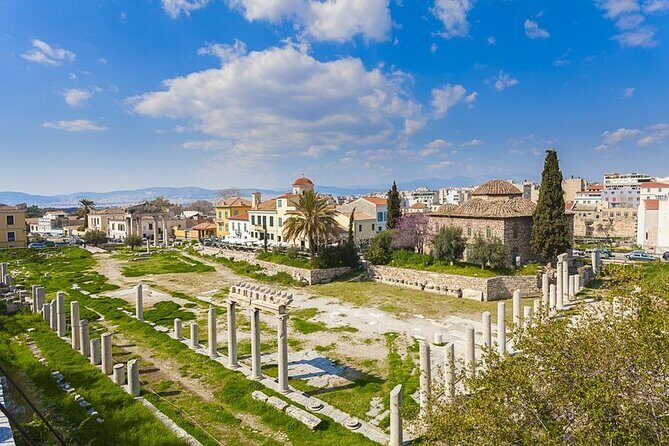
- Athenian “daily life” payoff at the Ancient Agora and Temple of Hephaestus
- A guide-driven pace with multiple short pauses instead of one long grind uphill
- Small group size (max 15) so you’re not shouting over each other
- Mobile ticket and an easy-to-find meeting spot near transit
Temple of Olympian Zeus and the start of the Athens myth-world
Your tour begins at the Arch of Hadrian area on Leof. Vasilisis Amalias, right by the Temple of Olympian Zeus (Olympeion). From the outside, you’ll see just how massive this place used to be, and you’ll hear what it represented in ancient Athens. Even in partial ruins, the scale is impressive. It’s also a smart warm-up, because it sets the tone: this is Athens where politics, religion, and storytelling all lived in the same space.
This first stop is short—about 15 minutes—so it works well for getting oriented without burning too much time before the big climb. You’re not paying an entrance fee here, so you can focus on seeing and listening rather than queuing.
I like that the guide starts with context, because it means that when you later face the Acropolis, you’re not just looking at pretty columns. You’re learning what the places meant and why ancient Athenians cared.
You can also read our reviews of more tours and experiences in Athens.


Acropolis climb: Parthenon views and myth “why it mattered”
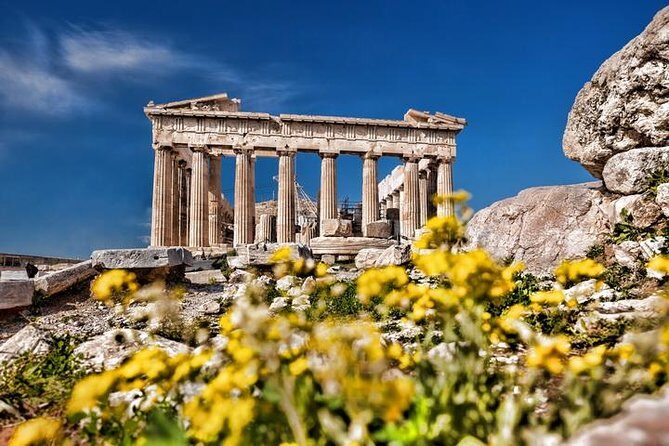
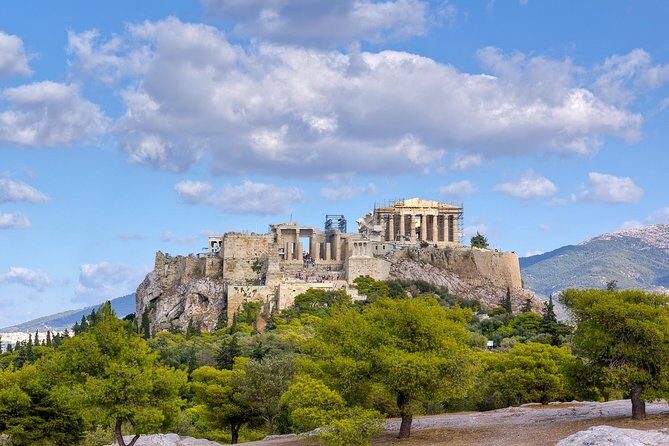
The Acropolis portion is the heart of the tour, and it’s where most people feel the biggest payoff. You’ll spend about 1 hour 30 minutes up there, moving between major monuments and hearing how they connect to the goddess Athena and to the cultural identity of Athens.
This is where you need to plan for reality. The hill is steep, the surfaces are uneven, and there are stairs. A hat and good shoes matter. Water helps. Even with a guide who keeps things moving, you’ll feel the climb.
At the top, you’ll hit the classic highlights:
- Parthenon: the grand temple dominated by the hill, built in the mid-5th century BCE and dedicated to Athena Parthenos. Expect to hear why its Doric architecture is such a milestone.
- Temple of Athena Nike: tied to the goddess Athena and Nike (victory). You’ll also learn the story elements that people connect with the temple’s winged-victory image.
- Erechtheion: known for its role on the Acropolis, including the cult statue theme associated with Athena and the way the building reinforces Athens at its height.
- Propylaea and other structures: you’ll get enough “what you’re looking at” detail to make the jumble feel organized.
If you’ve only seen the Acropolis in photos, this part changes your mental map. You start to notice how sightlines work, where sacred space sits, and why certain buildings get placed where they do. It’s also a lot easier to appreciate the carvings and proportions when you understand what the guide is pointing out.
A small-group bonus that actually matters
With a maximum of 15 travelers, you can usually hear the guide and get quick answers. Several guides mentioned in past groups—like Irene, Michael, Dani, and Alexandros—are known for teaching in a way that keeps the group engaged without turning it into a lecture.
Also, some departures may not use a microphone. If you’re toward the back or the wind is strong, you’ll want to position yourself closer to the front when the guide is speaking.
Theater of Dionysus: where major plays first took the stage
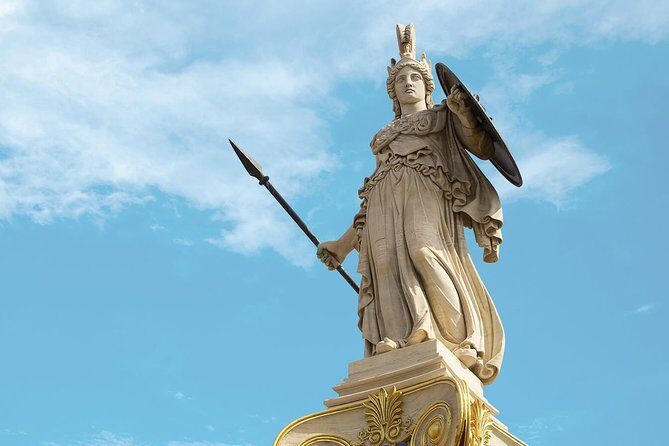
Next up is the Theatre of Dionysus Eleuthereus, with about 15 minutes here. This stop is fascinating because it connects Greek mythology to Greek theater in a concrete way: Dionysus was tied to wine and the grape harvest, and this theatre is associated with early major performances.
You’ll hear that it was among the oldest theatres in Athens, and you’ll get the names of playwrights who became part of the cultural foundation of Western drama. It’s a quick stop, but it adds a new layer to the day: these weren’t just gods on statues. They were part of public life, festivals, and entertainment.
If you like the arts, this stop is often the surprise favorite. It’s not as visually dominant as the Parthenon, but it helps the mythology feel less abstract.
Athena Nike and Erechtheion: the kind of details you’ll miss alone
Two shorter Acropolis stops—Athena Nike and Erechtheion—are where the guide’s storytelling becomes very practical. You get to stand close to specific buildings and learn what they represented, then watch for details in the structure.
For example, Athena Nike’s connection to Nike (victory) and the idea of victory tied to staying in Athens gives the building more meaning than just “pretty temple.” With Erechtheion, the explanation about the cult statue role helps you understand why this site was built the way it was, not just that it looks old.
These are good stops to use your eyes. Look at how the buildings sit relative to each other and relative to the city below. The more you understand the purpose of each space, the more you’ll appreciate the arrangement.
- All Day Cruise -3 Islands to Agistri,Moni, Aegina with lunch and drinks included
★ 5.0 · 4,958 reviews




Ancient Agora: politics, justice, and commerce in one square
After the Acropolis hill, the tour shifts to the Ancient Agora, with about 1 hour here, plus a final temple stop. The Agora is often the missing piece for first-time visitors. Yes, the Acropolis is iconic. But the Agora is where Athens functioned day to day.
Here’s what you’ll learn the Agora was for:
- political and administrative activity
- commerce and daily social life
- religious and cultural gatherings
- justice
This stop is great because it takes you out of the “temples on top of a mountain” mindset. You start thinking about how ancient myth connected to real civic routines. You also get a strong sense of how people moved through the city and what mattered to them.
It helps that the group is guided, because without context, the Agora can feel like a scattering of ruins. With the myth-and-history framing, it reads like a map of an active society.
Temple of Hephaestus: a well-preserved ending with real-world ties
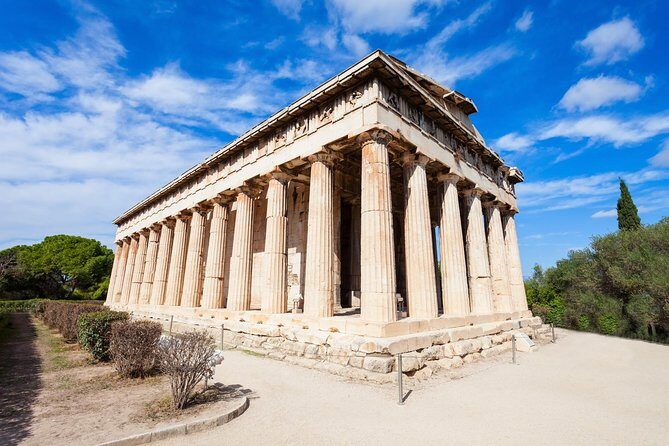
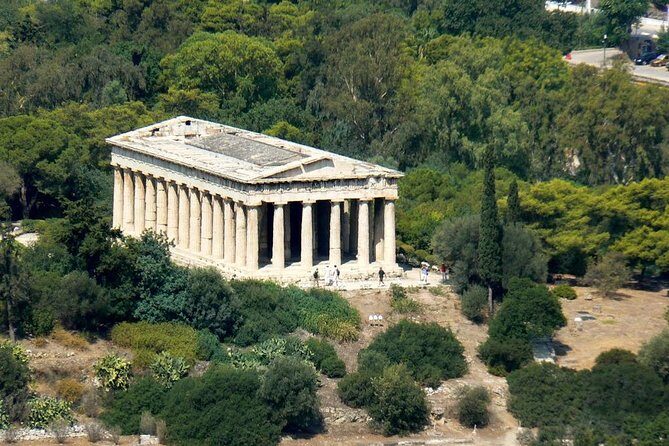
You’ll cap the tour at the Temple of Hephaestus—one of the best-preserved ancient temples in the world. This is a smart final stop because it’s both visually strong and conceptually grounded.
You’ll hear that it relates to Hephaestus (protector of metallurgists) and Athena Ergani (protecting potters and cottage industries). That link to crafts and everyday work makes the temple feel less distant. It’s not only gods and monuments—it’s also labor, trade, and community identity.
Spending time here also gives your legs a moment to recover. You still have to walk, but you’re not climbing again in the way you did earlier.
Walking pace, crowd timing, and what to bring
This tour is built for a steady pace with frequent stops and explanations at each site. That’s a good thing. Reviews often highlight guides who break the climb into stages and pause in shaded areas. On a hot day, those pauses matter more than you think.
Plan for:
- stairs and steep sections on the Acropolis
- uneven surfaces
- time in the sun if you arrive on a bright day
Bring:
- good walking shoes
- a hat
- water
Bags matter, too. Strollers and big backpacks are not allowed at the Acropolis, so pack light. If you’re traveling with a larger bag, you might want to store it off-site before you come.
If you want a “less stress” experience, aim to be at the meeting point a few minutes early so you start together and don’t waste time.
Price and value: what $54.42 covers (and what it doesn’t)
The tour price is $54.42 per person, and it includes an expert certified guide, small-group format, and a fun ancient Athens map. It also uses a mobile ticket, and it’s offered in English.
What’s not included is the big one:
- Acropolis admission is necessary for the 2-hour and 4-hour options: €30.00 per person
- Ancient Agora admission is necessary for the 4-hour option: €20.00 per person
So for the full 4-hour experience, you should budget about €50 per person in entrance fees, on top of the tour price. That can feel like a jump until you realize what you’re buying: access to the key archaeological zones plus guide time spent inside the story framework. A good guide saves you from walking around guessing.
If you like to reduce planning friction, the provider says you can pre-purchase entrance tickets for you—just let them know. This is handy when ticket lines and timing can be the difference between a smooth morning and a frantic one.
Where this tour fits best in your Athens plan
This is ideal if:
- you want the top Athens sites in one morning or half-day window
- you care about mythology but don’t want it to stay abstract
- you prefer a guide-led experience instead of reading signs slowly on your own
- you’re the kind of person who enjoys asking questions when something doesn’t add up
It’s also a good choice if you only have one day in Athens. Athens is huge, but this tour gives you a strong “north star” for the rest of your trip: you leave with a clearer mental map of where sacred Athens ends and civic Athens begins.
For people who struggle with steep climbs or have mobility challenges, the Acropolis portion is the main concern. The tour says most travelers can participate, but the ground and stairs are real. Wear shoes you can trust and be ready to take it slow.
Guides make the difference, and you’ll likely feel that quickly
One standout theme in the guide feedback is how effectively they connect myth to architecture. People repeatedly praise guides for being friendly, keeping a good pace, answering niche questions, and making the climb feel manageable.
Depending on your departure, you might hear names like Irene, Michael, Dani, Alexandros, Kristina, Theo, Chrysanthi, Angie, Maria, Demi, or Christina. The consistent point is the method: short story segments, clear explanations, and enough time at each monument to actually see what you’re being told about.
If you’re a mythology fan, this is the kind of tour that can turn familiar stories into something you can point to in stone. If you’re new to Greek myths, it still works because the guide starts with the basics and builds from there.
Should you book this Athens & Acropolis myth tour?
Yes—if you want your Acropolis time to feel purposeful. Paying for a guide here is usually worth it because the monuments are old, layered, and easy to misread without context.
Skip it or think twice if:
- you’re avoiding steep stairs and uneven ground
- you hate paying extra for entrance fees after booking
- you prefer to wander at your own pace with no group structure
If you’re flexible, bring the right shoes, and plan for the Acropolis admission cost, this tour gives you a high return on time: big-name sites, smart explanations, and an Athens story that connects gods to daily life.
FAQ
How long is the Athens & Acropolis Highlights tour?
It’s listed as about 4 hours.
Is this a small-group tour?
Yes. The tour has a maximum of 15 travelers.
Where do I meet the guide, and where does the tour end?
You start at the Arch of Hadrian, Leof. Vasilisis Amalias 50, Athina 105 58, Greece. You end at the Ancient Agora of Athens, Athens 105 55, Greece.
What language is the tour offered in?
The tour is offered in English.
Are entrance fees included in the price?
No. Entrance tickets for the Acropolis and the Ancient Agora are not included. The Acropolis admission fee is €30.00 per person, and the Ancient Agora admission fee is €20.00 per person for the 4-hour option.
Can you pre-purchase the entrance tickets for me?
Yes. The provider says you can request they pre-purchase entry tickets for you.
Do I need ID for any discounts?
The tour info says an ID card or passport is required for people under age 25 for possible discounts.
Are strollers or large bags allowed?
Strollers, backpacks, and big bags are not allowed at the Acropolis, and you shouldn’t bring them on the tour.
When will I receive confirmation after booking?
You’ll receive confirmation at the time of booking unless you book within 1 hour of travel, in which case confirmation is received as soon as possible subject to availability.
What happens if the tour is canceled due to weather or too few travelers?
This experience requires good weather. If it’s canceled due to poor weather, you’ll be offered a different date or a full refund. It also requires a minimum number of travelers; if that isn’t met, you’ll be offered a different experience or a full refund.
What is the cancellation window for a full refund?
You can cancel up to 24 hours in advance of the experience start time for a full refund. Canceling less than 24 hours before start time doesn’t get refunded.


More Tours in Athens

More Tour Reviews in Athens
- All Day Cruise -3 Islands to Agistri,Moni, Aegina with lunch and drinks included
★ 5.0 · 4,958 reviews