REVIEW · ATHENS
Athens Highlights: Myths & Philosophers Walking Tour
Book on Viator →Operated by Be a Greek · Bookable on Viator
Athens turns philosophical fast. This private walking tour connects myths and the world’s early thinkers to real streets and monuments, with guides like Bianca bringing Plato, Socrates, and Thales of Miletus into the conversation. It’s designed for questions as you go, not a sit-and-listen museum day.
I love how the route mixes big-name stops with spots many people skip, so you get Athens sights and ideas tied to those places. I also like the practical comfort touches: coffee/tea and bottled water are included, which keeps your brain switched on for four hours of discussion.
One possible drawback: the walk time is real, and several key stops have admission tickets not included. Plan for extra entry fees if you want to go inside certain buildings.
In This Review
- Key things that make this tour worth your time
- From Socrates to Street Corners: what this tour is really about
- Starting near Panepistimio and easing into the Academy of Athens
- A coin museum stop that shows how Greeks thought in numbers
- Hellenic Parliament and the Presidential Guard ritual
- National Garden: where Athens connects democracy, physics, and ethics
- Ermou Street and Hermes, plus Pantanassa in the square
- Ancient Agora: where Stoic ideas took shape
- Tower of the Winds and Aiolos, the keeper of the air
- Anafiotika near the Acropolis: Cynics in a real neighborhood
- Areopagus Hill: the view that ends with myth and meaning
- Why the private format makes the biggest difference
- Price and value: where your money goes
- Time on your feet: what to consider before you go
- Who should book this tour
- Should you book it? My practical take
- FAQ
- FAQ
- How long is the Athens Highlights: Myths & Philosophers walking tour?
- Is this tour private or shared?
- What languages is the tour offered in?
- What’s included in the price?
- Are entrance fees included for the stops?
- Where do you meet, and where does it end?
- Do I need good weather for the tour?
- What’s the cancellation policy?
- Is the tour suitable for everyone?
Key things that make this tour worth your time
- Private and question-friendly: your group can ask along the way.
- Philosophy told through myths: Socrates, Plato, Thales of Miletus, and more show up in stories you can picture.
- A route with contrast: grand landmarks, quieter corners, and viewpoints over the city.
- Included comfort: coffee or tea plus bottled water during the route.
- Stops often require extra tickets: Academy, Ancient Agora, and Tower of the Winds may mean extra cost.
From Socrates to Street Corners: what this tour is really about

This isn’t only a sightseeing loop. It’s a “how did people think?” tour, where philosophy turns into something you can point at. You walk past buildings and neighborhoods and then the guide connects them to the ideas people argued about in ancient Greece.
The tone is smart without being stuffy. In particular, guides such as Bianca, John, Gianni, and Effrosyni have been highlighted for turning the day into an interactive conversation. The effect is that you leave with more than facts. You leave with questions that feel worth carrying home.
And because it’s private, you’re not stuck with a script. If your group wants basics, you get them. If you want specifics, the guide can shift. That flexibility is a big part of why this kind of tour works so well for families and for students, from beginners to people who already studied the classics.
You can also read our reviews of more tours and experiences in Athens.


Starting near Panepistimio and easing into the Academy of Athens
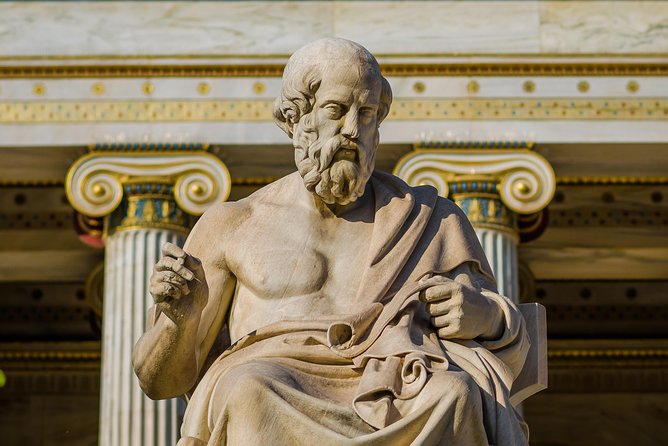
You begin in the Panepistimio area, then head toward one of the most iconic educational landmarks in modern Athens: the Academy of Athens complex. The guide uses it as a time-jump point, linking the building to the philosophical movements that shaped Greek thought.
You’ll spend about 15 minutes here, plus there may be an option to enter if you want to use the admission ticket (not included). Even if you don’t go in, the outside view is a good way to get your bearings fast, because the guide frames what came next on the walk.
Practical tip: this stop is a solid “warm-up.” If you’re new to Greek philosophy, it helps you understand what the later conversations are building toward.
A coin museum stop that shows how Greeks thought in numbers
Between the Academy area and the next major landmark, the tour includes a museum stop focused on coins—ancient and modern—and how big collections can tell stories about trade, power, and daily life. It’s short, around 15 minutes, and it’s especially good if your group likes details that feel tangible.
Here’s the value: philosophy in Athens wasn’t only head-in-the-clouds. Money, measurement, and civic life all connect back to how people organized society. A coin collection gives you that bridge without turning into a lecture.
Admission may be required for museum entry, so if you like museums, budget extra and be ready to decide on the spot. If you don’t, you can still benefit from the guide’s context while staying flexible.
Hellenic Parliament and the Presidential Guard ritual

Next up is the Hellenic Parliament area. Even if you’re not a flag-and-uniform person, this stop is memorable because you see one of Greece’s longstanding traditions: the changing of the Presidential Guard. The tour is timed so you’re there to watch from outside, with about 15 minutes at the site.
This is where mythology meets modern civic ritual. The guide uses the contrast—ancient ideas about virtue and order versus the visible pageantry of a living state. It’s a clever way to remind you that Greek culture didn’t stop in antiquity; it kept changing shape.
Quick note: this stop is free to view from the outside. If you’re traveling with teens, it’s also a nice moment of motion and energy before the walk turns more introspective.
National Garden: where Athens connects democracy, physics, and ethics
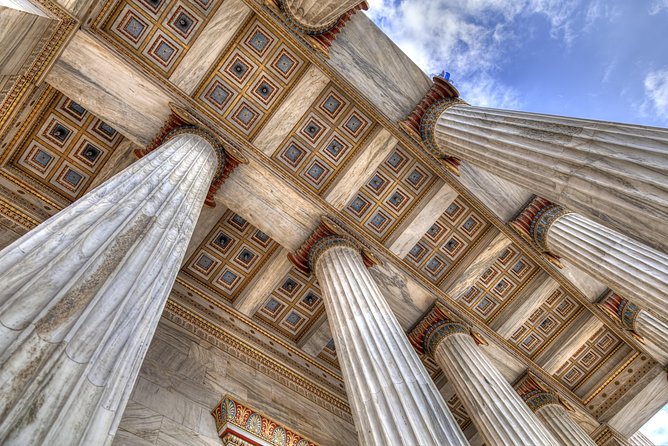
After the Parliament, you head to the National Garden for a quieter 15-minute pause. The guide turns this green space into a lesson on how Greek philosophy influenced applied sciences—things like democracy, physics, astronomy, and ethics.
This is a good stop if your brain is starting to feel full. The garden gives you a sensory reset while still keeping the philosophical thread. The guide’s job here is to make it feel like the ideas have consequences in daily life, not just fancy debates.
If you’re worried about the “four hours on foot” factor, this garden break matters. It’s one of the best points to slow down, grab air, and let the earlier history land.
- All Day Cruise -3 Islands to Agistri,Moni, Aegina with lunch and drinks included
★ 5.0 · 4,958 reviews





Ermou Street and Hermes, plus Pantanassa in the square
Then you move into the city’s texture around Ermou Street, a place where the guide leans into myth—specifically Hermes, the mischievous god. You get about 15 minutes in this area, with free access.
What I like here is how the guide uses myth as a map-reading tool. Hermes isn’t just a story character; he becomes a way to interpret motion, communication, cleverness, and the push-pull of city life.
You’ll also hear how the local area is named after the Church of the Pantanassa located in the square. It’s the kind of detail that makes Athens feel personal. You start noticing how places carry names, and how names carry meaning.
Ancient Agora: where Stoic ideas took shape
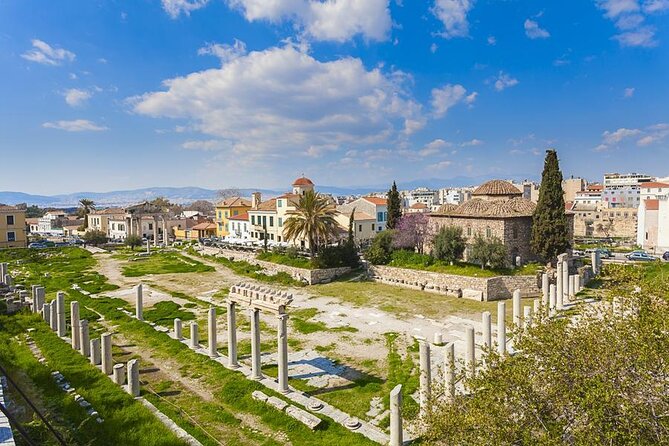
The day shifts to one of the most important thinking zones in Athens: the Ancient Agora. Here, the focus is Stoic philosophy and its link to the Poikile Stoa—about 15 minutes.
This is a key stop for anyone who wants more than mythology. You’ll get a sense of how philosophical schools formed in public spaces, where people debated, argued, and tested ideas against real events.
Admission ticket info matters here: entry is not included for points that require it. So plan your priorities. If your group loves ruins, you’ll likely want to go in. If you’re short on time, you can still get plenty from the exterior framing and the guide’s explanations.
Tower of the Winds and Aiolos, the keeper of the air
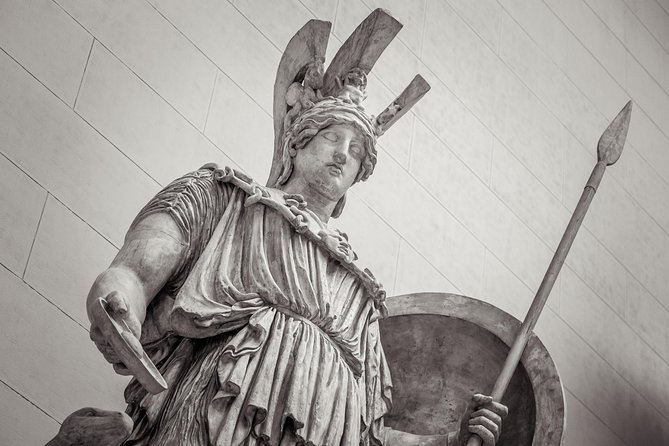
Next is the Tower of the Winds, a structure that looks like it belongs in a fantasy setting but is packed with real-world purpose. You’ll spend about 15 minutes admiring it and learning about Aiolos, the keeper of the winds.
Even if you don’t know the technical background, you’ll come away with a clear picture of how the Greeks connected observation to explanation. Philosophy here isn’t abstract. It’s about paying attention and building systems for understanding weather, direction, and time.
Admission may be required depending on what you choose to enter, and it isn’t included. The good news: the focus on the stop is still strong even without paying for extra access.
Anafiotika near the Acropolis: Cynics in a real neighborhood
After the more formal sites, the tour enters Anafiotika in the Plaka area, near the foot of the Acropolis. This is about 20 minutes, and it’s free.
The guide uses this neighborhood setting to talk about the Cynic philosophers. That pairing works well because Cynicism was about refusing empty social performance. When you’re walking narrow lanes and looking at how people actually live close to famous monuments, the idea feels more grounded.
If you’re traveling with mixed interests—say you’ve got philosophy lovers and people who mostly want atmosphere—this is where the route balances them. You get charm, location, and the chance to talk through ideas that don’t always translate well in a classroom.
Areopagus Hill: the view that ends with myth and meaning
You finish at Areopagus Hill, about 15 minutes, with a view over the Acropolis. This ending matters because it gives your brain a final “wide angle” after hours of ideas.
The guide closes with myths about the Olympian gods. It’s a good way to tie together what you’ve heard: early explanations of the world, later philosophical attempts to understand ethics and society, and the way stories stayed attached to place.
This is also a natural moment to ask one last question. Because it’s private, you’re not forced to stop when the clock hits. Some groups reported the conversation continued a bit beyond the stated time when the guide had room for it.
Why the private format makes the biggest difference
A walking tour can be impressive just on facts. This one is praised for something harder: discussion quality.
Guides like Bianca and John have been singled out for warm, engaging teaching—speaking to people, not at them. That style matters because Greek philosophy can sound intimidating until someone turns it into everyday thinking. You don’t just learn who said what. You practice the method: ask why, compare viewpoints, and connect a concept to a place you can see.
There’s also a practical value in the pace. Several guides are noted for choosing shady places and timing stops so the tour feels comfortable. When it’s hot, that kind of planning is not a luxury. It’s what keeps you engaged.
And for families: the tour has been described as working especially well for teens and young adults. The format gives room for questions, and it helps non-experts keep up without feeling lost.
Price and value: where your money goes
The price is $102.80 per person for about four hours. For that, you get a private guide experience, plus coffee or tea and bottled water included.
Here’s the value math you should do:
- Many stops are free to view from outside.
- Some key sites may require admission tickets not included, including the Academy of Athens, Ancient Agora, and the Tower of the Winds areas where entry could apply.
- If you plan to enter every paid site, your final cost will be higher than the base tour price.
- If you mainly want the stories and the viewpoints, you can often keep extra spending under control.
In either case, the real reason this tour can be worth it is the “conversation per hour” factor. You’re not paying for a checklist. You’re paying for a guide who can respond to your questions and steer the day toward what your group cares about.
Also, since it’s booked on average about 53 days in advance, it’s worth reserving early if you’re traveling in a busy season. Popular guides and dates can fill up.
Time on your feet: what to consider before you go
This is a 4-hour walking experience, and you’ll cover a sequence of Athens neighborhoods and major points. If you know you tire easily, consider whether you prefer a shorter version. Some people felt four hours was long, even with the breaks built into the route.
Weather also matters. The experience requires good weather, and if it’s canceled for poor conditions, you’ll be offered another date or a full refund.
What to bring:
- Comfortable walking shoes
- Water (you’ll have some included, but you’ll still want to be prepared)
- Sun protection, since some time will be spent outdoors
- A curious mindset—this tour works best when you ask things
Who should book this tour
Book it if:
- You want more than photos and facts. You want meaning.
- Your group includes philosophy fans, classics readers, or people who enjoy asking why.
- You like walking through Athens with a guide who connects myths to civic life and human behavior.
You might skip or swap it if:
- You want a quick-hit highlights route with minimal thinking.
- Your group hates discussions or you prefer tours that don’t involve questions.
- You’re trying to limit walking time and don’t want the full four hours.
Should you book it? My practical take
If you’re in Athens for just a few days and you keep hearing people say Greece is a must-see, this is a way to see it with your brain turned on. I’d especially recommend it if you want a tour that feels personal and interactive, not one-size-fits-all.
But if you’re working around strict stamina limits or you dislike extra site entry fees, treat the admission parts as a decision point, not a surprise. Plan for possible entrance costs and wear shoes you trust.
If your goal is to leave Athens thinking differently than you arrived, this tour is built for that.
FAQ
FAQ
How long is the Athens Highlights: Myths & Philosophers walking tour?
It runs about 4 hours.
Is this tour private or shared?
It’s private. Only your group participates.
What languages is the tour offered in?
The tour is offered in English.
What’s included in the price?
Coffee and/or tea and bottled water are included.
Are entrance fees included for the stops?
No. Entrance tickets for points of interest are not included.
Where do you meet, and where does it end?
You start near Panepistimio Athens (PanepistimioAthens 106 79, Greece) and end at Areopagus Hill (Theorias 21, Athina 105 55).
Do I need good weather for the tour?
Yes. The experience requires good weather. If it’s canceled due to poor weather, you’ll be offered a different date or a full refund.
What’s the cancellation policy?
You can cancel for free up to 24 hours in advance for a full refund. If you cancel less than 24 hours before the start time, the amount paid is not refunded.
Is the tour suitable for everyone?
Most travelers can participate, and service animals are allowed. The meeting area is near public transportation.
More Tour Reviews in Athens
- All Day Cruise -3 Islands to Agistri,Moni, Aegina with lunch and drinks included
★ 5.0 · 4,958 reviews