REVIEW · ATHENS
Athens Private Tour Acropolis and Highlights & Athenian Riviera
Book on Viator →Operated by Great Greece Tours · Bookable on Viator
Marble and sea views in one smart day. This private route strings together the Acropolis masterpieces and classic city districts, with an English-speaking driver-guide who can explain what you’re actually looking at, from Parthenon details to why the Changing of the Guard exists. I love the doorstep-style pickup (they meet you with a name sign) and the way the day is paced for real sightseeing instead of rushing. One heads-up: the tour price does not include site entrance fees (listed at €30 per person) and you’ll want to pre-book your Acropolis tickets so you don’t lose prime time.
You’re on the move for about 6 hours, mostly by air-conditioned private transport, with water and Wi‑Fi on board. The best part for many people is the mix: you get skyline moments from Lycabettus Hill and then a scenic drive to Vouliagmeni for that Athens-by-the-sea feeling. The drawback to plan for is simple: it’s a lot of stops, so comfortable shoes and a little patience help, especially if the ceremony or viewpoints slow you down.
In This Review
- Key highlights you should care about
- A Private 6-Hour Mix of Acropolis Icons and Riviera Views
- What You Pay for This Athens Private Tour (and What Costs Extra)
- Pickup That Feels Easy: Name Signs, Air-Conditioned Comfort, and Wi‑Fi
- Acropolis Highlights: Nike, Parthenon Details, and the Real Meaning of Those Columns
- The Parthenon stop: built in a tight window, finished with major artistry
- Temple of Olympian Zeus and Hephaestus: Ancient Power, Then a Temple That Survived
- Temple of Olympian Zeus: Hadrian-era scale with ruins you can still read
- The Temple of Hephaestus: a calmer stop with a specific kind of importance
- Plaka and Adrian’s Arch: Marbled Streets and a City Split in Two
- Plaka: the ancient city feel, with a driving history lesson
- Adrian’s Arch: a symbol of honoring a ruler and a split identity
- The Changing of the Guard Ceremony: Evzones at the Tomb of the Unknown Soldier
- Panathenaic Stadium, Stoa of Attalos, and the Ancient Agora: Where Public Life Happened
- Panathenaic Stadium: marble seating and Olympic origins
- Stoa of Attalos: a market-world with hero statues
- Ancient Agora: Temple of Theseus and a library tied to philosophers
- Lycabettus Hill and Vouliagmeni: Views That Change Your Athens Picture
- Lycabettus Hill: Athens from above and Saint George Church
- Vouliagmeni: a natural lake for photos on the Riviera
- How to Make This Day Feel Smooth (Not Exhausting)
- Who This Tour Suits Best
- Should You Book This Private Athens Tour?
- FAQ
- FAQ
- How long is the Athens Private Tour Acropolis and Highlights & Athenian Riviera?
- What does the price include for a group of up to 2?
- Are entrance fees included?
- Do I need to pre-book Acropolis tickets?
- Is the tour fully private?
- Do you offer airport pickup?
- What stops are included during the day?
- What is the cancellation policy?
- Is the tour offered in English?
Key highlights you should care about
- Private transport for up to 2: you spend less time transferring and more time looking.
- Acropolis focus that names the key artists: you’ll hear references like Phidias, Iktinos, and Kallikrates while you’re standing there.
- Changing of the Guard timing: you’re set up for the hour ceremony at the Tomb of the Unknown Soldier.
- Mix of ancient Athens and photo-friendly viewpoints: Lycabettus Hill and the drive to Vouliagmeni give you a different angle on the city.
- A guide who takes you off the obvious routes: one standout account highlights getting to streets bigger buses can’t use.
- Practical comfort extras: bottled water, Wi‑Fi, and an air-conditioned vehicle.
A Private 6-Hour Mix of Acropolis Icons and Riviera Views
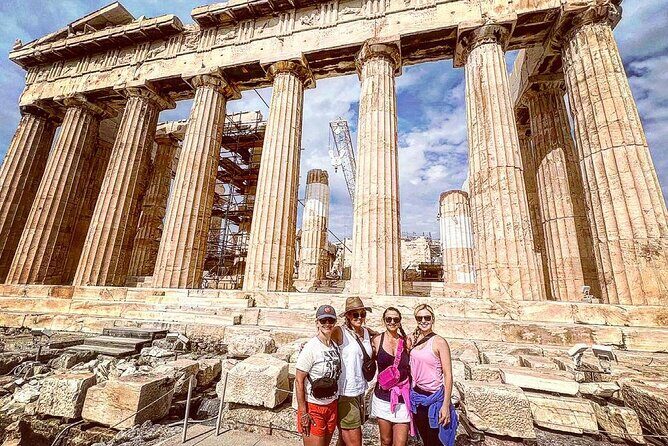
This tour is built for people who want the big “Athens must-sees” without feeling trapped in a crowded bus line. You’re moving through layers of the city: high marble on the Acropolis, then the old streets around Plaka, then the calmer coastal vibe at the Athens Riviera.
If you like stories that connect architecture to power and daily life, you’ll likely enjoy how the itinerary targets meaning, not just monuments. For example, the Parthenon stop isn’t treated as a photo op only. You’re also told it’s dedicated to Athena and framed through the period tied to early democracy. Later, the temples and market-era spots keep returning to the same theme: Athens as a place where religion, politics, and public life overlap.
The day stays realistic: it’s about 6 hours, with shorter stops built in so you’re not spending the whole time inside ticket lines. Still, think of it as “high density sightseeing,” so plan for walking on uneven ground and time spent waiting for the Changing of the Guard.
You can also read our reviews of more private tours in Athens


What You Pay for This Athens Private Tour (and What Costs Extra)

The listed price is $223.50 per group (up to 2) for around 6 hours. That group pricing is where the value starts to make sense: two people can split the cost of private transport and a dedicated English-speaking driver-guide, which is hard to match if you book a larger group tour.
But there are two extra budget items to understand up front:
- Entrance fees: the terms list €30 per person for archaeological sites/museums.
- Inside-site guidance: the package notes that a licensed tour guide to accompany you into archaeological sites is not included.
In plain terms: you’ll likely get solid commentary from your driver-guide during the ride and at outdoor stops, but when you want someone fully inside ticketed areas, you may need to confirm how that’s handled for your exact booking.
One more practical note: you should pre-book your Acropolis tickets. The tour itself includes a mobile ticket option, but the Acropolis area can be time-sensitive, and booking ahead helps keep your day on schedule.
Pickup That Feels Easy: Name Signs, Air-Conditioned Comfort, and Wi‑Fi
The pickup system is straightforward: you get collected by someone holding a sign with your name. That matters in Athens, where meeting points can get chaotic fast. One example of the experience that stands out: a guide picked up a guest at a remote hotel and arrived in a Mercedes, which gave the day a smooth start rather than a scramble.
Once you’re in the car, the practical setup is solid:
- bottled water
- air-conditioned vehicle
- Wi‑Fi on board
That might sound like basic comfort, but it’s a big deal when your itinerary includes sun-exposed stops like the Acropolis and Lycabettus Hill. It also gives you an easier way to keep up with maps and transport timing without draining your phone battery.
You’ll also want to remember the tour is private, meaning it’s only your group in the vehicle. With just up to 2 people, you can often move at your pace instead of matching a larger group’s slowest walker.
Acropolis Highlights: Nike, Parthenon Details, and the Real Meaning of Those Columns
The day’s backbone is the Acropolis area, and the itinerary uses its time well. You start with the Victory of Nike stop, described as a famous marble temple linked to prayers connected to Athenians and battle victory. Even if you don’t know the story already, this sets a tone: the Acropolis was never just about being impressive. It was about belief, identity, and public power.
The Parthenon stop: built in a tight window, finished with major artistry
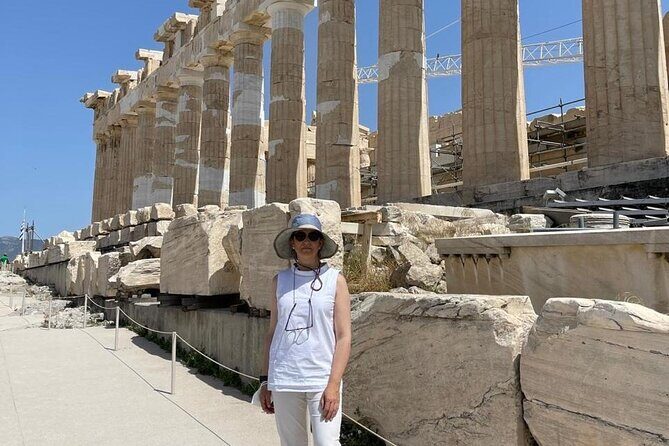
Next comes the Parthenon (about 1 hour, admission ticket not included). The tour context is specific:
- built in 447 B.C. and finished 438 B.C.
- statues associated with Phidias
- architecture linked to Iktinos and Kalikrates
- a “birthplace of democracy” framing
- 97 columns originally, with 65 left
- dedicated to Athena
Standing there with these facts in mind changes how you look at the building. Instead of seeing “a famous temple,” you start noticing how the scale and artistic choices were meant to communicate legitimacy. It also helps that your stop time is long enough to step back, scan the structure, and then return for closer details.
Possible drawback to consider: the Parthenon stop requires an admission ticket, and that’s one of the places where lines and timed entry can disrupt a tight day. Pre-booking matters.
- All Day Cruise -3 Islands to Agistri,Moni, Aegina with lunch and drinks included
★ 5.0 · 4,958 reviews





Temple of Olympian Zeus and Hephaestus: Ancient Power, Then a Temple That Survived
After the Acropolis core, you shift toward the broader Athens map and keep the focus on gods tied to civic identity.
Temple of Olympian Zeus: Hadrian-era scale with ruins you can still read
The Temple of Olympian Zeus stop is about 30 minutes (admission ticket not included). You get a quick historical framing:
- dedicated to Zeus in the second century
- associated with Hadrian, the Roman king
- 104 columns originally, with 15 left
- tied to festival tradition connected to the Panathinaia games dedicated to Athena
The numbers are useful. When you’re staring at what’s left, it’s easy to feel like you’re missing the whole thing. This kind of context helps you reconstruct the original massing in your mind, which makes the ruins more than just “leftover stone.”
The Temple of Hephaestus: a calmer stop with a specific kind of importance
Between stops, you’ll also visit the Temple dedicated to Hephaestus and Athena Pronoia (the itinerary describes it as the only monument in a perfect situation). It’s tied to weapons and offerings: the Athenians reportedly used it for buying weapons and making small statues to honor Athena.
This stop can be a relief after the big-ticket Acropolis area. It’s the kind of place where the mood changes. Instead of grand views, you get a clearer sense of how everyday religious devotion connected to practical life.
Plaka and Adrian’s Arch: Marbled Streets and a City Split in Two
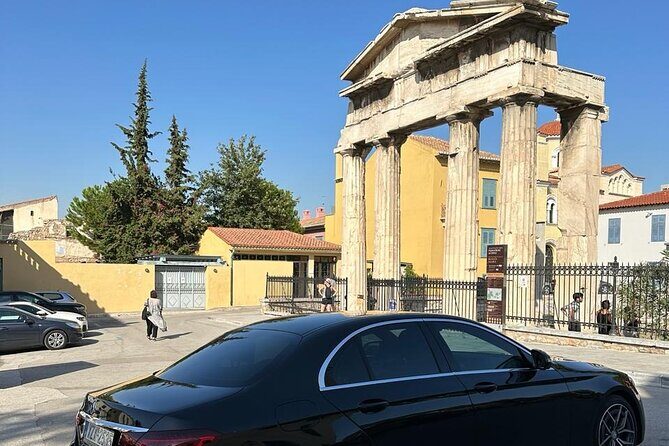
You then move into the old heart of Athens.
Plaka: the ancient city feel, with a driving history lesson
The itinerary includes Plaka for about 20 minutes and notes it as ancient city material dating back to the 7th century B.C., described as made out of marble. You’ll do a driving tour here with history explanations, which is a smart compromise. Plaka can be busy on foot, but from the right angle and pacing, you still get a feel for the neighborhood’s layers.
Adrian’s Arch: a symbol of honoring a ruler and a split identity
There’s also an arch stop tied to Adrianos (Adrian). The itinerary frames it as an arch built to honor Adrian for finishing the Temple of Zeus, plus a mention of the town of Theseus and the town of Adrian.
That’s a useful way to connect monuments with city planning. In Athens, you’ll constantly see how different eras rebranded space to fit their own narratives. A quick stop at an arch like this can make the rest of the city feel less random.
The Changing of the Guard Ceremony: Evzones at the Tomb of the Unknown Soldier
This is one of the most iconic segments of the day, and it’s scheduled for about 20 minutes.
You’ll watch the Changing of the Guard Ceremony at the Tomb of the Unknown Soldier. The tour explains that the guards are called Evzones, meaning armed soldier, and the ceremony happens hourly.
What I like about this stop is that it’s structured and time-based. It gives your day a “anchor moment,” something you can build around instead of chasing viewpoints all afternoon.
What to consider: ceremony viewing can involve waiting. You might not always get a front-row view depending on where you position, but it’s usually easy to find a workable spot if you listen to your guide’s timing cues.
Panathenaic Stadium, Stoa of Attalos, and the Ancient Agora: Where Public Life Happened
The itinerary keeps rolling through the places where Athens felt like a living city, not just a museum.
Panathenaic Stadium: marble seating and Olympic origins
Next is Panathenaic Stadium (about 30 minutes, admission ticket free). The tour offers the standout facts:
- started to be built in 335 B.C.
- tied to the end of the first marathon
- capacity around 65,000
- made of marble
- Panathenaia Games there
- the modern Olympics starting in 1896 A.D., connected to George Averof and Baron Pierre de Coubertin
Even if you’ve heard parts of this before, having the names together helps. It connects ancient athletic culture to the modern idea of Greece as a symbol for international sport. It’s also one of those places where you can picture the crowds because the shape still reads clearly.
Stoa of Attalos: a market-world with hero statues
The Stoa of Attalos stop is about 20 minutes (admission ticket not included). It’s described as a place dedicated by King Attalos of Pergamos to the Athenians, tied to a fleet market, plus featuring 10 statues of heroes.
A stoa isn’t just an architectural style here. It’s a reminder that commerce, storytelling, and community mingled in covered public space. If you’re the type who likes “what people did all day,” this stop fits your interests.
Ancient Agora: Temple of Theseus and a library tied to philosophers
Then comes the Ancient Agora of Athens (about 30 minutes, admission ticket not included). You’ll hear references to:
- the Temple of Theseus
- Andrian’s Library (the itinerary says it was the second largest library in the world after Alexander the Great’s)
- the idea that Greek philosophers walked there
This is where the tour’s storytelling approach pays off. When someone connects the Agora to thinkers and daily movement, it feels less like “ruins again” and more like “a city center that still shaped how people thought.”
Lycabettus Hill and Vouliagmeni: Views That Change Your Athens Picture
After the dense ancient stops, the tour shifts toward viewpoints and scenery.
Lycabettus Hill: Athens from above and Saint George Church
Lycabettus Hill is about 20 minutes (admission ticket free), and it’s pitched as the highest point in Athens. The itinerary also includes Saint George Church.
This is a classic good-move stop. From high ground, Athens stops looking like one long list of monuments and starts looking like a city with structure. You get an idea of where the neighborhoods sit and how the historic core fits together.
Vouliagmeni: a natural lake for photos on the Riviera
Finally, there’s Vouliagmeni (about 20 minutes, admission ticket free). The itinerary describes it as a natural lake made roughly 2,000 years ago, with photo-driven scenic driving from Athens Riviera.
This isn’t a museum stop. It’s about changing the pace and giving you the “we’re in Greece” visual reward: blue/reflective water, coastline mood, and the sense that Athens isn’t only stones and temples.
How to Make This Day Feel Smooth (Not Exhausting)
With an itinerary this packed, your success comes down to preparation. Here’s what helps:
- Pre-book Acropolis tickets so the Parthenon area doesn’t become your day’s bottleneck.
- Wear comfortable walking shoes. Even with short stops, you’ll do enough ground time to justify good soles.
- Plan for heat and sun. Lycabettus Hill in particular is exposed, and bottled water helps, but water alone doesn’t stop fatigue.
- Keep expectations clear on guidance inside sites. Entrance fees are listed, and a licensed tour guide to accompany you inside archaeological sites is not included in the terms. If you want someone to explain artifacts inside museums or ticketed areas, ask how your guide plans to handle it.
Who This Tour Suits Best
This is a great fit if you want:
- a private Athens day with only your small group
- a single route that balances Acropolis highlights with Agora/stadium landmarks
- the Changing of the Guard experience
- a scenic end toward the Riviera and Vouliagmeni
It’s less ideal if you only want one or two major stops and prefer slow pacing. This day is designed to cover a lot of ground in a single working-style sightseeing block.
Should You Book This Private Athens Tour?
Yes, if you want a well-sequenced highlights route with private transport and a guide who can connect the monuments to the people and politics behind them. The strongest reason to book is the structure: you hit the Acropolis, then pivot to market and civic sites, then close with viewpoint and coast energy. The experience also scores high for guide quality, including accounts of Konstantinos bringing passion, taking guests to streets buses can’t reach, and setting up a local-feeling lunch moment.
I’d book it especially if you’re coming for the first time and you like having a plan you can trust. If you’re traveling with someone who hates lines, the private setup helps you move with fewer friction points. If you’re strictly budget-focused and want to minimize extra costs, remember the listed €30 per person entrance-fee estimate and the potential for extra guidance inside ticketed areas.
FAQ
FAQ
How long is the Athens Private Tour Acropolis and Highlights & Athenian Riviera?
It’s listed as approximately 6 hours.
What does the price include for a group of up to 2?
The price is $223.50 per group (up to 2) and includes pickup offered, private transportation, a mobile ticket, bottled water, Wi‑Fi on board, and an English-speaking driver-guide.
Are entrance fees included?
No. Entrance fees for archeological sites/museums are listed as €30.00 per person, and some stops are marked as admission ticket free while others are not included.
Do I need to pre-book Acropolis tickets?
Yes. The tour notes that you should pre-book your Acropolis tickets.
Is the tour fully private?
Yes. It’s a private tour/activity, and only your group participates.
Do you offer airport pickup?
Airport pick up is available but comes with an additional cost of €50.00 per booking.
What stops are included during the day?
The tour includes the Victory of Nike, Parthenon, Temple of Olympian Zeus, a stop at the Temple of Hephaestus and Athena Pronoia, Plaka, the Changing of the Guard ceremony, Adrian’s Arch area, Panathenaic Stadium, Stoa of Attalos, Ancient Agora, Lycabettus Hill, and Vouliagmeni.
What is the cancellation policy?
Free cancellation is available. You can cancel up to 24 hours in advance for a full refund.
Is the tour offered in English?
Yes, it’s offered in English.



More Private Tours in Athens


More Tours in Athens

More Tour Reviews in Athens
- All Day Cruise -3 Islands to Agistri,Moni, Aegina with lunch and drinks included
★ 5.0 · 4,958 reviews