REVIEW · ATHENS
Athens Private Walking Food Tour With Secret Food Tours
Book on Viator →Operated by Secret Food Tours · Bookable on Viator
Food walks in Athens come with stories. This private 3-hour loop blends Ottoman- and Roman-flavored bites with a steady stroll from Monastiraki toward Hadrian’s ruins, guided by locals like Ilias and Thalia. I like the way these guides slow down when needed, especially when different people move at different speeds.
The real pull is the food. You’ll go from koulouri and tiropita through fresh seafood, tzatziki, fava purée, saganaki cheese, olives and olive oil tasting, then end with bread galaktoboureko plus a Secret Dish. Even if you think you know Greek food, you’ll get the version you actually eat in daily life.
One thing to weigh: the $397.59 price is a premium, and transportation isn’t included. Also, the plan and menu can change with weather and what’s available, since the tour requires good conditions and keeps flexible spots in the schedule.
In This Review
- Key things I’d zero in on before you book
- Why this Athens private food walk feels local
- Monastiraki start to Avissinias vintage square: where browsing turns into your first bites
- The seafood and market stop: olives, olive oil, tzatziki, and the real backbone of the meal
- Hadrian’s Roman ruins stop: eating with a 132 CE timeline
- Wandering the older neighborhood near the Acropolis: labyrinth streets and neoclassical corners
- The included Greek menu: what each bite is really doing for you
- Price and value: is $397.59 actually fair here?
- How the 3-hour pace works (and who it suits best)
- Small practical tips so you enjoy every stop
- Should you book this Athens Private Walking Food Tour with Secret Food Tours?
- FAQ
- How long is the Athens private walking food tour?
- Where does the tour start?
- Is this tour private?
- What’s included in the price?
- Is transportation included?
- Does the tour run in any weather?
Key things I’d zero in on before you book

- A guide who adapts: Ilias and Thalia are repeatedly praised for pacing, patience, and keeping everyone in the group with the right food turns.
- All food is included: lunch plus multiple tastings, not just one snack and a pat on the back.
- A real mix of flavors: seafood, vegetables, olives, and dairy-forward plates, ending with a sweet that’s very Greek.
- History you can walk beside: you hit Roman ruins tied to Hadrian, then wander the older lanes around the Acropolis slopes.
- Food in places you’d miss on your own: you’re pointed toward small spots that don’t scream restaurant from the sidewalk.
Why this Athens private food walk feels local
This is Athens food the way locals experience it: eat as you go, keep walking, and let your guide connect the plate to the place. The big idea here is that Greek food didn’t come from one single moment. It’s shaped by long layers of influence, including the Ottoman and Roman worlds, and you feel that in how dishes evolved and how markets operate.
I also like that it’s private. With only your group, the route and stops can fit your pace better than a large group cram session. In the reviews, Ilias gets named for being extremely patient with mixed walking speeds, and Thalia gets credit for showing people her own neighborhood rhythms—less sightseeing-from-a-distance, more daily-life Athens.
The tour stays focused. You’re not asked to play museum tour guide. Instead, each stop has a reason: a shopping street vibe, a market pull, a Roman-history pause, and then a neighborhood wander where the streets do the talking.
You can also read our reviews of more tours and experiences in Athens.


Monastiraki start to Avissinias vintage square: where browsing turns into your first bites
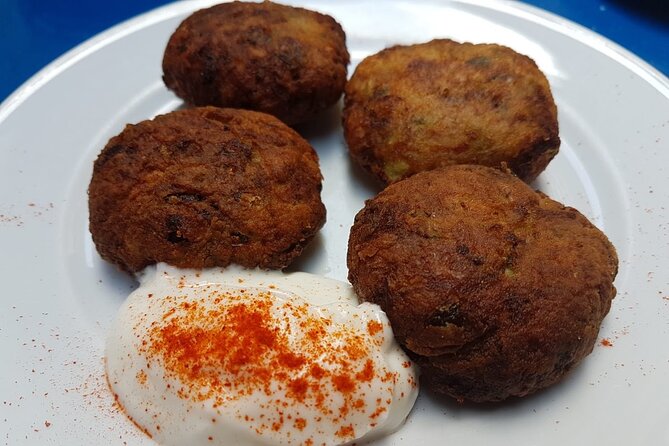
You begin at the Monastiraki Flea Market area, near Ifestou Street. Monastiraki is one of those Athens neighborhoods where you can feel the city’s “always moving” energy. It’s not just tourist shopping either; it’s a real place where people browse, haggle, and grab quick food between errands.
The first tasting area is described as a principal shopping district with clothing boutiques, souvenir shops, and specialty stores. If you like bargains, this is where you’ll feel that energy. And nearby, Avissinias vintage square is where antiques and precious items show up. Think of this stop as the setup: you get your bearings fast, then your first snack course gives you a taste of the kind of traditional bread and pastry Athens treats as everyday comfort.
What to expect here:
- You’ll walk through a shopping-and-hustle environment.
- Your guide will connect what you see (goods, street life) with what you’ll eat first.
- You’re getting warmed up for the market crawl that comes next.
Possible drawback: because this is a shopping area, you may deal with more foot traffic than later stops. That’s exactly why the “private” format matters—your guide can help keep your group moving as a unit.
The seafood and market stop: olives, olive oil, tzatziki, and the real backbone of the meal
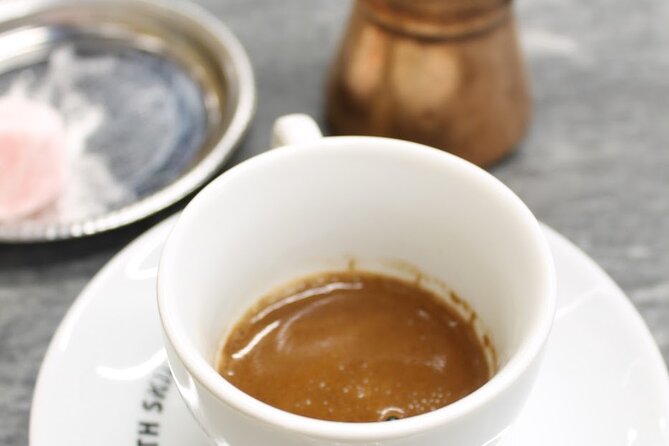
The second stop focuses on an active market with locally sourced seafood, meats, fruits, and vegetables, plus street eats. Markets are where Greek food becomes practical. You see ingredients before they’re plated, and that makes later dishes easier to understand.
This is where the menu hits a satisfying variety:
- Koulouri (athenic breads) gets you started with an Athens classic bread choice—portable, sesame-friendly, and made for walking.
- Fresh seafood is the main event, and it matters that it’s paired with the rest of the meal, not treated like a separate show.
- Tzatziki comes in as a cool, herby counterpoint—creaminess balanced with tang.
- Fava purée adds a legume-forward, silky texture. If you’ve only had fava as a side dish, this stop helps you see it as comfort food.
- Olives and olive oil tasting turns what could be a quick nibble into a small education. Greek olives are not one-note; you get differences in taste and how the oil itself carries flavor.
Then there’s saganaki cesaria in the included list. Saganaki is typically associated with fried cheese, and in a tour like this it’s the kind of hot, savory bite that makes people stop talking for half a second and just eat.
Why this stop is valuable: markets teach you Athens’ food logic. You learn how salads, legumes, dairy, bread, and seafood work together. The best part is that you don’t have to choose restaurants. Your guide brings you to a sequence that flows.
Small consideration: market days can vary based on what’s available. The tour notes that the itinerary and menu may change with location availability and weather. Don’t assume every dish will be identical at every booking date, even though the core included items are listed.
Hadrian’s Roman ruins stop: eating with a 132 CE timeline
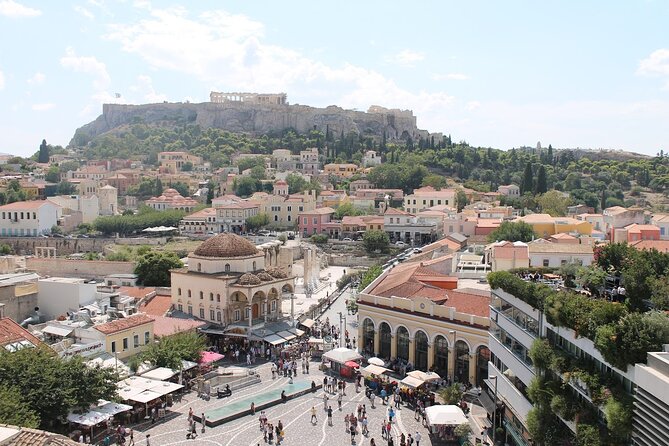
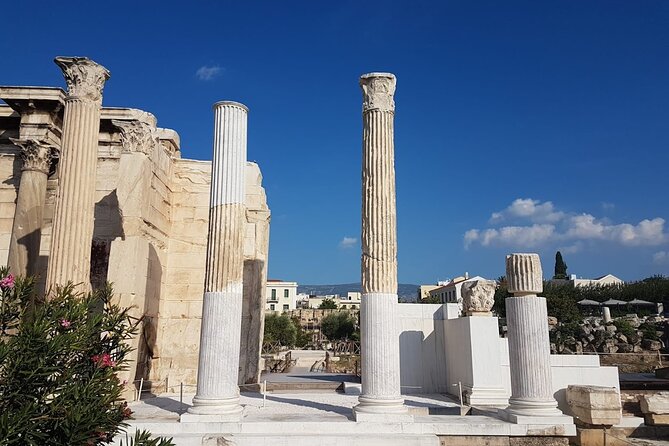
After the market energy, you shift to a quieter kind of awe. One stop is the Roman ruins of a library and cultural complex constructed in 132 CE by Emperor Hadrian.
This is a strong contrast stop. You go from smelling food and scanning stalls to standing near stone that outlasted empires. The link is not that you’ll learn Roman cookery (there’s no claim like that here). The link is the deeper point: Athens food history didn’t develop in isolation. It moved through centuries of rule, trade, and cultural contact. Seeing a Roman-era complex makes those layers feel real.
What I like about this part of the route:
- It breaks up the meal pace so you’re not only eating and walking.
- It anchors the tour theme: Greece as a food-and-culture crossroads.
- It gives you a “pause” moment—useful if you like taking photos or just resetting.
Practical note: ruins mean uneven ground. You’ll be walking on real city surfaces. Bring shoes you’re comfortable in for a couple of hours, not just street sandals that feel cute in pictures.
Wandering the older neighborhood near the Acropolis: labyrinth streets and neoclassical corners
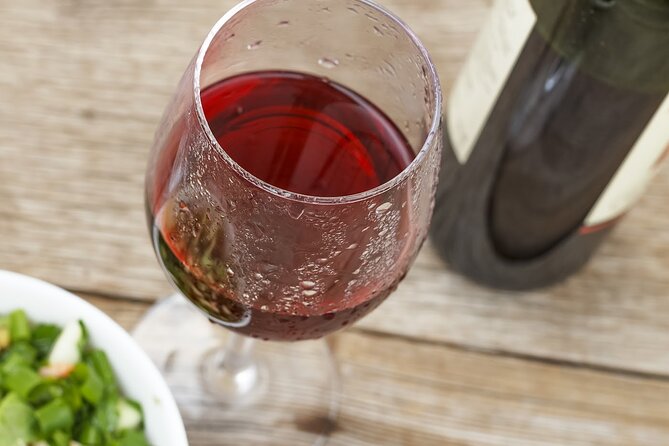
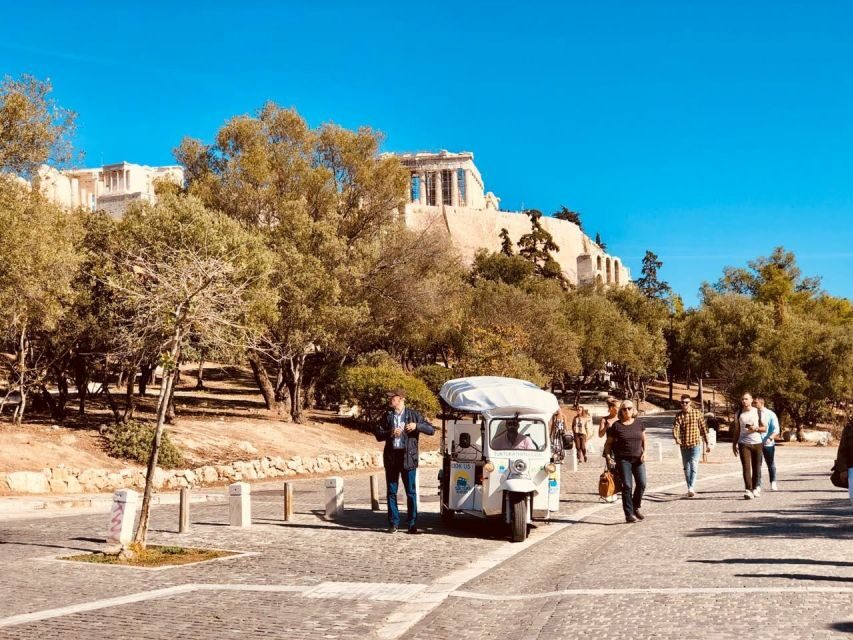
The final walking section heads into the old historical neighborhood clustered around the northern and eastern slopes of the Acropolis. Expect labyrinthine streets and neoclassical architecture.
This is where the tour earns its “Secret” reputation in a practical way. Once you leave the market and ruins, you’re not chasing big-ticket landmarks. You’re moving through smaller lanes where the city feels more human-scaled. And that’s ideal for food, because this is the part of Athens where you can stumble into the kind of eat-now spaces that locals actually use.
Why this stop works even if you’re not a hardcore history person:
- You get the atmosphere between major sites.
- Your guide keeps tying the food back to place, so the meal doesn’t feel random.
- You’re more likely to see a side of Athens that doesn’t revolve around one view corridor.
In the reviews, Thalia is praised for bringing people to places to take photos while still eating well. That combo matters: you can enjoy the neighborhood textures without turning the entire meal into a sightseeing sprint.
- All Day Cruise -3 Islands to Agistri,Moni, Aegina with lunch and drinks included
★ 5.0 · 4,958 reviews
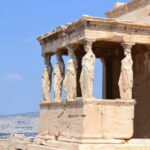





The included Greek menu: what each bite is really doing for you
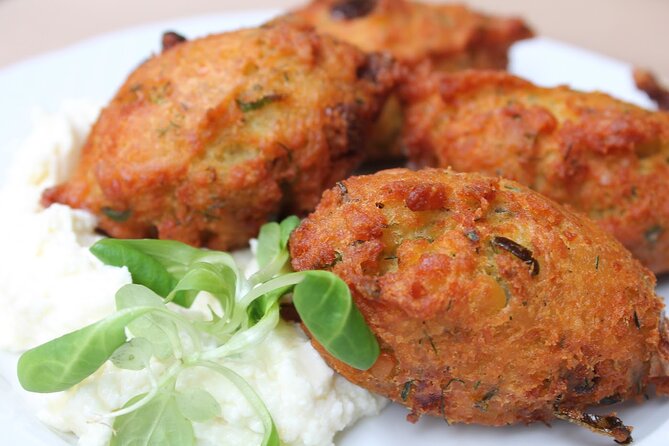
The price includes lunch and a lineup of classics and variations that cover a full spectrum: bread, savory pastries, seafood, dairy, legumes, olive products, and dessert.
Here’s how the included list reads as a smart structure for taste:
- Koulouri (athenic breads): an easy, walkable starter that sets the Athens tone.
- Tiropita: a traditional pastry that’s all about cheese comfort. It also gives you a savory baseline before the market hits.
- Fresh seafood: anchors the meal to Greece’s coastline identity.
- Tzatziki: cooling and tangy, the kind of sauce that makes every bite feel more complete.
- Fava beans purée: creamy legume flavor with staying power.
- Saganaki cesaria: a hot, indulgent moment that adds contrast to the cooler items.
- Olives and olive oil tasting: a “taste and learn” segment that makes Greek ingredients feel less mysterious.
- Bread galaktoboureko dessert: sweet, custard-like, and distinctly Greek.
- Our delicious Secret Dish: the wild card. The fact that it’s listed as a Secret Dish is your hint that you shouldn’t overthink it—just leave room for a surprise.
One more detail worth noting: since the tour says the itinerary and menu can change based on availability and weather, you should think of this as a framework, not a factory recipe. You’ll still be fed properly, with the included types of dishes, but the exact sequence can shift.
Price and value: is $397.59 actually fair here?
At $397.59 per person, this isn’t a budget snack walk. But it can be good value if you look at what’s included and why a private format costs more.
Here’s where the math feels reasonable:
- Food is included: lunch and multiple tasting items. That means you’re not paying twice—once for the tour and again for meals.
- You get variety: seafood, vegetables/legumes, olives and olive oil, pastry, and dessert. One normal restaurant meal rarely covers all of that.
- A local guide shapes the route: reviews repeatedly highlight Ilias and Thalia for knowledge, warmth, and patient pacing. In Athens, a guide can save you time hunting for the right kind of places.
- You avoid the big-crowd restaurant problem: the tour is positioned as a way to experience Athens’ culinary history without getting stuck in the most crowded tourist corridors.
What you should keep in mind:
- Transportation isn’t included. If you’d otherwise spend money on getting between stops, you’ll want to plan for that separately.
- You’re paying for a private experience, not a generic group walk. If you like social tours where you meet strangers, this might feel more expensive than you want.
My rule of thumb: if you want to eat well with minimal decision-making, and you’re happy paying for a guide-driven route, this price can make sense. If you’re the type who prefers solo wandering and picking your own tavernas, you may get a different kind of value elsewhere.
How the 3-hour pace works (and who it suits best)

The tour runs about 3 hours. That’s long enough to feel like a meal and a walk, but short enough that you’re not stuck for half a day.
From the experience descriptions and review highlights, the key advantage is pacing control. One review specifically calls out Ilias being patient with family members and ensuring nobody was left behind, even with different walking speeds and taste preferences. Thalia also gets described as attentive and welcoming, including making room for photo stops and keeping the flow on rainy days.
So who it suits best:
- You want a structured food experience without spending your day making restaurant choices.
- Your group includes people with different comfort levels for walking.
- You like traditional Greek flavors, plus ingredients like fava and olive oil that go beyond the usual “order-salad-and-souvlaki” plan.
- You enjoy when food connects to culture and specific places (market, ruins, and older streets).
Who might hesitate:
- If weather is unpredictable for your dates, remember the tour requires good conditions. It also notes that locations and the menu can change, so you should keep flexible expectations.
Small practical tips so you enjoy every stop
These are the kinds of details that make the tour feel easy instead of rushed:
- Wear comfortable walking shoes. You’ll cover multiple areas and likely uneven surfaces near historic sites.
- Come hungry. The included lineup is substantial: pastry, multiple savory bites, plus dessert.
- Pace yourself on sweets. Galaktoboureko and the Secret Dish come later, so leave room even if the first bites feel irresistible.
- If you have dietary needs, plan to communicate them in advance. The tour lists a specific menu, and it also states changes can happen due to availability and weather, so clear communication helps your guide adjust when possible.
- Bring a light layer. Since the tour is weather-dependent and you’ll be outside, layers keep you comfortable.
Should you book this Athens Private Walking Food Tour with Secret Food Tours?
I’d book it if your goal is simple: eat a strong spread of traditional Greek food in a route that explains how Athens shaped its flavors. The fact that the menu includes lunch, pastry, seafood, tzatziki, fava, olive oil tasting, saganaki, and a classic Greek dessert means you’ll leave with a clearer picture of Athenian cuisine than you’d get from one restaurant visit.
I’d think twice if you’re hunting for a low-cost snack session or you already know you want to design your own eating plan from scratch. Also, the weather requirement and the note that the menu can change means you should keep flexibility in your schedule.
If you’re paying for a private experience, you’re paying for less stress and more attention from the guide. With Ilias and Thalia repeatedly praised for pacing and warmth, that attention seems to be the real product—not just the food.
FAQ
How long is the Athens private walking food tour?
It’s about 3 hours.
Where does the tour start?
It starts at Monastiraki Flea Market, Ifestou, Athina 105 55, Greece.
Is this tour private?
Yes. It’s a private activity, and only your group will participate.
What’s included in the price?
Food is included, including lunch and items such as koulouri, tiropita, fresh seafood, tzatziki, fava purée, saganaki, olives and olive oil tasting, bread galaktoboureko, and a Secret Dish.
Is transportation included?
No. Transportation is not included.
Does the tour run in any weather?
The tour requires good weather. If canceled due to poor weather, you’ll be offered a different date or a full refund.

More Tour Reviews in Athens
- All Day Cruise -3 Islands to Agistri,Moni, Aegina with lunch and drinks included
★ 5.0 · 4,958 reviews