REVIEW · ATHENS
Best of Greece: 7-Day Tour to Real Greece of the Peloponnese, Delphi and Meteora
Book on Viator →Bookable on Viator
Greece by the window, not the crowd.
This 7-day, private-style road trip strings together the big names of Peloponnese and finishes with Delphi and Meteora, plus plenty of real-town time for coffee, lunch, and strolls. You start with sites tied to myths and empires, then shift into coastal villages, Byzantine layers, and those otherworldly Meteora rocks.
I especially like the way meals are built into the day (lunch seven times and breakfast six times), so you don’t waste your vacation hunting for food. And I like the comfort factor: excellent hotel stays are part of the package. One thing to plan for: entrance fees are not included (budget about €120 per person, plus anything optional).
In This Review
- Key points at a glance
- What makes this route feel like real Greece
- Price and what you truly pay for (and what’s extra)
- Day 1: Corinth Canal, Mycenae, Nafplio, Epidaurus—myth meets the postcard
- Day 2: Parnon coast to Monemvasia’s medieval rock town
- Day 3: Mani Peninsula, caves, Mystra, and the Leonidas statue stop
- Day 4: Olympia ruins plus Arcadia villages for a slower landing
- Day 5: Caves of the Lakes, Kalavrita’s train ride, and Galaxidi seaside evenings
- Day 6: Delphi with the museum, then Meteora at sunset if timing allows
- Day 7: Great Meteoron + another monastery, then Thermopylae and Athens in one arc
- Hotels and included meals: why it matters on a packed week
- About the guide: communication and the human touch
- Who should book this tour (and who should think twice)
- Should you book this Peloponnese, Delphi, and Meteora tour?
- FAQ
- Are entrance fees included?
- Is pickup included, and where do they pick you up?
- What meals are included?
- Do I need a licensed guide?
- How much walking and physical effort should I plan for?
- What is the Meteora plan on the last day?
- What’s the cancellation policy if plans change?
Key points at a glance
- Private group flow: only your group participates, with pickup from Athens hotels/Airbnb, the airport, Piraeus/Nafplio port, or Hydra (extra cost may apply).
- Big historical hits, but paced: Mycenae, Epidaurus, Olympia, Delphi, and Meteora plus mid-day village breaks.
- Food is not an afterthought: breakfast most mornings and a full lunch routine each day.
- Monastery day is flexible: you’ll visit two Meteora monasteries that are open on the day.
- A strong driver-guide reputation: in past trips, guides like Theo (and drivers like Panayiotis) have been praised for timing, safety, and great restaurant choices.
What makes this route feel like real Greece
This tour is built around a simple idea: don’t just see ruins—also see the Greece that sits between them. You spend a full week in the Peloponnese by car, which means you can stop for coffee by the water, wander medieval lanes, and actually notice how the region changes from coast to mountains to stone villages.
Then the trip turns a corner with Delphi and Meteora. One day you’re walking among temples and stadiums of ancient Olympia; the next you’re standing at Delphi’s sacred precinct and watching how the mountains frame the oracle legend. Meteora follows, with monasteries perched high above Kalampaka—views you’ll feel in your chest even if you’re not a big church-and-history person.
You can also read our reviews of more tours and experiences in Athens.


Price and what you truly pay for (and what’s extra)
At about $5,046.26 per person for a 7-day run, this isn’t a budget bus tour. The value is in the “less hassle” package: door-to-door pickup options, a mobile ticket, bottled water, an in-car tour information booklet, and—most importantly—breakfast and lunch included (breakfast six times, lunch seven times).
Hotels are another major chunk of the price. The tour states you’ll get the best accommodation available, even including a 5-star unique hotel at one or more locations, depending on where you are on the route.
The big extra you should budget for is straightforward: site entrance fees are not included and are estimated at €120 per person. Many of the highlights on this route have paid admissions, and caves/rail options can add more if you choose them.
Day 1: Corinth Canal, Mycenae, Nafplio, Epidaurus—myth meets the postcard
Day 1 gives you that classic Greece starter combo: a quick geographic jaw-drop, then some of the most famous ancient sites in the region, then a gorgeous town to land in.
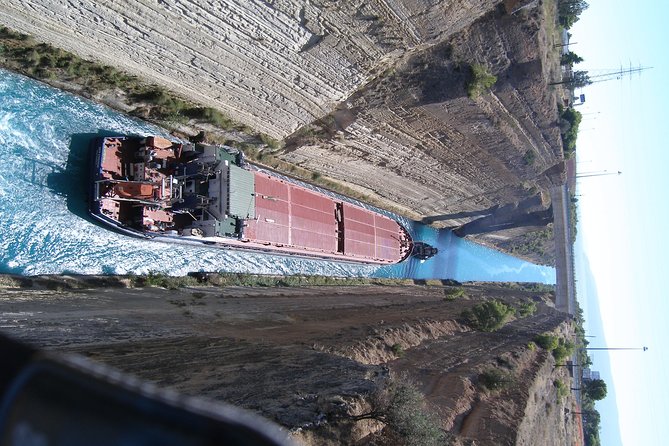
- Corinth Canal: it’s a short stop, but it’s worth it because it really does explain why the Peloponnese can feel like its own world. You’re separating the Gulf of Corinth from the Saronic Gulf—meaning: miles of history tied to trade, travel, and control.
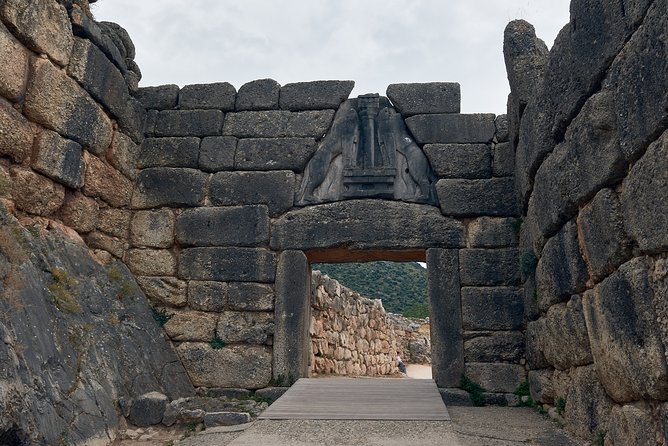
- Mycenae: a UNESCO site linked to King Agamemnon and the Mycenean civilization. This is your first real “walk among big stones” moment, plus a museum option that helps connect the ruins to the people who built them.
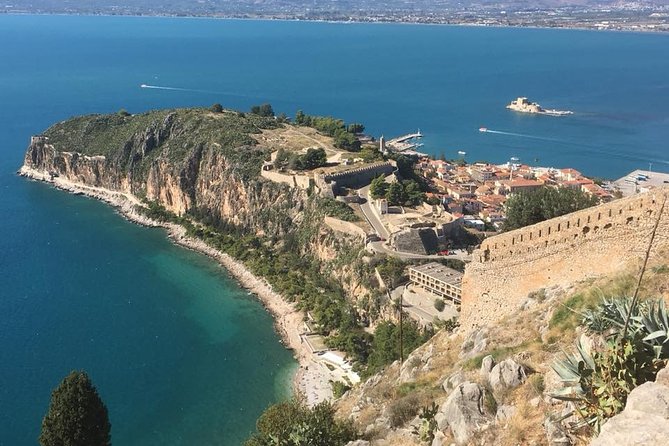
- Nafplio: you get real time here—two hours is enough to wander the old town vibes, enjoy an easy pace, and start understanding why so many people fall for this part of Greece.
- Palamidi Castle: if you like views, you’ll probably find the 999 steps (and the climb) easier when you know the reward is the old-town panorama.
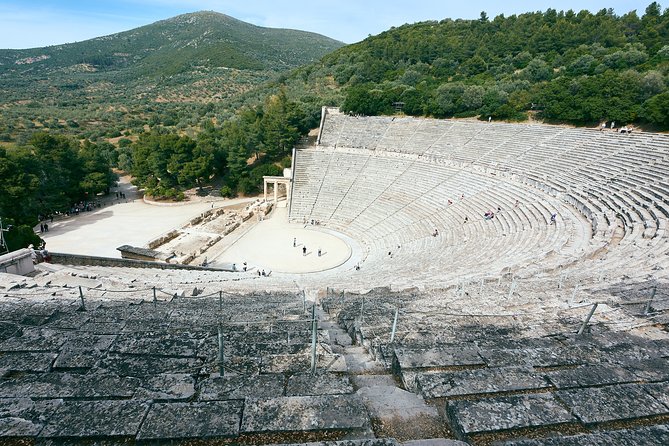
- Epidaurus: this is the theater stop—ancient, unusually well preserved, and famous for its acoustics. Even if you don’t plan to test the sound with your own voice, the setting makes it feel alive.
- Ancient Corinth (optional): if you want more ancient-city overlap, this adds context about Corinth as a crossroads city.
- Nafplio port evening (optional): a free transfer drop-off/pick-up so you can do dinner and a seaside wander without worrying about transport.
Best for your energy level: if you can handle a solid day of driving plus a few active segments (castle steps and site walking), you’ll love Day 1. If you want to move slowly, you may choose only the most important stops and skip optional additions.
Day 2: Parnon coast to Monemvasia’s medieval rock town
Day 2 is where the trip starts feeling less like a checklist and more like a road trip with character.
You leave Nafplio and enjoy the coastline after the drive begins, then head into the Parnon mountain range. The plan includes small, practical breaks—like coffee next to the ocean and lunch at a mountain village—so your day isn’t only about monuments.
Highlights include:
- Tyros: not just a stop sign. You get coastal coffee by the water, then move into the climb.
- Leonidio: known in Greece for its eggplant (a beloved sweet aubergine), plus you get a short reset in a town that sits dramatically between red rock and mountain terrain.
- Monastery of Panagia Elona: a cliff-hanging monastery with views over the red rock setting.
- Kosmas: an authentic lunch place under huge plane trees in the village square. The key value here is that you’re eating with locals in a normal village rhythm, not in a theme-park dining room.
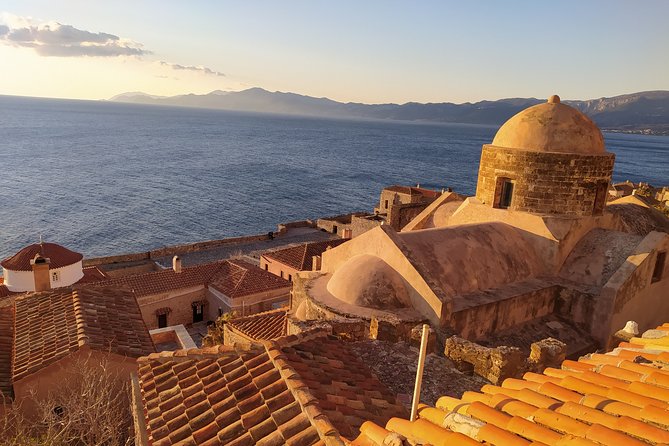
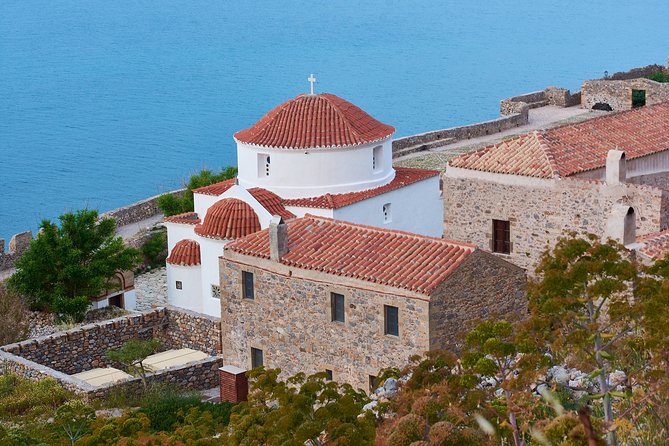
- Monemvasia Castle town: the big finale. Monemvasia is built into a sea rock, and you’ll get time to wander the medieval lanes and stone spaces.
One practical note: Monemvasia is famously photogenic and can feel like a place you could spend a whole day. This tour gives you dedicated time, but it’s still smart to keep comfortable shoes and be ready for uneven stone.
Day 3: Mani Peninsula, caves, Mystra, and the Leonidas statue stop
This is a powerful day because it stacks different Greece in a single sweep: wild peninsula terrain, pirate-era stone towns, Byzantine layers, then Sparta-area symbolism.
- Mani Peninsula: described as wild and beautiful—and that’s exactly the feel. You’re moving through rugged, steep-edged regions where Greece looks tough in the best way.
- Caves of Diros (optional): experienced from an expertly guided boat with formed rock features and cave lighting. If you’re the sort of person who likes nature scenes that feel a little unreal, this one often lands well.
- Areopoli: a stone-built town historically shaped by threats from pirates—so the architecture and layout make more sense when you know the background.
- Mystras (Mystra) archaeological site (optional admission): this is the Byzantine castletown above Sparta, with views across the Laconic olive groves. If you like layers of history, this stop connects ancient Greece to later Christian worlds.
- Vathia (optional alternative to Diros caves): an abandoned village area that’s heavily photographed for its viewpoints. You’re not going to “fix history” by choosing it, but you will get a very specific Mani atmosphere.
- Leonidas Monument: a quick stop, but with instant meaning. The statue references Thermopylae and the famous defiant line often translated as Molon labe.
Physical reality check: this day includes optional cave experiences and a lot of road time. You should be fine if you’re in “moderate physical fitness” shape, but if you know you struggle on stairs or long walks, plan which options you want to spend energy on.
- All Day Cruise -3 Islands to Agistri,Moni, Aegina with lunch and drinks included
★ 5.0 · 4,958 reviews



Day 4: Olympia ruins plus Arcadia villages for a slower landing
Day 4 goes for the heart of classical Greece and then softens the edges with mountain village time.
- Archaeological Site of Olympia: home of the original Olympic Games (founded in the 8th century B.C.). You’ll see extensive ruins including training areas, a stadium, and temples dedicated to Hera and Zeus.
- Olympia Museum: this is where you’ll likely feel the most “wow” per hour. The museum holds sculptures connected to the temple of Zeus and famed pieces like the Hermes statue by Praxiteles (as referenced in the tour description).
- Arcadia: then you transition to overnight stone-built villages in the mountains. This matters because it changes your perspective. Instead of only looking down at history, you’re living beside it—at least for a night or two.
- Dimitsana (evening): one of the most beautiful stone towns in central Peloponnese. It’s a popular destination year-round, and you get a chance to wander and reset.
Why this pairing works: Olympia can become heavy if you’re only thinking about stadiums and dates. Arcadia slows you down, so the classical stuff sticks without burning you out.
Day 5: Caves of the Lakes, Kalavrita’s train ride, and Galaxidi seaside evenings
This is the day for nature and views, with a signature ride that makes the scenery feel engineered to respect it.
- Kastria Cave of the Lakes (optional admission): the “Cave of the Lakes” has its own character, with unusual galleries and rock formations. If you love caves, you’ll appreciate that it’s not just one plain tunnel.
- Kalavrita: this is your lunch town. After lunch, you explore on foot before or after. It’s a resort area all seasons, so it’s a comfortable base.
- Odontotos Rack Railway (optional admission): a historic rack railway connecting Diakopto to Kalavrita. The ride is described as fitting into the gorge with construction materials from the area—stone and wood—so it doesn’t feel like it bulldozed the natural setting.
- Nafpaktos (optional quick coffee + legs): a short stop by the water and the Venetian castle, depending on time. This is the kind of stop that keeps you from feeling locked into pure driving mode.
- Galaxidi: early evening arrival at the coastline. You get time next to the water, with a chance to watch daily life rather than only visiting a monument.
If you’re choosing between options: caves and rail both cost extra, but they add “memory moments,” not just “checked boxes.”
Day 6: Delphi with the museum, then Meteora at sunset if timing allows
Day 6 is built around Delphi, and it’s the best kind of plan: you get both museum context and the sanctuary site itself.
- Delphi Archaeological Museum: you’ll see major collections tied to the Delphic sanctuary and its oracle. The description specifically calls out sculptures and items like architectural fragments and the famous Charioteer and Sphinx of the Naxians.
- Delphi Ancient Town: the sanctuary where the oracle of Apollo spoke. You’re walking within a place framed by the mountains, where the story of the omphalos (the navel of the world) is part of the setting.
- Tholos of Athena Pronaia: you get the chance to see a photo-famous Delphi spot that many visitors miss, which is a smart way to make the time feel more complete.
- Amfissa: lunch in a less beaten-path area with authentic choices.
- Meteora (optional first visit at sunset): if there are no delays, you may get an extra first look at monasteries’ area at sunset, possibly including St Stephan’s if time permits.
Real value here: museum first helps the ruins make sense fast. You’re less likely to wander Delphi feeling like you’re guessing.
Day 7: Great Meteoron + another monastery, then Thermopylae and Athens in one arc
This is the day you’ll remember for the Meteora experience itself: two monasteries on giant rock pillars, plus the famous Thermopylae stop and a return to central Athens.
- Great Meteoron Monastery: described as the oldest, biggest, and most important among the preserved monasteries. You’ll spend about an hour here.
- Varlaam Monastery: features historical notes tied to an ascetic named Varlaam and later construction efforts.
- Holy Trinity Monastery: dates given between 1458 and 1476, and it’s noted as one of the most photographed.
The tour also states you’ll visit two monasteries that are open on the specific day, so you’ll get exactly what’s available.
- Thermopylae battlefield: a stop with the Leonidas statue. This is short but meaningful—three days of battle in 480 B.C. between Greek city-states and the Persian Empire under Xerxes I.
- Syntagma back in Athens: a final, practical arrival with about two hours for you to decompress.
Best way to enjoy it: arrive ready to look up. Meteora is less about one viewpoint and more about a shifting sense of height as you move.
Hotels and included meals: why it matters on a packed week
The tour includes breakfast and lunch repeatedly, and that sounds simple until you try to plan your own days across three regions. It means you can spend your attention on the stops—Corinth, Mycenae, Olympia, Delphi, monasteries—rather than constantly checking menus, hunting for bus-friendly restaurants, or guessing driving times.
From the past traveler feedback tied to this company, the guide role is also a key part of the “meal value.” Guides like Theo and Panayiotis have been praised for choosing traditional places and handling meal logistics smoothly. That shows up as real-world peace of mind: you’re more likely to get food you’ll actually enjoy and not just whatever is closest to a parking spot.
About the guide: communication and the human touch
This is described as a private tour, meaning your driver-guide experience is central. In the feedback connected to this operation, Nikos is mentioned as the owner/manager who keeps in touch before and during the trip. Your on-the-ground guide-driver—often named Theo in past experiences, and also Panayiotis in others—has been praised for knowing the route details, timing stops well, driving carefully, and choosing good lunch spots.
Also, professional licensed guiding is described as optional. If you want more narration at every site, ask about what the licensed guide option can cover for your dates.
Who should book this tour (and who should think twice)
This tour is a strong fit if you want:
- A guided road trip with history and scenery, not just one city
- Daily structure with breakfast and lunch included
- The ability to choose optional add-ons like Diros caves or the rack railway
- A private group format with pickup from multiple starting points
It might be less ideal if you:
- Don’t like longer driving days between major stops
- Are very sensitive to stairs or uneven stone (Palamidi’s 999 steps is the kind of detail you should take seriously)
- Want to pay no extra fees at all (entrance fees are a separate line item)
Should you book this Peloponnese, Delphi, and Meteora tour?
I think you should book it if your top priority is a well-run week with strong logistics: pickup, comfortable hotels, meals, and a route that hits the icons without turning your trip into a sprint.
You should probably hesitate if your budget can’t absorb entrance fees (about €120 per person) and you dislike the idea of optional experiences that can add more cost. Also, if you want total independence and zero structure, this isn’t that style.
If you’re game for a classic-but-not-stale route, this is the kind of trip that turns Greece into a sequence of moments: canal views, castle lanes, cave light, Olympic stone, Delphi’s sacred feeling, and Meteora height you can’t fake.
FAQ
Are entrance fees included?
No. Entrance fees are not included, and the tour lists a budget of about €120.00 per person for sites.
Is pickup included, and where do they pick you up?
Pickup is offered. You can be picked up from any Athens hotel or Airbnb, the Athens airport, Piraeus and Nafplio port, or Hydra island. Some locations may cost extra.
What meals are included?
Lunch is included for 7 days, and breakfast is included for 6 days.
Do I need a licensed guide?
A professional/licensed guide is marked as optional. The core experience is run with a driver-guide setup, and the licensed guide add-on is something you can request.
How much walking and physical effort should I plan for?
The tour recommends moderate physical fitness. You’ll have walking at archaeological sites and the itinerary includes a castle climb with 999 steps at Palamidi, so comfortable shoes matter.
What is the Meteora plan on the last day?
You’ll visit two Meteora monasteries that are open on the day you travel. The itinerary lists Great Meteoron as one, and it also includes Varlaam and Holy Trinity as the other monastery option(s), depending on what’s open.
What’s the cancellation policy if plans change?
You can cancel up to 6 days in advance for a full refund. If you cancel 2–6 days before, the refund is 50%. If you cancel less than 2 days before, the amount paid is not refunded.

More Tour Reviews in Athens
- All Day Cruise -3 Islands to Agistri,Moni, Aegina with lunch and drinks included
★ 5.0 · 4,958 reviews