REVIEW · ATHENS
Athens: Philosophy and Democracy Walking Tour
Book on GetYourGuide →Operated by Athens Classic Tours · Bookable on GetYourGuide
Democracy gets a street-level walk. This Athens tour strings together philosophy and civic life along famous ruins, so the big ideas feel human instead of textbook-only. I especially liked the Ancient Agora context (how public life actually worked), and I liked how guide Panos tells the story with humor and clarity. One consideration: admissions to specific sites are not included, so if you want to enter everything, plan a little extra spending.
What makes this walk so satisfying is the mix of heavy concepts and real places you can point to. You start with the cemetery-and-speech setting at Kerameikos, then move through learning and civic landmarks like Hadrian’s Library and the Pnyx Hill—and you finish with wide views from Philopappos Hill. It’s designed to be an easy walk overall, but you’ll still want comfortable shoes and you’ll be out in the weather.
In This Review
- Key takeaways
- Where the Tour Starts: Statue of Theseus, Then Straight Into Athens’ Arguments
- Kerameikos: The Cemetery That Helps Explain Pericles and Public Life
- Monastiraki Flea Market: Don’t Skip the Modern Noise Between Ancient Chapters
- Hadrian’s Library and the Roman Agora: Education as a Public Experience
- Tower of the Winds: When Athens Measured Weather Like a Brainy Superpower
- Pnyx Hill: The Walk-Up Moment When Democracy Becomes Physical
- Pass by Plaka and the Ancient Agora: Why the Walk Feels Smarter Than a Checklist
- Finishing on Philopappos Hill: A View That Makes the Whole Story Click
- Price and Value: Why $49 Can Still Feel Like a Deal
- Who Should Book This Walk (and Who Might Want Another Option)
- How I’d Pair This With Your Other Athens Plans
- Should You Book the Athens Philosophy and Democracy Walking Tour?
- FAQ
- Where is the meeting point?
- How long is the Athens Philosophy and Democracy Walking Tour?
- Is admission to the sites included in the price?
- What group size should I expect?
- Will the tour run if it rains?
- Is this tour okay for kids and families?
- What should I wear or bring?
Key takeaways
- Panos’s storytelling turns philosophy and politics into something you can follow without a degree in classics
- Ancient Agora + Pnyx Hill explain democracy in the exact spaces where it took shape
- Tower of the Winds adds a smart science angle, from timekeeping to weather forecasting
- Hadrian’s Library and Roman Agora connect education to public life in one route
- Philopappos Hill views give you a clear Athens perspective near the end of the walk
Where the Tour Starts: Statue of Theseus, Then Straight Into Athens’ Arguments
You meet the guide at the Statue of Theseus, across the road from the train station. It’s a convenient spot to find, and it also puts you in the right mood: this is Athens as a conversation, not Athens as a museum hallway.
From there, the day moves at a lively but manageable pace for a 3.5-hour walking tour. The group stays small—max 15 people—which matters because you can ask questions and actually hear the answers. The tour runs rain or shine, so I’d bring a light rain layer even if the forecast looks friendly.
If you’re traveling with kids, this can work nicely because children up to 14 join for free. The bigger question is attention span: it’s not just sights, it’s ideas mapped onto streets and stones. For seniors, the tour notes it’s not suitable for people over 70, so consider another option if mobility is an issue.
You can also read our reviews of more walking tours in Athens


Kerameikos: The Cemetery That Helps Explain Pericles and Public Life
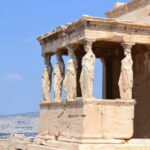
The tour begins where many prominent Athenians were buried for centuries, at Kerameikos Archaeological Site. That alone gives the first stop a different feel than a typical “look and move on” ruin visit. You don’t just see ancient ground—you hear why this place mattered to civic identity.
What makes Kerameikos especially memorable here is the political connection. You’ll learn that this is where Pericles gave his famous speech, tying a major moment in democratic Athens to the emotional weight of the graves. It’s a strong start because it reminds you that politics wasn’t abstract—it was tied to community, memory, and loss.
This part also sets up the tour’s guiding theme: Athens as a place where education, reasoning, and debate were part of daily civic life. If you’ve ever wondered why philosophy and democracy grew up together, this is where the pairing starts making sense.
Monastiraki Flea Market: Don’t Skip the Modern Noise Between Ancient Chapters
Next comes Monastiraki, where antique stores and flea-market stalls line the edges of history. The point isn’t shopping for the sake of shopping. It’s to show you how Athens still trades in objects, stories, and everyday culture right next to ancient spaces.
This stop breaks up the heavier material with something practical and sensory. You get a chance to orient yourself, notice the flow of neighborhoods, and even pick up small ideas about what kinds of finds tend to show up in this area. If you’ve got photography in your plans, this section is where you’ll likely get some of your most natural shots.
Also, Monastiraki helps you understand a key tour strategy. The guide keeps linking the “big themes” to street-level reality, and that means the walk doesn’t stay locked in the ancient past. It keeps you awake and interested.
Hadrian’s Library and the Roman Agora: Education as a Public Experience
Then you shift into Hadrian’s Library, a stop that’s doing more than satisfying a sight list. Here, education is treated like civic infrastructure, something connected to public life rather than a private hobby.
Just a short distance away is the Roman Agora, which helps you see how Athens’ spaces evolved over time. Even if the political systems changed, the idea of gathering—trading ideas, conducting business, and meeting as a community—kept returning in new forms.
One practical benefit: this area is a good place to stop and let your brain sort the timeline. Athens doesn’t feel like a single era; it feels like layers of ambition. By the time you reach the next science-minded landmark, you’ll already be thinking, Why did people build these public spaces in the first place?
Tower of the Winds: When Athens Measured Weather Like a Brainy Superpower
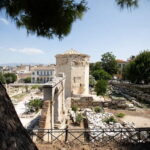
The Tower of the Winds is one of those stops that feels fun even if you’re not a science person. It’s an octagonal marble tower in the Roman Agora area, and the story is that it served as both a wind indicator and a clock.
What I like about this stop is the way it expands the tour beyond politics and philosophy. You hear about the first meteorological station and how it was used to forecast weather. That turns ancient “thinking” into something useful, not just rhetorical.
It also reinforces a theme you’ll keep hearing: Athens wasn’t only debating. It was observing, measuring, and trying to understand how the world works. If philosophy ever felt too airy to you, this is where the tour brings it back to earth.
- All Day Cruise -3 Islands to Agistri,Moni, Aegina with lunch and drinks included
★ 5.0 · 4,958 reviews



Pnyx Hill: The Walk-Up Moment When Democracy Becomes Physical
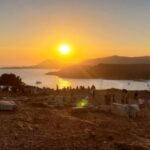
At Pnyx Hill, the tour focuses on a historic site connected to democracy. This is where the idea stops being a concept and starts becoming a stage. Even without heavy technical detail, the setting makes you feel what it means to have public decisions shaped by speakers and crowds.
The route also includes the Philopappos Monument area, and the tour uses this stretch to slow down and let you take in the view. That matters because the guide doesn’t just toss facts at you—he connects them to space and perspective. You’re meant to look around and imagine the scale of what was at stake.
In terms of pacing, this is also where you’ll likely appreciate comfortable footwear the most. You’re walking, then you’re thinking, then you’re looking outward. It’s a smart sequence because it balances energy and reflection.
Pass by Plaka and the Ancient Agora: Why the Walk Feels Smarter Than a Checklist
As you move between landmarks, the tour passes by Plaka, a historic neighborhood known for small houses and narrow streets. It’s not a long detour, but it adds texture and reminds you that these ruins aren’t sitting in isolation. They’re part of a living city.
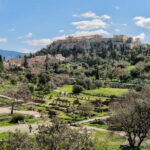
You also pass the Ancient Agora of Athens, a major open area where political, commercial, administrative, and social activity used to happen. This stop is essential because it’s the “how” behind the tour’s “why.” If democracy was a system, the Agora was one of its engines: a place for gathering, rules, debate, and daily business.
The strongest version of this experience is when the guide keeps tying the sites to how people argued and made decisions. You don’t just hear about Athens; you learn how Athens thought and acted in shared public space.
Finishing on Philopappos Hill: A View That Makes the Whole Story Click
The tour ends at Philopappos Hill, and the payoff is the view. Even if you’re not into panorama shots, this finish helps you understand the city layout and the walking logic of the day.
It also gives you a natural closing point: you can look back over the route you just learned, and the themes start to connect. Philosophy and democracy aren’t treated like separate subjects. They’re presented as different angles on the same question: how human beings organize life together using reason, persuasion, and institutions.
If you’re the type who likes to process after a good tour, this ending helps. You leave with a mental map, not just a list of monuments.
Price and Value: Why $49 Can Still Feel Like a Deal
At $49 per person for 3.5 hours, this tour lands in the “good value” range, mainly because the guide does more than point. You’re paying for interpretation: how the Athens of philosophy and civic debate connects across multiple sites in one route.
Small group size matters here. With max 15 people, the tour doesn’t feel like a factory line. It feels like a guided conversation where the route supports the explanation instead of distracting from it.
Also, this is an efficient first Athens experience. If you’re only in the city a short time and you want the big story early—how democracy and philosophy grew together—this walk is timed well. You can then choose later visits based on what surprised you most.
One caution on cost planning: admissions are not included for certain sites. If you want to enter the major locations (like Hadrian’s Library and the Roman Agora areas), budget accordingly. If you’re content with exterior viewing plus the guide’s context, you may spend less than you expect.
Who Should Book This Walk (and Who Might Want Another Option)
This is a great fit if you enjoy ideas connected to real places. You’ll probably like it if you want a route that links politics, philosophy, and even science-like observation into one narrative line.
It’s also a strong choice for families who can handle conversation-heavy history. In the experience, kids up to 14 can join free, and the tour often moves at a pace that keeps many young people engaged. That said, one part can feel like a lot of thinking for younger kids, so be honest about your child’s attention span.
It may be less ideal if you’re visiting with mobility limits. The tour is rated easy, but it still notes a few steps at the end and is not suitable for people over 70. If you fall near those boundaries, consider another tour format that reduces walking and climbing.
How I’d Pair This With Your Other Athens Plans
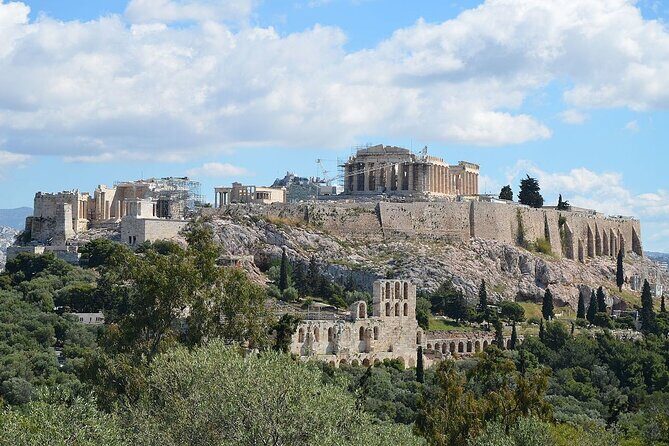
If it’s your first day in Athens, this tour can act like orientation for the mind. It gives you the “why” behind what you see later, including places like the Acropolis that you may visit separately.
If you want the best pairing, do this earlier rather than later. You’ll walk the streets with better context, and when you revisit sites on your own, you’ll notice details the second time. The guide also encourages questions as you go, which makes it easier to follow the city’s logic afterward.
When you plan your own time, remember that the route includes neighborhood walking through areas like Plaka and Monastiraki. That means snacks and water help, especially since the tour runs rain or shine and you can’t just run back indoors whenever the weather changes.
Should You Book the Athens Philosophy and Democracy Walking Tour?
If you want Athens to make intellectual sense fast, I think you should book it. The guide, often described as Panos, is central to the value here: the tour is built around storytelling that connects major philosophical themes with the physical spaces of civic life. The mix of philosophy, democracy, and even measurement-minded science (like the Tower of the Winds) makes the route feel varied instead of repetitive.
Book it if:
- You like guided history that explains why ideas matter.
- You want to cover multiple key areas in a single 3.5-hour walk.
- You enjoy small-group tours with room for questions.
Consider skipping or switching if:
- You’re looking for a quick sightseeing hit with minimal walking and minimal thinking.
- You want all admissions included in the price (they are not).
- You’re over 70 or need a tour designed for reduced walking and steps.
FAQ
Where is the meeting point?
The tour meets in front of the Statue of Theseus, opposite the train station across the road.
How long is the Athens Philosophy and Democracy Walking Tour?
It lasts about 3.5 hours.
Is admission to the sites included in the price?
No. Admissions are not included for sites like Athens, Hadrian’s Library, the Roman Agora, the Tower of the Winds, and the Ancient Agora of Athens.
What group size should I expect?
The group is limited to a maximum of 15 people.
Will the tour run if it rains?
Yes. The tour takes place rain or shine.
Is this tour okay for kids and families?
Children up to 14 years old join for free. It’s an easy tour overall, but it does include some ideas that may feel like a lot for very young kids.
What should I wear or bring?
Wear comfortable shoes. The tour notes there may be a few steps at the end.


More Walking Tours in Athens

More Tours in Athens


More Tour Reviews in Athens
- All Day Cruise -3 Islands to Agistri,Moni, Aegina with lunch and drinks included
★ 5.0 · 4,958 reviews