REVIEW · ATHENS
Greece Military History Private Tour
Book on Viator →Operated by Athens Classic Tour · Bookable on Viator
Four museums. One clear story.
This private tour in Athens turns military history into something you can actually see, not just read. I love the operational trireme replica at the sea and the chance to pair it with the WWI legend Averof battleship, side by side in the same visit. The other big plus is the way your guide can connect the dots across centuries, including the surprising “how did they build that?” moments for kids and adults.
One consideration: the main museum sites have separate admission fees, and the optional stop depends on the dates you travel. If you’re trying to keep costs tight, plan for ticket add-ons before you go.
In This Review
- Key highlights you shouldn’t miss
- Four museums, one clear story by the sea
- Stop 1: The trireme replica and stepping up to the Averof
- Stop 2: Kotsanas Museum and the shock of ancient war technology
- Stop 3: Athens War Museum Athens and the idea of defending freedom
- Optional Air Force Museum: airplanes on the right dates
- Price and tickets: what $64 really buys you
- How to get the most from a 4-hour military history sprint
- Who this tour is best for (and who it might not be)
- Should you book this Greece Military History Private Tour?
- FAQ
- FAQ
- What is the duration of the Greece Military History Private Tour?
- Where does the tour start?
- Does the tour include pickup and drop-off?
- Is this tour private?
- Are museum admission tickets included in the price?
- How much does Averof battleship admission cost?
- How much is admission for the Ancient Greek Technology Museum?
- How much is admission for the Athens War Museum?
- Is bottled water provided?
- What is the cancellation policy?
Key highlights you shouldn’t miss
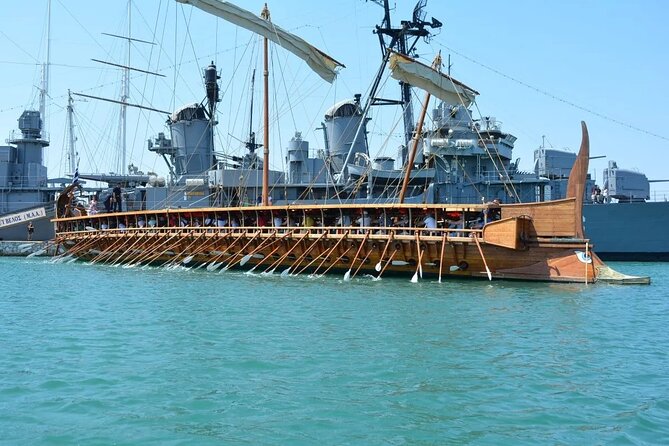
- A working ancient trireme replica at a maritime park by the sea
- Averof battleship (140 meters) with optional entry and WWI Aegean connections
- Weapons-and-strategy storytelling across centuries at the Athens War Museum
- Ancient Greek technology surprises, including flame-thrower ideas and the famous Antikythera Mechanism
- Optional Hellenic Air Force Museum on specific dates, with 40+ airplanes
Four museums, one clear story by the sea
This tour is built around a simple idea: Greece’s history often wasn’t peaceful, so you learn it through conflict and defense. You start at the water, not in a classroom. That choice matters, because naval power and coastal life shaped Athens long before modern borders existed.
You’ll have about 4 hours with a professional driver with deep knowledge of history, plus hotel/Airbnb/port pickup and drop-off. That’s a big value add in Athens, where hopping between museums can eat up time. And since it’s private, you control the pace for your group, whether you’ve got fast-moving kids or adults who want more explanation.
The tour also comes with small practical extras that make it easier on the day: bottled water, fuel and tolls included, and a mobile ticket. The main thing to watch is that the listed museum admissions are not included, so you’ll want to decide which optional entries you care about most.
You can also read our reviews of more tours and experiences in Athens.



Stop 1: The trireme replica and stepping up to the Averof
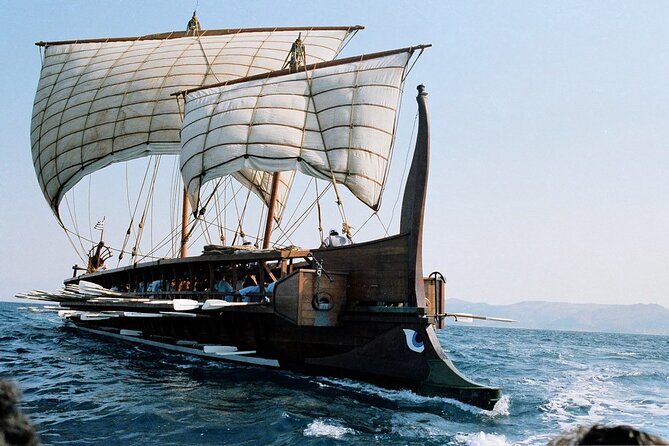
You begin at the Hellenic Maritime Heritage Park (by the sea), where the focus is ancient naval power with a very modern twist: you can see an actual replica of a trireme, the classic warship closely linked to Athens. The trireme is described as unique in the world and fully operational as a replica, and the whole point is to help you picture how a rowed fighting ship worked in the age of oars and speed.
This is also where the “why Athens matters” story gets sharper. The trireme’s background is tied to the idea that it helped protect Athenians and their newborn democracy from the Persians in one of antiquity’s biggest naval battles—often described in terms of 400 Greek ships versus 1,200 Persian ships. Even if those numbers are just the starting point, the museum context pushes you to understand that Athens wasn’t just philosophers and marble. It was also power at sea.
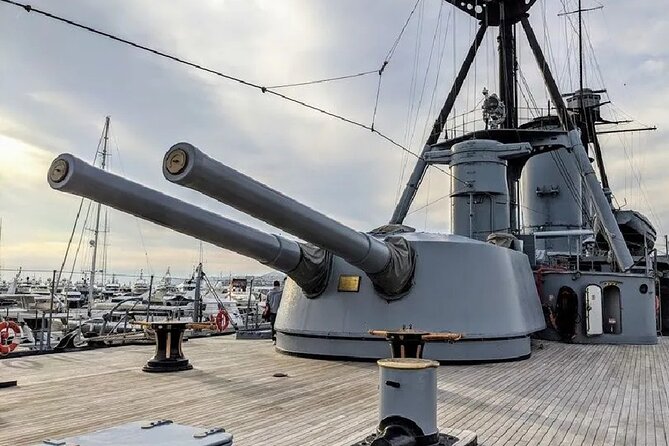
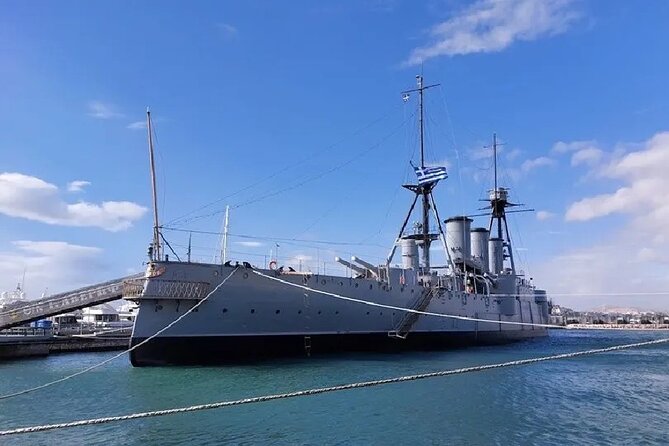
Next to the trireme is the Averof battleship, a 140-meter-long vessel tied to WWI naval history. It’s presented as a flagship of the Aegean fleet, involved in multiple naval battles and used as an escort ship for convoys. The ship was de-commissioned in 1952—a helpful detail, because it anchors the battleship in the real timeline, not just legend.
Averof entry is optional, and the ticket cost is clearly listed:
- 5 Euros for ages 18–64
- 2.50 Euros for ages 7–17 and 65+
My practical take: if you like ships or your group has strong curiosity, Averof is worth considering because it connects the ancient sea story to a much later one without changing location. If you’re traveling with very young kids or want shorter stops, you can still enjoy the waterfront exhibits without stepping aboard.
Stop 2: Kotsanas Museum and the shock of ancient war technology
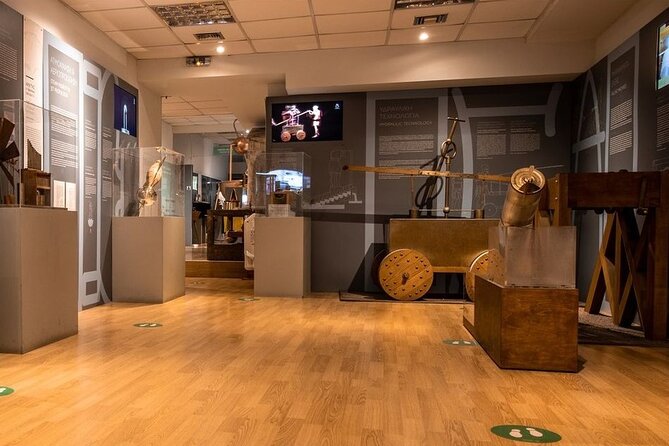
After the waterfront, you head to the Kotsanas Museum of Ancient Greek Technology. This stop flips the tone in a good way. Instead of just battles and uniforms, you get inventions and the kind of engineering that makes people ask, wait, how?
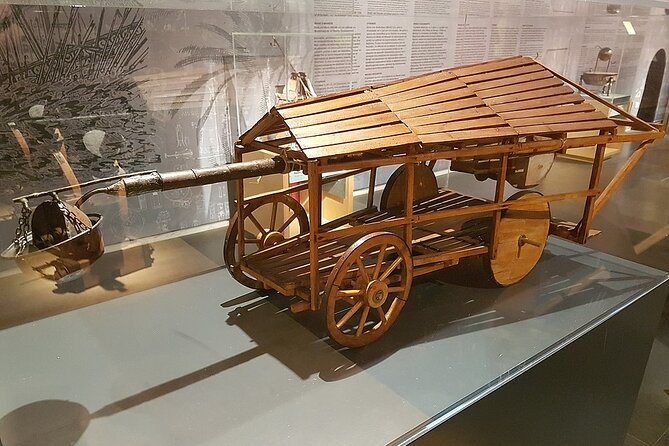
The museum is described as small but meaningful, with interactive artifacts that are meant to surprise both kids and adults. A detail I especially like is that the museum doesn’t treat technology as tidy and simple. It includes ideas that sound almost impossible for the classical era, such as flame-throwers, and it frames them as part of the larger wave of advances from classical antiquity.
There’s also a very specific cultural touchpoint here: you’ll see references to the Antikythera Mechanism, and there’s even a suggestion to take home a souvenir. That matters for a family-friendly reason. When you’ve got kids, it helps to leave with a name they can remember and talk about later, not just a vague “cool museum.”
Potential drawback to plan for: because the museum is focused on technology surprises, it can feel more “artifact-heavy” than “story-heavy.” If your group is mainly into battles, just make sure you’re ready to spend some time looking closely at how things work, not only reading about when they were used.
Stop 3: Athens War Museum Athens and the idea of defending freedom
Then you move into the Athens War Museum, which is framed as the largest museum in Southeastern Europe focused on war and freedom themes. The big theme is that Greece’s anthem is dedicated to freedom, and the exhibits connect that idea to centuries of being conquered by different invaders.
What makes this stop practical for your understanding is the structure: you see the weapons Greeks used across long periods of time and you also get the strategies tied to major battles. In other words, it’s not only about what the tools looked like—it’s about how people tried to win with those tools.
Time-wise, this stop is listed as about 1 hour 30 minutes, which is a sweet spot if you want depth but don’t want to get stuck in one building for too long. And it’s a strong match for adults who like context: the museum helps you connect ancient periods to later moments under changing powers.
Ticket cost here is:
- 6 Euros
Tip for getting more out of it: if you have questions, ask them during this stop. The tour format is set up for a guide who can explain what you’re seeing and also go beyond the strict agenda when you ask about something on the spot.
Optional Air Force Museum: airplanes on the right dates
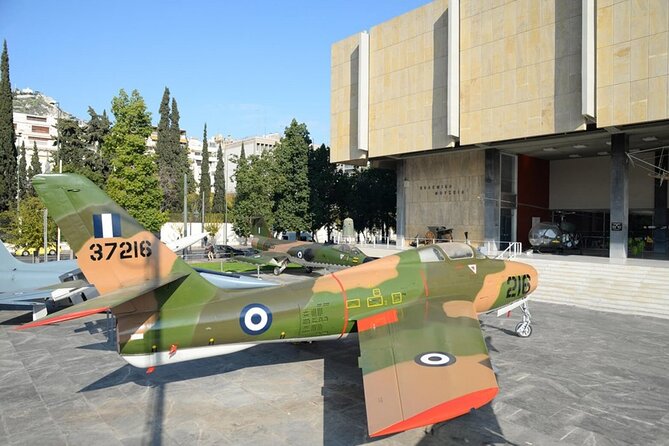
The tour also includes a possible extra stop: the Hellenic Air Force Museum. It’s labeled optional and available only on specific dates, so it’s not guaranteed every day. When it’s on, the museum has 40+ airplanes, which gives you a very different angle on military history—from sea and land into air power.
If your family loves aircraft, this optional add-on can be the best payoff. After trireme and battleship, you’d be jumping into modern military tech and strategy, which makes the story feel like it keeps growing instead of looping in time.
Because it depends on dates, I’d treat this as bonus value rather than a promise. If it’s available on your day, it’s an easy way to make the half-day feel longer and more varied.
- All Day Cruise -3 Islands to Agistri,Moni, Aegina with lunch and drinks included
★ 5.0 · 4,958 reviews






Price and tickets: what $64 really buys you
At $64 per person, this tour isn’t just museum hopping. You’re paying for a private guide-driver experience plus pickup and drop-off (hotel/Airbnb/port). In a city where transit and timing can become a headache, that “front-loaded convenience” is a real part of the value.
Now, the museum admissions are separate, so it’s important to do the math in your head:
- Averof battleship: 5 Euros (18–64) / 2.50 Euros (7–17 and 65+)
- Athens War Museum: 6 Euros
- Kotsanas Museum of Ancient Greek Technology: 5 Euros
So if you do all three paid museums (and depending on ages for Averof), you can expect additional costs on top of the $64. If you’re traveling as a group with mixed ages, this is where the optional Averof entry can help you control spending.
What I like about the pricing model: it lets you choose depth. You can enjoy the key story points even without entering every ship, and you can spend the extra money where it matters most to your group (often Averof or the tech museum).
How to get the most from a 4-hour military history sprint

This is a half-day format, so pacing is everything. The itinerary is built with two long-ish museum blocks (technology and war) plus a maritime start that helps you get your bearings fast.
Here’s how I’d approach it to keep it fun and not exhausting:
- Wear comfortable shoes. You’ll be moving between sites, and some parts will involve outdoor waterfront time.
- Decide early if Averof entry is a must. It’s optional, and stepping aboard a ship is a different kind of experience than looking from outside.
- If you’re with kids, let them “pick” one theme. They can latch onto either the tech shock (flame-throwers and Antikythera references) or the battle tools and strategy at the war museum.
- Take advantage of the guide’s flexibility. One standout theme from customer feedback is that the guide is willing to explain what you’re seeing and answer questions beyond the strict route.
Also, the tour runs during 9:30 AM to 1:00 PM hours, with operation listed across Monday–Sunday within the broader date range shown. That morning timing is helpful because you can still enjoy the rest of the day in Athens without rushing to fit everything in.
Who this tour is best for (and who it might not be)
This is a strong fit for:
- Families with kids who like museums but need something interactive and visual
- Adults who want military history presented in a human, story-driven way, not just dates and troop movements
- People who enjoy “objects you can see” more than lecture-style tours
It might not be perfect if:
- You only want ancient Greece and you dislike moving into WWI-linked history
- You hate museums with mixed focus, because this tour deliberately jumps between sea power, technology, and later freedom-focused battle storytelling
- Your group is trying to avoid any extra ticket spending at all (since admissions are not included)
For most people, the balance works because the tour connects different eras using the same lens: how people defended what they believed mattered.
Should you book this Greece Military History Private Tour?
Book it if you want a high-value private morning that’s easy to organize and heavy on “see it to believe it” moments—starting with an operational trireme replica and continuing through the Averof battleship, the tech surprises at the Kotsanas Museum, and the Athens War Museum’s weapons-and-strategy storytelling.
Skip it or rethink if your priorities are very narrow (only one period of history) or if you’re trying to keep the day strictly to the base price with zero add-ons. But if you’re okay adding a few museum tickets and you like the idea of military history told through real objects, this one is an efficient and memorable way to spend half a day in Athens.
FAQ
FAQ
What is the duration of the Greece Military History Private Tour?
The tour duration is approximately 4 hours.
Where does the tour start?
You start at the Hellenic Maritime Heritage Park by the sea (the Phaleron Maritime open-air museum area is described as the starting point).
Does the tour include pickup and drop-off?
Yes. Hotel/Airbnb/port pickup and drop-off are included.
Is this tour private?
Yes. It’s a private tour/activity, and only your group participates.
Are museum admission tickets included in the price?
No. The tour price includes the guide/transport and bottled water, but admissions for Averof, the Athens War Museum, and the Ancient Greek Technology Museum are not included.
How much does Averof battleship admission cost?
Averof costs 5 Euros for ages 18–64, and 2.50 Euros for ages 7–17 and 65+.
How much is admission for the Ancient Greek Technology Museum?
Admission is 5 Euros.
How much is admission for the Athens War Museum?
Admission is 6 Euros.
Is bottled water provided?
Yes. Bottled water is included.
What is the cancellation policy?
Free cancellation is available up to 24 hours in advance for a full refund. Changes less than 24 hours before the start time aren’t accepted.



More Tour Reviews in Athens
- All Day Cruise -3 Islands to Agistri,Moni, Aegina with lunch and drinks included
★ 5.0 · 4,958 reviews