REVIEW · KALAMATA
Kalamata Food Tour: Greek Food Treasures and Traditions
Book on GetYourGuide →Operated by Food Philosophy · Bookable on GetYourGuide
Food made me slow down in Kalamata. This 3-hour Kalamata food tour starts at the Ypapanti Church in the historic centre, then turns the old streets into a tasting route with real shop owners and storytellers. I love how the guide brings the food to life with Greek food myths and local history, and how the stops focus on the kind of everyday specialties you only understand by tasting them—olives, olive oil, breads and pastries, pies, meat dishes like succulent pork, and sweet finishes.
One possible consideration: you’ll eat a lot, and alcohol tastings are included as part of the sample lineup—so come with an appetite (and plan your day around feeling full). The tour runs in all weather, so bring shoes that handle uneven sidewalks and rain.
In This Review
- Key highlights you’ll feel right away
- Starting at Ypapanti Church: Your 3 Hours in Old Kalamata
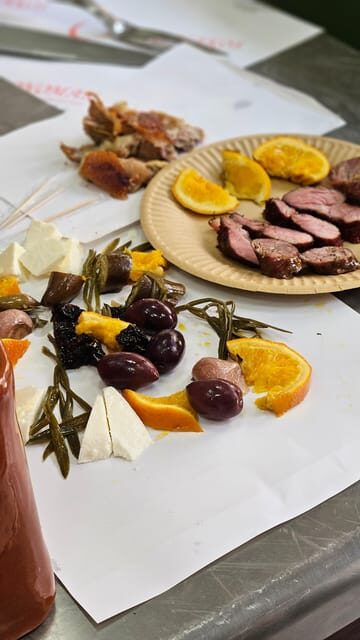
- What You’ll Actually Taste: Olives, Olive Oil, Pies, Pork, and Sweets
- Why the Greek Food Myths Matter (Yes, Really)
- The Shop Stops: Hidden Corners Where Pride Does the Talking
- Lunch at a Souvlaki Restaurant: A Light Meal That Finishes the Story
- Value at $88: What You’re Really Paying For
- Diet and Family-Friendly Reality: Vegans, Vegetarians, Gluten Intolerant, Pregnant
- Weather and Comfort: All-Weather Means Plan for Your Feet
- Who This Tour Suits Best (And Who Might Want Something Else)
- Should You Book This Kalamata Food Tour?
- FAQ
- How long is the Kalamata Food Tour?
- Where does the tour start?
- What food and tastings are included?
- Is lunch included?
- Are drinks included?
- Is the tour suitable for vegetarians, vegans, and gluten intolerance?
- Does the tour run in bad weather?
- What languages is the tour guide available in?
Key highlights you’ll feel right away
- Meet shop owners face-to-face and hear what makes their products worth queueing for
- A guided old-town route that hits Kalamata’s most charming side, not just the obvious stops
- Tastings across the full Greek meal spectrum: bread, olives/olive oil, pies, meats, and sweets
- Greek myths and food stories that give context without turning into a lecture
- A light lunch at a local souvlaki restaurant included in the tour price
Starting at Ypapanti Church: Your 3 Hours in Old Kalamata
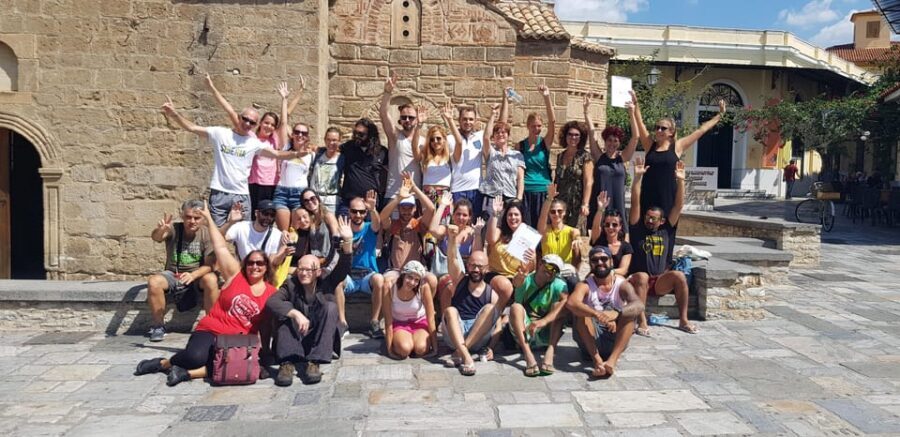
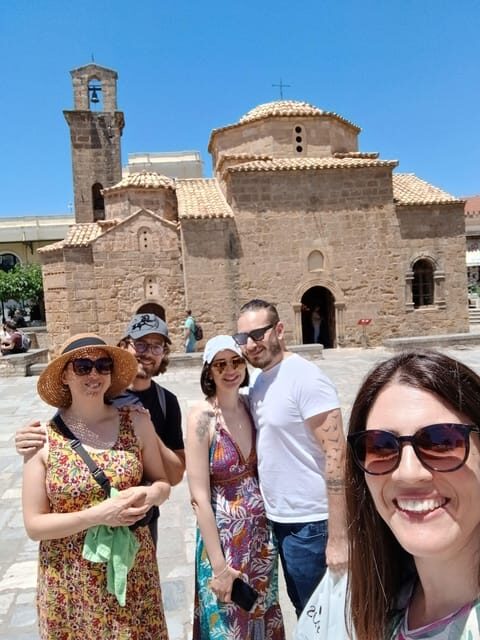
Kalamata’s old centre is easy to underestimate until you walk it with a local guide. This Kalamata food tour begins at the main entrance of Ypapantis (Ypapanti) Church, putting you in the historic core right away instead of waiting around for transportation or a bus group.
Then the pace shifts. You’re not touring a museum. You’re moving from shop to shop, stepping in and out, tasting, and asking questions as you go. The route is designed to show you the “best side” of Kalamata—tight streets, small businesses, and the kind of places that rarely make it into quick photo routes.
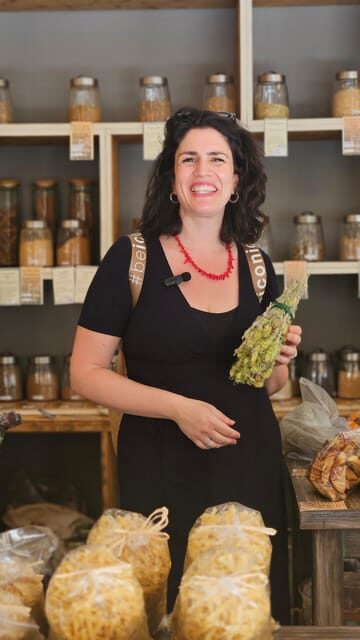
A big part of the value here is that you’re guided in English (and Greek), so you’re not stuck guessing. Guides like Sara, Sofia, and Dora come up in multiple accounts, and what they tend to share is the same theme: pride in local produce and a knack for explaining how food ties to place.
Practical tip: wear comfortable shoes. You’ll be walking through the historic centre for three hours, and the tour runs in all weather.
You can also read our reviews of more food & drink experiences in Kalamata

What You’ll Actually Taste: Olives, Olive Oil, Pies, Pork, and Sweets
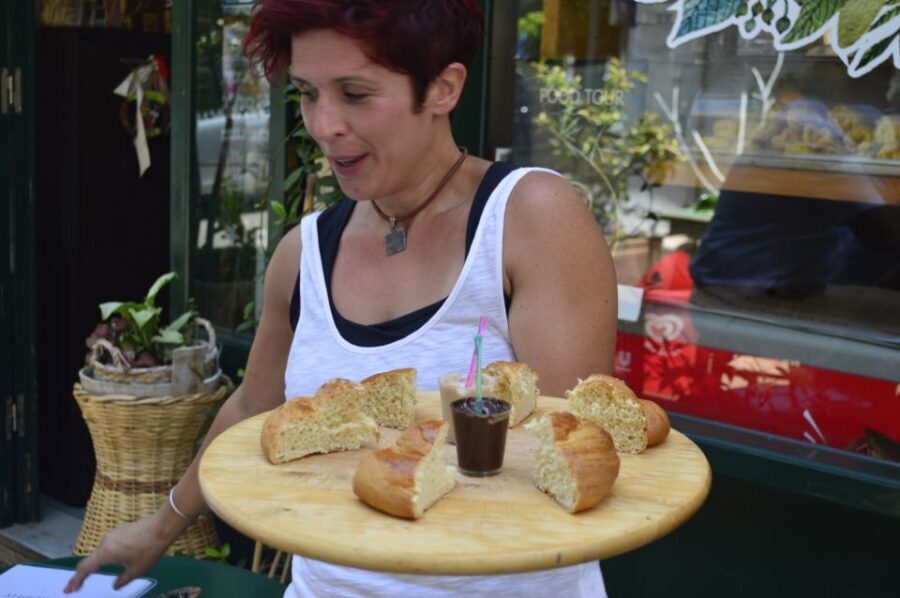
This isn’t a snack sampler where you get three tiny bites and call it a day. The tasting list spans a lot of Greek food categories, which is why it works even if you’re not a huge “food tour” person.
Expect tasting stops that cover:
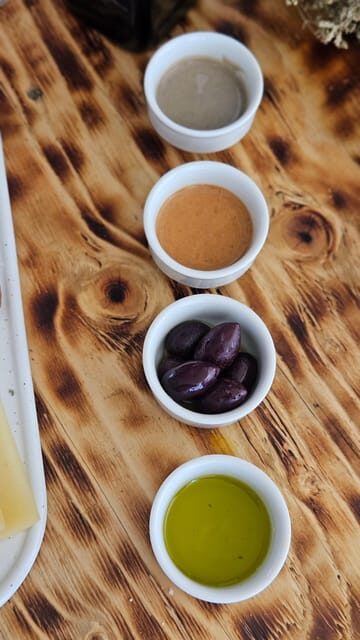
- Olives and olive oil, which are basically Kalamata’s signature
- Bread products and pastries, the kind you’d normally grab without thinking, until someone explains what to look for
- Pies (pita-style and pastry-style), often the comfort-food lane of Greek eating
- Meat products, including traditional succulent pork
- Sweets, where you finish with something syrupy or pastry-like rather than leaving with a salty last bite
The clever part is sequencing. You start with lighter tastes—bread, olives, and olive oil—so your palate is ready for richer items later. By the time you hit pies and meat dishes, you understand what you’re tasting instead of just eating.
And because the tour includes a souvlaki light lunch, you’re not left wondering if you should eat again afterward. You’re guided through a flow that resembles a meal, not a random collage.
If you’re sensitive to gluten: the tour is stated as suitable for gluten intolerance, but you should still advise the operator when booking so tastings match your needs.
Why the Greek Food Myths Matter (Yes, Really)
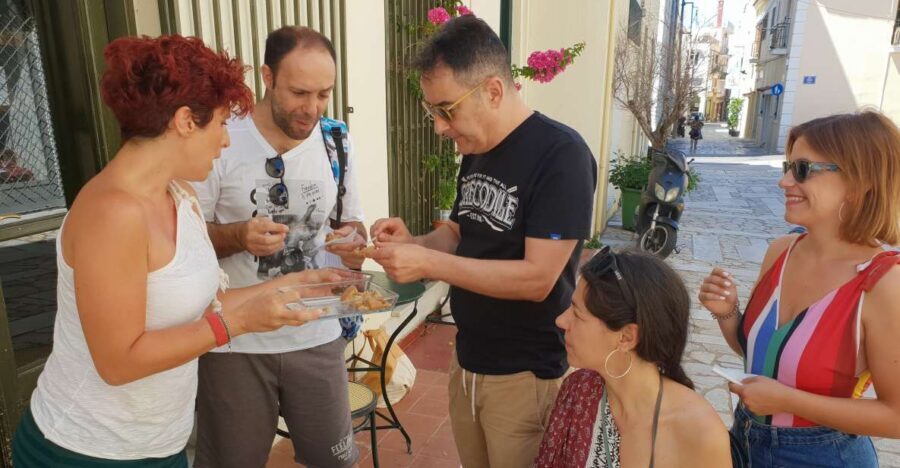
Greek food myths can sound like trivia until they’re connected to what’s on the table. Here, the stories are part of the tasting experience, explained in a way that adds meaning to everyday foods.
You’ll hear myths and stories about food, and the effect is practical:
- It helps you understand why certain ingredients are treated like more than ingredients
- It gives you a lens for local traditions—especially around olives, olive oil, and what people consider “proper” eating
This is also where the guide’s personality shows. Multiple guides are described as passionate locals, and that energy matters because you’re standing inside real shops, listening to real people. When the guide can link a story to a tasting, the whole route feels more grounded.
So if you like travel that mixes culture with food (instead of just food), the myth-and-story angle is one of the tour’s strongest features.
The Shop Stops: Hidden Corners Where Pride Does the Talking
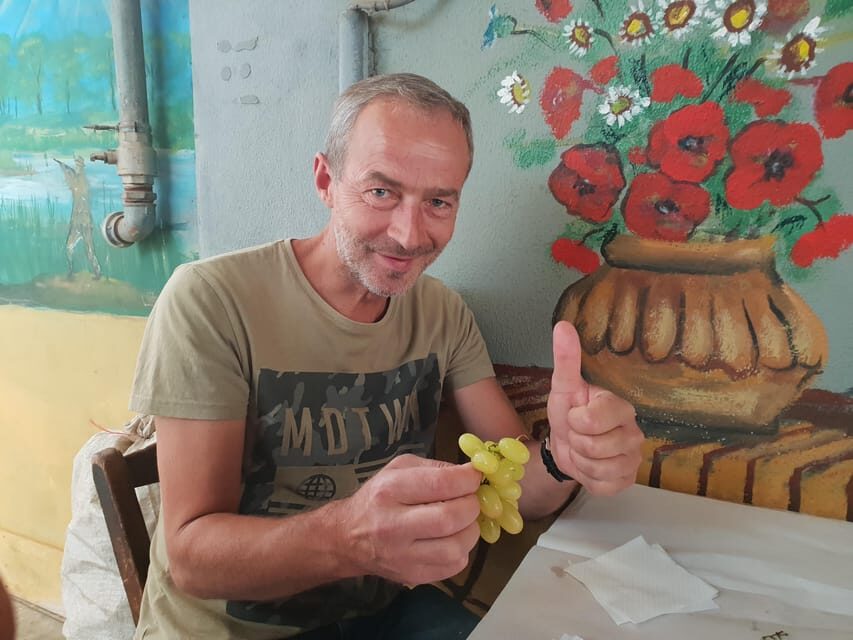
The route is built around selected family shops in Kalamata’s historic centre, with chances to speak with the people who make or sell the products. That’s a major reason the experience feels authentic: you’re not tasting in a staged setting, and you’re not relying on a script.
In practice, you can expect stops that match the types of businesses described across experiences—places like:
- a traditional bakery counter for bread and pastry tastings
- an olive/cheese/wine-style shop where olives, olive oil, and pairings are the focus
- a butcher-style stop for meat products (including pork-related tastings)
- a food hall-like setting on some routes, where you can sample with a lively marketplace feel
A key point: there’s no need to buy everything. The tastings are included, and the shop owners are there to share. Even when prices come up later, you’ll feel like you’re making a choice based on knowledge, not pressure.
My advice: ask one good question at each stop. Something like what ingredient matters most, or what they recommend to pair with the taste you’re trying. That turns the tour from eating to understanding.
Lunch at a Souvlaki Restaurant: A Light Meal That Finishes the Story
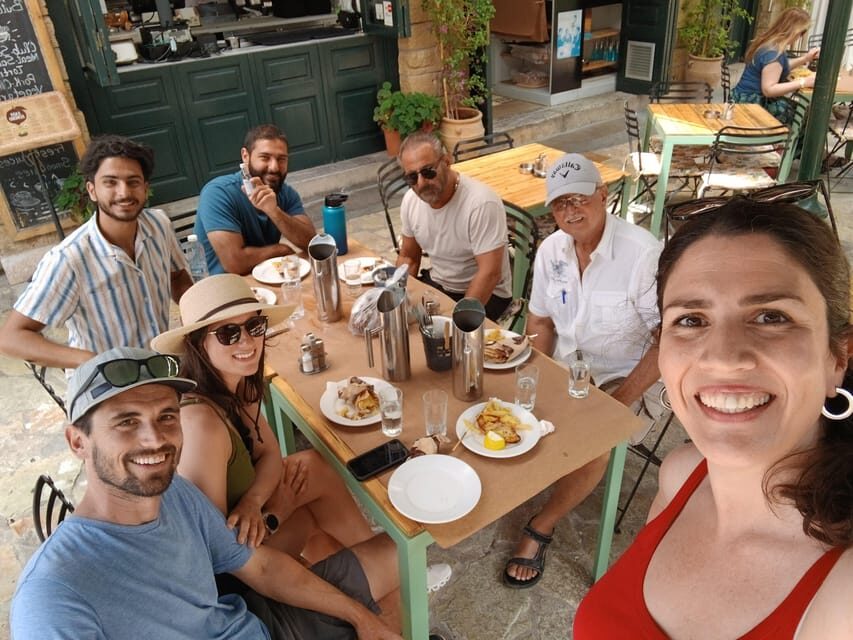
You’ll enjoy your lunch at a local souvlaki restaurant, included as part of the 3-hour experience. Calling it a light lunch is important. This tour is already built on repeated tastings, so the lunch isn’t meant to be another heavy plate piled on top.
Instead, it works like a final chapter. After olives, bread, pies, and meat samples, souvlaki gives you a clearer sense of everyday Kalamata-style eating. You leave with the feeling that you’ve tried the city’s flavors in more than one form.
Also, lunch time inside the tour is one of the reasons this can be better than trying to DIY it. When you’re on your own, you risk picking a restaurant that’s fine but not memorable. Here, the meal is designed to fit the tasting flow.
Practical tip: plan your next meal loosely. This tour can leave you full for hours.
You can also read our reviews of more tours and experiences in Kalamata
Value at $88: What You’re Really Paying For
At $88 per person for about 3 hours, this is priced like a guided experience with multiple tastings, not like a quick street snack. The included items matter:
- Local guide
- Traditional souvlaki light lunch
- Food and alcohol tastings
Meanwhile, drinks aren’t included. That doesn’t automatically make it bad value—it just means you shouldn’t compare it to a full meal with unlimited beverages. Think of it as paying for access: the guide, the route, and the tastings that bring you into local shops.
Why it can still be a good deal:
- If you’d normally pay for guided food experiences, you’re getting a structured route plus lunch
- If you’d normally pay for multiple snacks separately in different places, tastings start to add up quickly
- You’re paying for translation of culture, not just calories
One smart way to get your money’s worth is to arrive ready to eat. Skip a heavy breakfast so lunch and tastings feel like part of the plan instead of a burden.
Diet and Family-Friendly Reality: Vegans, Vegetarians, Gluten Intolerant, Pregnant
The tour is stated as suitable for:
- vegetarians
- vegans
- people who are gluten intolerant
- children and adults
- pregnant women
That’s a big deal because food tours often break the moment you need adaptations. Here, you’re specifically told to advise the operator of dietary requirements when booking.
What that means for you:
- If you have allergies or strict diets, message ahead with details so the guide can plan tastings that fit
- If you’re traveling with kids, this kind of short, guided walking experience can be easier than a long sit-down meal plan
- If you’re pregnant, the tour is described as suitable, so it’s not marketed as an all-day hike
Still, keep your expectations honest. The tour goes through shops, and Greek food often relies on ingredients like bread, dairy, and olive oil. The fact that it’s offered as suitable is encouraging, but your preparation (clear dietary info) is what makes it smooth.
Weather and Comfort: All-Weather Means Plan for Your Feet
The tour operates in all weathers, so you should prepare for rain or wind as well as sun. That’s not a reason to avoid it—it’s simply how to think about packing.
For a three-hour old-town walk, comfortable shoes are non-negotiable. Kalamata’s historic centre has the kind of sidewalks that can be uneven, and you’ll want grip.
If you’re visiting in cooler months, a light layer helps. If it’s warm, you’ll still be standing inside shops and eating, so water habits matter even if drinks during the tour aren’t included beyond tastings.
Who This Tour Suits Best (And Who Might Want Something Else)
This experience is a great match if you:
- want a Kalamata food tour that shows real local shops, not just a single restaurant meal
- like learning through tasting, with guides who can connect food to story
- want a short, structured plan for a morning or afternoon, starting right in the historic centre
- need a tour that’s marked as suitable for a range of diets and travelers
It might be less ideal if you:
- don’t enjoy walking around town and prefer a fully seated food experience
- get overwhelmed by multiple tastings in a short window (this tour is designed to feed you)
- are expecting drinks to be included beyond tastings
Still, if you’re flexible and you eat with curiosity, it’s exactly the kind of tour that makes a destination feel personal.
Should You Book This Kalamata Food Tour?
If you want a satisfying, culturally grounded food experience in a compact time window, I’d book it. The combination of shop visits, tasting variety (olives to sweets), and included lunch gives you a full picture of Kalamata eating—without you having to plan every stop yourself.
Book it especially if you value friendly local hospitality and want to talk with shop owners, not just read menus. And if you need vegan, vegetarian, or gluten-friendly options, this tour is specifically set up for that—just make sure you advise your dietary needs when booking.
My final practical call: come hungry (skip a big breakfast), wear comfy shoes, and treat the stories and myths as a way to understand what you’re eating, not as side entertainment.
FAQ
How long is the Kalamata Food Tour?
The tour lasts 3 hours.
Where does the tour start?
The meeting point is at the main entrance of Ypapantis Church in the historic centre of Kalamata.
What food and tastings are included?
You’ll taste a selection of traditional Greek foods such as olives and olive oil, bread products, pies, meat products (including traditional succulent pork), and sweets, plus food/alcohol tastings.
Is lunch included?
Yes. The tour includes a traditional souvlaki light lunch.
Are drinks included?
No. Drinks are not included.
Is the tour suitable for vegetarians, vegans, and gluten intolerance?
Yes. The tour is suitable for vegetarians, vegans, and people who are gluten intolerant. You should advise your dietary requirements when booking.
Does the tour run in bad weather?
Yes. The tour operates in all weathers.
What languages is the tour guide available in?
The live tour guide is available in English and Greek.