Four hours, and Meteora feels huge. This morning tour strings together the key monasteries and viewpoints on the Meteora rocks, with stops that make it easy to get great photos without losing time. I especially liked the in-depth guide storytelling (the kind that explains why these places matter) and the photo-focused viewpoint pacing that helps you avoid the worst crush. The main thing to plan for is extra cost and time: monastery entry fees are not included, and the guide is not with you inside the monasteries.
In practice, this is a smart choice if you’re only in Kalambaka for a short visit. The route starts in Kalambaka at 8:20 am, uses a VIP mini bus with air-conditioning, and keeps the group small (max 8). If you get motion-sick, you’ll likely feel better in the bus than in your own car hopping between pull-offs, too.
For people who want a fast, well-organized Meteora morning, this works. For deep explorers who want to spend a long time sitting quietly inside multiple monasteries, you may feel it’s a bit too brisk—and that’s not a flaw, just the tradeoff for the short schedule.
In This Review
- Key things to know before you go
- A Quick Snapshot of Meteora in 4 Hours
- Kalambaka Pickup and the VIP Mini Bus Setup
- Stop 1: Holy Monastery of Saint Nicholas Anapafsas and Saint Antonios
- Stop 2: Meteora Photo Stops and Two Monastery Visits on Local Timing
- Stop 3: Kastraki and the St George the Mandilas Story
- What You Really Get From a Guided Morning (and What You Don’t)
- Price and Value: Is $36.01 a Good Deal?
- Tips for Better Photos During the Meteora Rock Viewpoints
- Who Should Book This Morning Meteora Tour?
- Should You Book This Morning Meteora Tour?
- FAQ
- How long is the Morning Tour to Meteora with Photo Stops?
- What time does the tour start, and where does it meet?
- Is pickup available?
- Are monastery entrance fees included?
- Does the guide go inside the monasteries with you?
- Is free cancellation available?
Key things to know before you go
- Small group (max 8) means you’re not stuck in a giant shuffle
- VIP mini bus with air-conditioning keeps the ride comfortable
- Photo stops on the rock views so you can slow down for pictures when you want
- Two monastery visits planned around local timing rather than forcing the same route every day
- Kastraki stop for St George the Mandilas with a specific, memorable backstory
A Quick Snapshot of Meteora in 4 Hours
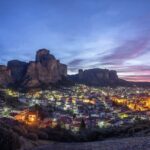
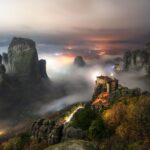
Meteora can feel unreal, like you’re driving through a dream of stone pillars and perched monasteries. The trick is time. Most people arrive in Kalambaka and realize they have one morning (or less) to make it count.
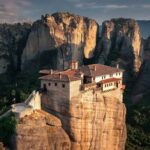
That’s where this tour earns its keep. It’s built around a short, efficient route with three main stops: the Holy Monastery of Saint Nicholas Anapafsas, a Meteora area viewpoint stretch with photo pauses and additional monastery visits, and then Kastraki for St George the Mandilas. You’re not just sightseeing. You’re being guided through the meaning of what you’re seeing—monk life, why the hermits chose these rocks, and why certain stories stick in local tradition.
The vibe is practical. You get guidance, timing, and photo opportunities, without turning your morning into a complicated logistics puzzle. And if your schedule is tight, it’s reassuring that this is booked fairly far in advance—37 days on average—because it suggests many people use it as their main Meteora plan.
You can also read our reviews of more tours and experiences in Meteora

Kalambaka Pickup and the VIP Mini Bus Setup
You meet back in Kalambaka, and the tour starts at 8:20 am. It ends back at the meeting point, which is ideal if you’re planning to have lunch afterward or need to catch another activity.
The transportation is a VIP mini bus with air-conditioning, and you can request pickup. That combination matters more than it sounds. Meteora’s monasteries sit across several angles and roads. A mini bus keeps the group together and helps you get to each viewing area without everyone juggling parking and walking distances.
Also, the group size is small—maximum 8 travelers. I like tours that stay that size because you can actually hear the guide. You can also ask questions without the whole experience feeling like a conveyor belt.
Stop 1: Holy Monastery of Saint Nicholas Anapafsas and Saint Antonios
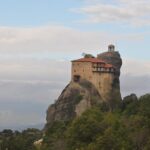
Your first major stop is the Holy Monastery of Saint Nicholas Anapafsas at Meteora. The visit runs about 30 minutes, and the focus is on getting the background so the place makes sense once you’re there.
This is where you learn about the very early monastic presence in the area—how hermits began carving out a life on these rocks. One of the standout points here is the mention of Saint Antonios and the earliest hermits arriving in the Meteora region. That detail turns the monastery from a postcard view into a chapter in a real story: people chose isolation here because it matched the kind of religious life they wanted to build.
A practical note: you’re not paying for a guided walkthrough inside multiple sites. The guide’s role is to explain and orient during the stops, and you can then explore on your own. That’s not bad. It just means you’ll want to use the time efficiently—listen, look, take notes if you like, and then go in with a clear sense of what you’re trying to see.
Who this stop is for: If you want the quickest possible grounding in Meteora’s origins, this is a strong first anchor.
Possible drawback to watch: With only about 30 minutes, you won’t have time to linger everywhere. If you love slow, detailed sightseeing, you’ll likely want to choose extra time on another day in addition to this tour.
Stop 2: Meteora Photo Stops and Two Monastery Visits on Local Timing
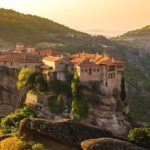
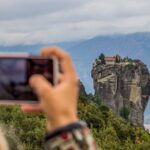
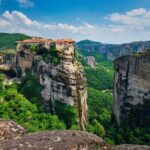
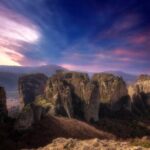
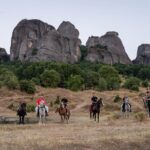
Next comes the heart of the scenic part of the morning: Meteora itself. This stretch takes about 1 hour 40 minutes and includes multiple spots for photos.
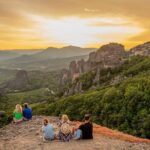
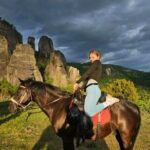
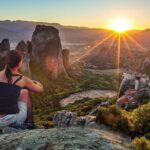
Yes, the plan is described as sunset photos, even though it’s an earlier departure. What that usually means in practice is that you’re positioned for the kind of dramatic angles people love later in the day. You still get those iconic rock views and the monastery lookouts. You just won’t be taking your photos at the exact late-day hour you might see in guides online.
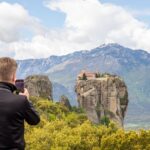
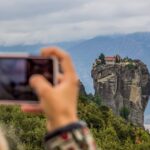
What I like most about this section is the pacing. The stops aren’t all just one quick photo and move on. You get time for “pause and shoot” moments when you request it. That’s huge if you care about getting images that show the scale of the rocks and the placement of monasteries.
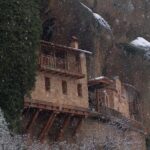
This stop also includes visiting two monasteries, depending on the local monastery schedule. That’s smart. Monasteries operate on their own hours, and forcing a fixed itinerary can lead to disappointment. By tying the plan to what’s open, you’re more likely to get actual visits rather than just viewpoint stops.
And the guide doesn’t just point at stone. You get explanations about how monks lived—how the place was used and why the daily routine mattered. Even if you’ve seen Meteora photos before, this kind of context changes how you look at the buildings.
What you should watch for: Because monastery times can shift, the exact sites you see may vary. That’s not a problem, but it does mean you should treat this as a flexible morning built around access and timing, not a promise that you’ll see the same two monasteries as someone else on a different date.
Stop 3: Kastraki and the St George the Mandilas Story
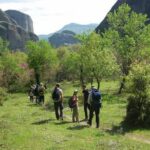
The final stop takes you to Kastraki and the church site associated with St George the Mandilas. You’ll spend about 40 minutes here, and the experience is built around a very specific story and local traditions.
The guide shares the tale of Saint George as a Greek who became an officer in the Roman army. The story includes family origins tied to ancient places, and it mentions his service in the Guard of Diocletian. It also frames him as a Christian martyr, which helps explain why he shows up across Greek customs long after the historical period.
Then the tour gets more colorful—literally. You learn that there’s a tradition involving colorful head scarves, climbing, and dancing along cliff edges, tied to a ruined monastery built inside a cave about 40 meters above ground on the north side of a Meteora rock. That single detail is one of those Meteora moments where you realize the rocks aren’t just scenic. They’re part of living memory and repeated local practice.
This stop is a nice contrast to the monastery-from-above feel earlier in the morning. Kastraki is more grounded in town and tradition, and the time block is long enough for you to settle and absorb the story rather than rushing through it like a checklist item.
What You Really Get From a Guided Morning (and What You Don’t)
A good Meteora morning tour is mostly about saving you mental energy. This one does that with three ingredients:
First, you get cultural and historical context as you go. The guide explains significance at each stop, including origins, monk life, and the story behind St George. Instead of wondering what you’re looking at, you understand why it’s here.
Second, you get photo help without turning into a photography class. There are multiple stops for pictures, and the guide adjusts timing when you ask. That means you can choose when to shoot rather than being dragged through everything at one pace.
Third, you’re not alone in the logistics. One review highlights that the guide navigates crowds and traffic with ease. In Meteora season, that alone can feel like a superpower. You’ll still see other people, but you’ll spend less time stuck or frustrated.
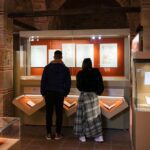
What you don’t get is a full inside-monastery guide for every site. The tour specifically notes that the guide is not for inside the monasteries. That doesn’t mean you’ll be left hanging, just that you should expect to move through certain parts independently once inside.
If you prefer a guide leading you step-by-step through interiors, you may find this tour better as your “orientation day,” then add extra independent time later if you want.
Price and Value: Is $36.01 a Good Deal?
At $36.01 per person for about four hours, the value here depends on what you’d otherwise spend—time, transportation hassle, and the cost of a guide.
You’re getting:
- a tour guide,
- transportation on a VIP mini bus with air-conditioning,
- sightseeing and photo stops,
- explanations about local culture and monastic life.
Then there’s the extra cost most people miss until they’re standing at a ticket window: monastery entrance fees are not included, and they’re listed as 3 euro per person. The key is budgeting for that early, so it doesn’t feel like a surprise.
Is it still worth it? In my view, yes—especially if you don’t have a lot of time in Kalambaka. Meteora is big in visuals and small in time windows. Paying for a tight route can be cheaper than spending your morning zig-zagging on your own, wasting energy on timing, and paying for “just transportation” without any context.
If you’re traveling with a group of friends and you have flexibility to drive and slow down, you could DIY. But if you want a guided structure and you like the idea of a small group, this price lands in the sensible zone.
Tips for Better Photos During the Meteora Rock Viewpoints
You’ll have photo pauses, and that’s the main reason this morning tour works so well for photographers, casual shutterbugs, and anyone who just wants one or two great images.
Here’s how to use the time well:
- Listen first, shoot second. When the guide explains where the hermits came from or why a spot matters, your photos come out more intentional.
- Ask for a photo stop when you want it. The tour includes stops for taking pictures when requested.
- Use the multiple viewpoint chances at Meteora to get angles. One quick shot rarely captures the scale.
- Think in terms of composition. Even if the timing isn’t true sunset, you’ll still be capturing the famous monastery-and-rock geometry.
Also, remember that photo time competes with access time. Meteora is popular. If you request stops, be ready to move when the group needs to shift so you don’t lose your spot for a monastery visit.
Who Should Book This Morning Meteora Tour?
This tour fits best if you:
- want a strong Meteora overview in a short window,
- appreciate being told the significance behind what you see,
- like small groups (max 8) and a comfortable vehicle,
- need a workable plan because you’re only in Kalambaka briefly.
It’s also a good option if you want recommendations after the tour. One review specifically calls out lunch and halva recommendations from the guide Thanos, which tells me the guide isn’t just clock-watching.
You might choose differently if:
- you want to spend long hours inside monasteries with a guide,
- you’re planning a slow, multi-day monastery deep dive and don’t need a fast orientation.
Should You Book This Morning Meteora Tour?
If your Meteora window is short, I’d book it. This is the kind of tour that helps you avoid the most common first-timer problem: seeing impressive rocks but missing the why behind them.
It’s also a solid choice because you get both the big visuals and the storytelling: Holy Monastery of Saint Nicholas Anapafsas to set the early monastic stage, Meteora viewpoints with photo pacing and two monastery visits based on local timing, then Kastraki for the St George the Mandilas story that’s more specific and memorable than generic heritage stops.
If you hate paying extra at the door, don’t ignore the 3 euro monastery entrance fee per person. But if you’re okay budgeting for that and you want an organized, small-group morning, this tour is a very practical way to make Meteora feel complete.
FAQ
How long is the Morning Tour to Meteora with Photo Stops?
It’s about 4 hours.
What time does the tour start, and where does it meet?
It starts at 8:20 am in Kalambaka (Kalabaka 422 00, Greece).
Is pickup available?
Yes, pickup is offered.
Are monastery entrance fees included?
No. Entrance fees to the monasteries are excluded and are listed as 3 euro per person.
Does the guide go inside the monasteries with you?
No. The guide is not for inside the monasteries.
Is free cancellation available?
Yes. You can cancel for a full refund up to 24 hours before the experience starts.