REVIEW · METEORA
Meteora: Hermit Caves Sunset Hiking Experience
Book on Viator →Operated by Visit Meteora · Bookable on Viator
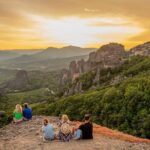
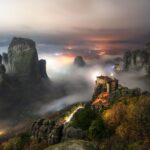
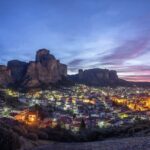
A hike with monks, rocks, and sunset. That combo is why this Meteora hermit caves experience feels so special. You start in Kastraki, hike up among the famous monoliths, and end with big views as the light turns soft.
Meteora sunset hike sounds simple. The payoff is not.
Two things I really like: the professional English-speaking mountain guide and the way the route mixes sweat with scenery you can actually feel up close. You’ll also get bottled water and a small group cap of 12, so it’s easier to keep a steady pace without feeling like you’re on a conveyor belt.
One consideration: it’s marked for moderate fitness, and there’s an exposed part that includes a ladder. With the right shoes and a calm head, it’s manageable. Still, if heights bother you, this is worth factoring in.
In This Review
- Key Highlights You’ll Notice Fast
- From Kastraki Up: Why This Hike Feels Worth It
- Meeting at Taverna Gardenia: Settle In and Start Moving
- The Kastraki Climb: Views, Monoliths, and a Guide Who Connects Dots
- Hermit Caves: More Than a Photo Stop
- The Peak Moment and the Bell: Where Effort Turns Into Payoff
- Sunset on Meteora: How to Time Your Energy
- What You Actually Get for $28.57: Value Check
- Group Size of 12: The Difference Between Quiet and Crowded
- Shoes, Weather, and a Few Smart Moves
- Who Should Book This Hike (and Who Might Rethink It)
- Should You Book the Meteora Hermit Caves Sunset Hike?
- FAQ
- How long does the Meteora Hermit Caves Sunset Hiking Experience last?
- Where is the meeting point, and how does the tour end?
- Is the tour offered in English?
- What fitness level do I need?
- How many people are in the group?
- What’s included in the price?
- What happens if weather is bad?
Key Highlights You’ll Notice Fast
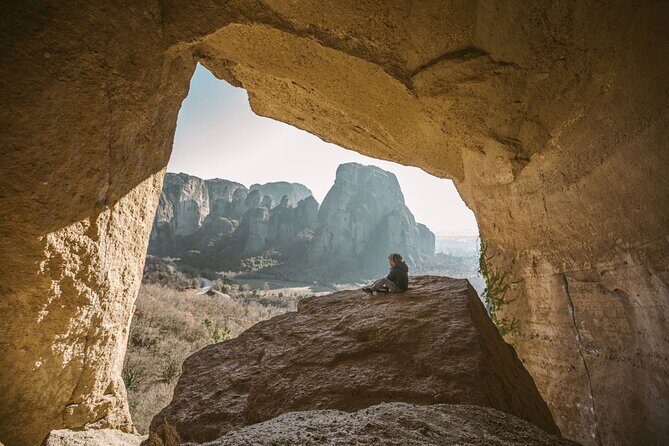
- Hermit caves used by monks for centuries, giving the hike more meaning than just views
- Small group size (max 12) for a calmer pace and more guide attention
- English mountain guide with practical route guidance plus culture and nature talk
- A peak with a bell and a memorable end point above the valleys
- Exposed ladder section where traction and confidence matter
From Kastraki Up: Why This Hike Feels Worth It
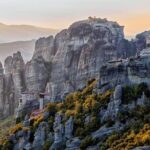
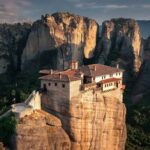
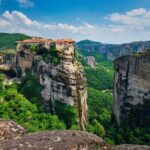
Meteora is famous for big stone towers, but this hike is different from the usual quick viewpoint shuffle. You’re moving through the area on foot, and that changes everything. From down in Kastraki, you climb into the same world that monks used when they wanted quiet, isolation, and closeness to the sky.
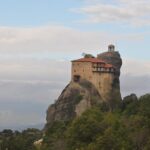
The best part is the mix of spiritual sites and actual hiking effort. You don’t just see the monasteries from a distance. You work your way up between the rocks, where the terrain and views constantly shift. It’s the kind of experience that makes you understand why these places were chosen in the first place.
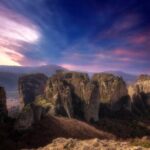
And yes, sunset is built into the name. Even with a modest time window, you’re aiming for that softer light that makes Meteora’s stone look dramatic instead of harsh.
You can also read our reviews of more evening experiences in Meteora

Meeting at Taverna Gardenia: Settle In and Start Moving
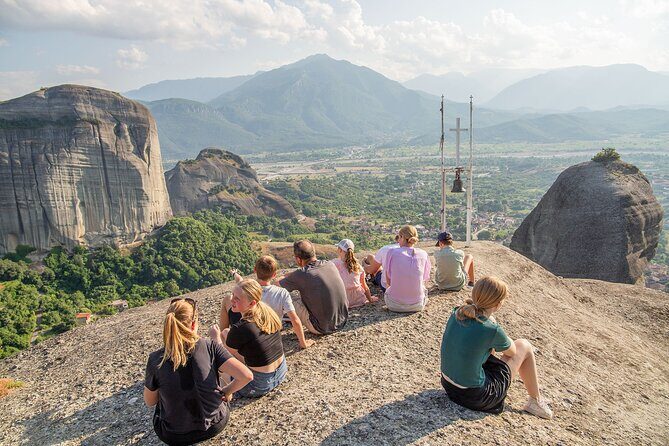
You meet at Taverna Gardenia in Kastraki (Agίου Αθανασίου, 422 00). The activity ends back at the same meeting point, so you’re not stuck figuring out transport at the end when you’re tired and your phone battery is low.
The tour notes that the meeting area is near public transportation. That matters because Meteora can be a bit spread out, and it’s nice when your plan doesn’t rely on a specific taxi schedule.
Timing-wise, plan for about 3 hours (approx.) on the trail. That’s a good length: long enough to feel like a real hike, short enough that you can still enjoy other Meteora sights the same day.
The Kastraki Climb: Views, Monoliths, and a Guide Who Connects Dots
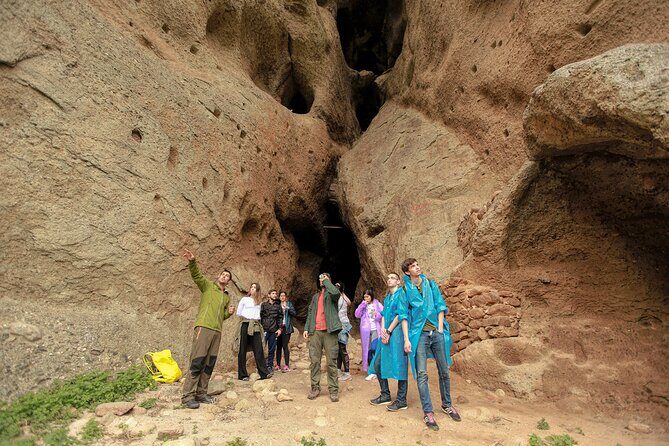
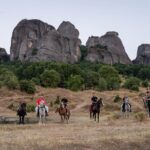
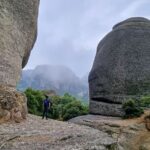
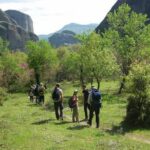
Your hike starts in Kastraki and then moves upward through the Meteora terrain. You’ll spend time hiking between the monoliths and toward the hermit cave area. This is where the guide becomes more than just a person with a whistle.
A strong feature here is what guides can explain while you walk. With this tour, the guide focuses on history and culture, plus what’s around you. In the reviews, guides like Evangelos and Chris are singled out for being excellent and knowledgeable—so you can expect more than generic “look left” commentary.
What you’ll enjoy most on the climb is how the views change as you gain elevation. Early on, the rocks feel like a backdrop. Later, they turn into a 3D maze you’re hiking through. That shift is one reason this route lands as a highlight for many people.
Practical note: the route includes a section that can feel exposed. Even if you’re a confident hiker, it’s smart to keep your focus as you climb. Watch your footing, take your time, and you’ll feel much more comfortable.
Hermit Caves: More Than a Photo Stop
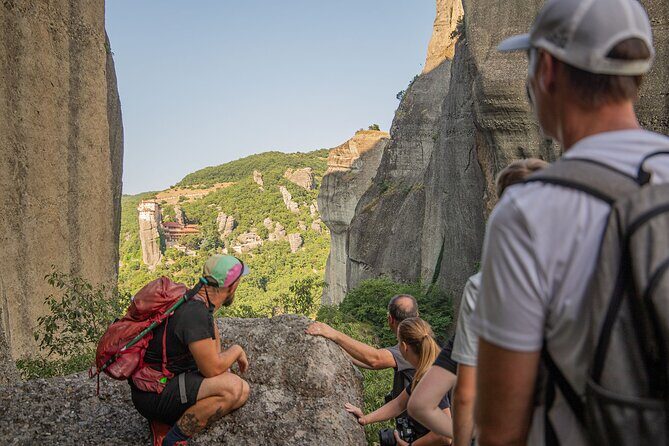
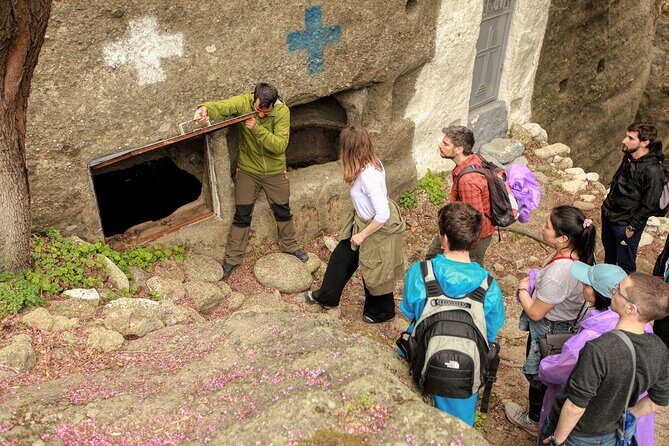
You’ll explore hermit caves used by monks for centuries. That’s the heart of why this tour has more emotional weight than a standard hike. These weren’t built for tourists. They were built for people who wanted isolation, routine, and a life shaped by faith.
When you reach the cave areas, slow down. Even a quick stop can help, but the value here is context. Your guide can help you connect the caves to the larger Meteora story—why monks lived here, what it offered them, and how the rock itself played a role in that lifestyle.
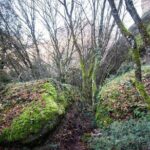
From a practical standpoint, caves also change the feel of the hike. You’ll probably notice the air feels different and the surroundings get quieter. Then you move back out into open sky views, which creates a nice rhythm: enclosed solitude, then wide outlook.
This part is also a reminder that Meteora’s appeal isn’t just visual. It’s about human choices—how people adapted to the terrain instead of fighting it.
The Peak Moment and the Bell: Where Effort Turns Into Payoff
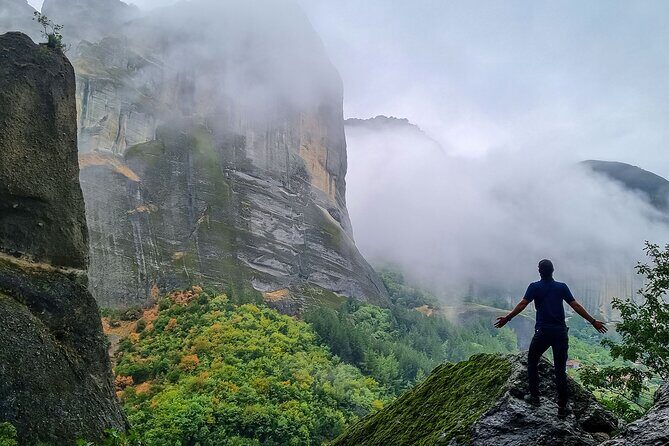
The hike pushes upward toward a peak area, and there’s a bell at the top that becomes a high point of the route. Reaching that spot is the reward for all the climbing and careful steps.
If you like the sense of accomplishment that comes from earning your views, you’ll likely feel it here. One review describes it as well worth the effort, and that matches the “why” behind a short, intense hike like this.
This is also where reviews emphasize the most exposed segment: a ladder climb. That detail matters because it’s the one part you can’t just walk around. If heights make you nervous, don’t ignore that. If you’re comfortable with balance and using your hands and feet deliberately, it often feels more manageable than people expect—especially when you move slowly and don’t rush.
Shoes matter here. Bring footwear with good traction. On rock, traction isn’t optional. It’s the difference between feeling relaxed and feeling tense.
You can also read our reviews of more hiking tours in Meteora


Sunset on Meteora: How to Time Your Energy
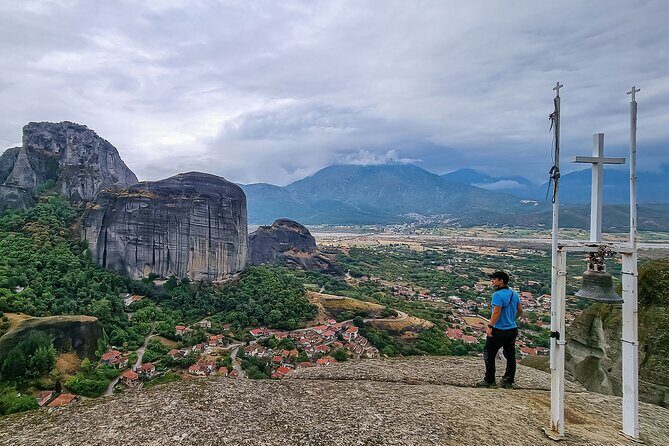
The experience is designed as a sunset hiking experience. That usually means you don’t want to burn all your energy too early. Save some stamina for the top and for the photo moments.
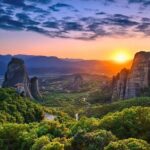
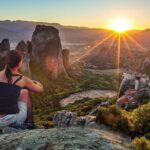
Sunset on Meteora is about angles. As the light changes, the stone textures and monastery silhouettes become easier to read. The cliffs look deeper. The shadows stretch. The whole scene becomes more photogenic without you needing to fight the camera.
So pace yourself from the start. If you go hard early, the last section can feel harder than it should. If you hold back a bit, the final stretch feels like a steady climb into the payoff.
Also, remember you’ll be on a timed activity that lasts about 3 hours (approx.). You don’t have infinite time for wandering once you reach the key points. The trick is to watch the guide, match the pace, and then give yourself a few focused minutes at each viewpoint.
What You Actually Get for $28.57: Value Check
At $28.57 per person, the biggest value isn’t a bargain price. It’s what you get alongside that price.
Included:
- Professional English speaking mountain guide
- Bottled water
- All fees and taxes
The experience info also indicates the admission ticket is free. And while that might sound like a small detail, it affects real trip math. You don’t want your Meteora day to turn into a surprise pile of extras at the last minute.
What’s not included:
- Pick up and Drop off service
- Gratuities (optional)
So you’re paying for guided time, guidance on a terrain-heavy hike, and basic comfort like water. That’s a solid deal for a 3-hour Meteora outing, especially because the group size is capped at 12 travelers. Smaller groups mean less rushing and more ability to ask questions.
If you care about getting the story and not just collecting snapshots, this structure makes sense.
Group Size of 12: The Difference Between Quiet and Crowded
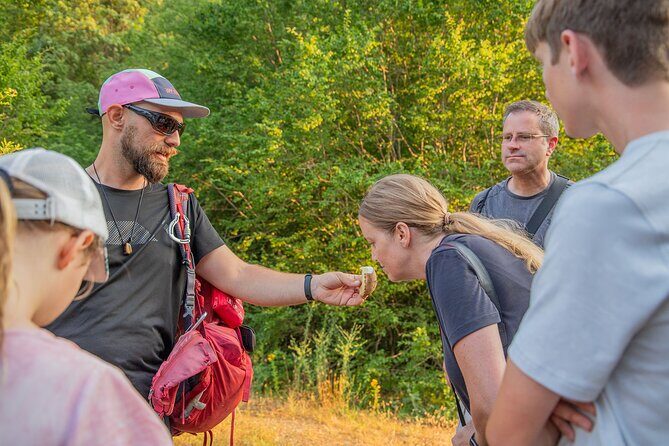
A max group size of 12 might not sound like a big deal until you’re on foot in rocky terrain. Smaller groups typically mean:
- fewer people bunching up at narrow spots
- less waiting for the whole group to catch up
- more chances to hear the guide instead of just craning your neck over shoulders
That calmer feel also helps with the ladder/exposed part. You’re less likely to feel crowded or hurried, which is where confidence can grow.
If you like your trips social but not chaotic, this is a good match.
Shoes, Weather, and a Few Smart Moves
This hike requires moderate physical fitness. That usually means you should be comfortable walking uphill for a sustained period and handling uneven rock surfaces.
Here’s what I’d treat as non-negotiable:
- Wear good traction shoes (rock + ladder section = don’t gamble)
- Bring a steady pace mindset. This isn’t a race.
- Keep your eyes on your feet in exposed areas.
Weather matters too. The experience requires good weather. If it’s canceled due to poor weather, you’ll be offered a different date or a full refund. This is the right approach for Meteora hikes. Rain and cold can make rock sections less friendly.
One more practical note: there’s no pick up/drop off, so you’ll need to get to the Taverna Gardenia meeting point on your own.
Who Should Book This Hike (and Who Might Rethink It)
You’ll likely love this if:
- you want a guided hike with real explanation (not just a pass-by viewpoint)
- you enjoy Meteora beyond the obvious monastery look
- you’re okay with moderate climbing and uneven ground
- you like finishing with the payoff of sunset views and a peak moment with a bell
You might rethink it if:
- you’re very uncomfortable with ladders or exposed steps
- your fitness level isn’t ready for uphill hiking for about 3 hours
- you strongly need a vehicle-based “see it all quickly” plan
If you’re an experienced hiker, you’ll probably find it manageable, as one review points out. If you’re new to terrain hiking, don’t panic—just be honest about your comfort and bring the right shoes.
Should You Book the Meteora Hermit Caves Sunset Hike?
I’d book this if you want Meteora to feel like a journey, not a stop-and-go postcard circuit. The combination of hermit caves, guided context, and sunset timing makes it one of the more meaningful ways to spend a few hours in the area.
It’s also good value. For $28.57, you get a guide, water, and fee coverage, plus the activity info notes a free admission ticket. The only real “cost” is effort—plus the need to handle an exposed ladder section.
If the idea of climbing with steady focus sounds okay, this is a smart Meteora pick. If ladders or heights make you uneasy, choose another Meteora option and save your energy for sights that feel more comfortable.
FAQ
How long does the Meteora Hermit Caves Sunset Hiking Experience last?
It runs for about 3 hours (approx.).
Where is the meeting point, and how does the tour end?
You meet at Taverna Gardenia, Agίου Αθανασίου, Καστράκι 422 00, Greece, and the activity ends back at the same meeting point.
Is the tour offered in English?
Yes. The tour is offered in English.
What fitness level do I need?
The hike is listed for travelers with moderate physical fitness.
How many people are in the group?
The experience has a maximum of 12 travelers.
What’s included in the price?
The price includes a professional English-speaking mountain guide, bottled water, and all fees and taxes. The activity also notes that the admission ticket is free.
What happens if weather is bad?
The experience requires good weather. If it’s canceled due to poor weather, you’ll be offered a different date or a full refund.