REVIEW · METEORA
Majestic Meteora Private Morning Tours
Book on Viator →Operated by MajesticMeteora · Bookable on Viator
Meteora looks best in the morning light. This private tour lets you tackle the UNESCO monasteries in a calm, efficient way, with a comfortable drive and time to browse at your own pace once you get up there. I especially like the private-vehicle comfort and the small-group feel (up to six). The main drawback to plan around: monastery entry fees are not included, and the dress code is strict, so pack smart.
You’ll start at 9:00 am with pickup from around town, then spend about four hours doing three of the six still-active monasteries. The tour is offered in English, and you get bottled water plus insurance, which makes the whole thing feel low-stress from minute one.
One more reality check: Meteora is weather-dependent. If conditions are poor, the operator can switch dates or refund, so it’s worth booking early and staying flexible.
In This Review
- Key things that make this Meteora morning work
- Why a private Meteora morning beats the usual rush
- Pickup, timing, and how you’ll actually spend the 4 hours
- Stop 1: Great Meteoron (Transfiguration of the Saviour) and the biggest wow factor
- Stop 2: Agios Stefanos nunnery above Kalambaka (and the hours you must know)
- Stop 3: Agios Nikolaos Anapaphsas and the dress code reality check
- Price and value: what $240.96 per group really buys you
- The small details that make the day feel smooth
- Weather and how to keep your plans flexible
- Should you book Majestic Meteora Private Morning Tours?
- FAQ
- Does this tour include pickup?
- How long is the Meteora private morning tour?
- How many people are in a group?
- What time do the monasteries visits take place?
- Which monasteries are included?
- Are monastery tickets included in the price?
- What is the dress code for the monasteries?
- What if my clothes do not meet the dress code?
- What days are some monasteries closed?
- What happens if weather is bad?
Key things that make this Meteora morning work
- Three monasteries, not all six: you get deeper time at each site instead of a frantic checklist.
- Private transport for comfort: easier start, less hassle, and more control over the day.
- Great Meteoron as your anchor: start at the highest, largest active monastery for big views and iconic architecture.
- Agios Stefanos timing matters: it has specific daily hours and is closed on Mondays.
- Dress code is enforced: plan for covered shoulders and appropriate clothing; don’t rely on last-minute fixes.
Why a private Meteora morning beats the usual rush
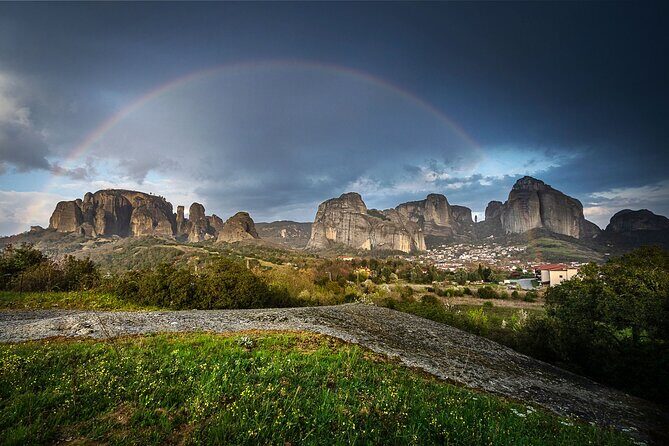
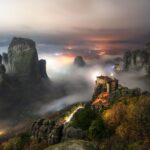
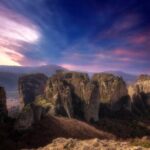
Meteora is one of those places where the timing really changes the experience. Morning tends to be cooler, the light is gentler, and you’re not fighting the same crowd wave that shows up later. With a private morning tour, you’re not locked into a rigid group rhythm from start to finish.
What I like about this style of tour is the balance: you still get key monasteries, but you’re not sprinting from one viewpoint to the next. You’ll have time to step in and out, pause for photos, and take a breath on the way between rock-top stops. That matters here, because Meteora isn’t just “pretty buildings on cliffs.” It’s a whole spiritual landscape of stone, steps, narrow pathways, and sweeping air around you.
Also, you’re going early enough to make the day feel purposeful. You’re not spending hours trying to decide where to go first or scrambling for transportation from Kalambaka to the monasteries. Instead, you start with pickup and a plan.
The one thing to watch: monasteries can be strict about clothing and entry rules. If your outfit doesn’t pass the test, you may have to buy covering items once you arrive (free clothing is not guaranteed). That’s not a reason to avoid the tour—just a reason to pack appropriately.
You can also read our reviews of more private tours in Meteora

Pickup, timing, and how you’ll actually spend the 4 hours
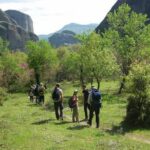
This is a private tour for your group only, up to six people. That small cap is a big deal at Meteora because you’ll spend some time walking inside monastery areas and navigating steps and viewpoints. A larger group can turn those moments into a traffic jam. A small group keeps it calmer.
You’ll start at 9:00 am. Pickup is offered from all around the city, so you’re not stuck hunting for a meeting point. The tour runs about four hours, which is long enough to feel like you did something meaningful, but not so long that the day burns out your energy.
You’ll also have a simple rhythm: drive, arrive, visit, then drive to the next rock-top site. Bottled water and insurance are included, which is a nice touch when you’re dealing with stairs, sun exposure, and the kind of bumpy terrain that can make the day feel more intense than it looks on a map.
One more practical note: some monasteries have closures on certain days. If your goal is to visit a specific nunnery or monastery that’s closed that day, you’ll want to check your tour date. This tour has a built-in selection, so the bigger question is whether your date falls on a closure day.
Stop 1: Great Meteoron (Transfiguration of the Saviour) and the biggest wow factor
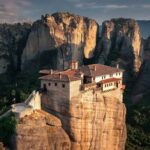
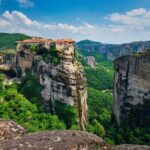
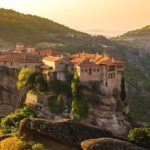
Your first stop is the Holy Monastery of the Great Meteor (Transfiguration of the Saviour). This is a male monastery located at the highest point of Meteora, at an altitude of 534 meters. It’s also the largest of the six still active monasteries in Meteora, which you’ll see reflected in the scale and prominence of the complex.
If you’re only doing three stops, Great Meteoron is a smart starting choice because it sets the tone. The rock-top position gives you that iconic Meteora feeling right away: stone buildings clinging to cliffs, dramatic angles, and a huge sense of height. You’ll also get a clear sense of why these places were chosen in the first place—distance, isolation, and a commanding view of the surroundings.
The tour schedules about 1 hour 20 minutes for the monastery visit. That’s enough time to explore at a respectful pace. Don’t feel pressured to rush through. Monasteries reward slow walking—there’s usually a rhythm of steps, small changes in viewpoint, and quiet corners where you can pause.
Admission isn’t included, so budget for a monastery ticket fee on-site. The amount isn’t huge, but it’s better to know it’s separate than to be surprised once you’re already there.
A practical tip: start paying attention to your dress code right here. If you need to adjust clothing, it’s easier to do it at the first stop than once you’re already committed to a tight schedule later.
Stop 2: Agios Stefanos nunnery above Kalambaka (and the hours you must know)
Next up is Agios Stefanos, a nunnery on Meteora. This monastery sits at the southern end of Meteora, above Kalambaka. It’s one of the still-active monasteries and part of the UNESCO World Heritage area since 1988.
What makes this stop feel different is the character of the monastery itself. Being a nunnery changes the atmosphere. Expect a more reflective feeling as you move through the site, plus the setting is a bit more “southern Meteora” than the high central rock cluster.
There’s also a history element worth keeping in mind. Settlement on the rock of Agios Stefanos began at the end of the 12th century. According to tradition, in 1191/2, an ascetic named Jeremiah founded the monastery.
You’re scheduled for another about 1 hour 20 minutes here, with admission not included.
Now, the big practical detail: opening hours vary by season, and there’s a weekly closure. The monastery is closed every Monday. It also has special Sunday timing, welcoming visitors from 09:30 in the morning. Summer hours list two visiting windows (a morning block and an afternoon block), while winter hours shorten the day a bit.
So if you’re planning based on your own timing, keep this in mind: your tour starts at 9:00 am, but Agios Stefanos can have openings that begin at 9:30 on Sundays. On a closed day, the tour wouldn’t make sense as planned. That’s why choosing the correct date matters more here than at most sightseeing stops.
Stop 3: Agios Nikolaos Anapaphsas and the dress code reality check
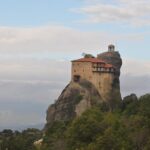
Your final monastery stop is Agios Nikolaos Anapaphsas. Like the others, it’s still active and part of Meteora’s UNESCO status (since 1988). This is a strong closing choice because it helps round out the story of Meteora’s active monastic life across different sites and settings.
Time at this stop is again about 1 hour 20 minutes, with monastery admission not included.
Before you arrive, don’t treat dress code as a suggestion. Meteora monasteries have a strict policy. Here’s the core idea:
- Men should wear pants and sleeves on shirts.
- Women should wear long skirts and fully cover shoulders.
If your clothing is off, you might be offered covering items like skirts or pants for short shorts. But since the Covid-19 pandemic, free clothing has not been provided for security reasons. That means if you don’t meet the rules, you may be required to purchase clothing upon entering the convent. In other words: plan to comply from the start to avoid an awkward scramble.
There’s also a closure day to note: Agios Nikolaos Anapaphsas is closed every Friday. Summer hours list 9:00–16:00, and winter hours 9:00–15:00.
If you’re choosing between dates to get the best monastery mix, Friday is the day to avoid for this stop. If your schedule makes Friday unavoidable, you may need to pick another tour option, but this tour as described depends on visiting this site.
You can also read our reviews of more tours and experiences in Meteora


Price and value: what $240.96 per group really buys you
The price is $240.96 per group, for up to six passengers. That’s the key frame to evaluate: you’re not paying per person like a hop-on-hop-off bus. You’re buying a private morning plan—transport, timing, and a controlled route—so your group can focus on monasteries instead of logistics.
When you break it down, value comes from three things:
- Private transportation: you’re not coordinating taxis, timing buses, or paying extra to move around Meteora between rock-top areas.
- Efficient route choice: you hit three active monasteries, not all six. That means you spend time rather than just passing through.
- Inclusion of bottled water and insurance: small costs you might otherwise pay or worry about.
What’s not included is monastery admission. The tour lists a monastery ticket fee, and the itinerary notes entry fees per stop. Either way, it’s a small add-on, but it’s an add-on.
If you’re traveling solo, the price can feel steep compared with group tours. If you’re traveling as two to four people, it often starts to make more sense because the per-person cost drops fast while you keep the benefits of privacy.
This is a particularly good fit if:
- you hate feeling rushed,
- you want a calm morning with time for photos and walking,
- you prefer not to manage the “how do we get there?” question on your own.
The small details that make the day feel smooth
You’ll get a few helpful basics built into the plan. First, you receive a mobile ticket, which is convenient and reduces hassle at check-in. Second, pickup is designed for people staying around the city, and the start is near public transportation, which can be helpful if your hotel is hard to reach by vehicle.
English is supported, which matters for understanding what you’re seeing. Meteora’s monasteries can feel overwhelming at first—so much stone, so many steps, so many viewpoints. A guide who gives you clear context helps you look at the right things, not just the biggest photo spots.
One detail you should treat as a “must”: respect monastery rules on clothing. It’s not about being dramatic. It’s about preventing a forced clothing purchase and keeping your visit comfortable.
Finally, aim for practical footwear. Even though the tour covers travel time, you’re still walking and climbing stairs on rock-top grounds. If your shoes are comfortable for hills and steps, your enjoyment usually jumps.
Weather and how to keep your plans flexible
Meteora really can change day to day. This experience is described as requiring good weather. If it has to be canceled because of poor weather, you’ll be offered a different date or a full refund.
That means your best strategy is to book with enough flexibility in your schedule. If Meteora is one of the “big days” of your trip, consider leaving room for a swap.
Also, check your own expectations. If fog, rain, or strong wind rolls in, viewpoints can be less dramatic. You’re still seeing monasteries, but the outside experience can feel muted. The tour’s weather rule is there for a reason—Meteora works best when the skies cooperate.
Should you book Majestic Meteora Private Morning Tours?
I’d book it if you want a comfortable, controlled Meteora morning without turning it into a sprint. This tour makes sense for small groups that care about timing, prefer private transport, and want to spend real time inside each monastery.
Skip it (or switch plans) if you already have a hard-to-match schedule for monastery closures, or if you know your clothing won’t meet the dress code. It’s not a problem if you pack correctly; it’s just a hassle if you don’t.
If you can choose dates, avoid closures like Monday for Agios Stefanos and Friday for Agios Nikolaos Anapaphsas. Also, plan around the fact that Agios Stefanos has Sunday timing that starts later at 09:30, which can affect how your morning flows if you’re arriving right at 9:00.
Bottom line: for up to six people, the private setup is a strong value way to see three active monasteries in one morning, with enough time to look closely and not feel rushed.
FAQ
Does this tour include pickup?
Yes. Pickup is offered from all around the city. The start time is 9:00 am.
How long is the Meteora private morning tour?
The duration is about 4 hours.
How many people are in a group?
It’s private for your group only, with up to 6 passengers.
What time do the monasteries visits take place?
The tour starts at 9:00 am, and each monastery stop is scheduled for about 1 hour 20 minutes. Exact opening times vary by monastery and season.
Which monasteries are included?
You’ll visit the Holy Monastery of the Great Meteor (Transfiguration of the Saviour), Agios Stefanos, and Agios Nikolaos Anapaphsas.
Are monastery tickets included in the price?
No. Monastery tickets are not included. You should budget a monastery admission fee on-site.
What is the dress code for the monasteries?
Men should wear pants and long-sleeve shirts. Women should wear long skirts and clothes that fully cover the shoulders.
What if my clothes do not meet the dress code?
Clothing may be provided in some cases, but since the Covid-19 pandemic, free items are not provided for security reasons. If you aren’t properly dressed, you may be required to purchase clothing upon entering.
What days are some monasteries closed?
Agios Stefanos is closed every Monday. Agios Nikolaos Anapaphsas is closed every Friday.
What happens if weather is bad?
This experience requires good weather. If it’s canceled due to poor weather, you’ll be offered a different date or a full refund.