REVIEW · KATAKOLO
Katakolon: Olympia Highlights Shore Excursion
Book on GetYourGuide →Operated by Your Shore Time · Bookable on GetYourGuide
Olympia from Katakolon is a fast time machine. You trade cruise-port waiting for a direct hop to the ruins tied to the Olympic Games. I like how this trip blends a live English-speaking coach escort with time to explore at your own pace using a free downloadable audio guide.
Two things I really like: the trip is built for cruise schedules with air-conditioned roundtrip transportation and a smooth port pick-up, and you get the key monuments in one focused visit. Think Gymnasium, Palaestra, the Temple of Zeus, the Temple of Hera, and the sacred enclosure called the Altis—all in a short window.
One consideration: the day is tightly timed. You’ll have limited free time on-site, and while the Olympia Museum is optional, its entrance fee isn’t included, so you may feel a squeeze if you want both ruins and museum.
In This Review
- Key highlights to know before you go
- Katakolo port to Olympia: easy start, clear pace, real-world timing
- Meeting your escort and how the “guided” part actually feels
- The Altis sanctuary of Zeus: where the Olympics weren’t just sport
- Temple of Zeus and Temple of Hera: sacred power, mirrored purpose
- Gymnasium and Palaestra: training space becomes your history lesson
- The stadium viewpoint: the competition theater you can still picture
- What you do with your free time: making the most of limited minutes
- The optional Olympia Museum: worth it, but plan for the extra cost
- Weather and comfort: your best tools are shoes, sun protection, and water
- Price and value: what $56 buys you (and what it doesn’t)
- Who should book this Olympia highlights excursion
- Should you book Katakolon Olympia Highlights?
- FAQ
- How long is the Katakolon Olympia highlights shore excursion?
- Where do we meet in Katakolon?
- Are Olympia entrance tickets included?
- Is the Olympia Museum included?
- Will there be a licensed guide inside Olympia?
- What should I bring, and is the tour accessible?
Key highlights to know before you go
- Port pick-up at the John Latsis Katakolo Port keeps the start simple after you get off the ship
- Entrance tickets to Olympia are included so you can focus on seeing, not queuing for paperwork
- Altis sanctuary + the Classical Temple of Zeus area give you the core story of the Games’ sacred setting
- Gymnasium and Palaestra let you connect athlete training to the later competition scene
- Free time on-site helps you pace your photos and lunch (but it’s not a long linger)
- Walking-heavy ruins mean it’s not suitable for wheelchair users or those with mobility issues
Katakolo port to Olympia: easy start, clear pace, real-world timing
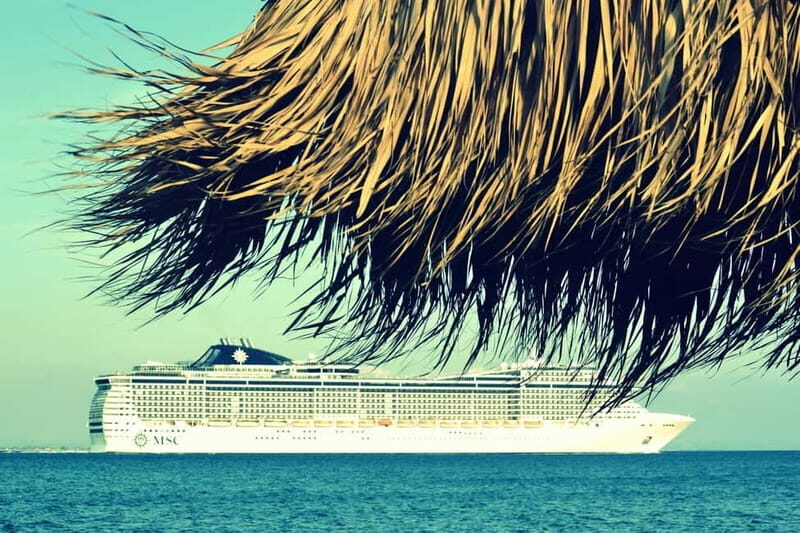
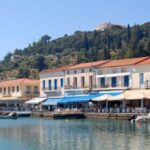
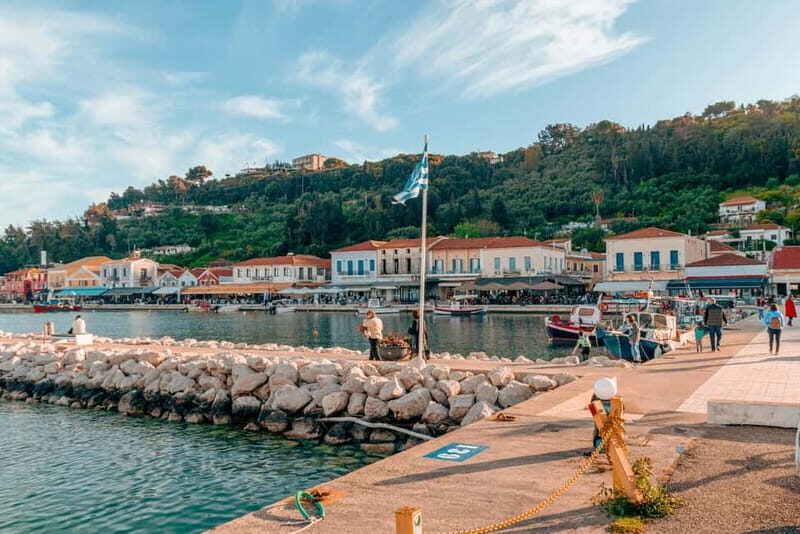
Katakolon is one of those ports where you can either drift with the crowds or grab a worthwhile “greatest hits” day trip. This Olympia highlights shore excursion is the second option: you meet at the port after disembarkation, then you’re quickly on your way by air-conditioned coach.
The logistics are designed around the reality of cruise stops. There’s a bus ride of about 40 minutes to Olympia, and then a structured visit on-site. After that, you head back with a short return ride that gets you back to the John Latsis Katakolo Port before your ship needs you. If your biggest worry is wasting time with complicated transit, this tour keeps it straightforward.
That said, you’re not signing up for a slow, museum-by-museum wander. You’re signing up for a short, high-impact day. If you love planning your route and lingering where something catches your eye, you’ll want to use the included free time carefully.
You can also read our reviews of more tours and experiences in Katakolo
Meeting your escort and how the “guided” part actually feels
This is a live English-language tour in the sense that you have an escort who helps set the scene and explains what you’re seeing. You’ll board your transportation and the escort walks you through the meaning of the site—Olympia’s role as a center of athletic excellence and why the Games were held every four years in honor of Zeus.
There’s also a practical addition: a free downloadable audio guide of Olympia and the museum. That matters because ruins don’t come with big story labels in every spot. The audio guide helps you make sense of what you’re looking at when you’re moving at your own speed.
One detail worth knowing: a licensed guide escorting you inside Olympia is not included. In plain terms, you’ll get direction and context, but you should expect to do some self-guided reading and listening while walking the site.
If your goal is to learn the “why” behind the stones—not just take photos—this format works. You get the big picture from your escort, then you use the audio guide to keep filling in the blanks.
The Altis sanctuary of Zeus: where the Olympics weren’t just sport
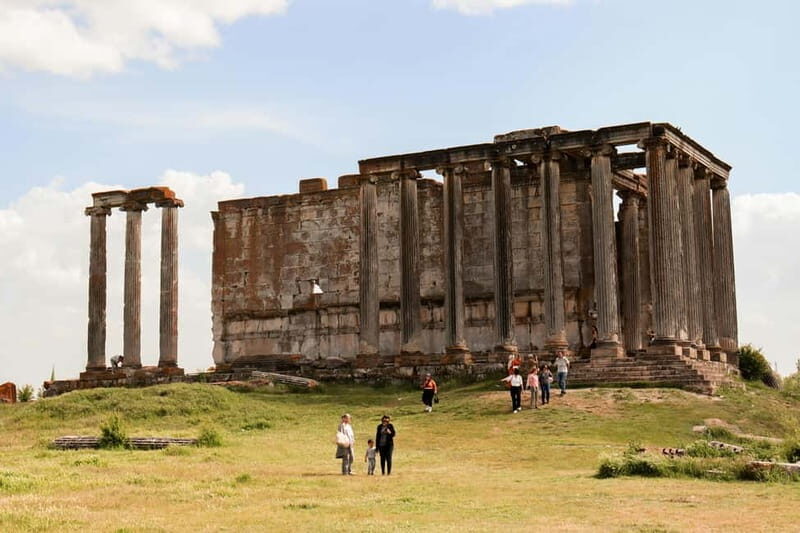
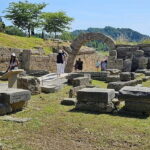
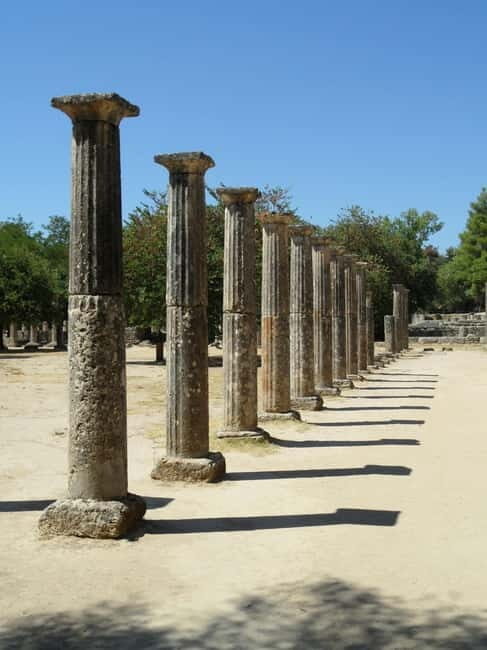
The heart of Olympia isn’t only the buildings. It’s the idea of place. In this excursion, you’re set up to see the Altis, the sacred enclosure and sanctuary of Zeus, including the Classical Temple area tied to the Games’ religious center.
When you stand in this kind of sacred athletic landscape, you start to understand why the Olympics were bigger than medals. This sanctuary setting links athletic excellence to worship. The Games weren’t held just to crown winners; they were part of a broader celebration dedicated to the gods, with Zeus at the center.
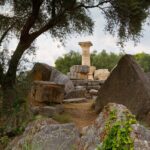
The temples you’re shown—Temple of Zeus and Temple of Hera—help you see how power and athletic identity were baked into the town. Even seeing them mainly from the outside still gives you strong orientation because your escort frames what each structure meant, not just where it sits.
It’s also a good moment to think about scale. In Olympia, you can’t see everything at once. The tour’s structure nudges you to prioritize the areas that best explain the system: sacred enclosure first, then the sport-related spaces that tell you how athletes prepared.
Temple of Zeus and Temple of Hera: sacred power, mirrored purpose
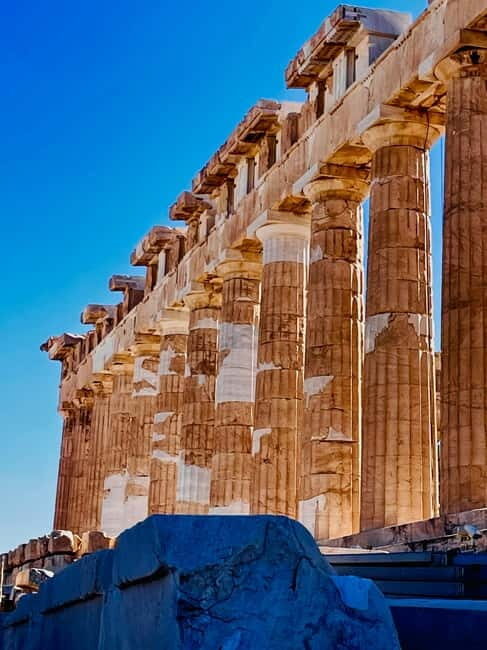
The Temple of Zeus is the headline, because Zeus is tied directly to the origin story of the Games. You learn this isn’t random mythology. Olympia functioned as the recurring athletic and sacred center in Greece, and the Games were held every four years to honor Zeus.
Then you get Temple of Hera in the mix, which helps balance the story. Hera’s presence matters because it shows the Games weren’t only one-god theater. The religious landscape included multiple divine connections that shaped how people understood the event.
Practical tip: when you’re looking at the temples from outside, let your escort’s explanation guide where you stand. In a site like this, small repositioning can change what you can “read” visually—what lines up, what dominates a view, and what helps the story click.
Gymnasium and Palaestra: training space becomes your history lesson
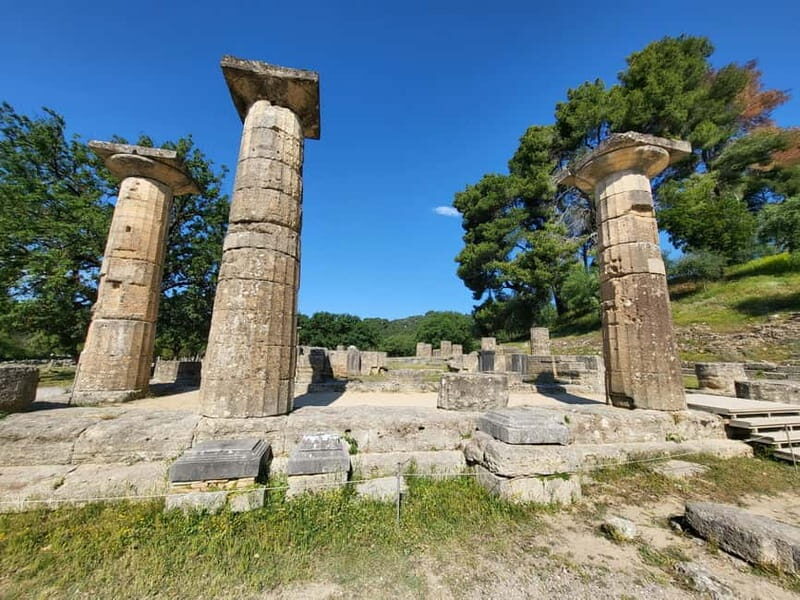
Many ruins feel like ruins until you connect them to everyday use. That’s where the Gymnasium and Palaestra stop really pays off.
Athletic preparation wasn’t abstract. These spaces were designed for training routines and physical conditioning. Seeing the layout where exercise and training took place helps you understand the Olympics as a process, not just a final event.
This is also one of the best parts of a shore excursion like this, because you get something you can’t easily “guess” from a photo. Even if you’re not an architecture nerd, you’ll likely find yourself thinking, Okay, this is where the body-work happened before the big moment.
If you’re traveling with teens or anyone who usually tunes out “ancient stuff,” this is a great angle. You can keep the conversation grounded in human behavior: practicing, building strength, learning discipline. The stones become a reminder that sport has always been work.
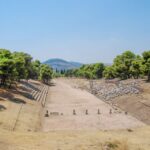



The stadium viewpoint: the competition theater you can still picture
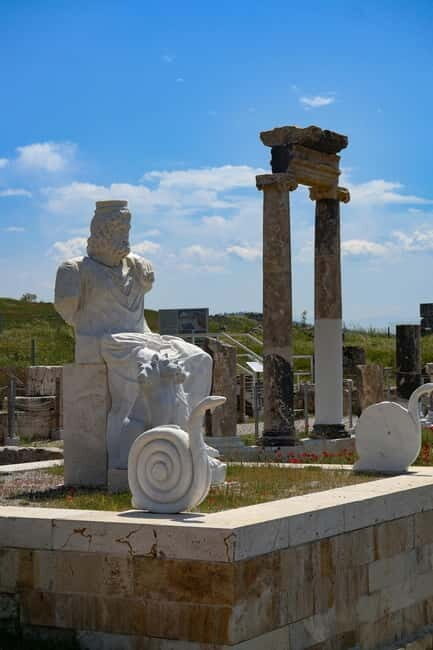
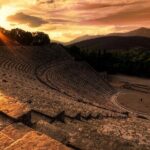
Olympia’s ancient stadium is one of those places where the past stays legible. You’re not going to stage your own race here, but you can still sense how crowds, athletes, and the rhythm of competition would have played out.
Even when the tour focuses on exterior viewing, the stadium area acts like a visual anchor. Once you’ve seen the sanctuary of Zeus and the training spaces, the stadium makes sense as the final stage.
If you’re the type who likes photos that tell a story, build your photo sequence in this order:
- temple areas for sacred context
- training areas for preparation
- stadium for the payoff
It helps your brain connect the whole system instead of treating each stop as an isolated postcard.
What you do with your free time: making the most of limited minutes
The schedule gives you a break on-site with about 50 minutes of free time. That’s enough for photos, a slow walk to re-check your favorite spots, and possibly lunch if you plan smart. It’s not enough for a long, detailed museum-style crawl through every last corner.
A practical approach:
- Use your free time to revisit the areas your escort highlighted
- Bring your water and pick a shade moment if the sun hits hard
- If you’re set on the Olympia Museum, treat it like a separate decision, not an automatic add-on
This matters because the museum entrance isn’t included. So if you want more context—artifacts, displays, and explanations—you’ll likely need extra planning (and money) to do it well.
Also note: the excursion says it’s not suitable for people with walking and mobility issues and it’s not for wheelchair users. Even with free time, you’ll be moving over archaeological terrain. Comfortable shoes are not optional here.
The optional Olympia Museum: worth it, but plan for the extra cost
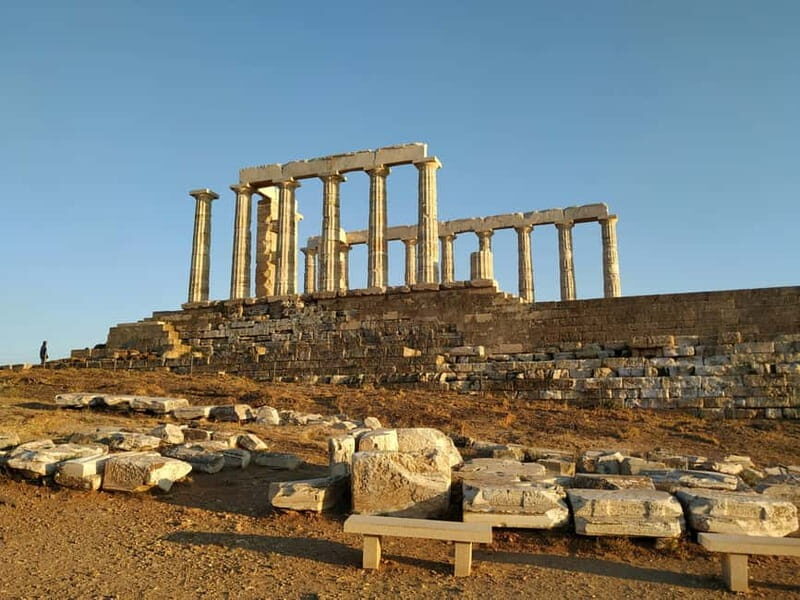
You might have time and interest to visit the Olympia Museum during your free time, but the museum entrance fee is not included. So you’re making a trade-off: ruins time vs. museum time.
Should you go? If you’re the type who likes objects that explain how people lived and competed, the museum can add depth fast. It’s also a useful way to understand the site if you feel you only saw “the shapes” of buildings outside.
If you want the easiest stress-free path, you can skip the museum and use your free time to soak up the site views and take your own pacing. Many people will prefer that at a cruise stop, because you can’t control everything about timing or sun.
Either way, your escort and the audio guide can help you decide on the spot, based on what you already learned about the Altis and the training/competition spaces.
Weather and comfort: your best tools are shoes, sun protection, and water
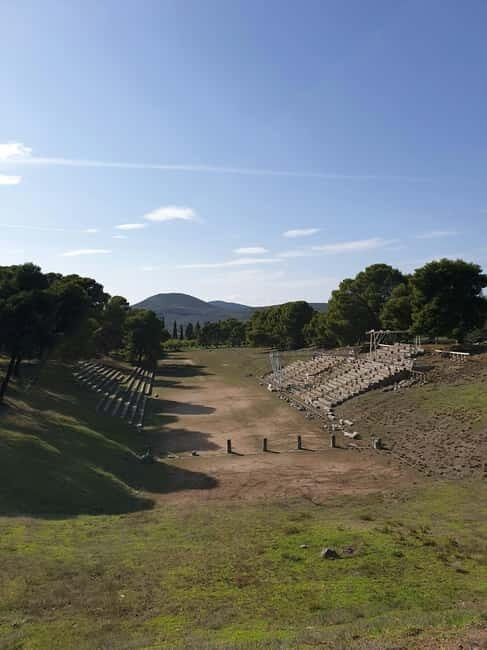
Olympia is outdoors for most of the experience. That means your comfort strategy matters more than you might expect.
Bring:
- comfortable walking shoes
- sunglasses
- a hat
- sunscreen
- water (a bottle)
And yes, Greek sun can turn “a short walk” into “a lot faster than you planned,” especially when you’re squeezing a historic site into a four-hour window.
A small but useful note: smoking isn’t allowed on the tour. Simple, but it’s good to know so you’re not hunting for a place to step out.
Also watch for public holidays. The information notes that archaeological sites and museums in Greece are closed during local public holidays, so if your cruise date lands on a holiday, double-check your plans before heading out.
Price and value: what $56 buys you (and what it doesn’t)
At $56 per person for about 4 hours, this tour is priced like an efficient port-to-site package. The value comes from what’s included:
- cruise port pick-up
- air-conditioned roundtrip transportation
- English-speaking coach/minibus escort
- entrance tickets to Olympia
- a free downloadable audio guide
Those inclusions matter because they remove the two biggest friction points for cruise days: getting there and paying entry fees in the middle of time pressure.
What’s not included:
- museum entrance fee (optional)
- food and drinks
- licensed guide escort inside Olympia
So the “cost math” is really about your priorities. If you want the easiest path to see the core Olympia monuments with entry handled and a guide explaining the story, the price is a solid deal for a short visit. If you only care about a museum and want lots of time inside, you’ll likely need a different plan.
Who should book this Olympia highlights excursion
This shore excursion is a good match when you want:
- a short, structured Olympia day without complicated logistics
- an escort to explain the mythology and the Olympic origins tied to Zeus
- key stops like Gymnasium, Palaestra, Temples of Zeus and Hera, and the stadium area
It’s not the best choice if:
- you have mobility limitations or need wheelchair access
- you prefer deep museum time over outdoor ruins
- you want to roam freely without being guided by a set schedule
If you’re traveling with family members who enjoy seeing major landmarks but also appreciate someone explaining what they mean, this format hits a nice balance.
One more thing: some people described the experience as basically a port-to-Olympia transfer plus site time. That’s not a failure—it’s the reality of a shore excursion—but it helps set expectations. You’re not buying an all-day course. You’re buying a focused hit of the essentials.
Should you book Katakolon Olympia Highlights?
Book it if you’re short on time and you want your Olympia visit to start strong and stay organized. With included Olympia entry tickets, air-conditioned transport, and a guide who puts the ruins into context, you’ll get more meaning than you would by simply showing up on your own.
Skip or reconsider if you know you’ll want long museum time, or if walking on archaeological paths is tough for you. In that case, you’ll feel the four-hour limit quickly.
My practical call: this is a smart choice for first-time Olympia visitors from Katakolon who want the core Altis + Zeus/Hera + training + stadium story in one trip.
FAQ
How long is the Katakolon Olympia highlights shore excursion?
It runs for about 4 hours, including roundtrip transportation.
Where do we meet in Katakolon?
Meet at the John Latsis Katakolo Port. After you disembark, go to the port exit and look for the large blue overhead sign where your driver and tour escort will be waiting with a YOUR SHORE TIME sign.
Are Olympia entrance tickets included?
Yes. Entrance tickets to the Olympia site are included.
Is the Olympia Museum included?
No. The museum entrance fee is not included. You may have free time to visit it during the break, but it would be optional and paid separately.
Will there be a licensed guide inside Olympia?
No. An English-speaking coach/minibus escort is included, but a licensed guide escorting customers inside Olympia is not included.
What should I bring, and is the tour accessible?
Wear comfortable shoes and bring sunglasses, sunscreen, a sun hat, and water. It is not suitable for people with walking and mobility issues and it is not for wheelchair users. Smoking is not allowed.