REVIEW · KATAKOLO
Katakolo: Olympia Tour and Archeological Museum
Book on GetYourGuide →Operated by AVALON TRAVEL SERVICES SINGLE MEMBER · Bookable on GetYourGuide
Ancient Olympia goes fast. This guided tour from Katakolo lets you see the origins of the Olympic Games in the open air, then connects the ruins to the art and artifacts back inside the museum. It’s a smart way to cover a lot of ground without worrying about transport or timing.
I really like two things here. First, you get guided time at both Ancient Olympia and the Archaeological Museum, so you’re not just staring at stones. Second, the bus ride is handled for you with an air-conditioned coach, which matters when the Peloponnese feels hot and the cruise days run tight.
One possible drawback: the site can be busy and groups can feel large, so you may want to plan for clearer audio. Some people found it harder to hear the guide without whisper headsets.
In This Review
- Key highlights you’ll feel right away
- Katakolo to Olympia: the ride that sets the tone
- Ancient Olympia on foot: stadium, sanctuaries, and the Zeus story
- Walking the stadium and sacred grounds
- Temple of Zeus and the vanished statue
- The starting-line moment
- Archaeological Museum of Olympia: where the ruins make sense
- Olympia village free time: a 30-minute breather that helps
- The guides make or break the day
- How a great site guide changes everything
- Hearing the guide: plan for it
- Value check: what $129 really buys you
- Practical tips for a smoother Ancient Olympia visit
- Should you book this Katakolo Olympia tour?
- FAQ
- How long is the Katakolo to Olympia tour?
- What’s included in the price?
- Do I need headsets to hear the guide?
- Do I need identification for Ancient Olympia?
- Where do I meet the tour in Katakolo?
- Is the tour wheelchair accessible?
Key highlights you’ll feel right away
- A guided walk through the sacred grounds tied to the Olympics’ birthplace, not just a photo stop
- Temple of Zeus area and the famous starting-line feel, where legends were made in real space
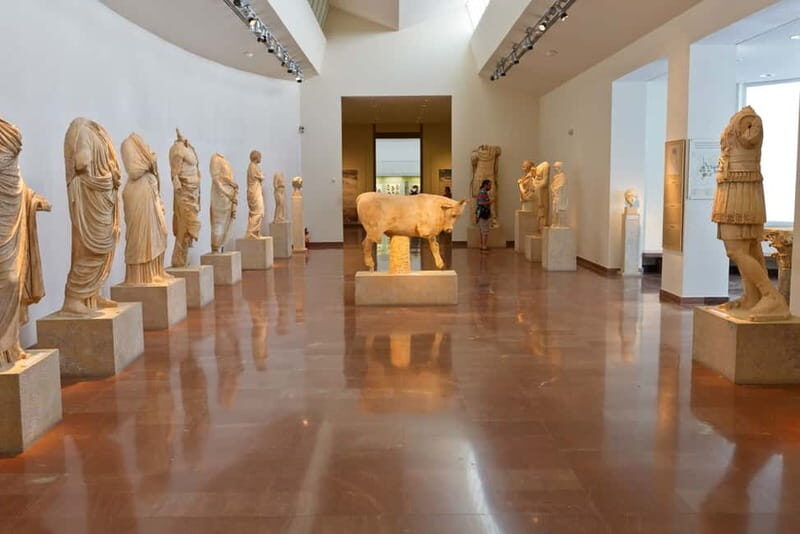
- Museum context that makes the ruins click, especially the sculptures and artifacts you’ll see up close
- Time in Olympia village so you can reset, grab a drink, or simply breathe
- Licensed guides in English and German, including names like Flora, Antonia, Christos, Mike, and Kathlina from past tours
- Optional whisper headsets if you want to avoid strain in a crowded group
Katakolo to Olympia: the ride that sets the tone
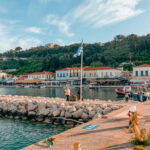
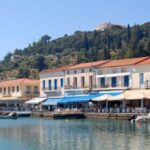
Katakolo to Olympia isn’t right next door, so the transfer is part of the experience. You start at Katakolo Port and take a coach ride of about 50 minutes each way. I like this setup because it’s one less thing to juggle on a cruise day. Also, having an air-conditioned vehicle can be a real quality-of-life upgrade if you’re going in warmer months.
A practical detail: after you get off your ship, walk along the pier and out of the gated/restricted area. The team meets you at the main gate under the big blue Katakolo Port sign, and you should look for the Avalon Travel sign. That’s the moment where a lot of stress gets either avoided or created—so give yourself a little slack time to find the group.
If you’re sensitive to heat, keep this in mind from the ride onward. Some travelers reported the air conditioning wasn’t very cold on hot days, so dress in layers you can manage in both sunshine and vehicle air.
You can also read our reviews of more tours and experiences in Katakolo.

Ancient Olympia on foot: stadium, sanctuaries, and the Zeus story
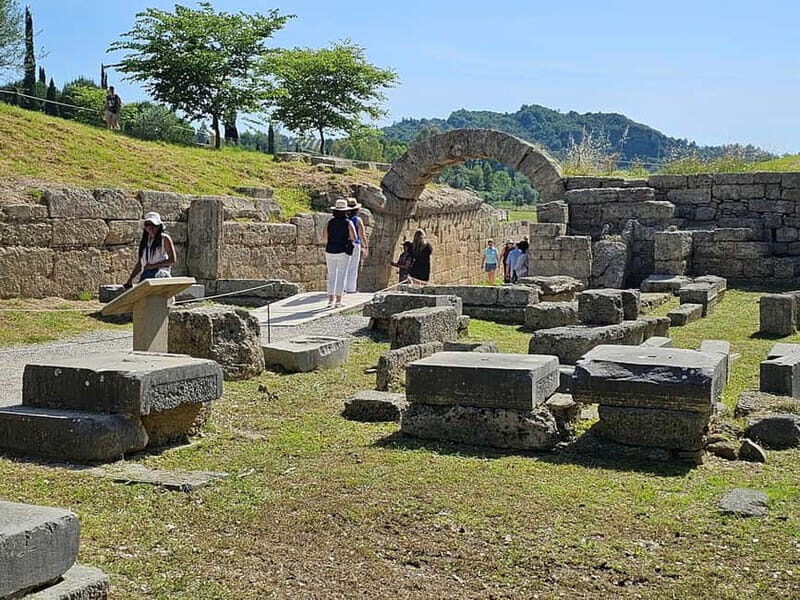
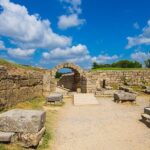
The heart of the tour is the Ancient Olympia site, where the Olympics began. You’ll get around 1 hour of guided walking. With that time, the goal isn’t to see every corner in extreme detail—it’s to get oriented, spot what matters, and understand why the place mattered.
Here’s what you can expect to experience, in plain terms:
Walking the stadium and sacred grounds
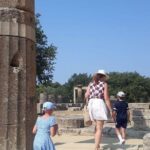
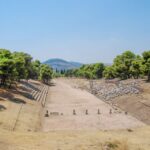
You’ll walk through the original Olympic stadium and the surrounding sacred areas. This part is valuable because stadium ruins aren’t just dramatic; they’re readable. When a guide shows you how the ground was used—where athletes would have lined up, how the space worked—you stop viewing it as random blocks and start feeling the choreography of the ancient event.
Temple of Zeus and the vanished statue
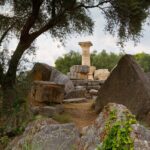
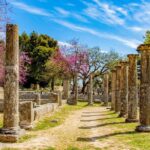
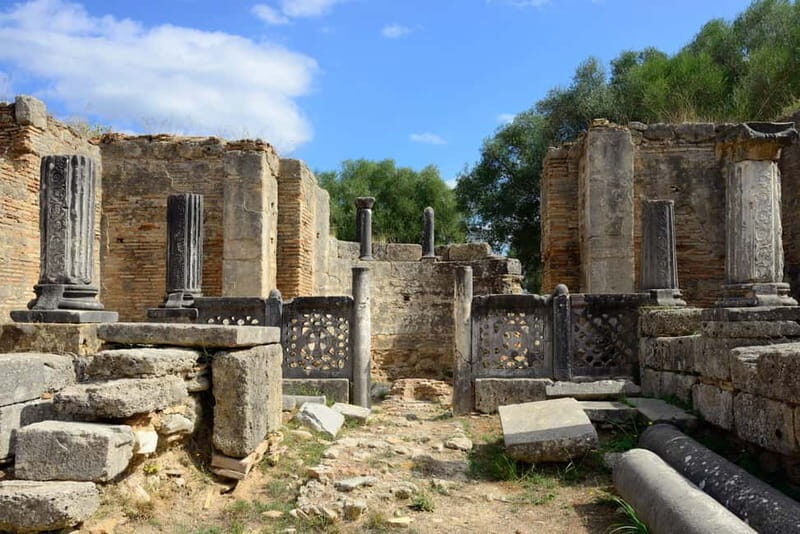
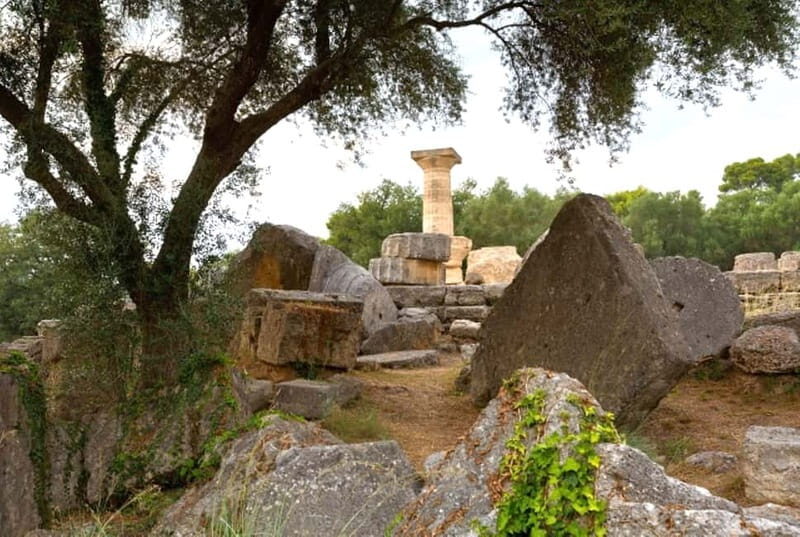
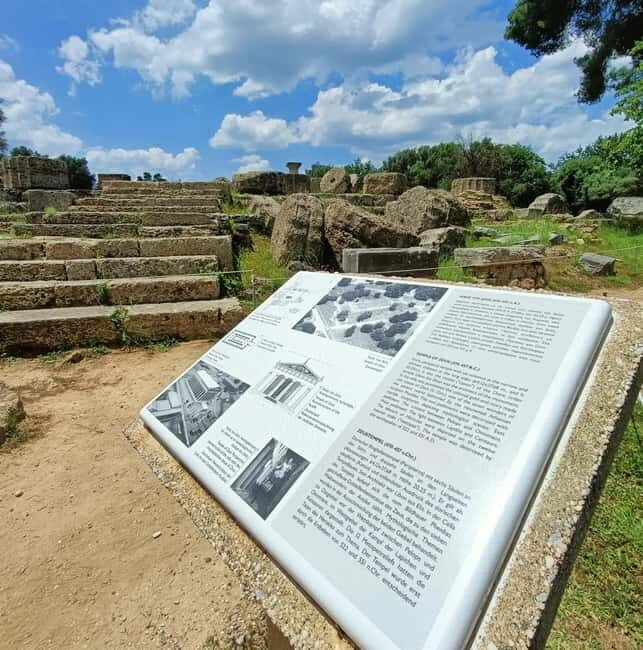
You’ll also explore the area connected to the Temple of Zeus, where the iconic Statue of Zeus once stood. Even though you’re not seeing the statue itself, the framing matters. A good guide connects the scale of the temple area to what people expected from it: power, religion, prestige, and public spectacle.
The starting-line moment
One of the most memorable ideas on this tour is standing on the ancient starting-line feeling of the original Olympic track. It’s the kind of stop that turns history into something physical. You’ll likely get a quick mental movie in your head: athletes ready, rules and ritual in place, the crowd energy (even if you’re seeing it centuries later).
Important walking note: this tour involves comfortable walking and standing. Wear supportive shoes. The site has uneven ground, and the tour schedule moves with purpose.


Archaeological Museum of Olympia: where the ruins make sense
After the outdoor site, you’ll head into the Archaeological Museum of Olympia for about 50 minutes of guided touring. I love this pairing because the museum does what ruins alone can’t: it gives objects back their identity.
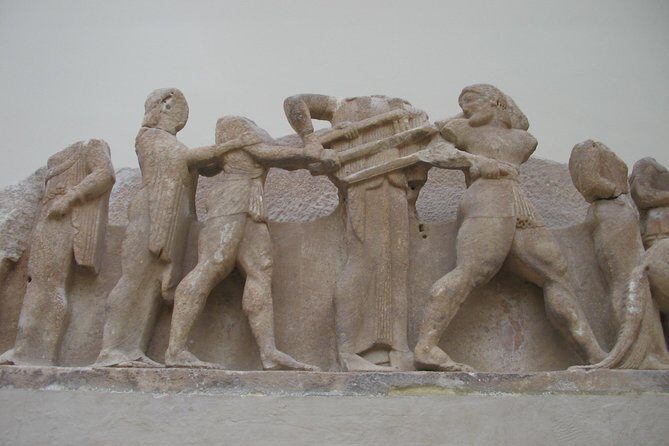
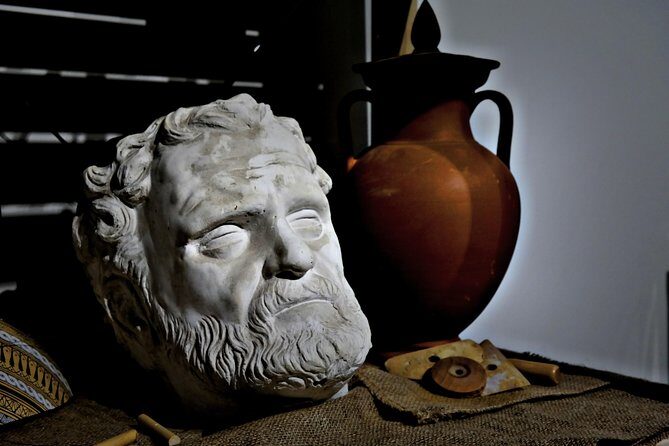
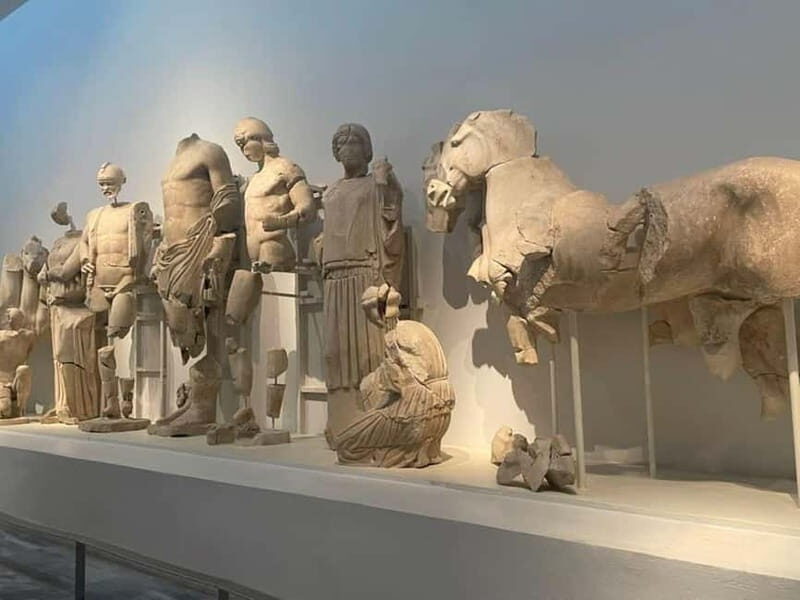
In the museum, you’ll focus on things like statues, artifacts, pottery, and sculptures—the material culture of athletes, worship, and daily life around the Games. This is where you start noticing connections. A fragment in the ground becomes a recognizable type of artwork. A ruin’s purpose becomes clearer once you’ve seen what people valued and used.
A big reason this stop earns so much praise: the museum guide format is built for interpretation, not just viewing. When the guide explains what you’re looking at without overloading you, you can leave with real understanding rather than a blur of exhibits.
Audio matters here too. A few people wanted whisper headsets because hearing a guide in a large group isn’t always easy. If you think you’ll struggle with hearing, add the optional headsets in advance so you’re not stuck guessing.
Olympia village free time: a 30-minute breather that helps
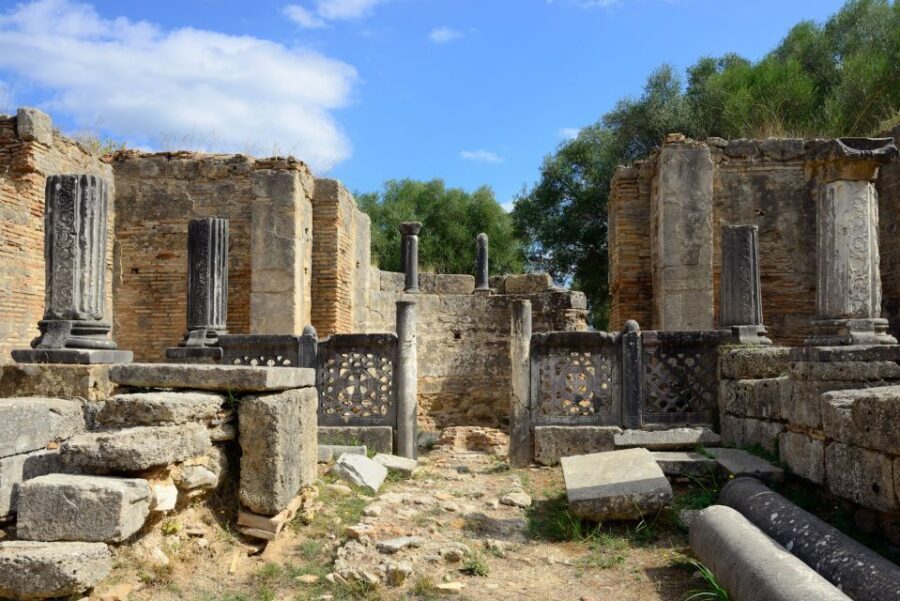
Then you’ll have about 30 minutes in Olympia, Greece. This isn’t long, but it’s enough time to reset after standing in the sun and walking on site. Use it to grab a quick drink, check the town vibe, or just step away for a moment.
I also like this as a reality check for your body. If you’ve been on a cruise, you may be carrying some travel fatigue. A short village pause makes it easier to enjoy the second half of the experience and not feel like a nonstop sprint.
The guides make or break the day
This tour is built around professional guides, and the difference shows. In past groups, bus hosts and site guides have included people like Flora, Christos, Antonia, and site guides such as Mike, Kathlina, and others. The common theme in the best experiences is pacing and clarity—keeping the group together and turning what you see into something you can actually picture.
How a great site guide changes everything
At Ancient Olympia, tiny details can become the main event once someone points them out. In one highly praised example, the site guide drew attention to carved footprint-style markings that helped show how a statue’s supporting elements worked. That’s the kind of “look again” moment that makes ruins feel alive.
Hearing the guide: plan for it
For a large group, being able to hear matters. Several people felt the tour would improve with headsets included in the price. The good news: whisper headsets are available as an optional extra, but you have to book them in advance. If you’re traveling with anyone who has hearing trouble, I’d strongly consider them.
Value check: what $129 really buys you
At $129 per person, this tour isn’t the cheapest way to see Ancient Olympia—but it’s also not overpriced for what you get.
Here’s the value logic:
- Port pickup and drop-off means you don’t have to coordinate local transport.
- Air-conditioned coach handles the travel between Katakolo and Olympia.
- Licensed professional guide for the site and museum helps you understand what you’re seeing.
- Entrance fees to the archaeological site and museum are included.
If you had to DIY this, you’d still need a reliable way to get there, pay for entries, and figure out how to interpret what you’re looking at. Even with the short time on each stop, the guided structure is what makes the price feel fair.
The trade-off is that the schedule is tight. You’ll see the key parts, but you won’t have hours and hours to wander freely.
Practical tips for a smoother Ancient Olympia visit
A few small choices make the day feel easier.
- Bring comfortable shoes. You’ll be standing and walking for extended periods.
- Use comfortable clothes you can move in, plus a light layer for vehicle AC.
- Bring valid identification for the Olympia site (passport, driver’s license, or another government-issued ID). This is required for the visit.
- If sound is important to you, book the whisper headsets in advance.
- Pack for crowds. Ancient Olympia can be busy, and large groups can make it harder to hear or get your preferred viewing angles.
Also, keep your expectations realistic about timing. Some people felt the day was a bit rushed due to crowding and group size. If you’re the type who wants to linger for 20-minute photo pauses, you might need to accept that this tour is built for coverage.
Should you book this Katakolo Olympia tour?
I think you should book it if you want a guided, guided-useful day focused on the Olympic birthplace plus the museum that explains it. It’s especially attractive for cruise travelers who need a clear plan: transport from the port, entries handled, and expert interpretation built into the route.
Skip it or look for another option if:
- you need wheelchair access (this one isn’t suitable for wheelchair users)
- you know you’ll struggle to hear in crowds and you’re not willing to add the optional headsets
- you want long, slow free time at the ruins (this schedule is time-efficient, not leisurely)
If your goal is to leave with a real understanding of why Ancient Olympia matters—and you want it without the stress of planning—this is a solid choice.
FAQ
How long is the Katakolo to Olympia tour?
The duration is listed as 1 to 4 hours, depending on the starting time. From the schedule details provided, you’ll have about 50 minutes each way by coach, around 1 hour at the archaeological site, about 50 minutes in the museum, and roughly 30 minutes in Olympia.
What’s included in the price?
The tour includes port pickup and drop-off, transportation in an air-conditioned coach, a licensed professional guide, entrance fees to the archaeological site and museum, and a tour leader.
Do I need headsets to hear the guide?
Whisper headsets are available as an optional extra for this tour and can be added at an additional charge. If you want them, you must select and book them in advance.
Do I need identification for Ancient Olympia?
Yes. You’re required to have a valid form of identification with you for the visit to the Olympia site, such as a passport, driver’s license, or another government-issued ID.
Where do I meet the tour in Katakolo?
After disembarking from your cruise ship, walk along the pier and out of the gated/restricted area. A team member will be waiting at the main gate of the port under the big blue Katakolo Port sign. Look for the Avalon Travel sign.
Is the tour wheelchair accessible?
No. This tour is not suitable for wheelchair users.