REVIEW · ATHENS
Meteora & Delphi 3 Days Semi Private Tour
Book on Viator →Operated by Visit Meteora · Bookable on Viator
Meteora feels like a puzzle made of stone. This 3-day route strings together monasteries high above the valley and then finishes at Delphi’s ancient sanctuary. I like the small-group setup (max 18) because it keeps the guide’s attention useful, not just background noise.
My second favorite part is the human side of the experience. In Meteora, guide Katerina gets credit in the feedback for sharing details with real feeling, including a personal cave-monk story that adds texture to what you see.
One consideration: this is semi-private. You get structure for the monastery days, but you’ll also have periods where you’re managing your own time in Delphi and handling transfers around public bus schedules.
In This Review
- Key highlights to know before you go
- Why this Meteora-and-Delphi combo works so well
- Small-group size and the semi-private pace (what it means for you)
- Price and value: what you’re really paying for
- Day 1 in Meteora: monasteries, frescoes, and smart timing
- Agios Stefanos (Saint Steven): frescoes plus an easier view
- Byzantine Church of the Assumption of Virgin Mary: art history in layers
- Great Meteoron (outside photo stop), then Roussanou, Holy Trinity, Varlaam
- Day 1 drawback you should plan for
- Day 2 in Meteora: more time inside the rock monasteries
- Great Meteoron (longer visit)
- Varlaam and Roussanou: built for viewpoint lovers
- Holy Trinity plus a second Agios Stefanos look
- Day 2 love factor
- Day 3: Thermopylae transfer and a Delphi day you can actually enjoy
- Thermopylae stop: quick history, big mental image
- Delphi Archaeological Area and the museum block
- Return to Athens: bus back, end point at KTEL Liosion
- Where each stop shines (and when it may feel like too much)
- Logistics that matter: entrance fees, shoes, and phone power
- Plan your entrance fees
- Shoes and weather
- Phone power and offline readiness
- Best fit: who should book this tour
- Should you book this Meteora and Delphi 3-day tour?
- FAQ
- What’s included in the tour besides transportation and hotels?
- Do I need to pay entrance fees for Delphi and Meteora?
- Is there a guide during the Delphi visit?
- How much time do I get at Delphi?
- Where does the tour start and end in Athens?
- How big is the group for this experience?
Key highlights to know before you go
- Small group (up to 18): easier questions and more breathing room at viewpoints and key stops.
- Crowd-smart monastery timing: quick photo breaks outside the main complexes before the heaviest rush.
- Route covers the “big three” views: Great Meteoron, Varlaam, and Holy Trinity, plus Roussanou and Agios Stefanos.
- Delphi with guided-style support: mobile audio guide app during your free time, including the museum.
- Useful hotel package: 2 nights in a 3–4 star hotel with breakfast, plus transport legs handled for you.
Why this Meteora-and-Delphi combo works so well
If you try to do Meteora and Delphi in one day, you’ll feel rushed. The winning move here is the split: Meteora gets two full monastery days with time to slow down, and Delphi gets a longer block to explore its site and museum without sprinting.
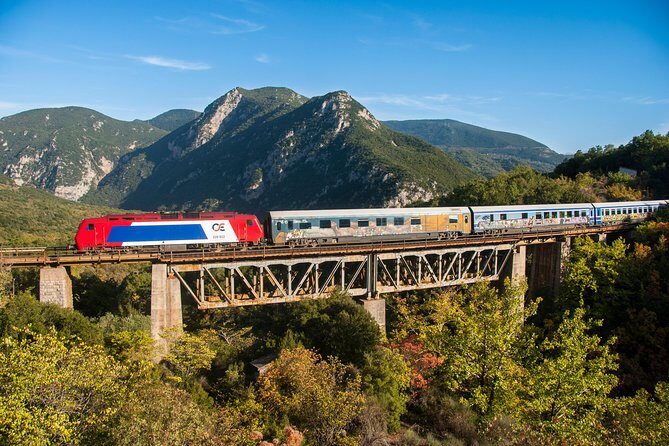
You’re also set up with a practical flow of transportation. You travel from Athens to the Meteora area on an express bus, then you move from Meteora to Delphi by car or mini-bus, and the return to Athens uses a direct public bus. That means you’re not constantly rebooking or switching taxis between places.
On top of that, you’ll usually get a smart audio guide on your phone or device (with multiple languages listed, plus the tour is offered in English). The audio matters because it turns free time into something purposeful instead of wandering with no plan.
You can also read our reviews of more private tours in Athens


Small-group size and the semi-private pace (what it means for you)

This tour runs with a maximum of 18 travelers, which is genuinely helpful in Meteora. The monastery sites aren’t huge, but walking paths and viewpoint areas can feel tight, so a smaller group lets the guide steer you without constant stop-and-go.
Still, “semi-private” has a practical meaning. You’re not treated like a private driver who stays by your side every minute. There are guided parts, but there’s also time to explore on your own—especially on the Delphi day. In a place like Delphi, that can be great. In a place like a bus terminal, it can feel stressful if you’re not prepared.
My advice: before you leave, save the key details on your phone:
- your hotel name and address
- where you’re told to be for departures
- a plan for luggage (where it goes, who holds it, and how you’ll find it again)
This isn’t about distrust. It’s about avoiding the kind of day that turns into confusion simply because public transport doesn’t wait.
Price and value: what you’re really paying for

At $349.97 per person, you’re paying for a packaged flow of big-distance travel plus 2 nights in a 3–4 star hotel with breakfast, along with express transfer legs and guided Meteora time. For a Meteora-and-Delphi combination, that’s often the difference between a smooth trip and one built on many separate bookings.
What’s not included is important:
- Delphi entrance fee: €12 per person
- Meteora entrance fee: €12 per person
- Delphi guide: not included
- Food and drinks unless specified
- local accommodation tax may apply (not included)
So, what does this mean for your budget? Plan on adding roughly €24 total in entrance fees (plus meals). If you’re the kind of traveler who pays attention to sights and museum content, those two fee lines are worth budgeting early so the trip doesn’t surprise you at the gate.
Also remember: Delphi is built for self-paced exploration. Because there’s no separate Delphi guide included, the audio guide and your own curiosity will carry some of the storytelling load.
Day 1 in Meteora: monasteries, frescoes, and smart timing
You’ll start the day early, with pickups and transport that connect you from Athens down into the Meteora/Kalampaka area. From there, Day 1 focuses on classic viewpoints and major monastery stops, with some of them set up to reduce crowd pressure.
Agios Stefanos (Saint Steven): frescoes plus an easier view
This is a calm start. You’ll visit the monastery complex known for its frescoes and a small museum area with items like ancient parchments and portable icons. What I really like about this stop is the accessible balcony view, since you get big panoramic sightlines without needing a stair-heavy approach.
Practical note: wear comfortable shoes anyway. Even when a place is described as accessible, you’re still walking on uneven stone paths.
You can also read our reviews of more tours and experiences in Athens




Byzantine Church of the Assumption of Virgin Mary: art history in layers
Next comes the Byzantine church, where you’ll see:
- frescoes dating to the 16th century
- a carved pulpit said to be from the 7th century
- a mosaic masterpiece from the 5th century
- remnants of an Apollo temple with marble sculptures and ancient symbols
That sounds like a lot, and it is. The value is that you start noticing how Greek religious sites reuse and reinterpret older sacred spaces.
Great Meteoron (outside photo stop), then Roussanou, Holy Trinity, Varlaam
Day 1 includes shorter stops for photos and views—some positioned to give you a chance before the biggest morning traffic and crowds.
- Great Meteoron: you get a quick outdoor break for photos.
- Roussanou: highlighted as one of the most photogenic spots in Meteora.
- Holy Trinity: a short stop where the view is famous partly because the James Bond movie filming is linked here.
- Varlaam: another view-focused stop that’s meant for photo time and quick appreciation.
Then you finish the Meteora block with about an hour to experience the vistas and monasteries with guide storytelling.
Day 1 drawback you should plan for
The day is packed with stops, even if some are short. It’s thrilling, but it’s also a “keep your energy up” day. If you’re traveling with limited stamina, you’ll want to pace yourself during transitions and save longer rests for Day 2.
Day 2 in Meteora: more time inside the rock monasteries
Day 2 shifts into longer visits at the monastery complex level. This is where you can get a better sense of how the buildings work, not just how they look from a distance.
Great Meteoron (longer visit)
Great Meteoron is described as the oldest and in terms of size, the big one. You’ll have about one hour here, which is enough to slow down, look closely at details, and take in how the site dominates the area.
Varlaam and Roussanou: built for viewpoint lovers
Varlaam comes next with about 45 minutes. You’ll also get Roussanou for a shorter block (around 20 minutes). Together, these stops help you compare architectural styles and how monks’ living spaces were shaped around the rock itself.
Holy Trinity plus a second Agios Stefanos look
You’ll return to Holy Trinity for another brief viewpoint moment, then loop back past Agios Stefanos for additional time.
There’s also a choice built into the experience: you can select either the Meteora Hiking Tour or the Meteora Half-day Tour. If you’re up for it, hiking is the better match for travelers who want Meteora from the inside—paths, effort, and changing perspectives as you climb. If you’d rather keep it gentler, the half-day option still gives you plenty of monastery access and view time.
Day 2 love factor
This is the day where the guides’ personality really matters. In the feedback, Katerina’s storytelling came up as a standout, especially in how she connected daily life with monastery spirituality. If that style is your thing, you’ll likely feel it more on Day 2 because you’ll be moving between spots with more sustained time to listen.
Day 3: Thermopylae transfer and a Delphi day you can actually enjoy
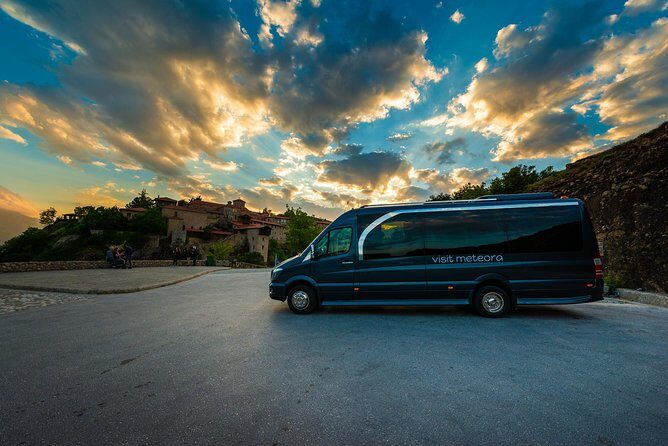
Day 3 is a big transition day: Meteora to Delphi, plus a stop at one of Greece’s most famous battle sites.
Thermopylae stop: quick history, big mental image
You’ll transfer by SUV/mini-bus. En route you stop at Thermopylae, where the 300 Spartans are remembered for standing against the Persian army. The stop is short—about 20 minutes—so it’s more about the moment and orientation than deep study.
Still, it helps set the mood for Delphi. Delphi isn’t just ruins; it’s tied to how the ancient Greeks made decisions and framed power.
Delphi Archaeological Area and the museum block
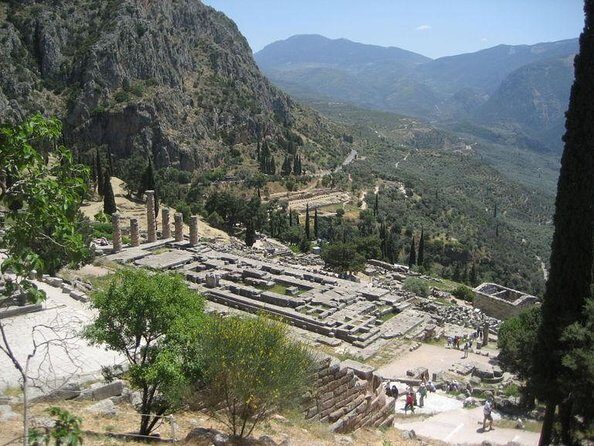
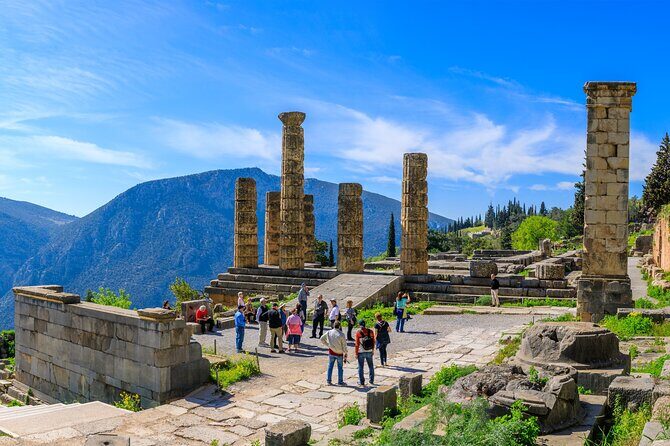
You arrive before noon and get about 4 hours of free time to explore Delphi with the help of a mobile audio guide app. There’s also a dedicated museum visit block listed at around 1 hour, so you should expect time that covers both the main site and museum context.
What I like about this approach is that Delphi has enough sensory detail—temple fragments, monuments, inscriptions, and museum artifacts—that you don’t want a forced tour pace. You can slow down where you care most and skip what you don’t.
Also, you’ll want your phone charged. Without the audio guide, Delphi can become a blur of stones and dates. With it, you’ll start recognizing what you’re looking at.
Return to Athens: bus back, end point at KTEL Liosion
Around 4:00 PM, you head back to Athens by bus, with an estimated 2 hours 30 minutes travel time. The tour notes that the Delphi bus station is linked via Google Maps (helpful if your connection is tight). Your final stop in Athens is KTEL Liosion (Bus Terminal B).
Practical tip: plan for a little “get your bearings” time when you arrive. Bus terminals are convenient, but they’re not the same as being dropped at your hotel door.
Where each stop shines (and when it may feel like too much)
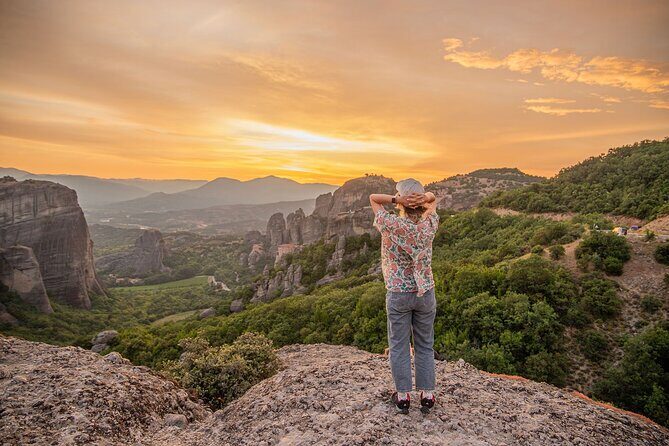
Here’s the quick reality check on pacing:
- Agios Stefanos: best for softer morning energy plus art and museum details, with an easier view setup.
- Byzantine Church of the Assumption: best if you like symbolism and layers across centuries.
- Great Meteoron: best if you want the main anchor monastery with enough time to absorb it.
- Roussanou and Varlaam: best for photos and for seeing how the rock changes the feeling of the buildings.
- Holy Trinity: best for the instantly recognizable viewpoint and its pop-culture reference tied to James Bond filming.
- Delphi museum + site time: best when you can wander with a guide-in-your-pocket audio app.
If you prefer a tightly guided stop-by-stop narration with no freedom at all, you might find the Delphi day less structured than you’d like. If you want freedom but still want transport and a guided backbone for Meteora, this format can feel like a very good trade.
Logistics that matter: entrance fees, shoes, and phone power
A few practical things will make this trip smoother:
Plan your entrance fees
Even though you’ll see plenty of free viewing angles, Meteora entrance fee (€12) and Delphi entrance fee (€12) are listed as not included. Keep cash or a card ready so you don’t lose time at gates.
Shoes and weather
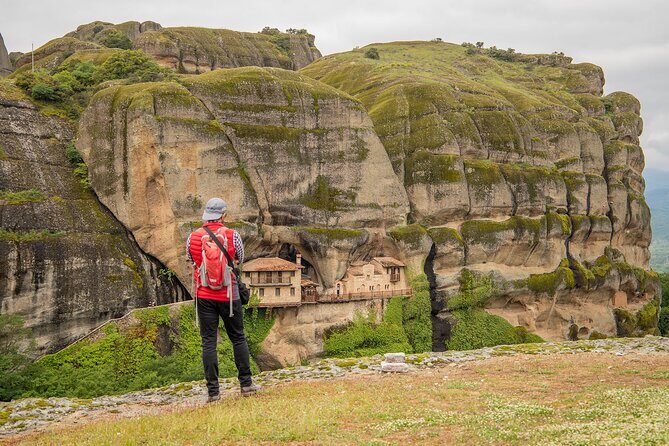
Meteora involves walking on stone paths and around uneven surfaces. A good grip sole helps. Also, wind can be real at the viewpoint level, so bring a light layer even in warmer months.
Phone power and offline readiness
Because the Delphi experience relies on a mobile audio guide app, you’ll want a charged device. Save any access links or instructions on your phone before you start walking.
Best fit: who should book this tour
This tour is a strong match if you:
- want Meteora plus Delphi without planning multiple transport steps yourself
- enjoy monasteries and art details, not just scenic photos
- like the balance of guided time plus free exploration (especially at Delphi)
- are comfortable with a trip that includes public bus legs as part of the package
It’s also a good value for couples or solo travelers because the group size caps at 18, and the structure reduces decision fatigue.
Should you book this Meteora and Delphi 3-day tour?
I’d book it if your top priority is a smooth Meteora-first experience with guided time where it counts, plus a Delphi day where you can explore at your own speed using an audio guide. The combination of 2 hotel nights with breakfast, transport legs, and major monastery coverage makes it easier to manage than doing everything separately.
I’d think twice if you need constant hands-on help from start to finish. The semi-private format means you should be ready to handle parts of the day independently, especially during transfers and the Delphi exploration block. Pack like you’ll be moving efficiently, keep your key details saved in your phone, and you’ll likely find the value lands well.
FAQ
What’s included in the tour besides transportation and hotels?
You get pickup from Kalampaka train station to your hotel, transport from Athens to Meteora via express bus, transfer from Meteora to Delphi by car or mini-bus, and return to Athens via direct public bus. The package also includes 2 nights in a 3 or 4 star hotel with breakfast, free wifi on board the tour bus, and a smart audio guide in many languages.
Do I need to pay entrance fees for Delphi and Meteora?
Yes. Entrance fee for Delphi is listed as €12 per person, and entrance fee for Meteora is also listed as €12 per person. These are not included in the tour price.
Is there a guide during the Delphi visit?
The tour data lists that a guide at Delphi is not included. You’ll have free time to explore with a mobile audio guide app.
How much time do I get at Delphi?
You’ll have about 4 hours of free time to explore Delphi before the return journey begins around 4:00 PM. There is also a Delphi Archaeological Museum block listed at about 1 hour.
Where does the tour start and end in Athens?
It starts at 8:00 am at the meeting point listed in Athens (Heathfield Industrial Estate area). It ends at KTEL Liosion (Bus Terminal B) at Liosion 260.
How big is the group for this experience?
The maximum group size is 18 travelers, so it’s intended to feel more manageable than large full-day bus tours.

More Private Tours in Athens


More Tours in Athens



More Tour Reviews in Athens
- All Day Cruise -3 Islands to Agistri,Moni, Aegina with lunch and drinks included
★ 5.0 · 4,958 reviews