REVIEW · ATHENS
3-Day Ancient Greek Archaeological Sites Tour from Athens
Book on GetYourGuide →Operated by Key Tours · Bookable on GetYourGuide
Myth and ruins in three days is serious value. This Peloponnese-focused tour strings together the big names of classical Greece—Epidaurus, Mycenae, Delphi, and Olympia—while keeping the drive-and-see rhythm manageable with an English-speaking guide and built-in breaks. It’s also marketed as carbon-neutral, which is a nice match for how much ground you cover without the usual guilt.
What I like most is the way the guide turns stone piles into stories you can picture. I’m also a fan of the mix of site time plus museum time—especially at Olympia, where the Archaeological Museum sits right opposite the ruins. One consideration: it’s a fast, packed route, so if you want slow wandering and quiet, you may find the pace demanding.
In This Review
- Key moments that make this trip work
- The real attraction: classical Greece in a tight, guided loop
- Day 1: Corinth Canal, Epidaurus theater, Nafplia, and the citadel at Mycenae
- The Corinth Canal: a break from the ruins
- Epidaurus: the theater’s acoustics are the point
- Nafplia: a historic stop in a living town
- Mycenae: citadel ruins plus the Tomb of Agamemnon
- Overnight in Olympia region
- Day 2: Olympia sacred grounds, museums, and the road to Delphi via Nafpaktos
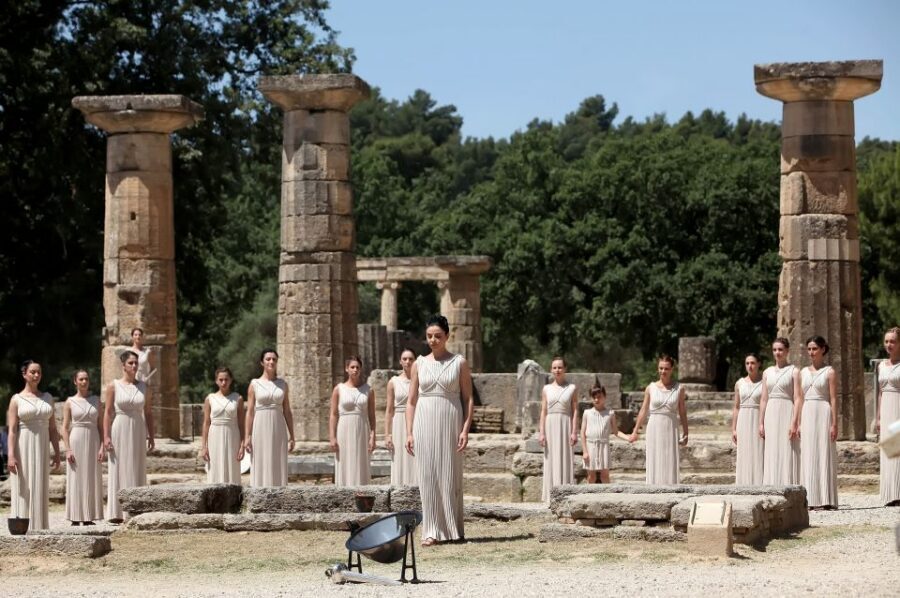
- Olympia: temples, stadium remains, and the flame altar
- Archaeological Museum of Olympia: opposite the ruins
- Across the Corinthian Bay: the Antirrio–Rion crossing
- Arachova for a night: mountain village energy
- Day 3: Delphi’s Oracle world—Apollo, the theater, and museum artifacts
- The Delphi archaeological site: where prophecy meets theater
- Views from the top: why Delphi hits differently
- Archaeological Museum of Delphi: artifacts that make the myths tangible
- Back to Athens via the Parnassus and Phocis valleys
- What the included meals and hotel setup mean for you
- Timing, pace, and heat: how to make the day feel easier
- Value and price: what you’re really paying for
- Who this tour fits best
- Should you book it?
Key moments that make this trip work
- Epidaurus’ theater: you’re there for the legend of the acoustics, not just another scenic viewpoint.
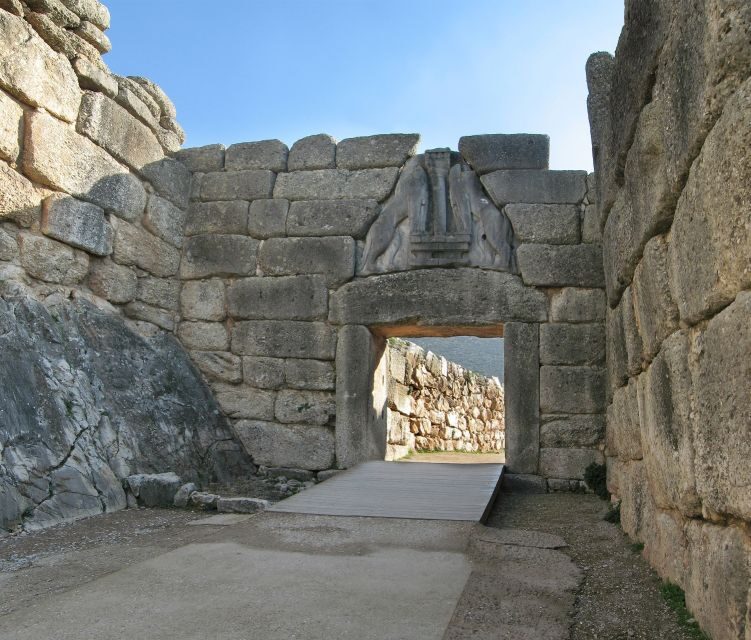
- Mycenae and the Tomb of Agamemnon: a compact stop that gives real traction on Mycenaean power and myth.
- Olympia’s flame altar and sacred grounds: you see what the Olympics meant beyond medals.
- Delphi’s Apollo, Oracle, and theater views: the site’s layout plus the mountains around it do half the work for the imagination.
- Corinth Canal and the Antirrio–Rion crossing: engineering stops that break up the ancient vibe with something more modern to notice.
- Guides who explain the links: many departures are led by experienced storytellers such as Anna and Panos, Marianna Tsigaridou, Dimitris, or Evangelist, and they tend to connect the myths and landscapes as you travel.
The real attraction: classical Greece in a tight, guided loop
If you only have a few days from Athens, this kind of route is the practical play. You’re not trying to “master” the entire ancient world. You’re getting the core locations that help you understand how Greeks told stories about gods, heroes, games, and power.
The structure is straightforward: depart Athens, hit the Peloponnese sites, then move up to Delphi, and finish back in Athens through the hills. You travel by air-conditioned coach with entrance fees handled, plus breakfast and dinner included—so you spend less time scheduling and more time looking.
That said, manage expectations. This is not a “one site per day with long lunch and zero rushing” vacation. It’s closer to a well-run whirlwind with time to explore, rest, and ask questions. If your travel style is more chaotic than structured, you’ll probably love it. If you hate time limits and tight transitions, you might feel like you’re constantly getting on and off the bus.
You can also read our reviews of more tours and experiences in Athens



Day 1: Corinth Canal, Epidaurus theater, Nafplia, and the citadel at Mycenae
Day 1 has a smart rhythm: you start with a modern engineering landmark, then shift into full ancient mode.
The Corinth Canal: a break from the ruins
Driving past the Corinth Canal on the Saronic Gulf is a good palate cleanser. It’s a 19th-century feat of engineering, and it helps you remember that Greece isn’t only ancient marble and olive trees—it’s also impressive infrastructure. It’s the kind of quick stop that makes the rest of the day feel more intentional instead of nonstop.
Epidaurus: the theater’s acoustics are the point
Epidaurus is where the tour earns its myth reputation. You visit the ancient theater, famous for its outstanding acoustics. Even if you don’t do a formal “sound test,” you’ll get what makes Greek theaters different: the design was built for voice projection, not just visuals.
I like that the guide doesn’t treat Epidaurus as a photo-op. You get context, then you’re free to look around and soak in the steep layout and sightlines at your own pace. This is also a good day to remember shade. Sites like this can be exposed, and the tour typically moves efficiently between locations rather than lingering in comfortable pockets.
Nafplia: a historic stop in a living town
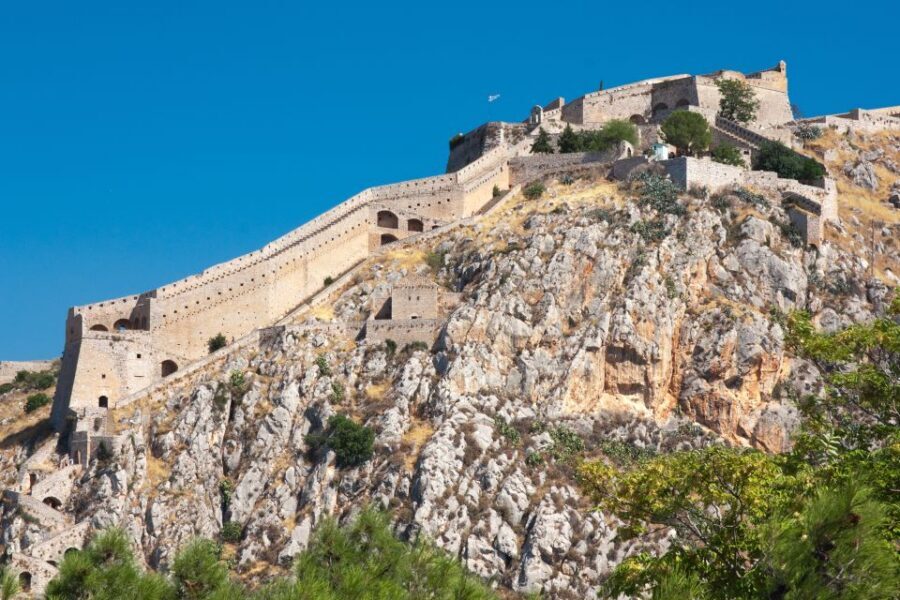
Nafplia is part “break” and part “history.” It’s a former capital of the First Hellenic Republic, and you drive through the plain of Argos as you move through the region. Even with short legs stretches and quick orientation stops, Nafplia gives you a sense of real Greece beyond archaeology parking lots.
- All Day Cruise -3 Islands to Agistri,Moni, Aegina with lunch and drinks included
★ 5.0 · 4,958 reviews



Mycenae: citadel ruins plus the Tomb of Agamemnon
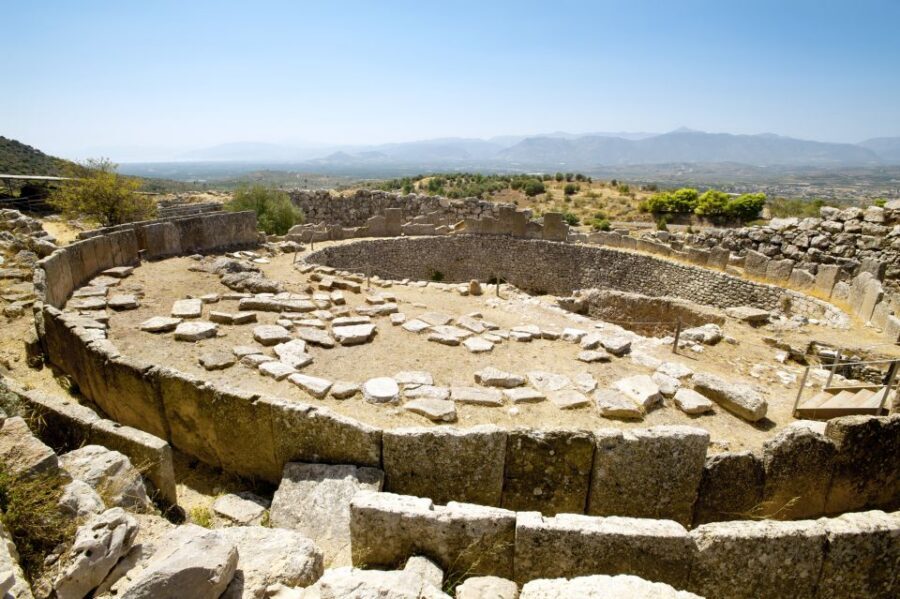
When you arrive in Mycenae, the citadel ruins and the Tomb of Agamemnon are the emotional core of the day. Mycenae matters because it anchors a lot of the hero stories you hear later in Greek mythology. The site is not a polished museum display. You’re walking among remnants—walls, foundations, and traces that rely on imagination and explanation.
This is where an excellent guide really shows. People like Anna, Panos, and Marianna Tsigaridou (among others you might meet) tend to explain how the tomb and the citadel fit together in the story of power and myth. You’re not just reading labels—you’re building a mental picture.
Overnight in Olympia region
Day 1 ends with travel onward to Olympia for the night. The route passes through Tripolis and Megalopolis with short stops for stretching or souvenirs. Those breaks are small, but they help you stay alert for the next day’s longer archaeology block.
Day 2: Olympia sacred grounds, museums, and the road to Delphi via Nafpaktos
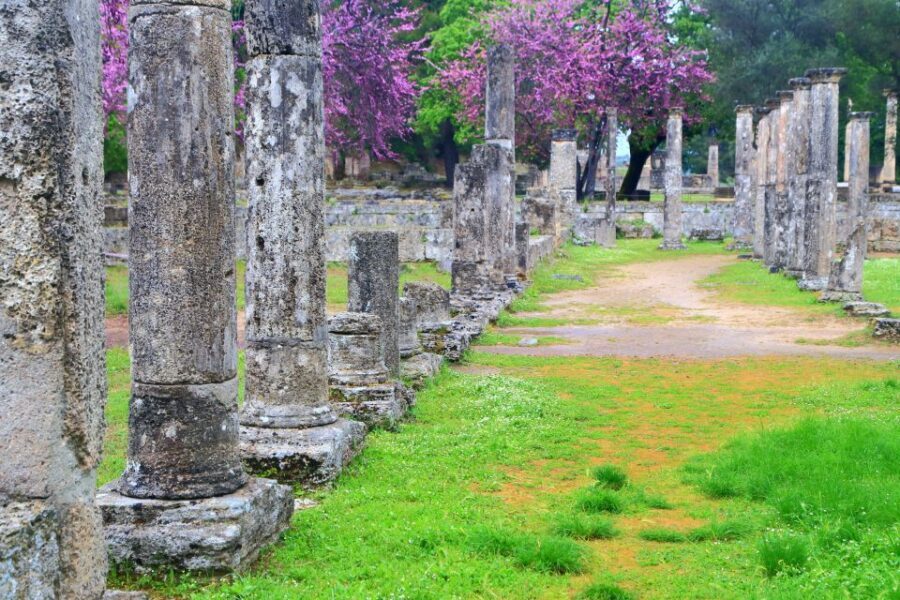
Day 2 is where the tour’s “big two” show up: Olympia and Delphi.
Olympia: temples, stadium remains, and the flame altar
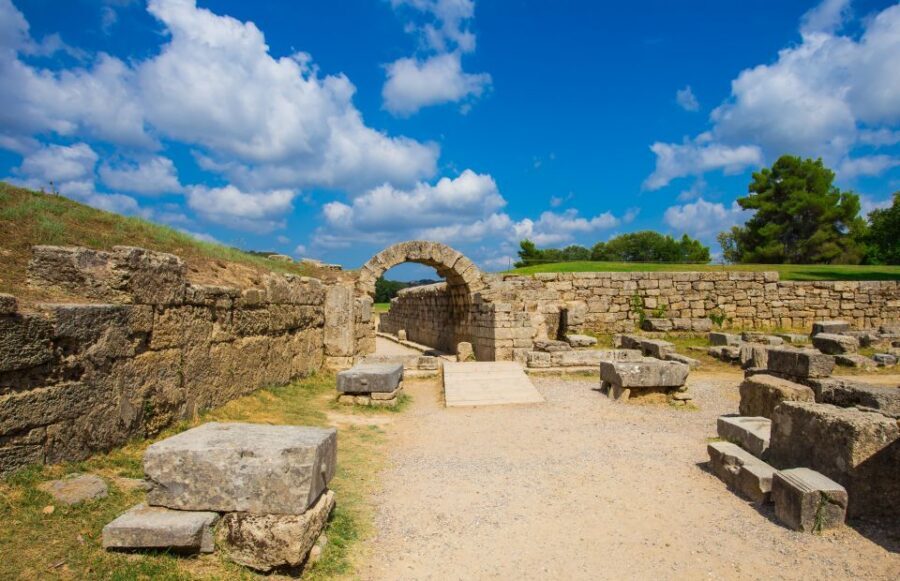
Olympia in classical times wasn’t just a sports venue—it was sacred ground. You walk among the remains of major temples like the Temples of Zeus and Hera, then you see the stadium area. The guide’s myth storytelling helps you understand why athletic competition sat inside religious meaning.
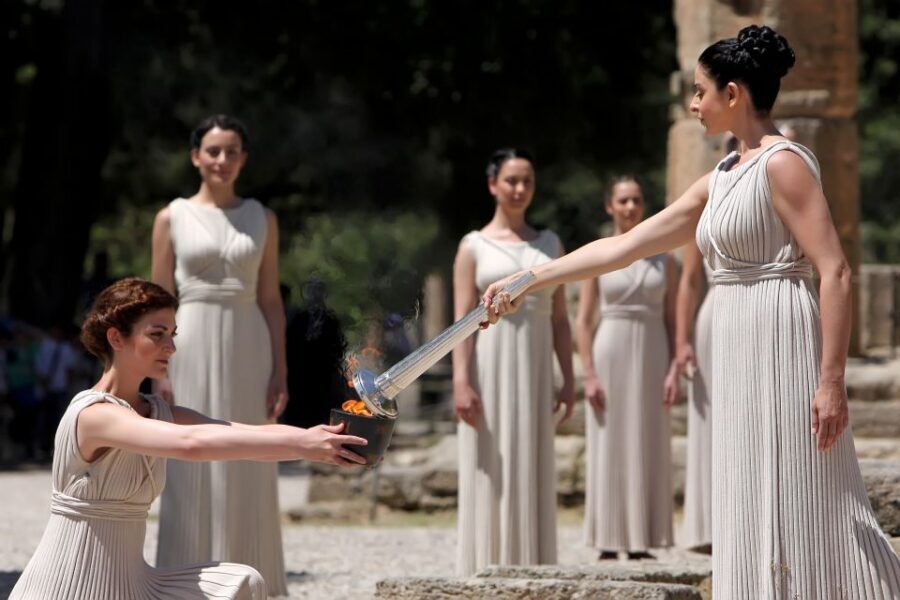
One highlight is the altar of the Olympic flame. It’s a modern tradition, but it sits in a place that once carried an ancient weight. Seeing it on-site gives the Olympics more texture than watching it on a screen.
Archaeological Museum of Olympia: opposite the ruins
The Archaeological Museum of Olympia is directly opposite the ruins, which is great for your time and energy. You can go from walking the landscape to seeing what excavations turned up—artifacts, sculpture fragments, and evidence that fills in the story the ruins only suggest.
This is also a place where a guide can help you notice what you might otherwise miss. Look for details that show ceremonial life, not only “pretty objects.” The museum time balances the outdoor heat and the stone-dry feeling of ruins.
Across the Corinthian Bay: the Antirrio–Rion crossing
After Olympia, the tour drives to Rion and crosses the Corinthian Bay via the new bridge to Antirion. The ride along the coastal road passes Nafpaktos, a small harbor city. It’s a practical transition segment that prevents Day 2 from turning into a single long archaeology day without a breath.
Arachova for a night: mountain village energy
In the afternoon, you stop at Arachova on the slopes of Mount Parnassus. It’s picturesque and offers a chance to break up the travel with mountain air and village atmosphere before you sleep in Delphi.
Day 3: Delphi’s Oracle world—Apollo, the theater, and museum artifacts
Day 3 is the emotional closer. Delphi has a “center of the world” mood because of where it sits: high on the Parnassus Mountains with dramatic views over the valley.
The Delphi archaeological site: where prophecy meets theater
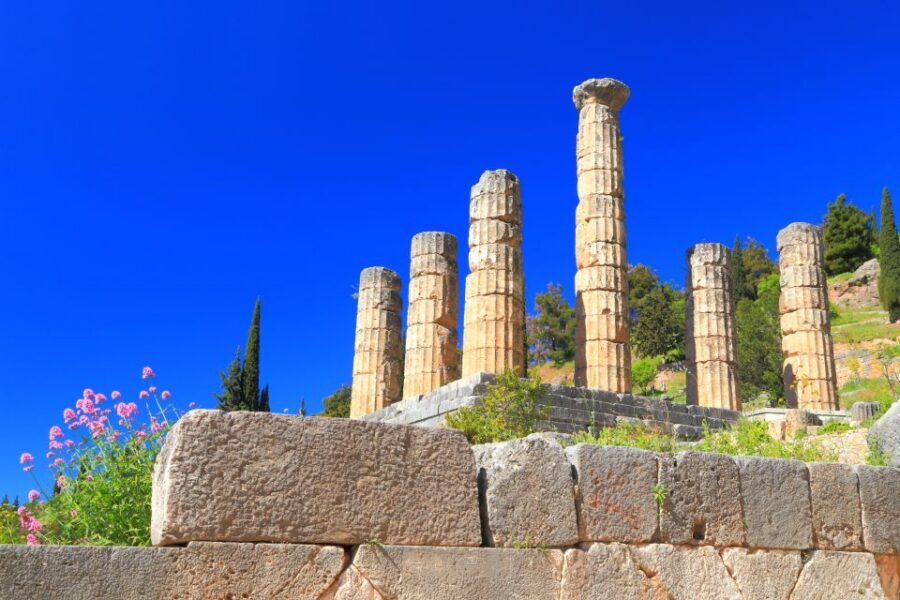
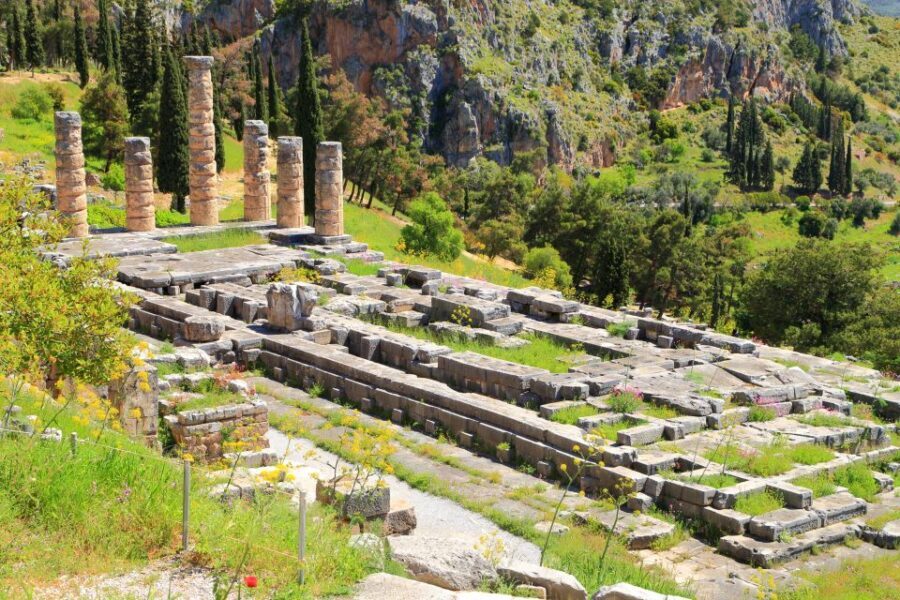
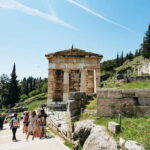
You tour the Delphi site with an emphasis on what made it special. You learn the idea that Delphi was linked to worship of Gaia (Mother Earth) and the myth background of the Python dragon killed by Apollo. The story matters because Delphi wasn’t only a place to ask questions—it was a ritual setting where the natural landscape felt connected to the divine.
You visit the temple dedicated to Apollo and then you move on to the theater. That theater held up to 5,000 spectators and hosted plays, poetry readings, and festivals. Even if you’re not sitting in every seat, it’s easy to grasp the scale—and the feeling that this was a community space, not a private shrine.
Views from the top: why Delphi hits differently
One of the reasons Delphi stays memorable is the viewpoint. You get strong views of the Parnassus Mountains and the valley from the higher parts of the site. On a clear day, it helps you understand how geography shaped belief.
Archaeological Museum of Delphi: artifacts that make the myths tangible
The Archaeological Museum at Delphi is where you make sense of the site pieces. You explore an impressive collection of artifacts and relics connected to ancient Delphi. This museum time is one of the tour’s best investments because the outdoor ruins can look like fragmented stone unless someone helps you “read” them.
Back to Athens via the Parnassus and Phocis valleys
In the afternoon, the drive back to Athens goes through the vine and olive-tree hills of the Parnassus and the Valley of Phocis. It’s a calmer closing segment, and it gives you a last look at the terrain that shaped the ancient world you just toured.
What the included meals and hotel setup mean for you
The tour includes breakfast and dinner, plus entrance fees, transfers by air-conditioned bus, and a live English guide. Lunch is not included, and drinks are also not included, so you’ll want a plan for midday calories and hydration.
Your hotel stay is in a 3-star or 4-star property depending on the option you choose. There’s also a hotel accommodation tax that you pay directly at the hotel: €5 per room/per night for 3-star and €10 per room/per night for 4-star.
From recent experiences shared, the hotels tend to be “good choices” for convenience and evening downtime, with Olympia sometimes getting extra praise for comfort and meal quality. Still, it’s wise to accept that you’re booking a tour format, not a luxury resort.
Timing, pace, and heat: how to make the day feel easier
This kind of route is always a balancing act. You’re going to be moving between regions, and that means long stretches in the vehicle, even when the bus ride is comfortable and well-managed.
The biggest practical risk is heat. One set of experiences described scorching temperatures around 35°C at Olympia and Delphi, and the key survival tactic was shade-hunting—plus bringing practical sun protection like hats, sunglasses, and umbrellas. If you’re traveling in summer, treat sun gear like it’s part of your itinerary, not an optional accessory.
Also remember this: some sites can look like “piles of stones” until someone guides you. If you prefer to understand architecture through your own independent reading, you’ll still be able to do that. But your enjoyment will increase if you actively listen for how the guide explains what you’re looking at.
Value and price: what you’re really paying for
At $506 per person for three days, you’re paying for more than transport. You’re paying for a package that includes:
- a live English guide
- entrance fees
- air-conditioned transfers
- breakfast and dinner
- accommodation in the 3-star or 4-star category
That combination matters if you want to avoid the “nickel-and-dime” effect of booking each entrance and arranging intercity transport on your own. It also reduces stress when you’re moving between sites that are far apart.
Where the cost might not feel as “worth it” is if you already plan to rent a car and you enjoy independent exploring at a slow pace. This tour is for people who want structure, context, and a guided “through-line” across multiple sites.
Who this tour fits best
This tour is a strong match if:
- you want a first big taste of classical Greece without adding extra days
- you enjoy myth and want it connected to place names and landscapes
- you like museums where artifacts explain what ruins can’t fully show
- you’re okay with a busy schedule and want the efficiency
It may not fit if:
- you need wheelchair accessibility (it’s not suitable for wheelchair users)
- you hate tight timing and constant movement
- you’re traveling in peak summer heat and want long, shaded downtime at every stop
Should you book it?
Book it if you want the “best-of” ancient Greece circuit with a guide who makes the stories click. The strongest proof is the consistent emphasis on guide quality—many departures highlight guides such as Anna, Panos, Marianna Tsigaridou, Dimitris, Evangelist, or others, and you can feel the difference between a generic lecture and a guided narrative that helps you connect Mycenae, Olympia, and Delphi into one meaningful thread.
Don’t book it if your idea of a great trip is slow, silent, and flexible. This is structured travel across multiple sites. You’ll do best if you show up ready to learn, ready to walk, and ready to manage sun and heat.
If you want a compact, high-impact route from Athens, this one earns its place on the shortlist.

More 3-Day Experiences in Athens


More Tours in Athens


More Tour Reviews in Athens
- All Day Cruise -3 Islands to Agistri,Moni, Aegina with lunch and drinks included
★ 5.0 · 4,958 reviews