REVIEW · ATHENS
Mythology, Philosophy and Democracy Tour
Book on Viator →Operated by Athens Classic Tour · Bookable on Viator
Your morning lesson in democracy starts at a cemetery.
This 3-hour Athens walk stitches together myth, philosophy, politics, and the early roots of science, moving from ancient belief to more evidence-based thinking without dragging you through museum fatigue. You’ll see where Pericles delivered his famous funeral speech in praise of Athenian democracy, then keep rolling forward to the sites where the city argued, theorized, and measured the world.
Two things I like a lot are the small group size (up to 12) and the way the route hits key ideas in real places, from the Ancient Agora to the Pnyx. One possible drawback is that it’s an outdoor, mostly walking experience in a city that can get hot fast, and the tour requires good weather.
In This Review
- The Tour in 5 Stops: What You Really Get
- A 3-hour Athens Walk That Links Myth, Philosophy, and Democracy
- Kerameikos: Ceramic Workshops, Athens’ Cemetery, and Pericles’ Speech
- Ancient Agora of Athens: The Real Stage for Socrates and Plato
- Monastiraki Market Stretch and Roman Agora Context
- Tower of the Winds: When Measurement Looked Like Magic
- Hadrian’s Library and Plaka: Roman Power Meets Everyday Street Life
- Pnyx Hill: The First Parliament and a Sunset View
- Philopappos Hill at Night: Views Over Athens and the Symposium Finish
- Price and Logistics: Is It Good Value for $50.69?
- Plan Your Day: Pace, Heat, and Where This Tour Fits
- Should You Book This Mythology, Philosophy and Democracy Tour?
- FAQ
- Where does the tour start and where does it end?
- How long is the tour?
- Is the tour offered in English?
- How many people are in a group?
- Do I need to pay admission tickets for the stops?
- What happens if the weather is bad?
- Can I get a full refund if I cancel?
The Tour in 5 Stops: What You Really Get
- Kerameikos first: a cemetery and ceramic workshops site where Pericles’ funeral speech connects leadership to civic values.
- Ancient Agora conversations: you get context for Socrates, Plato, Solon, Pericles, Thucydides, Sophocles, Aristophanes, and the day-to-day debate culture.
- Roman Athens add-on: Roman Agora, Hadrian’s Library, and the practical genius behind the Tower of the Winds.
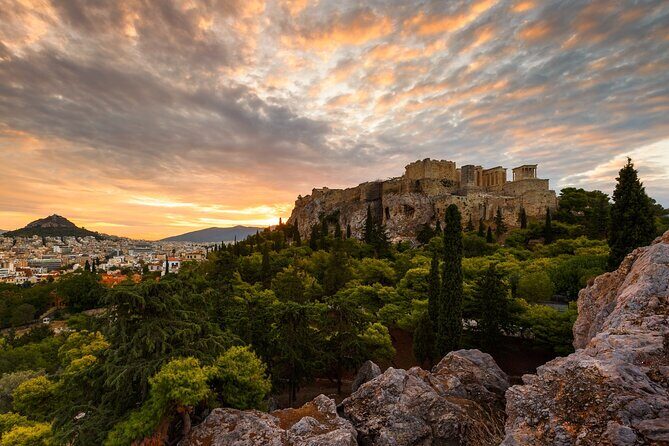
- Democracy in stone: Pnyx Hill, described as the first parliament of the world, plus big viewpoint time for sunset.
- Finish at Philopappos Hill: night views over Athens and the Acropolis, with a symposium-style close that frames Greek philosophy as living questions.
A 3-hour Athens Walk That Links Myth, Philosophy, and Democracy
What makes this tour feel different is the cause-and-effect storytelling. Instead of treating Greek history like separate chapters, you move through the city like the ideas are traveling with you: myth helps explain society, philosophy questions how to live, and democracy gives people a place to argue in public.
You’ll also notice the time structure. It’s tight enough to give momentum, but spaced out so you get viewpoint moments, market wandering, and science-meets-history stops. That mix is ideal if you want Athens to mean something beyond the Acropolis photo.
And the guide’s style matters here. Panos is known for turning big concepts into human stories, with humor and wit, plus questions that make you think critically rather than just memorize facts.
You can also read our reviews of more tours and experiences in Athens.
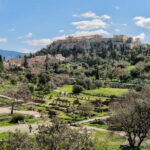


Kerameikos: Ceramic Workshops, Athens’ Cemetery, and Pericles’ Speech
You start at Kerameikos, an area that tends to get overlooked, even though it’s one of Athens’ more important landmarks. The name hints at its past: Kerameikos means ceramic, and it was home to many ceramic workshops. Nearby, it also functioned as the cemetery of Athens for centuries.
The reason this stop lands is Pericles. Here, the tour places you at the setting for his funeral speech for the first casualties of the Peloponnesian War, where he praises Athenian democracy. So you’re not just walking past graves. You’re standing where civic identity was reinforced through leadership, sacrifice, and public speech.
This is a strong opener because it sets the tone: democracy wasn’t abstract. It was tied to community, loss, values, and public persuasion. And because the stop is listed as about 25 minutes with free admission, it’s an easy first anchor without forcing you into a long ticket line scenario.
Ancient Agora of Athens: The Real Stage for Socrates and Plato
Next comes the Ancient Agora, the city’s heart. This is where the tour’s theme becomes concrete: a place for walking debate, political discussion, and philosophical argument.
The name of famous people here reads like a syllabus for Western thought: Socrates and Plato for philosophy, Solon for law and civic structure, and then names connected to public life and literature such as Themistocles, Pericles, Thucydides, Sophocles, and Aristophanes. The point isn’t that one person changed everything alone. The point is that Athens trained people to discuss, disagree, and reason in public.
You’ll get a short stop (about 10 minutes) but it’s the kind of time that works best on a guide-led walk. The Agora is large, and it’s easy to get turned around on your own. With a guiding narrative, you can connect the dots fast and leave with a clearer mental map of where ideas would have circulated.
Monastiraki Market Stretch and Roman Agora Context
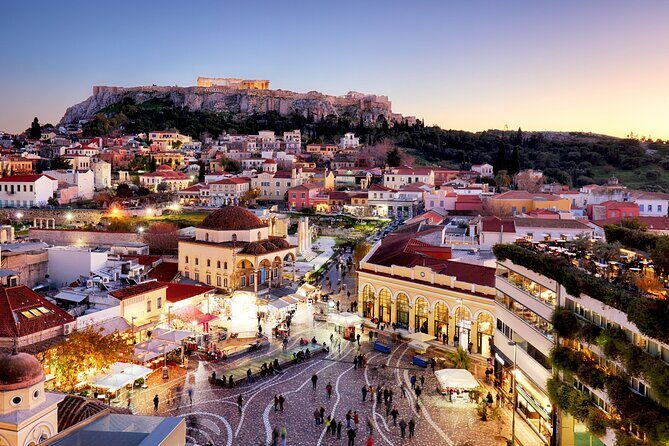
Between the big philosophy stops, you get a calmer interlude: Monastiraki Square and an easy-pace walk through the flea market area. The value here is simple. It breaks the pattern so your brain can reset, and it gives you a sense of how everyday Athens still lives on top of ancient roots.
Then you transition to the Roman Agora, positioned to the north of the Acropolis and east of the Ancient Agora. Roman Athens can feel like it exists in a different universe from the “classic” Greek scenes, but this stop helps you keep the continuity. Empires change the signage and the architecture, yet civic space still tends to be civic space.
It’s also a helpful pacing move. These are relatively brief segments (around 10 minutes each) that keep the tour moving without turning it into a nonstop sprint.
Tower of the Winds: When Measurement Looked Like Magic
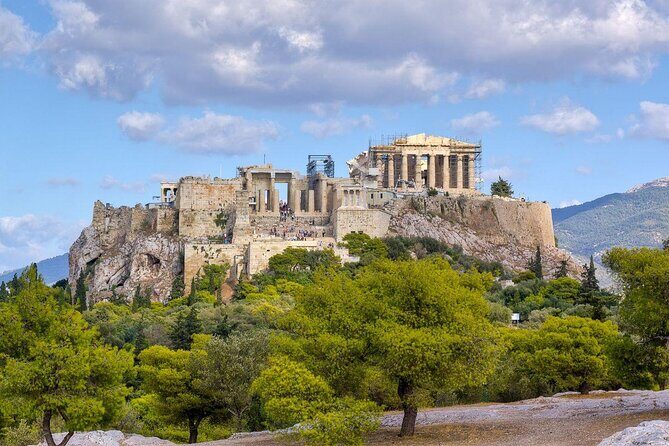
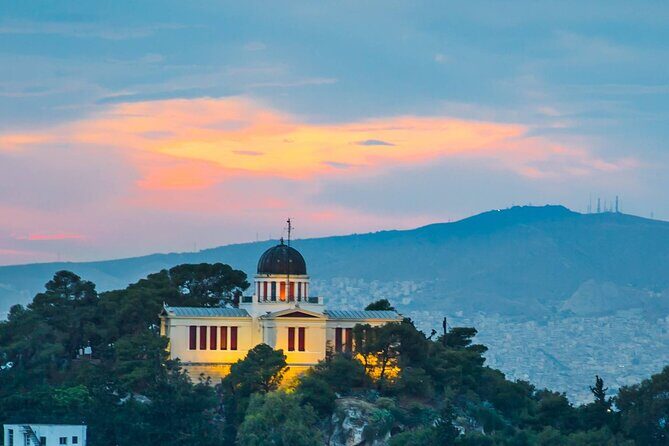
If you want one stop that makes the whole tour’s logic click, it’s the Tower of the Winds. This octagonal structure is tied to astronomy and practical timekeeping, credited to Andronicus of Kyrristos in the 1st century BC.
The tour frames it as both wind indicator and clock. The solar clock approach was supported by a hydraulic mechanism for cloudy days that produced a sound every hour. That mix of observation, design, and adaptation is why it fits the tour’s theme of moving from blind faith toward early science thinking.
It’s only around 10 minutes, and it’s free to enter based on the stop details, but it’s the kind of place where you stop and look up. The tower turns abstract “science of antiquity” into something you can physically imagine: tools built to read the atmosphere, track time, and organize daily life.
- All Day Cruise -3 Islands to Agistri,Moni, Aegina with lunch and drinks included
★ 5.0 · 4,958 reviews




Hadrian’s Library and Plaka: Roman Power Meets Everyday Street Life

After the Tower, Hadrian’s Library pulls you into Roman cultural ambition. Created by Emperor Hadrian in AD 132 on the north side of the Acropolis, it’s described here as the second largest library in the world at that time.
Libraries are an underrated way to understand power. They’re not just about books. They signal funding, education, and the belief that knowledge should be public enough to build a civic culture. In the context of this tour, it fits the broader story of how people tried to systematize learning.
Then you step into Plaka for a scenic neighborhood walk with small houses and narrow streets. The point of Plaka in this route is not “photo ops only.” It provides atmosphere so you don’t finish the intellectual part of Athens feeling like you never saw the city you’re visiting.
Both segments are short (about 10 minutes for each), but that’s exactly what you want on a 3-hour experience that also aims for viewpoints.
Pnyx Hill: The First Parliament and a Sunset View

Pnyx Hill is the tour’s democracy anchor. This site is described as the first parliament of the world, and it comes with a strong viewpoint payoff. You’re on a hill, looking out across Athens, and it’s positioned as a great sunset spot.
This stop works because it turns the idea of democracy into a physical setting. You can stand where public speech and civic decision-making would have taken place, and you can imagine how argument, persuasion, and participation weren’t separate from daily life.
Spending around 25 minutes here gives you room to look, absorb, and ask yourself the questions the guide is likely to push. Reviews for Panos repeatedly point to a thought-provoking style, and Pnyx is the perfect place for that kind of conversation.
Philopappos Hill at Night: Views Over Athens and the Symposium Finish

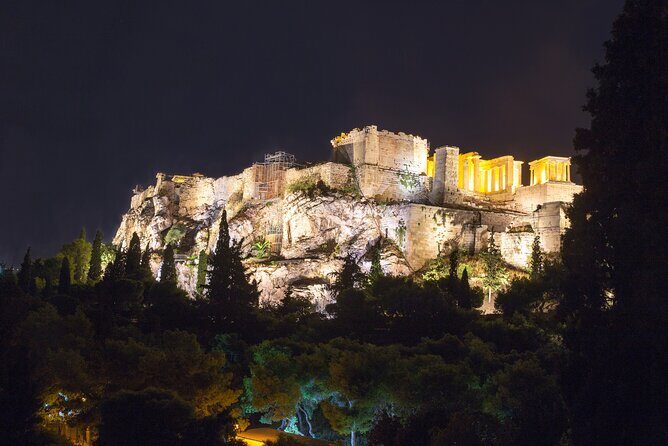
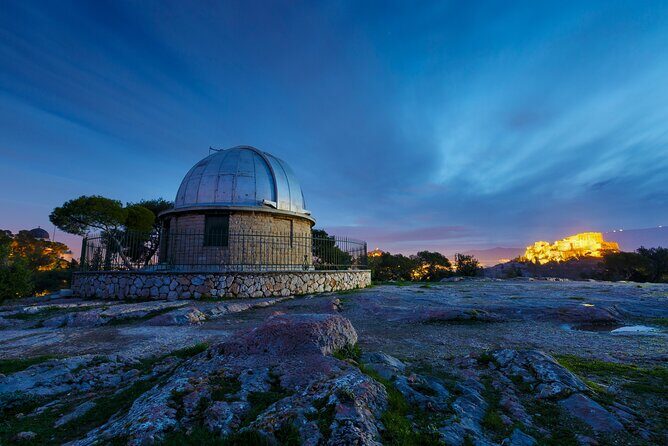
The tour ends at Philopappos Hill, also called the Hill of the Muses. Expect the best vistas over the Acropolis and Athens by night, which makes the ending feel rewarding rather than just logistical.
There’s also a more reflective close described as an end-of-tour symposium. In practice, what that usually means on a tour like this is a final wrap that connects the places you saw to questions about how humans think, argue, and build systems for living together.
You’ll spend around 45 minutes here, which is generous on a short walking tour. It also helps if you want to linger for photos without feeling rushed. The hill location is a smart choice: it gives you a panoramic payoff after a day of ideas and stories.
Price and Logistics: Is It Good Value for $50.69?
At $50.69 per person for about 3 hours, this is priced like a serious guided experience, not a casual stroll. The value comes from three things you can actually feel: a small group (max 12), a tight route through major theme sites, and free admission listed for each stop.
You’re also getting a guided narrative in English, plus a mobile ticket. That matters in Athens, where independent route planning can turn into a maze of landmarks with confusing context. When the same walk can look like scattered stones if you go alone, a guide’s job is to keep the storyline straight.
Timing is a quiet advantage too. This tour is often booked about 37 days in advance on average, which usually means it’s popular. If you care about your schedule, book sooner rather than later.
Plan Your Day: Pace, Heat, and Where This Tour Fits
This is a walking tour with multiple outdoor stops. The itinerary includes an easy pace market walk, but you still should plan as if you’ll be on your feet for most of the 3 hours.
That’s why weather matters. The tour requires good weather, and Athens can switch from pleasant to punishing fast. If your travel dates include hot afternoons, consider aiming for a cooler time of day. The tour’s structure helps, since you also get a night-view finish from Philopappos Hill.
Who should book? You’ll enjoy it if you like big ideas explained through real locations. If you want a guided arc connecting Greek mythology, philosophy, politics, and the early science impulse, this tour matches that goal closely. It’s also a good fit for older teens and adults who enjoy discussion.
If you prefer archaeology-only sightseeing with minimal talk, you might find the philosophy and politics focus more than you want. The tour is built around ideas, not just ruins.
Should You Book This Mythology, Philosophy and Democracy Tour?
I think it’s a strong yes if your goal is understanding how Athens shaped Western thinking. The route makes the ideas physical, from Kerameikos and Pericles to the Agora’s public debate culture, then up to the democracy stage at Pnyx, and finally the night views that let the whole theme land.
Book it early if your dates are fixed, because it’s commonly reserved about a month ahead. And come ready to talk back to the material: Panos’s style is built for thought, not passive listening, and Pnyx plus the end-of-tour symposium-style close is where that really clicks.
If you want Athens with context, this is one of the best ways to get it in half a day.
FAQ
Where does the tour start and where does it end?
The tour starts at the Statue of Theseus in Athens and ends at Philopappos Hill. The end location is given as Φυλής 215, Athina 117 41, Greece.
How long is the tour?
The duration is listed as approximately 3 hours.
Is the tour offered in English?
Yes, the tour is offered in English.
How many people are in a group?
The maximum group size is 12 travelers.
Do I need to pay admission tickets for the stops?
The stop details provided list admission ticket free for each of the included sites.
What happens if the weather is bad?
The experience requires good weather. If it’s canceled due to poor weather, you’ll be offered a different date or a full refund.
Can I get a full refund if I cancel?
Yes. You can cancel up to 24 hours in advance for a full refund. If you cancel less than 24 hours before the start time, the amount paid will not be refunded.

More Tours in Athens

More Tour Reviews in Athens
- All Day Cruise -3 Islands to Agistri,Moni, Aegina with lunch and drinks included
★ 5.0 · 4,958 reviews