REVIEW · ATHENS
Philosophy and Democracy tour of Athens
Book on Viator →Operated by Athens Classic Tour · Bookable on Viator
Democracy has a map, and you’ll walk it. This Philosophy and Democracy tour takes you past major Athens landmarks while building one clear story: how ideas about citizenship, debate, and virtue shaped the city then shaped the modern world. You’ll move from sites tied to Pericles and civic decision-making to places that anchor the philosophers in real streets and real stone.
I especially love the focus on how democracy and philosophy fit together, not just a list of monuments. I also like the small group size (up to 15), because the guide can pace questions and keep everyone in the conversation. One thing to consider: the walking is real, and several of the big archaeological stops have admission tickets not included, so you’ll want a little extra budget and time for entry lines.
In This Review
- Key takeaways
- Where the story really starts: Kerameikos to Pericles’ Athens
- The “less famous” Athens moments that make it feel real
- Tower of the Winds: Athens’ first weather station story
- Plaka time: a scenic breathing space
- Ancient Agora: where debate wasn’t a metaphor
- A tribute spot for Socrates
- Pnyx Hill: the cradle of democracy and the best payoff view
- How the guide experience changes the value
- Price and tickets: what $50.81 buys you
- Timing, walking, and what to bring
- Who should book this tour (and who might skip it)
- Should you book Philosophy and Democracy of Athens?
- FAQ
- How long is the Philosophy and Democracy tour in Athens?
- What language is the tour offered in?
- Is this tour a small group?
- Are entrance tickets included?
- Where do I meet the tour guide?
- What is the price per person?
- Is the tour dependent on weather?
- Can I bring a service animal?
Key takeaways
- A philosophy-first route that connects Pericles, Socrates, Plato, and the civic spaces where debate happened
- Small group (max 15) for more attention and more chances to ask questions
- Several free stops plus a few paid sites, so you can plan your money on the day
- Tower of the Winds storytelling, including how it acted like Athens’ weather station
- Pnyx Hill views that make the word cradle of democracy feel literal
- Guide style that keeps pace brisk and talk clear, with humor and context that links stops
Where the story really starts: Kerameikos to Pericles’ Athens
You’ll begin at the Statue of Theseus area, then head for Kerameikos, one of Athens’ most meaningful sites that still flies under many visitors’ radar. Kerameikos gets its name from ceramics, because workshops once ran here. It later became the city’s cemetery for centuries, including prominent Athenians whose names still matter in Greek history.
What makes this stop shine on this tour is the link to politics and civic identity. You’ll hear how Pericles delivered his famous Epitaph speech for early casualties of the Peloponnesian War here, praising the virtues of democracy and the ways Athenians lived. Even if you’ve read about Pericles before, hearing that speech placed in this specific landscape gives it weight. You start to see democracy as something practical: it was argued for, defended, and mourned.
Kerameikos is about 15 minutes, and admission is not included, so you may want to plan for a ticket purchase. If you prefer to move quickly, this is still a smart start because it sets up everything you’ll see later.
You can also read our reviews of more tours and experiences in Athens.


The “less famous” Athens moments that make it feel real
After Kerameikos, the tour slows down in a way that helps you reset. The next stop is an easy walk through the Flea Market, about 15 minutes and free. This is not there to send you shopping for trinkets. It’s there to give you a taste of everyday Athens movement in between monumental sites.
Then you’ll shift back into ancient Athens with Hadrian’s Library (about 15 minutes, admission not included). Built by the Roman emperor Hadrian in AD 132, it sat on the north side of the Acropolis. From a traveler’s point of view, this stop works because it shows Athens wasn’t a museum that stayed frozen. It kept getting reused, rebuilt, and layered through new empires and new eras.
Right after that, you’ll also visit the Roman Agora (about 15 minutes, admission not included). It’s located north of the Acropolis and east of the Ancient Agora. This is a helpful detour for your brain: you’ll start noticing how civic spaces evolved, even when the names and power structures changed.
If you’re worried about feeling overwhelmed, don’t. The guide’s job is to keep the timeline understandable, and the whole route is built to avoid the common Athens problem of seeing everything but remembering nothing.
Tower of the Winds: Athens’ first weather station story
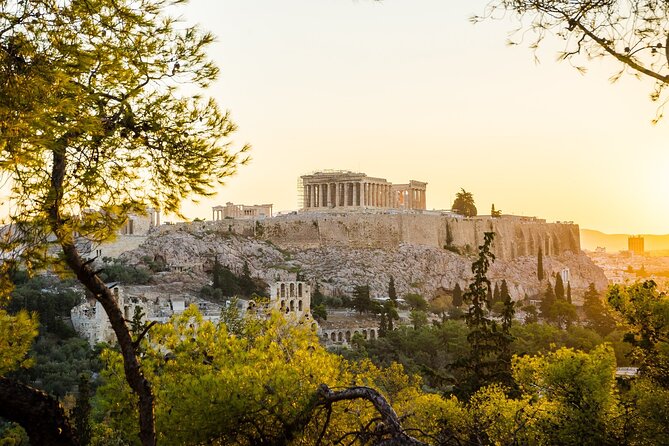
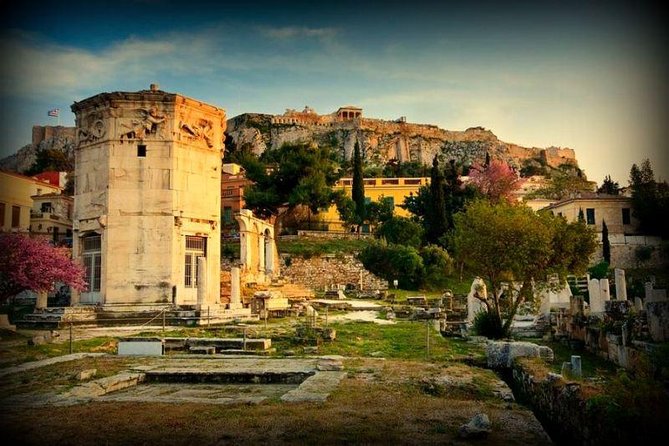
One of the most memorable science-and-history stops is the Tower of the Winds. It takes only about 5 minutes, and admission is not included. But it’s the kind of place you’ll remember because it’s unusually specific.
The octagonal tower was made by astronomer Andronicus of Kyrristos in the 1st century BC. It served as a wind indicator and also a clock. Here’s the part that makes it feel like Athens had its own technological heartbeat: the clock was solar, and in cloudy conditions there was a hydraulic mechanism that produced a sound every hour. It’s often described as the first meteorological station.
Even if you’re not the type to care about ancient timekeeping, this stop connects dots nicely. It quietly reinforces how the Greeks (and then the Romans) treated measurement and public information as civic value. You’re not just walking old stones. You’re watching how people tried to run daily life with knowledge.
Plaka time: a scenic breathing space
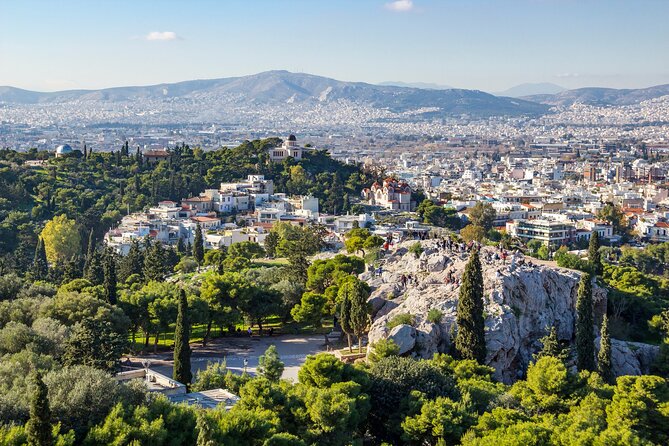
At some point you’ll pass through Plaka, a classic Athens neighborhood known for small houses and narrow streets. On a philosophy-focused tour, Plaka isn’t just decoration. It gives your legs a break and lets you experience the city’s texture between major sites.
This is also a useful moment to look around. You’ll notice how the modern city wraps around the archaeological landscape. That’s key to understanding why Athens still feels different from other ancient capitals. You’re not only viewing history from the outside. You’re walking through it.
If you’re trying to plan what to do next, Plaka is one of the easiest areas to base your evening on later, since it’s naturally walkable once you’ve learned your bearings.
Ancient Agora: where debate wasn’t a metaphor

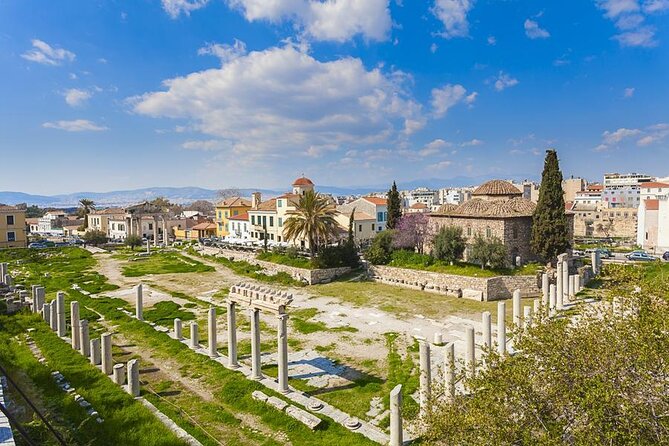
Now you get to the core. The tour visits the Ancient Agora of Athens (about 20 minutes, admission not included). This was the heart of the city. It’s where philosophers and civic leaders mixed in real public space.
You’ll hear stories tied to major figures like Socrates, Plato, Solon, Themistocles, Pericles, Thucydides, Sofoklis, and Aristofanis, plus the ordinary citizens who also walked and argued here. What makes this stop special isn’t just who you’re reading about in school. It’s the idea that the Agora was a living workshop for thinking—politics, philosophy, and public life all sharing the same sidewalks.
One practical note: since admission isn’t included here, you’ll want to treat this as a likely paid entry on the day. If you’re trying to budget tightly, this is the part where you’ll feel it most.
- All Day Cruise -3 Islands to Agistri,Moni, Aegina with lunch and drinks included
★ 5.0 · 4,958 reviews





A tribute spot for Socrates
You’ll also stop at the Prison of Socrates (about 10 minutes, free). The tour frames it as a tribute to the philosopher. Even though you won’t get a long “museum-style” visit here, the payoff is emotional and conceptual: you connect debate and punishment to the same civic system.
If your mind tends to go abstract, this is one of those stops that pulls it back to reality. It’s hard to treat ideas as harmless once you’re standing near where the consequences of those ideas mattered.
Pnyx Hill: the cradle of democracy and the best payoff view
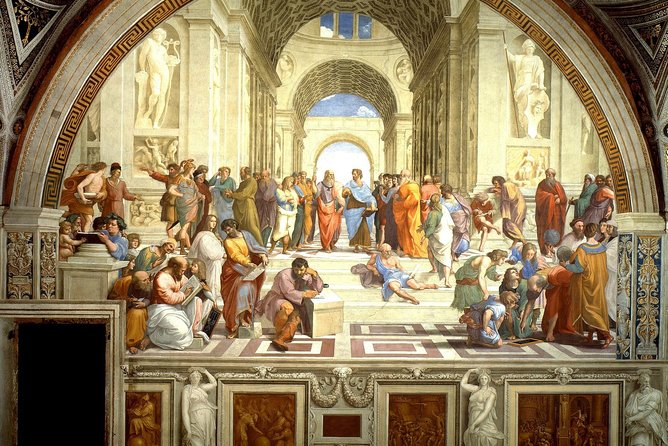
Next is Pnyx (about 30 minutes, free). Pnyx Hill is often called the cradle of democracy because it was the first place in the world where people took decisions for their future. Standing on the hill, the phrase starts to feel less like a slogan and more like a description of a physical place where civic action happened.
You’ll also get great views toward the Acropolis and Athens. That viewpoint is more than a photo opportunity. It helps you grasp how speech and decision-making worked in a public setting. People weren’t debating in a vacuum. They were looking out over the city and making choices together.
If you only have a day to understand Athens beyond the Acropolis, this stop is one of the best uses of time.
How the guide experience changes the value
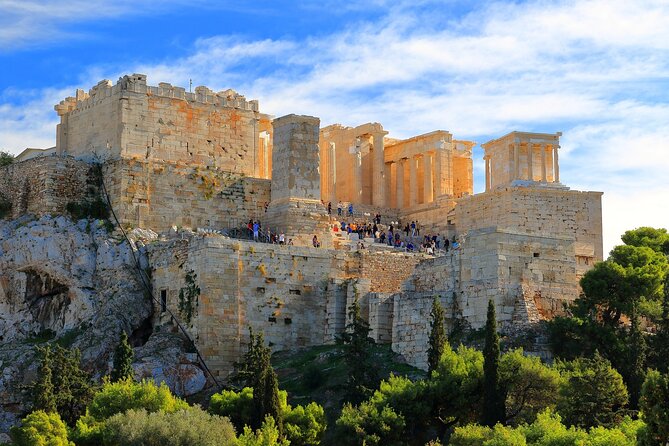
This tour runs as a small group up to 15 travelers, and that matters. When you’re talking about philosophy and democracy, you need follow-up questions. You also need explanations that link the stops in plain language.
Many people come away saying the tour is educational but not heavy. A consistent theme in the feedback is how the guide, Panos, presents the material clearly and with humor, so complex ideas land without feeling like homework. One helpful detail: Panos speaks loudly and clearly enough that earphones aren’t necessary. That’s a real quality-of-life win if you dislike wearing devices or tuning them.
The pacing also gets praise for being “excellently paced.” In practice, that means you’re not rushing through everything like a checklist, but you also aren’t stuck in one place too long. One review notes a mid-tour pause around a kiosk area for refreshments and access to WC facilities, which is exactly the kind of real-world break you appreciate on a walking itinerary.
If you’ve already visited the Acropolis on another day, this tour often works even better because it gives you the missing context: not only what Athens looked like, but how Athenians decided things and argued about the good life.
Price and tickets: what $50.81 buys you
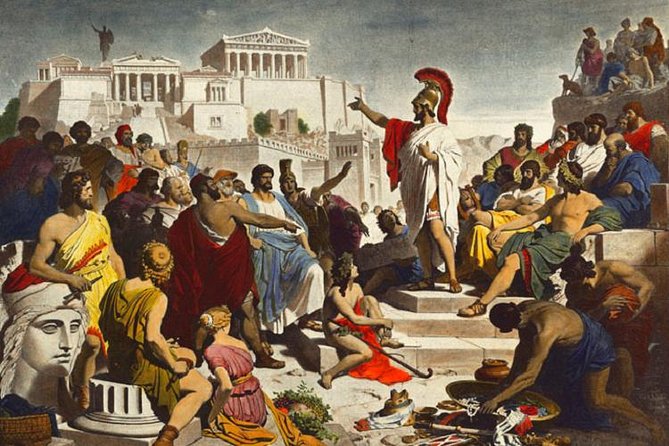
At $50.81 per person for about 3 hours 30 minutes, this is priced in the “serious value for a guided education” category. You’re paying for guided interpretation and a focused route that connects multiple sites with one theme.
The key variable is admission. Several stops include admission ticket not included, including:
- Kerameikos
- Hadrian’s Library
- Roman Agora
- Tower of the Winds
- Ancient Agora
Meanwhile, some pieces are free, including:
- Flea Market
- Prison of Socrates
- Pnyx
- Tower? (Tower is listed as admission not included, so don’t assume free there)
So, how do you judge value? You do it like this: if you plan to enter most of the paid sites anyway, the guided route becomes a time-saver and a meaning-builder. If you want to only see what’s free, you still get a good storyline, but you’ll have a thinner “official site” footprint.
Also, the tour has an average booking window of about 36 days in advance, which is a hint it can sell out. If you’re traveling in a busy season, booking early is smart.
Timing, walking, and what to bring
This is a walking tour. That sounds obvious, but it’s worth saying because some people don’t pack for it. Comfortable shoes matter. Bring water; one piece of feedback specifically recommends a bottle of water to stay hydrated.
Because the experience requires good weather, it’s a safe bet that you’ll be outside most of the time. Athens can be bright and exposed, so sun protection is your friend. If you’re sensitive to heat, plan to go at a time of day when you’ll have shade options.
For questions, you’re in the sweet spot: the route is structured so you’re not stuck listening for hours without chances to connect the dots. If philosophy is your thing, ask how the Agora’s public life relates to what you see at each stop. The guide’s whole format is designed for that kind of conversation.
Who should book this tour (and who might skip it)
You should book if you want Athens to make sense at a deeper level. This is especially good for people who care about:
- philosophy and how it shaped civic values
- the origin story of democracy as real practice
- learning through place-based storytelling instead of only reading plaques
You might skip or pair it differently if you:
- dislike walking between multiple sites
- only want Acropolis-style highlights with minimal entry costs
- prefer a purely archaeological tour without political theory threads
For many people, the best approach is simple: do this early in your Athens trip. One of the smartest bits of advice tied to the tour is that it helps your later stops click into place, so the rest of your city time feels more connected.
Should you book Philosophy and Democracy of Athens?
Yes, if you want guided meaning more than you want a photo sprint. The strongest reason to book is the way the route ties together democracy, public debate, and major thinkers across real sites. The second reason is practical: the small group size gives your guide room to explain clearly and keep pace comfortable, with Panos repeatedly praised for how well he teaches the topic.
If you’re watching your budget, just budget for a few paid admissions on the itinerary, since several major stops are not included. Also, pack for walking and bring water.
If that sounds like your style, this tour is one of the best ways to experience Athens beyond the skyline.
FAQ
How long is the Philosophy and Democracy tour in Athens?
The duration is approximately 3 hours 30 minutes.
What language is the tour offered in?
The tour is offered in English.
Is this tour a small group?
Yes. It has a maximum of 15 travelers.
Are entrance tickets included?
Admission is not included for several stops such as Kerameikos, Hadrian’s Library, Roman Agora, Tower of the Winds, and the Ancient Agora. Some stops are free, including the Flea Market, Prison of Socrates, and Pnyx.
Where do I meet the tour guide?
The start point is the Statue of Theseus, Athens 105 55, Greece. The end point is Theorias 21, Athina 105 58, Greece.
What is the price per person?
The price is $50.81 per person.
Is the tour dependent on weather?
Yes. The experience requires good weather. If it’s canceled due to poor weather, you’ll be offered a different date or a full refund.
Can I bring a service animal?
Service animals are allowed.


More Tour Reviews in Athens
- All Day Cruise -3 Islands to Agistri,Moni, Aegina with lunch and drinks included
★ 5.0 · 4,958 reviews