REVIEW · ATHENS
Private Luxury Tour: Mystic Pilgrimage – Kerameikos to Eleusis
Book on Viator →Operated by Pericles Century · Bookable on Viator
This day trip has a special pull.
You’re riding out of Athens in comfort, then walking and standing at major waypoints on the Sacred Way—Kerameikos, Eleusis, and the myth-rich corners in between—without the stress of crowd choreography. I like the private, no-rush pacing (your driver adjusts to your group), and I also like that the route is built around the actual “pilgrimage road” story, not just a checklist. One thing to keep in mind: this is mostly driver-guided history, and site entry fees are extra.
The best part is how the myths connect the places. Your English-speaking driver-guide (often named Pericles in the experience) explains what you’re seeing—then you move on. That makes the long drive feel like part of the tour, not dead time. The main drawback is the trade-off you’ll want to budget for: you won’t get a licensed guide inside the archaeological sites, and you still pay museum and monument admission if you want full access.
In This Review
- Sacred Way Luxury With a Driver-Guide, Not a Group Stampede
- Price and Value: What You Pay, What You Should Budget Extra
- Kerameikos to Dipylon: Starting the Pilgrimage at Athens’ Potters’ Quarter
- The Sacred Way in the Modern City: Iera Odos and the Kifisos River Crossing
- Daphni Monastery: Byzantine Mosaics on a Pilgrim Route
- Quick Stops With Real Myth Flavor: Aphrodite at Skaramagkas
- Eleusis Highlights: The Great Propylaea, Telesterion, and a Myths-First Day
- Museum and Taverna Time: What to Do With Your Last Stretch in Eleusis
- Comfort, Pace, and the Reality of Walking Ruins
- Who Should Book This Sacred Way Tour
- Should You Book Mystic Pilgrimage: Kerameikos to Eleusis?
- FAQ
- How long is the tour?
- Is pickup from a hotel or cruise port included?
- Are entrance fees included in the price?
- Does the tour include a licensed guide inside the sites?
- Is lunch in Eleusis included?
- What comfort items are included during the ride?
- What vehicle do you use for different group sizes?
- What if the weather is bad?
Sacred Way Luxury With a Driver-Guide, Not a Group Stampede
This private tour is built for travelers who like history but hate the chaos part. Instead of fighting for position on public buses or squeezing into a large group tour, you get a vehicle sized to your party, plus pickup and drop-off from your hotel or the Athens port/cruise area. Expect air conditioning, bottled water, and WiFi on board—small comforts that matter when you’re combining driving with multiple walking stops.
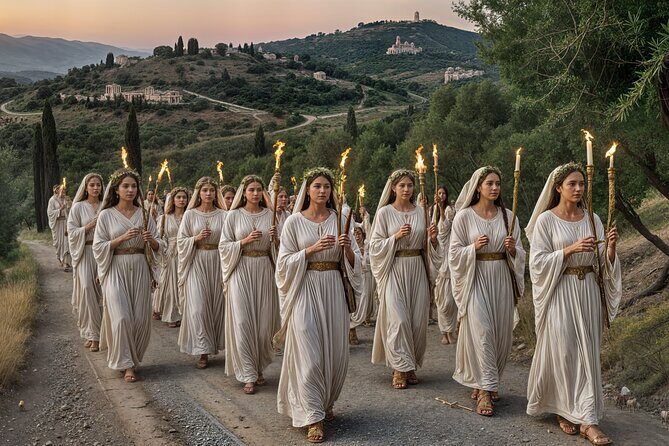
Most of the “magic” here is that you’re not just visiting Eleusis. You’re traveling the corridor that linked Athens to Eleusis, following the same idea of a pilgrimage road—the Iera Odos (Sacred Way)—and hitting key stops that shaped the route’s meaning: gates, procession buildings, bridges, monasteries, wells tied to Demeter, and the cave associated with Hades.
If you love myth, you’ll like how the tour keeps switching gears: one minute it’s architecture and burial art in Kerameikos, the next it’s Demeter’s search for Persephone at the Kallichoron Well, then it’s the Ploutonion and what ancient people imagined “beneath the ground” meant.
Price and Value: What You Pay, What You Should Budget Extra
At $129 for a 5 to 6 hour private tour (round-trip time included), you’re paying primarily for transportation, a driver-guide with strong historical storytelling, and the convenience of a tight route. For many people, that’s the value: Eleusis is far enough outside central Athens that you’ll feel the benefit of a direct plan.
But you still need to budget for two add-ons:
- Entrance fees are not included for archaeological sites and museums.
- Lunch in Eleusis is not included (you’ll stop at a traditional taverna, but the meal cost is on you).
So the “real” total depends on what you choose to enter. If you’re the type who wants to see museums and indoor sections, plan on extra spending. If you’re happy with outside viewpoints and key ruins, you can keep costs controlled—especially because several stops are free.
Also note: gratuities and tips are not included, so you’ll want to decide what feels fair for your driver-guide.
You can also read our reviews of more private tours in Athens

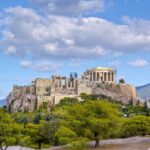

Kerameikos to Dipylon: Starting the Pilgrimage at Athens’ Potters’ Quarter
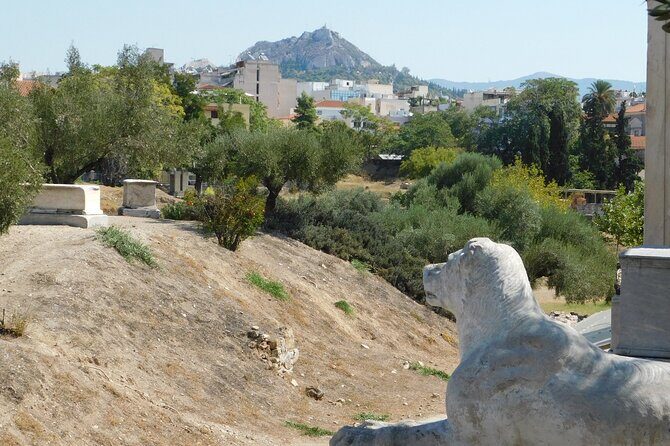
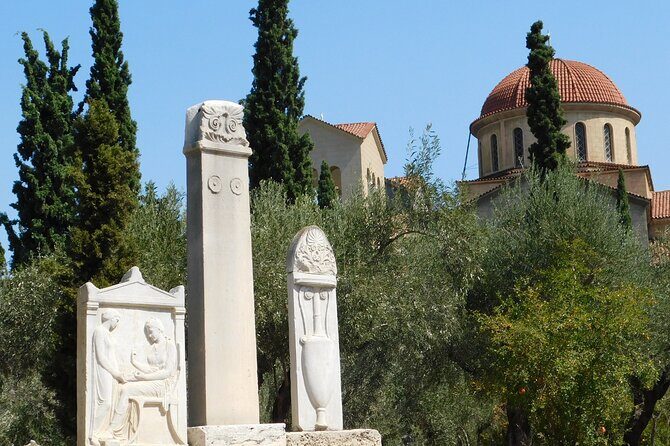
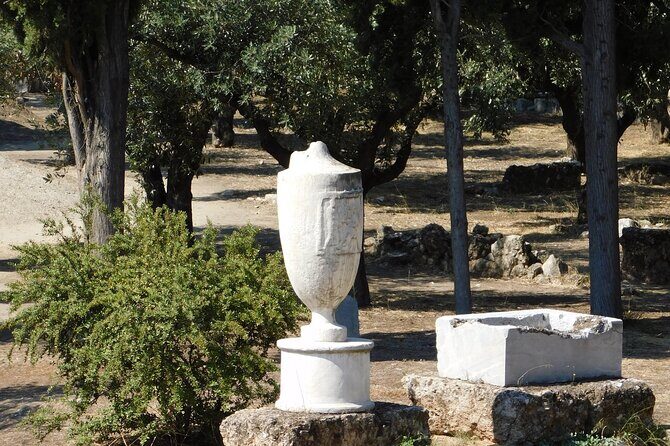
You begin at Kerameikos Archaeological Site, one of the most atmospheric places near Athens. This area served as the potters’ quarter in ancient times and also functioned as the city’s major cemetery. You’ll walk among burial grounds and sections of ancient walls, then connect that setting to the Sacred Way concept—because procession and pilgrimage didn’t happen in a vacuum. They moved through lived-in landscapes.
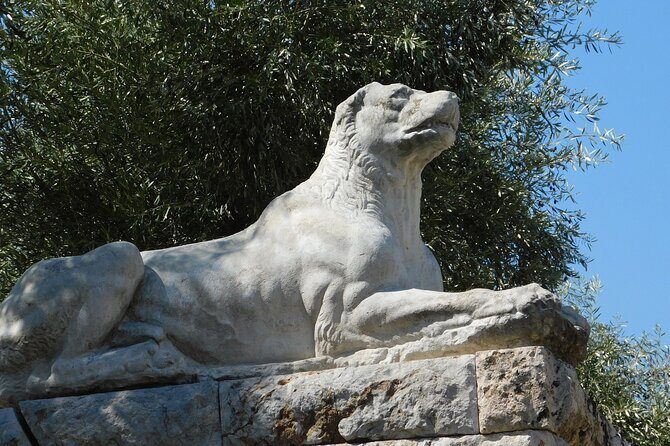
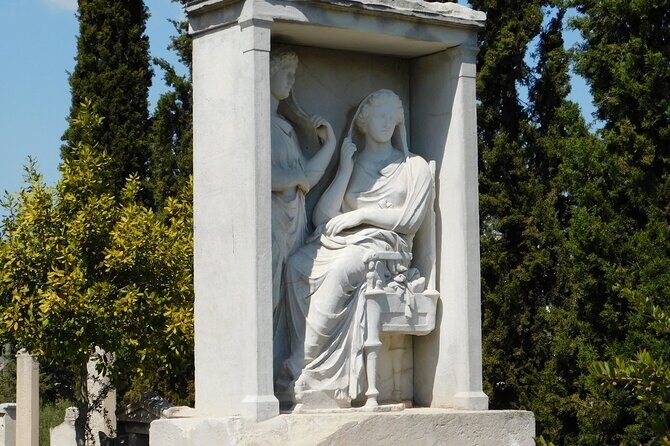
Kerameikos also includes an on-site museum, and this is where many people find it worth slowing down. The collection of funerary monuments and artifacts helps translate what you’re looking at outside: pottery, grave goods, and the kinds of symbols ancient Athenians used to talk about death, status, and belief.
Right after that, you hit the Dipylon Gate for a short but memorable stop. It’s the largest and most important gateway of ancient Athens. Even in remains, you can see why it mattered: merchants, visitors, and sacred processions all funneled through here, and Panathenaic festival movement passed through its monumental arches on the way toward the Acropolis.
Then comes the Pompeion, another key stop in the Kerameikos complex. This building was tied to the ceremonial setup for the Panathenaic Procession—so it’s a good reminder that Athens didn’t just worship once a year; it organized rituals like a well-tuned machine.
Quick practical note: Kerameikos is one of those places where shoes matter. Bring comfortable footwear, because you’re not doing “stand-and-take-a-photo” only—you’ll be walking.
The Sacred Way in the Modern City: Iera Odos and the Kifisos River Crossing
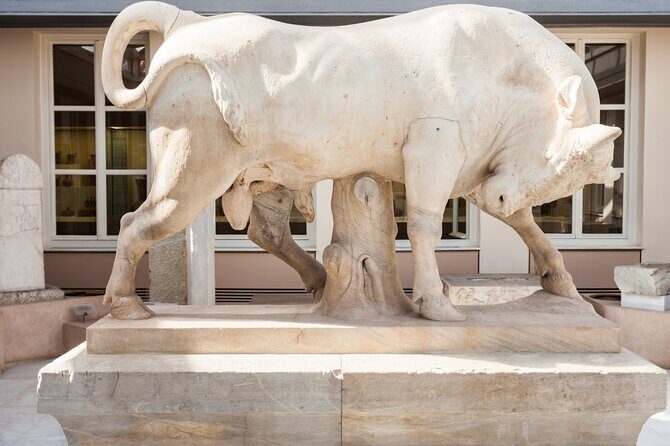
From Kerameikos, the tour keeps that Sacred Way thread going, even when you’re surrounded by modern Athens. You’ll see archaeological fragments of Iera Odos (Sacred Way)—including a section found during construction work at the Eleonas Metro Station area.
This is the kind of stop that people either love or skip—so don’t skip it. The surviving piers from an ancient bridge (linked to the crossing of the Kifisos River) tell a practical story: pilgrims weren’t only following ideas. They also needed stone crossings, engineered passage, and routes that worked day after day.
The tour framing helps here. You’ll learn how this crossing lined up with the Eleusinian processions, when thousands of pilgrims passed through on their journey. That makes the ruins feel less random. Instead of “a few old stones,” you get a sense of movement—people traveling with purpose.
You also walk the Iera Odos area in Aigaleo, where the ancient road connected Athens to Eleusis during the Eleusinian Mysteries. It’s a short stop, but it’s a good one. You get to step onto (and interpret) the path that carried worshippers, hymns, and sacred objects—so the day doesn’t feel like a museum visit. It feels like a guided reconstruction.
Daphni Monastery: Byzantine Mosaics on a Pilgrim Route
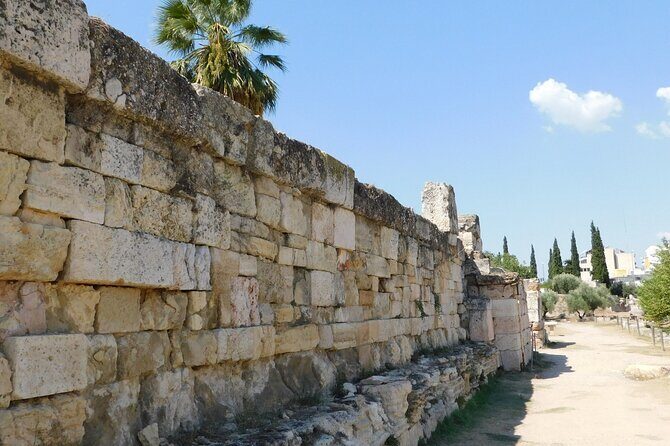
Then you switch from classical antiquity to a later layer of sacred tradition: The Monastery of Daphni. It’s a UNESCO World Heritage Site built in the 11th century, famous for its Byzantine art and architecture.
This is where the tour gets visually satisfying. You’ll be looking at exquisite mosaics, including the depiction of Christ Pantocrator in the dome. Even if mosaics aren’t usually your thing, this stop works because it’s placed where the ancient Sacred Way still matters. Different religion, same human instinct: choose a powerful location, then build art and ritual around it.
Time here is reasonable—around a half-hour—so you won’t feel rushed. And it’s also a good moment to step out of the “walk-walk-walk” mode.
Quick Stops With Real Myth Flavor: Aphrodite at Skaramagkas

After Daphni, the tour includes a brief stop at the Sanctuary of Aphrodite in Skaramagkas. Today, you’ll mostly see remnants, not a fully intact complex. That said, it still fits the story of the Sacred Way perfectly: this sanctuary served pilgrims traveling between Athens and Eleusis.
Here’s the key detail to plan around:
- Weekends: the sanctuary is open to the public.
- Weekdays: access to the interior isn’t permitted, so you’ll view it from outside.
Either way, it’s usually a good photo break and a reminder that pilgrimage routes often had multiple “spiritual stops,” not just one final destination.
You can also read our reviews of more tours and experiences in Athens





Eleusis Highlights: The Great Propylaea, Telesterion, and a Myths-First Day
Now you get to the centerpiece: Eleusis. First, you’ll pass a Roman engineering highlight—the ancient Roman bridge near Eleusis, built during Hadrian’s reign around 125 AD. It’s made from Piraeus limestone and measures about 50 meters long and 5.30 meters wide, with a central section featuring four arches. Even as remains, it helps you picture how the Sacred Way connected with waterways and kept the procession moving toward Eleusis.
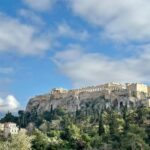
Then you move into the archaeological focus. The day’s big architectural moment is the Great Propylaea—the monumental entrance to the Sanctuary of Demeter and Persephone. Built in the 2nd century CE under Marcus Aurelius, it mirrors the feel of the Propylaea at the Acropolis. With Doric columns and massive stone structure (even in ruins), it communicates that crossing into the sacred space was meant to feel like crossing into a different reality.
From there, the itinerary shifts into myth geography:
- The Kallichoron Well, linked to Demeter’s search for Persephone. The name means well of the beautiful dances, tied to the tradition that local women danced there to comfort the grieving goddess.
- The Ploutonion Cave, associated with Hades and seen as a mythical entrance to the Underworld. This cave plays into the story people connected to Persephone’s descent, and it’s a strong stop for anyone who likes how ancient cultures pictured life, death, and rebirth.
Next comes the heart-rhythm stop for the Eleusinian Mysteries: the Telesterion. This was the grand hall where initiation ceremonies took place. It’s one of the places where the tour’s explanation matters. Without context, it’s easy to look at ruins and shrug. With context, you start imagining the movement of people and the meaning of the ritual space.
Timing tip: These stops are short, but the tour is designed so you’re not just seeing names on plaques. Listen for the way each place links to the myths, then pause for 30 seconds longer at the spots that feel most meaningful.
Museum and Taverna Time: What to Do With Your Last Stretch in Eleusis
Eleusis also offers an excellent finish for people who like artifacts, not just ruins. The Archaeological Museum of Eleusis sits within the ancient site area and focuses on material connected to the sanctuary and the Mysteries. You’ll see items tied to Demeter and Persephone, including statues and sacred offerings, plus reliefs depicting scenes connected to the Eleusinian rites.
This is also where the tour’s learning tools can help. In the experience, printed guides are mentioned as a useful add-on, with clear explanations and visual support. If you’re the type who likes to keep your bearings without reading your phone screen all day, that can be a big win.
Then you wrap with a traditional meal in Eleusis at a taverna. The meal itself is your expense, but the stop is built into the route so you’re not hunting for food at the end when everyone’s tired. This is the day’s social break: Greek dishes, local hospitality, and the chance to recover after all that myth-walking.
If you’re sensitive to heat, lunch is also your chance to cool down—especially with the earlier bottled water and air-conditioned transport.
Comfort, Pace, and the Reality of Walking Ruins
This tour is “luxury” in the practical sense: air-conditioned vehicle, private transportation, WiFi, and a driver-guide who helps you move efficiently from place to place. The walking portions aren’t extreme, but they’re real. You should wear comfortable shoes and plan for some uneven surfaces.
Heat matters too. Bring sunscreen and a hat, and plan water use even if bottled water is provided. Greece in warm season can be sneaky: you feel fine on the drive, then suddenly you’re in full sun for a ruin stop.
Also, don’t count on a single long explanation at one stop and then being done. The style here is motion plus short, focused history moments so you don’t lose the thread.
Who Should Book This Sacred Way Tour
I’d book this if you want:
- A private route that avoids big-group stress.
- A driver-guide who makes Eleusis feel connected to the road that led there.
- A strong mix of myth + architecture + place-based learning.
You might skip it—or switch to a different format—if you want a licensed specialist inside every site. Since entry tickets are extra and a licensed guide isn’t included for inside-the-site narration, you’ll depend on your driver-guide’s explanations and what you can access via ticketed entry.
Should You Book Mystic Pilgrimage: Kerameikos to Eleusis?
If you like your history with a route story, this is a strong pick. The big reasons are the private comfort, the focus on the Sacred Way line between Athens and Eleusis, and the way the itinerary includes both famous monuments and the myth-linked “smaller” stops like the Kallichoron Well and the Ploutonion Cave.
Before you book, do one quick mental calculation: add a budget for entrance fees and a lunch meal in Eleusis. If you’re okay with that, you’ll probably find the $129 value makes sense because you’re paying for a guided day with transport, not just access to ruins.
FAQ
How long is the tour?
It runs about 5 to 6 hours, including the driving time between locations.
Is pickup from a hotel or cruise port included?
Yes. You can arrange pickup from your hotel or the Athens port/cruise ship, and you’ll also be dropped back off afterward.
Are entrance fees included in the price?
No. Entrance fees are extra, and they apply to archaeological sites and museums. Some stops are free, but many are ticketed.
Does the tour include a licensed guide inside the sites?
No. The tour includes an expert English-speaking driver-guide for historical explanations, but it does not include a licensed guide to accompany you inside archaeological sites.
Is lunch in Eleusis included?
Lunch stops are part of the plan, but the meal cost is not included. You’ll eat at a traditional taverna in Eleusis at your own expense.
What comfort items are included during the ride?
The vehicle is air-conditioned, and you’ll have bottled water and WiFi on board.
What vehicle do you use for different group sizes?
For 1–4 people, you’ll travel in a luxury sedan. For 5–7 people, you’ll use a comfortable mini van.
What if the weather is bad?
This experience requires good weather. If it’s canceled due to poor weather, you’ll be offered a different date or a full refund.



More Private Tours in Athens


More Tours in Athens



More Tour Reviews in Athens
- All Day Cruise -3 Islands to Agistri,Moni, Aegina with lunch and drinks included
★ 5.0 · 4,958 reviews