REVIEW · ATHENS
Semi-Private Balkans Tour; From Athens to Sarajevo or Belgrade
Book on Viator →Operated by Choose Balkans · Bookable on Viator
This trip is a Balkan whirlwind you can actually manage. In two weeks, you’ll move from Athens into North Macedonia, Kosovo, Albania, Montenegro, Bosnia and Herzegovina, and Serbia—hitting major UNESCO stops along the way without doing the planning math yourself.
What makes it work is the format: a maximum of 10 travelers and a professional guide handling the driving and the route. I like that the itinerary is packed with recognizable names (Delphi, Meteora, Ohrid, Kotor, Mostar), but you still get time to walk streets, see markets, and eat like a local in places where regular life is close to the monuments.
One thing to consider: the pace is fast. You’ll do long travel days, lots of stairs and uneven terrain (especially in places like Sarajevo), and lunches and dinners are not listed as included.
In This Review
- Key things that make this tour a smart value
- How the Athens-to-Sarajevo/Belgrade Route Fits Together in 14 Days
- Delphi and Meteora: The First Two Days That Set the Tone
- Ioannina and Gjirokastër: Castles, Corner Cafés, and Stone-City Atmosphere
- Berat’s 1001 Windows and the Onufri Museum: Albania’s Most Poetic Walking Day
- Drilon, St. Naum, and Ohrid: UNESCO Water Views You Don’t Have to Chase
- Tirana Food Stops and Bunk’Art 2: A Capital Day With Actual Stories
- Kruja to Kosovo’s Prizren: Ottoman Echoes and the Best Kind of Walking
- Gjakova, Decan, and Rahovec: UNESCO Frescoes and Wine Country Quiet
- Mrizi i Zanave and Shkodra: A Slow-Food Break Before Montenegro
- Montenegro by the Coast: Sveti Stefan, Budva Old Town, and Kotor’s Walled Maze
- Mostar and Blagaj: The Bosnia of Bridges and Blue Water
- Sarajevo: Ottoman-Austria Layers and Visible War Reminders
- Price and Logistics: What You’re Actually Buying at This Level
- Should You Book This Tour? My Honest Recommendation
- FAQ
- How long is the semi-private Balkans tour?
- What time does the tour start?
- Where does the tour start and is pickup offered?
- How many people are in the group?
- Is this tour semi-private?
- What’s included in the price?
- Are lunches and dinners included?
- Where does the tour end?
- Is tipping required?
- Is the tour refundable or changeable after booking?
Key things that make this tour a smart value
- Small-group size (max 10) keeps sightseeing more personal than big-bus tours
- Private transportation means you’re not fighting schedules or transfers
- UNESCO-heavy route across seven countries in ~14 days
- Most entry tickets are handled (included where required for sites visited)
- A guide team you can learn from, with past guidance praised by name (Ervin, Julian, Eri Veseli, Sirma)
How the Athens-to-Sarajevo/Belgrade Route Fits Together in 14 Days
You start in Athens with pickup, then the tour leader drives you out to some of Greece’s biggest “wow” sites before the journey turns West. After that, you’re on the classic West Balkan circuit: old towns, Ottoman-era architecture, Orthodox churches, castle views, and bazaars—plus a lot of UNESCO.
The best part is that the logistics are taken care of. With private transportation and a guide who’s managing the flow, you spend your time looking at places instead of studying maps. You also get an efficient rhythm: early sights, a midday break when possible, then an evening walk in the town you’re staying in.
Just keep your expectations realistic. This is a “see a lot” style of trip. If you prefer slow travel with long afternoons off the clock, you might feel rushed by Day 3 onward—especially as borders and driving days stack up.
You can also read our reviews of more private tours in Athens
Delphi and Meteora: The First Two Days That Set the Tone
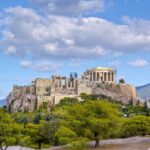
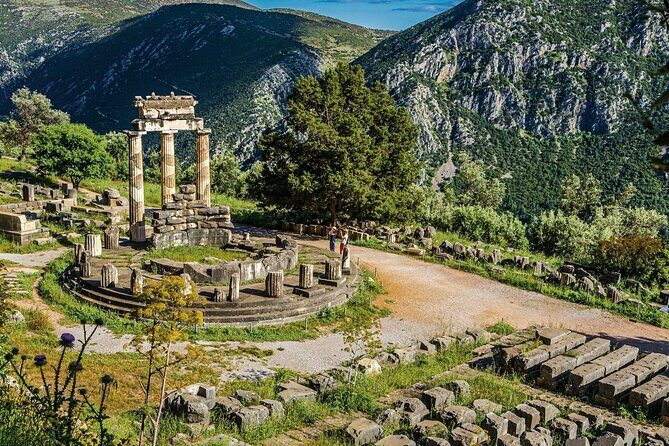
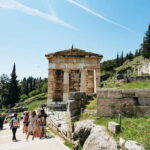
Day 1 is a smart opener because it mixes legend with scale. You drive to Delphi, walk through an ancient sacred complex, and get the context that makes the site feel more than just ruins. You’ll see highlights like the Temple of Apollo and the Treasury of the Athenians, plus a museum with famous ancient statuary details. It’s a great way to start because it gives you something big immediately—then the tour keeps moving.
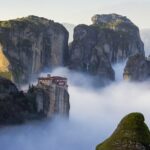
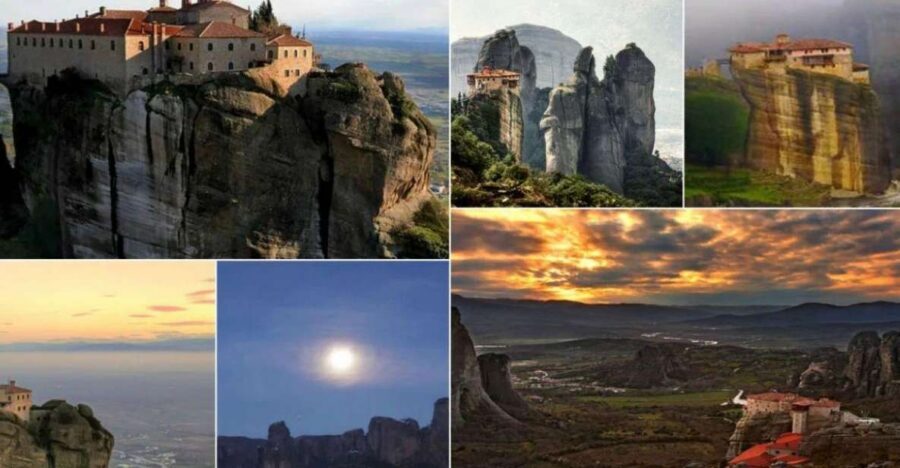
After that, you head to Meteora, where the scenery does most of the selling. The monasteries sit on top of dramatic rock formations dating back to the 14th–15th centuries. Even without special effects, the light and the height make it feel cinematic. The itinerary also gives you a chance for a top-tier sunset moment, which is exactly the kind of timing that’s hard to recreate on your own.
Practical note: this is one of those days where you’ll want good shoes. Rocks + uneven footing are normal here.
Ioannina and Gjirokastër: Castles, Corner Cafés, and Stone-City Atmosphere
Day 2 opens in Ioannina, a city where the old town’s byzantine and Ottoman layers show up in the architecture. You’ll walk cobbled streets, then head to Ioannina Castle. Inside, you get narrow lanes, historic buildings, and enough café culture that you can slow down for a coffee or snack without feeling like you’re wasting time.
In the afternoon, the route shifts toward Albania with a stop in Gjirokastër, the “Stone City.” This is where the trip starts to feel distinct: fortified town shapes, stone houses that look like they’re built for defense, and a castle that helps explain the whole town’s layout. You’ll also pass the medieval bazaar area, so you’re not only seeing architecture—you’re seeing the craft economy around it.
I like that you get a mix here:
- castle + views
- old-town bazaar lanes
- and an interior look at the town’s traditional house style (Skenduli House)
That combination makes Gjirokastër more understandable than a quick photo stop.
Berat’s 1001 Windows and the Onufri Museum: Albania’s Most Poetic Walking Day
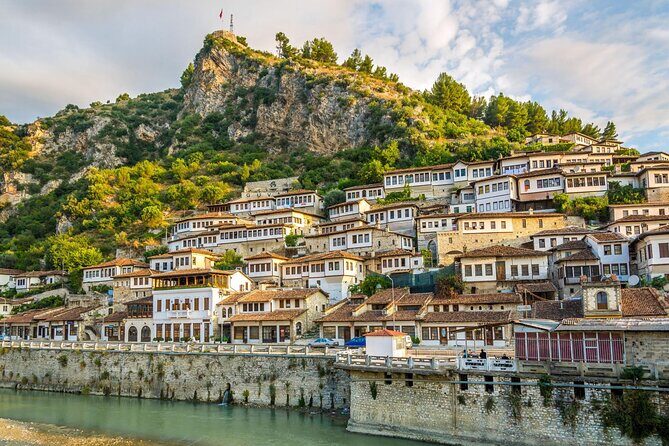
Next up is Berat, famous for its layered hillside houses and the “1001 windows” look. The town’s UNESCO identity makes sense when you walk the narrow streets and see how the houses stack up like steps.
You’ll visit Berat Castle, see church and mosque areas, and get time to explore the lower town vibe, including bridges and museums. This is one of those stops where you can feel the timeline: Illyrian roots, later castle-city life, and modern residents still living inside castle walls.
Then comes the National Iconographic Museum Onufri, which helps you connect the religious art you see in churches with the people who made the style. If you like art history even a little, this is a nice payoff.
One consideration: Berat is a walking town with slopes. If you’re tired from earlier driving days, start your energy early—take breaks when you can.
Drilon, St. Naum, and Ohrid: UNESCO Water Views You Don’t Have to Chase
Day 5 starts with a breather before the border crossing: Drilon National Park. The itinerary centers on springs, a small lake, greenery, and a calm pause by the water—exactly the kind of reset you need before more long-country travel.
Then you reach St. Naum Monastery, at the source of the River Crni Drim, tied to Lake Ohrid. It sits in a strictly protected area, and the setting is the point: clear water reflections, surrounding green, and mountain peaks in the background. The monastery complex also helps you understand the region’s religious importance beyond “a stop on a map.”
By Day 6, you’re in Ohrid, another UNESCO star and one of the oldest settlements in Europe. Ohrid’s appeal is that it’s not only a viewpoint—it’s a lived city with churches, a lake shoreline, and layered identities from Illyrian times through Roman and Byzantine periods, then Ottoman growth.
You’ll visit key sights in Ohrid including the viewpoint area of Church of St. John, Church of St. Nicolas, and Halveti Hayati Tekke mosque. There’s also a built-in education point: Ohrid is known for its Orthodox tradition of many churches (365 is the famous number used for the story).
Practical tip: bring something for shade. You’ll spend time outdoors looking at old-town scenes and viewpoints.
- All Day Cruise -3 Islands to Agistri,Moni, Aegina with lunch and drinks included
★ 5.0 · 4,958 reviews

Tirana Food Stops and Bunk’Art 2: A Capital Day With Actual Stories
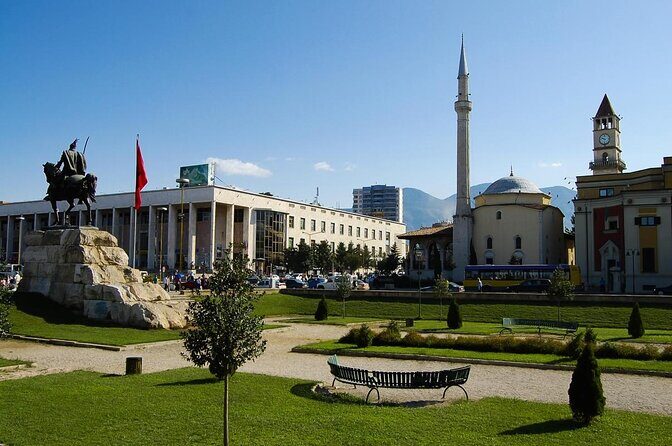
On Day 7, the tour turns to Albania’s capital, Tirana. You meet a local companion and move through neighborhoods that emphasize everyday life rather than only the major landmarks.
A big win here is the food pacing. You’ll stop for Byrek tasting, then head toward Çam bazaar and sample foods like Byrek again in a local setting. Later you get a dessert and coffee culture moment, including traditional Albanian coffee at a local café—one of those details that makes a city feel like a place, not a checklist.
In terms of history, Bunk’Art 2 is the contrast. It’s a former nuclear bunker linked to Enver Hoxha’s regime. The bunker was hidden from the public for years, then opened as a museum project. Even if you don’t love museums, this one helps you understand why so many Albanian landmarks carry “why it looks like this” history.
If you’re sensitive to heavy political history themes, be aware that the museum covers the communist era and daily life under that system. It’s educational; just go in with your mental settings.
Kruja to Kosovo’s Prizren: Ottoman Echoes and the Best Kind of Walking
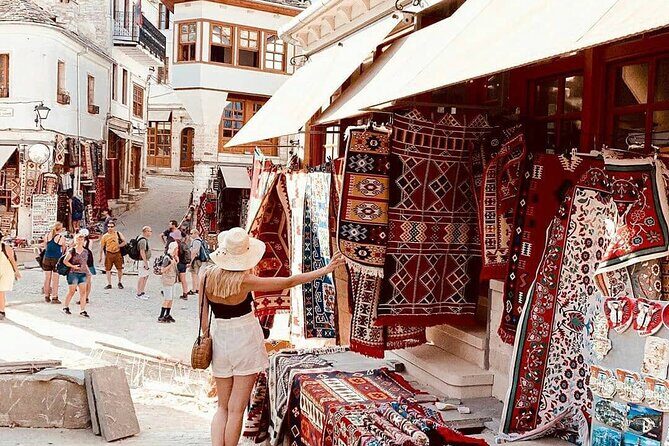
Day 8 starts in Kruja, tied to Albanian resistance against Ottoman expansion in the 15th century. You’ll get a short introduction by visiting Kruja, then walk through the Medieval Old Bazaar. This is an easy place to shop for souvenirs that feel connected to local craft—carpets, jewelry, and handmade goods.
Then you go up to Kruja Castle, placed strategically on a rocky hill. The route includes hidden paths used by locals to leave the castle unnoticed during times of siege. Even if you don’t remember every detail, that kind of storytelling makes the terrain make sense.
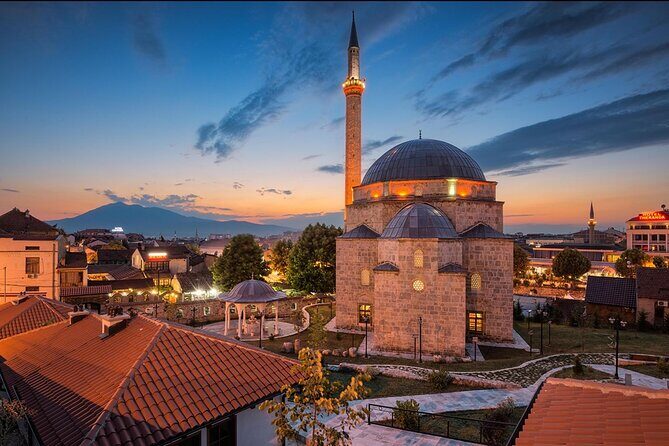
After crossing borders, you reach Prizren in Kosovo, described as a cultural capital. The old town has a river running through it with bridges and lanes. You’ll visit Sinan Pasha Mosque for its arabesque color and pattern, and also climb up to Kalaja Fortress for a panorama.
I like Prizren on this itinerary because it blends the “respect the past” side (mosque, fortress) with the “still alive today” side (streets, bridges, markets). It’s also one of the places where the tour gives you context around seasonal events—Dokufest in August is mentioned as a major short film festival.
Gjakova, Decan, and Rahovec: UNESCO Frescoes and Wine Country Quiet
Day 9 is more spread out geographically, which makes the day feel like a journey, not just point-to-point tourism.
You start with Gjakova, known for an old bazaar tradition that was rebuilt after conflicts. The rebuilt market area works as a craft-and-meal stop, which helps you shift from “history viewing” into “local daily rhythms.”
Next comes Decan Monastery, UNESCO-listed due to frescoes and Orthodox artistic heritage. The monastery is still inhabited by Orthodox monks who make fresh organic foods like cheeses. If you like religious art, this is one of the more meaningful stops because it’s not only a building; it’s a living community context.
Then you drive through Rahovec Valley, tied to viticulture and wine traditions. The vineyards are described across hillocks at altitudes of roughly 350–520 meters. The itinerary notes a wine festival in September, but even without festival timing, the setting is why the region has a reputation for quality wine.
Mrizi i Zanave and Shkodra: A Slow-Food Break Before Montenegro
Day 10 shifts to slow-tour mode with an agrotourism farm stop at Mrizi i Zanave (Restorant Agroturizëm). The itinerary includes a tour of the farm, the family story, and how it created jobs for hundreds of people in surrounding areas. You’ll also hear how the farm processes and preserves regional bio products and adapted older communist buildings for storage.
You’ll have free time to enjoy a traditional lunch or buy fresh produce, but since only breakfast is clearly listed as included, treat lunch as optional-pay depending on what your package covers.
In the afternoon, you move to Shkodër (Shkodra) in Albania. The focus is on centuries of habitation and the region’s fortress tradition. You’ll visit Rozafa Castle, known for views where the lake and rivers converge near the Adriatic Sea.
The itinerary also mentions Venetian influence in architecture and a note about masks being handmade locally if you happen to travel during February. That kind of seasonal detail is nice because it hints that Shkodër has its own traditions beyond sightseeing.
Montenegro by the Coast: Sveti Stefan, Budva Old Town, and Kotor’s Walled Maze
Day 11 is the start of Montenegro sightseeing and it has the “three different vibes” structure that works well.
First is a viewpoint near Sveti Stefan, a fishing town turned into an exclusive resort. While you can’t visit the island itself anymore, the coastline view is still a strong photo moment.
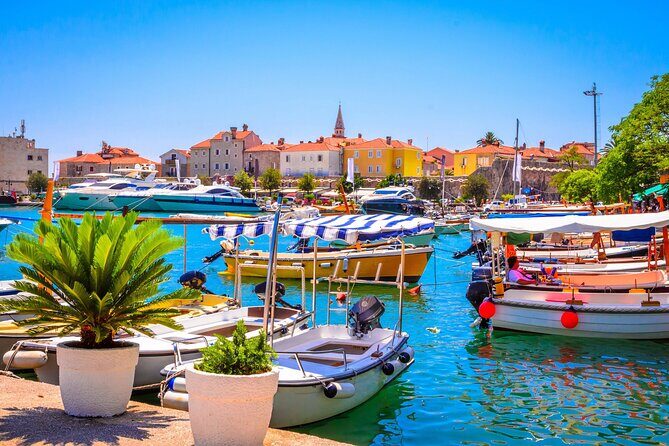
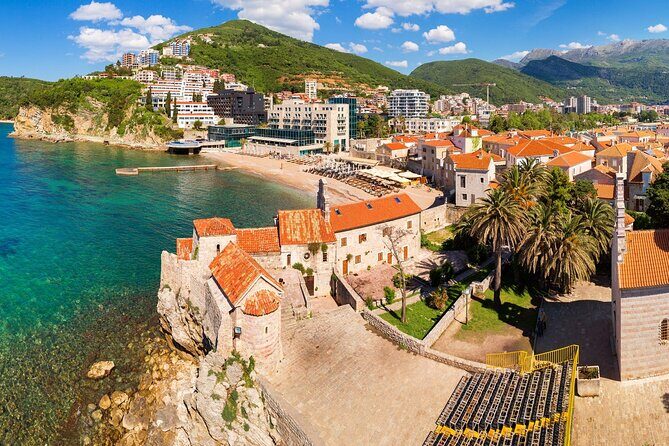
Then you drive to Budva. The city splits between old and new areas. The tour focuses on the Old Budva center with medieval old-town lanes and churches like St. Ivan and a small church of St. Mary. Even if you’re not a beach person, the old town walk is worth it because it’s compact and walkable.
Finally, you reach Kotor, another UNESCO stop. The old town is a maze of narrow cobblestone streets—originally designed to confuse intruders, which you can feel in the street layout. You’ll visit Saint Luke’s church, which matters locally as a symbol of unity.
Montenegro days can get busy with walking. If your feet aren’t happy by midday, take it slow in Kotor’s side streets.
Mostar and Blagaj: The Bosnia of Bridges and Blue Water
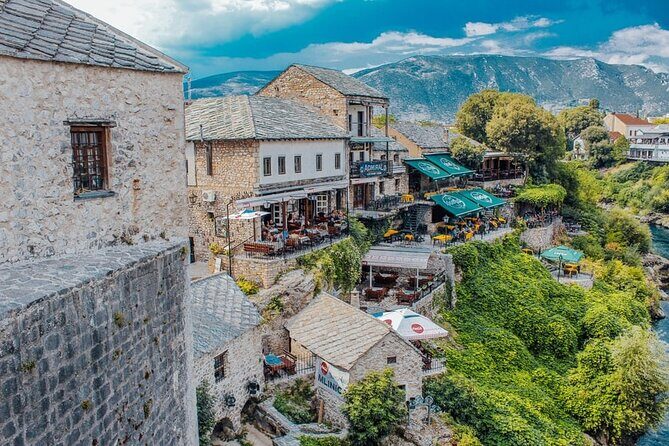
Day 12 starts with the border into Bosnia and Herzegovina and the iconic Old Bridge (Stari Most) in Mostar, UNESCO-listed and built in the 16th century with Islamic architectural style. This is one of those places where the “bridge” isn’t just infrastructure—it’s identity.
You then wander the Old Bazaar with its lively lane pattern and Ottoman-era feel. The itinerary also notes the “Don’t Forget” memorial stones around town, which is part of the modern layer of remembering.
Finally, you head outside Mostar to Blagaj tekija near a cliff with blue water in front. It’s described as a small Ottoman medieval settlement and known for the spring of the River Buna. This is a good pairing with Mostar because it shifts you from a dense city center into nature and a calm architectural setting.
Sarajevo: Ottoman-Austria Layers and Visible War Reminders
Day 13 is one of the most emotionally heavy days, but also one of the most educational.
You arrive in Sarajevo, the capital of Bosnia and Herzegovina, and your tour includes walking on uneven terrain while visiting ruins and visible reminders of the Yugoslav War, like bullet holes and cannon marks. You’ll also get the bigger historical arc: origins of Sarajevo, the medieval Bosnian kingdom, and the Ottoman plus Austria-Hungarian parts of the city.
You’ll visit sites tied to multiple faiths and empires—markets, bazaars, mosques, churches, and synagogues—often described as Sarajevo’s “European Jerusalem” nickname in the tour description. It’s a good reminder that multiple identities can be part of the same street.
You’ll also visit the Latin Bridge, and hear how it connects to WWI’s spark, with the bridge named for connecting the Catholic area called Latinluk. Then you get free time in the old town for traditional Sarajevo dishes and desserts.
This day is about respect. Go with patience. You may want extra time just to look quietly at what’s still visible.
Price and Logistics: What You’re Actually Buying at This Level
At $5,142.79 per person for about 14 days, you’re paying for more than a list of sights. You’re paying for:
- private transportation across multiple countries
- a professional guide for the route
- hotel bed-and-breakfast in 3-star properties for most nights
- entry tickets for sites that are part of the planned visits
- tourist taxes, road taxes, petrol, and international insurance coverage
That’s where the value comes from. If you try to piece this together yourself, you’d likely spend serious time coordinating driving, tickets, and multilingual guidance. Here, the structure does that for you.
What to budget separately: lunches, dinners, drinks, and snacks are not included. Souvenirs and personal spending are also on you. So keep some daily cash or card buffer for meals, extras, and any paid attractions not clearly included.
Room note: the price is calculated for double/twin/triple/quad occupancy in 3-star hotels. If you’re traveling solo, you may pay more depending on availability and how the operator prices single rooms (not specified in the details you provided).
Should You Book This Tour? My Honest Recommendation
You should book this if you want a guided intro to the West Balkans with minimal planning stress and a trip that hits UNESCO sites plus real neighborhoods. The max 10 travelers size is a big deal if you don’t want to lose the day to crowd-control logistics.
You might skip it if you hate packed schedules, dislike long driving days, or want meals and dinners fully handled. This itinerary is built for movement and sightseeing, not for resting.
If you do book, I suggest you pack smart for walking and weather changes, and plan to budget daily for lunch/dinner. Also, pay attention on the last day: the tour notes airport transfer in Sarajevo is free of charge only on Day 14, while you can end with hotel drop in Belgrade if you prefer that finish.
One last nudge: if you care about history, ask your guide questions early. Names like Ervin, Julian, Eri Veseli, and Sirma appear in past feedback for a reason—good guidance can turn “seeing” into real understanding fast.
FAQ
How long is the semi-private Balkans tour?
It lasts about 14 days.
What time does the tour start?
The meeting time is 9:00 am.
Where does the tour start and is pickup offered?
It starts in Athens, and hotel pickup in Athens is offered.
How many people are in the group?
The tour has a maximum of 10 travelers.
Is this tour semi-private?
Yes. The experience is described as a semi-private tour.
What’s included in the price?
Private transportation, a professional tour guide, hotel bed-and-breakfast (3-star hotels), tourist and road taxes (and related driving costs), and entry tickets for the sites that are part of the planned visits. Breakfast is included for 13 mornings.
Are lunches and dinners included?
No. Lunches, dinners, drinks, and snacks are listed as not included.
Where does the tour end?
It can end in Sarajevo (including airport drop on the last day) or in Belgrade (hotel drop off), based on your preference.
Is tipping required?
Tips are not a must in the Balkans, but it’s recommended to tip the tour leader/driver for good service.
Is the tour refundable or changeable after booking?
No. It’s non-refundable and cannot be changed for any reason.
More Private Tours in Athens


More Tours in Athens

More Tour Reviews in Athens
- All Day Cruise -3 Islands to Agistri,Moni, Aegina with lunch and drinks included
★ 5.0 · 4,958 reviews