REVIEW · ATHENS
Sparta Full Day Tour
Book on Viator →Operated by H.P.Tours - Hellenic Private Tours · Bookable on Viator
Sparta comes at you fast. This private full-day tour is built around big landmarks: the Corinth Canal, ancient Sparta, and the Byzantine wonder of Mystras, all with round-trip pickup from Athens or Piraeus. You travel as a small group (up to 2 per booking), and your English-speaking driver shares context along the route.
I like the way the day mixes story time with real sites. Your driver can explain what you’re seeing from the car, and you can add a licensed guide (optional, paid in cash) if you want someone allowed to walk with you inside the attractions. The main tradeoff is simple: it’s a long day (about 12 to 13 hours) and you’ll still need to budget for site entrance fees and lunch.
In This Review
- Key highlights to know before you go
- A private Athens-to-Sparta day that moves (slowly) but matters
- Corinth Canal: a quick stop that explains a centuries-old problem
- Sparta’s archaeological area and museum: Athena Chalkioikos to Roman mosaics
- What you’ll look for in the archaeological area
- What you’ll get from the museum
- The Museum of Olive and Greek Olive Oil: a smart 30-minute culture break
- Mystras: the Byzantine power center you can still walk through
- The churches you’ll hear about
- Driver stories vs. a licensed guide: choose how deep you want to go
- Price and what it really costs you on the ground
- Timing tips so you don’t feel rushed or worn out
- Where pickup works best: Athens hotels and Piraeus terminals
- Who this Sparta full day tour fits best
- Should you book the Sparta Full Day Tour?
- FAQ
- Is the Sparta Full Day Tour private?
- How long is the tour?
- What is the price and how many people can book?
- What’s included with the tour?
- What costs are not included?
- Where do you get picked up at Piraeus Port?
- What’s the cancellation window?
Key highlights to know before you go
- Private, just-your-group touring with no unknown passengers
- Pickup from Athens hotels or Piraeus terminals with driver sign-in details
- Corinth Canal history stop (marked free) with a quick but meaningful look
- Sparta archaeology + museum time focused on major monuments and museum highlights
- Mystras ruins and major churches tied to the Despotate of Morea and late Byzantine power
- Driver explanations vs. licensed guide access (driver can’t accompany you inside)
A private Athens-to-Sparta day that moves (slowly) but matters
This is the kind of tour where you feel the scale of the Peloponnese quickly. You’re not just getting driven to one site. You’re stitching together several places that make sense only when you see them in sequence: a “shipping world” moment at the Corinth Canal, an anchor in Sparta’s ancient center, then the steep, church-filled story of Mystras.
The trip is about 12 to 13 hours total. That length isn’t a surprise, but it’s worth respecting. Expect plenty of driving between stops—first the ride along the main highway toward Corinth, then the longer push through mountainous roads to Sparta. This isn’t a sit-and-stare half-day. It’s a full day designed for people who want to pack in a lot of meaning, not just a lot of minutes.
And yes, it’s private. That means your timing can feel calmer. You won’t be stuck waiting for a group of strangers or squeezed by someone else’s pace. The vehicle is air-conditioned, and you get bottled water and WiFi on board, which is genuinely useful when the day stretches long.
One more thing: the driver is English-speaking and can explain monuments and history on the drive. But they’re not licensed to accompany you into the sites. If you want someone to guide you inside, you can arrange an optional licensed guide for an extra cost.
You can also read our reviews of more tours and experiences in Athens
- All Day Cruise -3 Islands to Agistri,Moni, Aegina with lunch and drinks included
★ 5.0 · 4,958 reviews
Corinth Canal: a quick stop that explains a centuries-old problem
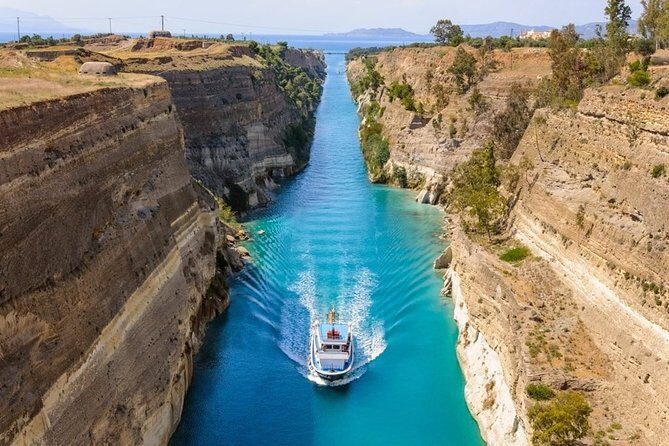
Your day starts with a drive along the national highway, about 45 miles, to the Corinth Canal area. You’ll have around 20 minutes here. It’s short by design, so think of it as a “set the stage” stop—enough time to take in the canal itself and connect it to why people kept trying to cut through the Peloponnese.
Here’s the useful context you’ll hear: before the canal, ships traveling between the Aegean and the Adriatic had to go around the Peloponnese—adding about 185 nautical miles. For a rich port city like Corinth, that kind of detour wasn’t just annoying; it affected commerce, anchoring, and travel time.
The canal wasn’t a one-off idea. The story you’ll get includes the ancient dream of cutting across the isthmus:
- Periander of Corinth (mentioned around 602 BC) is linked to an early conception of the project.
- Because the tools of the era weren’t up to digging a modern canal, Periander constructed a diolkós, a stone road system to move ships across on wheeled platforms.
- Emperor Nero is part of the long saga. The attempt with 6,000 slaves didn’t finish because Nero was murdered.
- Construction finally concludes in the late 19th century.
The payoff: even though the stop is brief, it gives you a mental map for why later history (and later empires) cared about controlling movement through Greece. If you like “how geography shaped power,” you’ll enjoy this one.
Sparta’s archaeological area and museum: Athena Chalkioikos to Roman mosaics
After the canal, you’re in for the longer stretch—about 2 hours of driving through mountainous roads toward Sparta. This is where the tour shifts from a single engineering story to a more layered “what Sparta built and what others later changed” day.
At Sparta, the visit is described as an archaeological area visit plus time at the Archaeological Museum of Sparta. The stop is around 2 hours, so you won’t be wandering for ages. You’ll move through the highlights and then use the museum to anchor what you just saw in place.
What you’ll look for in the archaeological area
The major monuments highlighted include:
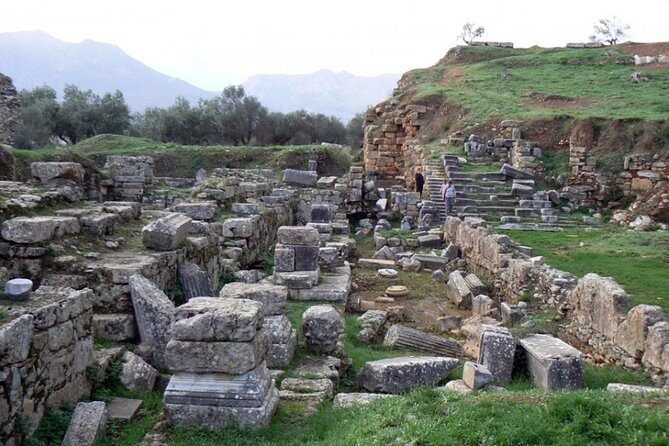
- Temple of Athena Chalkioikos: tied to the northwest end of the Acropolis area, with the temple’s position established through surviving relics.
- Ancient theatre of Sparta: on the south side of the Acropolis. You’ll hear how it reflects an early Imperial Period build, with elements preserved like the orchestra area and inscriptions tied to Roman rulers of Sparta.
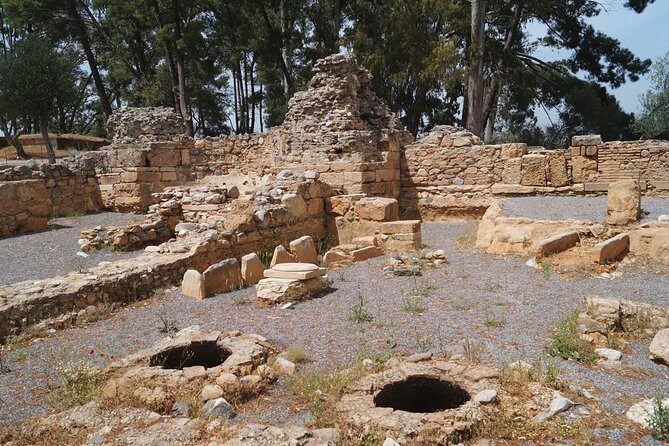
- The circular building of unknown destination: a circular structure made of hewn blocks and smaller stones. It’s suggested that it may have played an important role in Spartan daily life (with a reference to Skias).
- Merchant stalls near the theatre, connected to Roman Imperial period activity.
- Remains connected to a mid-Byzantine basilica linked to Saint Nikon (10th century AD).
This is a good mix for your brain. It doesn’t treat Sparta as just one era. It shows layers: ancient religious space, entertainment and civic life, then later Roman and Byzantine rewrites.
What you’ll get from the museum
Then you continue to the Museum of Sparta, which is set up as a storage-and-display space for the province of Lacedaemon. It covers a wide time span from the Neolithic up through later Roman eras, with special weight on major sanctuaries of Sparta.
A few things worth calling out because they help you understand the museum’s value:
- You’ll see sculptures from Archaic through Roman periods.
- There are artefacts from rescue excavations (important in archaeology because it shows how sites are saved and documented as work happens).
- A highlight is the remains of Roman mosaic floors from Sparta.
- There are also valuable epigraphs (inscriptions). Even a short inscription can add real detail that artifacts alone can’t.
If you’re the type who gets impatient in museums, this still works—because the tour gives you the “why it matters” version before you’re stuck looking at objects with no context.
- All Day Cruise -3 Islands to Agistri,Moni, Aegina with lunch and drinks included
★ 5.0 · 4,958 reviews



The Museum of Olive and Greek Olive Oil: a smart 30-minute culture break
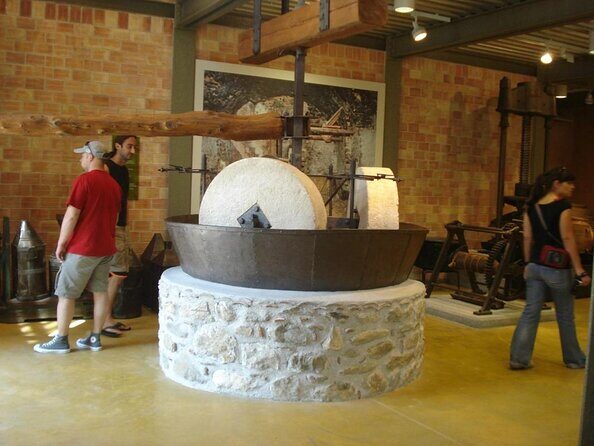
Next up is a short, focused stop: the Museum of the Olive and Greek Olive Oil in Sparta, around 30 minutes. Entrance isn’t included here, so you’ll want to budget.
This is the kind of museum that travels well because it doesn’t feel like trivia. It’s about how a single plant—olive trees—shaped everyday life and technology across centuries. The museum frames the story from prehistoric times through the early 20th century.
What I like about this stop is how it moves beyond the modern idea of olive oil. You get to see:
- early evidence of olives and olive oil production in Greece,
- how different historical periods shaped the economy and daily living,
- uses of olive oil that are easy to forget today, like lighting.
For many visitors, this is a welcome reset between heavy ruins. You’re going from political and religious stone to something practical and human: food, work, and survival.
Practical tip: since it’s only half an hour, come in with the right mindset. Don’t plan to read every panel. Scan for the “timeline beats” and the tech story.
Mystras: the Byzantine power center you can still walk through
If there’s one stop that deserves your best attention, it’s Mystras. This is the “steep ruins and huge story” portion of the day.
You’re told Mystras developed down the hillside from a fortress built in 1249 by William II of Villehardouin, the prince of Achaia. Then the timeline keeps turning:
- In 1262, the Franks surrendered the castle to the Byzantines.
- Mystras becomes the center of Byzantine power in southern Greece, shifting roles from military governor base to seat of the Despotate of Morea in 1348.
- The Turks capture it in 1460, and later it’s occupied by the Venetians too.
- After 1834, inhabitants gradually move to the modern town of Sparta, leaving behind the dramatic medieval ruins.
What makes Mystras work on a full-day itinerary is the concentration of things to see. You get churches, fortifications, palaces, houses, convents, streets, and public squares—so you’re not just viewing one monument. You’re reading a whole city layout, even in ruins.
The churches you’ll hear about
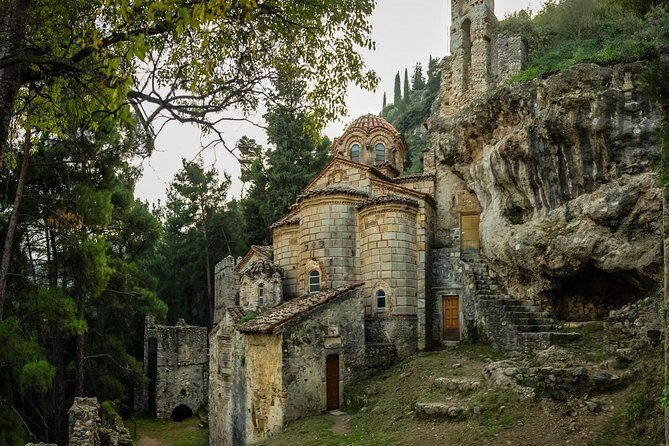
The tour highlights major Late Byzantine church architecture, including:
- Hagioi Theodoroi (1290–1295)
- Hodegetria (around 1310)
- Hagia Sophia (1350–1365)
- Peribleptos (3rd quarter of the 14th century)
- Evangelistria (late 14th – early 15th century)
- Pantanassa (around 1430)
You also get references to monasteries such as the Brontochion and the monastery of Christos Zoodotes (Christ the Giver of Life).
Your time here is about 1 hour 30 minutes, and that’s enough if you choose a path and don’t try to do everything. The ruins sit in a beautiful hill setting, and the best plan is to focus on the biggest church clusters and the fortification viewpoints—then let the rest of the atmosphere do its job.
Also, the experience is often better when your day includes the earlier context. After Corinth and Sparta, Mystras feels like the political and spiritual “continuation.”
Driver stories vs. a licensed guide: choose how deep you want to go
This tour is set up around a very practical compromise: you get an English-speaking driver for route explanations, but the driver can’t accompany you into the sites by law.
That’s why there’s an option for a local licensed tour guide who can go inside with you. The extra cost is listed as 240 euros, payable in cash, subject to availability.
Here’s how to decide:
- If you love atmosphere and you’re happy with broad context, stick with the driver’s storytelling. You’ll still get a strong overview as you travel and as you arrive.
- If you want to understand carvings, inscriptions, layout decisions, or the finer points of each monument, add the licensed guide. Mystras and Sparta archaeology can reward that kind of attention, especially with a timed stop.
One detail I found useful from a previous experience with this exact style of tour: a driver named Jimmy was praised for bringing the region’s history to life. If you happen to get a similarly animated driver, you’ll feel the day connect in a way that static information doesn’t.
Price and what it really costs you on the ground
The published price is $845.90 per group (up to 2). That’s not cheap—but private tours from Athens to the Peloponnese often aren’t. The value isn’t just comfort. It’s time and access. You’re paying for:
- round-trip pickup and drop-off from Athens hotels or Piraeus,
- air-conditioned private transport (with WiFi and water),
- an English-speaking driver who explains what you’re seeing,
- and an itinerary that hits several distinct regions in one day.
Now, budget reality. Entrance fees are explicitly not included. The total listed is €35.00 per person for entrances covering the Archaeological Museum of Sparta, Museum of Olive and Greek Olive Oil, and Mystras fortress and museum. Also, lunch is not included.
So your real spend has two parts:
1) the tour price for the group, and
2) per-person add-ons for entrances (and lunch).
If you’re traveling as a pair, the group price structure helps. If you’re traveling solo, you’d be paying the full group rate. Either way, bring a little flexibility in your budget because the “not included” items do matter on an all-day schedule.
Timing tips so you don’t feel rushed or worn out
Because the day is long, your comfort habits matter more than usual.
- Wear shoes you can walk in on uneven ground. Sparta’s archaeological areas and Mystras ruins can involve rocky surfaces and stairs.
- Bring a light layer. Even in pleasant seasons, a long ride plus changing hill temperatures can make you wish you had one.
- Plan your lunch timing. Lunch isn’t included, and the day is structured with time at stops, so you’ll want to decide early where you’ll eat based on what the driver recommends.
- At Mystras, pick your priorities before you start walking. With about 1.5 hours, you’ll enjoy it more if you aim for the main church clusters and viewpoints rather than trying to cover everything.
The tour itself is built with short-to-medium stop lengths (20 minutes at the canal, 2 hours for Sparta archaeology/museum area, 30 minutes for the olive museum, 1.5 hours for Mystras). You won’t have hours at each place, so your payoff comes from smart focus.
Where pickup works best: Athens hotels and Piraeus terminals
This tour can pick you up from Athens (hotel pickup) or from Piraeus Port. It also lists airport pickup on request for an additional fee that varies by vehicle type.
For Piraeus, the details are very specific:
- Your driver meets you at the correct cruise ship terminal holding an H.P. Tours sign with your name.
- Piraeus has terminals A, B, and C.
- If your ship docks at Terminal B or C and that exit gate is closed, you’ll need the shuttle bus to Terminal A (a short ride) where the driver will be waiting.
This is one of those small logistics things that can save you stress. If you’re sailing in, check your terminal letter ahead of time so you can match it to the correct pickup point.
Who this Sparta full day tour fits best
This is a good match if you want one private day that meaningfully covers:
- ancient Greece’s power geography (Corinth and Sparta),
- and Byzantine-era culture you can still walk among (Mystras).
It’s also a strong choice if you like the idea of an English driver explanation but don’t need a fully guided experience inside every site. If you’re the type who loves museum context and wants a break in the middle, the olive oil museum stop is a nice change of pace.
It may feel less ideal if you hate long days or you expect a relaxed pace with lots of free time. With 12 to 13 hours and several structured stops, you’ll be busy.
Should you book the Sparta Full Day Tour?
Book it if you want a private, efficient, high-impact day out of Athens that includes major sites: Corinth Canal, Sparta archaeology and museum time, the olive oil museum, and Mystras. The private setup, plus the option to add a licensed guide if you want deeper site access, is a practical way to tailor the day.
Skip it (or at least rethink) if you’re sensitive to long schedules or you’re trying to keep costs strictly low, because entrance fees and lunch are on you.
If you do book, plan to focus on the big connections between stops—engineering and movement at Corinth, civic and religious spaces in Sparta, then the Byzantine political “center” at Mystras. That’s where the day feels like more than a checklist.
FAQ
Is the Sparta Full Day Tour private?
Yes. It’s totally private, and only your group participates. No unknown passengers join.
How long is the tour?
The duration is approximately 12 to 13 hours.
What is the price and how many people can book?
The price is $845.90 per group, for up to 2 people.
What’s included with the tour?
Included are bottled water, an air-conditioned vehicle, WiFi on board, and private transportation with pickup and drop-off from Athens hotel or the Piraeus Port cruise terminal. You also get a professional driver, and a mobile ticket.
What costs are not included?
Lunch isn’t included. Entrance fees are not included (listed as €35.00 per person for the Archaeological Museum of Sparta, the Museum of Olive and Olive Oil, and Mystras fortress and museum). A licensed tour guide is optional for an extra 240 euros in cash, subject to availability.
Where do you get picked up at Piraeus Port?
The driver meets you at the cruise ship terminal that matches your docking terminal, holding an H.P. Tours sign with your name. Piraeus has terminals A, B, and C, and if the exit gate for Terminal B or C is closed, you’ll take the shuttle bus to Terminal A to meet the driver there.
What’s the cancellation window?
You can cancel for free up to 24 hours before the experience start time for a full refund. Cancellation changes made less than 24 hours before don’t qualify for a refund.
More Full-Day in Athens
- All Day Cruise -3 Islands to Agistri,Moni, Aegina with lunch and drinks included
★ 5.0 · 4,958 reviews


More Tours in Athens


More Tour Reviews in Athens
- All Day Cruise -3 Islands to Agistri,Moni, Aegina with lunch and drinks included
★ 5.0 · 4,958 reviews