REVIEW · ATHENS
Sparta Tour
Book on Viator →Operated by 4 Seasons Greece Tours · Bookable on Viator
Sparta feels like a shortcut into ancient Greece, with a medieval twist later. This private door-to-door day trip covers the big names you’ve likely pictured on postcards—Sparta itself and Mystras—plus smart stops like the Corinth Canal. I especially like that you go in a 1-trip route without juggling public buses, and I love the comfort perks: onboard Wi‑Fi, A/C, and bottled water, so the long travel day stays tolerable.
The main thing to keep in mind is the cost of seeing things once you arrive. Several stops require you to pay entrance fees yourself, and the same goes for any meals unless you choose the lunch option. If you want a totally set-price day, this won’t be it—but if you’re flexible, the payoff is a lot of history packed into one organized outing.
Key Highlights Worth Booking
- Door-to-door Athens and Piraeus pickup with a private vehicle and return
- UNESCO-listed Mystras plus time to walk the medieval ruins
- Onboard Wi‑Fi, A/C, and bottled water to make the drive feel shorter
- A stop at the Corinth Canal where the engineering is the show
- Olive museum visit to connect the dots on food, fuel, and daily life
In This Review
- A Private Sparta Day That Actually Moves
- Corinth Canal: A Fast Photo Stop With Real Engineering Facts
- Sparta Town and the Archaeological Museum: What’s Left of Lacedaemon
- The Olive and Greek Olive Oil Museum: A Quieter Stop With Big Everyday Meaning
- Mystras UNESCO: Byzantine Ruins You Can Read Like a Story
- Lunch in Pikoulianika: Mountain Views and a Real Break
- Comfort, Wi‑Fi, and the Private-Vehicle Advantage
- Price and Value: What $802.86 Covers
- A Personal Touch That Changes the Day
- Should You Book This Sparta Tour?
- FAQ
- How long is the Sparta tour from Athens?
- How many people is the tour for?
- Do you get pickup and drop-off in Athens?
- Is there Wi‑Fi on the vehicle?
- Is the ticket mobile?
- Are entrance fees included?
- What meals are included?
- Does the driver escort you inside sites?
- Is the Corinth Canal admission included?
- What’s the cancellation policy?
A Private Sparta Day That Actually Moves
Here’s the deal: a Sparta trip can turn into a travel test if you try to DIY it. This one is designed to flow. You’re picked up in Athens or Piraeus and taken back the same way, in an exclusive vehicle for your group (up to 3 people). That matters, because the drive from Athens to Sparta is about 2.5 hours each way, and you don’t want to lose energy negotiating connections.
The tour also does something I really appreciate: it gives you a mix of eras. You start with a modern sightseeing moment at the Corinth Canal. Then you step into ancient Sparta through the town area and the Archaeological Museum of Sparta. After that, you get a detour that’s less expected (the olive museum), and finally you land at Mystras, the UNESCO site where Byzantine Greece still shows its shape in the ruins.
One more practical win: your driver keeps English conversation going throughout the day, and the vehicle includes Wi‑Fi so you can stay connected without worrying about roaming costs. It’s not a “stay in the bus” day. You’ll be out walking and looking at real sites.
Corinth Canal: A Fast Photo Stop With Real Engineering Facts

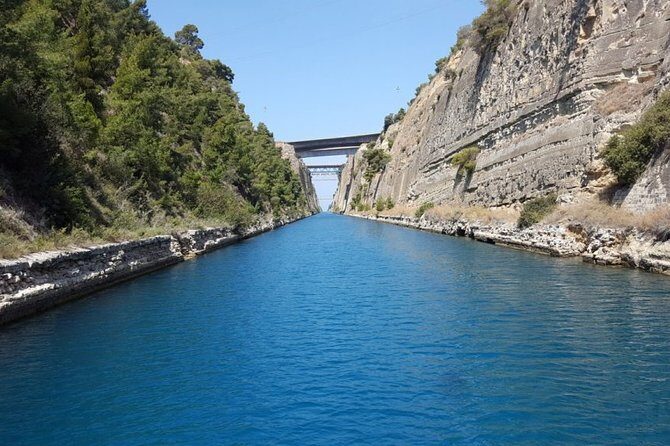
You start with the Corinth Canal, just a quick stop—about 20 minutes. It’s not there to overwhelm you with scale. It’s there to make you understand how geography can be cut, literally, for ships and commerce.
The canal connects the Gulf of Corinth and the Saronic Gulf, slicing through the narrow Isthmus of Corinth. It’s described as being dug at sea level, with no locks, and it’s narrow enough (21.4 meters wide at the base) that modern ships can’t just pass through easily. Today it has less economic importance and more tourist attention—so think of it as a compact “how the world got shaped” moment.
What you’ll like here is the clarity. You can look, take your photos, and still feel like you learned something. It’s also a nice warm-up before the longer archaeological stops.
You can also read our reviews of more tours and experiences in Athens.


Sparta Town and the Archaeological Museum: What’s Left of Lacedaemon
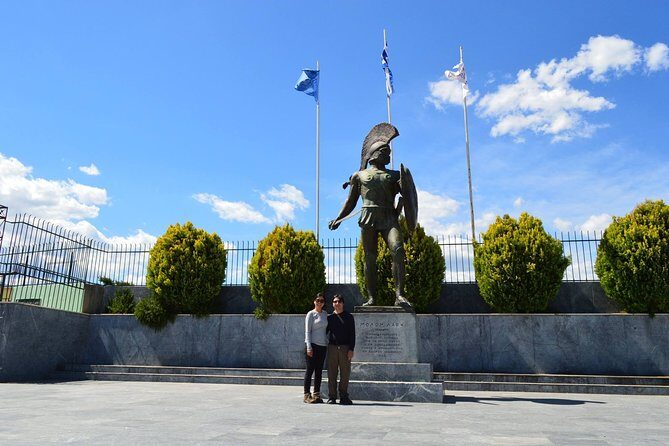
Next comes Sparta itself. You get around 30 minutes to see the area connected with ancient Sparta. In antiquity, this city-state was known as Lacedaemon, while Sparta referred to the main settlement by the Eurotas River in Laconia. Even if you’re not a walking textbook, the tour’s framing helps you understand why Sparta mattered: it rose to dominance around 650 BC and became the leading land power in ancient Greece. It later fought hard against Athens during the Peloponnesian War.
This isn’t a full-day deep dive into every ruin around town. It’s more of a way to get your bearings and then move to the place where the artifacts do the talking.
That brings you to the Archaeological Museum of Sparta for about 30 minutes. Entrance here is not included, so plan for that expense. Inside, the museum holds thousands of finds from the ancient Acropolis of Sparta (also called Lakedaemonia), plus material from the broader municipality of Laconia. The collection stretches from the Neolithic Age through the late Roman period, though you’ll only see a portion of rooms and exhibits.
If you’re the type who likes to put faces and objects to the big names, this is the stop that will click. If you’re short on museum patience, you may want to move briskly and focus on the pieces tied to the Acropolis and Acropolis-era life.
The Olive and Greek Olive Oil Museum: A Quieter Stop With Big Everyday Meaning
After the history stops, you shift to something surprisingly useful: the Museum of the Olive and Greek Olive Oil. You’ll have about 30 minutes here.
This museum is designed like a guided idea, not just a room of displays. You start from the olive’s appearance in the Mediterranean and move toward how olives and olive oil shaped daily life and even practical uses: cooking, fuel, rituals, and perfume-making (so yes, the olive has range). The courtyard also includes reconstructed olive presses, with examples from different periods—prehistoric through Byzantine.
One reason I like this stop in a day tour is that it slows you down just enough to reset your brain. Ancient ruins can be intense. Olive oil is grounding. It also gives you a different kind of cultural context for the Peloponnese—what people ate, how they produced it, and why it mattered.
Entrance fees are not included, so budget for that. Still, this tends to be one of those stops you remember for the texture of everyday life, not just the names of battles.
Mystras UNESCO: Byzantine Ruins You Can Read Like a Story
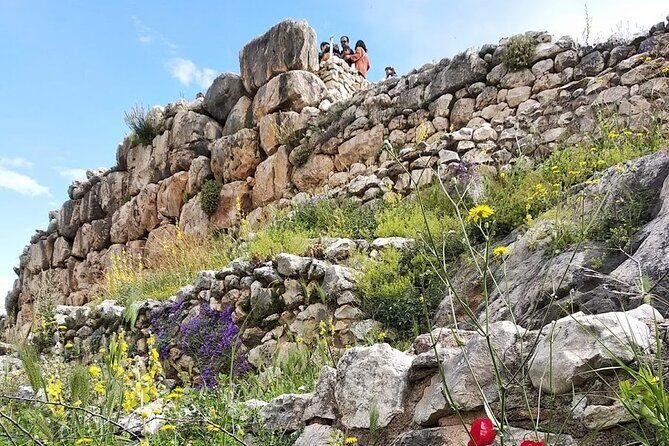
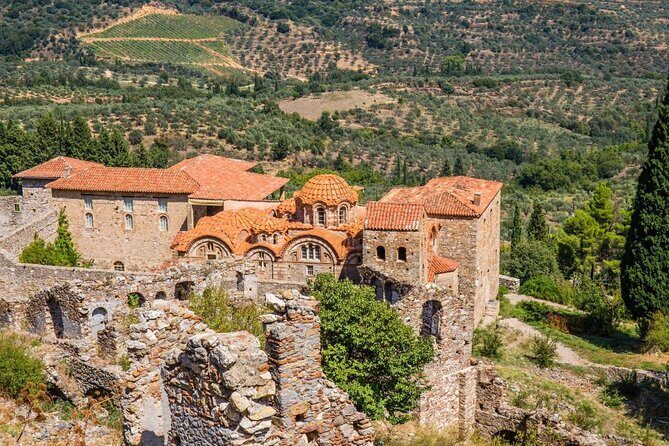
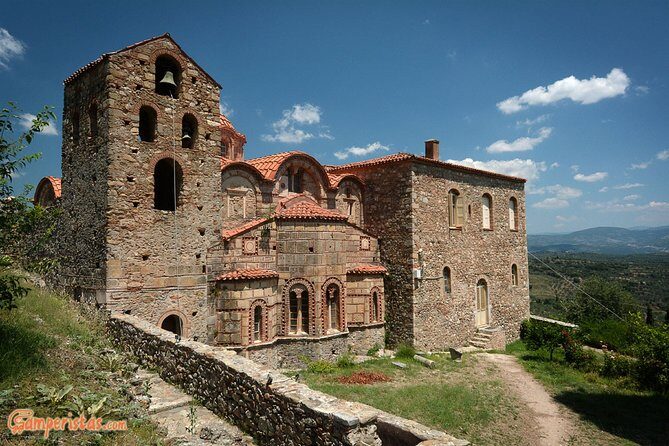
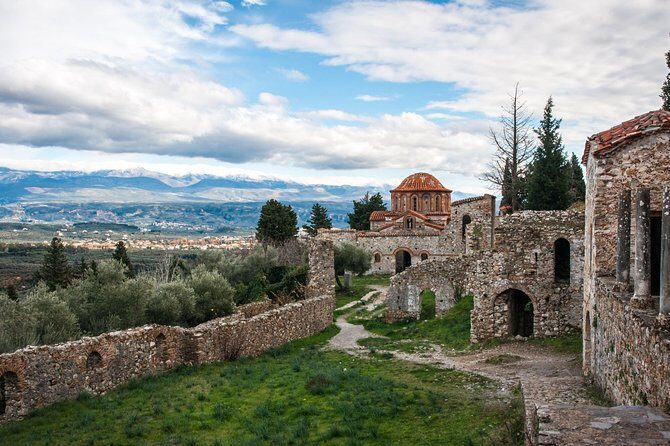
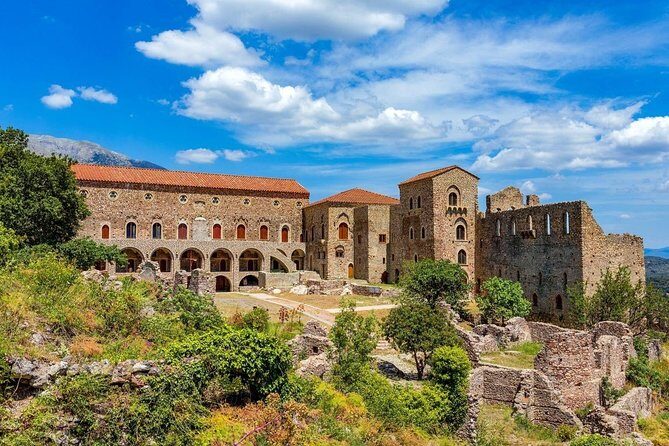
Then comes the star turn: Mystras, a UNESCO World Heritage Site. You’ll spend about 1 hour 30 minutes here.
Mystras is not just a pile of stones. It was built around a fortress erected in 1249, then reconquered by Byzantines, later occupied by Turks and Venetians, and eventually abandoned in 1832. What you see now is the medieval city’s ruins sitting in a landscape that helps you understand why people built there in the first place.
The tour’s context matters. Mystras became a center of Byzantine power, and institutions followed. The bishopric moved there from Sparta, and the town developed key religious structures over time. The Metropolis (church of Hagios Demetrios) was built after 1264. Monasteries were founded too, including the Brontochion and the monastery of Christos Zoodotes.
What’s practical for your day: ruins can mean uneven ground and stairs. The tour doesn’t spell out fitness requirements beyond saying most travelers can participate, so if you have mobility limits, you’ll want to go carefully and pace yourself.
Still, this is the stop where the day justifies itself. You can look around and feel the “layering” of centuries—fortress, Byzantine religious life, and then the later occupations. If you’ve been chasing the medieval side of Greece (not only the classical side), Mystras is a strong reason to choose this tour.
Lunch in Pikoulianika: Mountain Views and a Real Break
After Mystras, you get lunch in Pikoulianika, a mountainous village with panoramic views of the Sparta area. The lunch stop is about 1 hour.
Meals are not automatically included unless you choose the lunch option, but the tour sets you up with a traditional tavern and the point here is simple: you don’t just rush from ruin to ruin. You get a pause to eat and take in the setting.
If you’re traveling as a small group, this part can be especially good. You can slow down, talk with your driver about what you’ve just seen, and enjoy your food without the stress of figuring out where to stop last-minute.
- All Day Cruise -3 Islands to Agistri,Moni, Aegina with lunch and drinks included
★ 5.0 · 4,958 reviews






Comfort, Wi‑Fi, and the Private-Vehicle Advantage

Let’s talk about what makes this feel good as a day trip.
You’re in brand new luxury vehicles with A/C and bottled mineral water. There’s also onboard Wi‑Fi, which is a real perk for a long day because your phone stops being a “battery problem.” Instead, it becomes your navigation, your photos, and your translation helper if you want it.
You also get free hotel/port pickup and return in Athens and Piraeus. That door-to-door design matters more than people think. In Athens, time leaks. A day tour becomes exhausting when you spend it walking to meeting points or waiting for the right bus.
This is also 100% exclusive to your group, up to 3 people. In other words, you’re not squeezed into a crowd while the schedule whips by. That privacy tends to make the whole day smoother—especially when your driver is offering context throughout.
One important note for expectations: your professional English speaking driver can’t escort you inside the sites. You still get explanations and guidance, but when it’s time to enter, you’ll handle the walk-in portion yourself. That’s not automatically bad—some people prefer it—but it’s good to know ahead of time.
Price and Value: What $802.86 Covers
The price is $802.86 per group (up to 3 people) for a day roughly 10 to 11 hours long. That sounds steep if you’re thinking per person. It makes more sense when you split it across a small group.
- Up to 3 people: you can treat it like about $267 per person if everyone in your group participates.
- Solo traveler: you’re basically paying for a whole private day vehicle. You can still do it, but it won’t feel like “budget Athens.”
Where the value shows up is in the total experience: private transportation, a driver throughout the day, and door-to-door pickup from Athens and Piraeus. You’re also packing in multiple stops that each would take time and effort to coordinate alone—Corinth Canal, Sparta, a museum, an olive museum, and Mystras.
Just remember: entrance fees and drinks are not included. Meals are also not included unless you pick the lunch option. So your real day cost is the tour price plus on-site spending. If you go in expecting that, the budget math stays sane.
A Personal Touch That Changes the Day
One thing that stands out from a well-run private tour is how you feel during the drives. On this one, the guide approach is detailed and attentive. A family booking shared that their guide stayed engaged, shared helpful context at each stop, and even went out of their way to buy a local sweet after it came up only briefly.
That kind of small care doesn’t show up in a brochure, but it affects the day. It’s the difference between a driver who just drives and a driver who actually makes the sights feel connected.
Since the driver can’t walk you into the sites, that personal touch matters even more. You still rely on the driver for the narrative and the timing, and this style helps you get a smoother experience without feeling rushed.
Should You Book This Sparta Tour?
I’d book it if you want a single, well-paced day that covers ancient Sparta and Mystras without turning your trip into a logistics problem. It’s a strong choice for couples, small families, and groups of friends who want door-to-door comfort and onboard Wi‑Fi without wasting time.
You might skip it if you’re on a tight budget for add-ons. Since entrance fees and drinks are on you, the final spend can climb. Also, if you hate any walking on uneven ground, you should think twice about Mystras and choose your pace carefully.
If your “Greece must-sees” include Mystras, this tour is one of the more sensible ways to fit it in from Athens.
FAQ
How long is the Sparta tour from Athens?
The tour runs about 10 to 11 hours, depending on the day’s timing and stops.
How many people is the tour for?
It’s private for your group, up to 3 people.
Do you get pickup and drop-off in Athens?
Yes. You get free pickup and return from residences/hotels/ports in Athens and Piraeus.
Is there Wi‑Fi on the vehicle?
Yes. There is onboard Wi‑Fi, along with A/C and bottled mineral water.
Is the ticket mobile?
Yes. The tour uses a mobile ticket.
Are entrance fees included?
No. Entrance fees are at your own expense.
What meals are included?
Meals are not included unless you select the lunch option for the stop in Pikoulianika.
Does the driver escort you inside sites?
No. The driver can’t escort you into the sites, but you’ll still have a professional English-speaking driver throughout the day.
Is the Corinth Canal admission included?
The information provided lists the Corinth Canal admission ticket as free.
What’s the cancellation policy?
You can cancel for free up to 24 hours in advance for a full refund.
If you tell me your travel month and your group size (1, 2, or 3), I can help you sanity-check the day plan and estimate your likely total spend for entrances and lunch.




More Tours in Athens

More Tour Reviews in Athens
- All Day Cruise -3 Islands to Agistri,Moni, Aegina with lunch and drinks included
★ 5.0 · 4,958 reviews