REVIEW · ATHENS
Steps to tradition: Greek Traditional Dances in Athens
Book on Viator →Operated by Hidden Greece · Bookable on Viator
Sunrise dancing beats a museum day. This small-group class takes place on Philopappou Hill, with Acropolis views as your backdrop, while instructor Tania teaches you step-by-step Greek dances in a circle. It’s not just movement for movement’s sake—it’s a guided look at how cyclical dances stayed alive through centuries.
I love how the teaching feels practical and encouraging, so even if your feet are not usually on speaking terms with Greek music, you still get to succeed. The second big win for me is the cultural storytelling side—how the dances evolved across regions—and the feel of becoming a little community by holding hands and matching rhythm.
One possible consideration: it starts early (6:00 am) and the session begins with a short uphill walk on the hill, so plan for morning legs and the good-weather requirement.
In This Review
- Key takeaways
- Morning Dancing on Philopappou Hill With the Acropolis in View
- Why Cyclical Greek Dances Have Survived for Thousands of Years
- Meeting Tania and Getting Oriented Before You Dance
- What You Actually Learn: Regional Steps, Hand-to-Hand Circles, and Rhythm
- The Views and the Atmosphere That Make This Feel Like Athens, Not a Performance
- Comfort and Practical Tips for a Hilltop Dance Class
- Price and Value: Is $41.52 a Smart Use of Your Athens Time?
- Who This Athens Greek Dance Class Is Best For
- The Certificate, Playlist, and the After-Glow That Helps You Remember
- Weather, Timing, and Day-of Reality
- Should You Book Steps to Tradition in Athens?
- FAQ
- How much does Steps to Tradition: Greek Traditional Dances in Athens cost?
- How long is the experience?
- What time does the tour start?
- Where do I meet, and where does it end?
- How many people are in a group?
- Do I get a mobile ticket?
- What happens at the beginning?
- Is this class suitable for most travelers?
- Do I get anything after the class?
- What if the weather is bad or I need to cancel?
Key takeaways
- Acropolis-facing morning session on Philopappou Hill, not inside a stuffy room
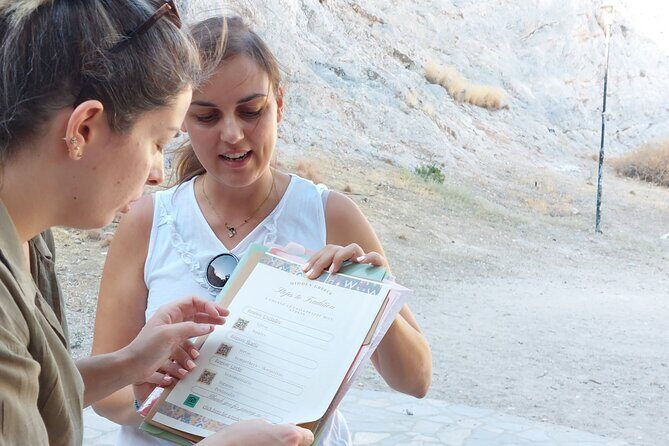
- Tania coaching step-by-step, with a partner instructor (Kostas) supporting the group
- Hand-to-hand circular dancing, tied to long-running Greek traditions
- Regional dance mix from multiple parts of Greece, with instruction that adjusts to your level
- Small group up to 12, which keeps the energy friendly and manageable
- Certificate with QR codes and a playlist link after the class
Morning Dancing on Philopappou Hill With the Acropolis in View
If Athens is on your checklist, you already know the city delivers big sights. This experience adds something different: you don’t just look at the Acropolis—you dance with it watching you from above.
You meet at the main entrance area of Philopappou Hill, near the meeting point at Dionysiou Areopagitou & Apostolou Pavlou. From there, you head out together for a short 10-minute walking route, which gives you an easy warm-up and a view of the Acropolis before the dancing begins.
Then you settle into a spot inside the nature area on the hill. That change—walking to dancing, city-view to greenery—helps the whole thing feel like a real ritual instead of a quick photo stop.
You can also read our reviews of more tours and experiences in Athens.



Why Cyclical Greek Dances Have Survived for Thousands of Years
The class connects the dancing you learn today to movements that go way back. Circular dances trace back to ancient Greece and are linked to early Mediterranean dance traditions dating to around 2000 B.C., including references to Minoan civilization in Crete.
What matters for you isn’t just the date trivia. The bigger point is the purpose behind circular dancing: the group moves together, the rhythm carries the story, and the circle keeps everyone engaged. You’re not performing at people; you’re participating with people.
That’s why the instructions tend to focus on feel—hand placement, timing, and matching the group rhythm—rather than formal “stage technique.” The circle becomes your guide.
Meeting Tania and Getting Oriented Before You Dance
The tone starts with Tania, an experienced traditional dances teacher. Once the group gathers, she leads you through that short walk, giving you a view of the Acropolis while everyone gets into the flow of the morning.
This is a smart design for beginners. You get orientation—where you’re headed, what you’ll be doing, and how the group will move—before you’re asked to copy steps. It reduces the awkward moment where you’re unsure whether you’re holding hands right or stepping on the wrong beat.
As you move up the hill, you’ll also pick up context about notable nearby sites. One example mentioned is Socrates’ Prison, which shows how the hill isn’t just scenery; it sits in the middle of Athens’ layers of meaning. You don’t need a history degree to get it—you just need to pay attention for a few minutes while the view does its job.
What You Actually Learn: Regional Steps, Hand-to-Hand Circles, and Rhythm
Over the full 2 hours 30 minutes, Tania teaches multiple traditional Greek dances that represent different regions of Greece. In practice, most sessions land around 5–7 dances, based on what participants report, with time spent on repetition so you can feel the pattern rather than brute-force it.
The core style is circular and social. You learn steps in a group with hand-to-hand holding, then you practice until the movement starts to make sense in your body. That’s when it stops being “a class” and starts being something closer to belonging—because you’re doing it together.
The dance mix includes both simpler sequences and higher-energy regional styles. Reviews point to Cretan elements too, including quick steps and more athletic movements (like kicks). The good part: instructors can adjust difficulty to your level, so you’re not stuck either watching or flailing.
Also pay attention to the storytelling tied to the music. The teachers explain what you’re hearing and why it matters, so you’re not counting steps with one brain while your other brain is trying to translate Greek feelings into English. You end up understanding the dance as a cultural sentence, not a random set of foot taps.
The Views and the Atmosphere That Make This Feel Like Athens, Not a Performance
Location isn’t just decoration here. Dancing on Philopappou Hill changes how you experience the city.
With the Acropolis in your line of sight, the dancing feels connected to the bigger Athens picture—ancient stones above you, living tradition around you. One reviewer summed it up as the ultimate feeling of yelling Opa during the dancing, which is exactly the kind of spontaneous energy the circle invites.
You’re also in a quieter, more natural area than you’d find inside a crowded museum. That helps you focus on the rhythm and on the group. Even if you come solo, the setup makes it easier to join in rather than hang back.
And if you’re the type who wants proof your trip wasn’t just photos: some instructors also capture moments for the group, like recordings and photos. That’s helpful because it’s hard to feel how you look while you’re busy thinking about your feet.
- All Day Cruise -3 Islands to Agistri,Moni, Aegina with lunch and drinks included
★ 5.0 · 4,958 reviews






Comfort and Practical Tips for a Hilltop Dance Class
This is not a dance studio on a flat floor, so show up smart.
Wear comfortable shoes you can move in quickly. That means something with decent grip for uneven ground on a hill. If your plan is stylish sneakers with zero tread, switch plans.
Dress for early-morning weather. Athens can be cooler at 6:00 am, and you’ll go from walking outdoors to doing rhythmic movement. Bring a layer you can lose if you warm up fast.
Expect hand contact. Circular dances rely on it. If you’re shy about that, you’ll still get pulled into the group rhythm, but you may want to mentally prepare for being a human metronome.
Finally, bring a water mindset. The class format includes time outdoors and a multi-dance session, so expect water availability, and drink steadily rather than waiting until you feel drained.
Price and Value: Is $41.52 a Smart Use of Your Athens Time?
At $41.52 per person, this isn’t an impulse “just once” souvenir. It’s a guided activity with multiple parts: teaching, cultural context, outdoor setting, and group participation for about 2.5 hours.
Here’s why it feels like good value:
- You’re not just learning one short routine—you’re taught several dances and how they connect.
- You get a small-group experience (max 12), which makes corrections and encouragement more likely to land.
- The setting costs real money in time and effort—Philopappou Hill plus the Acropolis view. Even without paying for tickets, most people can’t turn that view into a meaningful activity in two hours.
If you like hands-on cultural experiences, this is a strong deal. If you prefer quiet sightseeing only, it might feel a little too physical or too “participation-based” for your comfort. But for most people, it’s a smart use of morning hours.
Who This Athens Greek Dance Class Is Best For
This experience works especially well if you want culture that you can feel, not just culture you can read.
It’s a good match for:
- Couples and friends who want a shared activity that turns into a story
- Solo travelers who like meeting others without awkward icebreakers
- Families (one review mentions ages 13 and 11 doing great)
- People who enjoy music and don’t mind learning by doing
It may be less ideal if:
- You hate early starts or you’re not feeling steady walking on uneven outdoor terrain
- You want a sit-down lecture only (this is movement-first)
The setup says most travelers can participate, and the teaching approach aims for “you can get it” success. That’s a big part of why people come back saying it became a highlight.
The Certificate, Playlist, and the After-Glow That Helps You Remember
One nice touch: after the class, you get a certificate of participation. Reports also mention QR codes to a Greek traditional playlist and an overview of the dances you learned, including where they’re commonly danced.
That matters because dance memory fades fast if you don’t have a way to replay it. The QR playlist gives you a way to hear the rhythms again back home, and the dance overview helps you remember what you learned beyond the moment.
If you also get photos or recordings, you’ll have a second layer of memory. That’s especially useful because you’ll be focused on the steps while you’re dancing, and you won’t fully see yourself in motion.
Weather, Timing, and Day-of Reality
This experience requires good weather. If conditions are poor, you’ll be offered a different date or a full refund.
Timing is also part of the reality check. You start at 6:00 am, which means you’ll want to plan your night and transit around an early pickup. If you’re thinking about stacking big sightseeing plans right afterward, give yourself room for breakfast and a slow landing.
The experience ends back at the meeting point, so you’re not stuck with an uncertain “now what?” situation at the end.
Should You Book Steps to Tradition in Athens?
Yes—if you want a real Greek experience where you participate, learn, and leave with a clearer sense of how tradition moves through everyday life.
Book it if:
- You want hands-on Greek dance learning with a friendly, small group
- You like morning views and don’t mind a bit of walking uphill
- You’d rather spend 2.5 hours bonding through rhythm than collecting another set of photos
Skip it if:
- Early mornings and outdoor movement don’t match your travel style
- You want a passive cultural activity only
If you’re on the fence, this is the kind of class that tends to turn into the story you retell later—not because it was flashy, but because you were inside it.
FAQ
How much does Steps to Tradition: Greek Traditional Dances in Athens cost?
It’s priced at $41.52 per person.
How long is the experience?
The duration is about 2 hours 30 minutes.
What time does the tour start?
The start time is 6:00 am.
Where do I meet, and where does it end?
You meet at Dionysiou Areopagitou & Apostolou Pavlou, Athina 117 41, Greece. The activity ends back at the meeting point.
How many people are in a group?
This experience has a maximum of 12 travelers.
Do I get a mobile ticket?
Yes, the experience uses a mobile ticket.
What happens at the beginning?
You meet Tania at Philopappou Hill’s main entrance, then she leads you through a short 10-minute walking route with views of the Acropolis before you begin the dancing.
Is this class suitable for most travelers?
Most travelers can participate.
Do I get anything after the class?
A certificate of participation is provided, with QR codes to a Greek traditional playlist and an overview of the dances learned.
What if the weather is bad or I need to cancel?
The experience requires good weather. If it’s canceled due to poor weather, you’ll be offered a different date or a full refund. Free cancellation is available up to 24 hours before the experience starts for a full refund.



More Tour Reviews in Athens
- All Day Cruise -3 Islands to Agistri,Moni, Aegina with lunch and drinks included
★ 5.0 · 4,958 reviews