REVIEW · ATHENS
Unexpected Athens Orientation Tour
Book on GetYourGuide →Operated by Alternative Athens · Bookable on GetYourGuide
Time-traveling streets run through Athens. This 4-hour walk strings together Ottoman alleys and neoclassical landmarks with a World War II prison visit that most people miss on their own. I love the smart pacing and the way guides like Simos and Andreas keep the story clear, even between busy intersections. I also love the included city map that tracks Athens’ changes across 2,500 years. One thing to consider: the WWII prison portion is closed on Mondays and Tuesdays, so the route can feel slightly different depending on the day.
I like that you can start where you already are: either at Syntagma Square or in Kolonaki, then end at Monastiraki. For the price, $62 per person, you’re paying for a tight orientation that helps you understand what you’re seeing while you’re seeing it (not hours later in your hotel).
In This Review
- Key things to love about this Athens orientation walk
- A 4-hour Athens orientation that helps you read the city
- Starting at Syntagma Square or Kolonaki: where your Athens story begins
- Kolonaki’s 19th-century and royal-palace era stops
- Exarcheia: a lesson in Athens as a living city
- Psiri and Ottoman Athens: walking through neighborhoods that kept the older script
- Parliament, the Academy, the University, and the National Library
- WWII prison stop: what you gain and what can change
- Ancient rivers still flowing and tombs from a foregone era
- Price and pacing: is $62 good value for 4 hours?
- Who should book this tour, and who might prefer something else
- Should you book Unexpected Athens Orientation?
- FAQ
- FAQ
- How long is the tour?
- How much does the tour cost?
- What languages are offered?
- Where can I start, and where does it end?
- Is food included?
- What should I bring?
- Is the World War II prison stop always included?
- Is there a private group option?
- Can I cancel for a refund?
Key things to love about this Athens orientation walk
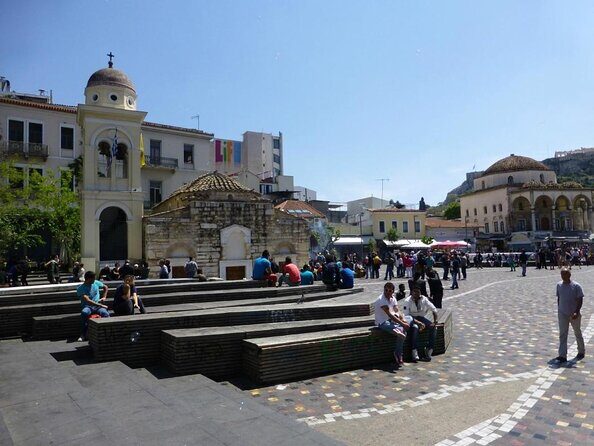
- A guided route that connects ancient Athens to modern city life in one afternoon walk
- 19th-century landmarks and royal-palace era buildings that explain why the city looks the way it does
- A WWII prison stop (when open), which adds a hard-edged chapter to the Athens story
- Neoclassical icon stops like the Parliament, Academy, University, and National Library
- Psiri and Monastiraki Ottoman neighborhoods where old city traditions still show up
- A map that tracks 2,500 years of change, so the walk sticks in your head
A 4-hour Athens orientation that helps you read the city

Athens can feel like a jumble of eras—columns here, traffic there, and a neighborhood that looks like it’s from somewhere else entirely. This tour is built to make sense of that jumble. In a short span of time, you get a guided thread that links big political buildings, old religious and burial spaces, and everyday streets where different cultures overlapped.
The walk works because it’s not only about spotting famous sights. It’s about understanding why they sit where they sit, and how Athens went from ancient power to a modern European capital. That context turns your sightseeing from random to meaningful. You’ll also appreciate the human scale of a walking tour: you see details you’d miss from a bus window, and you can ask questions as you go.
One more plus: the guides are consistently described as attentive and good at pacing. That matters in Athens, where the temptation is to rush from one photo stop to the next and miss the point. Here, the timing feels designed to let you absorb the story, not just collect landmarks.
You can also read our reviews of more tours and experiences in Athens.


Starting at Syntagma Square or Kolonaki: where your Athens story begins
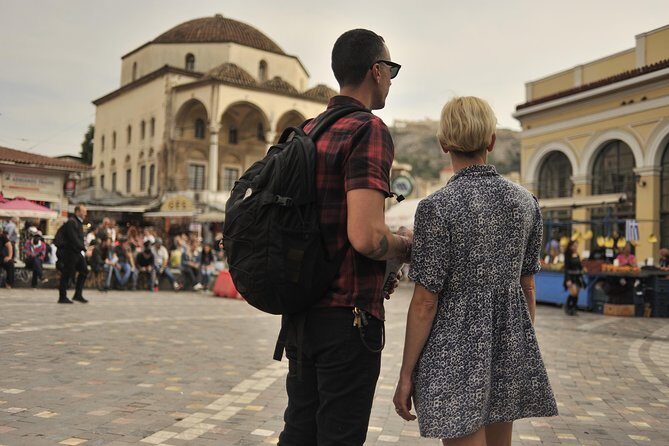
You choose one of two starting points, which is a big practical win. If you’re staying near the central action, Syntagma (Constitution) Square is an easy anchor. If you’re based more toward the “upscale and café” side, Kolonaki can be the smoother start.
Starting in these areas shapes what you notice first. You don’t begin with the ancient ruins. You begin with Athens as it presents itself today—then you’re walked backward and sideways through time. That approach is especially helpful if it’s your first trip and you want your bearings fast.
From the start, you’ll be oriented to major public spaces and building types that show Athens’ shift toward a modern capital. The tour also sets you up for what comes later: the Ottoman neighborhood streets and the connection between old burial sites and the city’s later growth.
Kolonaki’s 19th-century and royal-palace era stops
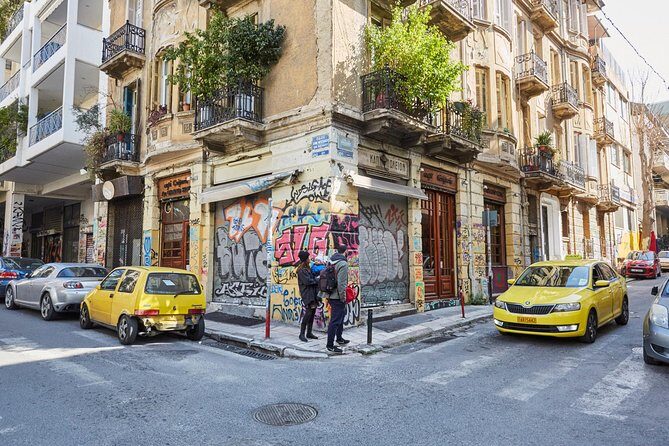
Kolonaki on this walk is more than a neighborhood introduction. It’s where the tour leans into the “why Athens became European-looking” story. You’ll see 19th-century landmarks tied to the industrial-revolution era and royal-palace influence. Even if you’ve seen photos of Athens, these kinds of buildings often feel different once you’re standing in the right spot to grasp their scale and purpose.
This is also a good section for first-time visitors, because it gives a framework. You start learning how government buildings, grand institutions, and royal-era projects helped reshape Athens into a capital that could host international visitors and represent a modern state.
If you’re the type who loves architecture, this portion is a payoff. If you’re not, it still helps. The guide’s job here is to translate what you’re seeing into something you can remember: what these buildings were for, how they fit into the city’s plan, and how they connect to the ancient past that came before.
Practical note: this part of Athens can involve steady walking on sidewalks that vary in width and texture. Comfortable shoes are not optional.
Exarcheia: a lesson in Athens as a living city
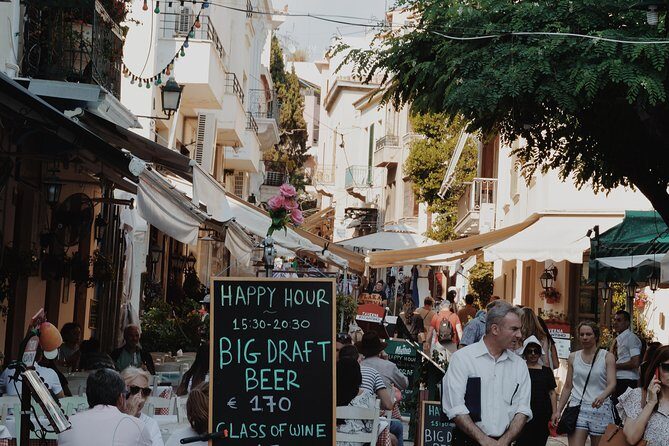
After Kolonaki, you move into Exarcheia for another guided segment (about an hour). This stop matters because it keeps the tour from feeling like a museum circuit. Athens isn’t just monuments. It’s neighborhoods, street life, and squares where modern people move through the city.
During this part of the walk, the tour threads together major urban squares and routes, including stops around Omonia Square and Kotzia Square. Even though these spaces may look like typical city centers, the guide’s commentary helps you see them as part of Athens’ ongoing evolution.
This is also where you start understanding the city’s “missing link” idea. The ancient world doesn’t stay in one intact zone. It influences how later Athens grew, and the city’s layers show up in surprising places—sometimes right in the middle of where everyday errands happen.
If you like to ask questions, this tends to be the moment when the tour becomes more interactive. The pacing described by guides like Andreas suggests time to catch your bearings and still keep moving.
Psiri and Ottoman Athens: walking through neighborhoods that kept the older script
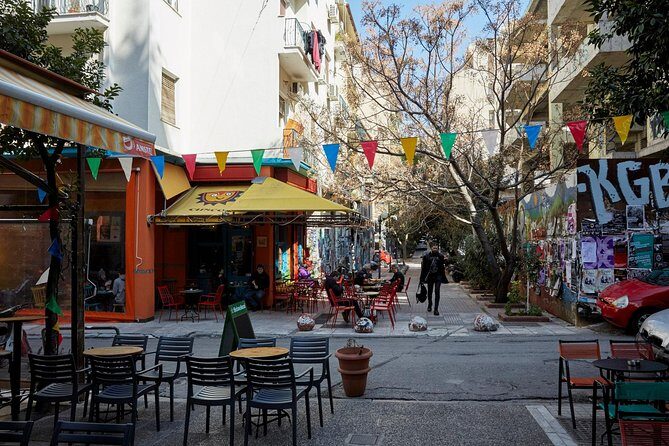
Psiri is where the tour’s cultural angle really turns. You’ll walk through preserved Ottoman neighborhoods, and the guide explains what the Ottoman footprint left behind—and what didn’t fully transfer when Western European ideas took stronger root.
This matters because many first-timers expect Athens to be ancient-only or modern-only. Ottoman-era streets complicate that. They show you a middle layer: the city after its ancient glory, shaped by different rules, traditions, and daily life.
In Psiri, you get a feel for how traditions mixed (or didn’t) across centuries. You also pass through areas that connect you to Athens’ market energy and the city’s everyday rhythm. The tour doesn’t ask you to treat every street like a postcard. It encourages you to pay attention to patterns: street layout, building forms, and the way neighborhoods hold on to their character.
Then you roll into Monastiraki, where the Ottoman neighborhood story pairs well with Athens’ public-life vibe—especially around central markets. You’re ending the walk in a place that’s still active, which makes the earlier explanation of layers click.
- All Day Cruise -3 Islands to Agistri,Moni, Aegina with lunch and drinks included
★ 5.0 · 4,958 reviews





Parliament, the Academy, the University, and the National Library

One of the most satisfying parts of the tour is the run of major landmark buildings of international architectural interest. You’ll visit or pass by icons tied to Athens’ role as a modern capital and educational hub, including:
- Parliament
- Academy
- University
- National Library
These aren’t just pretty facades. The guide ties them to the city’s transformation into a contemporary European capital—basically the story of Athens trying to present itself as both heir to ancient authority and an active modern state.
This is where the included map helps, if you actually use it during the walk. As you look at the city today, the map’s timeline-style approach makes it easier to connect your mental image to the guide’s chronology. It’s the difference between knowing a fact and being able to place it.
If you’re a seasoned visitor, this section can still be worth it. The tour is designed to make you look again. Even guides like Andreas are described as showing parts of the city that seasoned travelers might not reach on their own.
WWII prison stop: what you gain and what can change

A standout feature is the tour’s descent to a World War II-era prison stop. It’s notorious for a reason, and adding this chapter makes the Athens story feel honest. You’re not just learning about empires and architecture. You’re also learning about modern suffering and resistance, and how that history lingers in physical spaces.
Here’s the practical catch: the prison portion is closed on Mondays and Tuesdays. So if your trip falls on those days, don’t expect that exact stop to happen. The tour may adjust or skip it, but the rest of the route still covers the same major Athens threads—neighborhood layers, major buildings, and the Ottoman-era streets.
If you’re deciding whether to take the tour on a particular weekday, check your schedule against this closure. It’s the single most likely change you’ll notice.
Ancient rivers still flowing and tombs from a foregone era

One of the more unusual-sounding highlights is the chance to watch ancient rivers still flowing, plus visits connected to tombs from an earlier age. Even without a flashy name, these stops can be powerful because they show continuity.
It’s easy to think of ancient Athens as finished and sealed. But when you see how natural features and older burial traditions fit into the present city, you get a different mental model. Athens isn’t just built on top of the past—it’s built alongside it, sometimes in places you’d never expect.
This part of the walk also helps you understand why the guide keeps repeating the same theme: the ancient city isn’t a separate planet. It influenced later urban development, and the modern city still interacts with those older traces.
Price and pacing: is $62 good value for 4 hours?

At $62 per person for about 4 hours, you’re paying for three things:
- A local guide in English or French
- A structured route that connects multiple neighborhoods and building types
- A map that explains transformations across a very long timeline
Food and drinks are not included, and gratuity is optional. That’s normal for city walking tours. The real question is whether the guide time is worth it.
In my view, the value is strongest if you want interpretation, not just movement. If you like history that helps you look at streets and buildings differently, the guide’s explanations can save you hours of guesswork. If you only want a checklist of sights, you might feel like you could do parts on your own. But the route is built to connect dots: the Ottoman streets, the public squares, the royal-palace era, and the WWII prison stop (when open).
Pacing seems to be a genuine strength. Guides like Simos have been praised for pacing that keeps you engaged without speeding you through everything. That’s exactly what you want in a city where it’s easy to get tired fast.
Also, group size tends to be small, which makes the walk easier to manage and more conversational. That’s especially useful if you want restaurant or coffee tips.
Who should book this tour, and who might prefer something else
This tour is a great fit for you if:
- You want a practical Athens orientation fast
- You like seeing how neighborhoods evolved, not just ancient ruins
- You’ll enjoy a guided mix of major buildings plus walking through still-standing community streets
- You’re interested in the WWII perspective, not only the classical one
It may be less ideal if:
- You’re mainly after hands-on ancient archaeology sites and long ruin time
- You’re visiting on a Monday or Tuesday and this WWII prison stop is a must-have for your trip
- You hate walking and prefer fixed-ticket attractions
One small but real benefit: some guides will suggest places to eat or grab a coffee after the walk. In the descriptions I’ve seen, those tips can be the difference between a meal that feels touristy and one that feels like Athens today.
Should you book Unexpected Athens Orientation?
Yes—if you want to understand Athens quickly, in a way that makes later exploring easier. This is the kind of tour that helps your second day in the city make sense. It takes you from central squares to neoclassical institutions, then into neighborhood streets shaped by different eras, ending in Monastiraki where the city’s old-meets-new feeling is hard to ignore.
If the WWII prison stop matters most to you, plan your day carefully around the Monday/Tuesday closure. Otherwise, you’ll still get a strong Athens orientation with a guided explanation of how the city connects its ancient roots to modern identity.
FAQ
FAQ
How long is the tour?
It runs for 4 hours.
How much does the tour cost?
The price is $62 per person.
What languages are offered?
The guide speaks English or French.
Where can I start, and where does it end?
You can start either at Syntagma Square or in Kolonaki. The tour finishes at Monastiraki Square.
Is food included?
No. Food and drinks are not included.
What should I bring?
Wear comfortable shoes.
Is the World War II prison stop always included?
No. The prison visit is closed on Mondays and Tuesdays.
Is there a private group option?
Yes, private group availability is offered.
Can I cancel for a refund?
Yes. You can cancel up to 24 hours in advance for a full refund.



More Tours in Athens

More Tour Reviews in Athens
- All Day Cruise -3 Islands to Agistri,Moni, Aegina with lunch and drinks included
★ 5.0 · 4,958 reviews