REVIEW · ATHENS
13 Day Private Tour in Ancient Greece with Mykonos & Santorini
Book on Viator →Operated by Private Tours Greece · Bookable on Viator
This route feels like ancient Greece on fast-forward. I like the private-driver setup that keeps the days smooth, and I really like that the trip bundles the big-name sites with hands-on moments like the Acropolis Museum glass-floor views and the Olympia tastings. The main thing to watch is pacing: you’ll have early starts, long travel days, and a few add-ons that cost extra.
If you care about good planning, this is the kind of tour where the human touch matters. The team behind the scenes includes Dimitra, Effie, and Patty, and the vibe is steady and helpful rather than chaotic. One possible drawback: the overall price is premium, and you’ll still want to budget for site entrance fees and city taxes on top.
In This Review
- Quick hits you can plan around
- Why this Athens–Meteora–Mykonos–Santorini route works
- Athens: Acropolis guidance and the museum built over ruins
- Corinth, the Diakofto cog railway, and Nafplio’s Cave of Lakes
- Epidaurus theatre acoustics, Mycenae’s Lion Gate, then Olympia
- Olympia’s Zeus sanctuary, plus honey, olive oil, and wine tasting
- Delphi’s Oracle center, Arachova coffee, and a Meteora sunset on day six
- Meteora monasteries and the quick Thermopylae memorial
- From Athens to Mykonos: early ferry, hotel transfer, and your first night
- Delos day trip: UNESCO ruins plus BBQ and a swimming island
- Santorini by late afternoon: Oia sunset becomes your anchor
- Palea Kameni cruise (optional): hot springs, red and white beaches, and onboard BBQ
- The value math: what you’re paying for, and what you’ll add
- Who this tour fits best
- Should you book it?
- FAQ
- Is this a private tour?
- What’s included for the island transfers?
- Are hotel rooms included?
- Do I need to pay entrance fees for sites?
- Is the Acropolis tour guided?
- Are Delos and the Santorini hot springs cruise included?
- Does the tour include airport and hotel transfers in Athens?
- How far in advance should I book?
Quick hits you can plan around
- Acropolis guide + tickets + museum included: Parthenon area time is matched with a museum built over excavations you can see through glass.
- Meteora sunset is built in: you arrive, check in, then watch monasteries perched on rocks change colors.
- Olympia is more than ruins: you’ll get the Zeus sanctuary context plus tastings (honey, olive oil, and wine).
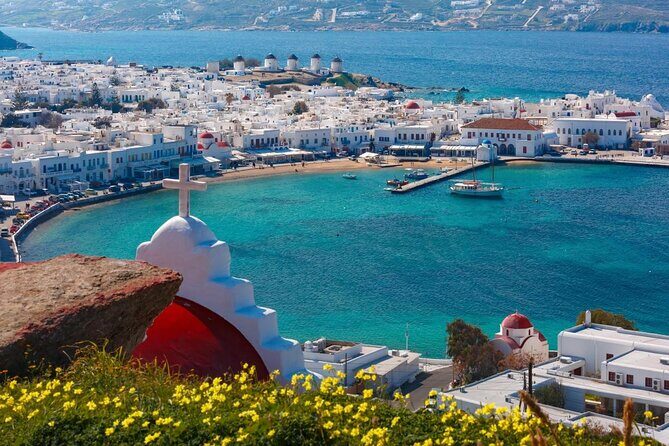
- Mykonos includes real timing: you catch an early ferry (Piraeus at 07:25) so you still get a full afternoon on the island.
- Delos and Santorini volcano days are optional: pick the ones you want, and don’t feel locked into a packed day if you’d rather slow down.
Why this Athens–Meteora–Mykonos–Santorini route works
You’re covering a lot of ground, but the plan is designed to avoid the most stressful version of “trying to do Greece in two weeks.” You start in Athens, move through key ancient stops in the Peloponnese and central Greece, then finish with two island stays—Mykonos for the vibe and Santorini for the views.
What makes it work is the mix of guided time and freer time. The trip gives you focused access where it matters (the Acropolis and its museum, Delphi’s core pieces, Meteora monasteries), then adds just enough breathing room for lunch stops, short walks, and sunset moments.
And yes, it’s private. Only your group participates, and you’re using English-speaking drivers for the land portions, plus fast ferries between islands. That combination cuts down on decision fatigue. You won’t spend half your day figuring out buses, ferry schedules, or where to stand in the right ticket line.
You can also read our reviews of more private tours in Athens
Athens: Acropolis guidance and the museum built over ruins
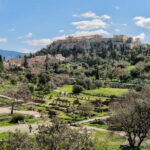
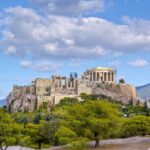
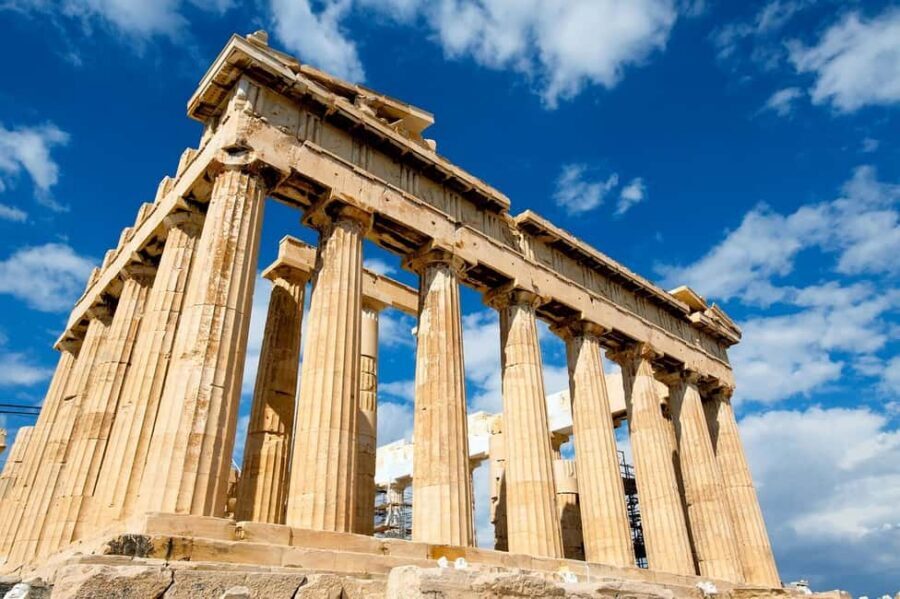
Day two is the heart of Athens. You get picked up from your hotel, driven to the Acropolis, then meet a guide for a walk that hits the landmarks most people dream about: the Theatre of Dionysus, the Porch of the Caryatids, and of course the Parthenon.
The smartest part here is the pairing with the Acropolis Museum. After your exterior time, you go inside to see artifacts and sculptures tied to the Acropolis buildings. The museum is built over an archaeological area, so there are excavations beneath you—viewable through a transparent glass floor. It’s the kind of detail that makes the whole place feel less like a photo op and more like a layered story.
Day three keeps things practical. You add a panoramic tour with your driver, seeing major sights like the Temple of Olympian Zeus, the Hellenic Parliament at Syntagma Square, and the Panathenaic Stadium (famous as the first modern Olympic Games site). Then you’re dropped back, either at your hotel or in Plaka if you want to wander for souvlaki and old-street atmosphere.
My advice: wear good shoes. The Acropolis area is famously uneven and can be tiring even when you’re moving at a steady pace.
Corinth, the Diakofto cog railway, and Nafplio’s Cave of Lakes
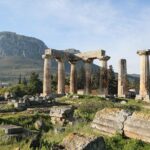
This is one of the days where you get variety instead of repeating the same “ancient site, museum, next ancient site” rhythm. You start with a stop at Ancient Corinth, with time to consider its long ties to early Christian history. You’ll also pass the Canal of Corinth, a narrow strait with steep walls that makes you understand why ships and stories both mattered here.
Then comes Kalavrita, reached via the Odontotos cog railway (the one that runs through Vouraikos Canyon). The ride is part transportation, part scenic show: tunnels, waterfalls, cliffs, and stretches through pine and oleander. Even if you’re not a train person, this is a memorable change of pace.
Nafplio is where the day softens. You overnight there after stops including the Cave of the Lakes, a rare natural formation with multiple small lakes of different colors depending on minerals in the rock. It’s an easy “wait, that’s real?” moment that breaks up the ancient-history workload.
If you like “wow” stops that aren’t just ruins, this day is a good match.
Epidaurus theatre acoustics, Mycenae’s Lion Gate, then Olympia
The Epidaurus day balances drama and context. You can choose to add Palamidi castle (famous for the 999 steps) or take a boat option to Bourtzi, the fortress at the harbor entrance. Either way, you start with a bit of local texture before heading to Epidaurus.
Then you visit the Ancient Theatre of Epidaurus, known for acoustics that still work. That means you’re not just walking through a big empty stone bowl. You’re experiencing a design that was built for voices—so the site hits differently than many other ancient theatres.
Next up is Mycenae. You’ll see key features like the Lion Gate, the Cyclopean walls, the Royal Palace, and the tomb of Agamemnon. The big value here is how you get the “what it was for” story while looking at what remains, instead of only seeing stones.
You end at Ancient Olympia for overnight, which sets you up for a true full day dedicated to the Games. It’s a smart staging move. Instead of rushing Olympia as a quick stop and then leaving, you sleep nearby and can go in with fresh energy.
Olympia’s Zeus sanctuary, plus honey, olive oil, and wine tasting
Olympia is scheduled for a morning start. You’ll visit the archaeological site where the first Olympic Games took place in 776 BC. The plan includes the sanctuary of Zeus with major pieces like the Temple of Zeus and Temple of Hera, plus the shrine of Pelops and the Council house where athletes took the Olympic oath.
Then you get a tour around the supporting spaces that make Olympia feel complete: the Treasury houses, the Gymnasium, and the Palestra where athletes used to train for a month before the Games. Those details matter. They help you picture the routine, not just the spectacle.
After the site visit, there are food and local-production stops that actually fit the theme. You’ll have a market stop in Ancient Olympia where you can taste olive oil and sample free wine. You’ll also go to a honey farm for coffee or juice and hand-made honey desserts made from honey produced there for generations. It’s not just “snacks.” It’s Greece’s tastes tied to how people historically lived and traded.
You’ll also cross the Rion–Antirion bridge, one of the biggest bridges in Europe. It’s the kind of moment that breaks up the mental load of ancient ruins and gives you a quick reset before heading to Delphi.
My take: this day feels like you earned it. It’s not only sight-seeing; it’s built to connect the Games to daily life, food, and place.
- All Day Cruise -3 Islands to Agistri,Moni, Aegina with lunch and drinks included
★ 5.0 · 4,958 reviews

Delphi’s Oracle center, Arachova coffee, and a Meteora sunset on day six
Delphi is set up well for the way people actually experience it: first you go to the museum and the core sanctuary area (Oracle site dedicated to Apollo, plus the stadium and the ancient theatre). Then you add a stop in Arachova, a traditional village where you can pause for coffee or lunch.
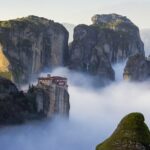
The next shift is Meteora. After leaving Arachova you drive to Kalambaka area, check in, then get the sunset tour around the rocks. This is a big deal because the monasteries sit high on enormous rock formations, and sunset changes the whole mood of the cliffs. You’re seeing Meteora as a living setting, not just as an item on your list.
Even better: you’re not trying to cram the monasteries and sunset on the same day. You arrive, settle, then watch the light play across the rock landscape before the more structured monastery visits the next morning.
Meteora monasteries and the quick Thermopylae memorial
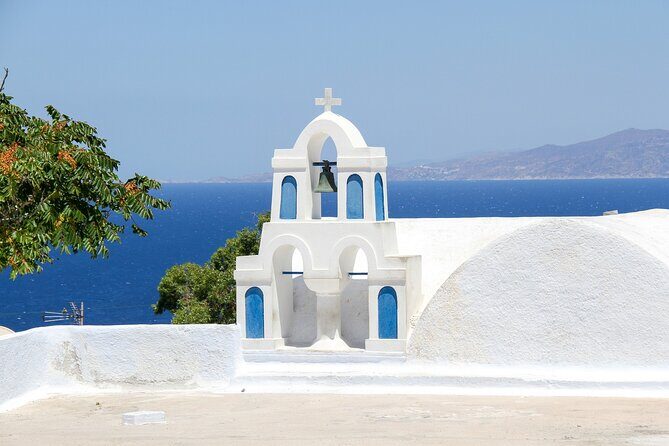
Morning in Meteora means real walking and real views. You’ll visit Byzantine monasteries included as part of UNESCO World Heritage. The first stop is the Holy Monastery of Great Meteoro, noted as the biggest and oldest of the group. Then you’ll visit the monastery of St. Stephan, the one resting on the plain rather than perched fully on a cliff.
You end the day in Kalambaka with a traditional Greek lunch, then there’s a short stop at Thermopylae to admire the statue of Leonidas. It’s only about 15 minutes, but it gives you the symbolic connection to the story of 300 Spartans and the battle with the Persians.
By the end of the day you head back to Athens so you can catch the early ferry the next morning. That transition matters. It’s what lets you do Mykonos without turning day eight into a stressful scramble.
Practical note: Meteora involves stairs and uneven surfaces around viewpoint areas. Comfortable shoes are not optional.
From Athens to Mykonos: early ferry, hotel transfer, and your first night
The ferry day is scheduled with real numbers, so you can plan your day instead of guessing. You get picked up from your Athens hotel at 05:45 and head to Piraeus for a ferry at 07:25. You arrive Mykonos at 11:25, then get transferred to your hotel.
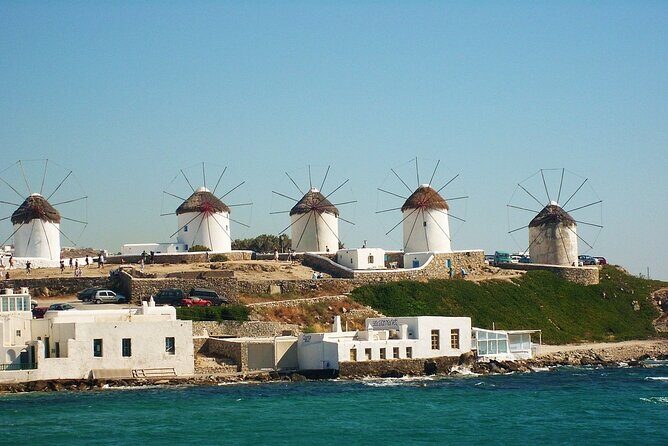
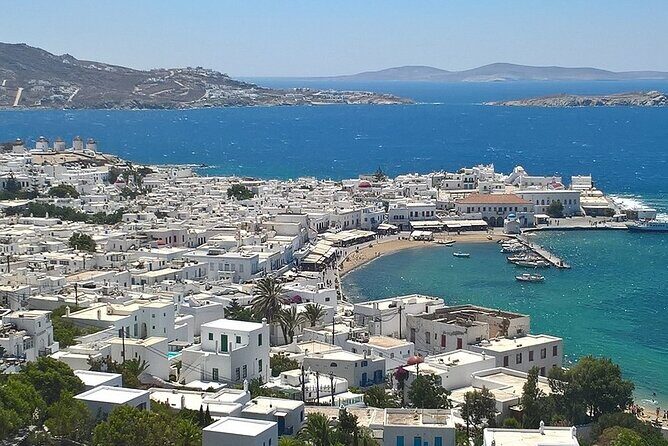
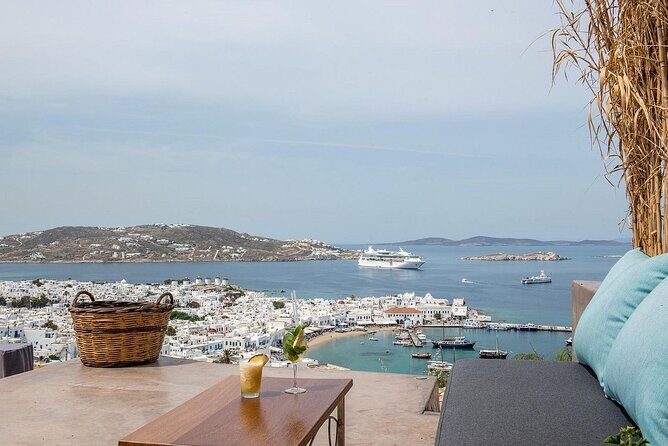
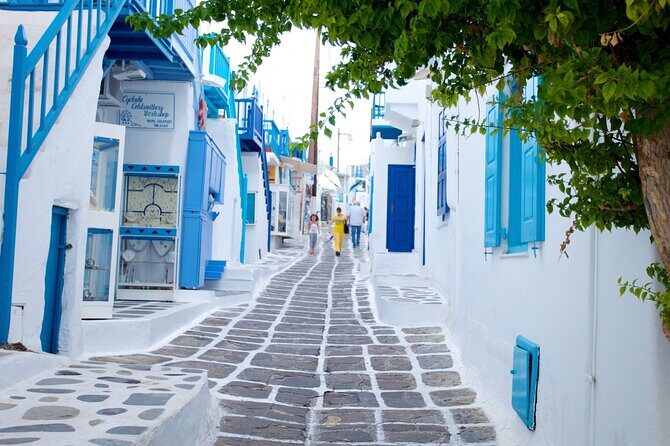
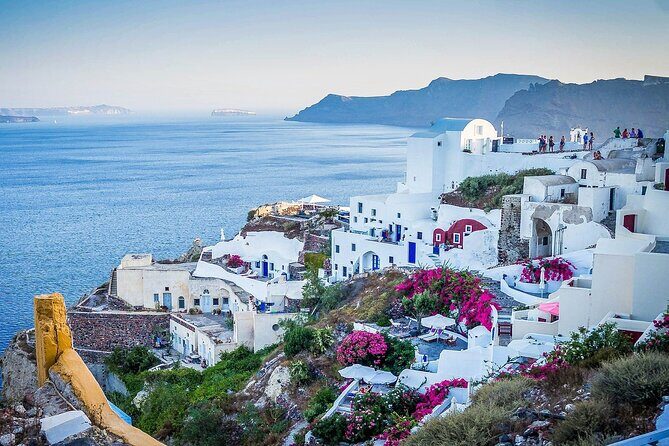
Mykonos is described as the famous island for beaches, nightlife, and Cycladic architecture—plus the “island of winds” vibe. Your time is intentionally unscripted after arrival. You can stroll Little Venice, walk the narrow streets around Matogiania for shopping, or just relax and save your energy for the evening.
If nightlife is your priority, this is where you’ll feel it. If you’d rather keep things calmer, aim for beach time and sunset walks rather than racing from bar to bar.
Delos day trip: UNESCO ruins plus BBQ and a swimming island
Delos is an optional add-on, but it’s one of the most compelling day ideas on this whole itinerary because it pairs ancient ruins with actual relaxation time. You’ll transfer to the port, then head out on a boat.
You get about 1.5 hours exploring Delos, a UNESCO World Heritage site tied to the mythical birthplace of Apollo and Artemis. The plan includes a look at temples, mosaics, and monuments.
Then comes the food and water part: you return to the boat for a BBQ lunch, sail onward to Rhenia, and spend around two hours on a quieter island with chances to swim, snorkel, and sunbathe. The day finishes with time to relax before heading back.
This day is best if you want a change from temples and theatres. You still get a strong ancient payoff, but the schedule includes time to cool off.
Santorini by late afternoon: Oia sunset becomes your anchor
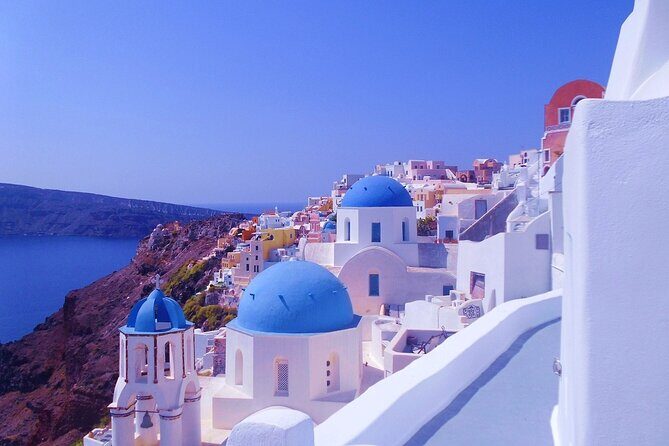
You travel to Santorini on a separate day by ferry, leaving Mykonos at 14:55 and arriving at 17:35. Then you’re transferred to your hotel. This timing is key. It gets you to Oia with enough time to set up for what the itinerary calls the best sunset of your life.
After sunset, you can enjoy a drink or dinner and wander Santorini’s narrow village streets for souvenirs. This is one of those “less planning, more feeling” moments. When the light hits the caldera and the village turns gold, you’ll understand why Oia is such a magnet.
My advice: go a little early. Even with a plan, you’re likely to share the view space with lots of people.
Palea Kameni cruise (optional): hot springs, red and white beaches, and onboard BBQ
Santorini’s volcano day is another optional add-on. You’ll get hotel pick-up and set out on a cruise that starts with a stop at Palea Kameni for therapeutic hot springs. There’s time to swim.
You’ll also see views and photo spots listed on the plan, including Aspronisi and the ancient lighthouse, plus Akrotiri and Indian Rock. Then it’s on to the Red Beach and the White Beach—where the White Beach is only accessible by boat.
The day includes an onboard BBQ buffet with fresh seafood, grilled meats, salads, and desserts. It ends with a sunset view in Oia again, so you get a second chance to experience the caldera glow even if your timing on day ten was perfect.
If you get motion-sick, consider whether a 6-hour cruise is right for you. The itinerary gives the duration, so you can judge realistically.
The value math: what you’re paying for, and what you’ll add
This trip is priced at $7,360.28 per person, which is not cheap. For many people, that price only makes sense if you look at what’s included rather than what’s missing.
Included highlights that justify the premium:
- Private transfers and English-speaking drivers for the land tour segments
- Guided Acropolis tour and Acropolis Museum with tickets included
- Meteora sunset tour, plus monastery visits
- Fast ferry tickets for Piraeus to Mykonos and Mykonos to Santorini, then back to Piraeus
- 12 nights accommodation
- Olympia tasting stops (honey, olive oil, and wine-related tastings)
What’s not included (so budget for it):
- Entrance fees: listed at about €25 per person for sites
- Hotel city tax: depends on whether you’re in 3-star or 4-star properties
- Gratuities
- Some optional experiences: Delos and the Santorini cruise are described as optional with extra cost (and the Santorini cruise notes admission not included)
So the “value” question becomes: do you want a stress-free chain of logistics for two islands plus several major ancient stops? If yes, the price starts to feel more reasonable. If you’d rather manage transport yourself and pick your own day trips, you might find cheaper DIY options. But you’ll pay for it in time and planning effort.
Also: this is scheduled as a private tour, and only your group participates. That’s a big part of the cost—privacy costs money, but it can also save your sanity.
Who this tour fits best
This experience is a great match if you want:
- A strong hit list of Greece’s top ancient sites, with guides where they matter
- Island time that feels like a vacation, not just a transit stop
- Built-in sunset moments: Oia and Meteora are both scheduled as visual anchors
- Tasting and local stops that connect to place, not only “look at the stones”
It may feel less ideal if you:
- Hate early mornings (you have a very early start for the Mykonos ferry day)
- Prefer long unstructured days with minimal driving
- Are trying to stay very flexible without paying for optional tours
Should you book it?
I’d book this if your dream Greece trip includes both big ancient sites and two iconic islands—and you want someone to handle the chain of logistics end-to-end. The combination of guided Acropolis time, Delphi and Meteora coverage, and then the Mykonos/Santorini ferry-and-hotel rhythm is exactly what a first-timer or a repeat visitor who wants less hassle tends to appreciate.
If you’re going to choose only one add-on, think carefully: Delos brings UNESCO ruins plus BBQ and swimming time, while the Santorini cruise adds hot springs and volcanic beaches. Pick what matches your vibe, then let the rest of the itinerary carry the weight.
If you do book, note that you can cancel up to 6 days in advance for a full refund—use that buffer if you’re still locking in flights.
FAQ
Is this a private tour?
Yes. It’s described as a private tour/activity, and only your group participates.
What’s included for the island transfers?
Fast ferry tickets are included for Piraeus to Mykonos and for Mykonos to Santorini, plus the return ferry back to Piraeus.
Are hotel rooms included?
Yes. The package includes 12 nights of accommodation, and rooming is set up as double-sharing, triple-sharing, or a private single room for one person.
Do I need to pay entrance fees for sites?
Entrance fees are not included. The tour notes entrance fees of about €25 per person for sites.
Is the Acropolis tour guided?
Yes. There is a guided tour of the Acropolis & Museum, and tickets are included.
Are Delos and the Santorini hot springs cruise included?
Both are described as optional. Delos is optional with extra cost, and the Santorini cruise to Palea Kameni is also optional with extra cost (and the plan notes admission not included).
Does the tour include airport and hotel transfers in Athens?
Yes. There’s meet and greet at Athens airport and transfers to your hotel, plus driver transfers at the end of the trip to Athens Airport based on your flight details.
How far in advance should I book?
The tour notes it’s commonly booked about 126 days in advance, so booking early is smart. If your plans change, you can cancel up to 6 days in advance for a full refund.

More Private Tours in Athens


More Tours in Athens

More Tour Reviews in Athens
- All Day Cruise -3 Islands to Agistri,Moni, Aegina with lunch and drinks included
★ 5.0 · 4,958 reviews