REVIEW · ATHENS
8 Days Peloponnese: Sightseeing, Historical & Tasting Private Tour from Athens
Book on Viator →Operated by GREECE TAXI · Bookable on Viator
That first sunrise-looking plan is real. This 8-day Peloponnese tour mixes major Greek history with real-time scenery and photography stops, from the Corinth Canal to medieval fortresses on cliff towns. You’ll also get built-in time for sunrise/sunset photography, plus meals and wine culture as part of the rhythm.
Two things I especially like: the driving setup is smooth and easy (pickup from your Athens/Athen’s-area base, clean air-conditioned vehicle, and a driver who’s genuinely into photo storytelling), and the route hits both famous sites and lesser-visited, photogenic stops along the way. One possible drawback is that many of the biggest sights have seasonal admission fees, and the driver is not a licensed archaeology guide inside museums and ruins.
In This Review
- Key Highlights You’ll Actually Feel
- A Photo-First Peloponnese Route That Still Feels Personal
- Nikolaos, the Photo Artist: Why the Story Lands Better
- Day 1: Corinth Canal to Kalavryta’s Monasteries (Scale + Independence)
- Day 2: Lakes Cave and the Olympic Core (Plus Quiet Forest Myth)
- Day 3: Nestor’s World, Ionian Beaches, Navarino Bay Battles
- Day 4: Methoni Fortifications to Mani’s Tower-House World
- Day 5: Gerolimenas, Vathia, Cape Tainaron, Porto Kagio
- Day 6: Monemvasia and Mystras—Byzantine Ghosts in Stone
- Day 7: Palamidi, Nafplio, and the Argolis Finale
- Day 8: Acronafplia, Nemea Sanctuary, and Nemea Wine Culture
- Price and Logistics: Does It Feel Like Value?
- Should You Book This Peloponnese Tour?
- FAQ
- What time does the tour start?
- Where can you get picked up and dropped off?
- Is this a private tour or a group tour?
- Are admission fees included for museums and archaeological sites?
- Is accommodation included in the tour price?
- Does the tour include a licensed archaeology guide inside sites?
- What kind of extra ticket might I need aside from museum admissions?
Key Highlights You’ll Actually Feel
- Photography-minded timing with dedicated sunrise and sunset opportunities across castles and historic viewpoints
- A professional, photo-artist driver (Nikolaos) who connects architecture, people, and places to the story
- Monasteries with real dramatic settings like Mega Spileo in a cave and Agia Lavra tied to Greece’s independence
- Olympia plus the Olympic Games museum for context, not just stone ruins
- Mani Peninsula tower houses and cave stops for that cinematic Peloponnese feel
- Medieval powerhouses in Monemvasia and Mystras, built for walking and looking
A Photo-First Peloponnese Route That Still Feels Personal
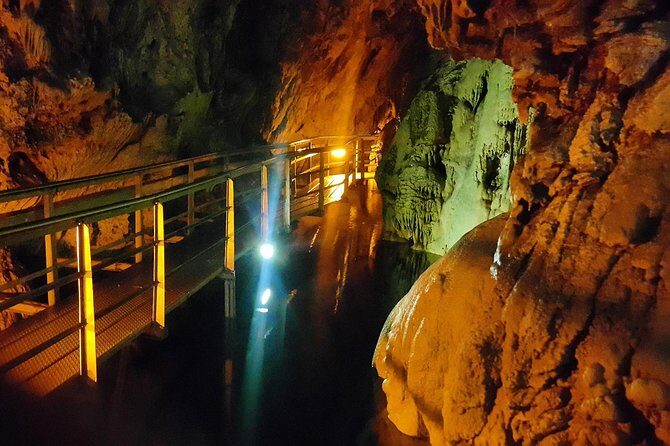
This tour works because it’s not just a checklist of monuments. It’s built around pacing and viewing angles—so you can photograph ruins at kinder light and see how coastlines, cliffs, and mountain villages shaped history here.
Even though the itinerary is full, the experience is set up as private for your group, with an emphasis on a small-group style. Pickup is offered from your hotel or apartment in Athens (or Piraeus), and the included vehicle handling covers fuels, tolls, and parking. That matters: you spend less time figuring out logistics and more time at the stops.
Also, you should know the tone: the tour driver provides interpretation and photography knowledge, but you won’t get a licensed archaeology guide automatically inside every site. If you love museum-level detail, you can hire an archaeologist guide separately in advance.
You can also read our reviews of more food & drink experiences in Athens



Nikolaos, the Photo Artist: Why the Story Lands Better
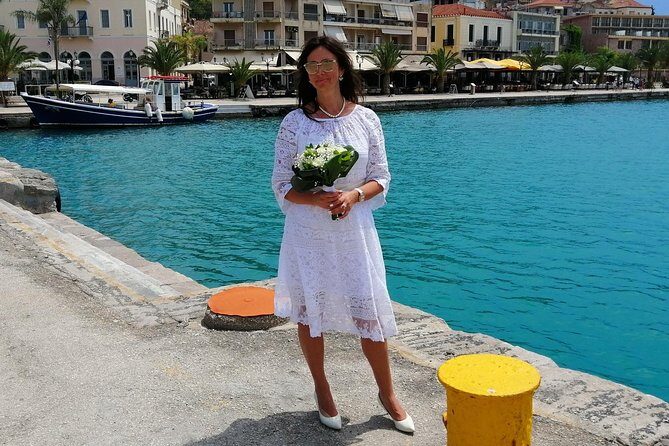
The driver listed for this experience is Nikolaos, and the big difference is that he brings photography into the history. He’s described as an artist who worked as a photographer and portrait painter for websites and newspapers, so you get practical help for how to see a place, not just what to see.
I like this approach because it changes the way the route moves. Stops like monasteries on cliff faces or fortresses above bays aren’t treated like snapshots—they’re treated like scenes. You’ll also spend time on architectural and people-focused imagery, not only wide-angle views.
One more practical point: the driver is experienced and English speaking, but the tour still positions you in control of walking and photographing. If you want to linger longer at a viewpoint or adjust the order of photos, this kind of setup tends to fit that style better than a strict bus tour.
Day 1: Corinth Canal to Kalavryta’s Monasteries (Scale + Independence)
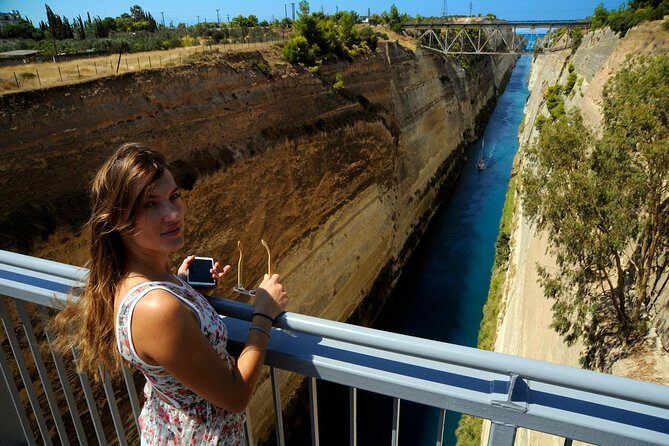
Your day starts early at 8:00 am, and it’s a strong opener. First up is the Corinth Canal, a man-made cut connecting the Aegean and Ionian seas. You can walk across the pedestrian bridge and photograph the canal from about 80 meters above—this is one of those engineering sights where the scale grabs you fast.
Next comes a brief stop in Diakopto, near the mouth of the Vouraikos River and at the lower end of the Vouraikos Gorge. It’s not the main “big ticket” stop, but it’s useful for atmosphere and quick photos, especially if you like small-town coastal edges.
Then the route turns dramatic with Mega Spileo Monastery. The monastery sits in a cave in a sheer cliff where Mount Chelmos drops down toward the Vouraikos gorge. The story here stretches from ancient references (including Pausanias) through early Christian hermits, so it’s not random scenery—it’s a place with a past that’s literally built into stone.
After that, you visit Agia Lavra Monastery, built in 961 AD on Chelmos Mountain. It’s strongly tied to the Greek War of Independence, including the moment when Bishop Germanos III raised the flag of revolt there on 21 March 1821. The series of fires and rebuilds over centuries is also part of what makes the site feel real: it looks ancient, but it’s also a survivor.
You end with time in Kalavryta for an overnight. Kalavryta is a natural base for the region, and staying overnight is one of the smartest ways to handle this area’s changing light and mountain atmosphere.
Day 2: Lakes Cave and the Olympic Core (Plus Quiet Forest Myth)
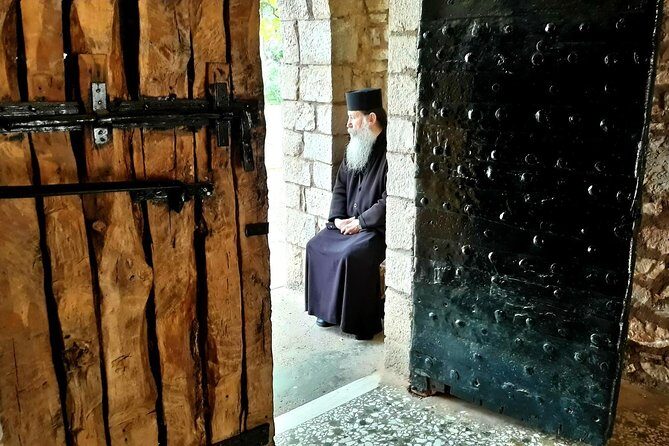
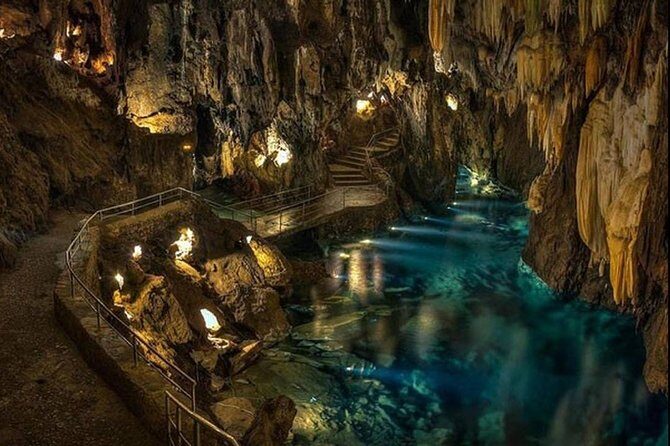
Day 2 starts with Kastria Cave of the Lakes, an underground river system with three levels. In winter, snowmelt can make it flow with waterfalls; in summer it dries up, leaving behind 13 lakes. Either way, it’s a good choice if you like contrast: you’re not only chasing sunlight—you’re chasing a different kind of atmosphere.
This stop is ticketed separately, and you should budget for it. The hours listed (09:30 to 16:30) matter too, so you’ll want to arrive ready to move through the cave experience efficiently.
Then you drive through the Arcadian Mountains toward Olympia, passing through areas like Aroania. You’ll also stop in places such as Lampeia and Dasos tis Folois, a flat oak forest in Greece protected under NATURA 2000. The myth layer is built in—this forest is named for the centaur Pholus and connects to the Hercules story—so it works if you like seeing how Greek mythology ties to real geography.
Olympia itself includes two separate experiences: the Archaeological Site of Olympia and the Museum of the Olympic Games. The ruins cover a wide sweep, from Bronze Age through Byzantine eras, with low trees and the ancient stadium area included. Then the museum helps you put the Olympics in timeline terms—starting with 776 BC, recorded winners, and the games’ recurring schedule.
One caution: Olympia’s admissions are not included. And it’s a popular site, so wear comfortable shoes and plan to walk steadily. This is one day where your energy planning matters more than your photo gear.
Day 3: Nestor’s World, Ionian Beaches, Navarino Bay Battles
Day 3 shifts from Olympia into Messinia and the bay coastline. You start with the Palace of Nestor near Pylos, one of the best-preserved Mycenaean palaces in the region. It’s strongly linked to Homer—Nestor’s kingdom in the Odyssey—and the palace walls and layout are set up so you can understand the complex without needing a PhD.
Then you hit Voidokilia Beach, known for its omega shape (Ω) and the dunes that curve into the water. It’s paired with Gialova Lagoon, a key bird habitat, so the area feels alive even when the wind is calm. Above it, you also have Nestor’s Cave and nearby Frankish castle ruins, plus the tomb area associated with Nestor’s son Thrasymedes.
After that comes Divari Beach and Gialova, where the bird habitat angle is even more explicit: many migratory species, including threatened ones listed in the Red Book. The tour includes time for photography and lunch here, which is smart because it gives you a break between major history stops.
Then you move to Ormos Navarinou (Navarino Bay), tied to the 1827 naval battle that helped make Greek independence more likely. It’s a shorter stop, but it adds a needed layer: not every “ancient” story here is ancient—some are modern turning points.
You also visit the New Castle of Pylos area, with reference to both older and newer fortifications overlooking the bay. Even though it’s not always a “museum inside” experience, these fort hills help you understand how the bay was controlled.
You end with Methoni for an overnight. This is where sunset photography fits naturally into the plan—Methoni’s historic setting makes evening light feel worth the effort.
You can also read our reviews of more private tours in Athens




Day 4: Methoni Fortifications to Mani’s Tower-House World
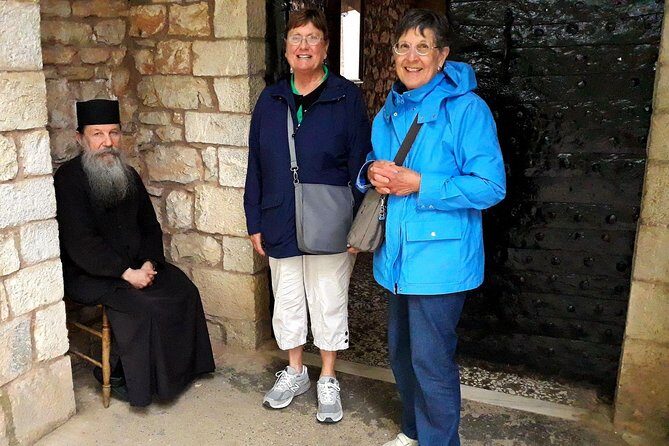
Morning begins with Methoni Castle, described as a fortified city built by the Venetians after 1209. The site sits on a rock into the sea, separated from land by an artificial moat, and it includes acropolis-style fortification on the landward side. Even in ruins, it’s impressive because the scale and positioning are obvious.
Then the route heads to Kalamata—not just for passing through, but because the area has older layers under the modern city. The tour notes references back to Homer and earlier city remains, so you get a quick historical frame rather than a generic stop.
Next you’ll see Kardamili, set in the Mani region with dramatic sea views and the “small resort but unspoiled” vibe. This is a break from heavy ruins and more about living scenery: the coastline, the harbor feel, and the way the hills press close to the sea.
You then visit the Caves of Diros area, including Alepotripa and Vlichada caves. It’s known for boat trips on an underground lake and illuminated caverns filled with stalactites and stalagmites. The tour’s notes are practical: you’ll need to negotiate steps to reach the cave entrance, and cave guides generally speak Greek only unless you confirm English ahead.
After the caves, you move into Areopoli, a well-preserved town in Inner Mani with stone paths and traditional tower houses. It’s also tied to Mani’s defensive history and local chieftain legacy, so it’s not just pretty architecture—it’s “why this town looks like this” history.
Day 5: Gerolimenas, Vathia, Cape Tainaron, Porto Kagio
This day focuses on the far southern edge of the Mani experience. First is Gerolimenas, a small coastal village whose name points to an old harbor concept. It’s one of the remotest settlements in the region’s story, and the tour frames it as a former fishing center now more tourism-focused.
Then comes Vathia, famous for tower houses built on a hill and the perichora—surrounding clusters of abandoned houses, towers, and chapels. This is a strong photography moment because the village reads like a living archive of Mani architecture. The tour notes wildflowers in spring and summer, so if you’re going in those seasons, expect a more colorful scene.
Next is Cape Tainaron, the southernmost point of mainland Greece. Here, you get a mix of myth and religious layering: legends tie a cave to Hades, ancient Spartans built temples, and later the Byzantine church conversion kept the religious use going. The Poseidon temple remnants are part of the story too.
Then you end with Porto Kagio Beach. It’s tied to an ancient port and later Venetian and Ottoman fortification history. The tour’s historical thread here is useful: you’re not just staring at the sea; you’re looking at how ports and galleys shaped regional power.
Day 6: Monemvasia and Mystras—Byzantine Ghosts in Stone
Day 6 starts with Monemvasia Castle. Monemvasia is on a small island connected to the mainland by a short causeway, and the medieval fortress sits on a plateau with walls and Byzantine churches still visible. The name also connects to Malmsey wine (via Malvasia), so it links geography to the Mediterranean wine story.
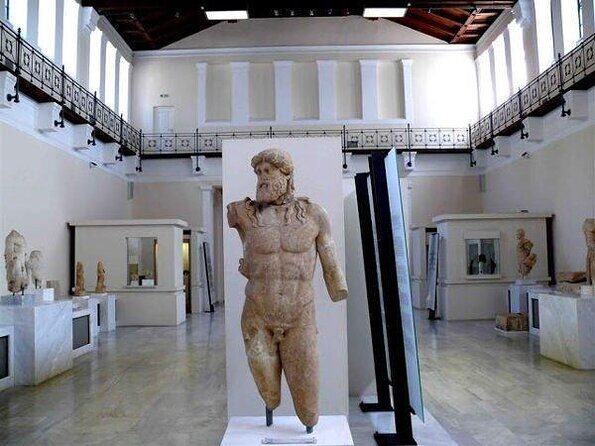
After Monemvasia, you head toward Sparta for a mix of museum and site time. The Archaeological Museum of Sparta is the oldest provincial archaeological museum in Greece, in a neoclassical building from 1874–1876. The tour lists a ticket price (3€), and it’s worth it if you want context before you walk the open-air areas.
Then you visit the Acropolis and Ancient Theater at Sparta. The tour frames Sparta’s power through the hoplite tradition and major wars. Even if you don’t know the details, you’ll feel why Sparta was feared—because the city was built around control, training, and movement.
You also see Mystras (Mystra), the famous medieval “wonder of the Morea.” It’s built as an amphitheatre around a fortress established in 1249 and later occupied by Byzantines, Turks, and Venetians before abandonment in 1832. The value here is the setting: you’re walking among ruins in a landscape designed by the builders to be defensible and visible.
Finally, there’s time at the Museum of the Olive and Greek Olive Oil, focused on olive and oil production from prehistoric times into the early 20th century. If you want a non-ruin kind of cultural stop that still ties to how people lived, it’s a good fit.
You end with overnight in Sparta, which helps you avoid the “arrive, rush, leave” problem.
Day 7: Palamidi, Nafplio, and the Argolis Finale
Day 7 starts in Agios Petros Kynourias, a traditional mountain-slope village ideal for peace and fresh air. It’s also positioned as a place with good food and rooms, so it functions as a relaxing transition after Sparta and Mystras.
Then you visit Paralio Astros, an amphitheatric coastal Arcadia-like port. The tour notes the historic Astros of Kynouria and the fact that the second National Assembly met there in April 1823. It also includes a medieval fortress viewpoint above the port, plus the olive grove setting.
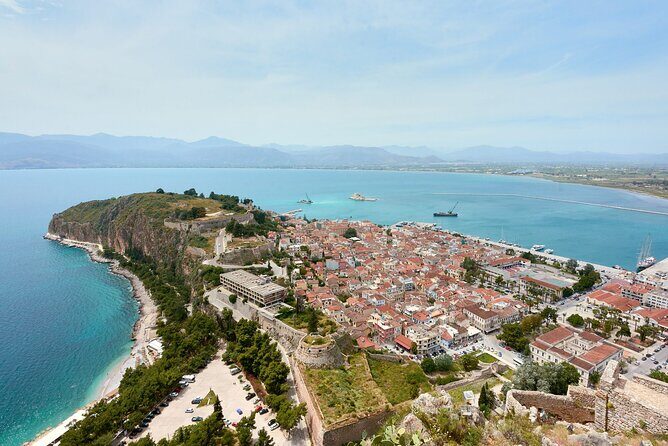
Next is Palamidi Castle in Nafplio, a Venetian fortification achievement. The tour notes construction led by Venetian General Superintendent of the Fleet Agostino Sagredo (1711–1714). This matters because the fortifications here are more than scenic walls—they’re engineering.
Then you have a big chunk of time in Nafplio, framed as one of Greece’s most romantic cities and the first capital of the new Greek state between 1827 and 1834. The town’s layers go deep, from prehistoric references through Byzantine, Frankish, Venetian, and Turkish influence. That kind of layered context is exactly what you want after days focused on single eras.
Day 8: Acronafplia, Nemea Sanctuary, and Nemea Wine Culture
Day 8 starts with the Archaeological Museum of Nauplion, in a Venetian structure on the edge of Syntagma Square. The building itself is part of the attraction, since it was used as a navy depository during the Venetian period.
Then you climb into Akronafplia Fortress, Nafplio’s oldest castle, with walls that go back to Bronze Age remnants. The fortress has later expansions by Romans, Franks, Venetians, and Turks, and the eastern parts are highlighted as especially worth attention.
You then move to Ancient Nemea, where the Sanctuary of Zeus becomes the main story. The tour notes the games and major temple and infrastructure phases, including the Archaic era and the later construction projects tied to Panhellenic competition. It’s a place that rewards patience because you’re connecting religion, sport, and politics across centuries.
Next is Cooperative Winery of Nemea. The focus is on the local native red grape variety Agiorgitiko, plus the cooperative structure and experimental bottling history. Even if you don’t consider yourself a wine person, the tie between agriculture and identity is a useful angle.
Finally, there’s Monastery of the Dormition Rock Nemea, described as a monastery-fort with views of the valley and vineyards, and then a last stop in Loutraki, a seaside resort known for thermal springs and spas.
Price and Logistics: Does It Feel Like Value?
At $2,659.81 per person, this is not a budget trip. The value comes from the combination of private transportation, professional driver time, and an itinerary that covers a wide geographic sweep from Athens through multiple Peloponnese regions.
Transportation is included, including fuels, tolls, and parking, and pickup/drop-off is offered in Athens (or Piraeus). That cuts down the hidden costs that often sink “cheap” tours.
But you should plan for extras. Accommodation is not included, and the tour coordinates selected hotels (boutique or 3/4-star with breakfast) for the nights it schedules. Site admissions are also not included, and the cost changes by season: listed as 10€ per site from 1 November to 31 March, and 20€ per site from 1 April to 30 October.
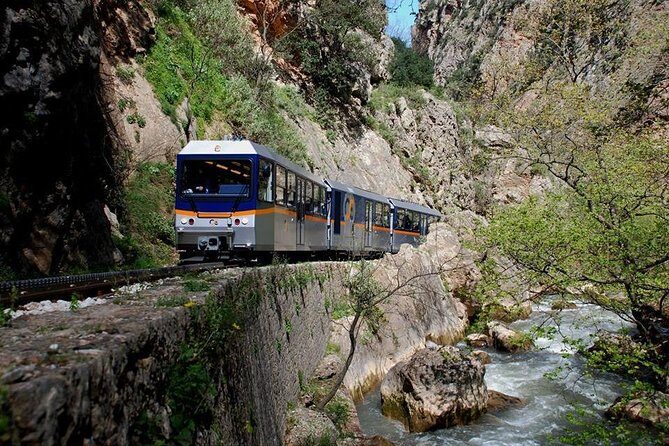
There’s also a mention of train rack railway tickets at 10€ per person and gratuities starting from 1€ per person. Those are small in the big picture, but they do affect your total trip cost.
One more practical caution: some sites and museums may be closed on Tuesdays, and opening hours shift by season. If you want a smooth day, it’s worth planning your timing around the given schedule rather than expecting every site to operate on your whim.
Should You Book This Peloponnese Tour?
I’d book it if you want a history-heavy route plus real photo time, and you like the idea of a driver who can explain places in a way that helps you see how to photograph them. It’s especially well suited for people who enjoy monasteries, castles, and “layers of time” across Greek and medieval sites.
I’d think twice if you expect a licensed archaeology guide inside every museum and ruin, because the driver is not a licensed archaeologist accompanying you on walks through archaeological sites. I’d also do the math on admissions and hotel costs if you’re watching your budget tightly.
If you’re going in July or August, plan ahead. The tour requests booking at least two weeks early because Peloponnese hotels are in high demand then.
FAQ
What time does the tour start?
The meeting point start time is 8:00 am.
Where can you get picked up and dropped off?
Pickup and drop-off are offered from/to your hotel or apartment in Athens or Piraeus. You can also request another location.
Is this a private tour or a group tour?
This is a private tour/activity. Only your group participates.
Are admission fees included for museums and archaeological sites?
Admission fees are not included. Seasonal pricing is listed as 10€ per person per site (Nov 1 to Mar 31) and 20€ per person per site (Apr 1 to Oct 31).
Is accommodation included in the tour price?
Accommodation is not included. The provider coordinates hotels, but you pay an additional cost for rooms (with breakfast listed).
Does the tour include a licensed archaeology guide inside sites?
No. The driver is not a licensed archaeological guide, so if you want an archaeologist guide for a site or museum, you need to hire one separately in advance.
What kind of extra ticket might I need aside from museum admissions?
The tour notes train rack railway tickets at 10€ per person. It also depends on which options you use during the day.
More Food & Drink Experiences in Athens



More Tours in Athens


More Tour Reviews in Athens
- All Day Cruise -3 Islands to Agistri,Moni, Aegina with lunch and drinks included
★ 5.0 · 4,958 reviews