REVIEW · ATHENS
Acropolis & Agora: The Rise & Fall of Democracy
Book on GetYourGuide →Operated by Alternative Athens · Bookable on GetYourGuide
Three hours in Athens, and the story sticks.
This guided route connects the Acropolis to the Ancient Agora with one clear theme: how democracy started, what it promised, and why it didn’t last. You’ll see the major monuments up close, then follow the political ideas down into the places where ancient Athenians debated and made decisions.
I especially like the way this tour pairs big sightseeing with actual political thinking. Two things I love: the focus on the meaning and limits of democratia, and the guided pacing that turns stones into clear cause-and-effect.
One consideration: this is a mostly on-your-feet climb and walk, and it’s not set up for everyone. It’s not suitable for wheelchair users, and you’ll also need to plan for rules like no strollers or backpacks on the Acropolis.
In This Review
- Key takeaways before you go
- Why democracy in Athens starts with stone, not slogans
- Price and time: what $69 gets you in 3 hours
- Where you meet and how to prep for the walk
- The Acropolis climb: Odeon to Parthenon with a political lens
- Odeon of Herodes Atticus
- Propylaea and the transition into the sacred core
- Erechtheion and the idea of Athens as a patchwork of meanings
- Temple of Athena Nike
- Parthenon: when propaganda becomes architecture
- Ancient Agora: where democracy stops being abstract
- Temple of Hephaestus and the clean clarity of older Athens
- The rise, the limits, and the fall: how the guide keeps you honest
- Ancient vs. modern democracy: what you should compare on the walk
- Why the guide matters more than you think
- Who this tour suits best
- Should you book it?
- FAQ
- FAQ
- How long is the Acropolis & Agora tour?
- Where does the tour start?
- Is the tour guided?
- What languages are offered?
- Are entry tickets included in the price?
- Can I get free entry with an ID?
- What should I bring or wear?
- What is not allowed during the visit?
Key takeaways before you go

- Acropolis as propaganda, not just postcard views: you’ll get the political story behind the monuments
- Ancient Agora first, then the question of who counted in demokratia
- A guided comparison to modern democracy: which parts still work and which keep failing
- Stop-by-stop structure keeps you from wandering aimlessly on the hill
- Small-group format with time for questions, photos, and short breaks
- Certified bilingual guides (French/English) bring clarity to a topic that can get fuzzy fast
Why democracy in Athens starts with stone, not slogans
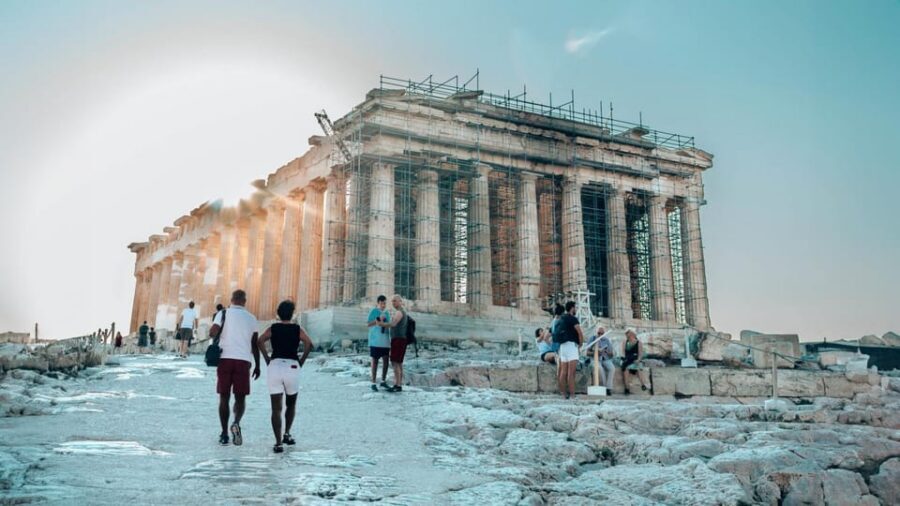
The best way to understand ancient Greece is to watch people turn ideas into buildings. On the Acropolis, every major structure was built with purpose. I like that this tour frames the Acropolis as political messaging, not only myth and marble.
Then you drop down to the Ancient Agora, where Athens functioned as a working city. Here, the story shifts from temples and triumph to everyday politics and decision-making. You’re not just touring ruins—you’re tracing a real experiment in governance.
And the tour keeps asking a sharper question than most history walks: what did the word democratia really mean in practice? The word itself points to people-power, but the tour pushes you to think about who counted as “the people,” what power they held, and what the system was trying to achieve.
You can also read our reviews of more tours and experiences in Athens.



Price and time: what $69 gets you in 3 hours
This is priced at $69 per person for about 3 hours, which is a solid value for Athens. In this time window, you’re getting two major sites with guided interpretation: the Acropolis monuments plus the Ancient Agora area.
Here’s how the math usually works in Athens: entry tickets alone can add up, and a self-guided walk can feel like random monuments unless someone connects them. This tour is designed to do that connecting for you, and it’s also set up as a walking small-group experience with a certified guide.
One note on value: entry tickets are included only if you choose the option that selects them. If you don’t, you can arrange entry tickets ahead of time. Also, food and drinks aren’t included, so plan for a snack stop after.
Where you meet and how to prep for the walk
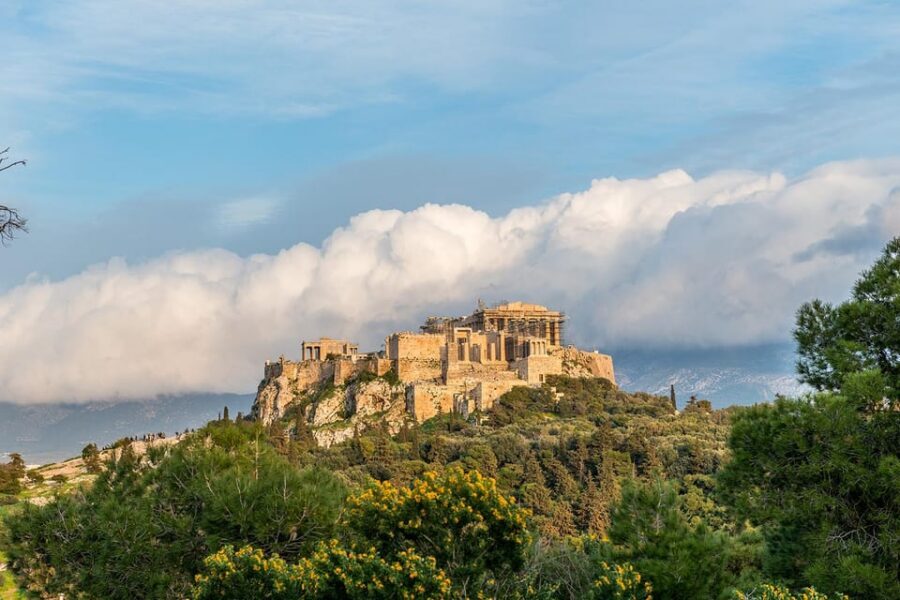
Meeting points can vary depending on what you book. One listed start location is Dionysiou Areopagitou 45, so it’s worth keeping an eye on your exact confirmation details.
Your prep checklist is simple:
- Comfortable shoes (you’ll want real traction)
- Comfortable clothes (the sun can be strong, even outside peak hours)
- Passport or ID (you’ll need it for entry-related rules)
- Leave backpacks at your hotel; they aren’t allowed at the Acropolis
Strollers aren’t allowed, and pets aren’t allowed either (assistance dogs are fine). If you’re traveling with kids, this one is not suitable for children under 8, and it’s also not suitable for wheelchair users or visitors who are visually impaired.
The Acropolis climb: Odeon to Parthenon with a political lens
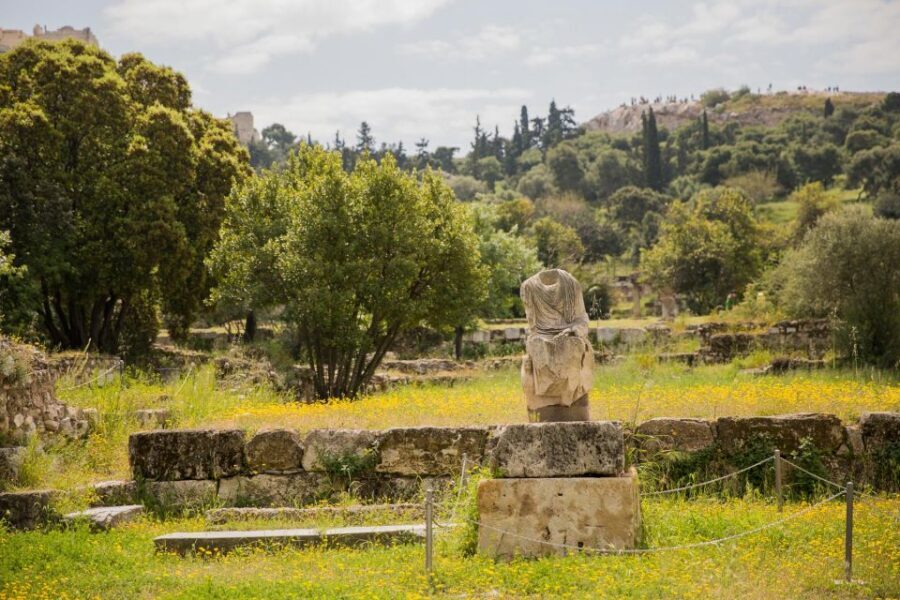
The route starts on the hill and moves in a logical flow, so you’re not crisscrossing paths while trying to make sense of where you are. Times are fairly tight—think quick guided stops, with enough time at each point to understand what you’re seeing.
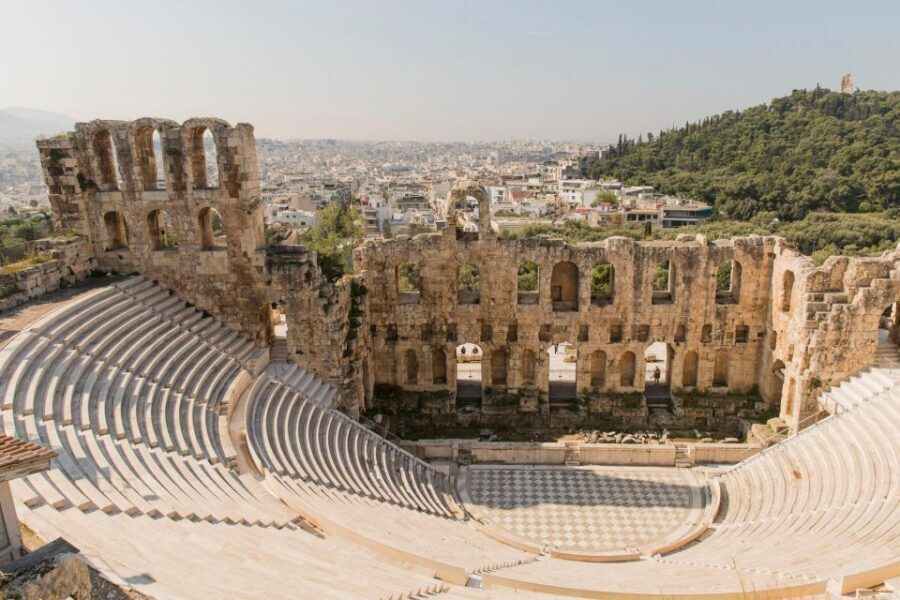
Odeon of Herodes Atticus
You begin with the Odeon of Herodes Atticus, a stop that helps set the scene for how Athenians staged public life. Even if you only take a few minutes here, it’s a useful warm-up: it reminds you Athens wasn’t built for tourists, it was built for citizens.
- All Day Cruise -3 Islands to Agistri,Moni, Aegina with lunch and drinks included
★ 5.0 · 4,958 reviews





Propylaea and the transition into the sacred core
Next comes the Propylaea—the gateway experience that signals you’re entering the heart of the Acropolis. I like this pause because it gives you a mental switch: from city life down below to the symbolic and political center up on the rock.
Erechtheion and the idea of Athens as a patchwork of meanings
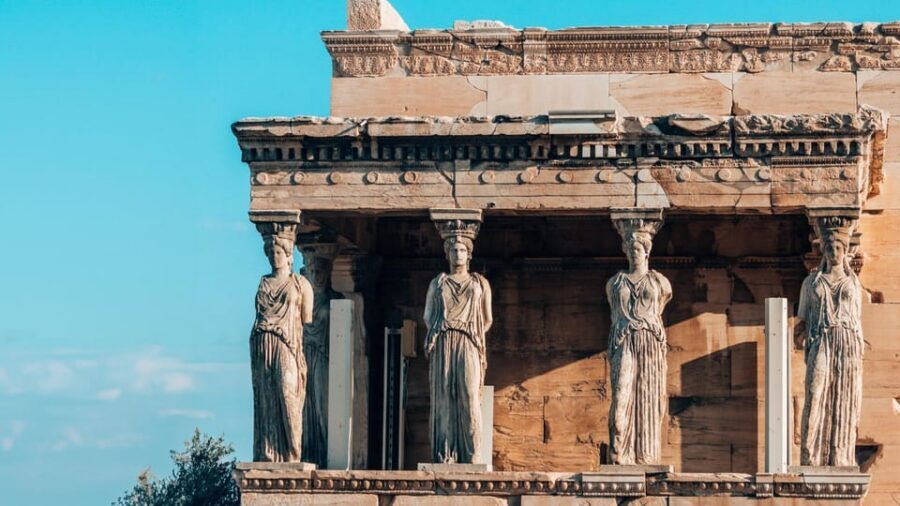
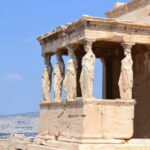
Then you reach the Erechtheion. This is one of those spots where the story matters as much as the shape of the building, because Athens treated religion, identity, and legitimacy as linked ideas.
Temple of Athena Nike
The Temple of Athena Nike adds another layer: power, protection, and the public image of strength. The guide’s political angle works well here, because it helps you stop treating each temple like an isolated object. Instead, you see the theme the city was trying to project.
Parthenon: when propaganda becomes architecture
The big moment is the Parthenon, with about one hour set aside. This is the stop where your democracy lesson lands hardest. In a system that relies on public confidence and civic identity, Athens used monumental art like a megaphone.
The tour doesn’t just point at details. It connects what you’re seeing to the broader message Athens wanted to broadcast. That makes the Parthenon feel less like a museum exhibit and more like something built to influence real people.
Ancient Agora: where democracy stops being abstract
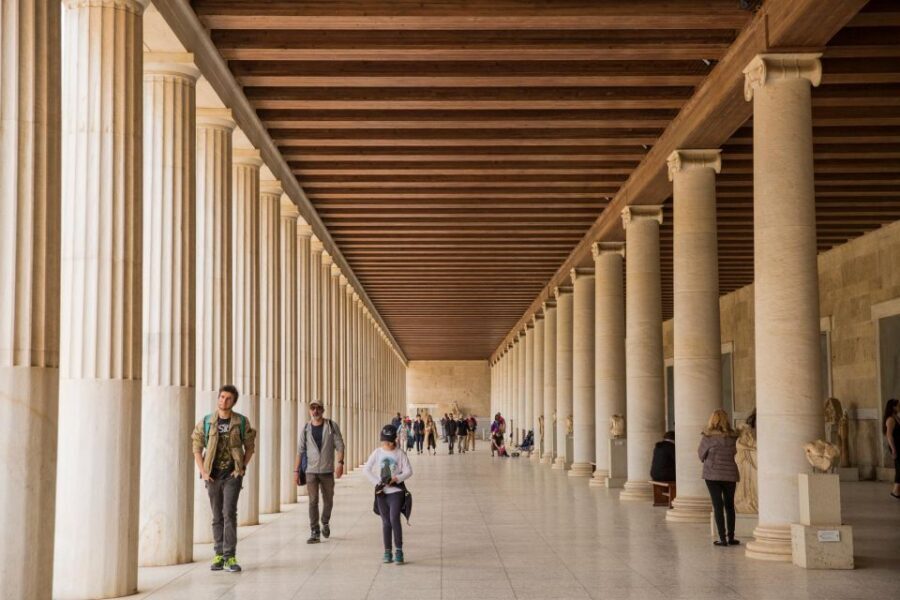
After the Acropolis, the day moves into the Ancient Agora of Athens, the political, commercial, and administrative center. This is where the “people-power” idea stops sounding theoretical and starts sounding like daily civic life.
You get about 30 minutes here, which is enough time to grasp the layout and understand the role of the Agora in city governance. I also like that the guide highlights what matters, including focal points around the area connected with the Agora’s interpretive spaces.
The key payoff: you’re not only learning where democracy happened—you’re learning what it was for. The tour frames democracy as an experiment with clear values and purposes, and then it explains why it was seen as radical at the time.
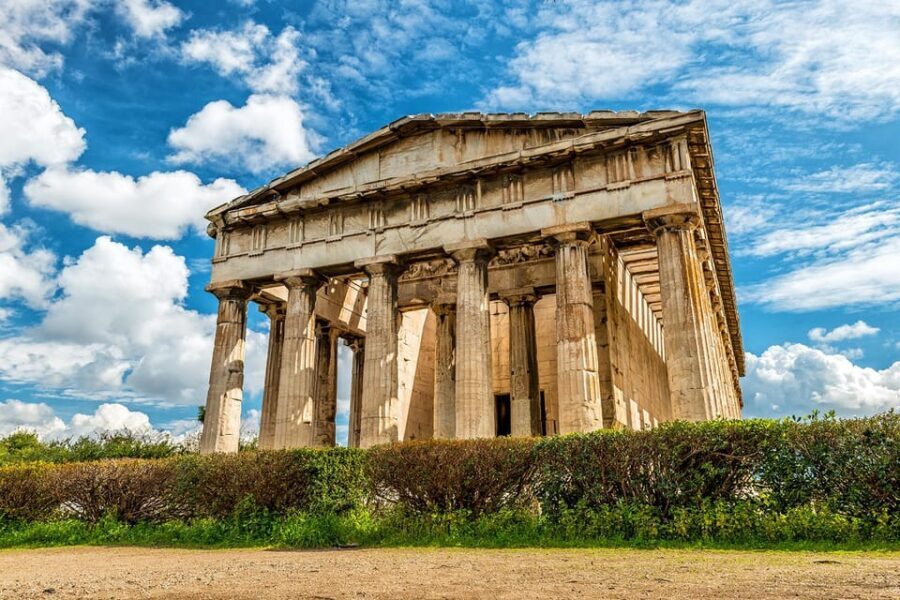
Temple of Hephaestus and the clean clarity of older Athens
Afterward, you’ll reach the Temple of Hephaestus for about 30 minutes. It’s one of those monuments that helps your brain rest, because the structure is so recognizable compared with some more fragmented sites. It also reinforces the Agora story: politics and public life were happening alongside art, ritual, and everyday commerce.
The tour then finishes in the Agora area, so you’re well-placed to continue exploring on your own afterward.
The rise, the limits, and the fall: how the guide keeps you honest
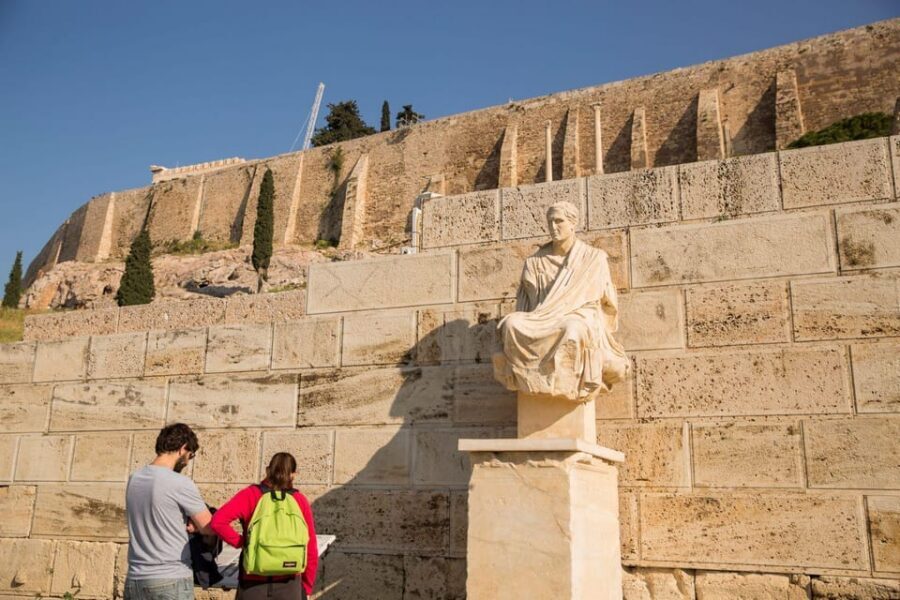
Most democracy tours risk turning into a lecture about ideals. This one tries to keep you grounded in the messy reality that ancient Athens wasn’t a modern democracy substitute.
That’s a good thing. The tour emphasizes the ambiguity in demokratia by making you think about who the people were and what power they actually held. It also looks at the purposes democracy served in Athens, not just the slogan version.
Then it tackles the harder part: why the system was an experiment and the reasons it ultimately failed. I appreciate this because it doesn’t let democracy off the hook. It treats the whole story as a learning process—some parts worked, and some parts broke under pressure.
Ancient vs. modern democracy: what you should compare on the walk
The tour’s strongest angle is the comparison section. It specifically asks you to notice similarities and differences between ancient and contemporary democracy.
In practical terms, you should pay attention to:
- Which structural elements still support society when handled well
- Which elements tend to fail when civic trust, participation, or fairness gets strained
- How the definition of “the people” changes the outcome of a system
This is where the experience becomes useful for your own life back home. You’ll start looking at modern elections, public debate, and civic responsibilities as part of a long experiment—not a single invention that suddenly appeared fully formed.
Why the guide matters more than you think

This kind of tour rises or falls on communication. The format here is guided, certified, and designed for a clear story arc from Acropolis propaganda to Agora politics.
The guides speak French and English, and that bilingual ability matters because it keeps the explanations consistent. Based on what people praise, the guides (including names like Maria, Nathalia, Anastasia, and Helena) are especially strong at making the story clear, friendly, and question-friendly.
What you can look for in the experience:
- The guide answering questions and keeping the pace understandable
- Time for photos without letting you feel rushed
- Thoughtful pauses, including shade breaks when needed
Even if you’re not a hardcore history person, these touches help. A good guide turns a crowded site into something you can actually follow.
Who this tour suits best
Book this if you:
- Want your Athens sightseeing to have a theme, not just a checklist
- Like political history that asks hard questions
- Enjoy walking with a guide and getting context as you move
It’s also a good match for visitors who want a structured way to see the hill and the Agora without getting overwhelmed by scale.
Skip it if:
- You need wheelchair access (this isn’t suitable)
- You’re traveling with a stroller (not allowed)
- You’re bringing a backpack (not allowed at the Acropolis)
- You need a quieter, less step-focused experience
Should you book it?
If you’re choosing between random monument time and a guided story with meaning, this is the better pick. The $69 price makes sense because you’re paying for interpretation on two of Athens’s biggest zones, and the topic—democracy’s rise and fall—gives your sightseeing purpose.
On the other hand, if you’re mainly chasing photos and don’t care about how political systems work, you might feel the time pressure. But if you want to leave Athens understanding not only what the ruins are, but what they were used to say, this tour is a strong choice.
FAQ
FAQ
How long is the Acropolis & Agora tour?
It lasts 3 hours.
Where does the tour start?
The meeting point may vary depending on the option booked. One listed start location is Dionysiou Areopagitou 45.
Is the tour guided?
Yes. It’s a walking small-group tour with a certified guide.
What languages are offered?
The live guide works in French and English.
Are entry tickets included in the price?
Acropolis & Ancient Agora entry tickets are included only if you select the option that includes them. Otherwise, you can have tickets pre-purchased.
Can I get free entry with an ID?
Access is free for EU citizens under 25 with a valid ID, and for EU and non-EU citizens under 18 with a valid ID or passport.
What should I bring or wear?
Bring passport or ID, and wear comfortable shoes and clothes.
What is not allowed during the visit?
Strollers and pets are not allowed (assistance dogs are allowed), and backpacks are not allowed at the Acropolis.


More Tour Reviews in Athens
- All Day Cruise -3 Islands to Agistri,Moni, Aegina with lunch and drinks included
★ 5.0 · 4,958 reviews