REVIEW · ATHENS
Ancient Athens tour: Acropolis, Parthenon and Acropolis Museum
Book on Viator →Operated by Athens Walks Tour Company · Bookable on Viator
Ancient Athens never feels this close. I love how this tour keeps the focus on the key monuments while still giving you room to breathe and look around, plus it’s led by licensed guides with real storytelling chops (people have specifically mentioned Giannas and Selena by name). The big win for me is the pairing of the hilltop sights with the New Acropolis Museum, so what you see outdoors snaps into place inside.
The tour’s also well paced for a place this physical: it’s about 4 hours total, with short stop-ins at major sites like the Parthenon area, Theatre of Dionysus, and Erectheion. One drawback to plan for: the Acropolis walk can be slippery and sweaty, even with water provided, so you’ll want good shoes and a sun plan.
In This Review
- Quick take: what makes this tour work (and what to watch)
- Key highlights you should care about
- Meeting at Porinou 5 and getting your timing right
- The Acropolis hill: where your guide makes the stones make sense
- Parthenon area: the famous view, explained fast
- Theatre of Dionysus: where drama becomes archaeology
- Herod Atticus Odeon and the Propylaea gateway moment
- Erectheion and the Caryatids: the sculptural star
- New Acropolis Museum: why the indoor stop is worth the ticket
- Price and value: what you’re really paying for
- Who this tour suits best
- Should you book this Ancient Athens Acropolis and Acropolis Museum tour?
- FAQ
- How long is the tour?
- What time does it start, and where is the meeting point?
- Is the Acropolis entrance ticket included?
- Is the Acropolis Museum entrance ticket included?
- What does the tour cost?
- Is the tour offered in English?
- How large is the group?
- What should I bring or plan for?
- What is the cancellation policy?
Quick take: what makes this tour work (and what to watch)
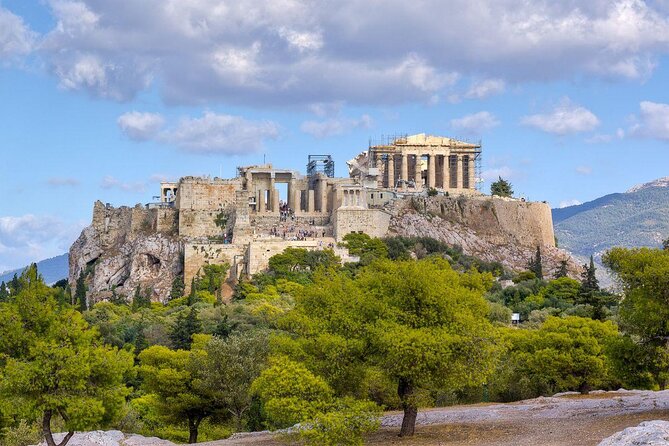
This is a strong choice if you want the Acropolis without feeling rushed. You get a guided route that helps you understand what you’re actually looking at, then the museum turns the stones into context fast. Just know you’ll likely budget extra for entrance tickets unless your booking includes them (the Acropolis is listed at €30 and the museum at €20).
Key highlights you should care about
- New Acropolis Museum first-class context for the sculptures and artifacts tied to what you saw outside
- Small group size (max 20) means you can actually hear, regroup, and find good photo angles
- Short, focused stops at big hits like the Parthenon, Theatre of Dionysus, Propylaea, and Erectheion
- Water provided for the Greek sun, plus breaks that keep the climb from turning into misery
- Licensed guides with excellent English who explain the why, not just the what (names like Lydia and Bernardos show up in praise)
You can also read our reviews of more tours and experiences in Athens.



Meeting at Porinou 5 and getting your timing right
The tour starts at 9:00am at Porinou 5, Athens (Athina 117 42) and ends back at the meeting point. That start time matters. The Acropolis is not just famous—it’s busy, exposed, and hot. Going earlier is how you avoid spending your best energy in lines and sun.
The group stays small, capped at 20 travelers, and that’s more than a comfort detail. On the Acropolis, crowd flow can make or break your experience. With a tighter group, it’s easier for your guide to steer you to viewpoints, keep everyone together, and pause without the whole line getting tangled.
You’ll use a mobile ticket, and the tour is offered in English. Practical tip: even with a mobile ticket, it’s smart to have a phone battery plan. You’ll be taking photos, checking directions, and you don’t want your map to die when you need it most.
The Acropolis hill: where your guide makes the stones make sense
You spend about two hours on the Acropolis at leisure, guided but not trapped in a rigid drill. The best part of this setup is that you can tailor your focus a bit. If you care more about architecture, you’ll get attention there. If Greek mythology and civic life feel more interesting, the guide can steer the story that way.
What you’re really getting here is orientation. The Acropolis can feel like a pile of famous ruins until someone helps you see relationships: where ceremonies happened, why certain buildings were placed where they were, and how the layout reflected power and belief.
Also, the heat is real. Bottled drinking water is provided, and the tour is designed with enough rhythm that you’re not constantly sprinting between stops. Still, you should treat this like a climb. Even if your pace is comfortable, your body will do some work on uneven stone.
One more thing: in crowded zones, hearing can get tricky. You might find it helpful to bring your own wired headphones as a backup, especially if you’re picky about audio in tight spaces. This is the kind of tour where small comfort upgrades pay off.
Parthenon area: the famous view, explained fast
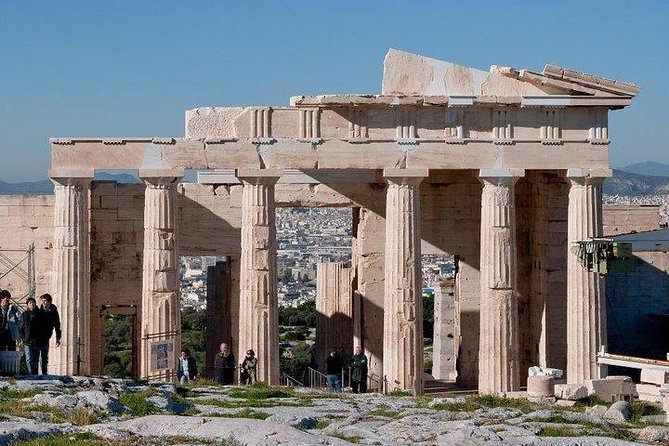
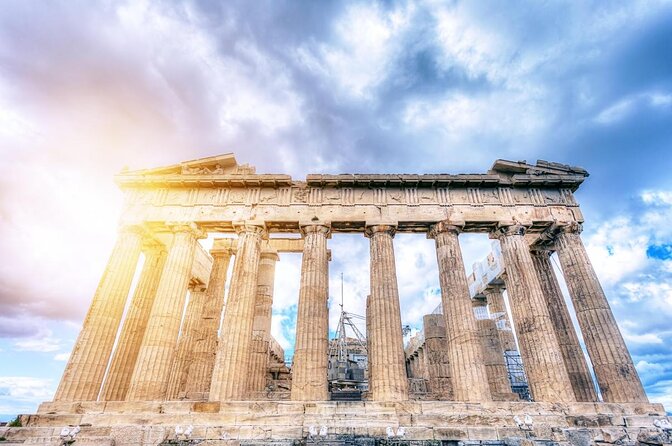
Your Parthenon stop is brief—around 10 minutes—so the value is in what you learn in that short window. You’ll be at the top of the Acropolis and looking at a building that’s basically a history textbook in stone. But the real magic is how your guide frames it: what the temple was for, what it symbolized, and why later visitors kept trying to recreate its meaning.
A quick stop can be a drawback if you love lingering. If you’re the type who wants 30 straight minutes of staring at carvings, you’ll be left wanting more. Still, for most people, the shorter visit is exactly what makes the overall tour flow work: you get the wow factor, then you move to the next layer of understanding instead of burning time and energy.
Pro tip for photos: pick your angle early, then listen. If you wait to learn after you’ve already framed every shot, you’ll miss the details that make the Parthenon area more than a postcard.
Theatre of Dionysus: where drama becomes archaeology
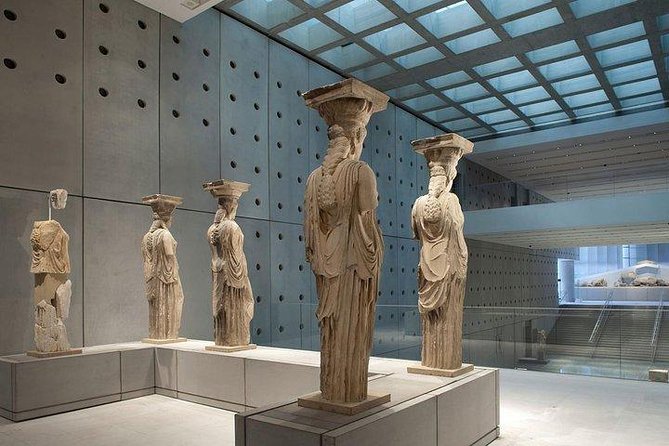
You’ll make two short stops at the Theatre of Dionysus area, each about 10 minutes. That repetition is useful. The first pass helps you see the shape and scale. The second gives you time to catch extra details—especially the kind of points your guide makes when you’re closer and the setting clicks.
This site is important because it connects directly to the idea of public life in ancient Athens. Even if you’ve heard the word theatre your whole life, here you’ll see how serious the Romans and Greeks were about performance as civic identity, religion, and storytelling.
The Theatre of Dionysus is also a reminder that the Acropolis wasn’t just a set dressing. It was an active stage for culture—one more reason why a guide matters. Without explanation, it can look like another ruin. With explanation, it starts to feel like a place people actually used.
- All Day Cruise -3 Islands to Agistri,Moni, Aegina with lunch and drinks included
★ 5.0 · 4,958 reviews





Herod Atticus Odeon and the Propylaea gateway moment
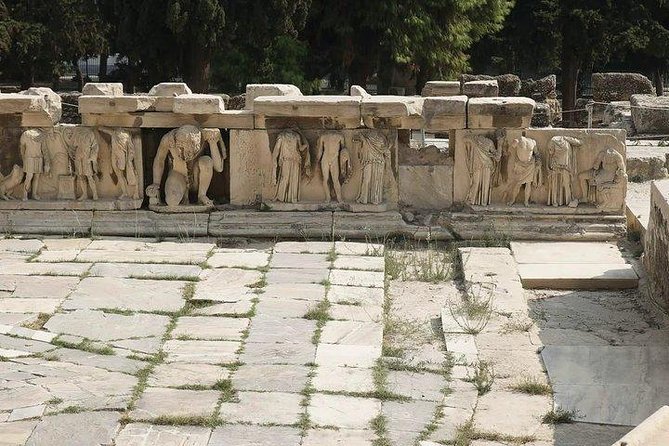
Next you’ll see the Herod Atticus Odeon, a Greek-Roman structure that’s still operating in some form. That’s a big deal for understanding continuity. You’re not just looking at dead history. You’re looking at architecture that has been repurposed and respected enough to survive.
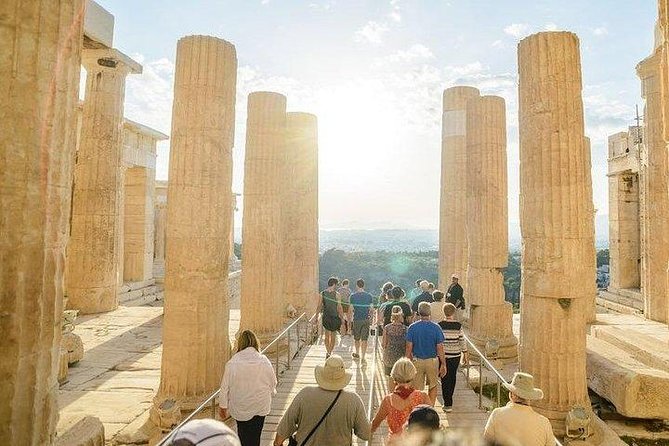
Then comes Propylaea, the gates of the Acropolis. This is a classic “don’t rush” spot—despite the stop being around 10 minutes—because gateways tell you how ancient builders thought about arrival. Propylaea isn’t just entrance; it’s a controlled transition from ordinary space into sacred space.
Even in a quick stop, your guide can help you notice the logic in the design: how movement into the complex was shaped, and how power and religion were reinforced through movement and ceremony.
Erectheion and the Caryatids: the sculptural star
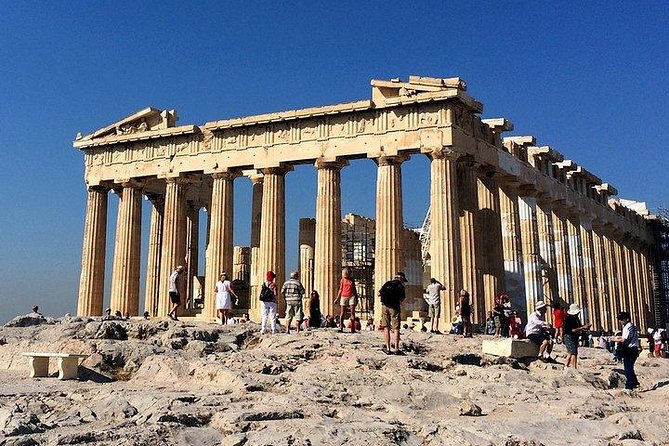
Your final hilltop monument stop is Erectheion, famed for the Caryatid statues. These figures are usually what people remember because they’re unusual and instantly recognizable. But what makes this stop valuable is the explanation of why they matter and what role that sculptural language played in the building’s identity.
At about 10 minutes, you won’t have time to become a sculpture scholar, but you will get enough to actually recognize what you’re seeing. If you’re the kind of person who loves details—hands, posture, and how sculpture supports architecture—this is the moment to slow down inside your allotted time.
If you’re worried about time pressure: your guide keeps the group together, but it’s usually possible to ask for one extra minute at your favorite viewpoint. Small groups make that easier.
New Acropolis Museum: why the indoor stop is worth the ticket
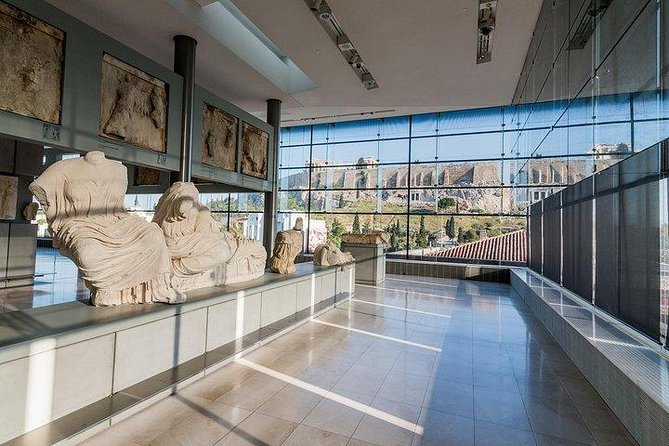
The tour ends at the Acropolis Museum for about one hour with your guide. This is where the day stops being a list of ruins and starts becoming a coherent story.
The museum is designed around one idea: keep the artifacts close to their origin. It houses findings from the Greek Bronze Age to Roman and Byzantine Greece, all tied to the Acropolis site and surrounding slopes. The collection covers objects and architectural pieces that help you understand how the Acropolis functioned across centuries, not just at its most famous moment.
One of the most striking things about the building itself is that it sits over ruins of part of Roman and early Byzantine Athens. So even when you’re standing still with a guide beside you, you’re watching layers of city life stack up in the same place.
If you love learning with your eyes, this museum pairing is the best part of the tour. You can see how sculptures and decorative elements relate to the buildings you just walked around. Many people take that one-hour guided session as a warm-up, then stay longer on their own. If you’re able, keep a bit of extra time after the tour so you don’t rush through the details that deserve it.
Price and value: what you’re really paying for
The tour price is $72.59 per person for a licensed guide and the guided route across the Acropolis plus the museum experience. For this site, you’re not just buying access—you’re buying time saved and context delivered.
Here’s the practical budget piece: entrance fees are not included unless you booked an option with tickets. The Acropolis entry fee is €30 per person, and the Acropolis Museum entry fee is €20 per person. If you didn’t pre-select tickets, the information you have says you can buy them in cash from your guide at the meeting point.
So your true total cost depends on your ticket option. Either way, the value argument is the same: a guided visit here reduces the guesswork. With just audio or a self-guided approach, you’d spend your energy trying to connect dots yourself. With a licensed guide, you get those connections quickly—especially at the Parthenon area and in the museum, where the meaning of sculptures and architectural fragments can otherwise feel random.
If you want a straightforward, efficient way to see the big monuments and understand them, this price is usually fair. If you prefer slow wandering with zero structure, you might feel like the stops are short. But the overall pacing is built to cover a lot without turning the day into a slog.
Who this tour suits best
This is a good fit if you:
- Want a guided Acropolis that explains what you’re looking at, not just where to stand
- Like the idea of finishing in the New Acropolis Museum, so you can connect outdoor ruins to indoor artifacts
- Prefer smaller groups over huge tour herds
- Can handle moderate walking and uneven stone surfaces (the tour notes a moderate physical fitness level)
It might feel less ideal if you:
- Want very long free time on the hilltop monuments
- Get frustrated by crowds, sun exposure, or quick viewpoint stops
Should you book this Ancient Athens Acropolis and Acropolis Museum tour?
Yes, if your goal is to see the Acropolis highlights and walk away with real context. The pairing of hilltop monuments with the New Acropolis Museum is the key reason. You’ll understand more in one day than you would trying to figure everything out on your own.
Book it with extra planning if you’re sensitive to heat or slippery surfaces. Wear grippy shoes, drink water, and consider starting your day with extra sunscreen. If you care a lot about hearing the guide in noisy spots, bring wired headphones as a backup.
Most importantly: if you want the Acropolis to feel like more than famous ruins, this tour structure does that job.
FAQ
How long is the tour?
It’s about 4 hours total, including time on the Acropolis and the visit to the Acropolis Museum.
What time does it start, and where is the meeting point?
It starts at 9:00am. The meeting point is Porinou 5, Athina 117 42, Greece, and the tour ends back at the same location.
Is the Acropolis entrance ticket included?
Entrance fees for the Acropolis are not included unless you booked the option with entrance tickets.
Is the Acropolis Museum entrance ticket included?
Entrance fees for the Acropolis Museum are not included unless you booked the option with entrance tickets, with the museum admission listed as €20 per person.
What does the tour cost?
The tour price is $72.59 per person, and entrance tickets may be additional depending on your booking option.
Is the tour offered in English?
Yes, it’s offered in English.
How large is the group?
The tour has a maximum of 20 travelers.
What should I bring or plan for?
Plan for walking on uneven stone and hot sun. Bottled drinking water is provided, and it’s smart to come prepared for warm weather.
What is the cancellation policy?
You can cancel for a full refund if you do it at least 24 hours in advance of the experience start time.



More Tour Reviews in Athens
- All Day Cruise -3 Islands to Agistri,Moni, Aegina with lunch and drinks included
★ 5.0 · 4,958 reviews